
Reviewed · NIKKO DAY TRIPS
Exciting Nikko – One Day Tour from Tokyo
Nikko in one day beats the usual long days. This trip strings together the places people actually come for: Shinkyo Bridge, Rinno-ji, and Nikko Tosho-gu, all tied into Nikko’s UNESCO status. I like that the route is efficient, with short, focused visits instead of wandering around trying to figure out what matters most.
Two standouts for me are the chance to get the classic vermillion Shinkyo Bridge photo and the time you get at Tosho-gu to really take in the famous color-and-detail woodwork. One more plus: the day is guided, so the symbolism and layout make more sense as you walk.
The main thing to consider is physical effort. You’ll be moving through shrine grounds with steps, and one practical warning you’ll want to take seriously if you have mobility limits or weak knees.
In This Review
- Key points before you go
- Why Nikko’s shrines land so hard in a single day
- Price and what you’re really buying for the day
- Getting from Asakusa to Nikko: timing, meeting point, and pace
- Stop 1: Shinkyo Bridge for the classic photo moment
- Stop 2: Rinno-ji Temple and its three golden Buddhist figures
- Stop 3: Nikko Tosho-gu for the carvings everyone talks about
- Stop 4: Futarasan Shrine and the three sacred mountains
- Stop 5: Taiyu-in Temple Niomon and Tokugawa-era context
- What the guide adds (and the difference it makes)
- Group format, tickets, and practical “don’t get stuck” advice
- Who should book this one-day Nikko tour
- Should you book? My straight answer
- FAQ
- What time does the tour start?
- How long is the Nikko tour?
- What’s included in the price?
- What isn’t included?
- Are admission tickets required for the main stops?
- Can I change or cancel my booking?
Key points before you go
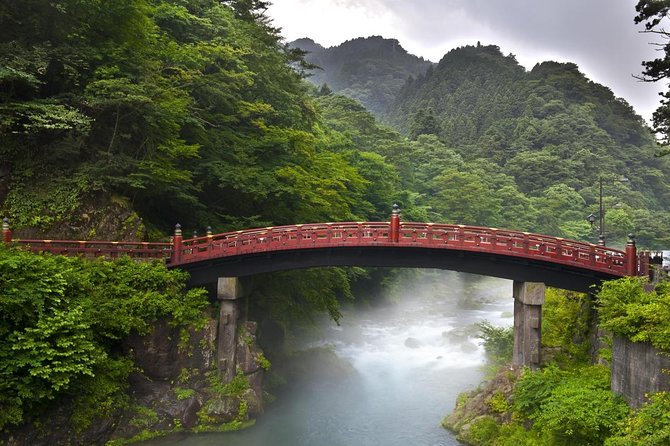
- Shinkyo Bridge photo time is built in, so you’re not sprinting to find the best angle
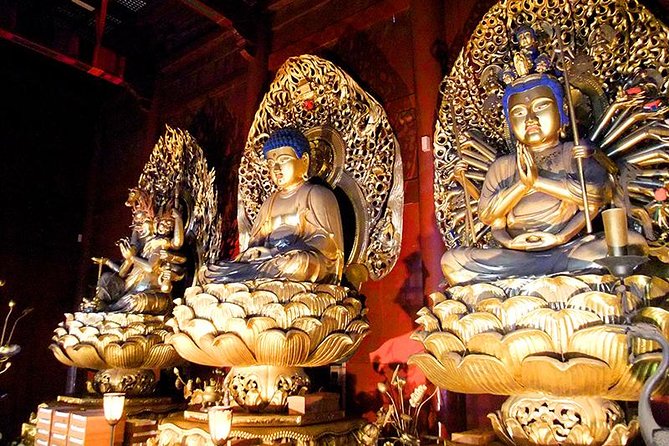
- Rinno-ji’s three golden Buddhist figures are the focal point, not background scenery
- Tosho-gu is the showstopper for elaborate carved details of plants, animals, and imagined creatures
- Futarasan Shrine is tied to Nikko’s sacred mountains and has a love-focused reputation
- Taiyu-in and Niomon add Tokugawa-era context and a bit of step-heavy walking
Why Nikko’s shrines land so hard in a single day
Nikko is one of those rare places where the setting and the art both do the talking. You’ll spend your day in a forested temple-and-shrine world where color, carvings, and religious symbolism feel very specific to the region.
What makes this one-day format work is that it hits the big anchors without trying to swallow the whole city. The stops are short enough that you keep momentum, but long enough that you can still notice details like wood carvings, temple gates, and the way each site frames the next one.
Also, Nikko is a UNESCO World Heritage area, and this tour is arranged so you see several of the destinations that earned that recognition. That matters because it keeps the day from feeling like a checklist with random detours.
More runs north to Nikko, ranked by reviews
- Nikko: Kegon Falls, Lake Chuzenji & Toshogu Temple
★ 4.6 · 1,577 reviews - Tokyo: Nikko Toshogu Shrine and Kegon Waterfall Tour
★ 4.5 · 1,266 reviews - From Tokyo: Nikko World Heritage Site Private Full-Day Trip
★ 4.9 · 243 reviews - Nikko: Edo Wonderland Edomura Cultural Theme Park Ticket
★ 4.3 · 205 reviews
Price and what you’re really buying for the day
At about $267.13 per person, this isn’t a budget outing. So you should think of it as paying for three things: a guide who handles the flow, transport from Tokyo, and admissions tied to the main sights.
From the tour details, the professional guide, transportation cost, and admission fee are included, while lunch and your trip from your hotel to the meeting area aren’t. You’ll also see that the scheduled visits list admission as free at each stop, which suggests admissions for those specific sites are handled as part of the package.
Still, I’m going to give you the practical caution that can save a headache: at least one account complained about extra payments for train tickets, entrances, and the guide’s lunch. That doesn’t mean it will happen to you, but it is a strong reason to double-check what your confirmation includes (especially train legs and any on-site tickets) before you leave Tokyo.
For your money, the best value is the time saved. A guided day to Nikko is usually about getting from place to place without second-guessing schedules, transit connections, and what’s worth your attention once you arrive.
Getting from Asakusa to Nikko: timing, meeting point, and pace
Your day starts at 9:00 am at the Tobu Tourist Information Center in Asakusa. It ends back at the meeting point, which is handy if you’d rather not deal with a different drop-off location.
You’re looking at about 10 hours total, so it’s a real day trip. You’ll also want to plan for movement at every stop, not just “sit and look” sightseeing. The description calls for a moderate physical fitness level, and the route includes stairs and walking in shrine settings.
One more detail that affects how smoothly your day goes: there’s a mobile ticket. That’s convenient in practice, but it still helps to have your phone charged and your booking details easy to find.
And since this is described as a private tour/activity with only your group participating, you can expect less waiting around for everyone to catch up. That can be a big deal when you’re doing multiple temple stops in one long day.
Stop 1: Shinkyo Bridge for the classic photo moment
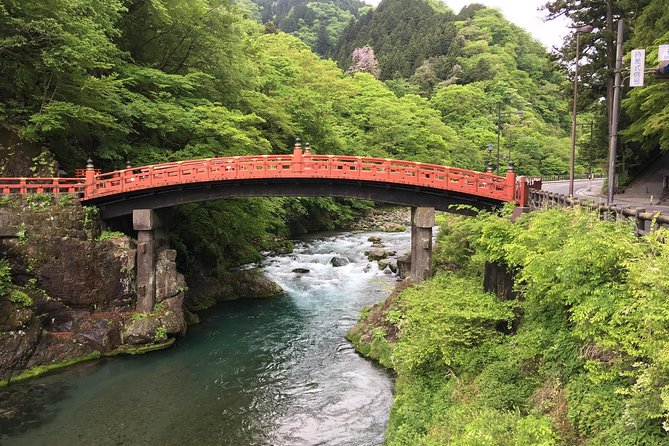
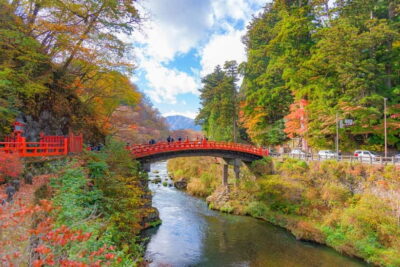
Your first stop is the Shinkyo Bridge, one of Nikko’s most popular photo points. You get about 30 minutes, and admission is listed as free for this stop.
This is the kind of place where 30 minutes is actually perfect. You can get there, find the best angles quickly, and still have time to look around at the surroundings without feeling rushed. The key thing here is the bridge’s vermillion lacquer look, which photographs especially well when the light hits the red surfaces.
If you’re the type who likes a clean shot, use your guide’s timing. Bridges like Shinkyo tend to attract constant visitors, so the value of a guided schedule is that you’re less likely to arrive at the peak moment.
A practical tip: wear shoes you trust. Even if you’re only standing for photos, shrine areas can be uneven, and you’ll be transitioning quickly to the next stop.
Stop 2: Rinno-ji Temple and its three golden Buddhist figures
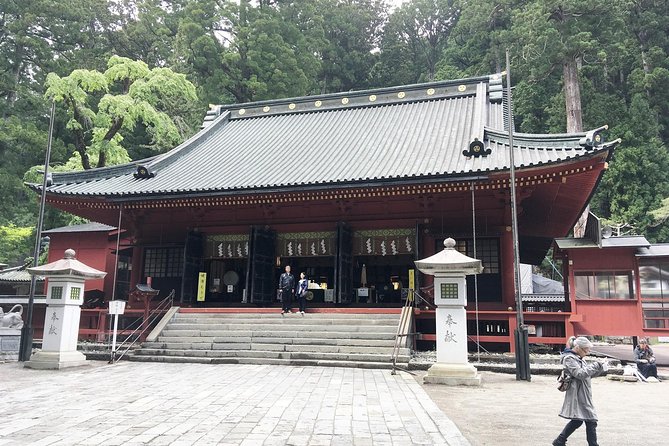
Next up is Rinno-ji Temple, known for having more than 1,200 years of history. You’ll have about 30 minutes, and this stop also lists admission as free.
The headline here is simple: the three golden Buddhist deities are the must-see. That focus helps you not get lost in the “so many halls” feeling that happens at larger temple complexes. With a guide, you can spend your time where it counts—on the specific figures and the layout that surrounds them.
Rinno-ji is also a good stop to slow down a bit emotionally. If the day starts feeling like a sprint, this is a reset: you can read the space, notice the architectural details, and connect the site’s religious role to the rest of what you’ll see in Nikko.
Drawback to keep in mind: 30 minutes goes fast if you stop to take photos of everything. If you want a few strong images instead of dozens of partial ones, decide early that your attention will go to the golden statues first.
Readers also shortlisted these Tokyo bookings:
- Mt Fuji and Hakone 1-Day Bus Tour Return by Bullet Train★ 5.0 · 26,383 reviews
- 1-Day Tokyo Bus Tour★ 5.0 · 14,250 reviews
- Mt Fuji & Hakone Cruise, Drum Show Bullet Train 1 Day from Tokyo★ 4.0 · 7,413 reviews
- Tokyo: DisneySea 1-Day Passport★ 4.5 · 2,726 reviews
- Tokyo Disneyland 1-Day Passport★ 4.6 · 2,512 reviews
Stop 3: Nikko Tosho-gu for the carvings everyone talks about
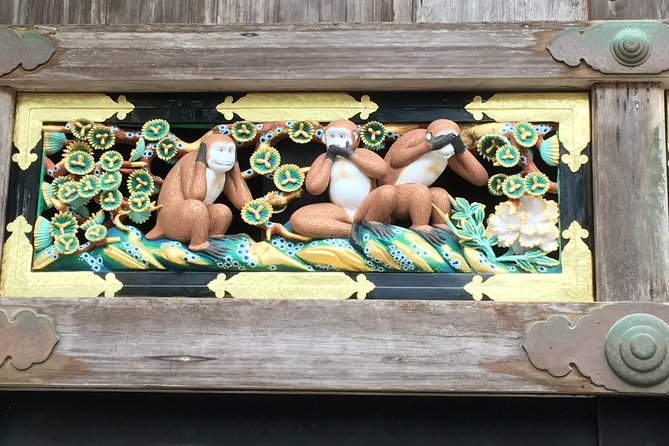
If you care about art you can see with your own eyes, this is the core stop. Nikko Tosho-gu gets about 1 hour, and it’s described as Japan’s most gorgeous shrine—famous for colorful and elaborate sculptures of plants, animals, and imaginary creatures.
This is where the day’s value really shows. Tosho-gu isn’t just architecture. It’s decoration with meaning. The guide can help you notice what you’d otherwise treat as surface ornament, like the way creatures and plant forms interact across different structures.
One practical consideration: because Tosho-gu is so detailed, it rewards slower looking. That’s also why it helps to have an hour rather than 15 minutes. If you’re tired, you might be tempted to skim, but you’ll miss the reason this shrine is famous.
Also plan for steps and uneven ground. Shrine paths are part of the experience, but they can be tiring. One of the best bits from the experience feedback is the note that it’s a good workout—so pack accordingly.
Stop 4: Futarasan Shrine and the three sacred mountains
After Tosho-gu, you’ll head to Futarasan Shrine. You get about 30 minutes, and admission is listed as free again.
Futarasan is tied to Nikko’s three sacred mountains, which gives this stop a different flavor than the gold-focused drama of Rinno-ji. This is more about respect, place, and meaning—less about grabbing the biggest photo and more about understanding what the mountains symbolize in the spiritual landscape.
The description also notes that Futarasan Shrine is “a shrine of love.” You might find that part of the experience more interesting if you like the personal, modern ways people connect to older sacred places.
This is also a smart pace breaker in the day. Thirty minutes is short enough to feel doable, but long enough that you can walk the grounds, take a breath, and keep your energy for the last stop.
Stop 5: Taiyu-in Temple Niomon and Tokugawa-era context
Your final stop is Taiyu-in Temple Niomon. You’ll have around 30 minutes, and admission is again listed as free.
This stop connects Nikko to the Tokugawa dynasty. The information provided highlights the grave of the third Shogun of the dynasty, adding a historical thread that helps the day feel more than just pretty buildings.
The word Niomon signals an important temple gate, and Taiyu-in’s grounds can feel more intimate than Tosho-gu’s big spectacle vibe. That’s a nice way to end: you finish with context, not just carvings.
One key thing to remember: the final stretch is often when people feel their legs. The experience guidance points out a lot of steps, and the shrine settings mean you shouldn’t assume everything is flat and smooth.
If you want an easy win, pick your last-stop priorities early: one gate or courtyard you want to photograph, then focus on the specific Tokugawa connection, rather than trying to see every corner.
What the guide adds (and the difference it makes)
This is a guided day, and the guide is included. That matters because Nikko can look like a lot of religious art from the outside, but the symbolism becomes clearer when someone explains it as you walk.
One guide name that shows up in the experience feedback is Yumiko Sano. The way she’s described is professional and patient, with a focus on making the day feel easy even when the route includes stairs and a bit of effort.
You’ll likely appreciate guidance most at Tosho-gu, where the carvings are the point. A good guide helps you shift from seeing decorations as random to seeing them as organized storytelling—plants, animals, and imaginary creatures all part of a larger message.
If you’re the type who likes to ask questions, this tour structure gives you a natural rhythm for it. The stops are timed, but not so rushed that you can’t get clarification about what you’re looking at.
Group format, tickets, and practical “don’t get stuck” advice
A few details can make the difference between a smooth day and a stressful one.
First, this is listed as private for your group. That can be more comfortable than big-group tours because you’re not dealing with lagging strangers. But it still doesn’t change that you’re in a single-day schedule, so you need to move at a steady pace.
Second, admissions are listed as free in the schedule, and transport and admission are listed as included. At the same time, there’s that one cautionary note about unexpected extra payments for train tickets and entrances. So your job is simple: confirm what your voucher covers, then bring a backup plan (like small cash/card) just in case something varies for your booking.
Third, lunch is on you. That’s normal for day trips, but it’s a real energy factor. If you arrive hungry and push your lunch later, your shrine-viewing patience drops. Plan to eat something you can tolerate even if the day runs a little tight.
Finally, you’re near public transportation and the meeting point is easy to reach in Asakusa. Still, if you’re traveling from a hotel farther out, make sure your route gets you to Tobu Asakusa Station on time—your hotel-to-station transport is not included.
Who should book this one-day Nikko tour
This trip is a good fit if you want the big Nikko sights without turning the day into a logistics puzzle. If you’re visiting Tokyo and you want UNESCO-level cultural stops in one long, guided day, this format is made for you.
It’s also a great match if you like religious art and want to understand what you’re looking at. The route is built around the places with specific “you must see this” features: the golden figures, the bridge photo, the Tosho-gu carvings, and the Tokugawa link.
On the other hand, it might be less ideal if you’re seeking a slow, laid-back day. The schedule is structured, you’ll walk between sites, and the experience context points to steps and physical effort.
If you’re traveling with kids, the details say children must be with an adult. In practice, the steps and walking time are the things you should factor in when deciding if the day will feel manageable for your group.
Should you book? My straight answer
Book it if you want a guided, efficient one-day Nikko plan that hits the signature sights: Shinkyo Bridge, Rinno-ji, Tosho-gu, Futarasan, and Taiyu-in. The value is strongest when you appreciate the artistry and you don’t want to guess your way through transport and priorities.
Don’t book it if you’re trying to keep costs ultra-low or you hate stairs and nonstop movement. The day is about walking and viewing, not lounging, and lunch is on you.
My final call: if you confirm what’s covered in your booking voucher (especially transit and admissions), this is a smart way to get Nikko’s best into a single day from Tokyo—without losing time or energy to planning.
FAQ
What time does the tour start?
The tour starts at 9:00 am at the Tobu Tourist Information Center in Asakusa. It ends back at the same meeting point.
How long is the Nikko tour?
It runs for about 10 hours (approx.).
What’s included in the price?
The price includes a professional guide, private tour setup, transportation cost, and admission fee. Lunch is not included.
What isn’t included?
Lunch isn’t included, and your transportation between your hotel and Tobu Asakusa Station is also not included.
Are admission tickets required for the main stops?
The scheduled stops list admission tickets as free. Still, you should review your booking details to confirm what’s covered for your specific reservation.
Can I change or cancel my booking?
This experience is non-refundable and cannot be changed for any reason. If you cancel or request an amendment, the amount you paid will not be refunded.
More Tours in Tokyo
- Mt Fuji and Hakone 1-Day Bus Tour Return by Bullet Train
★ 5.0 · 26,383 reviews - 1-Day Tokyo Bus Tour
★ 5.0 · 14,250 reviews - Tokyo: Shinjuku Food Tour (13 Dishes at 4 Local Eateries)
★ 5.0 · 6,603 reviews - Tokyo Mt Fuji 5th St & Hakone Cruise Bus Tour w/Bullet Train
★ 4.4 · 5,024 reviews - Flagship 2-Hours Official Street Go-Kart Tour – Tokyo Bay Shop
★ 5.0 · 4,974 reviews
More Tour Reviews in Tokyo
- Mt Fuji and Hakone 1-Day Bus Tour Return by Bullet Train
★ 5.0 · 26,383 reviews - 1-Day Tokyo Bus Tour
★ 5.0 · 14,250 reviews - Tokyo: teamLab Planets TOKYO Digital Art Museum Entry Ticket
★ 4.6 · 9,779 reviews - Mt Fuji & Hakone Cruise, Drum Show Bullet Train 1 Day from Tokyo
★ 4.0 · 7,413 reviews - Tokyo: Shinjuku Food Tour (13 Dishes at 4 Local Eateries)
★ 5.0 · 6,603 reviews
North to Nikko: More Trips Rated
- Nikko: Kegon Falls, Lake Chuzenji & Toshogu Temple
★ 4.6 · 1,577 reviews - Tokyo: Nikko Toshogu Shrine and Kegon Waterfall Tour
★ 4.5 · 1,266 reviews - From Tokyo: Nikko World Heritage Site Private Full-Day Trip
★ 4.9 · 243 reviews - Nikko: Edo Wonderland Edomura Cultural Theme Park Ticket
★ 4.3 · 205 reviews - Tokyo: Nikko World Heritage Private Day Trip Hotel Pick-up
★ 4.8 · 145 reviews
Latest Tokyo reviews off our desk

Nikko Day Trips, compared.
 ★ 4.6Nikko: Kegon Falls, Lake Chuzenji & Toshogu TempleFrom $891,577 reviews
 ★ 4.5Nikko Toshogu Shrine and Kegon Waterfall TourFrom $841,266 reviews
 ★ 5.0Nikko Full-Day Private Tour with Government-Licensed GuideFrom $155259 reviews
 ★ 4.9From Tokyo: Nikko World Heritage Site Private Full-Day TripFrom $483243 reviews
 ★ 4.3Nikko: Edo Wonderland Edomura Cultural Theme Park TicketFrom $35205 reviews
 ★ 4.8Nikko World Heritage Private Day Trip Hotel Pick-upFrom $390145 reviews
 ★ 4.9Nikko – Beautiful Full-Day Personal and Private TourFrom $364119 reviews
Browse the lists this tour appears in