
Reviewed · TEAMLAB ART TICKETS
Tokyo: teamLab Planets TOKYO Digital Art Museum Entry Ticket
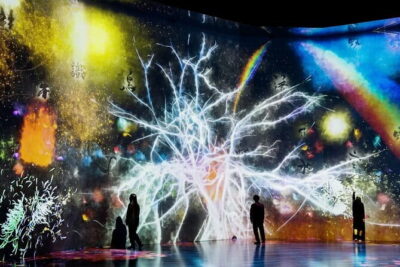
Digital art that changes as you move. teamLab Planets TOKYO is a huge, full-body experience where your presence affects the visuals around you, across about 10,000 square meters of galleries. I especially like the way it hits all five senses through shifting light, sound, and movement, and the standout Water Gallery where you literally wade into the artwork.
The catch: it runs by strict entry windows and rules, and you must go barefoot, with some areas involving water that can rise up to knee height. If you have epilepsy, heart problems, light sensitivity, or you rely on a wheelchair, this isn’t a good match.
In This Review
- Key Things to Know Before You Go
- Tickets, Entry Windows, and Why the Start Feels Like a Time Slot
- What to Wear: Barefoot, Knee-High Water, and Mirror Floors
- Walking In: Where Your Body Becomes Part of the Artwork
- The Water Gallery: The Moment That Turns Heads
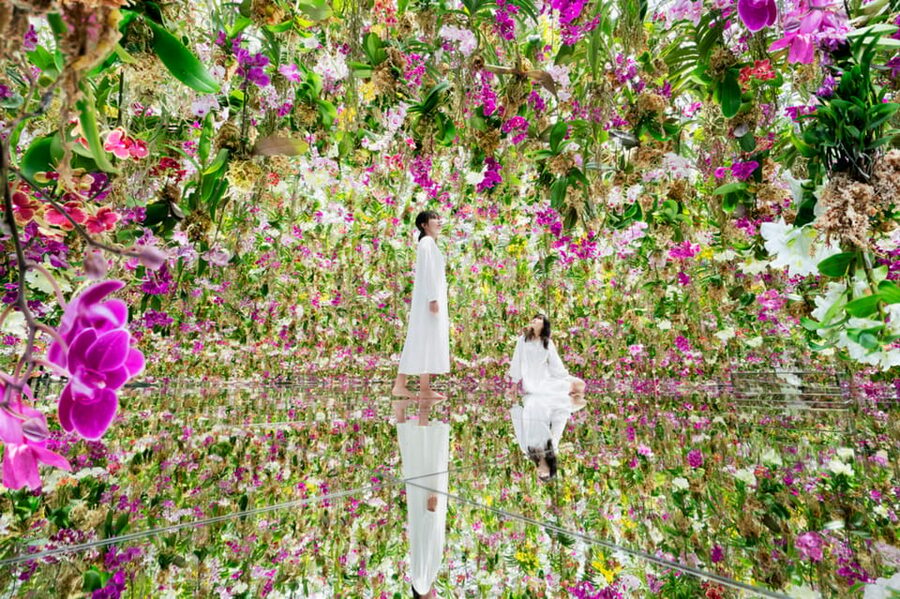
- Orchids, Falling Flowers, and the Feeling of Being Surrounded
- Five Senses, Not Just Screens
- How Long You’ll Want and How to Pace It
- Price and Value: About $25 for Digital Art That Costs More Energy Than It Sounds
- Who This Fits Best (and Who Should Skip)
- Should You Book teamLab Planets TOKYO?
- FAQ
- How much does the teamLab Planets TOKYO ticket cost?
- How long should I plan for the experience?
- Can I buy tickets on the same day I plan to visit?
- What time can I enter after my selected slot?
- Do I need a passport or ID card?
- Is there a place to store small items?
- Do I have to go barefoot?
- Are there water areas, and what should I wear?
- Is this wheelchair accessible?
- Is the experience suitable for epilepsy or heart problems?
Key Things to Know Before You Go
- Your entry time matters: you can only enter in the first 30 minutes after your selected time slot
- You go barefoot inside, and some floor surfaces use mirrored materials
- Water is part of the art: water areas can rise up to knee height, so plan flexible pants
- The Water Gallery is the highlight for many people, with rising/falling and nature-like visuals
- Expect sensory input: light/sound are active throughout, and eating and drinking are not allowed inside
Tickets, Entry Windows, and Why the Start Feels Like a Time Slot
This is one of those Tokyo experiences where logistics shape the vibe. Your ticket is for a specific entry time, and entry is only allowed during the first 30 minutes after that time. That means you should build in buffer time getting there, because if you show up late, you lose your entry and there are no refunds for late arrivals.
Also, plan on getting your ticket voucher by email and using it at the entrance. There’s no same-day ticket purchase option here, so don’t count on playing it by ear when you’re already in Tokyo. If you want an easier flow through the galleries, picking a less busy time slot can make a noticeable difference in how chaotic the start feels.
One more practical point: they may ask to check your ID for age and/or school affiliation. Bring your passport or an ID card. If you’re coming with kids, note that unaccompanied minors aren’t allowed, and children younger than 13 must be with an adult.
More digital-art entries our readers rated
- Tokyo: teamLab Planets TOKYO Digital Art Museum Entry Ticket
★ 4.6 · 9,779 reviews - Tokyo: ‘Red Tokyo Tower’ Digital Amusement Park Ticket
★ 4.1 · 398 reviews - RED Digital Amusement Park in Tokyo Tower Entry Ticket
★ 3.5 · 18 reviews - Tokyo: teamLab Borderless Museum Admission Ticket
★ 3.5 · 6 reviews
What to Wear: Barefoot, Knee-High Water, and Mirror Floors
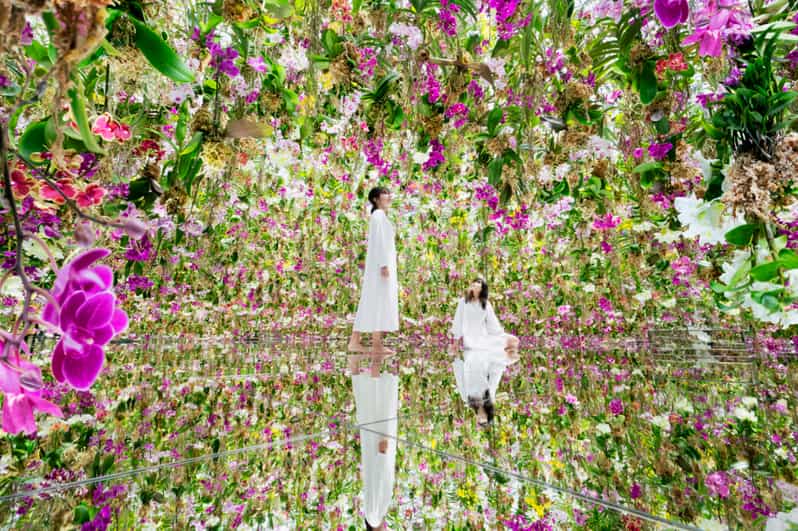
You’ll walk into the exhibition barefoot. That’s not just a rule to follow; it affects how you should plan your clothing and comfort. Some areas have mirroring materials on the floor, so expect a funhouse look and a lot of visual reflection. Keep your footing steady, especially in crowded moments.
Then there’s the water. In at least one major portion of the experience, water levels can rise up to knee height. The best advice is simple: wear trousers you can roll up past your knee. Review after review basically says the same thing, because it turns an uncomfortable chore into something you can actually enjoy for the full length of your visit. Semi-outdoor areas mean temperatures can feel cooler than you expect, especially in the evening. Bring layers if you’re going later in the day.
For what to bring: you only need your ID. For what to leave behind: the museum provides lockers for small items. The goal is less clutter, more movement. If you’re the type who likes to carry a lot of gear, you’ll probably use the lockers even if you think you won’t.
Walking In: Where Your Body Becomes Part of the Artwork
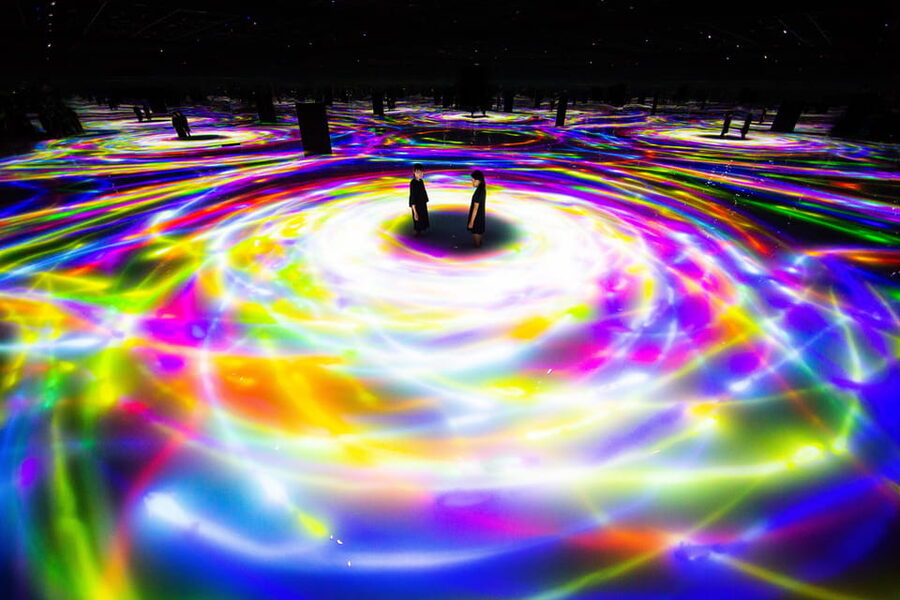
The whole point of teamLab Planets TOKYO is that you’re not just watching a screen. As you move through the installations, the artwork reacts to you. That’s the thrill: you can get close to the visuals, step into changing patterns, and watch light, sound, and projected effects shift around your presence.
The experience spreads across many rooms and atmospheres. You’ll see different lighting moods and materials, which helps keep you from getting sensory fatigue too fast. The good news is that you can control your pace. Take time to stand still when something catches your eye, then move on when you feel ready. Some installations are more powerful when you slow down and let your eyes adjust.
One thing I appreciate is that the museum turns what can feel like “an art viewing activity” into a full-body interaction. This isn’t a quiet museum visit. It’s more like a carefully designed interactive environment where your actions create the feeling that the artwork is alive.
The Water Gallery: The Moment That Turns Heads
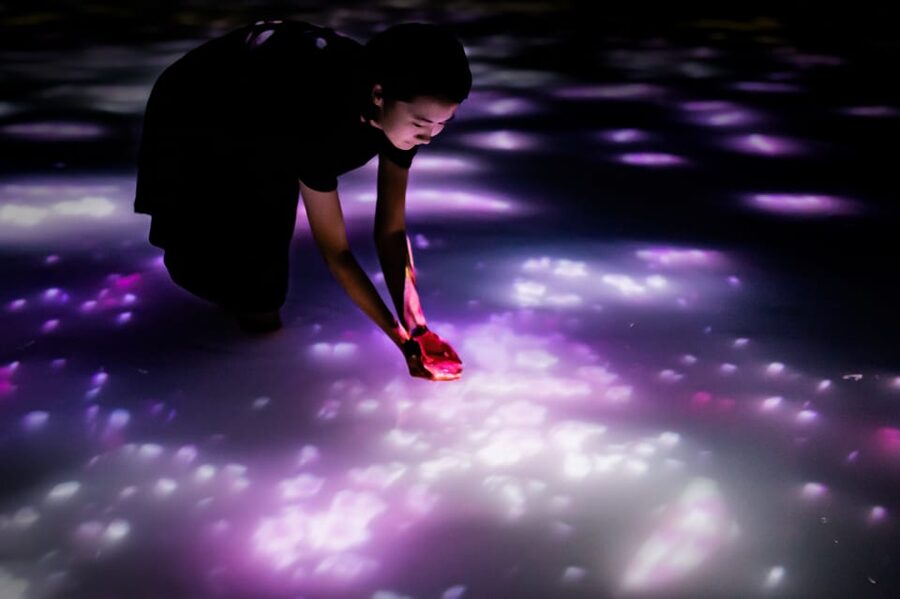
If you want the single most talked-about part, it’s the Water Gallery. People consistently describe it as the highlight, and it makes sense. This is where you feel the artwork as physical space. You’re not only inside a projection; you’re standing in a scene that behaves like water, with nature-like elements and shifting effects.
The water can rise up to knee height in some parts, so you’ll want those rolled-up pants. Once you’re set up, the whole gallery becomes a different kind of experience than the bright, dry rooms. The reflections, the movement, and the soft, watery atmosphere make it feel like you’re stepping into another world.
A clever detail: the visuals include rising and falling effects and nature-like patterns. Several reviews single out the forest and water combination, along with floral moments, as the emotional peak of the visit. Whether you care about art theory or not, these rooms tend to hit the wow button.
If you’re traveling with a group, this is also where everyone gets the same shared “did you see that” moment. It’s social without requiring conversation, which is handy when you’re in Tokyo and everyone’s running on different energy levels.
Orchids, Falling Flowers, and the Feeling of Being Surrounded
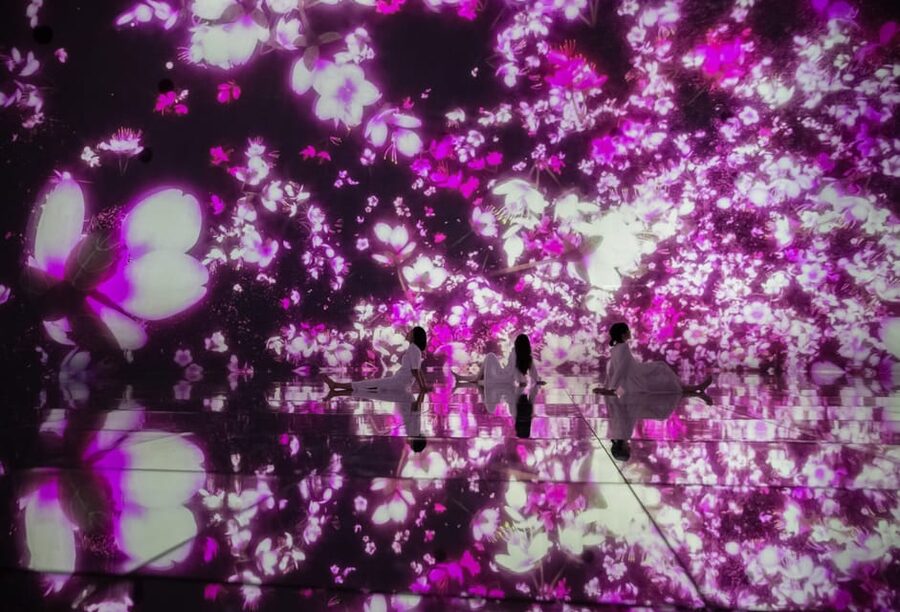
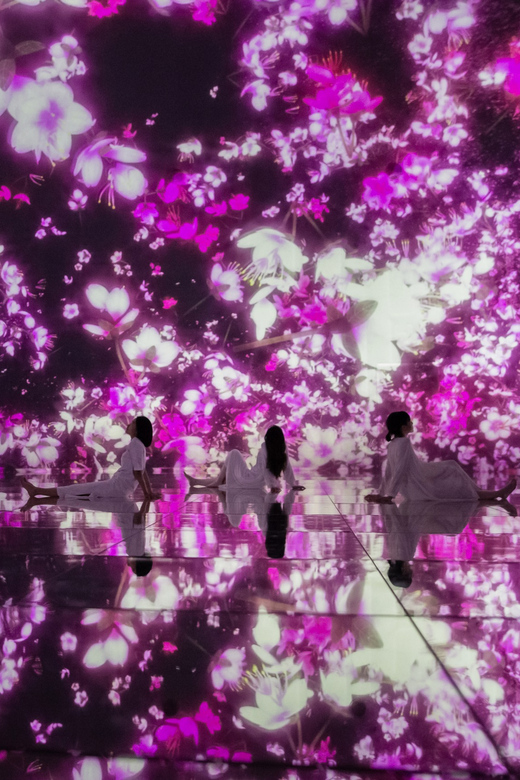
teamLab Planets TOKYO has a plant-and-petals vibe that people find strangely moving. The flower installations are the ones that many visitors remember most, especially rooms with falling flowers and flower petal walls. You’ll see projections and interactive visuals that behave like a floral universe moving around you.
Orchids are also repeatedly mentioned as a favorite. In practical terms, these rooms are great for slowing your pace. Instead of running to the next photo spot, you can let the visual drift happen around you. The feeling is part playful, part dreamy, and it’s easy to understand why solo visitors sometimes feel a little awkward at first but then get fully absorbed.
If you like taking photos, you might get frustrated at first because there’s no guarantee every moment will look good from a single angle. That’s not the point, though. The visuals work best when you watch them as a sequence and not just as a snapshot. Some visitors even say they wish they could come twice: once to experience everything and once purely to capture it.
Readers also shortlisted these Tokyo bookings:
- Tokyo: teamLab Planets TOKYO Digital Art Museum Entry Ticket★ 4.6 · 9,779 reviews
- Tokyo: Hop-On Hop-Off Sightseeing Bus Ticket★ 3.9 · 4,207 reviews
- Tokyo: Japanese Dance Cabaret Theater Asakusa-Kaguwa Ticket★ 4.8 · 2,270 reviews
- Tokyo Skytree Admission Ticket with Tembo Deck and Galleria★ 4.0 · 589 reviews
- Tokyo: ‘Red Tokyo Tower’ Digital Amusement Park Ticket★ 4.1 · 398 reviews
Five Senses, Not Just Screens
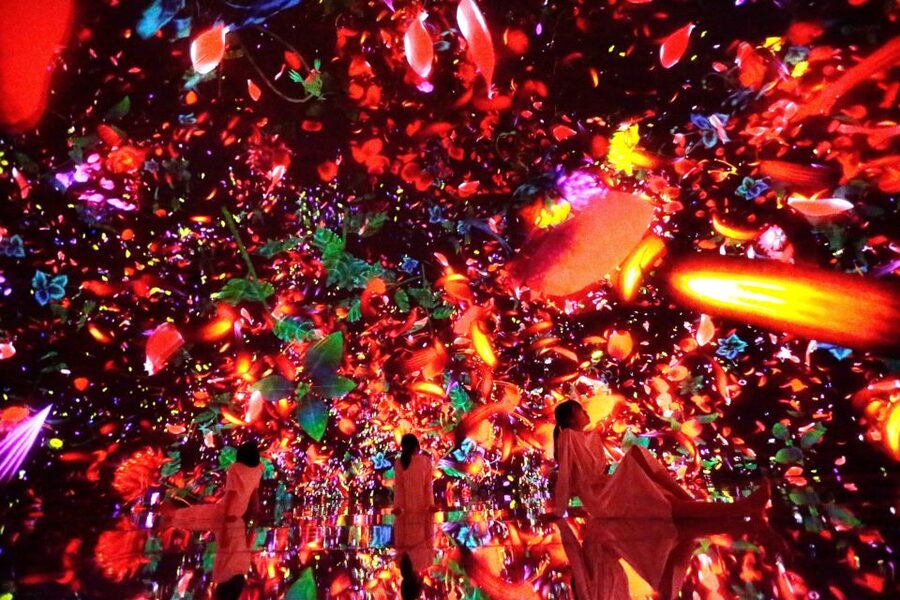
A big part of the value here is sensory design. Yes, it’s digital art. But it’s also built around shifting sound, changing light, and tactile-feeling spaces (like water and reflections). The idea is that you don’t just look, you experience.
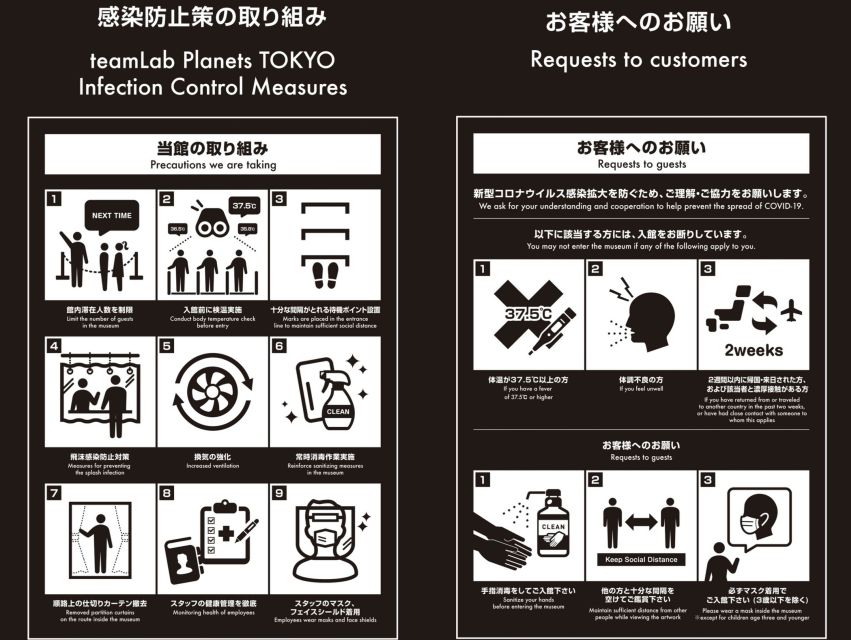
You may also notice that some areas are harder for certain people. This is not a quiet, low-stimulus environment. If you have light sensitivity, epilepsy, or heart problems, it’s not recommended. And eating, drinking, and smoking inside the exhibition is prohibited, which keeps the space focused on the art rather than turning it into a casual lounge.
Also, it’s worth knowing the experience isn’t equally easy for everyone. Some areas are not accessible by wheelchair due to the way installations are built and how the space functions. If accessibility is a concern for you, it’s smart to check your route options before committing.
How Long You’ll Want and How to Pace It
The official duration is listed as 1 day, but that’s broad. In real life, you’ll probably want at least a couple hours if you care about experiencing each area instead of just sprinting through for photos. One review notes spending at least two hours as a good plan.
To pace it well, do this:
- Start with curiosity, not speed. Give yourself enough time to understand how the reactions work.
- Expect a few moments where you’ll get “stuck” watching effects. That’s normal.
- If a room feels crowded, move with the flow and circle back later when it clears a bit.
- Save your attention for the Water Gallery and the flower sections. Those are the ones that tend to reward patience.
Some reviews talk about it being hectic at certain points, but staff control the traffic and keep things organized. Still, you’ll feel more comfortable if you choose a time slot that matches your energy level. Early or less busy entries can make the start calmer.
Price and Value: About $25 for Digital Art That Costs More Energy Than It Sounds
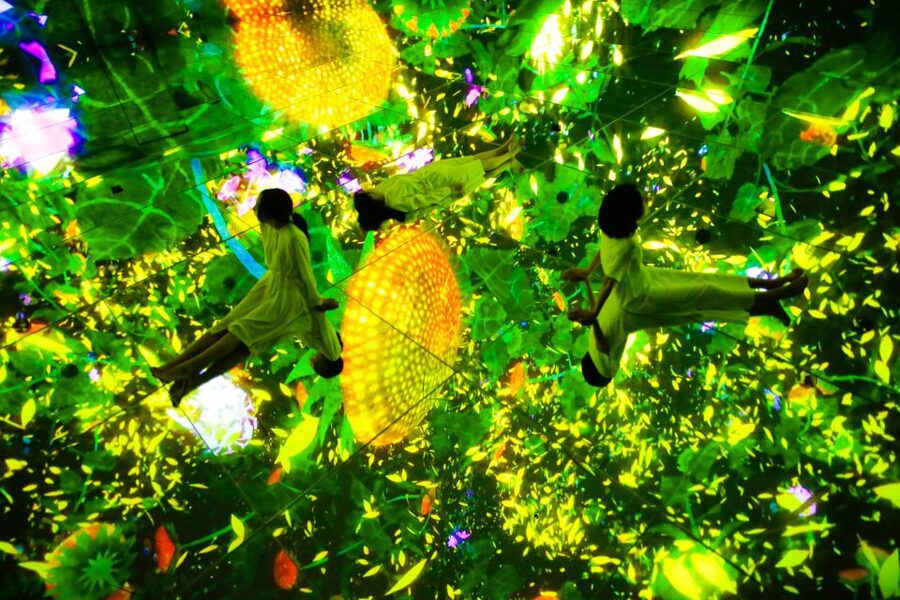
At around $25 per person, this is not the cheapest way to spend an afternoon in Tokyo. But it’s also not just a passive museum ticket. You’re paying for a large-scale interactive environment built for movement, sound, and multi-room effects.
The value becomes clearer when you compare it to other Tokyo “see it once” activities. teamLab Planets TOKYO is built to keep you inside the experience. Your body is part of the artwork, so you don’t get the same feeling of standing at a distance and moving on quickly. The Water Gallery and the falling-flower style rooms are repeatable in a sense because you can change your reactions by how you stand and where you move.
If you’re on a budget, I’d call it a “one big ticket” choice. But if you enjoy interactive art, sensory experiences, or you want a rainy-day plan that doesn’t feel like a compromise, it’s a strong use of money.
If you’re going with friends or family, it’s also a win because it tends to work across ages. Some reviews mention teens loving it, and even visitors who worried it would feel childish ended up surprised.
Who This Fits Best (and Who Should Skip)
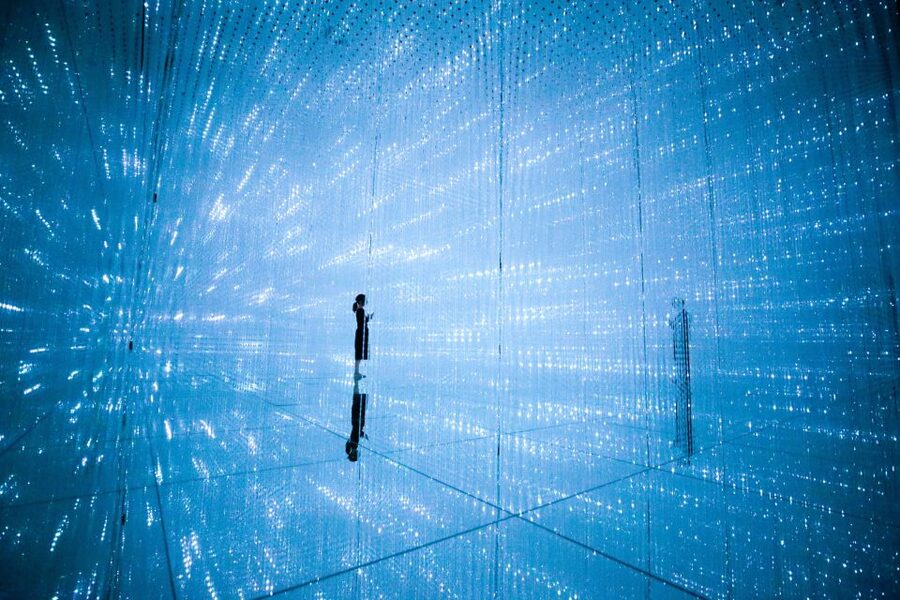
This experience is a good fit if you:
- want interactive digital art that reacts to you
- like sensory environments with light and sound
- want a memorable Tokyo evening plan, including rainy days
- are comfortable with barefoot rules and water areas
- are willing to roll up pants and enjoy the water portion rather than treat it like a chore
It’s not recommended if you have:
- epilepsy
- heart problems
- light sensitivity
And if you use a wheelchair, some areas aren’t accessible, so you’ll need to plan carefully based on what you can navigate. Also, if you’re traveling with children, keep the age rules in mind: under 13 needs an adult.
Should You Book teamLab Planets TOKYO?
Yes, if you want a Tokyo experience that feels more like stepping into a living artwork than walking through a gallery. The biggest “book it” reasons are the Water Gallery and the flower-based rooms, especially falling flowers and flower petal walls. Add in the fact that staff manage the flow, plus the clear sense of wonder many visitors describe, and you have a strong candidate for your Tokyo highlights list.
Skip it or reconsider if sensory input could be an issue for you, or if barefoot and water-level rules don’t fit your comfort level. Also, don’t gamble on last-minute timing because you can’t buy tickets the same day and entry is restricted to a tight window.
If you do book, wear practical pants, plan your timing well, and bring your ID. Then give yourself time to slow down in the rooms where the visuals feel most personal. That’s where the experience becomes more than a photo stop.
FAQ
How much does the teamLab Planets TOKYO ticket cost?
The ticket price is listed as $25 per person.
How long should I plan for the experience?
The activity is valid for 1 day. Based on visitor experience, plan for at least two hours to enjoy the rooms.
Can I buy tickets on the same day I plan to visit?
No. It is not possible to purchase tickets for admission on the same day.
What time can I enter after my selected slot?
You can only enter during the first 30 minutes after your selected entry time.
Do I need a passport or ID card?
Yes. You should bring a passport or ID card, and visitors may be asked to show ID for proof of age and/or school affiliation.
Is there a place to store small items?
Yes. Lockers are available for small items.
Do I have to go barefoot?
Yes. Visitors have to enter barefoot.
Are there water areas, and what should I wear?
Some areas can have water levels rise up to knee height. It is recommended you wear trousers that can be rolled up.
Is this wheelchair accessible?
Some areas are not accessible by wheelchair, so wheelchair access is limited.
Is the experience suitable for epilepsy or heart problems?
No. This experience is not suitable for people with epilepsy or heart problems. It is also not recommended for people with light sensitivity.
More Tickets in Tokyo
- Tokyo: Hop-On Hop-Off Sightseeing Bus Ticket
★ 3.9 · 4,207 reviews - Tokyo: Japanese Dance Cabaret Theater Asakusa-Kaguwa Ticket
★ 4.8 · 2,270 reviews - Tokyo Grand Sumo Tournament Viewing Tour with Tickets
★ 5.0 · 692 reviews - Tokyo Skytree Admission Ticket with Tembo Deck and Galleria
★ 4.0 · 589 reviews - Tokyo: ‘Red Tokyo Tower’ Digital Amusement Park Ticket
★ 4.1 · 398 reviews
More Tour Reviews in Tokyo
- Mt Fuji and Hakone 1-Day Bus Tour Return by Bullet Train
★ 5.0 · 26,383 reviews - 1-Day Tokyo Bus Tour
★ 5.0 · 14,250 reviews - Mt Fuji & Hakone Cruise, Drum Show Bullet Train 1 Day from Tokyo
★ 4.0 · 7,413 reviews - Tokyo: Shinjuku Food Tour (13 Dishes at 4 Local Eateries)
★ 5.0 · 6,603 reviews - Tokyo Mt Fuji 5th St & Hakone Cruise Bus Tour w/Bullet Train
★ 4.4 · 5,024 reviews
More Digital Art Bookings
- Tokyo: ‘Red Tokyo Tower’ Digital Amusement Park Ticket
★ 4.1 · 398 reviews - RED Digital Amusement Park in Tokyo Tower Entry Ticket
★ 3.5 · 18 reviews - Experience TeamLab Planets in Tokyo
★ 3.5 · 9 reviews - Tokyo: teamLab Borderless Museum Admission Ticket
★ 3.5 · 6 reviews
Latest Tokyo reviews off our desk






teamLab Art Tickets, compared.
 ★ 4.1‘Red Tokyo Tower’ Digital Amusement Park TicketFrom $37398 reviews
 ★ 3.5RED Digital Amusement Park in Tokyo Tower Entry TicketFrom $3118 reviews
 ★ 3.5Experience TeamLab Planets in TokyoFrom $09 reviews
 ★ 3.5teamLab Borderless Museum Admission TicketFrom $246 reviews
Browse the lists this tour appears in