
Reviewed · SHIBUYA EXPERIENCES
Guided Tokyo Go-Kart Tour: Tokyo Tower to Shibuya Crossing
Tokyo from a go-kart seat feels unreal. This guided Tokyo Go-Kart Tour turns famous sights like Shibuya Crossing into something you experience from street level, not from behind a bus window. I love how fast it fits into a tight schedule, and how the mix of traffic, costumes, and photo stops makes it feel like a Tokyo highlight reel you can actually drive.
Two things I especially like: you get a real guide in control of the route (so you’re not guessing where to go), and you leave with photo support that’s built into the experience, not something you have to “figure out” on your own. One key drawback to consider up front: driving is only allowed with the right hard copy international permit rules, and Japan can be strict about what counts.
In This Review
- Key points before you ride
- What makes driving central Tokyo in a go-kart feel doable
- Price and value: why this tour costs what it costs
- License rules: the paper IDP is not optional
- Meeting point, arrival vibe, and what you’ll do before you ride
- Stop 1: Shibuya Crossing from the driver seat
- Stop 2: Meiji Jingu Baseball Stadium area
- Stop 3: Omotesando in your kart tracks
- Stop 4: Tokyo Tower skyline views
- Stop 5: Harajuku Bridge and the photo-ready angles
- Stop 6: Yoyogi Park area
- Stop 7: Roppongi finish stretch
- Costume, photos, locker, and what you actually take home
- Safety reality check: what to expect with traffic
- Who should book this Tokyo Tower to Shibuya Crossing go-kart tour
- Should you book it?
- FAQ
- Do I need an International Driving Permit to drive the go-karts?
- What types of driving permits are not recognized?
- How long is the Tokyo Tower to Shibuya route experience?
- Where does the tour start and end?
- What landmarks are included on the drive?
- What happens if the tour can’t run due to weather?
Key points before you ride
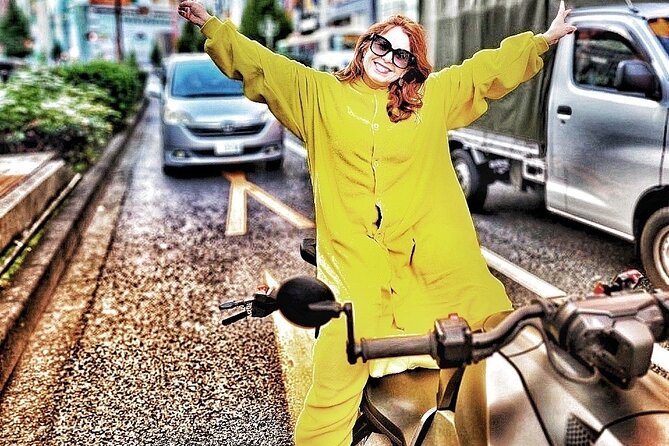
- You drive your own kart on public roads under an English-speaking guide’s direction
- Shibuya Crossing and Tokyo Tower are on the route, with photo moments planned along the way
- Costume dressing adds fun, though it can feel warm depending on the day
- Hard copy printed photos are included, so you get something tangible to take home
- Private tour means it’s only your group, with personalized attention
- You must bring the correct 1949 Geneva Convention IDP paper booklet to drive
What makes driving central Tokyo in a go-kart feel doable
Let’s be honest: Tokyo traffic looks intimidating from the sidewalk. The trick with this tour is that you’re not driving blind. You follow behind an experienced, English-speaking guide who leads the route and manages traffic flow, which is exactly what you want when you’re learning a new way to move through a complex city.
The experience is short at about 1 hour 30 minutes. That matters because you’re not committing your entire day to a single activity. You can slot this in between temple visits, shopping stops, or a dinner plan, without losing half a day to logistics.
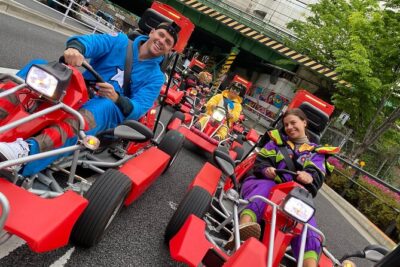
The other thing that helps is structure. You start at the meeting point, you get a safety briefing, and then you’re guided step-by-step once you’re on the road. In reviews, guides like Ren and Pancho get praised for making the route feel safe and for taking lots of photos. That matches the overall format: you’re there to enjoy the ride, not to stress about navigation.
More booked around Shibuya Crossing
- Official Street Go-Kart in Shibuya
★ 5.0 · 3,435 reviews - Tokyo: Street Kart Experience in Shibuya
★ 4.9 · 1,484 reviews - Shibuya Meltdown Nightlife Tour: All-You-Can-Drink Bar Hopping
★ 5.0 · 1,058 reviews - Shibuya Official Street Go-Kart in Shibuya Annex
★ 5.0 · 972 reviews
Price and value: why this tour costs what it costs
At $155.86 per person, this isn’t a “cheap thrill.” But it also isn’t just a lap-around-a-track kind of karting. You’re paying for:
- A private, guide-led route through central Tokyo roads
- The go-kart itself, petrol, and a locker
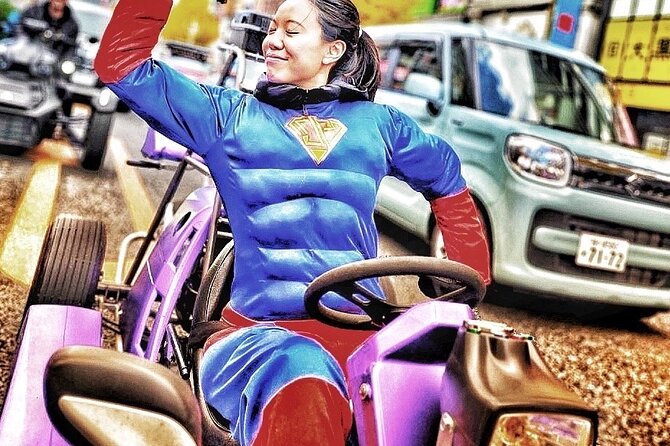
- Costume included
- Photo shooting plus a hard copy printed photo
- Bottled water
When you break it down, the price starts to make sense for what you’re getting. You’re not only buying access to a go-kart; you’re buying time with a guide who handles traffic flow and takes photos while you enjoy the ride.
Also, the tour is private, meaning only your group participates. That usually adds value because you’re less likely to get separated, rushed, or forced into a vibe you didn’t come for.
License rules: the paper IDP is not optional
If you take only one thing from this review, make it this: you must have the right hard copy International Driving Permit to drive the go-karts.
The tour requires:
- A valid driving license
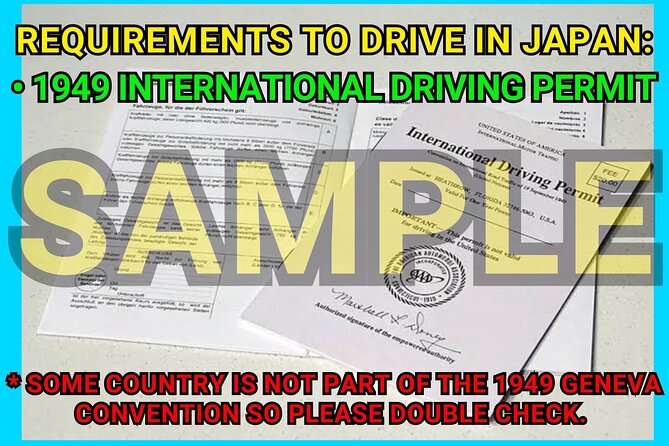
- A hard copy International Driving Permit issued under the 1949 Geneva Convention (paper booklet)
Important details that can trip people up:
- Online or digital copies are not valid in Japan for this activity.
- The 1968 Vienna Convention permits, and permits acquired online under other systems, are not recognized.
- You also need to check country-specific rules. For certain countries (including France, Switzerland, Taiwan, Germany, Monaco, and Belgium), you need a Japanese translation of your local license, and that physical copy can be obtained from the JAF office.
- Some countries’ permits are not allowed for driving in Japan, so it’s worth confirming before you fly.
If you don’t have the correct permit paper in hand, you won’t be able to drive. And the tour format clearly depends on legal compliance, so plan this first, not last.
Meeting point, arrival vibe, and what you’ll do before you ride
The tour meets at Monkey Adventure Kart Shinagawa, located at 7-chōme-6-5 Nishigotanda, Shinagawa City, Tokyo. It runs back to the same meeting point at the end.
It’s near public transportation, so you don’t need a car to get here. Once you arrive, you’ll get:
- A welcome from staff
- A safety briefing
- Help getting set with your kart and gear
- A locker for personal items
- Bottled water
If you’re nervous, you’re not alone. Some riders start anxious during the first minutes, especially with the traffic around Shibuya and busy intersections. The good news is the guide leads the way and signals where to go, so the “learning curve” tends to shrink fast.
Stop 1: Shibuya Crossing from the driver seat
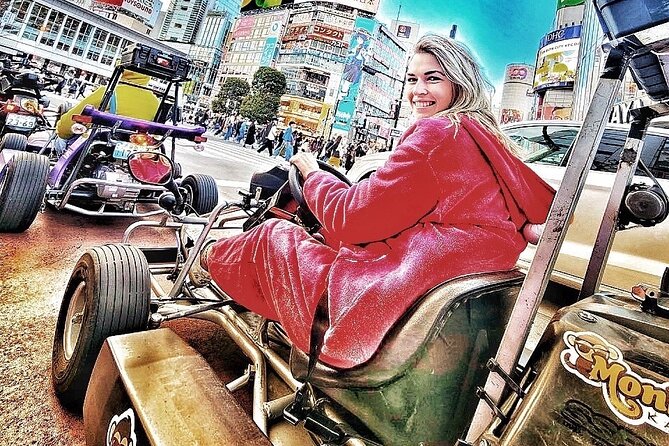
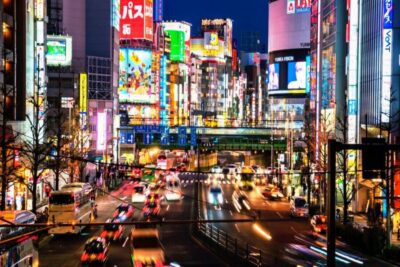
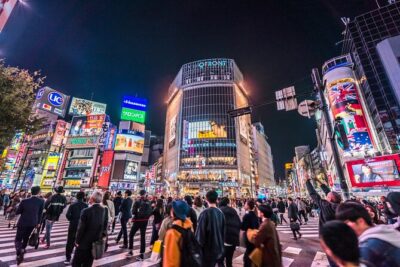
Shibuya Crossing is the moment people picture when they think Tokyo. Here, you experience it as a driver, not as a spectator stuck behind ropes and crowds.
What I like about this stop is timing and energy. Shibuya is famous for its crosswalk choreography and dense movement. Driving through it means you feel Tokyo’s pace directly—then you see the landmark up close from a perspective most visitors never get.
In reviews, riders mention that the other vehicles were respectful on the road and that they were able to keep moving confidently by following the lead driver. You also get photo support. The guide’s job here is part navigation, part “remember this forever” effort—so you can look up, smile, and not worry about snapping the perfect shot.
Possible drawback: the first approach can feel intense. If you’re sensitive to busy-road motion, give yourself grace for the first few minutes. Once you fall into the rhythm, it’s the kind of adrenaline that makes you feel like you’re in your own action movie.
More at Tokyo Tower, reviewed
- Dynamic Tokyo: Tokyo Tower, Tea Experience, Bay Cruise Day Tour★ 4.5 · 521 reviews
- Tokyo: ‘Red Tokyo Tower’ Digital Amusement Park Ticket★ 4.1 · 398 reviews
- Tokyo: Imperial Palace, Sensō-ji Temple, & Tokyo Tower Tour★ 4.5 · 339 reviews
- Tokyo Dinner Cruise & Tradition Show & Drinks & Tokyo Tower★ 4.7 · 315 reviews
- Guided Tokyo Go-Kart Tour: Tokyo Tower to Shibuya Crossing★ 5.0 · 237 reviews
Stop 2: Meiji Jingu Baseball Stadium area
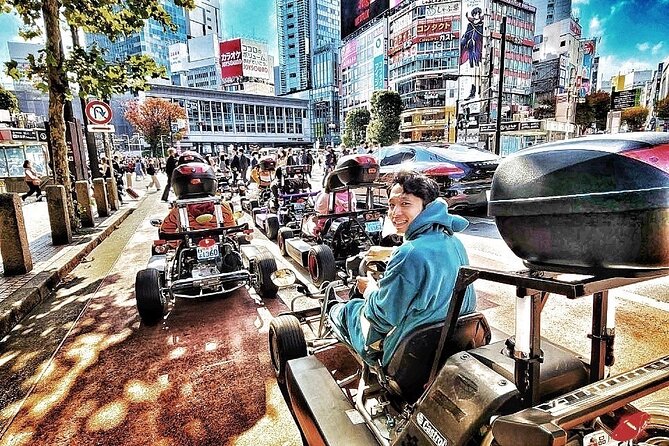
After Shibuya, the route keeps rolling with another recognizable Tokyo landmark stop: the Meiji Jingu Baseball Stadium area.
This part of the tour is useful because it changes the tempo. You’re still driving in the city, still in stop-and-go situations, but you’re not constantly thinking about one single “big famous picture” moment. It helps break the ride into manageable sections: big hit, then reset, then back into another landmark approach.
If you like photos, this is also a good kind of stop. A stadium location is typically wide-open compared to narrow streets, which can make it easier for the guide to position photo angles while you’re still moving through traffic.
Stop 3: Omotesando in your kart tracks
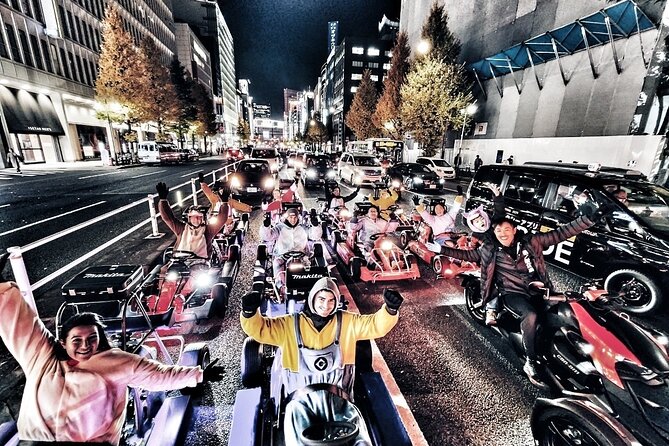
Next comes Omotesando. Even without hopping off for a long walk, seeing Omotesando from the road gives you a street-level feel for how Tokyo looks and moves beyond the big-name districts.
This stop matters because it adds variety. Shibuya is energy. Omotesando is a different slice of Tokyo visual culture, and you experience that from the seat of your kart rather than from a tour bus window.
Here’s the practical angle: since the route is guide-led, you’re not hunting for your next “where do we go now?” moment. You’re in motion, and the guide handles the flow so you can keep your attention on driving and the fun parts.
Stop 4: Tokyo Tower skyline views
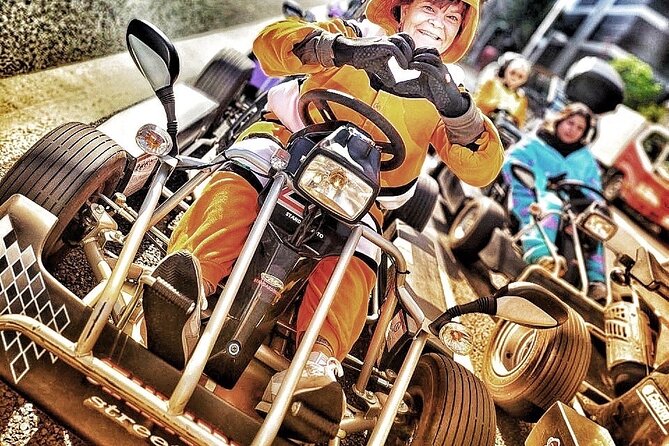
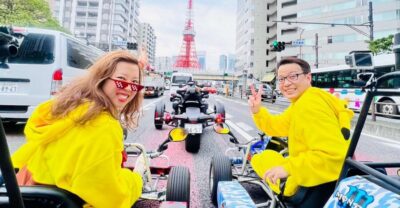
Then you hit Tokyo Tower, and the skyline backdrop makes the kart ride feel extra cinematic.
Tokyo Tower is one of those sights where the location matters. Approaching it from the road turns the tower into more than a photo subject—it becomes a landmark that frames your ride as you pass through the area. If you’ve ever wished you could “do” Tokyo rather than just “see” it, this is the point where the tour starts to feel worth every yen/dollar.
One reason I’d recommend this stop is that it gives you an iconic payoff later in the tour. A lot of activities peak too early. This one stacks highlights, so you still feel momentum after the big Shibuya moment.
Stop 5: Harajuku Bridge and the photo-ready angles
You’ll also stop around Harajuku Bridge. This is another place where you can get that “Tokyo at street level” feeling, because bridges and nearby crossings tend to create natural lines for photos.
In the reviews, guides are repeatedly credited for taking great pictures and for handling timing so groups get captured well. Some guides mentioned by name—like Adam, Pancho, and Ken—are specifically praised for photo effort and keeping drivers confident.
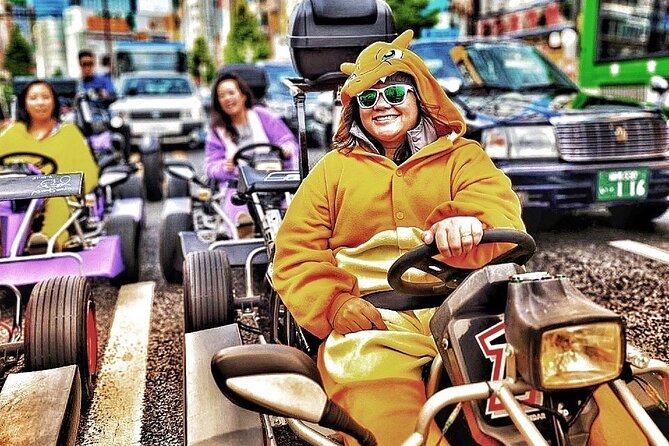
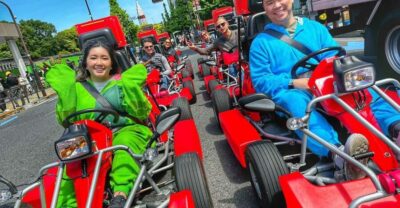
Practical note: costumes are part of the experience. If it’s hot, you might feel it more here. One review mentioned the costume was too hot for the day. If you want the look but the heat is real, choose a character costume option that feels comfortable to you and keep a good drink rhythm with the bottled water provided.
Stop 6: Yoyogi Park area
Then the route includes Yoyogi Park. This stop adds a change in scenery even if you’re still driving in an urban environment. It’s a good reminder that Tokyo isn’t only skyscrapers and intersections—it includes big green spaces too.
For your ride, it’s also a mental break. After landmark density, a park-area stop helps you reset and refocus on driving. That can matter when you’re learning to read the road while staying calm in traffic.
Also, it’s another moment where you can look around and notice how neighborhoods shift across short distances. That’s one of the main reasons a kart tour works so well: the city is compressed into a ride you can feel.
Stop 7: Roppongi finish stretch
Finally, you make it to Roppongi, one of Tokyo’s well-known entertainment and nightlife areas. As a final stretch, it’s a smart pick. It gives the tour a modern-city ending after the earlier mix of landmarks.
Even though this is the last “named” stop, it’s still part of the ride experience: you’re not just arriving at a viewing platform. You’re still driving, still following the guide, still getting that Tokyo-in-motion feeling.
At the end, the tour returns to the meeting point, so you can keep your day plans simple. No random drop-offs. No “meet us here later.” Just a clean loop.
Costume, photos, locker, and what you actually take home
This tour leans hard into “experience,” not just transportation.
Included:
- Costume for dressing up
- Picture shooting by the guide
- Hard copy printed photo
- Locker for your belongings
- Bottled water
- Go-kart and petrol
The photo piece is one of the biggest value drivers for me. It’s not a vague promise of good luck with camera angles. The guide takes photos as part of the experience, and you get a printed copy. That’s handy when you’re traveling and you don’t want your memories scattered across devices.
In reviews, riders talk about getting lots of pictures and about guides acting like their personal photographers. Names that came up include Pancho (praised for photo angles and effort), Ren (praised for doing a lot of photo work), and others like Brandon, Adam, and Issam.
One thing to know: action cameras are not included. If you want a helmet-cam style setup, you’d need to bring your own, but the tour data only lists action camera as not included, so plan accordingly.
Safety reality check: what to expect with traffic
The tour is designed around safety, and the guide’s job is active route management. Still, you should expect some intensity. Tokyo streets are busy, and even with a lead guide, you’re driving a small kart among real traffic rules and real vehicle behavior.
Here’s what riders’ feedback points to:
- Instructions are clear before you ride
- The initial minutes can feel cautious
- Confidence builds quickly once you follow the guide’s lead
- Other drivers are considerate in how they share the road
The big “do this right” tip is simple: don’t improvise. Stay close to the lead, follow signaling, and treat the guide like the pace-setter. If you try to “free drive,” that’s when the stress can spike.
Who should book this Tokyo Tower to Shibuya Crossing go-kart tour
This fits best if you want:
- An active, one-and-a-half-hour Tokyo highlight
- Landmark views you’d usually miss from typical walking tours
- The fun factor of costumes
- A guide-led route with built-in photo memories
- A private format, where it’s just your group
It might not be for you if:
- You don’t have the correct 1949 Geneva hard copy IDP on arrival
- You’re uncomfortable driving in busy traffic situations (even with guide support)
- You’d rather spend your time sightseeing on foot than learning the kart rhythm
If you’re traveling solo, or as a couple, this can be a great “one big memory” activity. Reviews also praise solo-friendly vibes, and the private tour format helps keep things comfortable.
Should you book it?
Yes, if you can meet the driving permit requirements and you want a hands-on Tokyo experience. The value comes from the full package: you drive, you hit major landmarks like Shibuya and Tokyo Tower, and you get guide-led photo support plus a hard copy printout.
I’d book this when:
- You have 90 minutes and want a high-impact memory
- You’re excited by the idea of costume + driving
- You’re okay with a short safety/drive learning curve
I’d pause or double-check first if:
- You’re missing the correct paper IDP rules
- Hot weather is a concern for the costume part
- You tend to get overly anxious in busy roads
FAQ
Do I need an International Driving Permit to drive the go-karts?
Yes. You need a valid driving license and a hard copy International Driving Permit issued under the 1949 Geneva Convention (paper booklet). Online or digital copies are not valid for driving in Japan for this activity.
What types of driving permits are not recognized?
The tour data states that 1968 Vienna Convention permits, IDA/IAA permits acquired online, and other online-acquired permits are not recognized in Japan for this activity. You should only use the 1949 Geneva Convention IDP paper booklet.
How long is the Tokyo Tower to Shibuya route experience?
The tour duration is about 1 hour 30 minutes.
Where does the tour start and end?
It starts at Monkey Adventure Kart Shinagawa in Nishigotanda, Shinagawa City, Tokyo, and ends back at the same meeting point.
What landmarks are included on the drive?
The route includes Shibuya Crossing, Meiji Jingu Baseball Stadium, Omotesando, Tokyo Tower, Harajuku Bridge, Yoyogi Park, and Roppongi.
What happens if the tour can’t run due to weather?
The tour requires good weather. If it’s canceled due to poor weather, you’ll be offered a different date or a full refund.
More Tour Reviews in Tokyo
- Mt Fuji and Hakone 1-Day Bus Tour Return by Bullet Train
★ 5.0 · 26,383 reviews - 1-Day Tokyo Bus Tour
★ 5.0 · 14,250 reviews - Tokyo: teamLab Planets TOKYO Digital Art Museum Entry Ticket
★ 4.6 · 9,779 reviews - Mt Fuji & Hakone Cruise, Drum Show Bullet Train 1 Day from Tokyo
★ 4.0 · 7,413 reviews - Tokyo: Shinjuku Food Tour (13 Dishes at 4 Local Eateries)
★ 5.0 · 6,603 reviews
More at Tokyo Tower
- Dynamic Tokyo: Tokyo Tower, Tea Experience, Bay Cruise Day Tour
★ 4.5 · 521 reviews - Tokyo: ‘Red Tokyo Tower’ Digital Amusement Park Ticket
★ 4.1 · 398 reviews - Tokyo: Imperial Palace, Sensō-ji Temple, & Tokyo Tower Tour
★ 4.5 · 339 reviews - Tokyo Dinner Cruise & Tradition Show & Drinks & Tokyo Tower
★ 4.7 · 315 reviews - Popular Sushi Making Class near Tokyo Tower
★ 5.0 · 229 reviews
More Around Shibuya Crossing
- Official Street Go-Kart in Shibuya
★ 5.0 · 3,435 reviews - Tokyo: Street Kart Experience in Shibuya
★ 4.9 · 1,484 reviews - Shibuya Meltdown Nightlife Tour: All-You-Can-Drink Bar Hopping
★ 5.0 · 1,058 reviews - Shibuya Official Street Go-Kart in Shibuya Annex
★ 5.0 · 972 reviews - Tokyo: Shibuya Food Tour (13 dishes and 4 Eateries)
★ 5.0 · 770 reviews
Latest Tokyo reviews off our desk

Shibuya Experiences, compared.
 ★ 5.0Official Street Go-Kart in ShibuyaFrom $763,435 reviews
 ★ 4.9Street Kart Experience in ShibuyaFrom $741,484 reviews
 ★ 5.0Shibuya Meltdown Nightlife Tour: All-You-Can-Drink Bar HoppingFrom $1061,058 reviews
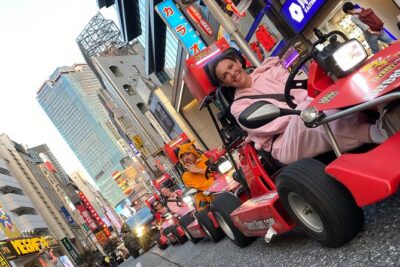 ★ 5.0Shibuya Official Street Go-Kart in Shibuya AnnexFrom $69972 reviews
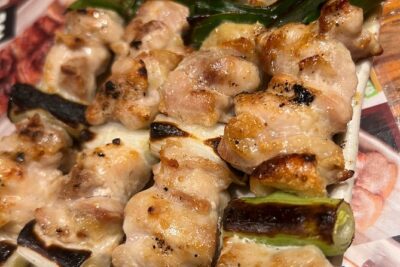 ★ 5.0Shibuya Food Tour (13 dishes and 4 Eateries)From $77770 reviews
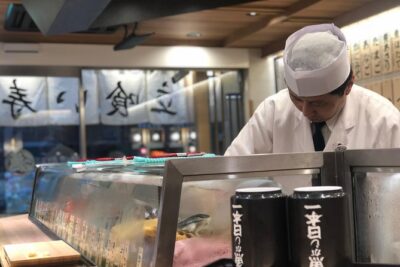 ★ 5.0Best of Shibuya Food TourFrom $217612 reviews
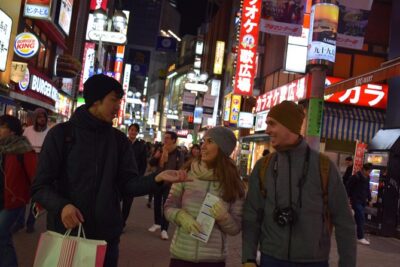 ★ 4.8Shibuya Highlights Walking TourFrom $19601 reviews
 ★ 4.7Premium Go-Kart Tour with Tower & Shibuya CrossingFrom $116528 reviews
Browse the lists this tour appears in