
Reviewed · SHIBUYA EXPERIENCES
Shibuya and Shinjuku Photography Experience
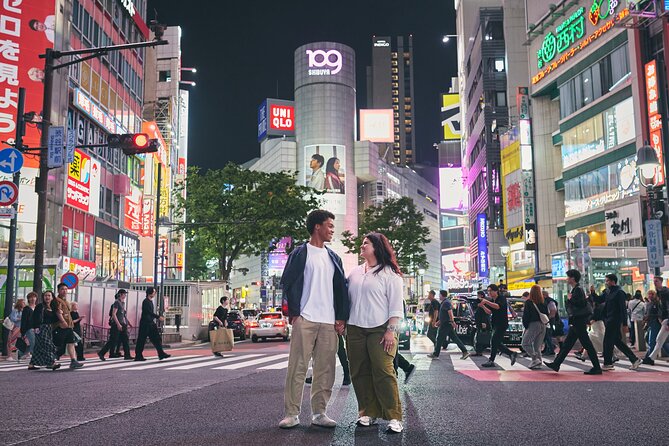
Neon Tokyo is a photography cheat code. This night walk pairs Tokyo’s most famous corners—like Shibuya Scramble—with lesser-known lanes where the mood changes fast. You’ll move through Shibuya’s youth-energy streets, then slide into Shinjuku’s after-dark lights for photos with real contrast.
I like two things a lot: you get a small-group experience with an English speaking photographer (Kenji), and you come away with 25–50 color-graded photos per person. One drawback to plan around: the tour starts on time, and if you’re more than 5 minutes late, you can’t join, reschedule, or get a refund.
In This Review
- Key Highlights (What Makes This Tour Worth It)
- Why Shibuya and Shinjuku Photos Look Better at 8:00 pm
- Kenji, Small-Group Energy, and Getting Real Shots
- Stop-by-Stop: Hachiko, Scramble, and Center-gai
- Miyashita Park: The Modern Break in Your Night Photos
- The Izakaya Alley by Shibuya Station
- Omoide Yokocho: Smoke, Texture, and Local Night Atmosphere
- Kabukicho and Godzilla Road: Neon Finisher in Shinjuku
- Photos, Color Grading, and What You’ll Actually Walk Away With
- Price and Logistics: Is $62.13 Good Value?
- Who This Tour Fits Best (And Who Might Skip It)
- Should You Book This Shibuya–Shinjuku Photo Walk?
- FAQ
- How long is the Shibuya and Shinjuku photography experience?
- What photos are included?
- Who will guide me during the tour?
- Where do we meet and where does it end?
- Is the train fee included from Shibuya to Shinjuku?
- What if I arrive late?
- What happens if the weather is bad?
Key Highlights (What Makes This Tour Worth It)
- Kenji’s solo-friendly approach for people who feel awkward getting their own photos
- Shibuya Scramble Crossing for that iconic, human-scale chaos
- Center-gai, Miyashita Park, and Memory Lane-style alleys for variety in one night
- Omoide Yokocho for narrow, smoky-feeling street atmosphere and night texture
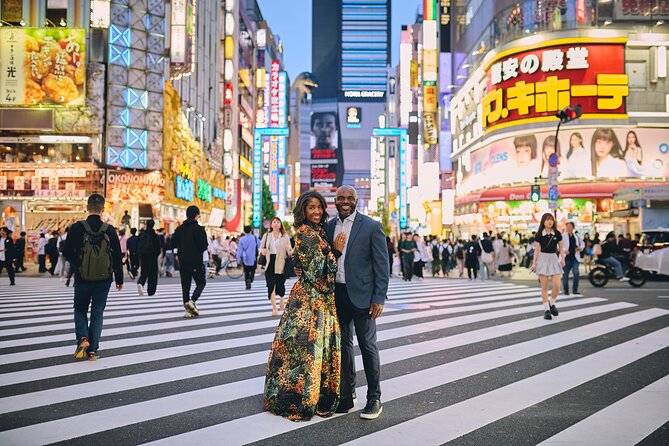
- Kabukicho and Godzilla Road for neon overload near the Shinjuku action
- 25–50 color-graded shots so you’re not stuck editing in the dark
Why Shibuya and Shinjuku Photos Look Better at 8:00 pm
Tokyo at night has rules. Light bounces, colors deepen, and moving people create that perfect blur you usually chase in post-processing. This tour is timed for that moment when street scenes look dramatic without turning into one big dark photo blob.
Shibuya and Shinjuku also give you two different vibes in the same 2-hour window. Shibuya is the “busy and youthful” side—big crosswalks, shops, and hangout energy. Shinjuku is the “neon and entertainment district” side, where signs, alleys, and lighting create stronger mood. If you want one night to cover a lot of visual ground, this route makes sense.
You’ll also benefit from the walking order. The tour starts where people naturally expect crowds, then gradually adds variety: a park, arcades-and-eats streets, tighter lanes by the station, and finally Shinjuku’s neon closer to the end at Godzilla Road.
More booked around Shibuya Crossing
- Official Street Go-Kart in Shibuya
★ 5.0 · 3,435 reviews - Tokyo: Street Kart Experience in Shibuya
★ 4.9 · 1,484 reviews - Shibuya Meltdown Nightlife Tour: All-You-Can-Drink Bar Hopping
★ 5.0 · 1,058 reviews - Shibuya Official Street Go-Kart in Shibuya Annex
★ 5.0 · 972 reviews
Kenji, Small-Group Energy, and Getting Real Shots
This experience is capped at 4 travelers, which changes everything. In a big group, photography tours turn into herding. Here, you get more attention and more chances to reset your stance, your settings, and your confidence.
Kenji is the guide/photographer, and the main pattern from past participants is how he helps people feel comfortable—especially solo visitors. If you’re traveling alone, asking strangers to take your picture can feel awkward fast. A photographer-guide handling poses and angles means you get photos that look intentional instead of just “record shots.”
You’re also on an English speaking format, and that matters because street photography isn’t just pointing and pressing. Knowing where to stand, when to wait for foot traffic, and how to frame signs can make the difference between a pretty street and a photo with story.
One more practical detail: you’ll have bottled water available if you need it. Tokyo nights can run warm under heavy signage and walking, and it helps to keep things easy.
Stop-by-Stop: Hachiko, Scramble, and Center-gai
You’ll meet at the Hachiko Statue in Shibuya. This is one of those places where you instantly understand you’re in Japan, not just next to Japan. Hachiko is tied to loyalty and devotion in popular culture, and the statue is a classic meeting point that photographers use for a reason: the setting frames you in the Shibuya identity.
From there, the tour heads to Shibuya Scramble Crossing. This is the centerpiece, and it’s also why the tour works at night. When thousands of people spill across the crossing, you get layers: moving bodies, stoplights, storefront glow, and those diagonal lines that make the scene feel busy even when your camera exposure is controlled.
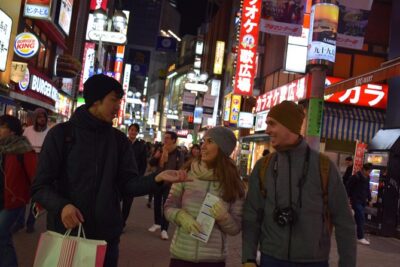
Next is Shibuya Center-gai. This narrow street is a visual workout: shops, places to eat, arcades, and bars tucked close together. The photo value here isn’t one single landmark. It’s texture—signs at different heights, reflections, and the “everyone is out here” energy. If your camera can handle night color well, this is where you start collecting the kind of shots you actually want to print.
A quick note for your planning: you’ll get time at each stop (most are around 20 minutes). That’s enough to take multiple attempts, but not enough to wander off and get lost. Follow the timing and stay close so you don’t miss your best light window.
Miyashita Park: The Modern Break in Your Night Photos
Then you transition into Miyashita Park, a modern pocket of green and social space in the middle of the city. Even if you’re not photographing trees for beauty, this stop helps your set because it changes the background from pure street signage to something with shape and negative space.
In practical terms, parks are great for night photography because you can step back and get a cleaner composition. You can also frame people against calmer elements, which makes your photo sequence feel intentional instead of one long neon blur.
Miyashita Park also mixes in a skate park vibe and cafe-style spaces. That means you can capture more than just crowds: you can find small scenes—someone resting, someone watching, someone moving through the walkway—where your composition has room to breathe.
The Izakaya Alley by Shibuya Station
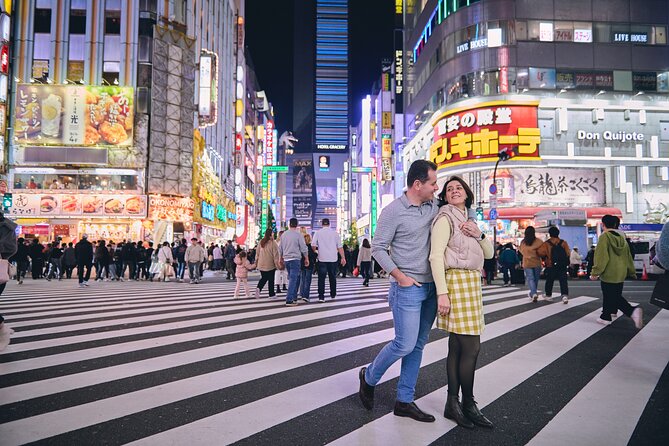
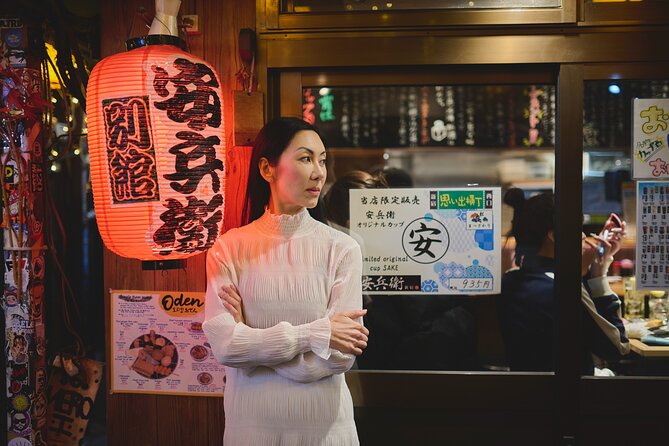
Between the iconic “poster spots,” you’ll visit a narrow alley just beside Shibuya Station. The description is simple: tiny, old-fashioned bars and izakayas lined up close to the street. This is one of those Tokyo experiences that doesn’t need a giant sign to feel authentic.
For your photos, this kind of alley works because the light is lower, older, and more directional. You can get intimate portraits and details—condensation on glass, reflections in narrow passages, and the warm glow that makes night scenes feel lived-in.
One consideration: alleys are tight, and you’ll want to be mindful of space for others. If you’re someone who likes to set up a shot slowly, keep it efficient. Stand, take, adjust, repeat.
This is also a good moment for street-level storytelling. If you’re collecting photos for a future scrapbook or for social media, this stop gives you “Tokyo between the landmarks,” which is usually what people remember.
More Shinjuku plates and pours our readers rated
- Tokyo: Shinjuku Food Tour (13 Dishes at 4 Local Eateries)★ 5.0 · 6,603 reviews
- Tokyo Bar Hopping Tour in Shinjuku (All-You-Can-Drink + Dinner)★ 5.0 · 3,587 reviews
- Tokyo: Shinjuku Food Tour (15 Dishes and 4 Eateries)★ 4.9 · 2,033 reviews
- Best of Shinjuku: Izakaya Food Tour (4 Stops, 14+ Tastings)★ 5.0 · 1,863 reviews
- Tokyo: Shinjuku Local Bar and Izakaya Guided Walking Tour★ 4.9 · 1,794 reviews
Omoide Yokocho: Smoke, Texture, and Local Night Atmosphere
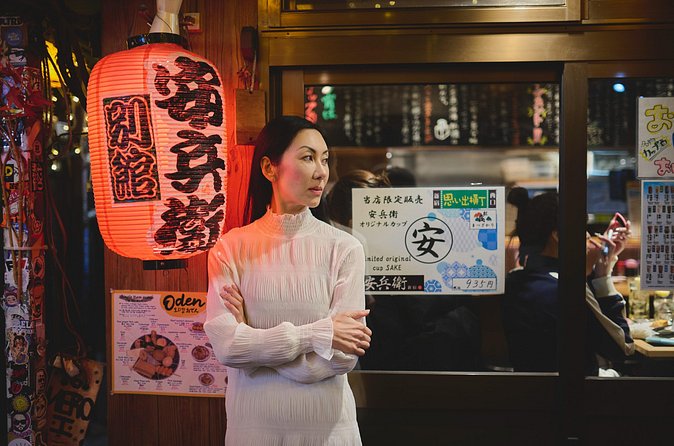
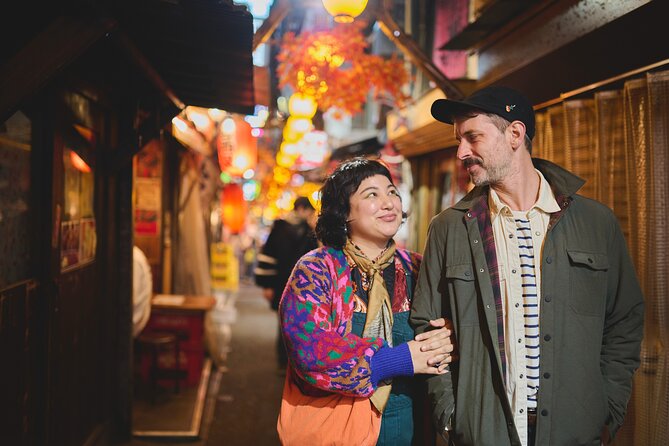
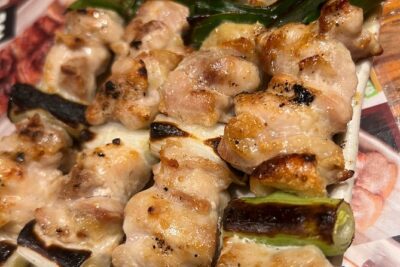
Next up is Omoide Yokocho, meaning memory lane. It’s known for its smoky, gritty-yet-nostalgic layout with cramped spaces and yakitori stalls. The visual payoff is the density. You’re not photographing wide streets here—you’re photographing layers of life packed into small lanes.
Omoide Yokocho is a great contrast stop after Shibuya’s wide crossings and shopping streets. Here you can aim your camera for texture: signage, steam-like atmosphere, shadows between tables, and the way light hits narrow walls.
If you’re wondering what to shoot, go for variety. Try one frame that shows the whole lane, then move into details: a menu board, a lantern glow, someone mid-laugh. The goal is to avoid repeating the same shot from the same angle.
Also, this area is a natural place to take a breath. Your feet will be tired by now, and Omoide Yokocho gives you a “pause spot” where people tend to linger—so you don’t always need to chase motion to get good results.
Kabukicho and Godzilla Road: Neon Finisher in Shinjuku
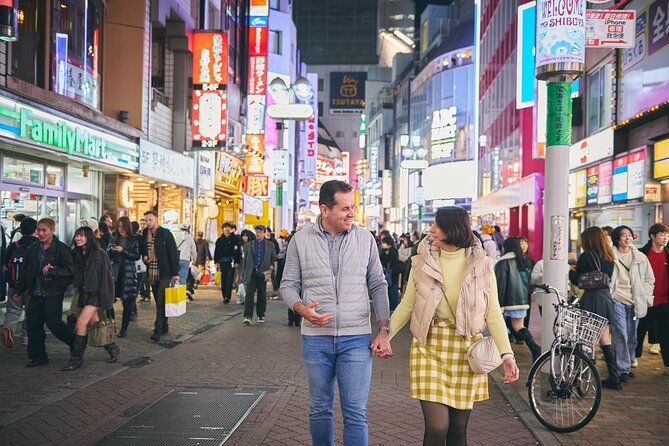
You end at Godzilla Road in Kabukicho, the entertainment district in Shinjuku. This is the night scene most people picture when they think of Shinjuku: neon signs, bright storefront energy, and a sense of constant motion.
Ending here is smart for photography because it’s visually intense. Your last stop can be your biggest set piece. You can also adjust your approach based on what you learned earlier in the night. If your settings are nailed by now, you’ll get more keepers without wasting time.
Godzilla Road is partly famous as a landmark road, but you’ll get better results if you treat it like a photo zone instead of one exact spot. Frame the road to include signage and pedestrian flow. If you’ve been collecting portraits or alley scenes earlier, this finish gives you the wide, cinematic Tokyo shot.
One practical thing: the tour ends right at the entrance area of Kabukicho. If you want to continue exploring afterward, plan your next steps before you arrive—once you’re in, you’ll probably want to wander.
Photos, Color Grading, and What You’ll Actually Walk Away With
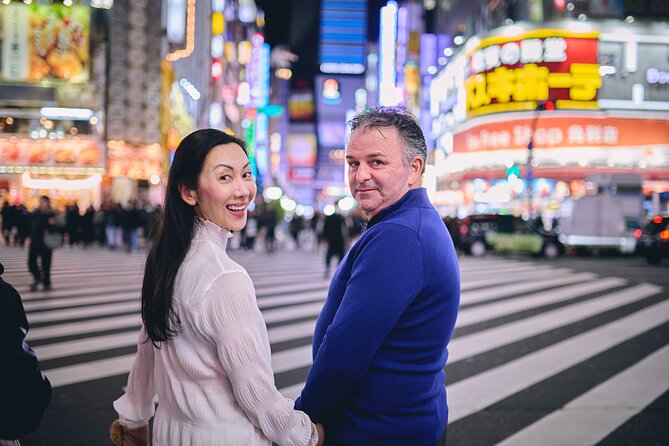
The promise here is 25–50 color-graded photos per person. That number matters because it’s enough variety: you’re likely to get action shots, portraits, street scenes, and a few creative compositions. Color grading is also a big deal for night images. Cameras can capture night, but getting consistent color and tone in a set usually takes human judgment.
You’re not just hoping your shots come out. The tour is structured around photo stops and guide direction, and Kenji’s role is to help you get frames you can use later.
For you, the real value is time. You avoid the stress of stopping, checking apps, testing settings, and asking strangers for photos. Instead, you focus on walking and composing while someone else handles the photography guidance.
If you’re the type who likes to learn as you go, there’s a second layer of value too. Past participants noted Kenji is helpful with poses and adds city context along the way. Even if you’re not studying Tokyo history, short explanations can help you notice details you’d otherwise ignore.
Price and Logistics: Is $62.13 Good Value?
The price is $62.13 per person for about 2 hours and includes an English speaking guide/photographer plus bottled water (if you need it) and the photo set. For night street photography in two major neighborhoods, that’s a practical package.
Where the “real math” comes in is your time and your photos. If you compare the cost to buying gear or spending hours trying to master night settings alone, the guided approach starts to look fair. You’re paying for direction, photo positioning, and the final output of 25–50 color-graded images.
One cost not included: the train fee from Shibuya to Shinjuku is ¥170 per person. That’s a small add-on, but it’s important for budgeting. Since the tour ends in Shinjuku, you should be ready to pay that transfer if you’re coming from Shibuya side for other plans too.
The tour also uses a mobile ticket, and confirmation is received at booking. Small group size and a clear start time keep the whole thing moving, which is exactly what you want on a short night schedule.
Who This Tour Fits Best (And Who Might Skip It)
This experience is best for you if:
- You want iconic Tokyo night scenes in one organized walk
- You’re solo or uncomfortable taking your own photos
- You care about photos with better framing, not just snapshots
You’ll also like it if you’re the type who enjoys walking and letting the city guide your photos. The route moves from Shibuya landmarks to Shinjuku’s neon finish without requiring you to research every stop.
Consider skipping (or thinking twice) if you hate strict timing. The tour starts on time, and if you’re more than 5 minutes late, you can’t join, and it’s not set up for refund or reschedule. Also, the experience requires good weather, so if Tokyo is raining hard, the tour may be adjusted.
Should You Book This Shibuya–Shinjuku Photo Walk?
If you want an efficient way to get strong night photography in two of Tokyo’s loudest districts, this is an easy yes. The biggest wins for most people are the small-group attention, the confidence boost for solo shots, and the delivered set of 25–50 color-graded images.
It’s also a good pick for first-time Tokyo visitors who want the “where to stand” guidance without wasting an entire evening troubleshooting camera settings. Add the fact that you end near Kabukicho, and you’ll finish in a place where it’s natural to keep exploring.
Just plan your timing like you’re catching a train—because you are. Show up early, bring comfortable shoes, and let Kenji handle the photo side while you enjoy the Tokyo night.
FAQ
How long is the Shibuya and Shinjuku photography experience?
It lasts about 2 hours.
What photos are included?
You’ll receive 25–50 color-graded photos per person.
Who will guide me during the tour?
The guide/photographer is Kenji, and it’s an English speaking experience.
Where do we meet and where does it end?
You meet at the Hachiko Statue area in Shibuya (2 Chome-1 Dogenzaka, Shibuya). You end at the entrance area near Godzilla Road in Shinjuku (Kabukichō area).
Is the train fee included from Shibuya to Shinjuku?
No. The train fee is ¥170 per person and is not included.
What if I arrive late?
The tour starts on time. If you’re more than 5 minutes late, you won’t be able to join, and there’s no refund or reschedule.
What happens if the weather is bad?
This experience requires good weather. If it’s canceled due to poor weather, you’ll be offered a different date or a full refund. Free cancellation is available up to 24 hours before the start time.
More Tour Reviews in Tokyo
- Mt Fuji and Hakone 1-Day Bus Tour Return by Bullet Train
★ 5.0 · 26,383 reviews - 1-Day Tokyo Bus Tour
★ 5.0 · 14,250 reviews - Tokyo: teamLab Planets TOKYO Digital Art Museum Entry Ticket
★ 4.6 · 9,779 reviews - Mt Fuji & Hakone Cruise, Drum Show Bullet Train 1 Day from Tokyo
★ 4.0 · 7,413 reviews - Tokyo: Shinjuku Food Tour (13 Dishes at 4 Local Eateries)
★ 5.0 · 6,603 reviews
More Shinjuku Food and Drink
- Tokyo: Shinjuku Food Tour (13 Dishes at 4 Local Eateries)
★ 5.0 · 6,603 reviews - Tokyo Bar Hopping Tour in Shinjuku (All-You-Can-Drink + Dinner)
★ 5.0 · 3,587 reviews - Tokyo: Shinjuku Food Tour (15 Dishes and 4 Eateries)
★ 4.9 · 2,033 reviews - Best of Shinjuku: Izakaya Food Tour (4 Stops, 14+ Tastings)
★ 5.0 · 1,863 reviews - Tokyo: Shinjuku Local Bar and Izakaya Guided Walking Tour
★ 4.9 · 1,794 reviews
More Around Shibuya Crossing
- Official Street Go-Kart in Shibuya
★ 5.0 · 3,435 reviews - Tokyo: Street Kart Experience in Shibuya
★ 4.9 · 1,484 reviews - Shibuya Meltdown Nightlife Tour: All-You-Can-Drink Bar Hopping
★ 5.0 · 1,058 reviews - Shibuya Official Street Go-Kart in Shibuya Annex
★ 5.0 · 972 reviews - Tokyo: Shibuya Food Tour (13 dishes and 4 Eateries)
★ 5.0 · 770 reviews
Latest Tokyo reviews off our desk






Shibuya Experiences, compared.
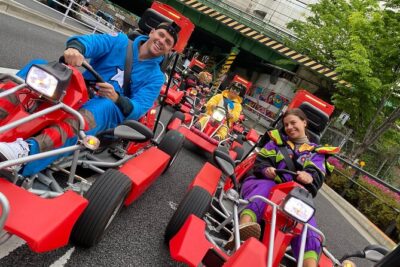 ★ 5.0Official Street Go-Kart in ShibuyaFrom $763,435 reviews
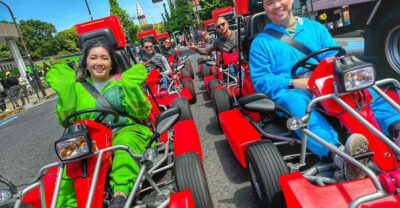 ★ 4.9Street Kart Experience in ShibuyaFrom $741,484 reviews
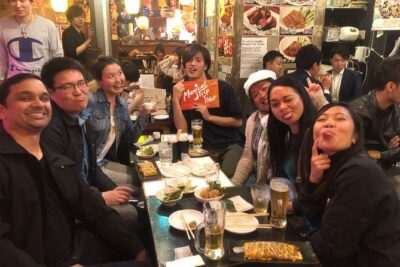 ★ 5.0Shibuya Meltdown Nightlife Tour: All-You-Can-Drink Bar HoppingFrom $1061,058 reviews
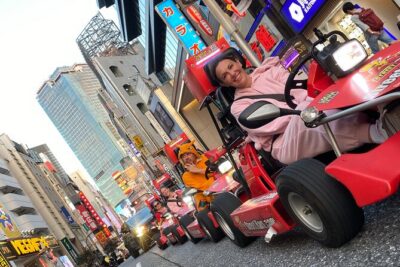 ★ 5.0Shibuya Official Street Go-Kart in Shibuya AnnexFrom $69972 reviews
 ★ 5.0Shibuya Food Tour (13 dishes and 4 Eateries)From $77770 reviews
 ★ 5.0Best of Shibuya Food TourFrom $217612 reviews
 ★ 4.8Shibuya Highlights Walking TourFrom $19601 reviews
 ★ 4.7Premium Go-Kart Tour with Tower & Shibuya CrossingFrom $116528 reviews
Browse the lists this tour appears in