
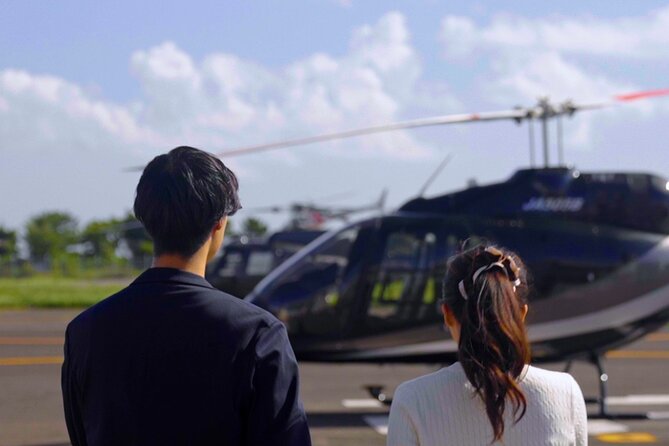
Reviewed · MOUNT FUJI TOURS
【TOKYO→FUJI】 Helicopter Oneway Transfer 35mins
Fuji, in just 35 minutes. This one-way Tokyo Heliport to Fuji-Oshino Heliport helicopter shuttle turns limited time into real aerial time over Mount Fuji, not hours of land travel. I love the 35-minute flight time, and I love that it’s set up as a straightforward transfer with a private-group feel.
One more reason to get excited: you’ll get a mobile ticket and a simple two-stop flow, including a free admission stop on arrival. The main drawback to plan around is that it’s one-way—after you land near Glamp Dome Fuji Oshino, you’re responsible for getting yourself onward, and that can get expensive if you rely on taxis.
In This Review
- Key takeaways before you book
- Tokyo to Mount Fuji by helicopter: why 35 minutes feels like magic
- The one-way drop changes your whole plan
- Tokyo Heliport: timing, security rules, and what to pack
- In the air: what you can expect over Mount Fuji
- Arrival at Fuji-Oshino and the Glamp Dome stop
- Weather rules: how to protect a day built around Fuji
- Price and value: $2,794.39 per person
- Who this one-way Tokyo→Fuji helicopter fits best
- Should you book this Tokyo to Mount Fuji helicopter transfer?
- FAQ
- How long is the helicopter flight from Tokyo to Fuji-Oshino?
- Is this a round-trip experience?
- Where do you depart and where do you arrive?
- What departure times are offered?
- How much baggage can I bring?
- Are there weight limits?
- What happens if the weather is bad?
Key takeaways before you book
- Real time savings: A 35-minute flight is the whole point of this Tokyo→Fuji transfer.
- Private-group setup: Only your group participates, which usually makes check-in feel calmer.
- Two free admission stops: Tokyo Heliport waiting time and the arrival stop include free admission.
- Photo rules at Tokyo Heliport: On-site photography is banned for security reasons.
- One carry-on included: You get one free carry-on piece; extra baggage may cost extra.
- Weather decides everything: Bad weather can lead to a full refund or an alternative date.
Tokyo to Mount Fuji by helicopter: why 35 minutes feels like magic
The headline is the 35-minute flight: you lift off from Tokyo Heliport and land at Fuji-Oshino Heliport. That’s the fast track to the Mount Fuji area, especially if you’re trying to do a short trip with tight timing.
What makes this experience genuinely different is that the value isn’t just “seeing Fuji.” It’s seeing it from above—approach angles, changing size as you move, and the way the surrounding terrain opens up. The operator describes it as a dream-like aerial stroll, and the core idea holds: this isn’t a scenic bus ride where Fuji is sometimes hidden behind timing and weather. You’re in the air, where Fuji is the main event.
The total time on the experience is listed as about 1 hour 30 minutes, with 30 minutes at the start and 30 minutes on arrival. So even though the flight is short, you’ll still want to plan a calm schedule around it. Aim for a day where you’re not racing for another reservation right after landing.
Also note the departure rhythm: flights run at 9:00, 10:00, 11:00, 12:00, 13:00, 14:00, and 15:00. That gives you flexibility, but it also means you’ll want to pick a departure time that works with your weather odds.
More Fuji day trips our readers rated highly
- Mt Fuji and Hakone 1-Day Bus Tour Return by Bullet Train
★ 5.0 · 26,383 reviews - Mt Fuji & Hakone Cruise, Drum Show Bullet Train 1 Day from Tokyo
★ 4.0 · 7,413 reviews - Tokyo Mt Fuji 5th St & Hakone Cruise Bus Tour w/Bullet Train
★ 4.4 · 5,024 reviews - From Tokyo: Mount Fuji Full-Day Sightseeing Trip
★ 4.5 · 4,970 reviews
The one-way drop changes your whole plan
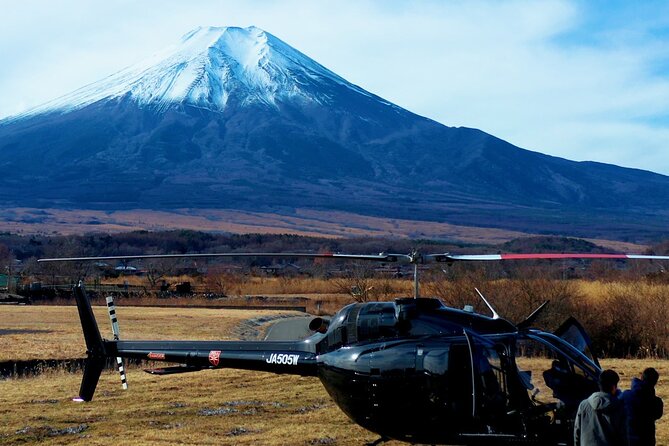
This is a one-way helicopter shuttle. That matters more than most people realize when they first see the price.
You do not fly back to Tokyo as part of this experience. You land near Glamp Dome Fuji Oshino, and then you move on from there. If your next step is a hotel in the Fuji Five Lakes area, you’ll probably be fine. If your plan depends on returning to Tokyo soon, you’ll want to figure that out before you book, not after you land.
Here’s the practical mindset I recommend: treat this as a “transfer plus arrival base,” not as a complete day tour. Give yourself buffer time to get situated. If you end up needing a taxi for a long haul back toward Tokyo, costs can spike fast. One real scenario included a roughly 2.5-hour taxi ride for about $400 USD—a reminder that one-way logistics can become the expensive part.
If you want the least stress, line up onward transport options in advance (even just knowing what your realistic options are). The helicopter gives you speed. You still need ground travel planning after the landing.
Tokyo Heliport: timing, security rules, and what to pack
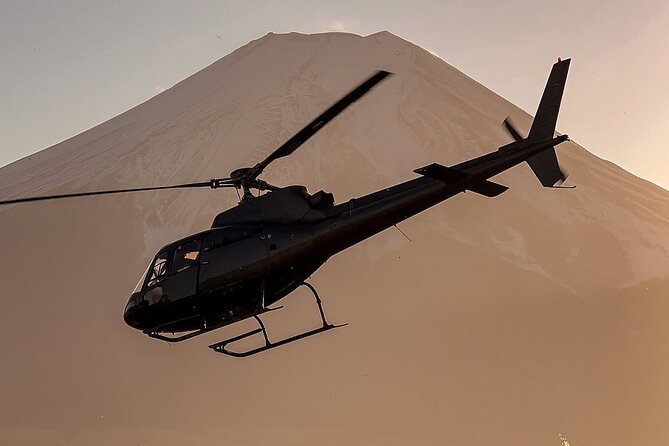
Your starting point is Tokyo Heliport (4-chōme-7-25 Shinkiba, Koto City, Tokyo 136-0082, Japan). The meeting window is 30 minutes before the experience starts, so show up with time to breathe and follow instructions.
Two details matter here:
1) Photography is banned on-site. The tour info notes it’s part of Tokyo’s terrorism countermeasure plan, and you’re not allowed to take photos or pictures at the site. If you were hoping to capture a classic pre-flight shot in front of the helicopter, adjust your expectations. The operator even suggests alternative ways to commemorate—like using Funabashi heliport or a night course from Yokohama Nishi heliport, where helicopter and in-flight shooting may be possible.
2) Baggage and weight have rules. You’re allowed one piece of carry-on baggage free of charge. Anything beyond that may require delivery fees or advance shipping. Keep it simple: one bag you can manage easily, plus smaller items if needed.
Weight matters for comfort and balance of the aircraft. The info lists:
- 286 lbs (130 kg) per passenger as the weight limitation
- A maximum total aircraft weight limit of 530 lbs (240 kg)
Even though there’s also a figure of 265 lbs listed as total weight per passenger, I’d treat 286 lbs (130 kg) as the hard limit you shouldn’t approach. If you’re close to the top end, confirm directly before your flight so you’re not scrambling.
Good news: the meeting point is described as near public transportation. That makes it easier to avoid a complicated car ride into the city on a tight day.
In the air: what you can expect over Mount Fuji
The pitch is simple: you get views of Mount Fuji from the helicopter shuttle as you fly. You’ll see the mountain from an angle you can’t get from ground viewpoints, and you’ll get a sense of scale—how the slopes spread out and how the surrounding geography wraps around the peak.
Still, keep your expectations grounded. One negative experience noted that even though the helicopter comes relatively close to the mountain, it’s still a distance away. That’s normal: you’re not being dropped onto the summit or hiking areas. You’re flying over the region, and the view depends on weather, cloud cover, and how the route is flown that day.
Your best strategy is to approach this as an aerial “view window” experience rather than a guaranteed close-up. When weather is good, the payoff is huge. When conditions are poor, you may get cancellation instead (more on that next).
Arrival at Fuji-Oshino and the Glamp Dome stop
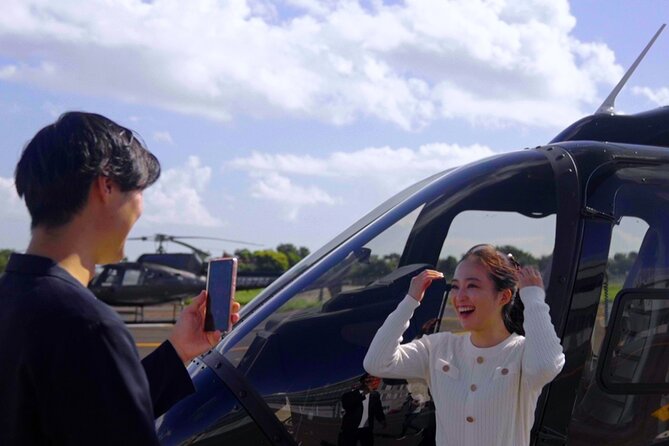
You land at Fuji-Oshino Heliport, and then you have an arrival stop at Glamp Dome Fuji Oshino for about 30 minutes. The entry is listed as free admission.
What does that mean for you day-of? It’s time on the ground to collect yourself, confirm next steps, and get oriented after the flight. Since you’re arriving outside the typical Tokyo rhythm, those 30 minutes can be useful for practical things like finding transport options, refreshing, and deciding how you want to spend the rest of the day in the Fuji area.
Because details on activities at the dome aren’t provided here, I’d treat it as: a scheduled arrival base with free access rather than a full guided program. Use the time to set up your next move—food, directions, and transport.
Readers also shortlisted these Tokyo bookings:
- 10-Min Helicopter Flight Tour Over Tokyo Bay★ 5.0 · 50 reviews
- Tokyo: Guided Helicopter Ride★ 4.9 · 24 reviews
- 25-Min Downtown Helicopter Tour : Tokyo Skytree and Tokyo Tower★ 5.0 · 19 reviews
- 75-Min Mt. Fuji Half Day Private Helicopter Tour★ 4.0 · 9 reviews
- Tokyo: Skytree and Tokyo Tower Helicopter Tour★ 5.0 · 8 reviews
Weather rules: how to protect a day built around Fuji
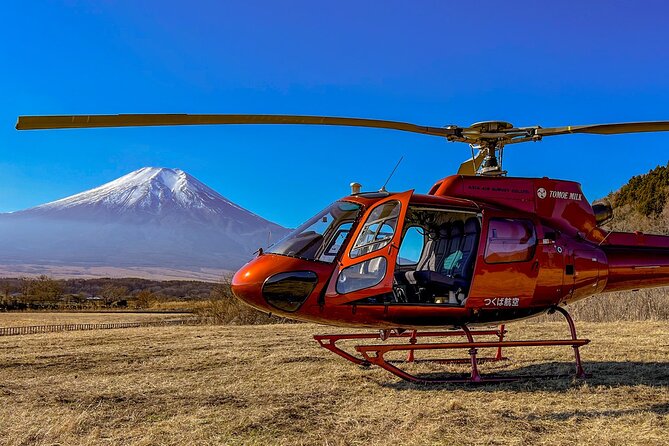
This is one of those experiences where the atmosphere matters as much as your planning. The info is clear: the operator may cancel due to adverse weather conditions and other aircraft or operational incidents. If that happens, you’ll receive a full refund or an alternative date.
There’s also a specific tip included: if you want to fly within 5 days, check the Japan Meteorological Agency (JMA) forecast, because the tour will be cancelled due to bad weather. That’s your cue to stay flexible. If you’re tying this to an itinerary that can’t move, think twice.
My practical advice: build Fuji days with an escape plan. Keep something you can do nearby in mind, and don’t stack multiple time-sensitive bookings that assume the helicopter must fly.
Price and value: $2,794.39 per person
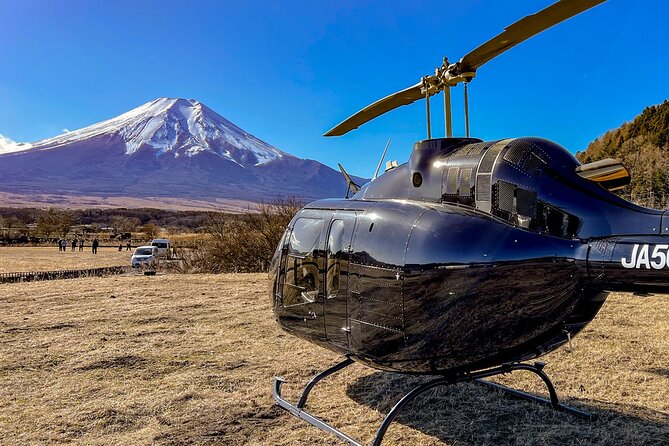
At $2,794.39 per person, this is not “affordable splurge” pricing. It’s a premium purchase.
So the value question becomes: what are you buying besides a view? You’re buying:
- Speed: reaching the Fuji area fast via air
- Control of the core experience: you’re doing the helicopter part in one package
- Private-group comfort: only your group participates
- Included basics: flight time (35 minutes) plus free admission stops, and one free carry-on piece
If your time in Japan is limited, the helicopter can be a real rational choice. Not because it’s cheap—it’s because the alternative is usually longer travel, which can steal time from the places you actually want to see.
If you have flexible time and a comfortable travel pace, you may decide the money is better spent elsewhere (and use the helicopter only for another trip). But if you’re the kind of person who values an “only happens like this once” moment, then the price starts to make sense.
Also remember: the one-way nature can affect total cost. If you end up paying for taxis or other transport afterward, that can change the math quickly. Plan onward travel so the helicopter isn’t only the expensive part.
Who this one-way Tokyo→Fuji helicopter fits best
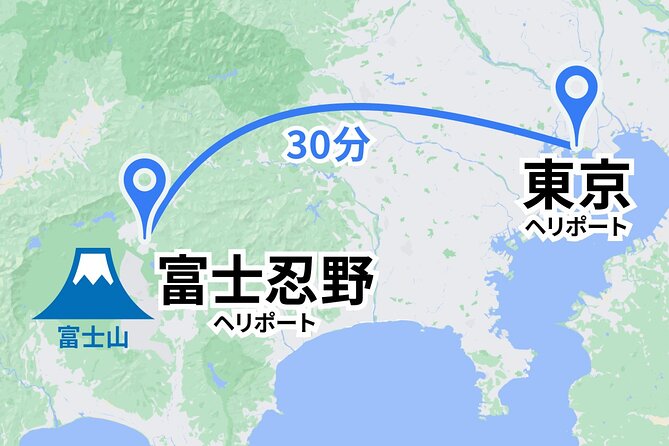
This helicopter transfer is best for people who want a fast, dramatic connection to Mount Fuji. It’s also a good fit when you prefer a private experience without mixed groups hovering around you.
It may not be a match if:
- You hate tight timing and want a fully self-paced day (the schedule and weather can decide things)
- You need to bring lots of extra luggage (carry-on is limited)
- You’re near the top end of the weight limits (aircraft comfort and balance rules apply)
One important restriction: people who have gone diving in the past 24 hours cannot participate. If that applies, you’ll need a different plan for that day.
Should you book this Tokyo to Mount Fuji helicopter transfer?
Book it if your goal is to trade travel time for real aerial time, and you’re ready to plan the ground part after arrival. The biggest plus is straightforward: a one-way jump from Tokyo Heliport to the Fuji-Oshino area in about 35 minutes, with views that are hard to replicate any other way.
Skip it (or at least rethink it) if you don’t want to deal with one-way logistics. Because it’s one-way, you’ll need to confidently handle your next ride from near Glamp Dome Fuji Oshino. Add weather risk, too—if Fuji must happen no matter what, you’ll want a flexible backup plan.
If you’re okay with those realities, this can be one of the most memorable “big scenery, short time” choices you’ll make in Japan.
FAQ
How long is the helicopter flight from Tokyo to Fuji-Oshino?
The flight time is listed as 35 minutes.
Is this a round-trip experience?
No. It’s a one-way helicopter shuttle from Tokyo to the Fuji-Oshino area.
Where do you depart and where do you arrive?
You depart from Tokyo Heliport and arrive at Fuji-Oshino Heliport, with the arrival stop at Glamp Dome Fuji Oshino.
What departure times are offered?
Departure times are listed as 9:00, 10:00, 11:00, 12:00, 13:00, 14:00, and 15:00.
How much baggage can I bring?
Each passenger can bring one piece of carry-on baggage free of charge. Extra baggage may require a fee for delivery or must be sent in advance.
Are there weight limits?
Yes. The weight limitation is listed as 286 lbs (130 kg) per passenger, with a maximum total aircraft weight limit of 530 lbs (240 kg).
What happens if the weather is bad?
If the experience can’t operate due to adverse weather or certain aircraft/operational issues, you’ll receive a full refund or an alternative date.
More Helicopter Tours in Tokyo
- 10-Min Helicopter Flight Tour Over Tokyo Bay
★ 5.0 · 50 reviews - Tokyo: Guided Helicopter Ride
★ 4.9 · 24 reviews - 25-Min Downtown Helicopter Tour : Tokyo Skytree and Tokyo Tower
★ 5.0 · 19 reviews - 75-Min Mt. Fuji Half Day Private Helicopter Tour
★ 4.0 · 9 reviews - Tokyo: Skytree and Tokyo Tower Helicopter Tour
★ 5.0 · 8 reviews
More Tour Reviews in Tokyo
- Mt Fuji and Hakone 1-Day Bus Tour Return by Bullet Train
★ 5.0 · 26,383 reviews - 1-Day Tokyo Bus Tour
★ 5.0 · 14,250 reviews - Tokyo: teamLab Planets TOKYO Digital Art Museum Entry Ticket
★ 4.6 · 9,779 reviews - Mt Fuji & Hakone Cruise, Drum Show Bullet Train 1 Day from Tokyo
★ 4.0 · 7,413 reviews - Tokyo: Shinjuku Food Tour (13 Dishes at 4 Local Eateries)
★ 5.0 · 6,603 reviews
More Mount Fuji Days We Have Reviewed
- Mt Fuji and Hakone 1-Day Bus Tour Return by Bullet Train
★ 5.0 · 26,383 reviews - Mt Fuji & Hakone Cruise, Drum Show Bullet Train 1 Day from Tokyo
★ 4.0 · 7,413 reviews - Tokyo Mt Fuji 5th St & Hakone Cruise Bus Tour w/Bullet Train
★ 4.4 · 5,024 reviews - From Tokyo: Mount Fuji Full-Day Sightseeing Trip
★ 4.5 · 4,970 reviews - Tokyo: Mt. Fuji Tour, Hakone Ropeway, Owakudani, Lake Ashi
★ 4.7 · 4,002 reviews
Latest Tokyo reviews off our desk






Mount Fuji Tours, compared.
 ★ 5.0Mt Fuji and Hakone 1-Day Bus Tour Return by Bullet TrainFrom $16326,383 reviews
 ★ 4.0Mt Fuji & Hakone Cruise, Drum Show Bullet Train 1 Day from TokyoFrom $1497,413 reviews
 ★ 4.4Tokyo Mt Fuji 5th St & Hakone Cruise Bus Tour w/Bullet TrainFrom $1545,024 reviews
 ★ 4.5From Tokyo: Mount Fuji Full-Day Sightseeing TripFrom $684,970 reviews
 ★ 4.7Mt. Fuji Tour, Hakone Ropeway, Owakudani, Lake AshiFrom $544,002 reviews
 ★ 4.4Mt.Fuji,Kawaguchiko Oishi Park,Arakurayama Sengen ParkFrom $542,682 reviews
 ★ 4.2Mt. Fuji 5th Station & Hakone Cruise 1-Day Bus TourFrom $1292,381 reviews
 ★ 4.7Mt Fuji Top 5 Spots Day Tour: Arakurayama Park,Oshino HakkaiFrom $532,066 reviews
Browse the lists this tour appears in