
Reviewed · SHIBUYA EXPERIENCES
Tokyo Bike Tour: Shibuya & Hidden Tokyo
Pedal through Shibuya’s real rhythm. This Tokyo Bike Tour mixes big-name stops like Shibuya Crossing with less-obvious side streets, so you see more than walking while still feeling local. The small-group setup (max 6 people) makes it easier to ask questions, take photos, and keep the ride calm even when the city gets intense.
I also like how the guide (Taichi) doesn’t just point at landmarks. You get practical context about daily life, plus tips for where to eat and hang out after the tour—useful on your actual Tokyo schedule, not just for trivia. The one consideration: this is not a leisurely “sit and roll” ride. You’ll need to pedal a non-electric bike confidently, including handling tight spots and cross-traffic lights, and you should be comfortable riding on roads.
In This Review
- Key things that make this bike tour worth your time
- Why cycling Shibuya makes Tokyo feel less like chaos
- Meeting near Shinjuku and Yoyogi: easy start, low friction
- Group size and what it changes on the street
- The bike ride reality check: pace, fit, and your comfort level
- Route walkthrough: Yoyogi Park to Japan National Stadium
- Stop 1: Yoyogi Park
- Stop 2: Shibuya Crossing
- Stop 3: Hachiko
- Stop 4: Shibuya Cat Street
- Stop 5: Aoyama Street
- Stop 6: Aoyama Cemetery
- Stop 7: Japan National Stadium
- Taichi’s guiding style: safety plus local context
- How much ground you cover in 3 hours (and why it feels worth it)
- Weather and what to do if conditions change
- Who should book this Tokyo Bike Tour
- Should you book Tokyo Bike Tour: Shibuya & Hidden Tokyo?
- FAQ
- How long is the Tokyo Bike Tour: Shibuya & Hidden Tokyo?
- Where does the tour start?
- What’s the cost per person?
- What fitness or cycling skills do I need?
- What bike size and weight limits apply?
- Will the tour run in rain?
Key things that make this bike tour worth your time
- Local-led route, not map-chasing: Taichi guides the group so you can focus on the ride and the city.
- Iconic Shibuya, timed for sanity: Shibuya Crossing and Hachiko are included, but the route aims to keep you moving instead of stuck.
- Off-main-road stops with a purpose: Yoyogi Park, Cat Street, and residential backstreets add variety beyond the usual photo list.
- A pace that stays comfortable: Plan on about 15 km/h, with multiple stops that never feel like a sprint.
- Real Tokyo tips during the ride: You’ll leave with suggestions you can actually use that day or next.
- Small group flexibility: If your group size is tiny, the tour can adjust to your exact situation and interests.
Why cycling Shibuya makes Tokyo feel less like chaos
Tokyo can look like a plate of moving parts—crowds, crossings, trains, and everyone in a hurry. But Tokyo is also one of the world’s most bike-friendly cities for getting neighborhood context fast. On this tour, the bike does what your feet can’t: it gets you from one atmosphere to another without burning half your day in transit or getting lost in the grid.
The sweet spot here is that you’re not only collecting famous sights. You’re moving through Shibuya, Harajuku, Aoyama, and Gaien so you feel how the city changes block by block. One minute you’re near major energy, the next you’re on quieter lanes where daily life looks more like what Tokyo feels like when the guidebook spotlight turns away.
And because you’re on a non-electric bicycle, you get a steady, human pace. You notice details: how people walk, how streets connect, and how the city’s design shapes your movement.
More booked around Shibuya Crossing
- Official Street Go-Kart in Shibuya
★ 5.0 · 3,435 reviews - Tokyo: Street Kart Experience in Shibuya
★ 4.9 · 1,484 reviews - Shibuya Meltdown Nightlife Tour: All-You-Can-Drink Bar Hopping
★ 5.0 · 1,058 reviews - Shibuya Official Street Go-Kart in Shibuya Annex
★ 5.0 · 972 reviews
Meeting near Shinjuku and Yoyogi: easy start, low friction
The tour starts at Umayamichi Park (5-chōme-24-11, Sendagaya, Shibuya). The location is convenient—close to both Shinjuku Station and Yoyogi Station—so you’re not spending your pre-tour time in a puzzle.
That matters more than it sounds. When you’re sightseeing in Tokyo, every extra transfer steals energy. Here, the meeting point is set up so you can plug this into a busy day without a complicated route plan.
Group size and what it changes on the street
This is capped at 6 travelers, which changes everything. Smaller groups mean:
- fewer bottlenecks when you stop for photos
- easier hand-signal communication and regrouping
- more chances to talk with Taichi about what you’re seeing
It also means the ride can feel personal. One rider had the tour tailored when the group was small, and another described the guide adjusting the stops if they had already seen something like Shibuya Crossing. If you like your sightseeing to match your pace and your prior plans, this is a good sign.
The bike ride reality check: pace, fit, and your comfort level
This tour runs at about 15 km/h. That’s not fast-tour racing speed, but it is a real riding pace, especially once you’re in traffic flow. You’ll cover a good distance for 3 hours—enough that biking feels like a “day’s worth of neighborhoods” rather than a short spin.
A few practical requirements are spelled out clearly:
- Bicycles fit heights between 155 cm and 195 cm
- You must weigh no more than 120 kg
- You need confidence riding on pavements, crossing traffic lights, and handling crowded or tight areas
- You should be comfortable riding on roads, since you’ll be in active urban conditions
This is the main drawback to keep in mind. If you haven’t biked in years, or if you’re uneasy around scooters, buses, and dense pedestrian flows, you may find the skill expectation stressful. If you’re a comfortable casual rider—someone who can pedal steadily and follow directions—you’ll likely feel fine.
Route walkthrough: Yoyogi Park to Japan National Stadium
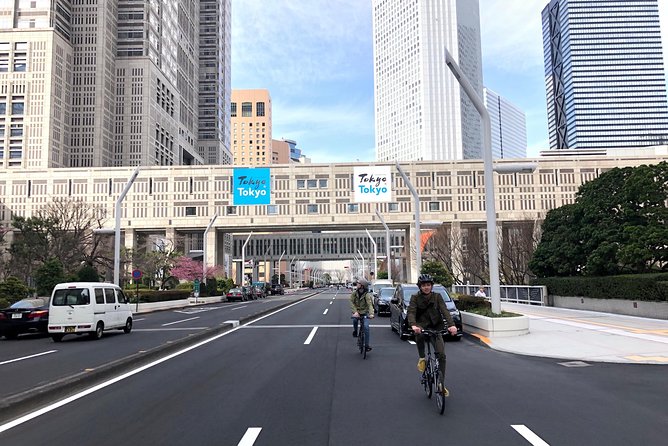
You’ll hit a sequence that moves from calm green space to high-energy icons, then into style-heavy streets and finally into a pair of distinctly Tokyo contrasts.
Readers also shortlisted these Tokyo bookings:
- Tokyo Guided Small-Group Biking Tour★ 5.0 · 1,250 reviews
- Tokyo Great Cycling Tour★ 5.0 · 811 reviews
- Tokyo Top Highlights 3h Guided E-bike Tour★ 5.0 · 714 reviews
- 3h Tokyo E-Bike Tour: Hidden Gems, and Local Life with guide★ 5.0 · 670 reviews
- Tokyo: 3-Hour Bike or E-Bike City Highlights Tour★ 4.8 · 435 reviews
Stop 1: Yoyogi Park
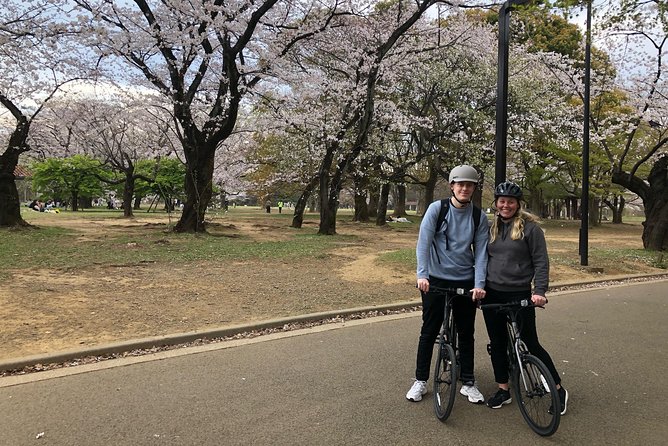
Starting at Yoyogi Park helps you transition into the ride. Parks also give you a break from the intense traffic patterns before you reach Shibuya’s busiest sights.
What I like about starting here: it sets your body into rhythm. You get the sense of speed and turning before the crowd comes at you.
Possible drawback: depending on weather and time of day, it can still be lively around paths and edges, so keep your focus on the guide’s routing and spacing.
Stop 2: Shibuya Crossing
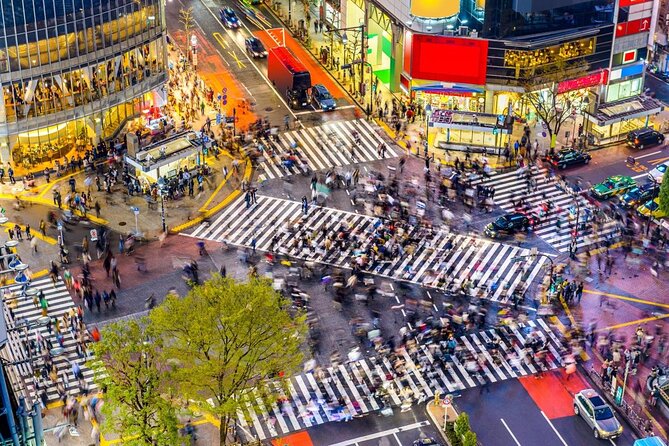
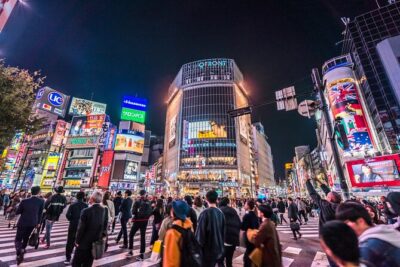
Yes, it’s famous. But the value isn’t the postcard view—it’s learning how to experience it without wasting time. With a guide leading the way, you don’t have to solve the crossing logistics yourself while people surge in every direction.
When you’re standing there, you’ll notice how the city manages flow. The crossing is basically a live demonstration of design and rules working together.
Practical tip: keep your phone ready, but listen first. Stopping positions matter here, and Taichi will likely help you find angles that are workable for photos.
Stop 3: Hachiko
Hachiko is the human anchor in the middle of Shibuya’s constant motion. It’s an easy landmark, but it also becomes a moment to understand why Shibuya is such a magnet.
This stop works well because it’s a pause point. After the chaos of the crossing, you can reset, get oriented, and keep your bearings for the next streets.
Stop 4: Shibuya Cat Street
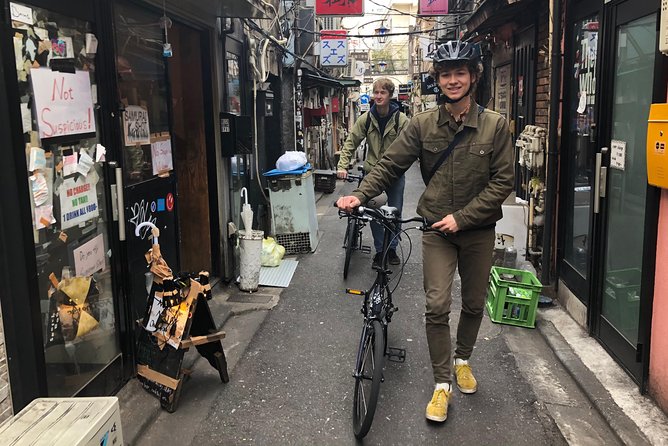
Cat Street is where Shibuya gets more human-scale. It’s an area known for fashion energy and street culture, and biking lets you glide past scenes without feeling like you’re trapped behind lines of people.
I like this stop because it changes the vibe quickly. You go from landmark intensity into something that feels more neighborhood than monument.
Possible drawback: it can be tight in places, so follow spacing rules. The tour requirements about crowded/tight spaces aren’t random—they’re for moments exactly like this.
Stop 5: Aoyama Street
Aoyama Street shifts the look again. This is more polished, more designed, and it’s where the tour gives you a sense of how Shibuya’s style influence stretches outward.
Why biking helps here: you can take in the rhythm of streets and shopfronts without being forced into slow walking queues.
Stop 6: Aoyama Cemetery
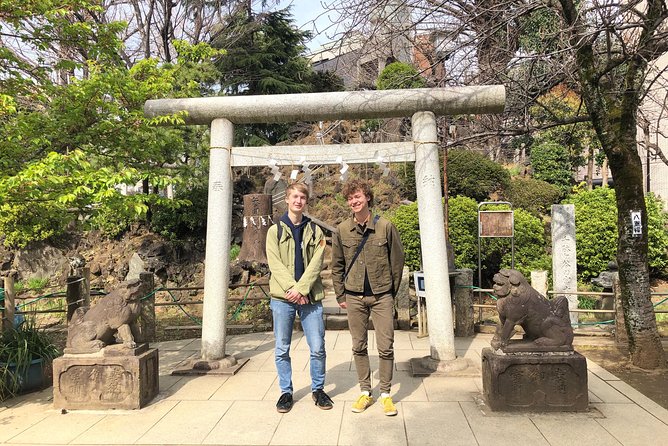
This is the curveball stop, and it’s a good one. A cemetery doesn’t fit the usual “bike tour highlights” template, but that contrast is what makes Tokyo feel layered.
You’ll experience quiet space in the middle of one of the busiest city cores. It’s a different kind of Tokyo moment—less about spectacle and more about atmosphere and respect.
Practical note: keep your volume down, stay attentive to where the group is moving, and treat it like a real place, not a photo set.
Stop 7: Japan National Stadium
Ending around Japan National Stadium adds a final sense of Tokyo scale. It’s a big venue, and seeing it from the street (rather than only through media images) helps the city feel concrete.
Also, finishing near a major landmark is smart. It gives you a clear mental marker for continuing your day—dinner plans, nearby transit, and where you are relative to the rest of your itinerary.
Taichi’s guiding style: safety plus local context
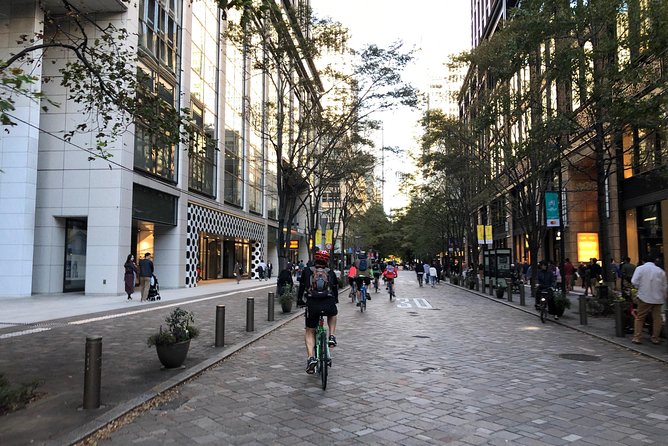
The biggest repeated theme is the way Taichi runs the ride. People describe the experience as safe, calm, and easy to understand—even in busy areas.
That’s not just luck. A guide who knows the best smaller streets and routes makes a huge difference in Tokyo, where main roads can feel like a conveyor belt. The route avoids turning the ride into a lesson in traffic anxiety.
You’ll also get explanations that help things click:
- what you’re seeing and why it matters locally
- how neighborhoods connect
- practical cultural context you can use later
A couple of small details from real experiences stand out too. One rider noted the guide helping with simple Japanese phrases. Another mentioned a coffee stop during the ride, which sounds like the kind of small kindness that turns the tour into a memory, not just a checklist.
How much ground you cover in 3 hours (and why it feels worth it)
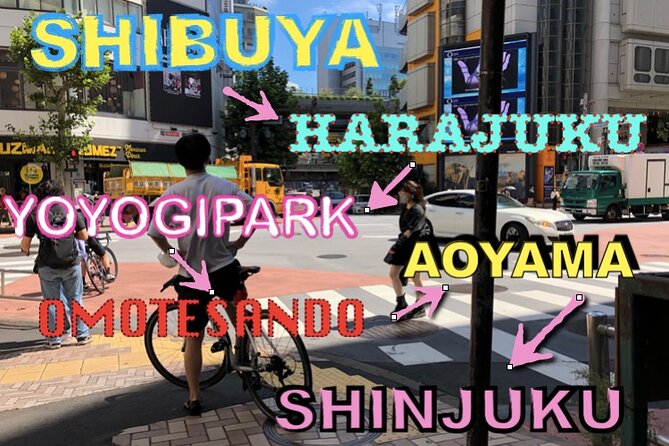
The duration is about 3 hours, and the tour typically hits around 9–10 miles of riding for at least one group size described. That’s a sweet length for people who have limited time in Tokyo but still want more than a half-day shuffle through the subway.
At a glance, $64.73 can sound like a lot—until you translate it into what you’re getting:
- a guided route so you don’t waste time navigating
- multiple stops you’d struggle to place together on your own
- neighborhood context that helps you enjoy Tokyo beyond the first-time highlights
- a ride that covers distance in a way buses and walking can’t
It’s a good value if you’re the type of person who wants your first view of a place to be structured but not rigid.
Weather and what to do if conditions change
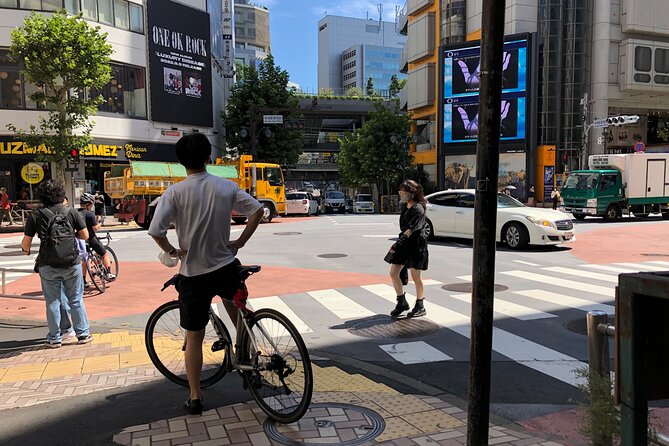
This tour runs in light rain, but it can be canceled due to sudden weather changes. If that happens, you’ll be offered an alternate date or a full refund, so you’re not stuck fighting the sky.
Practical advice: Tokyo weather can flip fast. Bring a compact rain layer, keep your hands dry for phone photos, and don’t plan anything tight immediately after the tour.
Who should book this Tokyo Bike Tour
Book it if:
- you can comfortably cycle on pavements and handle cross-traffic lights
- you want the Shibuya experience plus neighborhood texture in a few hours
- you like guided safety and route leadership more than DIY navigation
- you want local tips for food and places to return to later
Skip it if:
- you’re not comfortable riding on roads or in crowded/tight spaces
- you want a totally relaxed, no-skill-needed sightseeing option
- you need a very casual pace with frequent stop-starts (the tour expects steady riding at ~15 km/h)
This tour also makes sense early in your trip. When you understand how Shibuya and nearby areas flow, you’ll make smarter choices for the rest of your days.
Should you book Tokyo Bike Tour: Shibuya & Hidden Tokyo?
If you want Tokyo that feels less like rushing and more like learning the city in motion, this is a strong choice. The combo of iconic Shibuya stops, quieter streets, and a guide like Taichi—focused on safety and clear explanations—makes it easier to leave with understanding, not just photos.
I’d book it if you’re a confident casual cyclist and you like structured exploring with room to ask questions. I wouldn’t book it if you’re unsure about bike comfort in traffic, because the tour is designed for people who can ride steadily and follow instructions.
If you’re ready to pedal, this is one of the more practical ways to get a real sense of Shibuya and the surrounding districts in a short window.
FAQ
How long is the Tokyo Bike Tour: Shibuya & Hidden Tokyo?
It’s about 3 hours.
Where does the tour start?
The meeting point is Umayamichi Park, 5-chōme-24-11 Sendagaya, Shibuya, Tokyo 151-0051, Japan. The tour ends back at the meeting point.
What’s the cost per person?
The price is listed as $64.73 per person.
What fitness or cycling skills do I need?
You should be able to cycle on pavements, cross traffic lights confidently, and ride through crowded or tight spaces. The tour pace is about 15 km/h, and you’re expected to ride at that speed.
What bike size and weight limits apply?
The bicycles are suitable for heights between 155 cm and 195 cm. Participants must weigh no more than 120 kilograms.
Will the tour run in rain?
The tour proceeds in light rain, but it may be canceled due to sudden weather changes. If it’s canceled for weather, you’ll be offered a different date or a full refund.
More Tours in Tokyo
- Mt Fuji and Hakone 1-Day Bus Tour Return by Bullet Train
★ 5.0 · 26,383 reviews - 1-Day Tokyo Bus Tour
★ 5.0 · 14,250 reviews - Tokyo: Shinjuku Food Tour (13 Dishes at 4 Local Eateries)
★ 5.0 · 6,603 reviews - Tokyo Mt Fuji 5th St & Hakone Cruise Bus Tour w/Bullet Train
★ 4.4 · 5,024 reviews - Flagship 2-Hours Official Street Go-Kart Tour – Tokyo Bay Shop
★ 5.0 · 4,974 reviews
More Tour Reviews in Tokyo
- Mt Fuji and Hakone 1-Day Bus Tour Return by Bullet Train
★ 5.0 · 26,383 reviews - 1-Day Tokyo Bus Tour
★ 5.0 · 14,250 reviews - Tokyo: teamLab Planets TOKYO Digital Art Museum Entry Ticket
★ 4.6 · 9,779 reviews - Mt Fuji & Hakone Cruise, Drum Show Bullet Train 1 Day from Tokyo
★ 4.0 · 7,413 reviews - Tokyo: Shinjuku Food Tour (13 Dishes at 4 Local Eateries)
★ 5.0 · 6,603 reviews
More Around Shibuya Crossing
- Official Street Go-Kart in Shibuya
★ 5.0 · 3,435 reviews - Tokyo: Street Kart Experience in Shibuya
★ 4.9 · 1,484 reviews - Shibuya Meltdown Nightlife Tour: All-You-Can-Drink Bar Hopping
★ 5.0 · 1,058 reviews - Shibuya Official Street Go-Kart in Shibuya Annex
★ 5.0 · 972 reviews - Tokyo: Shibuya Food Tour (13 dishes and 4 Eateries)
★ 5.0 · 770 reviews
Latest Tokyo reviews off our desk


Shibuya Experiences, compared.
 ★ 5.0Official Street Go-Kart in ShibuyaFrom $763,435 reviews
 ★ 4.9Street Kart Experience in ShibuyaFrom $741,484 reviews
 ★ 5.0Shibuya Meltdown Nightlife Tour: All-You-Can-Drink Bar HoppingFrom $1061,058 reviews
 ★ 5.0Shibuya Official Street Go-Kart in Shibuya AnnexFrom $69972 reviews
 ★ 5.0Shibuya Food Tour (13 dishes and 4 Eateries)From $77770 reviews
 ★ 5.0Best of Shibuya Food TourFrom $217612 reviews
 ★ 4.8Shibuya Highlights Walking TourFrom $19601 reviews
 ★ 4.7Premium Go-Kart Tour with Tower & Shibuya CrossingFrom $116528 reviews
Browse the lists this tour appears in