
Reviewed · CYCLING TOURS
3h Tokyo E-Bike Tour: Hidden Gems, and Local Life with guide
Tokyo makes more sense on two wheels.
This 3-hour e-bike tour is a smart way to get history, architecture, and everyday street life in one go, led by an English-speaking guide who keeps things moving (and often funny). Two things I like a lot are the small-group feel (you’re not stuck with a hundred strangers) and the way the e-bike lets you ride at your own pace without turning sightseeing into a cardio punishment.
Here’s the only real catch: you do need to feel okay riding in traffic-adjacent streets and keeping up with the group. If busy roads make you nervous, you’ll want to plan for a slower, careful style and maybe choose the route timing that feels most comfortable.
In This Review
- Key reasons this e-bike tour works
- Getting started near Kanda Station (and why it matters)
- Why an e-bike is the best first-Tokyo move
- Morning vs afternoon: choose the Tokyo mood you want
- AM tends to lean: business core + iconic sights + market streets
- PM tends to lean: subculture + kitchen-knife street + temple classics
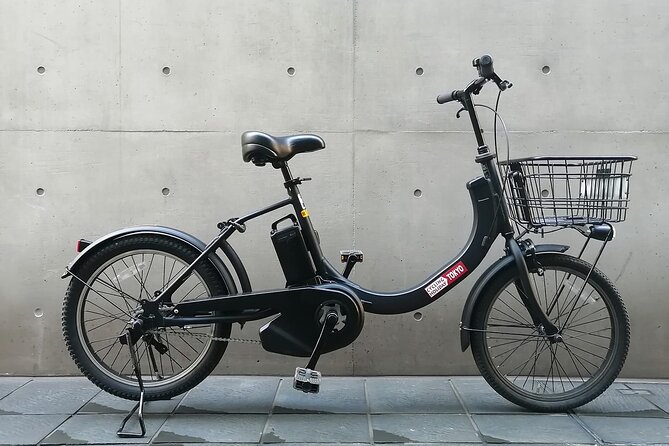
- The ride setup: included gear that actually helps
- Stop-by-stop: Kanda, Tokyo Station, and the Imperial Palace area (AM)
- Kanda: compact downtown with side-street energy
- Tokyo Station Marunouchi frontage: a station with big-city gravity
- Kokyo Otemon Gate: moat views without the hassle
- Imperial Palace grounds and the big Tokyo “inside the city” space
- Sakuradamon and the “castle gate” feel
- From Ginza lanes to Tsukiji street life (AM)
- Ginza backstreets: luxury brands on the edges, local streets in the middle
- Tsukiji Jogai Market (Outer Market): old-fashioned food-shop streets
- Backstreet connections you can’t easily do by train
- Stop-by-stop: Akihabara, Kappabashi, Asakusa, and Ryogoku (PM)
- Akihabara: subculture and geek culture focus
- Kappabashi Tool Street: kitchen tools and real knife culture
- Asakusa: the classic temple-town moment
- Ryogoku: sumo-area flavor if you’re lucky
- The guide factor: English-led, safety-focused, and full of context
- What to pack (so the ride doesn’t steal your joy)
- Weather reality: rain and extreme heat can change the plan
- Price and value: why $63 can work well in Tokyo
- Who should book this (and who might skip it)
- Should you book this Tokyo e-bike tour?
- FAQ
- Where is the meeting point?
- How long is the tour?
- Are helmets and rain gear included?
- What about food and drinks?
- How many people are in a group?
- What are the age and height requirements?
- Do I need experience riding a bicycle?
- Can I store luggage during the ride?
- What happens if it rains or it gets extremely hot?
- Is there an English guide?
Key reasons this e-bike tour works
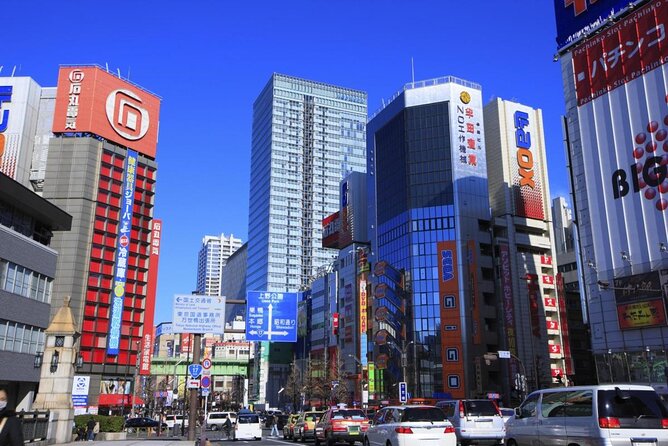
- E-assist bikes make “big city distances” feel manageable in 3 hours
- English guide + small group (max 6) means you get real attention, not just a running commentary
- Two route styles (AM and PM) swap neighborhoods: business core and markets in the morning, subculture and temples in the afternoon
- Imperial Palace area stops include classic gate and moat views that are easy to miss from trains
- Practical ride support: helmet, simple rain gear, and winter/summer comfort items
- Built-in “don’t get lost” structure so you can focus on seeing, not navigating
Getting started near Kanda Station (and why it matters)
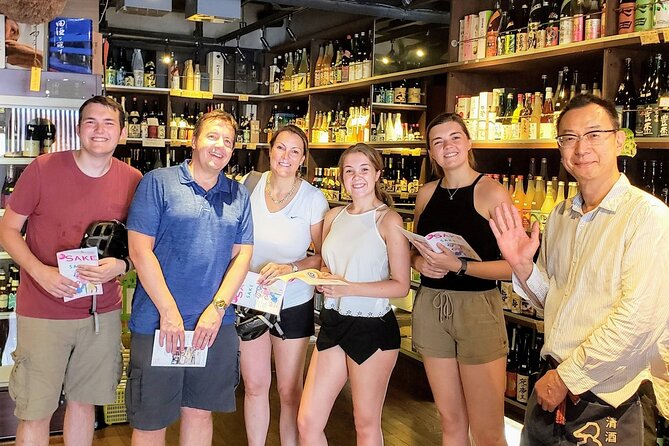
The tour begins at Cycling Holiday Tokyo, right by Kanda Station—about a one-minute walk from the west exit of JR Kanda Station. That’s genuinely helpful. Tokyo station systems are… a lot. Starting close to a major stop means less stress before you even ride.
You’ll have time at the shop for the basics: restroom access and luggage storage (they’ll hold bags other than valuables during the tour). Then you get your bike, put on your helmet, and get a quick run-through so you’re comfortable before you roll out.
If you’re the type who likes to know where your stuff is, this setup is worth it. You don’t end up dragging a backpack around all morning or afternoon.
Readers also shortlisted these Tokyo bookings:
- Tokyo Guided Small-Group Biking Tour
★ 5.0 · 1,250 reviews - Tokyo Great Cycling Tour
★ 5.0 · 811 reviews - Tokyo Top Highlights 3h Guided E-bike Tour
★ 5.0 · 714 reviews - 3h Tokyo E-Bike Tour: Hidden Gems, and Local Life with guide
★ 5.0 · 670 reviews
Why an e-bike is the best first-Tokyo move
Tokyo is dense. Streets look close together, but the stops add up fast—especially if you’re mixing major landmarks with side streets.
An e-assist bike solves the biggest problem: energy. Even if you’re reasonably fit, doing Imperial Palace-area sightseeing, then hopping toward Tsukiji or Akihabara, can turn into a long day of walking and escalators. With e-assist, you can do more stops without arriving tired enough to miss the details.
And you’re not just “cycling for exercise.” The route is designed so you can see things you’d miss on foot or from a train window. You’ll pass through quieter lanes and backstreet connections that are easier by bike, and your guide explains what you’re seeing as you go.
Morning vs afternoon: choose the Tokyo mood you want
There are different route options depending on morning or afternoon, so you’re not stuck with one set of neighborhoods.
AM tends to lean: business core + iconic sights + market streets
Expect Tokyo Station and the Imperial Palace gate/moat area, plus older market-street energy and photo-friendly city architecture. If you like the idea of starting with a sense of Tokyo’s layout—then shifting into more local street life—AM usually fits.
PM tends to lean: subculture + kitchen-knife street + temple classics
Afternoon routing highlights places like Akihabara, Kappabashi Tool Street, Asakusa, and sometimes Ryogoku (sumo area). It’s a great match if you want Tokyo’s pop-culture side and traditional “you really did come to Tokyo” sights in the same ride.
If you only have one day, I’d pick based on what you’ll enjoy seeing twice as much: old-market streets and big landmark views (AM), or gadget/subculture and temple-town atmosphere (PM).
Readers also shortlisted these Tokyo bookings:
- Tokyo 6hr Private Tour with Government-Licensed Guide★ 5.0 · 3,902 reviews
- Tokyo: Shinjuku Local Bar and Izakaya Guided Walking Tour★ 4.9 · 1,794 reviews
- Tokyo: Private City Highlights Tour with Local Guide★ 4.8 · 1,433 reviews
- Tokyo: Tsukiji Fish Market Guided Walking Tour★ 4.9 · 1,397 reviews
- Tokyo 4hr Private Tour with Government-Licensed Guide★ 5.0 · 1,394 reviews
The ride setup: included gear that actually helps
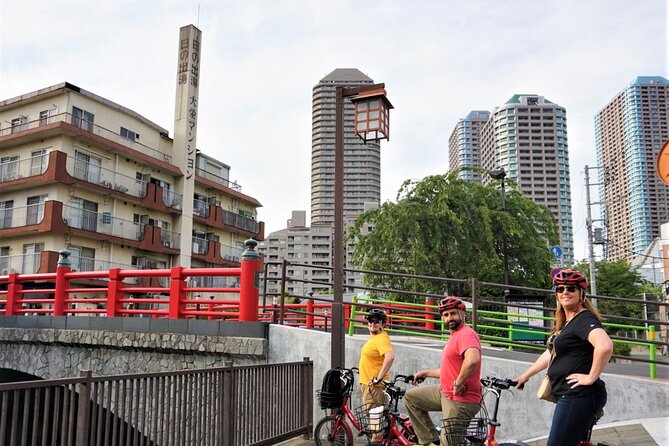
This tour includes the things that matter for a comfortable ride in Tokyo’s real weather.
You get:
- Rental e-assist bike
- Helmet (required)
- English guide
- Insurance
- Simple rain gear
- Simple gloves in winter and cooling products in summer
- Luggage storage during the tour (except valuables)
Not included: food and drinks. You’ll pay for meals yourself if you stop somewhere for snacks or drinks.
Practical note: if you’re visiting in summer, bring your own towel and sunscreen if you can. In winter, bring warm layers and consider gloves even if winter gloves are provided.
Stop-by-stop: Kanda, Tokyo Station, and the Imperial Palace area (AM)
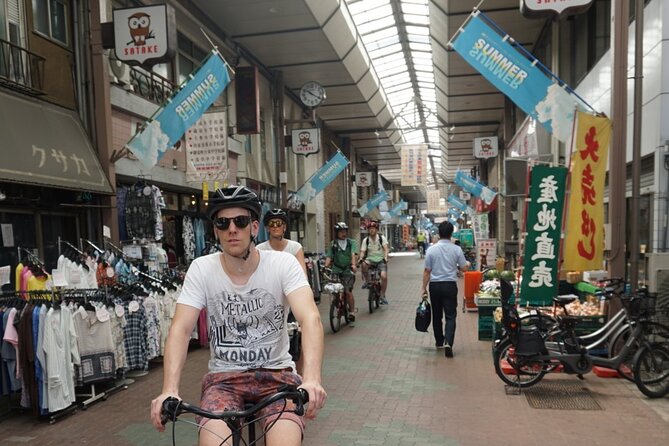
Even if you’ve been to Tokyo before, these first segments help you build a mental map fast.
Kanda: compact downtown with side-street energy
You start in Kanda, a smaller downtown area with a lot of businesspeople and small Japanese-style bars mixed into everyday streets. It’s not a “stagey” neighborhood. It feels lived-in, which makes it a good warm-up.
Tokyo Station Marunouchi frontage: a station with big-city gravity
Next you’ll look at Tokyo Station’s Marunouchi building from around Gyoko-dori Street. Your guide explains the station’s history while you’re already in motion, so it sticks better than reading a plaque after you’re tired.
Kokyo Otemon Gate: moat views without the hassle
You’ll reach the Kokyo Otemon Gate area. From there, you can look across the moat toward the Fujimi yagura tower. It’s a classic composition and an easy win for photos.
Imperial Palace grounds and the big Tokyo “inside the city” space
There’s also an included stop in the Imperial Palace-linked green space area near the palace zone (the tour description emphasizes a very large park area right in central Tokyo). The point isn’t that you’re touring every corner. It’s that you’re seeing how Tokyo manages open space right where you’d expect only dense streets.
Sakuradamon and the “castle gate” feel
You also pass through Sakuradamon and move through gate-adjacent streets. It’s one of those moments where Tokyo stops being only modern buildings and becomes something layered.
From Ginza lanes to Tsukiji street life (AM)
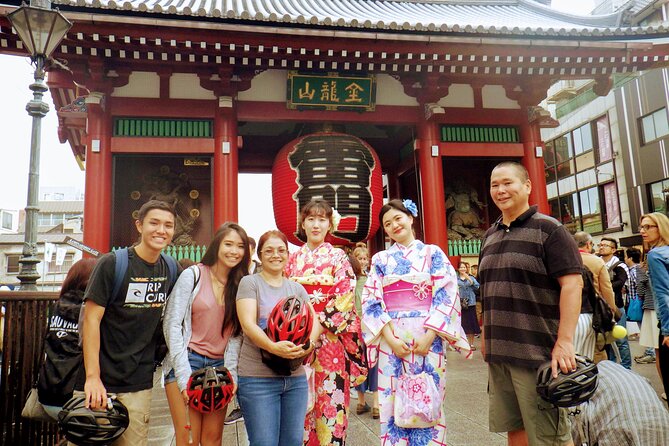
After the big landmarks, the ride shifts into neighborhoods where Tokyo feels more everyday.
Ginza backstreets: luxury brands on the edges, local streets in the middle
Depending on road and pedestrian conditions, you may ride through the backstreets near Ginza where luxury stores cluster—or take main streets if that’s what the day requires. Either way, the guide times and routes the bike line so you’re not stuck in the worst pedestrian crush.
This is where the e-bike pays off. You get the “Ginza is near” feeling, without spending your whole day trying to cross the densest blocks on foot.
Tsukiji Jogai Market (Outer Market): old-fashioned food-shop streets
You’ll visit Tsukiji outer market, with small, older-style food shops lining the streets. This is the part where you can slow down, look at what’s for sale, and ask questions. The pace is flexible, and your guide helps you understand what you’re looking at.
The tour description calls this a chance to see “local and historical Tokyo life,” and that’s the right mindset. Think atmosphere and street-level details, not a formal museum tour.
Backstreet connections you can’t easily do by train
There’s also a segment aimed at “connecting local streets and passes which only e-bike make possible.” Translation: you’ll take the kind of shortcuts that are annoying by foot and awkward by taxi. It helps you see more in less time, and it makes Tokyo’s geography feel clearer.
Stop-by-stop: Akihabara, Kappabashi, Asakusa, and Ryogoku (PM)
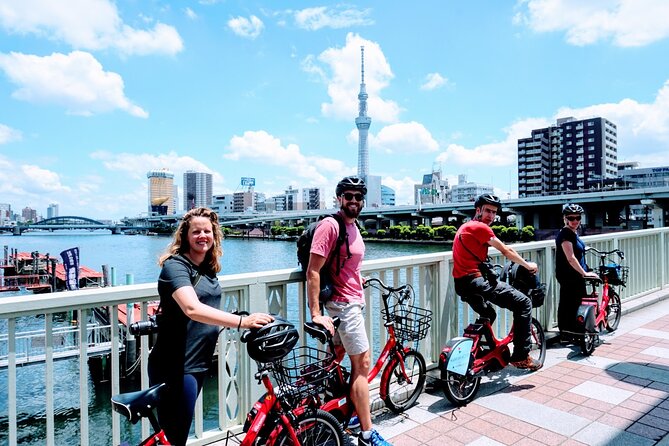
Afternoon feels like Tokyo turning up the volume—without going chaotic.
Akihabara: subculture and geek culture focus
You’ll hit Akihabara, famous for youth and geek culture. The tour framing is clear: it’s more than just checking one famous storefront. You’ll learn enough context to understand why this neighborhood has that reputation, and you’ll get photo chances along the ride.
Kappabashi Tool Street: kitchen tools and real knife culture
Then you’ll roll through Kappabashi Tool Street, where kitchen utensils and professional cooking tools are front and center. If you’re even mildly interested in Japanese knives, this is the kind of place you’ll want to look slowly.
There’s also time for browsing and optional shopping, which is a nice perk if you collect souvenirs that aren’t just T-shirts.
Asakusa: the classic temple-town moment
You’ll reach Asakusa, famous for an older temple and widely considered one of the key “you made it to Tokyo” stops. This is where the tour’s pacing matters: you don’t get stuck in a long transit slog, and you get guidance on temple customs, so you know how to behave without second-guessing.
Ryogoku: sumo-area flavor if you’re lucky
The PM option can include Ryogoku, described as a sumo wrestler area. The tour notes you might be able to meet real sumo wrestlers if you’re lucky. Even if you don’t see anyone famous, the neighborhood vibe and local focus make it feel more specific than a generic sightseeing stop.
The guide factor: English-led, safety-focused, and full of context
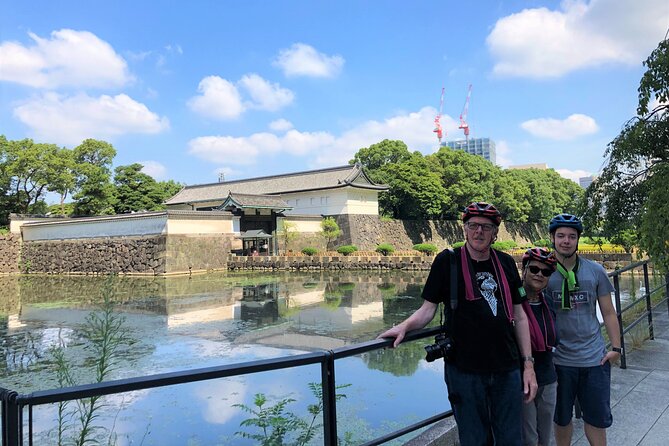
The tour’s real advantage is the guide. The names you might meet—Yo, Jenny, Take, Kazu, Ninja, Ted—show a pattern: they’re patient, they keep the group together, and they explain what you’re seeing while you’re still fresh enough to care.
A few things the best guides tend to do on this kind of tour:
- Keep stops frequent enough that you can ask questions
- Explain cultural and historical context right when you see it
- Adjust pace so the ride stays fun instead of turning into a sprint
There’s also a practical angle: one guide-style theme is safety and comfort, especially when roads are busy or weather shifts. That matters because Tokyo’s street environment can change quickly—cars, scooters, pedestrians, crossings.
What to pack (so the ride doesn’t steal your joy)
You’ll have support gear included, but you still want to show up prepared.
Bring:
- Comfortable closed-toe shoes
- If it’s summer: towel and sunscreen (Tokyo heat is real)
- If it’s winter: warm layers and consider extra gloves if you run cold
Also: consider carrying a small water bottle. The tour includes cooling products in summer, but hydration is still your job.
For rain: they provide simple rain gear. A bit of extra caution helps. If you’re prone to getting cold wet, plan layers accordingly.
Weather reality: rain and extreme heat can change the plan
Tokyo weather doesn’t always respect itineraries.
- The tour checks forecasts the day before and may cancel if rain is expected.
- Even if the day starts sunny, weather can shift, and the guide decides whether to continue.
- In summer July–August, they use a heat stress reference (WBGT) to judge if conditions are dangerous. They may cancel in advance or stop and return if needed, and in that case the fee can be refunded.
The upshot: this is a tour that puts safety first. It’s annoying when it changes, but it’s better than pretending heat and rain won’t affect how you feel.
Price and value: why $63 can work well in Tokyo
At about $63.01 per person for roughly 3 hours, you’re paying for more than bike rental. You’re paying for:
- An English-speaking guide
- A structured loop that reduces navigation stress
- Time-efficient access to multiple neighborhoods
- Safety gear and insurance
- The ability to move across central Tokyo without exhausting yourself
If you were doing this solo, you’d pay for the bike anyway, and you’d still spend time figuring out route logistics and what to look for. Here, the bike and the context come together.
Is it the cheapest way to “see Tokyo”? No. But it’s one of the best ways to see a lot of Tokyo in a short window without feeling wrecked by day two.
Who should book this (and who might skip it)
This works best if:
- You’re a first-time visitor who wants orientation fast
- You want both landmarks and everyday street life
- You like guided context but still want freedom to ride at your own pace
- Your group can ride a bike confidently (minimum height is 147 cm / 4.8 ft, minimum age 12)
Consider skipping or thinking carefully if:
- You cannot ride a bicycle
- Traffic riding makes you anxious
- You’re traveling with someone who struggles to keep pace in busy streets
Should you book this Tokyo e-bike tour?
Yes, I’d book it if you want an efficient, guided way to hit real neighborhoods—Kanda, Tokyo Station area views, Imperial Palace gates, plus either Tsukiji and market streets (AM) or Akihabara/Kappabashi/Asakusa/Ryogoku flavor (PM).
Make your decision based on your energy and interests:
- Pick AM for landmark views and market street life.
- Pick PM for subculture, tools/knives, and classic temple-town atmosphere.
And if weather is a concern in your travel week, pack smart and be flexible. Tokyo can be hot or wet, and the tour team adjusts for safety.
FAQ
Where is the meeting point?
You meet at Cycling Holiday Tokyo, located at 3-chōme-8-6 Uchikanda, Chiyoda City, Tokyo. It’s about a one-minute walk from the west exit of JR Kanda Station.
How long is the tour?
The tour lasts about 3 hours.
Are helmets and rain gear included?
Yes. Helmets are included, and you also get simple rain gear.
What about food and drinks?
Food and drinks are not included. You can self-pay at shops during the tour.
How many people are in a group?
The tour has a maximum of 6 people per booking. It can also include other participants if you’re joining the minimum-group departure.
What are the age and height requirements?
Minimum age is 12 years, and the minimum height is 147 cm (4.8 ft).
Do I need experience riding a bicycle?
Yes. If you cannot ride a bicycle, you cannot join this tour.
Can I store luggage during the ride?
Yes. You can leave luggage (except valuables) with the shop during the tour.
What happens if it rains or it gets extremely hot?
If the weather is poor, the tour may be canceled based on forecasts the day before. During summer heat risk, the tour may stop and return for safety, and the fee can be refunded in that case.
Is there an English guide?
Yes, the tour includes an English guide.
More Cycling Tours in Tokyo
- Tokyo Guided Small-Group Biking Tour
★ 5.0 · 1,250 reviews - Tokyo Great Cycling Tour
★ 5.0 · 811 reviews - Tokyo Top Highlights 3h Guided E-bike Tour
★ 5.0 · 714 reviews - Tokyo: 3-Hour Bike or E-Bike City Highlights Tour
★ 4.8 · 435 reviews - Tokyo: 3-hour Guided E-Bike Tour of the City’s Hidden Gems
★ 4.8 · 251 reviews
More Tours in Tokyo
- Mt Fuji and Hakone 1-Day Bus Tour Return by Bullet Train
★ 5.0 · 26,383 reviews - 1-Day Tokyo Bus Tour
★ 5.0 · 14,250 reviews - Tokyo: Shinjuku Food Tour (13 Dishes at 4 Local Eateries)
★ 5.0 · 6,603 reviews - Tokyo Mt Fuji 5th St & Hakone Cruise Bus Tour w/Bullet Train
★ 4.4 · 5,024 reviews - Flagship 2-Hours Official Street Go-Kart Tour – Tokyo Bay Shop
★ 5.0 · 4,974 reviews
More Tour Reviews in Tokyo
- Mt Fuji and Hakone 1-Day Bus Tour Return by Bullet Train
★ 5.0 · 26,383 reviews - 1-Day Tokyo Bus Tour
★ 5.0 · 14,250 reviews - Tokyo: teamLab Planets TOKYO Digital Art Museum Entry Ticket
★ 4.6 · 9,779 reviews - Mt Fuji & Hakone Cruise, Drum Show Bullet Train 1 Day from Tokyo
★ 4.0 · 7,413 reviews - Tokyo: Shinjuku Food Tour (13 Dishes at 4 Local Eateries)
★ 5.0 · 6,603 reviews
Latest Tokyo reviews off our desk






Cycling Tours, compared.
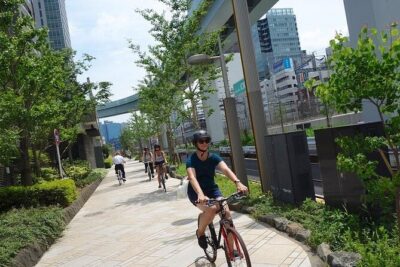 ★ 5.0Tokyo Guided Small-Group Biking TourFrom $1061,250 reviews
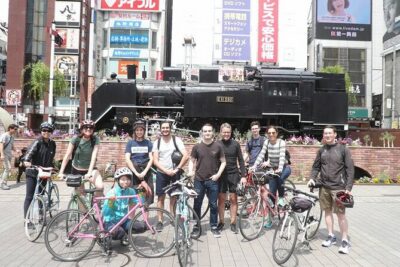 ★ 5.0Tokyo Great Cycling TourFrom $99811 reviews
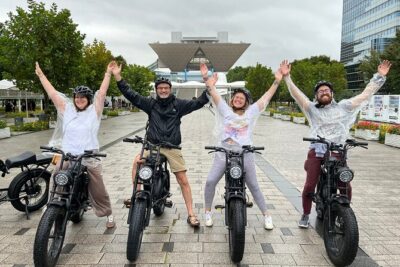 ★ 5.0Tokyo Top Highlights 3h Guided E-bike TourFrom $63714 reviews
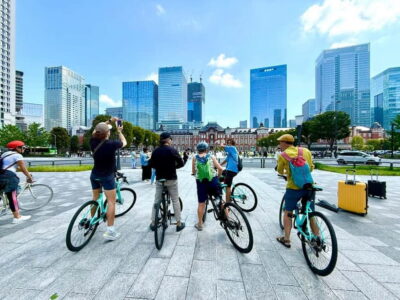 ★ 4.83-Hour Bike or E-Bike City Highlights TourFrom $45435 reviews
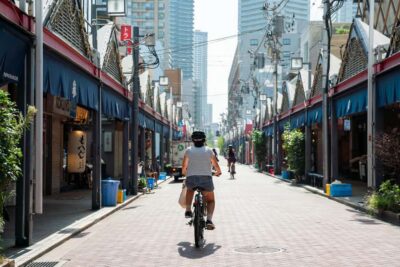 ★ 4.83-hour Guided E-Bike Tour of the City’s Hidden GemsFrom $65251 reviews
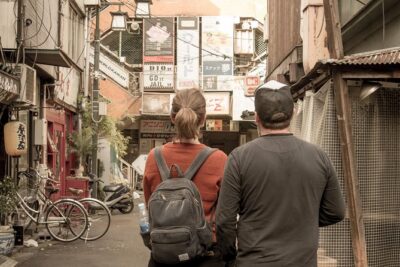 ★ 5.0Tokyo West-Side Cycling & Food TourFrom $99214 reviews
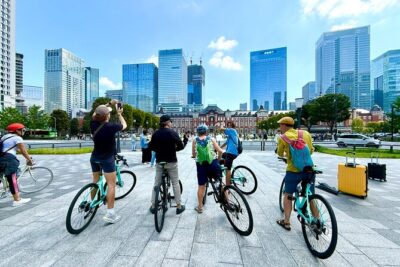 ★ 5.03-Hour Bike/E-Bike Tour of the City’s HighlightsFrom $63209 reviews
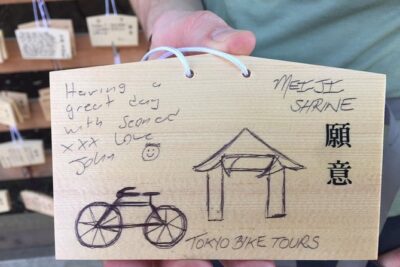 ★ 5.0Small Group Cycling Tour in TokyoFrom $66184 reviews
Browse the lists this tour appears in