
Reviewed · PRIVATE DRIVERS
Tokyo day Tour with Lunch/ English-Speaking Driver Cum Guide
Tokyo can feel like a video game. This private day tour keeps it sane. I especially love the door-to-door pickup and the lunch included. One thing to consider: this setup is closer to driver-led transportation than a deep, narrated guided tour.
You’ll get a well-paced hit list of first-day essentials: market energy at Tsukiji, a big panoramic moment from Tokyo Skytree (ticket extra), classic temple scenes in Asakusa, then the modern Tokyo contrast of Shibuya Crossing and futuristic Odaiba. And when the English and guiding style are strong, it really pays off, like with drivers such as Ahmad, Malik, and Sajid who helped make the day feel effortless.
In This Review
- Key things I’d pay attention to
- Why this private Tokyo day feels like a cheat code
- The real value: hotel pickup, WiFi, and a route that makes sense
- Tsukiji Fish Market: where the day starts with noise and smell
- Tokyo Skytree: the best payoff if you like city scale
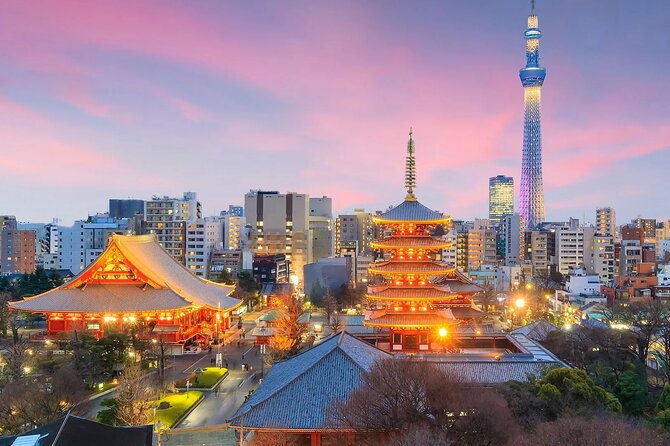
- Senso-ji in Asakusa: old Tokyo’s most photographed face
- Imperial Palace: why “free” can still feel like a big moment
- Meiji Jingu and the Yoyogi option: the calm break that Tokyo needs
- Shibuya Crossing: when Tokyo turns into a movie scene
- Odaiba: the bay views and the futuristic contrast
- Price and logistics: what $501.45 per group really buys you
- Driver vs guide: the biggest reason people either love or regret it
- Timing reality: you get short visits, so prioritize what you want
- So, should you book it?
- FAQ
- How long is the Tokyo day tour?
- What is included in the price?
- Is pickup from my Tokyo hotel included?
- Is Tokyo Skytree admission included?
- Do I need to buy tickets for the other stops?
- Is this tour private?
- What’s the meeting style for the day?
- Is the driver able to speak English?
- Can I cancel for a full refund?
- Does the tour run in any weather?
Key things I’d pay attention to
- Hotel pickup and air-conditioned car: You start fresh, not sweaty, with WiFi on board.
- A full Tokyo “starter pack” day: Tsukiji → Asakusa → Meiji Jingu → Shibuya → Odaiba, all in one run.
- Skytree entry is extra: You decide how high you want to go.
- Customization is real: If you care more about one stop, you can usually shape the timing.
- Know what you’re booking: Some people expect a true guide with narration; you’ll mostly get driving plus helpful explanations.
Why this private Tokyo day feels like a cheat code
Tokyo is amazing, but it’s also a test of logistics on day one. This tour is built for that exact problem: you don’t need to figure out trains, line transfers, station exits, or whether you’re walking the right 10 minutes between sights. You book a private car, and the route is designed to hit major landmarks without you burning your morning on navigation.
For first-time visitors, this kind of day is a stress reducer. For short-stay travelers, it’s also efficient: seven hours is enough time to see Tokyo’s “old and new” in a single loop. And because the itinerary includes lunch, you avoid the classic travel trap of spending the whole day grabbing snacks and then realizing you forgot to eat.
The one catch I’d plan around: the “English-speaking driver” role can vary. Some drivers provide clear, friendly explanations and help you understand what you’re seeing. Others focus more on transport. If you’re the type who wants detailed history with continuous narration, you’ll want to manage expectations before you book.
Readers also shortlisted these Tokyo bookings:
- Tokyo 6hr Private Tour with Government-Licensed Guide
★ 5.0 · 3,902 reviews - Tokyo: Shinjuku Local Bar and Izakaya Guided Walking Tour
★ 4.9 · 1,794 reviews - Tokyo: Private City Highlights Tour with Local Guide
★ 4.8 · 1,433 reviews - Tokyo: Tsukiji Fish Market Guided Walking Tour
★ 4.9 · 1,397 reviews
The real value: hotel pickup, WiFi, and a route that makes sense
This experience includes door-to-door transfers from Tokyo hotels. That matters more than it sounds. Tokyo stations are huge, and sometimes the shortest train route still means a long walk outside, crossing streets, or hunting for the correct exit. With pickup, your day starts with less friction and ends with less “where’s the car?” hassle.
You also get:
- Air-conditioned private vehicle
- WiFi on board
- Highway tolls and fuel surcharge
- Lunch included
- Mobile ticket
And yes, it’s private: only your group participates, with a max group size of up to 6. That means you’re not stuck waiting for other groups to finish photos, and you can usually keep your pace.
Tsukiji Fish Market: where the day starts with noise and smell
Tsukiji sets the tone. Even if you’re not a hardcore seafood person, you’ll feel the market’s momentum—busy alleys, vendors, street food energy, and that sense that everyone is here for a reason. The time slot is about one hour, and the good news is that’s enough to see the scene and grab something quick without feeling rushed.
What to expect in practice:
- You’ll have time for a walk-through and browsing.
- You can focus on street-food snacks and cooked items as much as raw seafood.
- The atmosphere is the main attraction here—so don’t overplan.
If you’re picky about eating, keep it simple: choose one or two items you’re comfortable with, then spend the rest of the hour watching how the market works. It’s one of the most visually “Tokyo” experiences you can fit into a first day.
Tokyo Skytree: the best payoff if you like city scale
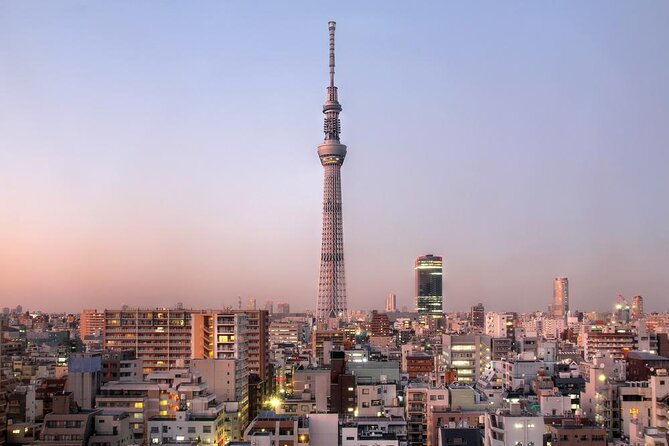
Tokyo Skytree is the stop that gives you perspective. It’s listed as the world’s tallest tower at 634m, and the schedule gives you about one hour.
Key point: Skytree admission is not included. So when you decide to go up (or not), it affects both cost and timing. If you want the big-view moment, plan for extra time if you encounter longer lines than expected.
Is it worth paying for entry? If you want a photo that makes the city feel real—dense neighborhoods, rivers and roads, and the sense of distance—that’s the moment. If you’re not into observation decks, you might treat Skytree as a photo stop and move on. Either way, you’ll still get the landmark experience.
Senso-ji in Asakusa: old Tokyo’s most photographed face
Senso-ji is Tokyo’s classic temple stop, and the time window is around 55 minutes. The tour includes the temple itself (free entry), so you’re not stuck figuring out ticketing or separate paid attractions just to visit a landmark.
This stop works because it’s not just a building. It’s a whole area with movement: approaching via the temple precinct, taking in the main sight, and soaking up Asakusa’s calm versus Tsukiji’s chaos.
Practical tips for making this time work:
- Wear shoes you’re happy to walk in—temple-area walking adds up.
- Go slow through the busiest spots, especially near the main approach area.
- Treat this as a “see it, feel it, take a few photos” stop rather than a long museum-style visit.
Readers also shortlisted these Tokyo bookings:
- Tokyo: Mt.Fuji & Lake Kawaguchiko 1-Day Bus Tour w/Optional Lunch★ 4.5 · 839 reviews
- Tokyo: Sumo Experience and Chanko Nabe Lunch★ 4.8 · 257 reviews
- Tokyo: Tsukiji Fish Market Tour with 6 Stops & Seafood Lunch★ 4.5 · 165 reviews
- Tokyo: 1 Day Bus Tour with Meiji-Jingu,Odaiba,lunch&Skytree★ 4.6 · 156 reviews
- Tokyo: Full-Day Tour w/Tea Experience,Buffet Lunch & Cruise★ 4.9 · 151 reviews
Imperial Palace: why “free” can still feel like a big moment
You get about 40 minutes at the Imperial Palace area, with admission not included. The real value here is the scale and symbolism: it defines a lot of Tokyo’s sense of place, and even if you only get a partial view, it changes the rhythm of your day.
The Imperial Palace experience in a short time slot is best understood as a “look, reset, and reposition” moment. You’re not going to cover everything in 40 minutes, so aim to:
- See the main areas you can reach during your time.
- Take a quiet pause before the day accelerates again.
This stop is also a nice counterweight to the busy modern scenes that come later.
Meiji Jingu and the Yoyogi option: the calm break that Tokyo needs
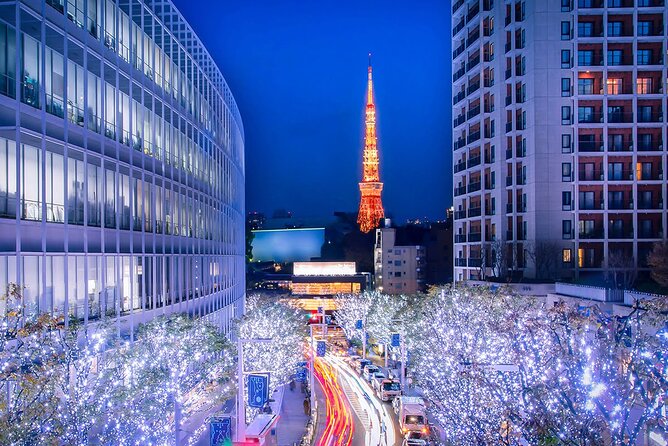
Meiji Jingu is about 50 minutes, and entry is free. It’s a major Shinto shrine dedicated to the deified spirits of Emperor Meiji and Empress Shoken, and it’s tied to a story of modern Japan’s formation.
The schedule gives you an important optional angle: Yoyogi Park and Takeshita Street are optional. That’s useful because it lets you choose how you want to split your Meiji time:
- If you want quiet and shrine atmosphere, focus on Meiji Jingu and nearby walking.
- If you want youth culture and street energy, add Takeshita Street.
- If you want a breather between temples and crowds, Yoyogi Park fits well.
The best way to decide is simple: if you’re tired, stay calmer. If you still have energy, the pop-culture contrast can be fun—just expect crowds if you go into the street areas.
Shibuya Crossing: when Tokyo turns into a movie scene
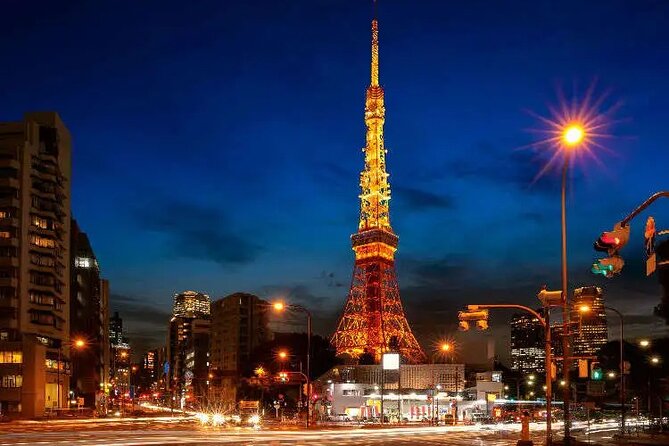
Shibuya Crossing is one of those landmarks where the hype is justified. The tour gives you about 40 minutes and entry is free. This is the stop that shows how Tokyo works at human speed—people flowing in organized chaos, lights changing, and a constant stream of phones, selfies, and street-level motion.
If you’re coming here after Meiji and Asakusa, you’ll feel the shift immediately. This is a good point to:
- Take a few classic shots.
- Watch for one full light cycle before you move on.
- Avoid trying to do too many side errands while you’re there.
It’s not a place to overthink. Stand where you can get the crossing view, and let the moment happen.
Odaiba: the bay views and the futuristic contrast
You finish the loop in Odaiba, a man-made island area with about one hour on the schedule. Entry is listed as free, and the point here is the contrast: Tokyo’s neon-soaked modern vibe meets wide-open bay views, plus landmarks like Rainbow Bridge.
What you’ll likely enjoy most:
- The feeling of space compared to earlier stops.
- Tokyo Bay views, including the bridge perspective.
- A calmer “wrap-up” atmosphere at the end of a long day.
If it’s clear, this stop becomes the final photo deck. If it’s cloudy, you’ll still get the waterfront feel and the skyline context—just with different lighting.
Price and logistics: what $501.45 per group really buys you
The listed price is $501.45 per group (up to 6) for about seven hours. That’s not cheap in “solo traveler” math. But in Tokyo, private transportation plus door-to-door service can add up fast, especially when you consider:
- hotel pickup and drop-off within Tokyo,
- highway tolls and fuel,
- an air-conditioned private car,
- WiFi on board,
- and lunch included.
Where you should expect extra cost:
- Tokyo Skytree entrance fee is not included.
Everything else you need to get around the city is included. For families or small groups, the per-person cost often feels more reasonable than it first appears—especially if one person would otherwise spend the day trying to manage train transfers, luggage, and timing.
Also, the tour is commonly booked about 7 days in advance on average. That’s a hint that many people plan this as their first-day anchor, right when they arrive and want the day handled.
Driver vs guide: the biggest reason people either love or regret it
Here’s the thing I think you should plan for: your experience may feel more like a guided day or like upgraded transport, depending on your specific driver’s style and English level.
Some people felt they got good help and explanation at stops. Others said it felt like a taxi driver experience: limited English, minimal narration, and the driver mostly waiting in the car while they explored on their own. A few also flagged confusion about expectations—especially when they thought they were paying for a true guide rather than transport.
So before you book, decide what matters most to you:
- If you mainly want the route handled, comfort, and time to explore each place, this is likely a good fit.
- If you want continuous history and cultural interpretation, you’ll want to be ready to do more on your own, or confirm that you’ll get real guiding-style narration.
In the positive examples, drivers such as Ahmad, Malik, Mumbi, Sadji, Sajid, and Sam were praised for helpfulness, patience, and English ability. In the less satisfying experiences, the complaint was usually not the itinerary—it was the depth of guiding and clarity.
Timing reality: you get short visits, so prioritize what you want
A seven-hour day sounds long until you stack Tokyo stops. Each location gets roughly an hour or less, which is normal for a packed highlights loop.
That means you should pick your “must-do” moments and treat everything else as “see it and enjoy it.” I like this style because it reduces decision fatigue. You’re not planning a whole week in one day—you’re sampling Tokyo’s biggest beats.
Also, expect walking. Meiji Jingu, Asakusa, and the crossing areas all involve getting around on foot. The fitness guidance is moderate physical fitness. If you need mobility support, you should plan for slower pacing and tell your driver what you need.
In some shared experiences, families with a wheelchair-bound parent and a toddler used the service effectively, which suggests flexibility is possible when you communicate clearly about your pace.
So, should you book it?
I’d book this tour if:
- it’s your first day in Tokyo and you want a stress-free way to cover major sights,
- you’re traveling with a small group and want private transport plus lunch,
- you like a balanced day that mixes temples and modern Tokyo without overplanning.
I’d skip it or plan differently if:
- you want a hands-on, story-heavy guide experience at every stop,
- you’re the type who prefers spending longer at fewer places rather than doing many short visits,
- you’re expecting all entrance fees to be covered (Skytree is extra).
My practical advice: if Skytree is important to you, budget for it from the start. And if you care about narration, ask directly what kind of guiding you’ll receive versus transport-only support.
FAQ
How long is the Tokyo day tour?
It runs for about 7 hours.
What is included in the price?
Included are air-conditioned private transportation, WiFi on board, an English-speaking driver, highway tolls and fuel surcharge, and lunch.
Is pickup from my Tokyo hotel included?
Yes. Door-to-door transfers from Tokyo hotels are included.
Is Tokyo Skytree admission included?
No. Skytree entry is not included, so you’ll pay the admission fee separately if you want to go up.
Do I need to buy tickets for the other stops?
No entrance fees are listed for Tsukiji, Senso-ji, Meiji Jingu, Shibuya Crossing, and Odaiba. The Imperial Palace admission is listed as not included.
Is this tour private?
Yes. It’s a private tour/activity, and only your group participates. The group size is up to 6.
What’s the meeting style for the day?
You’ll have pickup from your Tokyo hotel area and then move between the included stops by car.
Is the driver able to speak English?
Yes. The driver is English-speaking, though comfort with English can vary by driver.
Can I cancel for a full refund?
Yes, free cancellation is available. You can cancel up to 24 hours in advance for a full refund.
Does the tour run in any weather?
It requires good weather. If it’s canceled due to poor weather, you’ll be offered a different date or a full refund.
More Guided in Tokyo
- Tokyo 6hr Private Tour with Government-Licensed Guide
★ 5.0 · 3,902 reviews - Tokyo: Shinjuku Local Bar and Izakaya Guided Walking Tour
★ 4.9 · 1,794 reviews - Tokyo: Private City Highlights Tour with Local Guide
★ 4.8 · 1,433 reviews - Tokyo: Tsukiji Fish Market Guided Walking Tour
★ 4.9 · 1,397 reviews - Tokyo 4hr Private Tour with Government-Licensed Guide
★ 5.0 · 1,394 reviews
More Tours in Tokyo
- Mt Fuji and Hakone 1-Day Bus Tour Return by Bullet Train
★ 5.0 · 26,383 reviews - 1-Day Tokyo Bus Tour
★ 5.0 · 14,250 reviews - Tokyo: Shinjuku Food Tour (13 Dishes at 4 Local Eateries)
★ 5.0 · 6,603 reviews - Tokyo Mt Fuji 5th St & Hakone Cruise Bus Tour w/Bullet Train
★ 4.4 · 5,024 reviews - Flagship 2-Hours Official Street Go-Kart Tour – Tokyo Bay Shop
★ 5.0 · 4,974 reviews
More Tour Reviews in Tokyo
- Mt Fuji and Hakone 1-Day Bus Tour Return by Bullet Train
★ 5.0 · 26,383 reviews - 1-Day Tokyo Bus Tour
★ 5.0 · 14,250 reviews - Tokyo: teamLab Planets TOKYO Digital Art Museum Entry Ticket
★ 4.6 · 9,779 reviews - Mt Fuji & Hakone Cruise, Drum Show Bullet Train 1 Day from Tokyo
★ 4.0 · 7,413 reviews - Tokyo: Shinjuku Food Tour (13 Dishes at 4 Local Eateries)
★ 5.0 · 6,603 reviews
Latest Tokyo reviews off our desk






Private Drivers, compared.
 ★ 5.0Mt Fuji Private Tour with English Speaking DriverFrom $415861 reviews
 ★ 4.5Mt. Fuji & Hakone Private Day Tour with English-Speaking DriverFrom $453824 reviews
 ★ 4.5Haneda Airport (HND) Private Transfer to Central TokyoFrom $104636 reviews
 ★ 4.5Mt. Fuji, Hakone Full-Day Private Tour with English Driver GuideFrom $495458 reviews
 ★ 5.0Mt. Fuji Day Trip from Tokyo with English Speaking Driver GuideFrom $497443 reviews
★ 4.5Mt. Fuji Private Tour with English Speaking DriverFrom $464402 reviews
★ 5.0Mt. Fuji Day Trip from Tokyo with English Speaking Driver GuideFrom $497443 reviews
★ 4.5Mt. Fuji Private Tour with English Speaking DriverFrom $464402 reviews
 ★ 4.9Mt. Fuji & Hakone Private Custom Tour English DriverFrom $322351 reviews
 ★ 4.9From Tokyo : Mount Fuji Private Day Tour with English DriverFrom $409311 reviews
Browse the lists this tour appears in