
Reviewed · MOUNT FUJI TOURS
Tokyo: Instagram-Worthy Mt Fuji & Lake Kawaguchiko Day Trip
Mt. Fuji in one packed day. This Tokyo-to-Kawaguchiko trip is built for photos, with Tokyo Station pickup and multiple viewpoint stops timed to catch Mt Fuji when she’s visible. I especially like the focus on big, recognizable Mt Fuji angles, like the Chureito Pagoda view at Arakurayama, and the quick hit at the Lawson convenience-store viewpoint that frames the mountain in a way you can’t fake. One thing to weigh: it’s efficient and a bit photo-heavy, so don’t expect a slow, lecture-style day.
You’ll travel with a driver and guide and keep the group to a maximum of 21 people, which helps the timing stay manageable. I also appreciate how the route adapts by season, swapping stops during peak cherry blossom and autumn maples. Still, timing depends on traffic and Fuji’s mood, so you’ll want to be flexible and ready to move.
In This Review
- Key takeaways before you go
- Tokyo Station pickup makes the day feel doable
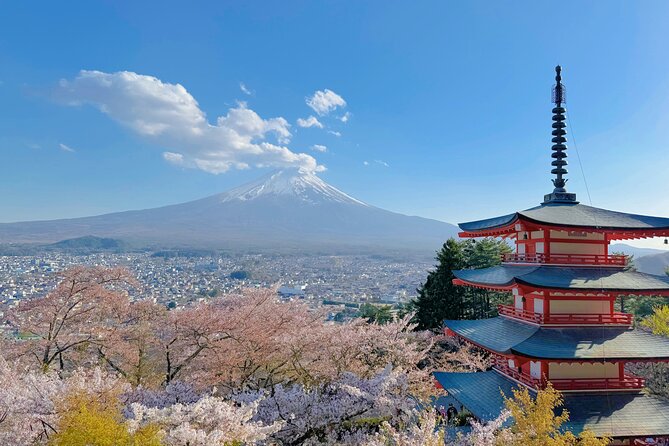
- Arakurayama Sengen Park: Chureito Pagoda and the best kind of hill
- Hikawa Clock Shop is in the plan, but not always in early April
- Oshino Hakkai: eight springs, clear water, and easy wandering time
- Lawson Kawaguchiko Station: the convenience-store photo stop that works
- Lake Kawaguchi Ohashi Bridge and the rhythm of Oishi Park flowers
- Maple Corridor in late Oct to mid Nov: when autumn is the main event
- How timing really works: photo-first pacing and why it can feel fast
- Value check: is $161 worth it?
- Who this Mt. Fuji photo day trip is for
- Should you book this tour?
- FAQ
- What time does the tour start?
- Where does the tour meet and where does it end?
- How long is the day trip?
- How much does the tour cost?
- What’s included in the price?
- Are admission tickets included?
- Do you use a mobile ticket?
- What changes during cherry blossom season in early April?
- Does the tour always visit Oishi Park?
- What’s the cancellation policy?
Key takeaways before you go
- Tokyo Station pickup at 8:00 am: reduces your stress on day-one logistics
- Arakurayama Sengen Park for the Chureito Pagoda view: a top Mt Fuji photo moment, especially in Apr and Nov
- Oshino Hakkai’s eight springs: calm, clear water that helps reflections
- Lawson Kawaguchiko Station photo stop: a famously easy Mt Fuji framing point
- Autumn swap from Oishi Park to Maple Corridor: if you’re traveling late Oct to mid Nov, plan for maples first
Tokyo Station pickup makes the day feel doable
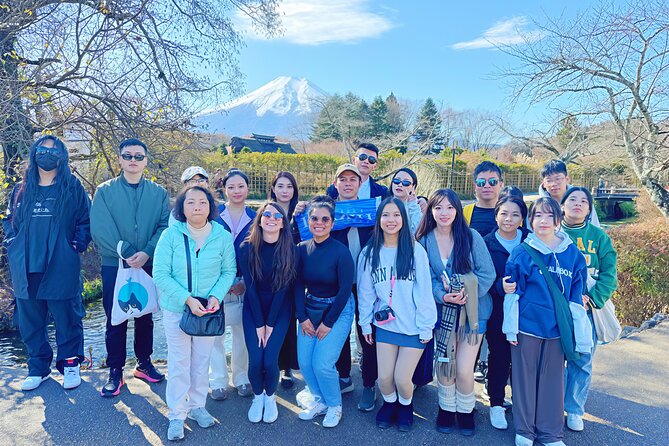
The best part of this trip is that you start where most visitors already are: Tokyo Station, with pickup at 8:00 am. That matters because getting out to Lake Kawaguchiko isn’t a quick hop. I like tours that remove the “how do I get there” friction, especially when you also want time at the viewpoints before crowds build.
The ride itself is part of the plan. Since the total day is about 10 hours including travel time, you’re trading a bit of control for momentum. You’ll end back at the meeting point too, which keeps the day from turning into a scramble.
More Fuji day trips our readers rated highly
- Mt Fuji and Hakone 1-Day Bus Tour Return by Bullet Train
★ 5.0 · 26,383 reviews - Mt Fuji & Hakone Cruise, Drum Show Bullet Train 1 Day from Tokyo
★ 4.0 · 7,413 reviews - Tokyo Mt Fuji 5th St & Hakone Cruise Bus Tour w/Bullet Train
★ 4.4 · 5,024 reviews - From Tokyo: Mount Fuji Full-Day Sightseeing Trip
★ 4.5 · 4,970 reviews
Arakurayama Sengen Park: Chureito Pagoda and the best kind of hill
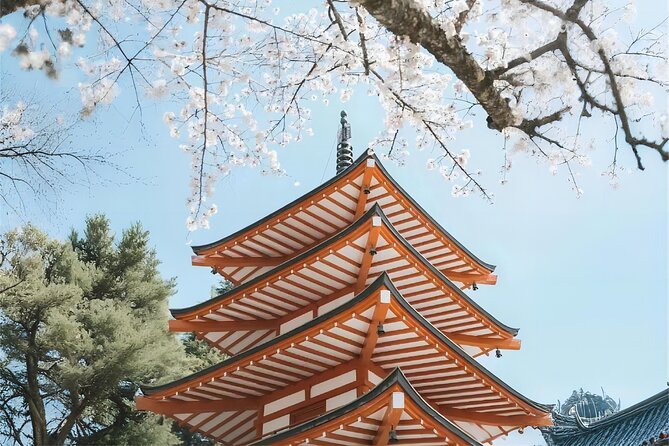
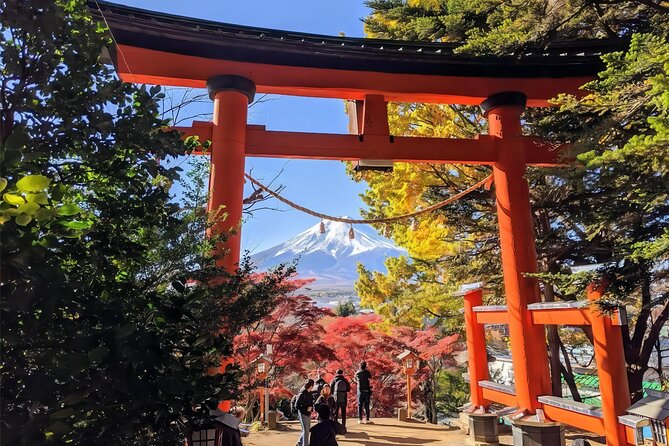
Arakurayama Sengen Park is the anchor stop, and it’s easy to see why. This is where the iconic Chureito Pagoda view lands in postcards and screens, with Mt Fuji behind it depending on weather and seasonal timing. The stop includes admission and gives you about an hour, which is usually enough to arrive, walk up, take pictures from a couple angles, and still have a calm moment.
There’s also a practical upside: this is one of those places where your “photo time” doubles as “experience time.” You’ll see the park’s seasonal changes up close—cherry blossoms in mid-April and autumn foliage in November are the big ones. If Fuji is partially obscured, you’ll at least be in the exact spot people come to for that dramatic reveal.
What to consider: there’s a short hike involved. If you’re not into stairy climbs or you’ll need extra breaks, keep that in mind early in the day so you don’t feel rushed later.
Hikawa Clock Shop is in the plan, but not always in early April
This stop is short—about 20 minutes—and it’s free. The catch is that during the 2025 cherry blossom traffic window (Apr 1–18), the tour skips Hikawa Clock Shop to maximize time at Arakurayama Sengen Park. That’s not a random change; it’s a timing decision meant to protect your Mt Fuji/photo opportunities.
So if you’re traveling in early April, don’t be surprised if you never see this particular spot. You’re still getting the “pagoda first” experience and keeping your day from collapsing under bottleneck traffic.
Oshino Hakkai: eight springs, clear water, and easy wandering time
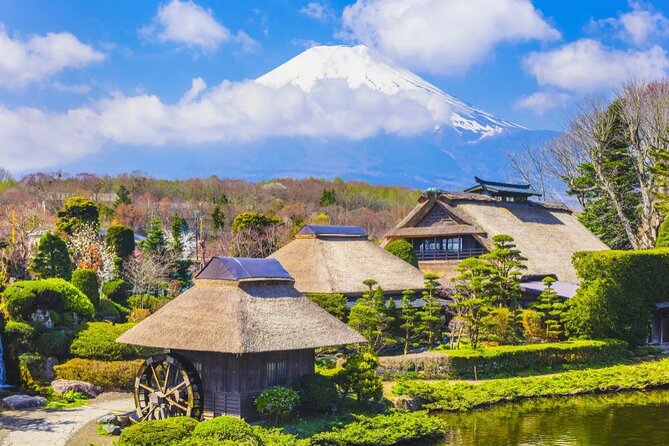
Next you head to Oshino Hakkai, where the story is simple and beautiful: eight springs fed by snowmelt from Mt Fuji. The goal here isn’t shopping; it’s slow strolling, looking for reflections, and taking photos where the waterline gives Mt Fuji a cleaner echo.
You get about 1 hour 20 minutes here, and admission is free. That longer window is useful because this stop feels calmer than the pagoda scramble. You can take your time, step into a quieter corner, and let the photos happen instead of chasing them.
What to consider: this is a natural monument area, so you’ll do some walking. It’s not described as strenuous, but it’s still outdoors, and you’ll feel it more in hot or rainy weather.
Lawson Kawaguchiko Station: the convenience-store photo stop that works
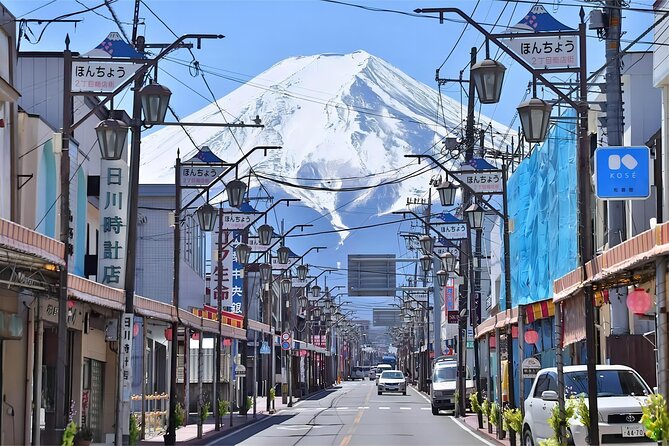
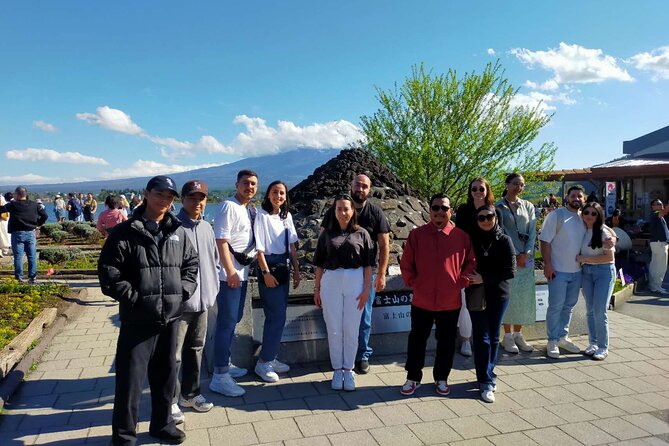
Then comes the most unexpected stop on the itinerary: LAWSON Kawaguchiko Station. It’s free and only about 20 minutes, but it’s a well-known viewpoint because the store sits in a spot where Mt Fuji can appear framed with the surrounding scene.
I like this kind of stop for two reasons. First, it’s fast—perfect when you’re waiting for Fuji to show itself. Second, it gives you a different visual style than temples and bridges, so your photo set doesn’t look like the same composition repeated.
What to consider: 20 minutes is short. You’ll get the time, but you’ll want to decide your angle quickly and avoid spending the whole window reading signs or doing long snack breaks.
Readers also shortlisted these Tokyo bookings:
- Mt Fuji and Hakone 1-Day Bus Tour Return by Bullet Train★ 5.0 · 26,383 reviews
- 1-Day Tokyo Bus Tour★ 5.0 · 14,250 reviews
- Mt Fuji & Hakone Cruise, Drum Show Bullet Train 1 Day from Tokyo★ 4.0 · 7,413 reviews
- Tokyo: DisneySea 1-Day Passport★ 4.5 · 2,726 reviews
- Tokyo Disneyland 1-Day Passport★ 4.6 · 2,512 reviews
Lake Kawaguchi Ohashi Bridge and the rhythm of Oishi Park flowers
After Lawson, the tour moves to Lake Kawaguchi Ohashi Bridge, with about 50 minutes allotted. This is a classic “big sky, big mountain” zone, and it also ties into the seasonal theme of the day.
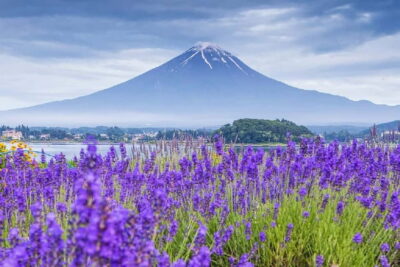
Most of the year, the schedule is built to end around Oishi Park, famous for flower fields like lavender, begonia, cosmos, and Japanese blood grass. In plain terms: it’s the stop where your photos shift from “Mt Fuji framed by landmarks” to “Mt Fuji framed by color.”
There’s one drawback to flag: flower seasons change, and some petals don’t show up on cue. The tour is honest about the seasonal swaps, but you should still expect that the exact look depends on timing.
Maple Corridor in late Oct to mid Nov: when autumn is the main event
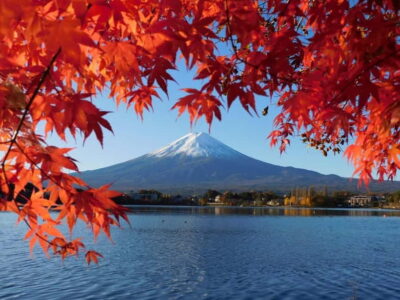
From about Oct 30 to Nov 20, the route swaps out Oishi Park and uses the Maple Corridor instead. During the maple season window (also described as starting around Oct 20 through Nov 20), you get a shot that many people chase hard: snow-capped Mt Fuji against red maple leaves.
This is the kind of stop that’s less about walking a long circuit and more about arriving, finding the right spot, and capturing the contrast. The itinerary gives you around 50 minutes, which is enough to settle in and take multiple photos without feeling like you’re sprinting the whole time.
What to consider: if you’re coming for flowers specifically, this is the season where Oishi Park may not be the final flower-focused payoff. The trade is autumn color for your ending.
How timing really works: photo-first pacing and why it can feel fast
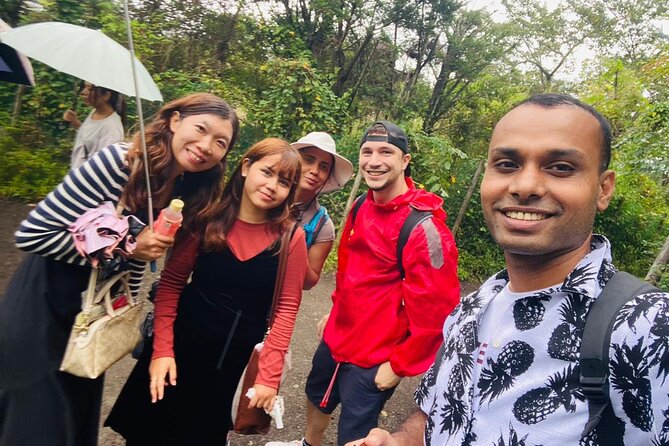
The tour runs about 10 hours including travel, and it has up to 21 people. That’s a workable group size for a day trip, but it also means the pace is set by the schedule between viewpoints.
Some guides in day trips are more talkative than others, and the biggest difference you’ll feel is how much they explain while you’re moving. If your ideal day is long history and cultural context, you might find the narration light compared to what you want. The tour’s structure is clearly aimed at getting you to multiple scenic angles, not turning every stop into a classroom.
Here’s the practical tip: show up with a photo plan. If you know you want pagoda, springs, convenience-store framing, and one autumn ending, you can spend your energy on composition instead of asking yourself what to prioritize when the bus doors open.
Value check: is $161 worth it?
At $161, you’re paying for a whole-day package: driver/guide time, parking fees, and the convenience of being picked up and returned to Tokyo Station. You’re also getting a schedule that doesn’t make you piece together trains, buses, and timing on your own.
Now, the smart way to judge value is to compare effort vs. payout. This is a day trip where your “cost” is mostly time and stress. If you’re traveling solo or you hate planning transfers, that’s where the price starts to make sense fast.
You should also look at what’s included vs. what isn’t. Most admissions are free on the stops listed, but Arakurayama Sengen Park includes an admission ticket. Dinner is not included, so you’ll still need to budget meals on your own.
One last point: Mt Fuji visibility isn’t under anyone’s control. What this tour tries to solve is the problem of Fuji being elusive by giving you several viewpoints across the day. If you treat the day as “maximize your odds” instead of “expect a guaranteed perfect mountain,” the value tends to land better.
Who this Mt. Fuji photo day trip is for
This is a good fit if you want an efficient day that’s built around photos and viewpoint hopping without the planning overhead. I’d especially recommend it for first-timers who are staying in Tokyo and want a structured way to reach the Kawaguchiko area.
You’ll likely enjoy it if you’re okay with a pace that prioritizes stop time over deep storytelling. It’s also a fine choice if you like variety: pagoda views, spring reflections, a convenience-store framing shot, and a seasonal finale.
If you’re the type who needs constant mental health supervision, the tour notes it’s not recommended for that. And if you’re sensitive to walking on uneven ground or climbing a hill at Arakurayama, plan for breaks and wear supportive shoes.
Should you book this tour?
I’d book it if you want less planning and more guaranteed access to the right places on a tight schedule. The Tokyo Station pickup, the small group size (up to 21), and the way the itinerary adapts in cherry blossom and maple season make it feel practical.
Pass or consider a different format if you need a slow, history-heavy day or you dislike photo-and-move itineraries. Also, if you’re traveling in peak seasonal periods, remember that schedules can change to manage traffic—like the early April skip of Hikawa Clock Shop—so your priority should be the overall Fuji viewing plan, not one specific stop.
If you decide to go, pack for weather, bring comfortable shoes, and treat your day as a set of photo opportunities that may or may not all line up with a clear Fuji. That mindset is what turns a rushed-feeling day into a win.
FAQ
What time does the tour start?
The tour start time is 8:00 am, with pickup from Tokyo Station.
Where does the tour meet and where does it end?
It starts at Tokyo Station (1 Chome-9 Marunouchi, Chiyoda City, Tokyo 100-0005) and ends back at the meeting point.
How long is the day trip?
It’s about 10 hours, and that total includes travel time.
How much does the tour cost?
The price is $161.
What’s included in the price?
Parking fees plus the driver and guide service fee are included. Children under 3 are free of charge if they do not occupy a seat.
Are admission tickets included?
Admission tickets are included for Arakurayama Sengen Park. Other listed stops are marked as free.
Do you use a mobile ticket?
Yes, the tour uses a mobile ticket.
What changes during cherry blossom season in early April?
For 2025 cherry blossom traffic regulations from Apr 1 to 18, the tour skips Hikawa Clock Shop to maximize time at Arakurayama Sengen Park.
Does the tour always visit Oishi Park?
No. From approximately Oct 30 to Nov 20, the tour visits Maple Corridor instead of Oishi Park to focus on autumn colors.
What’s the cancellation policy?
Free cancellation is available up to 24 hours before the experience’s start time for a full refund. Changes inside 24 hours are not accepted.
More 1-Day Tours in Tokyo
- Mt Fuji and Hakone 1-Day Bus Tour Return by Bullet Train
★ 5.0 · 26,383 reviews - 1-Day Tokyo Bus Tour
★ 5.0 · 14,250 reviews - Mt Fuji & Hakone Cruise, Drum Show Bullet Train 1 Day from Tokyo
★ 4.0 · 7,413 reviews - Tokyo: DisneySea 1-Day Passport
★ 4.5 · 2,726 reviews - Tokyo Disneyland 1-Day Passport
★ 4.6 · 2,512 reviews
More Tour Reviews in Tokyo
- Mt Fuji and Hakone 1-Day Bus Tour Return by Bullet Train
★ 5.0 · 26,383 reviews - 1-Day Tokyo Bus Tour
★ 5.0 · 14,250 reviews - Tokyo: teamLab Planets TOKYO Digital Art Museum Entry Ticket
★ 4.6 · 9,779 reviews - Mt Fuji & Hakone Cruise, Drum Show Bullet Train 1 Day from Tokyo
★ 4.0 · 7,413 reviews - Tokyo: Shinjuku Food Tour (13 Dishes at 4 Local Eateries)
★ 5.0 · 6,603 reviews
More Mount Fuji Days We Have Reviewed
- Mt Fuji and Hakone 1-Day Bus Tour Return by Bullet Train
★ 5.0 · 26,383 reviews - Mt Fuji & Hakone Cruise, Drum Show Bullet Train 1 Day from Tokyo
★ 4.0 · 7,413 reviews - Tokyo Mt Fuji 5th St & Hakone Cruise Bus Tour w/Bullet Train
★ 4.4 · 5,024 reviews - From Tokyo: Mount Fuji Full-Day Sightseeing Trip
★ 4.5 · 4,970 reviews - Tokyo: Mt. Fuji Tour, Hakone Ropeway, Owakudani, Lake Ashi
★ 4.7 · 4,002 reviews
Latest Tokyo reviews off our desk






Mount Fuji Tours, compared.
 ★ 5.0Mt Fuji and Hakone 1-Day Bus Tour Return by Bullet TrainFrom $16326,383 reviews
 ★ 4.0Mt Fuji & Hakone Cruise, Drum Show Bullet Train 1 Day from TokyoFrom $1497,413 reviews
 ★ 4.4Tokyo Mt Fuji 5th St & Hakone Cruise Bus Tour w/Bullet TrainFrom $1545,024 reviews
 ★ 4.5From Tokyo: Mount Fuji Full-Day Sightseeing TripFrom $684,970 reviews
 ★ 4.7Mt. Fuji Tour, Hakone Ropeway, Owakudani, Lake AshiFrom $544,002 reviews
 ★ 4.4Mt.Fuji,Kawaguchiko Oishi Park,Arakurayama Sengen ParkFrom $542,682 reviews
 ★ 4.2Mt. Fuji 5th Station & Hakone Cruise 1-Day Bus TourFrom $1292,381 reviews
 ★ 4.7Mt Fuji Top 5 Spots Day Tour: Arakurayama Park,Oshino HakkaiFrom $532,066 reviews
Browse the lists this tour appears in