
Reviewed · MOUNT FUJI TOURS
Tokyo: Mount Fuji Must-see Attractions One Day Sightseeing Tour
Fuji in a single day feels like a win. This one-day tour makes it easy to reach the Mt. Fuji area from Tokyo with round-trip coach transfers and live guide commentary as you move between stops.
I especially love the round-trip transportation. It saves you from coordinating trains and buses all on your own. I also like the mix of Mt. Fuji viewpoints and cultural stops, including Lake Kawaguchiko and the Chureito Pagoda area.
One key consideration: Mount Fuji visibility can change fast with the weather, and with a packed 10-hour schedule you may not have much extra time to linger if clouds roll in.
In This Review
- Key things to know before you go
- The basic pitch: Tokyo to Mount Fuji with a plan already made
- Price and value: what $60 buys you on a 10-hour day
- Your day on the road: how this schedule feels in practice
- Stop 1: Saiko Iyashi no Sato Nenba for traditional village atmosphere
- Stop 2: Lake Kawaguchiko for the quick Mt. Fuji “wow” shot
- Stop 3: Oishi Park for seasonal color and changing scenes
- Stop 4: Kawaguchiko Natural Living Center and the red torii shot
- Stop 5: Arakurayama Sengen Park for the Chureito Pagoda postcard angle
- Stop 6: Arakura Fuji Sengen Shrine for the calm after the crowd
- Stop 7: Oshino Hakkai springs for the Fuji-water moment
- Weather reality: when Fuji shows up, and when it doesn’t
- How the guide changes the whole experience
- What to bring (and what to skip) for a comfort-first Fuji day
- Who should book this Mt. Fuji day tour from Tokyo
- Should you book this tour?
- FAQ
- How long is the Mount Fuji one-day tour from Tokyo?
- What does the tour include in the price?
- Is lunch included?
- What Mount Fuji-area stops are part of the day?
- Are admission tickets included for all stops?
- Do you get a mobile ticket?
- How large is the group?
- What’s the cancellation window?
Key things to know before you go
- Round-trip coach transfers from Tokyo mean you spend less time figuring out transport
- Live narration turns each stop into more than a photo stop
- A classic Fuji circuit: Lake Kawaguchi, Oishi Park, Chureito Pagoda, Arakura Shrine, Oshino Hakkai
- Most entries are free on the stops listed as included-only for Saiko Iyashi no Sato Nemba
- Time is tight at popular viewpoints, so plan for quick photo windows
- Group size max is 45, which helps keep the day moving without feeling like a cattle ride
The basic pitch: Tokyo to Mount Fuji with a plan already made
If you want Mount Fuji vibes without the planning headache, this is built for you. You’re in a bus for a big chunk of the day, but you’re also getting guided context at each stop, plus someone else handles the route and timing.
The day covers a well-known slice of the Fuji region: lakeside views, seasonal gardens, shrines, a famous pagoda, and the Fuji spring village at Oshino Hakkai. You get to do multiple areas in one go, which is the biggest value of a one-day format.
And because the tour includes an air-conditioned vehicle and the usual fees and taxes, you’re not constantly doing math in your head while you’re sightseeing.
More Fuji day trips our readers rated highly
- Mt Fuji and Hakone 1-Day Bus Tour Return by Bullet Train
★ 5.0 · 26,383 reviews - Mt Fuji & Hakone Cruise, Drum Show Bullet Train 1 Day from Tokyo
★ 4.0 · 7,413 reviews - Tokyo Mt Fuji 5th St & Hakone Cruise Bus Tour w/Bullet Train
★ 4.4 · 5,024 reviews - From Tokyo: Mount Fuji Full-Day Sightseeing Trip
★ 4.5 · 4,970 reviews
Price and value: what $60 buys you on a 10-hour day
At $60 per person for an approximately 10-hour outing, the value comes from bundling three things:
- Transportation: round-trip coach transfers from Tokyo (so you skip the DIY transport puzzle)
- Time saving: multiple major Mt. Fuji-area stops packed into one schedule
- Guided storytelling: live commentary that explains what you’re looking at and why these places matter locally
The main catch is what’s not included: lunch. You’ll want to budget for a meal or snacks, and build in some flexibility because different stops can run slightly behind or ahead depending on traffic and crowds.
Still, compared to paying for transit separately and trying to coordinate entry tickets plus a guide on your own, this is a pretty straightforward way to buy back your time.
Your day on the road: how this schedule feels in practice
This tour runs about 10 hours total, with specific time windows for each stop. The stops listed for walking and sightseeing are roughly:
- Saiko Iyashi no Sato Nenba: 1 hour
- Lake Kawaguchiko: 20 minutes
- Oishi Park: 25 minutes
- Kawaguchiko Natural Living Center: 10 minutes
- Arakurayama Sengen Park (Chureito Pagoda area): 1 hour
- Arakura Fuji Sengen Shrine: 15 minutes
- Oshino Hakkai: 1 hour
In real life, what you feel most is the rhythm: short photo moments at scenic “must-see” spots, then a bit more time where you can slow down. If you love spending long stretches in one place, you might find the timing a little tight at the busiest viewpoints.
But if you want breadth, this schedule delivers. You’ll hit the main Fuji icons, not just one lake or one shrine.
Stop 1: Saiko Iyashi no Sato Nenba for traditional village atmosphere

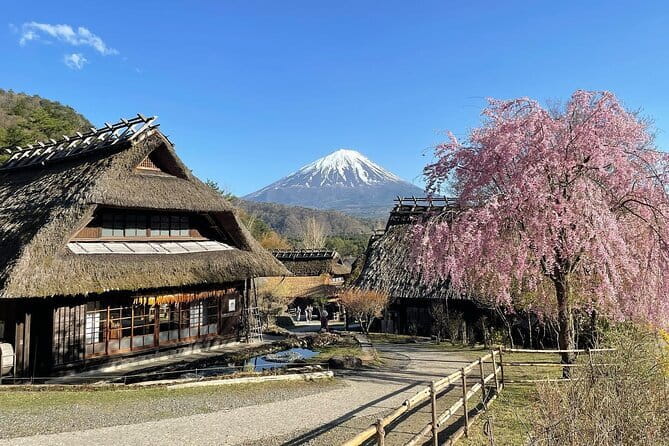
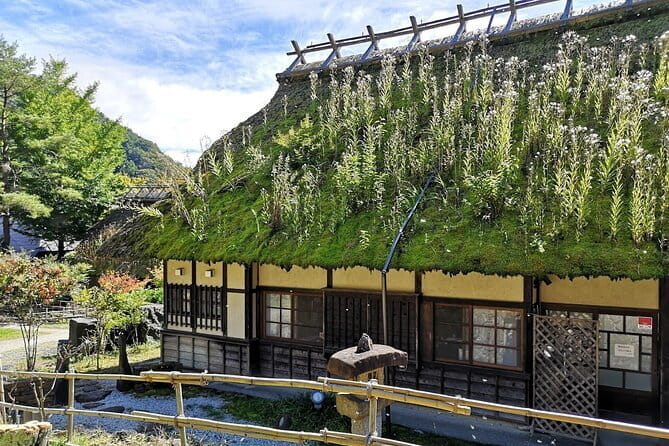
Saiko Iyashi no Sato Nemba is the opening chapter of the day. It’s a traditional Japanese village in Fujikawaguchiko Town known for Mt. Fuji in the background, and it carries an added layer of history: the village was destroyed by a landslide during a typhoon in 1966.
Why this stop works even if you’re tired: it sets a cultural tone. You’re not just chasing a view; you’re stepping into a quieter, older-feeling space that makes the surrounding scenery feel more meaningful.
What to watch for: bring your camera mindset. The village is scenic, but your best photos depend on where Mt. Fuji is visible between structures. This is one of those places where you’ll want to take a few test shots early, then move more slowly once you know the sightline.
Stop 2: Lake Kawaguchiko for the quick Mt. Fuji “wow” shot
Lake Kawaguchiko is often called the shining pearl of the five Fuji lakes, and for a reason. The shoreline creates multiple angles where Mt. Fuji can appear depending on wind and cloud cover.
You only get about 20 minutes here, so think of it as a photo sprint with just enough time to breathe. If Fuji is out, this is likely the moment you’ll feel the day “click.”
Best strategy: don’t stand in one spot for the full time. If the weather shifts, you’ll benefit from moving to another viewpoint within the lake area. Short stop, flexible thinking.
Readers also shortlisted these Tokyo bookings:
- Mt Fuji and Hakone 1-Day Bus Tour Return by Bullet Train★ 5.0 · 26,383 reviews
- 1-Day Tokyo Bus Tour★ 5.0 · 14,250 reviews
- Mt Fuji & Hakone Cruise, Drum Show Bullet Train 1 Day from Tokyo★ 4.0 · 7,413 reviews
- Tokyo: DisneySea 1-Day Passport★ 4.5 · 2,726 reviews
- Tokyo Disneyland 1-Day Passport★ 4.6 · 2,512 reviews
Stop 3: Oishi Park for seasonal color and changing scenes
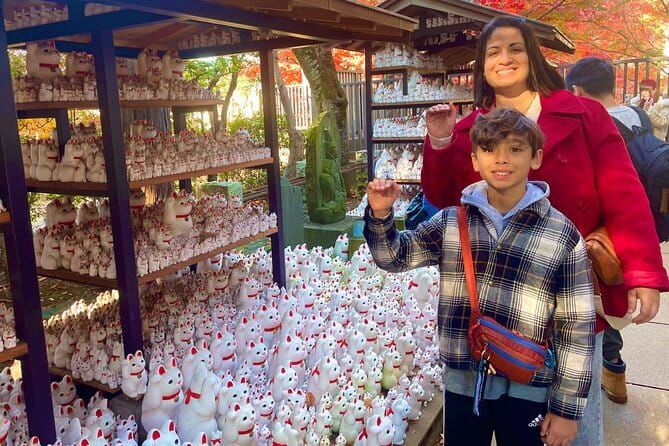
Oishi Park is famous for seasonal flower displays, so the experience can look very different depending on when you go. The park is described as nature’s palette, with seasonal highlights like cherry blossoms, lavender, red leaves, kochia, and even snow and reeds.
With about 25 minutes, you’re not wandering all day. Instead, you’re getting a “hit” of seasonal character that helps break up the more structured shrine-and-pagoda stops.
What to expect: even if Mt. Fuji is partially hidden, the park still gives you something to look at. It’s a good stop for mixing photos with casual strolling.
Stop 4: Kawaguchiko Natural Living Center and the red torii shot
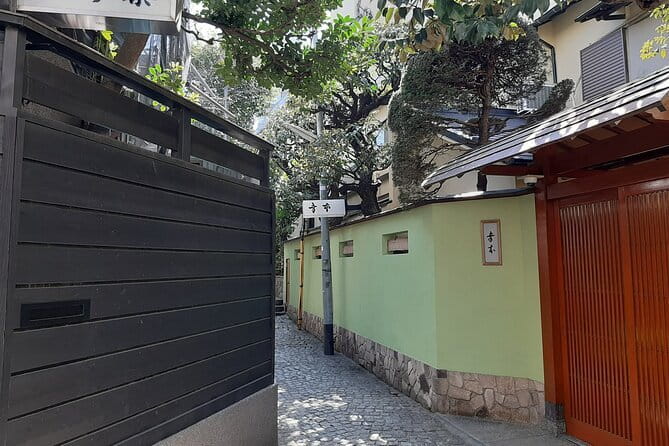
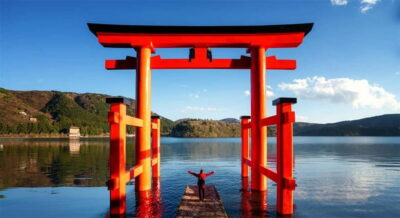
This is a clever short stop: you get about 10 minutes at the Kawaguchiko Natural Living Center, specifically for a photo perspective on the second floor where you can capture a red torii blending with Mt. Fuji.
It’s a classic case of “quick but high impact.” Ten minutes goes fast, so you’ll want to arrive ready to shoot and then step aside so others can do the same.
Pro tip: check your phone settings or camera focus before you step into the view angle. Little delays here cost you your best chance.
Stop 5: Arakurayama Sengen Park for the Chureito Pagoda postcard angle
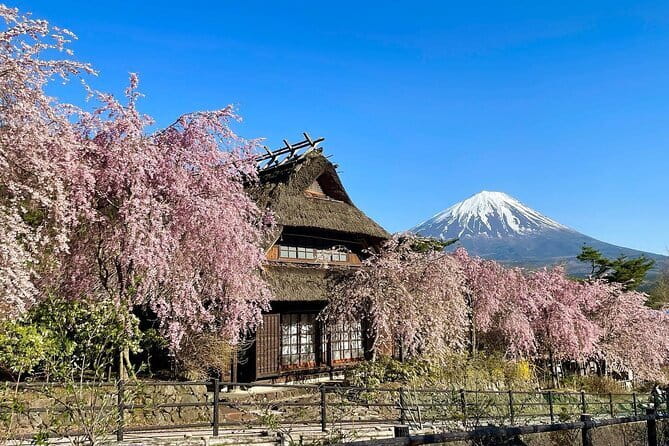
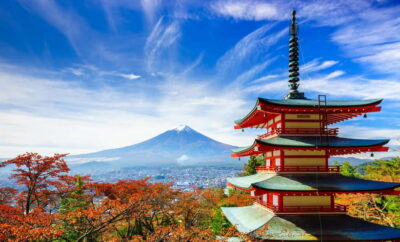
Arakurayama Sengen Park is the Fuji-region stop most people recognize instantly thanks to the Chureito Pagoda, a five-storied pagoda in the park. It’s famous for being one of the 21 places photographers from around the world must visit.
You’ll get about 1 hour here, and it’s usually the place where crowds can be biggest. The upside is that the view is popular for a reason: the pagoda silhouette against the wider scenery is a signature Fuji image.
How to make your hour count:
- Start early in your hour if you can, so you’re not trapped in peak crowd positioning
- Take a few compositions (straight-on, angled, higher/lower if paths allow)
- Don’t forget to look around the pagoda area for other Fuji angles too, not only one viewpoint
Stop 6: Arakura Fuji Sengen Shrine for the calm after the crowd
Right after the iconic pagoda, you’ll head to Arakura Fuji Sengen Shrine. This shrine dates back to 705, with more than 1,300 years of history. It’s considered a holy place where people pray for well-being and family happiness.
There’s also a specific historical link to Mount Fuji: in 807, Mt. Fuji erupted on a large scale, and society fell into panic. The shrine’s story includes how people responded and prayed during that difficult time.
You only get about 15 minutes here, so keep expectations realistic: it’s a quick, respectful visit with stops for photos and understanding, not a long devotional experience.
What I like about this sequencing: the day moves from the most photographed scene (Chureito Pagoda) into something more grounded. It’s a nice mental palate cleanser.
Stop 7: Oshino Hakkai springs for the Fuji-water moment
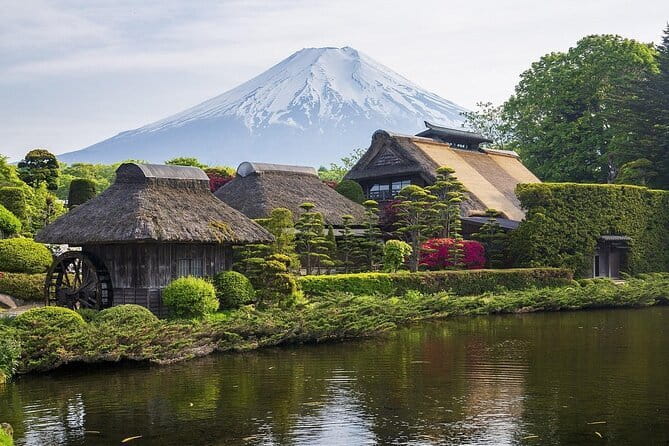
Oshino Hakkai is a World Heritage Site made up of eight clear springs fed by snowmelt from Mount Fuji. It’s often described as one of the 100 Famous Waters of Japan.
This is one of the best “slow down” sections of the day because you can wander among the springs and see why the area draws people even beyond the photo factor. You get about 1 hour here.
You can taste the spring water for free, and it’s described as sweet. Even if you’re not a big drinker, the act of tasting is one of those small cultural things that makes the visit feel more real than another bus stop.
If you care about photos: the springs have a different look depending on light. Move around a bit instead of staying fixed, and you’ll get multiple angles in an hour.
Weather reality: when Fuji shows up, and when it doesn’t
The most honest thing about Mount Fuji days: visibility is unpredictable. Even with great planning, clouds can swallow the mountain.
When the sky cooperates, the whole day improves. You’ll see Fuji clearly in multiple areas: lake viewpoints, park sightlines, and that red torii angle.
When the sky doesn’t cooperate, you still won’t have a wasted day. Many stops keep their appeal through gardens, architecture, and the spring-water scenery at Oshino Hakkai. But you should accept that the “big view” might be partial or fleeting.
My advice: go in with a flexible mindset. Don’t only chase one perfect shot. Collect several smaller wins across the day.
How the guide changes the whole experience
The tour is built around live commentary, and the biggest quality jump you’ll feel is how well the guide keeps things understandable while you’re on the move.
People have praised guides such as Kevin for being organized and for adding historical context that made stops more interesting. Others like Yulina have been noted for sharing Japanese words tied to the places you visit, and guides such as Andrew and Maddy have been described as informative and entertaining, with clear explanations and pickup timing.
You don’t need deep Japan knowledge to enjoy it, but the guide can help you look at each location with a better lens. You’ll get more than what’s on a postcard.
What to bring (and what to skip) for a comfort-first Fuji day
This is a long day with lots of outdoors time, short walking stretches, and a lot of photos. To keep it enjoyable:
- Bring a light layer. Mountains can feel cooler, especially near the water.
- Pack a rain jacket or poncho. Weather changes quickly around Fuji.
- Wear comfortable shoes. Some areas can involve uneven paths and steps.
- Keep a small snack or emergency water. Lunch isn’t included.
Skip the heavy “I’ll carry everything” plan. You’ll be happiest with hands-free comfort for photos and short walks.
Who should book this Mt. Fuji day tour from Tokyo
This tour is a strong fit if you:
- Want to see multiple major Fuji-region sites in one day without DIY transit stress
- Prefer guided pacing over researching routes
- Like getting historical or cultural context alongside the views
It’s also a good choice if you’re short on time in Tokyo. One day here can scratch the itch for lakes, pagodas, shrines, and springs.
If you’re the kind of traveler who wants to linger for hours in one spot and chase perfect light, you may feel the schedule is a bit fast, especially at the most famous photo areas.
Should you book this tour?
I’d book it if you want the cleanest path from Tokyo to the most recognizable Mount Fuji highlights, with transportation handled and commentary included. The $60 price makes sense because it’s not just “a ride,” it’s an organized circuit that hits Lake Kawaguchiko, Oishi Park, the Chureito Pagoda area, Arakura Shrine, and Oshino Hakkai.
I’d think twice only if you’re extremely sensitive to timing and crowds, or if you’re going purely for one magical, cloud-free view of Fuji. The weather can change, and this day is built for coverage, not for waiting out the sky for hours.
If you book, go in with the mindset of collecting several good moments. When Fuji shows up, you’ll feel like you hit the jackpot. When it doesn’t, you’ll still come home with a full, memorable Mt. Fuji region sampler.
FAQ
How long is the Mount Fuji one-day tour from Tokyo?
It runs for approximately 10 hours.
What does the tour include in the price?
You get an air-conditioned vehicle and all fees and taxes.
Is lunch included?
No, lunch is not included.
What Mount Fuji-area stops are part of the day?
You visit Saiko Iyashi no Sato Nenba, Lake Kawaguchiko, Oishi Park, Kawaguchiko Natural Living Center, Arakurayama Sengen Park, Arakura Fuji Sengen Shrine, and Oshino Hakkai.
Are admission tickets included for all stops?
Saiko Iyashi no Sato Nenba includes an admission ticket. The other listed stops are shown as admission-free.
Do you get a mobile ticket?
Yes, the tour includes a mobile ticket.
How large is the group?
The tour has a maximum of 45 travelers.
What’s the cancellation window?
Free cancellation is available up to 24 hours in advance for a full refund.
More Tours in Tokyo
- Mt Fuji and Hakone 1-Day Bus Tour Return by Bullet Train
★ 5.0 · 26,383 reviews - 1-Day Tokyo Bus Tour
★ 5.0 · 14,250 reviews - Tokyo: Shinjuku Food Tour (13 Dishes at 4 Local Eateries)
★ 5.0 · 6,603 reviews - Tokyo Mt Fuji 5th St & Hakone Cruise Bus Tour w/Bullet Train
★ 4.4 · 5,024 reviews - Flagship 2-Hours Official Street Go-Kart Tour – Tokyo Bay Shop
★ 5.0 · 4,974 reviews
More Tour Reviews in Tokyo
- Mt Fuji and Hakone 1-Day Bus Tour Return by Bullet Train
★ 5.0 · 26,383 reviews - 1-Day Tokyo Bus Tour
★ 5.0 · 14,250 reviews - Tokyo: teamLab Planets TOKYO Digital Art Museum Entry Ticket
★ 4.6 · 9,779 reviews - Mt Fuji & Hakone Cruise, Drum Show Bullet Train 1 Day from Tokyo
★ 4.0 · 7,413 reviews - Tokyo: Shinjuku Food Tour (13 Dishes at 4 Local Eateries)
★ 5.0 · 6,603 reviews
More Mount Fuji Days We Have Reviewed
- Mt Fuji and Hakone 1-Day Bus Tour Return by Bullet Train
★ 5.0 · 26,383 reviews - Mt Fuji & Hakone Cruise, Drum Show Bullet Train 1 Day from Tokyo
★ 4.0 · 7,413 reviews - Tokyo Mt Fuji 5th St & Hakone Cruise Bus Tour w/Bullet Train
★ 4.4 · 5,024 reviews - From Tokyo: Mount Fuji Full-Day Sightseeing Trip
★ 4.5 · 4,970 reviews - Tokyo: Mt. Fuji Tour, Hakone Ropeway, Owakudani, Lake Ashi
★ 4.7 · 4,002 reviews
Latest Tokyo reviews off our desk






Mount Fuji Tours, compared.
 ★ 5.0Mt Fuji and Hakone 1-Day Bus Tour Return by Bullet TrainFrom $16326,383 reviews
 ★ 4.0Mt Fuji & Hakone Cruise, Drum Show Bullet Train 1 Day from TokyoFrom $1497,413 reviews
 ★ 4.4Tokyo Mt Fuji 5th St & Hakone Cruise Bus Tour w/Bullet TrainFrom $1545,024 reviews
 ★ 4.5From Tokyo: Mount Fuji Full-Day Sightseeing TripFrom $684,970 reviews
 ★ 4.7Mt. Fuji Tour, Hakone Ropeway, Owakudani, Lake AshiFrom $544,002 reviews
 ★ 4.4Mt.Fuji,Kawaguchiko Oishi Park,Arakurayama Sengen ParkFrom $542,682 reviews
 ★ 4.2Mt. Fuji 5th Station & Hakone Cruise 1-Day Bus TourFrom $1292,381 reviews
 ★ 4.7Mt Fuji Top 5 Spots Day Tour: Arakurayama Park,Oshino HakkaiFrom $532,066 reviews
Browse the lists this tour appears in