
Reviewed · PRIVATE DRIVERS
Tokyo Private Tour with English Speaking Driver
Tokyo can feel like a nonstop puzzle at rush hour, so a private car outing helps you breathe. I like that you get hotel pickup and drop-off plus an English-speaking driver, which means you spend less time figuring out trains and more time seeing the city. I also like the all-day structure: you hit big-name landmarks and still have room to adjust stops to your pace and interests.
One thing to keep in mind: several top sights require separate admission tickets, so your final cost may rise a bit depending on what you choose (Tokyo Tower, Shinjuku Gyoen, Tokyo Skytree are not included).
In This Review
- Key Points at a Glance
- Why This Tokyo Private Car Tour Feels Easier Than Trains
- How the Driver Shapes Your Route (Without Feeling Chaotic)
- Tokyo Tower: The WWII Rebirth Symbol and a Solid First Photo Stop
- Shibuya Crossing and Takeshita Street: Pop Culture in Real Life
- Shinjuku Gyoen National Garden: Cherry Blossom Season’s Big Play
- Senso-ji Temple: Old Tokyo That Still Pulls in the Cameras
- Meiji Jingu Shrine: A Forest Reset in the Middle of the Megacity
- Tokyo Skytree: Panoramic Views With a Separate Ticket
- Tsukiji Fish Market Outer Area: The Market Energy Without the Wholesale Rush
- Akihabara and Odaiba: Two Different Kinds of Tokyo Fun
- Price and Value: What $422.70 Per Group Really Covers
- Who Should Book This Private Tokyo Tour (and Who Might Skip It)
- Should You Book This Private Tokyo Tour?
- FAQ
- FAQ
- How long is the Tokyo private tour with an English-speaking driver?
- How many people can be in a group for this tour?
- Does the tour include hotel pickup and drop-off?
- Is there an admission ticket included for all stops?
- Will there be a separate walking guide during the tour?
- What transportation is provided?
- Can I cancel for a full refund if plans change?
Key Points at a Glance
- Hotel pickup, air-conditioned private car: less hassle than trains, especially between neighborhoods.
- English-speaking driver-led experience: the driving time turns into learning time, not dead time.
- Flexible route with no fixed plan: you choose where to pause instead of being locked into a script.
- A best-of Tokyo mix: skyline views, shopping streets, major shrines, and classic markets.
- Designed for a full day (7 to 9 hours): enough time to cover a lot without sprinting through everything.
Why This Tokyo Private Car Tour Feels Easier Than Trains
Tokyo is famous for public transit, but it can still wear you down. Transfers, stairs, station navigation, and the timing between lines add up fast—especially when you’re trying to see multiple districts in one day. This tour trades that effort for a private vehicle and an English-speaking driver, so your day flows in a straight line.
The other big win is context. Instead of wandering with only a phone map, you’re given practical guidance along the way. The tour does not include a separate walking guide, but the driver provides the information during the ride and at stops, which is often more efficient than switching between people.
The day is built to cover a lot of Tokyo’s major neighborhoods—Shibuya, Shinjuku, Asakusa/Senso-ji, and more—without forcing you to memorize routes. If you’re a first-timer, it helps you get your bearings fast. If you’ve been before, it’s a low-stress way to revisit the areas you care about.
Readers also shortlisted these Tokyo bookings:
- Tokyo 6hr Private Tour with Government-Licensed Guide
★ 5.0 · 3,902 reviews - Private Tour to Mt. Fuji and Hakone (Fully Licenced Operator)
★ 5.0 · 1,910 reviews - Tokyo Customized Private Tour (Must See Places in 1 Day)
★ 5.0 · 1,499 reviews - Mount Fuji Full-Day Private Tour from Tokyo (Customizable)
★ 4.9 · 1,470 reviews
How the Driver Shapes Your Route (Without Feeling Chaotic)
This is a private tour, so you’re not stuck behind a bus full of strangers. You can also make choices: the tour uses a “key areas” approach, but there’s no fixed route. That matters because Tokyo isn’t one-size-fits-all. You might want more time on shopping streets, less time at viewpoints, or a different order based on your energy level.
In practical terms, the driver’s job is to handle the transitions. You’ll bounce between very different vibes—neon-crowded crossings, formal temple grounds, quiet shrine forests, and markets—without you worrying about train changes or finding meeting points. The car also gives you a simple way to keep the day running smoothly if weather changes.
There’s also a clear structure to the stops that usually fits into 7 to 9 hours. That’s long enough to see the highlights and still slow down, but not so long that you’re constantly moving. If you like your sightseeing with a natural rhythm—check out, walk a bit, get back in the car—that timing works.
Tokyo Tower: The WWII Rebirth Symbol and a Solid First Photo Stop
Most Tokyo days benefit from starting with something iconic and easy to orient around, and Tokyo Tower does that. It stands at 333 meters and was completed in 1958. At the time, it was the tallest tower in the world, even surpassing the inspiration: the Eiffel Tower.
What I like about this as a first stop is the way it frames the rest of the day. You’ll see a structure that feels both historic and unmistakably modern—Tokyo’s “we rebuilt and grew” story in steel. Even if you skip going up, you still get a strong sense of place.
One caution: Tokyo Tower’s admission ticket is not included, so plan for that cost if you want the views from inside. Also, because it’s a popular landmark, you’ll likely deal with crowds when you arrive. If you prefer calmer photos, ask the driver when the busiest times ease up.
Shibuya Crossing and Takeshita Street: Pop Culture in Real Life
From Tokyo Tower, the route naturally shifts toward the city’s high-energy districts. Shibuya Crossing is your first major “wow” moment. It’s famous for being one of the busiest crossings in the world, and it’s the kind of place where you can watch people for a long time without doing much else.
The nice part is that Shibuya Crossing doesn’t require tickets. The time is about atmosphere and photos, and you can just enjoy the motion. If you’re sensitive to crowds, you can still see the crossing by aiming for a viewpoint or edge rather than standing right in the thickest flow.
Then it’s on to Takeshita Street in Harajuku. This is a pedestrian shopping lane lined with fashion boutiques, plus cafes and restaurants. It’s a perfect contrast to Shibuya Crossing because it shifts from street spectacle to street browsing.
What to watch for here: Takeshita Street is fun, but it can get thick with people. I recommend using your time for quick shopping, snacks, and people-watching rather than trying to “complete” the whole street. If you want less crowd pressure, you can ask the driver to time your stop so you’re not stuck there at peak crush.
Shinjuku Gyoen National Garden: Cherry Blossom Season’s Big Play
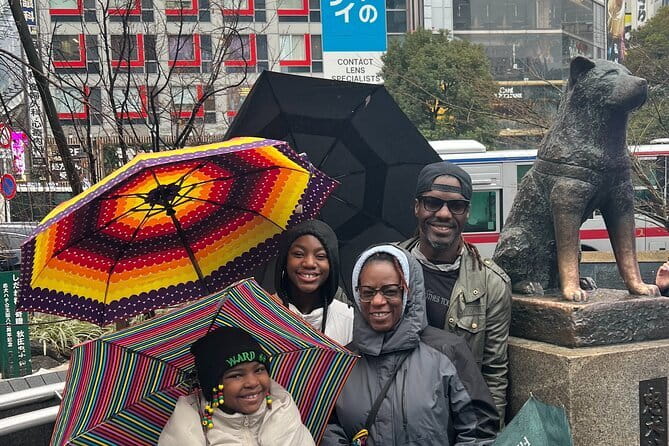
If your timing lines up with spring, Shinjuku Gyoen National Garden can be the most rewarding stop on the day. It’s described as the best place to see cherry blossoms, and the garden is set up for slow wandering and photo pauses.
During cherry blossom season, this is the kind of place that can justify using part of a limited itinerary on purpose. Instead of chasing landmarks for quick photos, you can take your time and actually enjoy the scenery.
The trade-off: admission tickets here are not included. So think of this as the optional “pay for the calm” moment of the day. Also, gardens can vary by season and weather, so if you’re visiting in hot or rainy months, the experience may feel different—but the walking space is still a welcome break from the city’s intensity.
Readers also shortlisted these Tokyo bookings:
- Mt Fuji Private Tour with English Speaking Driver★ 5.0 · 861 reviews
- Mt. Fuji & Hakone Private Day Tour with English-Speaking Driver★ 4.5 · 824 reviews
- Haneda Airport (HND) Private Transfer to Central Tokyo★ 4.5 · 636 reviews
- Mt. Fuji, Hakone Full-Day Private Tour with English Driver Guide★ 4.5 · 458 reviews
- Mt. Fuji Day Trip from Tokyo with English Speaking Driver Guide★ 5.0 · 443 reviews
Senso-ji Temple: Old Tokyo That Still Pulls in the Cameras
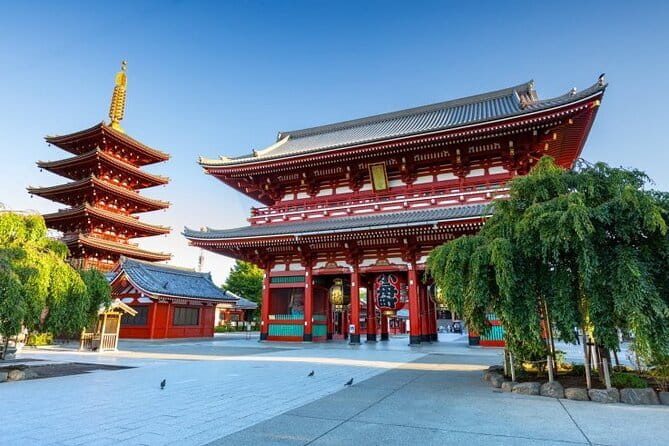
Next comes a classic: Senso-ji Temple in Asakusa. It’s perhaps Tokyo’s most famous and photographed temple, and it’s also noted as the oldest Buddhist temple in the capital. Expect dramatic visual details like the five-story pagoda and the incense atmosphere.
This stop is a strong choice because it slows you down in a good way. Unlike modern neighborhoods where the “main event” is crowds and lights, temples are built for drifting. You’ll likely get a mix of local visitors and tourists, which is exactly what makes it feel like everyday Tokyo rather than a theme park.
Senso-ji has no admission ticket required for the main visit (it’s listed as free). Still, it can be busy, so keep your expectations realistic. The best value is in the details: incense, architecture, and the layered feeling of history.
Meiji Jingu Shrine: A Forest Reset in the Middle of the Megacity
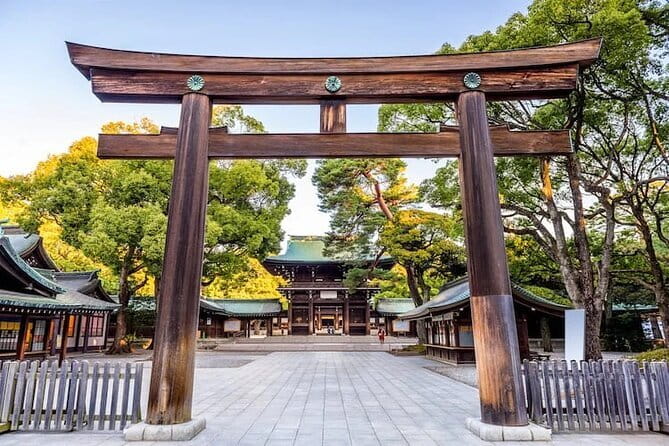
If you need a breather after Senso-ji’s busy energy, Meiji Jingu Shrine does that job well. It’s a Shinto shrine set within a vast forest area of about 70 hectares. The key promise here is the contrast: you step inside the precinct and the city noise fades fast.
This is one of those stops that works even if you don’t read much signage. The scale of the forest and the calm layout make it feel restorative. It’s also a great time to slow your pace—something you’ll appreciate later when you’re back in busier districts.
Like Senso-ji, it’s listed as free for admission. You’ll still want decent walking shoes because the grounds encourage you to walk. If you’re someone who gets tired of constant crowd energy, this is the “reset button” in the itinerary.
Tokyo Skytree: Panoramic Views With a Separate Ticket
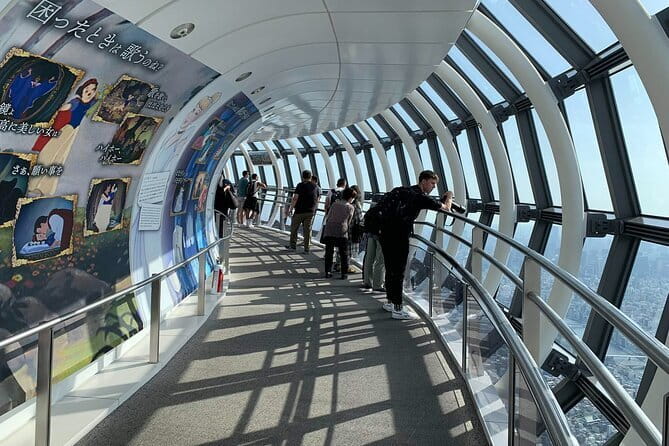
For skyline lovers, Tokyo Skytree is one of the main “finale” style sights. It reaches 634 meters and is described as the tallest structure in Japan. The payoff is the panoramic view—especially on clear days.
Your plan here depends on what you want. Even without going to the top, Skytree-area views and the overall scale can impress. But if you do want the best vantage, remember the admission ticket is not included.
Because Skytree is a headline attraction, it can draw crowds. The time on this stop is set at about 45 minutes, so it’s not a “linger forever” window. If you want lots of photos from the top, it helps to treat this as a focused mission rather than a wandering stop.
Tsukiji Fish Market Outer Area: The Market Energy Without the Wholesale Rush
Tokyo has shifted its wholesale operations, but the spirit remains strong at Tsukiji’s Outer Market. It’s known for fresh seafood and lively street stalls. Even though the wholesale market moved to Toyosu, Tsukiji’s Outer Market continues as a place for local bites and classic market browsing.
This stop is a great value because it’s listed as free for admission. That means you can spend your money where it counts: on snacks. It also gives you flexibility. You can do a quick walk and pick one or two favorites, or you can spend longer if you love food halls, street stalls, and busy energy.
The main practical tip is to pace yourself. Market food is delicious, but it can turn into a snack marathon if you’re not careful. Think of this as a tasting stop, not a full meal unless you’re intentionally doing that.
Akihabara and Odaiba: Two Different Kinds of Tokyo Fun
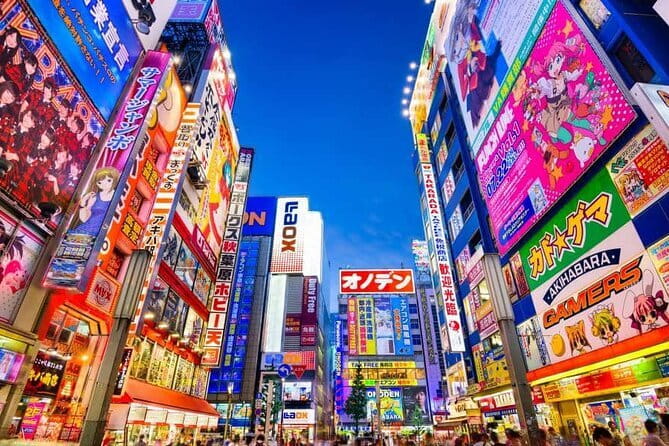
Akihabara is the city’s tech and pop culture hub. It’s famous for electronics stores, plus anime, manga, and collectibles. If you like gaming culture or want to see Tokyo’s fandom side in person, this area is built for that.
The time here is about an hour, which is enough to cover the essentials. Because it’s admission-free, you’re paying in walking shoes and curiosity, not entry tickets. The only downside is that Akihabara can feel overwhelming if you’re not sure what you want. A good approach is to pick one focus: electronics, themed stores, or arcade time.
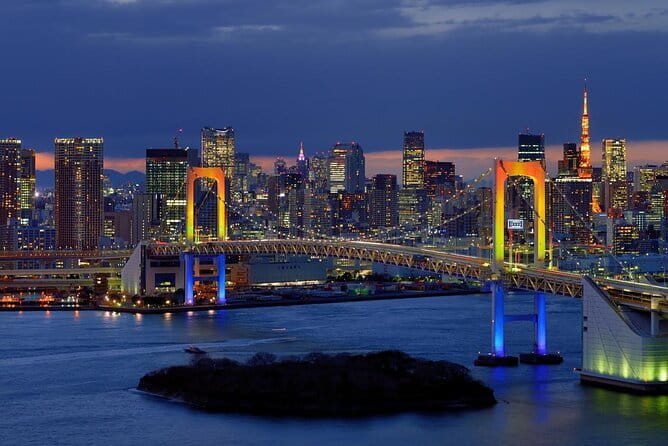
Then you shift to Odaiba, a futuristic district on a man-made island in Tokyo Bay. You’ll see shopping malls and attractions often associated with places like teamLab Borderless, plus the iconic Rainbow Bridge area. This stop helps balance the day by adding a different visual style than the dense city core.
Again, it’s listed as free for admission, so the cost is mostly what you choose to do inside Odaiba. If you like water views and wide-open spaces compared to central Tokyo streets, this is a satisfying contrast.
Price and Value: What $422.70 Per Group Really Covers
The price is $422.70 per group, up to 5 people. That can sound steep until you translate it into what you’re buying: a private, air-conditioned car with a dedicated English-speaking driver, plus hotel pickup and drop-off.
For most people, the value equation depends on how many sights you’d realistically hit in one day while also paying for taxis and dealing with train logistics. Here, fuel surcharge and toll fees are included, which matters in a big city where “quick” rides aren’t always quick in cost.
Also, the itinerary is structured for maximum coverage. One standout highlight is an all-day route that covered at least 10 Tokyo landmarks. That’s the big deal: you’re not just “driving around,” you’re hitting multiple key zones that are far apart.
The only real cost warning: admission tickets are not included for some stops, including Tokyo Tower, Shinjuku Gyoen National Garden, and Tokyo Skytree. If you plan to go up, enter, or do those paid experiences, your total will go up.
Who Should Book This Private Tokyo Tour (and Who Might Skip It)
You’ll likely love this if you want a first-time friendly best-of Tokyo day. It’s also a strong pick if your group includes people who don’t want to wrestle with transit transfers, stairs, and station navigation. The private format makes it easier to adjust pacing without asking strangers to slow down.
It’s also great for people who like variety. This day mixes skyline icons, shopping streets, temple grounds, a quiet shrine forest, a major market, and a pop culture neighborhood. You get a tour that feels like Tokyo’s different faces in one loop.
You might consider another format if you prefer a highly independent day with a map, because the driver-led approach means you’re following a planned set of stops. You also need to be okay with the fact that there’s no separate walking guide; you’ll get information from the driver, not from an additional guide who walks with you.
Should You Book This Private Tokyo Tour?
I’d book it if you want a private, English-friendly way to see a lot of Tokyo without turning the day into a transit workout. The combination of hotel pickup, a flexible route, and a driver who can guide the day’s flow is exactly what makes this feel like a smart use of time—especially if you only have a limited number of days in Japan.
If your group is mostly budget-driven and doesn’t care about paid viewpoints or garden admission, you’ll still get plenty for free at most stops. If you do care about Tokyo Tower, Skytree, or the cherry blossom experience, just budget for admission tickets and you’ll feel good about the overall value.
FAQ
FAQ
How long is the Tokyo private tour with an English-speaking driver?
The duration is about 7 to 9 hours.
How many people can be in a group for this tour?
The tour is priced per group and can include up to 5 people.
Does the tour include hotel pickup and drop-off?
Yes. Hotel pickup and hotel drop-off are included.
Is there an admission ticket included for all stops?
No. Some stops list admission tickets as not included, including Tokyo Tower, Shinjuku Gyoen National Garden, and Tokyo Skytree. Other stops like Shibuya Crossing, Takeshita Street, Senso-ji, Meiji Jingu, Tsukiji Outer Market, Akihabara, and Odaiba are listed as free.
Will there be a separate walking guide during the tour?
No. A walking guide is not included. The driver provides the information.
What transportation is provided?
You’ll travel in an air-conditioned private vehicle, with English-speaking driver service and tolls and fuel surcharge covered.
Can I cancel for a full refund if plans change?
Yes. You can cancel for a full refund up to 24 hours in advance of the experience start time.
More Private in Tokyo
- Tokyo 6hr Private Tour with Government-Licensed Guide
★ 5.0 · 3,902 reviews - Private Tour to Mt. Fuji and Hakone (Fully Licenced Operator)
★ 5.0 · 1,910 reviews - Tokyo Customized Private Tour (Must See Places in 1 Day)
★ 5.0 · 1,499 reviews - Mount Fuji Full-Day Private Tour from Tokyo (Customizable)
★ 4.9 · 1,470 reviews - Tokyo: Private City Highlights Tour with Local Guide
★ 4.8 · 1,433 reviews
More Tours in Tokyo
- Mt Fuji and Hakone 1-Day Bus Tour Return by Bullet Train
★ 5.0 · 26,383 reviews - 1-Day Tokyo Bus Tour
★ 5.0 · 14,250 reviews - Tokyo: Shinjuku Food Tour (13 Dishes at 4 Local Eateries)
★ 5.0 · 6,603 reviews - Tokyo Mt Fuji 5th St & Hakone Cruise Bus Tour w/Bullet Train
★ 4.4 · 5,024 reviews - Flagship 2-Hours Official Street Go-Kart Tour – Tokyo Bay Shop
★ 5.0 · 4,974 reviews
More Tour Reviews in Tokyo
- Mt Fuji and Hakone 1-Day Bus Tour Return by Bullet Train
★ 5.0 · 26,383 reviews - 1-Day Tokyo Bus Tour
★ 5.0 · 14,250 reviews - Tokyo: teamLab Planets TOKYO Digital Art Museum Entry Ticket
★ 4.6 · 9,779 reviews - Mt Fuji & Hakone Cruise, Drum Show Bullet Train 1 Day from Tokyo
★ 4.0 · 7,413 reviews - Tokyo: Shinjuku Food Tour (13 Dishes at 4 Local Eateries)
★ 5.0 · 6,603 reviews
Latest Tokyo reviews off our desk






Private Drivers, compared.
 ★ 5.0Mt Fuji Private Tour with English Speaking DriverFrom $415861 reviews
 ★ 4.5Mt. Fuji & Hakone Private Day Tour with English-Speaking DriverFrom $453824 reviews
 ★ 4.5Haneda Airport (HND) Private Transfer to Central TokyoFrom $104636 reviews
 ★ 4.5Mt. Fuji, Hakone Full-Day Private Tour with English Driver GuideFrom $495458 reviews
 ★ 5.0Mt. Fuji Day Trip from Tokyo with English Speaking Driver GuideFrom $497443 reviews
★ 4.5Mt. Fuji Private Tour with English Speaking DriverFrom $464402 reviews
 ★ 4.9Mt. Fuji & Hakone Private Custom Tour English DriverFrom $322351 reviews
 ★ 4.9From Tokyo : Mount Fuji Private Day Tour with English DriverFrom $409311 reviews
Browse the lists this tour appears in