
Reviewed · TOKYO
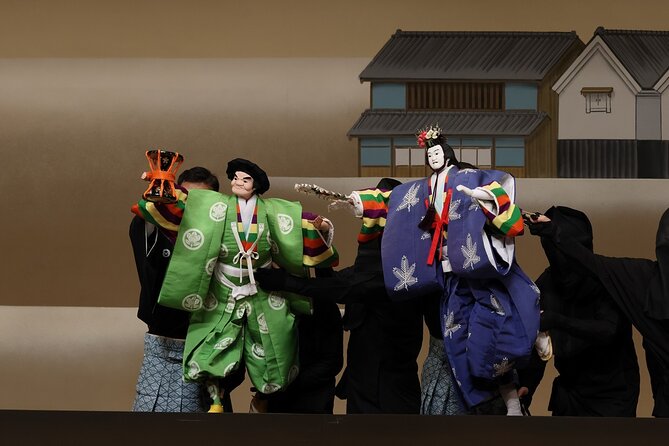
BUNRAKU performance by National Theatre in Kita-Senju, Tokyo
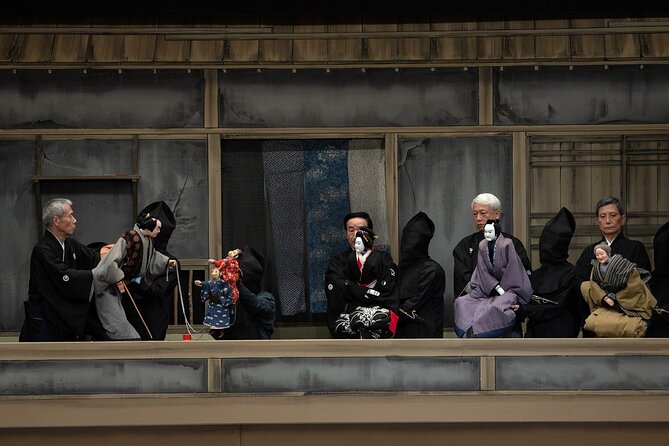
Bunraku is unlike anything else in Tokyo. This adult-focused puppet theater blends narration, shamisen music, and controlled puppet movement into one tightly coordinated story experience. I love that you’re not just watching puppets—you’re hearing the dramatic story delivery and the music that drives every beat.
Two things I especially like: the show’s collaboration is built into the art form, and the included English audio guide keeps the story clear even if you’re new to Bunraku. One thing to consider is that performance length is listed as a wide range, so plan for some timing flexibility on the day.
In This Review
- Key things to know before you go
- What makes Bunraku click: narration, shamisen, and puppets in one story
- Theatre 1010 in Kita-Senju: your practical arrival plan
- The included English audio guide: how you’ll actually follow the story
- Your seat and ticket: what class seats change (and what they don’t)
- Bunraku performance flow: what you’ll experience once it starts
- Why National Theatre’s Bunraku format feels worth the time
- Price and value: is $69.74 reasonable for what you get?
- Who this show suits best (and who might want a different plan)
- Tips to make the most of your night at Bunraku
- FAQ
- How long is the Bunraku performance?
- Where does the performance take place?
- What time does the experience start?
- Is an English audio guide included?
- What ticket do I receive?
- Is transportation to the theatre included?
- Is there a restroom available?
- What is the cancellation policy?
- Should you book this Bunraku performance in Kita-Senju?
Key things to know before you go
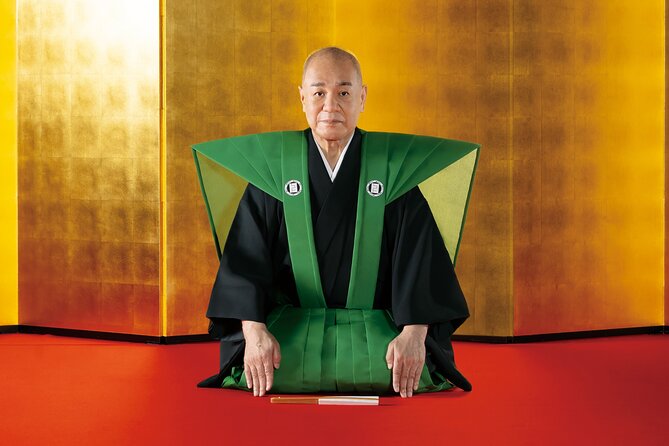
- UNESCO-recognized art form: Bunraku is part of Japan’s representative traditional theater heritage.
- Three-part performance engine: narration, shamisen, and puppetry move in sync.
- English audio guide included: you can follow the story without needing Japanese theater knowledge.
- Class seats included: you’ll get ticketing handled as part of the experience.
- Kita-Senju location, not central Tokyo: it’s a strong local choice if you want something less touristy.
What makes Bunraku click: narration, shamisen, and puppets in one story
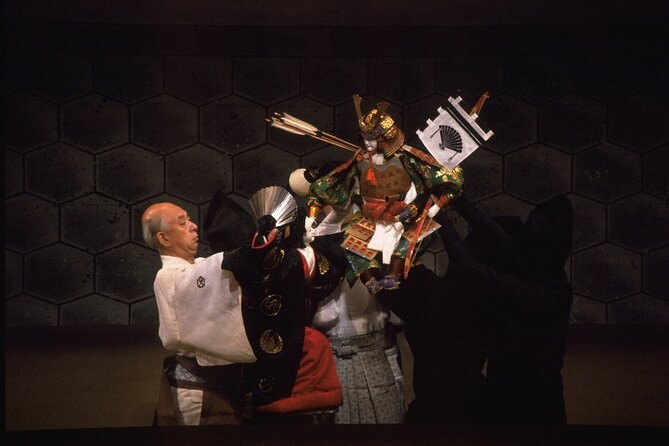
Bunraku works because it’s designed as a whole system. The story isn’t simply told through plot. It’s shaped through three layers that stay connected from start to finish.
First, there’s the narrator’s recitation. The voice is projected with force, and that energy matters. In many traditional performances, the rhythm of speech guides your understanding. In Bunraku, it also helps you track emotion—anger, urgency, tenderness—without needing every word in Japanese.
Second, the shamisen brings musical momentum. The sound is described as dynamic and delicate, which is a useful way to think about what you’ll notice in your seat. You’re not only hearing background music. You’re hearing cues that support pacing, tension, and transitions.
Third, the puppets themselves do the visible storytelling. Bunraku puppetry is often called sophisticated because the movement is precise, controlled, and intentional. The interesting part is that the puppets don’t feel like cheap props. They feel like characters with presence, especially when the narration and shamisen line up with what the puppets are doing.
If you’ve ever wondered how traditional theater can feel so adult and immediate, Bunraku is a strong answer. The format is collaborative by design: performers synchronize so you can read the story from multiple angles at once.
Readers booked these Tokyo options in the same breath. Here is how each one scored:
- Mt Fuji and Hakone 1-Day Bus Tour Return by Bullet Train
★ 5.0 · 26,383 reviews - 1-Day Tokyo Bus Tour
★ 5.0 · 14,250 reviews - Tokyo: teamLab Planets TOKYO Digital Art Museum Entry Ticket
★ 4.6 · 9,779 reviews - Mt Fuji & Hakone Cruise, Drum Show Bullet Train 1 Day from Tokyo
★ 4.0 · 7,413 reviews
Theatre 1010 in Kita-Senju: your practical arrival plan
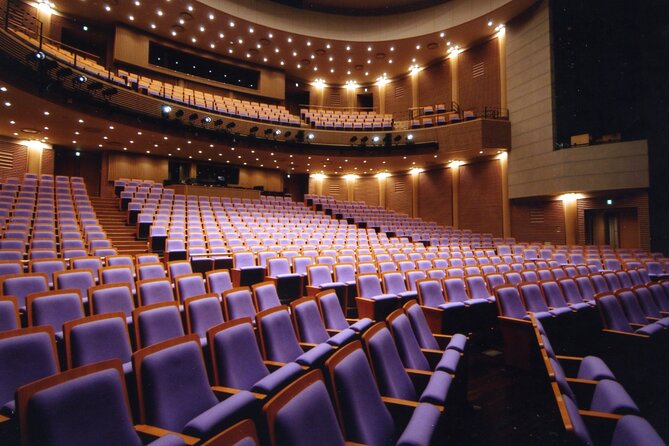
This performance happens at Theatre 1010 in Kita-Senju, Tokyo (in Adachi City). Your provided start time is 3:15 pm, and the ticket redemption point is listed as:
THEATRE1010, Japan, 120-0034 Tokyo, Adachi City, Senju, 3-chōme92 ミルディスⅠ番館 10階
Because the show time is estimated and can vary, I’d treat this as a plan that needs a little breathing room. Don’t schedule another strict commitment right after. Instead, build in time for getting there, getting settled, and handling any lines or slowdowns.
You’ll also appreciate that it’s near public transportation. You don’t need a private plan to get there, which helps when you’re mixing this with other parts of Tokyo. Still, transportation to the theatre is not included, so you’ll want to figure out your own route ahead of time.
One small comfort item that’s included is a restroom during the experience. That’s genuinely helpful for a show that can run longer than you expect.
The included English audio guide: how you’ll actually follow the story
One of the best pieces of value here is the English audio guide. You get it included, and it’s the difference between watching puppets and understanding why you should care about them.
The reviews you’ll see for Bunraku commonly mention that the audio support makes the story followable. That makes sense. Bunraku tends to rely on timing—specific phrases, emotional turns, and quick shifts in action. Without guidance, you can miss why a moment feels dramatic.
With the English audio guide, you can connect the narration to what’s physically happening onstage. That means the shamisen and puppet movement become clearer, not just visually impressive.
Practical tip: wear something comfortable and keep your phone or audio device instructions handy if you’re using provided equipment. The guide is there to support you, but you still need to give yourself the few minutes to get it working smoothly before things start.
Your seat and ticket: what class seats change (and what they don’t)
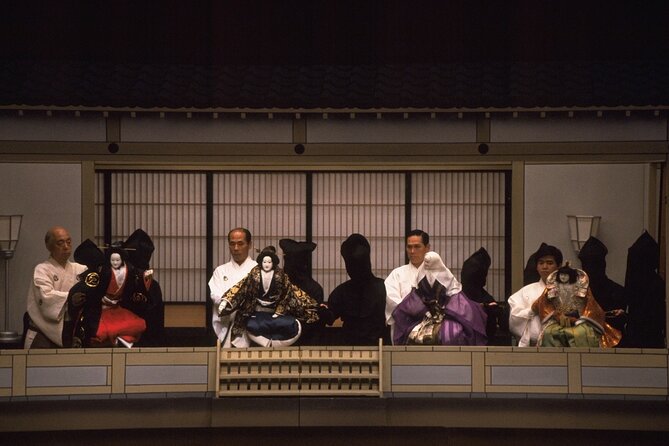
The ticket offer includes your 1st class seat ticket. That’s a meaningful upgrade in many theaters because better seating usually improves sightlines and reduces strain. With puppets, that matters. Even when puppets are visible from anywhere, small angles can affect how much you catch of detailed expressions and movement.
That said, don’t expect every seat to remove every challenge of traditional performance. Bunraku is still a full production with layered audio and movement. The English guide helps a lot, but the core experience is about coordinating your attention across narration, music, and puppets.
What I like about this setup is that it keeps things simple. You aren’t hunting for seat selection, comparing ticket types, or trying to decipher complex options. You’re paying for a seat category and getting the guide included.
Bunraku performance flow: what you’ll experience once it starts
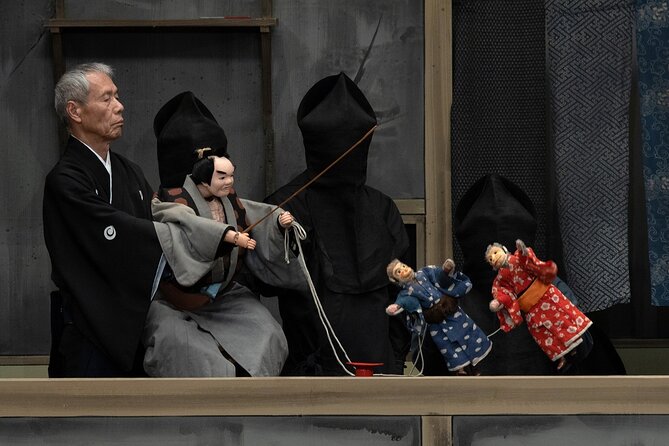
You’re looking at a show that lasts roughly 1 hour 20 minutes to 3 hours 30 minutes. That range is big, so expect some uncertainty. The good part is that the performance is structured as a complete theatrical event rather than a short showcase. When it’s working well, you feel like the whole story builds and resolves.
Here’s the kind of flow you should anticipate, based on how Bunraku is described:
- Narration leads the scene: the narrator’s delivery sets the emotional tone and keeps you oriented.
- Shamisen supports and sharpens emotion: music heightens transitions and intensifies moments.
- Puppets translate the story into motion: gestures, posture, and movement detail the character’s choices.
Because the art form is inseparable—story, voice, music, and puppet performance together—you’ll likely feel your understanding improve as the show continues. The key is using the English audio guide as your anchor so you don’t fall behind.
- Tokyo: Shinjuku Food Tour (13 Dishes at 4 Local Eateries)★ 5.0 · 6,603 reviews
- Tokyo Mt Fuji 5th St & Hakone Cruise Bus Tour w/Bullet Train★ 4.4 · 5,024 reviews
- Flagship 2-Hours Official Street Go-Kart Tour – Tokyo Bay Shop★ 5.0 · 4,974 reviews
- From Tokyo: Mount Fuji Full-Day Sightseeing Trip★ 4.5 · 4,970 reviews
- Tokyo: Hop-On Hop-Off Sightseeing Bus Ticket★ 3.9 · 4,207 reviews
Why National Theatre’s Bunraku format feels worth the time
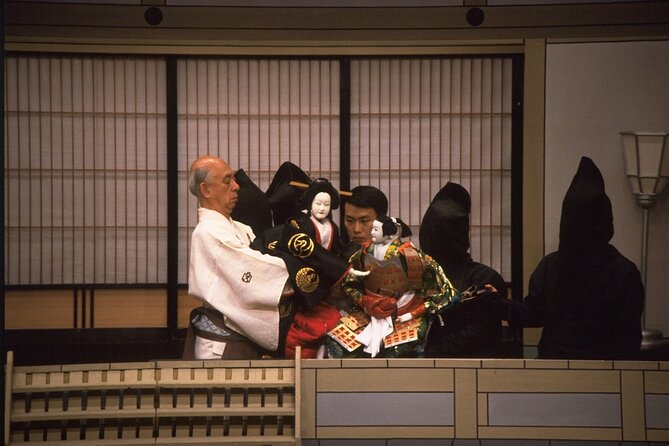
This experience is offered by 国立劇場 (National Theatre Japan). Even without getting lost in official branding, that matters because National Theatre programming typically aims for faithful traditional presentation rather than simplified entertainment.
Bunraku is also an adult representative tradition. That doesn’t mean it’s heavy or grim, but it does mean you should treat it as serious theater. Adult audiences tend to appreciate the precision of performance and the craft behind the coordination.
The combination of UNESCO-recognized intangible cultural heritage and a production that synchronizes multiple performance disciplines is the core reason this feels like a real cultural experience rather than a novelty show.
Price and value: is $69.74 reasonable for what you get?
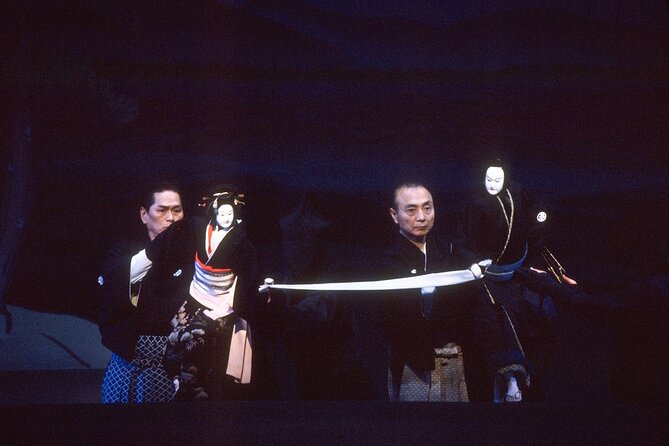
At $69.74 per person, you’re paying for a full Bunraku event with several built-in perks: admission included, class/1st class seating, and an English audio guide.
Value is about what you’d otherwise have to do yourself. In Tokyo, finding traditional theater at a clear price is often tricky. You might pay more if you’re buying tickets through separate systems, then separately renting audio support, or if you end up needing to pay transport with no assistance. Here, those pieces are bundled.
Is it the cheapest night in Tokyo? No. But it’s also not the kind of experience where you can realistically recreate the feeling by doing something else on your own. Bunraku’s power is in the live coordination—narration, shamisen, and puppet movement—so the ticket price buys the real thing, not an approximation.
Who this show suits best (and who might want a different plan)
This experience is a strong match if you:
- want a genuine traditional theater art form in Tokyo
- enjoy story-based performances, not just visuals
- like having English audio support rather than taking a leap of faith with language
It may be less ideal if you:
- prefer shows that rely mainly on visuals with minimal audio complexity (Bunraku is layered)
- dislike audio devices or audio-guided storytelling
- can’t handle a performance time that’s listed with a wide range
If you’re curious about Bunraku and want the story explained rather than left to chance, this format is made for you.
Tips to make the most of your night at Bunraku
A few practical habits can make this smoother:
- Arrive early enough to settle. Start time is 3:15 pm, but show timing can vary, so don’t rush in at the last second.
- Use the English audio guide as your anchor. It’s included for a reason. Let it help you connect narration to puppet action.
- Plan a light schedule. Since length can stretch, don’t stack time-critical plans immediately after.
- Bring a simple comfort setup. Shows can run longer than expected. Wear comfortable clothing and bring what you need for your own comfort.
FAQ
How long is the Bunraku performance?
The performance duration is listed as approximately 1 hour 20 minutes to 3 hours 30 minutes.
Where does the performance take place?
It takes place at Theatre 1010 in Kita-Senju, Tokyo (Adachi City, Senju).
What time does the experience start?
The listed start time is 3:15 pm.
Is an English audio guide included?
Yes, an English audio guide is included.
What ticket do I receive?
You’ll receive a 1st class seat ticket as part of the experience. Admission ticket is included.
Is transportation to the theatre included?
No. Transportation to the theatre is not included.
Is there a restroom available?
Yes, a restroom is included as part of the experience.
What is the cancellation policy?
You can cancel for a full refund up to 24 hours in advance of the experience’s start time. Changes made less than 24 hours before the start time aren’t accepted.
Should you book this Bunraku performance in Kita-Senju?
I’d book it if you want a real traditional Japanese adult theater experience with built-in English guidance. The big win is the combination of class seating plus the English audio guide, which makes Bunraku far easier to enjoy from your seat. At the same time, remember the duration is listed broadly, so plan your day with extra slack.
If your goal is to see something culturally significant in Tokyo without guessing your way through the story, this one is a strong fit.
More Tour Reviews in Tokyo
- Mt Fuji and Hakone 1-Day Bus Tour Return by Bullet Train
★ 5.0 · 26,383 reviews - 1-Day Tokyo Bus Tour
★ 5.0 · 14,250 reviews - Tokyo: teamLab Planets TOKYO Digital Art Museum Entry Ticket
★ 4.6 · 9,779 reviews - Mt Fuji & Hakone Cruise, Drum Show Bullet Train 1 Day from Tokyo
★ 4.0 · 7,413 reviews - Tokyo: Shinjuku Food Tour (13 Dishes at 4 Local Eateries)
★ 5.0 · 6,603 reviews





