

Reviewed · TOKYO
Celebrate Unique Japanese New Year Tradition Culture Festivity
Foxes, lanterns, and sake at New Year. This Oji Fox Pageant-style celebration in Tokyo blends fox folklore with a guided shrine start and ends with a fox procession and traditional dances, including the lion dance. I like the way the day builds story to spectacle, and I love the practical drinking setup: free-flow sake and beer plus hinoki cypress masu cups. One real consideration: crowd size can feel big, and that can make the shrine stops less calm than you might hope.
You meet at the North entrance of JR Ōji Station and head out with a Japanese host for 3 local shrines. Then you shift gears to a cozy izakaya for sake education from a sake sommelier, snacks, and tastings, before being walked to the procession starting point. The ticket is mobile, and the whole thing runs about 3 hours.
In This Review
- Key things that make this tour worth your attention
- Oji Fox Pageant: the New Year story behind the fox lanterns
- Meeting at Ōji Station and setting expectations for a 3-hour day
- Three shrine visits: how the guide helps you read the festival
- The izakaya break: hinoki masu, sake brewing talk, and free-flow drinks
- Sake tasting: what to pay attention to while you sip
- The fox procession starting point: dances, lion dance, and lantern energy
- Is it worth $106.74 for a 3-hour fox-and-sake New Year? Value check
- Who this Oji Fox Pageant tour suits best
- Should you book this Oji Fox Pageant experience?
- FAQ
- Where does the tour start?
- What time does the tour begin?
- How long is the tour?
- What’s included besides the shrine visits?
- How many shrines do you visit?
- Do adults get free-flow drinks?
- Where does the tour end?
- What’s the cancellation policy?
- Is this tour capped at a certain group size?
Key things that make this tour worth your attention
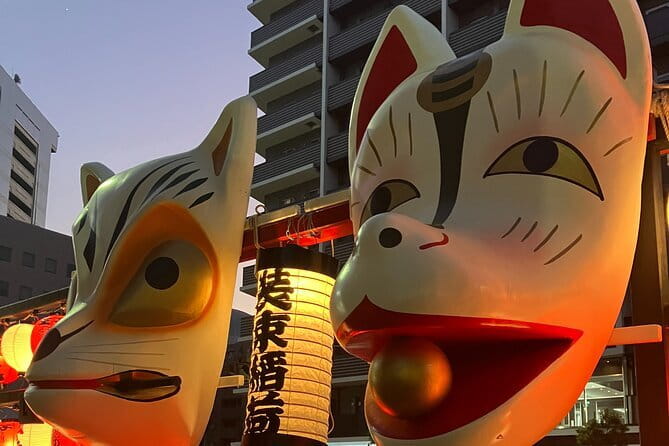
- Oji fox folklore meets New Year tradition, based on the fox legend tied to Oji Inari Shrine
- 3 shrine visits with a Japanese host, so you understand what you’re seeing instead of just passing by
- Sake in hinoki cypress masu cups, plus sake brewing talk from a sake sommelier
- A structured sake-tasting moment, paired with snacks and free-flow drinks
- You’re taken to the procession starting point, so you’re positioned for the dances and the lion dance
- Max 30 people on paper, but you should still be mentally ready for a crowd at the big finale
Oji Fox Pageant: the New Year story behind the fox lanterns
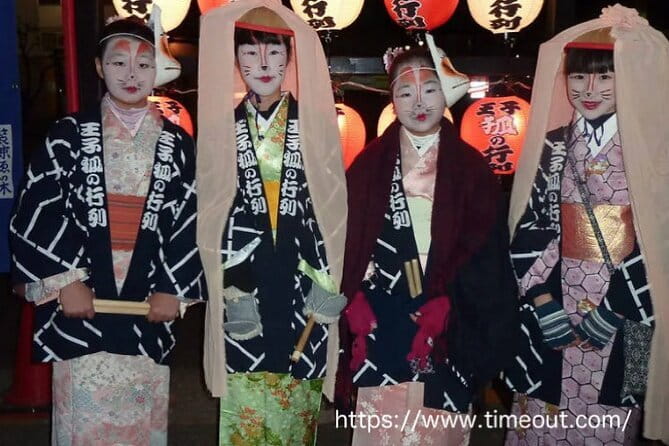
Ōji is a special place for fox lore, and New Year’s time brings that folklore into public view. The celebration is built around a legend that foxes travel to Oji Inari Shrine, a tale that’s been preserved in ukiyo-e artwork. Local organizers turned that myth into a real annual pageant, complete with fox-themed participants and yellow lanterns meant to suggest foxfires.
What I like about this kind of event is that it’s not just a show. You get the backstory first, then the day turns into a live, street-level performance. That matters, because you’ll recognize the meaning behind the masks, makeup, lanterns, and dances instead of only thinking, cool costumes.
The fox procession finale is the obvious highlight, but I also think the earlier rhythm is the secret sauce. You start with shrine context, then you refuel in an izakaya, then you go watch the parade in motion. It’s a smooth way to experience Japanese New Year culture without trying to stitch together multiple plans by yourself.
Readers booked these Tokyo options in the same breath. Here is how each one scored:
- Mt Fuji and Hakone 1-Day Bus Tour Return by Bullet Train
★ 5.0 · 26,383 reviews - 1-Day Tokyo Bus Tour
★ 5.0 · 14,250 reviews - Tokyo: teamLab Planets TOKYO Digital Art Museum Entry Ticket
★ 4.6 · 9,779 reviews - Mt Fuji & Hakone Cruise, Drum Show Bullet Train 1 Day from Tokyo
★ 4.0 · 7,413 reviews
Meeting at Ōji Station and setting expectations for a 3-hour day
You start at 8:30 am at the North entrance of JR Ōji Station. The tour ends back at the meeting point, so you’re not solving public-transport puzzles while you’re hungry or tired.
The duration is listed at about 3 hours. That’s short enough that you’ll likely feel the schedule as a compact sprint: a guided walking start, a food-and-drink window, and then a final viewing stretch. If you’re the type who likes to linger at sacred spaces, keep your pace expectations realistic.
Also note the size: the tour is capped at 30 people. Still, one past booking described a group that felt oversized, reported as over 50. If you’re sensitive to crowds, that’s the main thing I’d weigh before booking. The upside is that the operator coordinates with local tourism associations and the organizing committee, which is usually a sign the event logistics are taken seriously.
Three shrine visits: how the guide helps you read the festival
A big part of the value here is the 3-shrine sequence with a Japanese host. You’re not just walking past a few sites for photos. You’re getting explanations along the way, which helps you connect the fox legend to what you’re actually seeing in the area.
I like this format because it trains your eye. At shrines, details matter: how people approach, how the space is used, and what kinds of symbols show up in offerings and decor. With a host translating and pointing out meanings, you’re more likely to notice the cues you would otherwise miss.
There’s also a practical benefit: shrines aren’t always intuitive for first-timers. When you’re guided, you avoid awkward moments like standing where you shouldn’t or not knowing the flow of foot traffic. The only caution is crowd pressure. If the group is large, you may feel like the area is being occupied by a moving cluster. When that happens, the shrine part can feel less respectful and more like a transit stop.
The izakaya break: hinoki masu, sake brewing talk, and free-flow drinks
After the shrine start, the tour shifts to a cozy izakaya setup. This is where the experience turns into something you can taste and feel. You’ll get sake served in hinoki cypress masu cups, which is both a practical drink vessel and part of the sensory story. Hinoki has a strong, pleasant aroma, so even before you take a sip, you’re already getting a different kind of experience than plain cups.
You’ll also learn about sake brewing from a sake sommelier. Even if you’re not a sake expert, this is a smart stop because it gives you a vocabulary for what you’re tasting later. You’ll be more alert to differences like sweetness versus dryness, and lighter versus heavier styles.
Then comes the part that makes this tour feel like more than a cultural walk: free-flow alcoholic beverages and soft drinks. For adults, that includes sake and beer or other alcoholic beverages. For under drinking age participants, you still get soft drinks. In other words, the day isn’t built only around drinking, even though the sake focus is real.
Snacks support the schedule too. The provided examples include edamame (green soybeans), fried chicken, French fries, and more small bites. You’ll also have a sake-tasting component described as 5 kinds of snacks. That combo is helpful: it keeps you from doing a straight alcohol-only tasting, and it keeps energy up while you wait for the procession viewing time.
Sake tasting: what to pay attention to while you sip
Sake tasting can become mindless if everyone is just raising cups and moving on. The way this tour is designed, you get a chance to slow down and compare. The best way to do that is to treat each sip like a mini question:
- Is it light or full-bodied?
- Does it feel crisp, or more rounded?
- What does the snack change in the taste?
The sommelier’s brewing explanation gives you a framework to interpret those differences. You don’t need to remember every detail. You just need to notice that sake styles aren’t all the same, and brewing choices change flavor and aroma.
Another small tip: pace yourself. You’ll be heading out afterward to the procession starting point, where you’ll likely stand and watch. If you drink fast, that final stretch can get uncomfortable. So I’d aim for steady sips and snack balance, not a race.
- Tokyo: Shinjuku Food Tour (13 Dishes at 4 Local Eateries)★ 5.0 · 6,603 reviews
- Tokyo Mt Fuji 5th St & Hakone Cruise Bus Tour w/Bullet Train★ 4.4 · 5,024 reviews
- Flagship 2-Hours Official Street Go-Kart Tour – Tokyo Bay Shop★ 5.0 · 4,974 reviews
- From Tokyo: Mount Fuji Full-Day Sightseeing Trip★ 4.5 · 4,970 reviews
- Tokyo: Hop-On Hop-Off Sightseeing Bus Ticket★ 3.9 · 4,207 reviews
The fox procession starting point: dances, lion dance, and lantern energy
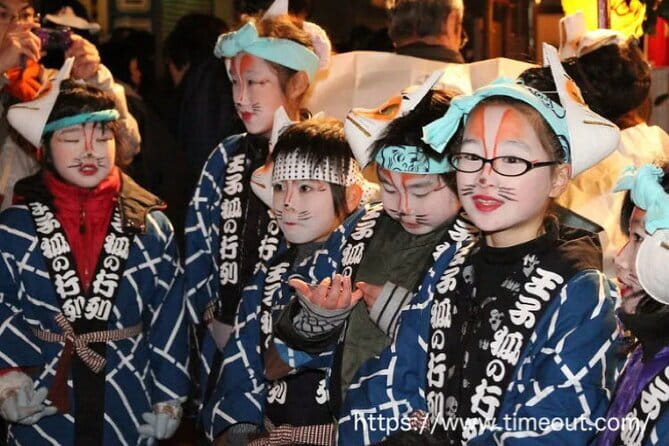
The last phase takes you to the starting point of the fox procession. This is where the folklore becomes a visible street performance. You’ll see participants carrying yellow lanterns, meant to symbolize foxfires, and many wear kimonos, fox masks, or fox makeup. Even if you’re not fluent in the cultural references, you’ll feel the theme instantly.
Then the performance includes traditional dances, including the lion dance. That lion dance moment is the kind of event peak that makes the earlier schedule feel worth it. It gives you a high-energy landmark that you can anchor the experience around.
Timing-wise, the description says the countdown to midnight is part of the build-up. With a 3-hour tour window, that suggests the pace is fast and the finale is the reason you’re there. If you want photos, arrive with a camera plan: know your power level, and consider quick shots rather than long framing attempts.
Crowds are also part of the reality here. Even with a group limit, New Year moments attract people. If you’re someone who needs personal space, you may find the shrine and parade areas both feel busy. If you’re okay with that and you like shared excitement, the procession is exactly the kind of thing that can turn into a memory you talk about for years.
Is it worth $106.74 for a 3-hour fox-and-sake New Year? Value check

At $106.74 per person for roughly 3 hours, the value depends on how much you care about the full package. What you’re getting isn’t just sightseeing. It includes:
- Guided visits to 3 local shrines with a Japanese host
- Hinoki cypress masu sake service plus free-flow drinks (sake and beer or other alcoholic options for adults)
- A sake sommelier talk about brewing
- Sake tasting with snack pairings
- Transportation to the fox procession starting point for the dances and lion dance
From a pure logistics standpoint, you’re buying convenience plus explanation. From a food-and-drink standpoint, you’re also buying structure: you get snacks and tasting, not just a place to drink.
The main value risk is crowding. If the group is larger than expected, the shrine portion can lose some of its calm, and the parade viewing can feel more like shoulder-to-shoulder waiting than a respectful moment. Since you start at 8:30 am and stay on a tight schedule, it’s also a “do it together” experience, not a flexible wander.
Still, if you want New Year culture without having to plan every step, this is one of the easier ways to do it. The alcohol isn’t the only attraction, but it is a big part of the tone, and the event is built around sake as well as fox folklore.
Who this Oji Fox Pageant tour suits best
I think this tour fits best if you’re:
- A first-time Japan visitor who wants a ready-made cultural thread instead of random shrine hopping
- Curious about Inari-related fox folklore and want the story explained while you walk
- Interested in sake beyond just ordering a drink
- Comfortable with an event atmosphere and don’t mind that New Year is a busy time
You might want to skip it or look for a smaller alternative if:
- You strongly prefer quiet shrine time and hate crowds
- You’re sensitive to alcohol being a central feature of the schedule
- You want lots of free time to roam on your own
The tour says most people can participate, and it’s near public transportation. That’s good news if you’re worried about access to the start area. Still, standing for a parade finale is part of the deal.
Should you book this Oji Fox Pageant experience?
Book it if you want a structured New Year outing that mixes shrines, sake, and the fox procession finale in one tight 3-hour run. The hinoki masu setup, the sake sommelier talk, and the fact you’re taken to the procession starting point are the three reasons I’d feel confident spending this money.
Think twice if crowd size is your top stress point. With one reported instance of a much larger group than expected, this isn’t the best choice if you want a calm, slow, reflective shrine experience. If you can handle busier spaces for the reward of seeing the lion dance and fox pageant energy up close, this is a very memorable Tokyo New Year option.
FAQ
Where does the tour start?
You meet at the North entrance of JR Ōji Station.
What time does the tour begin?
The start time is 8:30 am.
How long is the tour?
The duration is approximately 3 hours.
What’s included besides the shrine visits?
You’ll have time at a cozy izakaya for sake and beer (for adults), soft drinks (for under drinking age customers), snacks, a sake brewing talk by a sake sommelier, and sake tasting.
How many shrines do you visit?
You visit 3 local shrines.
Do adults get free-flow drinks?
Yes. Alcoholic beverages are free flow for adults, and soft drinks are provided for under drinking age participants.
Where does the tour end?
The tour ends back at the meeting point.
What’s the cancellation policy?
Free cancellation is available. You can cancel up to 24 hours in advance for a full refund, and weather matters since the experience requires good weather.
Is this tour capped at a certain group size?
Yes. The maximum group size is 30 travelers, and you’ll receive confirmation within 48 hours of booking subject to availability.
More Tour Reviews in Tokyo
- Mt Fuji and Hakone 1-Day Bus Tour Return by Bullet Train
★ 5.0 · 26,383 reviews - 1-Day Tokyo Bus Tour
★ 5.0 · 14,250 reviews - Tokyo: teamLab Planets TOKYO Digital Art Museum Entry Ticket
★ 4.6 · 9,779 reviews - Mt Fuji & Hakone Cruise, Drum Show Bullet Train 1 Day from Tokyo
★ 4.0 · 7,413 reviews - Tokyo: Shinjuku Food Tour (13 Dishes at 4 Local Eateries)
★ 5.0 · 6,603 reviews





