
Reviewed · GUIDED
Discover the hidden gems of Tokyo:Private Tour with a Local Guide
Tokyo moves fast. This tour helps you steer it.
A flexible, private half-day through traditional East Tokyo is a smart way to see more than the usual photo stops, especially because you choose three must-see places from a long menu. I like the local guide attention and the way the day can fit your interests, from shrine culture to food to manga and home appliances; guide Kazuo Hirose in particular came across as warm, professional, and practical in how he tailored the pace. One drawback to plan for: it’s a walking tour with moderate stamina needed, and several highlights (meals and some attractions) cost extra.
You’ll meet your guide at Kaminari-mon (Kaminarimon) in Asakusa (2-chome-3-1, 111-0032) and start your route from there, using public transport or walking. This is priced at $65.15 per person, with tour length listed from 2 hours up to 1 day, plus a mobile ticket for smoother check-in.
If you’re the type who likes to understand Tokyo while you move—why a shrine matters, how neighborhoods connect, where locals actually go—this format works well. The tour hours run 9:30 AM to 5:00 PM on all days during the listed season, so you can line it up with your other plans.
In This Review
- Key things I’d prioritize on this private East Tokyo walk
- Planning Your Half-Day in East Tokyo (and how the customization really helps)
- Kaminari-mon to Senso-ji: Asakusa’s temple approach, explained as you walk
- Asakusa food and Tsubaya knives: two very different traditions, both very practical
- Ueno Park: museum territory, plus a calm reset between neighborhoods
- Imado Shrine and Yushima Tenmangu: luck and study, explained for exam-season Tokyo
- Ameyoko and Mimeguri Shrine: value shopping plus a quick power stop
- Akihabara: from junk streets to Yodobashi, with manga and anime in the mix
- Nihonbashi, Tsukiji Outer Market, and Ginza stationery: eating and browsing like a local
- Ginza’s old money feel: Imperial Palace gardens, Kabuki theater, and Uniqlo Ginza
- Tokyo Station and a soba break: ending your day with transit-friendly calm
- Price and value: $65.15 per person plus what to budget for
- Who this private East Tokyo tour suits best
- Should you book this private East Tokyo tour?
- FAQ
- How many places do I choose for the tour?
- Where does the tour start?
- What’s included in the price?
- Are attraction tickets or restaurant meals included?
- Is this a private tour or a group tour?
- How long is the tour?
- Can I cancel for a refund?
Key things I’d prioritize on this private East Tokyo walk
- Pick your 3 stops, then let the guide connect them so you don’t waste time figuring out the best order.
- Asakusa temple area + shopping streets gives you classic Tokyo flavor right away at Kaminari-mon.
- Akihabara and Ginza together is a fun contrast: electronics and anime on one side, refined department-store Tokyo on the other.
- Food stops are optional but real—think sukiyaki at Imahan Honten and sushi at Sushi Dai (not included).
- Guides bring both storytelling and street-level tips, and the feedback on Kazuo Hirose highlights a friendly, adaptable style.
Planning Your Half-Day in East Tokyo (and how the customization really helps)
The big idea here is simple: you choose three must-visit spots from a list, then your guide builds a route around them. That matters because East Tokyo is a web of neighborhoods. If you pick the wrong order on your own, you’ll end up zig-zagging and spending more time traveling than seeing.
Your guide’s job isn’t just to point. The team includes local guides with deep Japan knowledge, and some staff have a media background from German TV national broadcasting crew work. Translation: you get people who can explain what you’re looking at, not just recite facts.
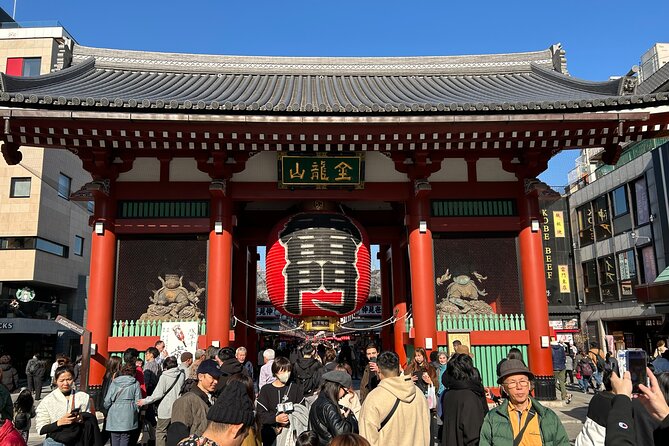
Your starting point is Kaminari-mon, which is a smart hub for a first day in Tokyo. You can reach it by public transport or on foot, and it puts you right into the Asakusa flow. If you want the day to feel like a guided walk with breathing room, I’d take advantage of the private setup and ask for a pace that fits you.
Readers also shortlisted these Tokyo bookings:
- Tokyo 6hr Private Tour with Government-Licensed Guide
★ 5.0 · 3,902 reviews - Tokyo: Shinjuku Local Bar and Izakaya Guided Walking Tour
★ 4.9 · 1,794 reviews - Tokyo: Private City Highlights Tour with Local Guide
★ 4.8 · 1,433 reviews - Tokyo: Tsukiji Fish Market Guided Walking Tour
★ 4.9 · 1,397 reviews
Kaminari-mon to Senso-ji: Asakusa’s temple approach, explained as you walk
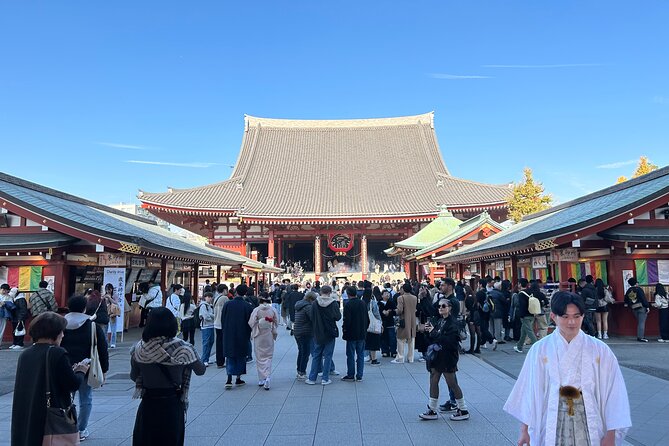
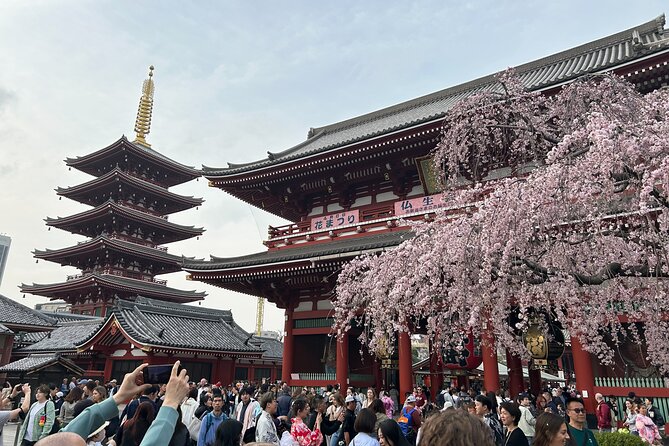
You’ll begin in the Kaminari-mon area and then move into Asakusa’s famous temple approach. The centerpiece stop is Senso-ji Temple, where the tour focuses on stories tied to Asakusa’s development and Tokyo’s older rhythms.
One highlight worth paying attention to: the guide talks about the origin of the Asakusa Sanja Festival, including the idea of the two fisherman brothers behind the name. It’s the kind of story that turns the scenery from scenery into context.
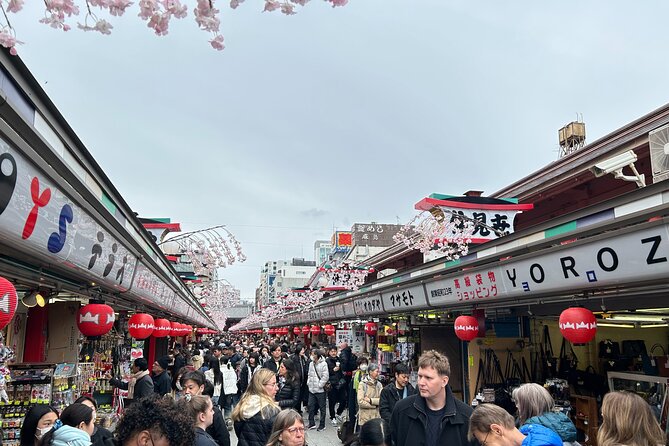
Right along the approach is Nakamise Shopping Street, which stretches along the main path to Senso-ji. This is where you’ll see traditional snack and souvenir culture in motion. Practical note: if you’re hungry, this is a good time to nibble. If you’re saving appetite for later meals, you can treat it as a browsing lane and let the guide point out what’s worth your money.
The tour also includes Asakusa Shrine, tied closely to the neighborhood identity. You’ll get a Shinto lens here—polytheistic beliefs and the way shrines function as guardian deities for local areas. If you’ve ever wondered why shrines feel different from temples, this is where the day starts making sense.
Asakusa food and Tsubaya knives: two very different traditions, both very practical
After the temple-and-shrine rhythm, the tour offers a chance to shift into something more sensory: a meal or a craft stop.
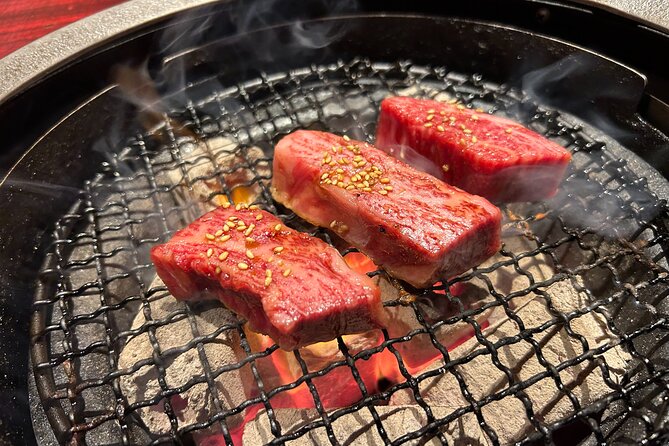
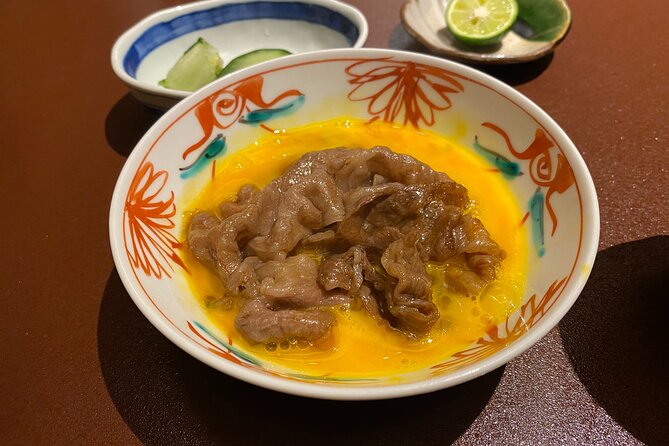
First, there’s Imahan Honten (すき焼き今半本店), a long-established high-end restaurant in Asakusa Kaminarimon. The emphasis is on carefully selected Kuroge Wagyu beef. Important value note: this is listed with an entrance/meal cost as not included, so you’re choosing a splurge, not a free add-on.
If you like Tokyo food experiences that feel tied to place (not just a menu in a mall), this is a strong pick. Just plan ahead: a one-hour sit-down can affect how much time you have for shopping streets later.
Then the day can swing into a different kind of Japanese tradition at Tsubaya Knives. This stop is about knife-making craft and the idea that samurai sword techniques connect to today’s knife skills. You’ll hear about honyaki, where knives are made by punching a single piece of steel out of a block.
Why I like this for a private walking tour: you can ask questions while you’re right there, instead of guessing from photos. You also get a clearer sense of what makes Japanese knives different if you’re curious about buying or just understanding the craft.
Ueno Park: museum territory, plus a calm reset between neighborhoods
One of the easiest ways to keep this tour enjoyable is to include time that isn’t only shopping and crowds. Ueno Park is that reset button.
The tour lists major anchors here: Tokyo National Museum, National Museum of Western Art, and Ueno Zoo. Even if you don’t go into museums, you’ll feel the scale. This area gives you a green break without leaving central Tokyo.
In practice, this stop is helpful because it lets your legs recover a bit while still staying in the action zone. It’s also a good place to use your guide to decide what fits your interests—museum time or just a park walk—since the whole tour is customizable.
Imado Shrine and Yushima Tenmangu: luck and study, explained for exam-season Tokyo
From Ueno’s open space, the tour moves back into shrine territory with Imado Shrine and Yushima Tenmangu.
Imado Shrine is said to be one of the birthplaces of the maneki-neko (beckoning cat). If you’ve seen lucky cats in storefronts, this stop helps you trace the icon to a real shrine setting. The tour also links the shrine to good-luck ideas, including match luck (so it’s the sort of stop couples often appreciate).
Then comes Yushima Tenmangu, which enshrines Sugawara no Michizane, known as the god of learning. This is a classic Tokyo exam-season stop, but the key value is how the guide can explain why the blessings extend beyond tests into education and qualification-type goals.
If you’re visiting Japan for the first time and want your day to feel more than sightseeing, this is where your guide’s storytelling adds weight. You’re not just walking past buildings—you’re learning what people come here to request.
Readers also shortlisted these Tokyo bookings:
- Private Tour to Mt. Fuji and Hakone (Fully Licenced Operator)★ 5.0 · 1,910 reviews
- Tokyo Customized Private Tour (Must See Places in 1 Day)★ 5.0 · 1,499 reviews
- Mount Fuji Full-Day Private Tour from Tokyo (Customizable)★ 4.9 · 1,470 reviews
- Private Custom Tour: Tokyo in a Day★ 5.0 · 1,432 reviews
- Tokyo 4hr Private Tour with Government-Licensed Guide★ 5.0 · 1,394 reviews
Ameyoko and Mimeguri Shrine: value shopping plus a quick power stop
The tour includes Ameyoko Shopping Street, commonly known as Ameyoko. It’s popular for good value: quality products and food where you can compare things fast. If you like markets and street shopping without needing to hunt for the right alley yourself, this is a practical choice.
Right after shopping, the tour can include Mimeguri Shrine. This is described as a power spot tied to financial luck and business, and it’s connected to the Sumida River Seven Lucky Gods tour.
I like pairing a market stop with a shrine stop because your senses get a break. You also get a clearer view of Tokyo’s rhythm: commerce nearby, then a quiet pause for ritual.
Akihabara: from junk streets to Yodobashi, with manga and anime in the mix
Akihabara is where Tokyo gets loud—in the best way—especially if you like electronics and pop culture.
The tour list includes Akihabara Junk Street, described as a backstreet packed with stores selling PC peripherals and related gear. There’s a reason this area draws repeat fans: it’s not just one giant store; it’s a network.
You’ll also encounter references to manga and anime culture, including the idea of a maid cafe. Even if you’re not going in for the experience, the area is a window into how Japan’s fandom culture shows up in real storefronts.
Another anchor is Yodobashi Akiba, part of the larger Yodobashi Akiba complex. It’s described as having one of the largest sales floor areas in Akihabara, making it a useful stop if you want to browse a wide range quickly in one place.
Nearby, your guide can connect the district to spirituality too, since Kanda Myojin is referenced as being close to Akihabara and tied to major festivals. And if your route includes it, the tour also lists Kanda Shrine as a power spot for victory and finding a partner.
Nihonbashi, Tsukiji Outer Market, and Ginza stationery: eating and browsing like a local
As the day moves west through central East Tokyo, you’ll see a shift in style: from specialty streets to department-store and market energy.
One stop is Tsukiji Jogai Market (Tsukiji Outer Market). The tour frames it around food, and specifically notes that many foreign tourists visit here, with a large share being foreigners, and that food and sushi help bridge the experience. Even if you’re not focused on sushi, the point stands: this is an easy place to snack and sample without committing to a full restaurant meal.
The tour lists Sushi Dai as a destination, but it’s marked not included, so treat it as an optional ticket to a sit-down meal. Another food-and-shopping anchor is Nihonbashi Mitsukoshi Main Store, where you’ll find the basement dining area with over 70 shops and bento-style options.
Then there’s Ginza Itoya Hontren, a stationery specialty store with a red paperclip-shaped sign. It’s described as founded in 1904, and it has multiple floors plus a separate annex. If you want a practical souvenir that feels like Tokyo—pens, paper goods, small stationery finds—this is a great one-hour browsing stop.
Ginza’s old money feel: Imperial Palace gardens, Kabuki theater, and Uniqlo Ginza
Ginza is where the tour can feel like a time shift. You’ll get context for Ginza’s refined atmosphere and history, including the idea that it was built on the remains of a silver coin foundry from the Edo period.
A highlight here is the East Gardens of the Imperial Palace, described as part of the former Edo Castle site. This is a rare “quiet inside the city” moment during a walking tour. If you’re tired of crowds and want a more reflective pause, this is it.
Kabuki also shows up with Kabukiza Theater, listed as a traditional performing art with over 400 years of history and noted as UNESCO intangible cultural heritage. Your guide can help you connect what you see in the building to the art form’s long arc.
Then comes a modern twist: Uniqlo Ginza, described as Uniqlo’s global flagship and the largest store in the world with multiple floors. This is an optional shop stop, but it’s a useful contrast next to Kabuki and Imperial grounds.
Also in the area is a reference to Wako Main Building (with a clock tower) along the Ginza 4-chome intersection. It’s noted that it has been renamed as Seiko House Ginza in 2022.
Tokyo Station and a soba break: ending your day with transit-friendly calm
The tour route can finish near Tokyo Station, which is described as a huge terminal that represents Japan and connects major train networks. This is useful because your day doesn’t strand you in the middle of nowhere; it lands you at a transportation hub.
If the itinerary includes the soba option, you’ll stop at a place described as an adult hideaway and centered on Edomae soba. The tour text frames it as connected to a main store operating since 1922 and as a space for adults to enjoy soba tasting.
This kind of final meal or snack works well after hours of walking. You’ll have a warm, simple finish without needing to locate a restaurant yourself.
Price and value: $65.15 per person plus what to budget for
At $65.15 per person, the main value is paying for a private guide and a structured walking route that reduces decision fatigue. You’re essentially buying time and context: how to order stops, what each place means, and what’s worth your money.
But this is not an all-inclusive tour. The tour includes a tour guide walking tour and visits to Asakusa, Ueno, Akihabara, Nihonbashi, and Ginza. Entrance fees are listed as free for some stops, while others are not included (like Imahan Honten, Tokyo Skytree, Sushi Dai, and Kabukiza).
So the real budgeting question is: what do you choose for your three stops? If you stick to free sights plus street food, the tour can stay cost-friendly. If you add a meal at Imahan and an indoor attraction like Skytree or Kabukiza, you’ll spend more, but you’ll also get a more “special day” feel.
My practical take: treat the base price as your guide-and-route fee, then budget separately for meals and any ticketed attractions you care about.
Who this private East Tokyo tour suits best
This style works best if you want a Tokyo day that feels guided but still flexible.
- You care about culture and context, not just photos. Shrine and festival stories can turn into real understanding fast.
- You like variety: temple streets in Asakusa, park time in Ueno, market shopping in Ameyoko, and pop culture in Akihabara.
- You want a guide who adjusts. The feedback on Kazuo Hirose highlights adaptation to likes and dislikes and a lot of walking-and-talking time, with friendly professionalism.
It may be less ideal if you want a low-effort day. The tour asks for moderate physical fitness, and it’s built around walking. If you’re mobility-limited or hate moving every hour, you might want to request a lighter selection of stops (and confirm your pace upfront).
Should you book this private East Tokyo tour?
Book it if you want a planned, human-guided route through East Tokyo’s big contrasts: sacred sites and shopping streets, markets and department-store food halls, Akihabara pop culture and Ginza polish. The private format and customizable three-stop approach are the core reasons to choose it.
I’d also book it if you value how your guide communicates. The strongest praise in the guide feedback points to warmth, professionalism, and personalization, with Kazuo Hirose described as adapting the itinerary and keeping the mood upbeat even when the day is active. If you’re traveling with someone and want shared time that feels meaningful (not just a checklist), this tour style fits.
Skip it only if you plan to do everything independently and you’re allergic to walking. Since some of the best-known stops here can require extra spending for food or attractions, you should also be comfortable budgeting for those “yes” moments.
FAQ
How many places do I choose for the tour?
You choose three must-visit spots from a listed selection, and your local guide customizes the itinerary around those picks.
Where does the tour start?
The tour starts at Kaminari-mon (Kaminarimon) 2-chōme-3-1, Asakusa, Taito City, Tokyo 111-0032, Japan.
What’s included in the price?
Included: a tour guide walking tour and visits covering Asakusa, Ueno, Akihabara, Nihonbashi, and Ginza. The guide is included; private transportation is not.
Are attraction tickets or restaurant meals included?
Not generally. Some stops are listed with admission free, while others like Imahan Honten, Tokyo Skytree, Sushi Dai, and Kabukiza Theater are marked as not included. Lunch/meal costs are also not included.
Is this a private tour or a group tour?
This is a private tour/activity, meaning only your group participates.
How long is the tour?
The duration is listed as 2 hours to 1 day (approx.), depending on how you build your half-day/full-day plan.
Can I cancel for a refund?
Yes. You can cancel for a full refund if you cancel at least 24 hours in advance. If you cancel less than 24 hours before the start time, the amount paid is not refunded.
More Guided in Tokyo
- Tokyo 6hr Private Tour with Government-Licensed Guide
★ 5.0 · 3,902 reviews - Tokyo: Shinjuku Local Bar and Izakaya Guided Walking Tour
★ 4.9 · 1,794 reviews - Tokyo: Private City Highlights Tour with Local Guide
★ 4.8 · 1,433 reviews - Tokyo: Tsukiji Fish Market Guided Walking Tour
★ 4.9 · 1,397 reviews - Tokyo 4hr Private Tour with Government-Licensed Guide
★ 5.0 · 1,394 reviews
More Tours in Tokyo
- Mt Fuji and Hakone 1-Day Bus Tour Return by Bullet Train
★ 5.0 · 26,383 reviews - 1-Day Tokyo Bus Tour
★ 5.0 · 14,250 reviews - Tokyo: Shinjuku Food Tour (13 Dishes at 4 Local Eateries)
★ 5.0 · 6,603 reviews - Tokyo Mt Fuji 5th St & Hakone Cruise Bus Tour w/Bullet Train
★ 4.4 · 5,024 reviews - Flagship 2-Hours Official Street Go-Kart Tour – Tokyo Bay Shop
★ 5.0 · 4,974 reviews
More Tour Reviews in Tokyo
- Mt Fuji and Hakone 1-Day Bus Tour Return by Bullet Train
★ 5.0 · 26,383 reviews - 1-Day Tokyo Bus Tour
★ 5.0 · 14,250 reviews - Tokyo: teamLab Planets TOKYO Digital Art Museum Entry Ticket
★ 4.6 · 9,779 reviews - Mt Fuji & Hakone Cruise, Drum Show Bullet Train 1 Day from Tokyo
★ 4.0 · 7,413 reviews - Tokyo: Shinjuku Food Tour (13 Dishes at 4 Local Eateries)
★ 5.0 · 6,603 reviews
Latest Tokyo reviews off our desk






Guided, compared.
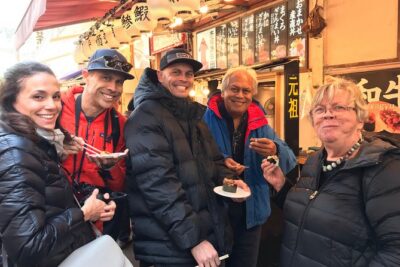 ★ 5.0Tokyo 6hr Private Tour with Government-Licensed GuideFrom $1553,902 reviews
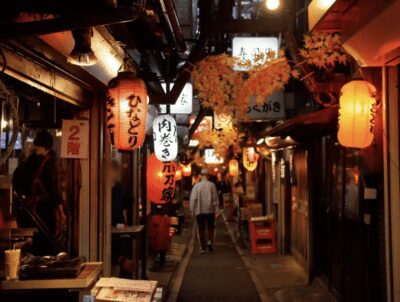 ★ 4.9Shinjuku Local Bar and Izakaya Guided Walking TourFrom $341,794 reviews
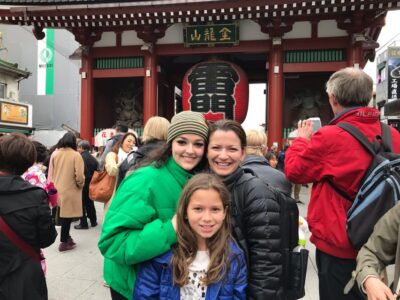 ★ 4.8Private City Highlights Tour with Local GuideFrom $1061,433 reviews
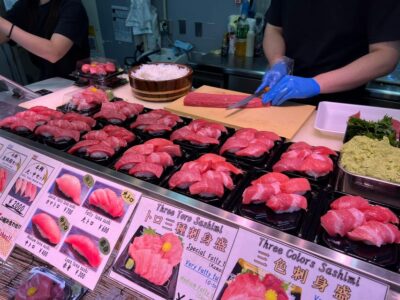 ★ 4.9Tsukiji Fish Market Guided Walking TourFrom $221,397 reviews
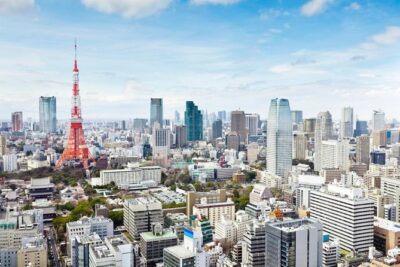 ★ 5.0Tokyo 4hr Private Tour with Government-Licensed GuideFrom $1091,394 reviews
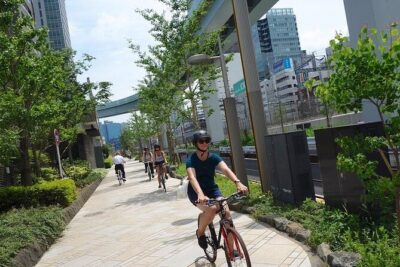 ★ 5.0Tokyo Guided Small-Group Biking TourFrom $1061,250 reviews
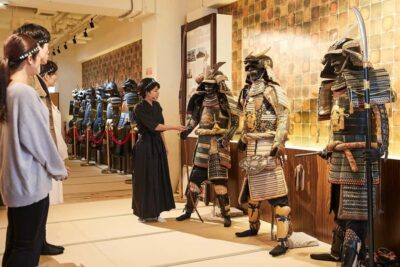 ★ 4.6Samurai Ninja Museum Guided tour and ExperienceFrom $271,010 reviews
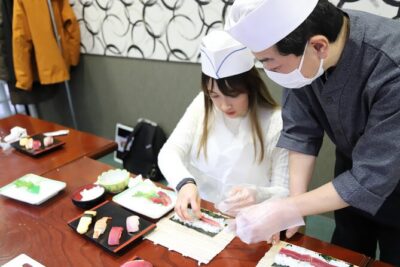 ★ 5.0Tsukiji Fish Market Guided Tour and Sushi Making with Pro ChefFrom $104775 reviews