Reviewed · TOKYO
Experience local life in Yoyogi Uehara
Tokyo quietes down in Yoyogi Uehara. This short tour is a smart way to see a calmer side of central Tokyo, where you can still spot older downtown habits next to newer cafés and shops. I love the small-group pace (max 8) because the streets feel easy to explore on foot, and you get time to ask questions. I also like that the guide keeps the day grounded in everyday life with food stops plus local landmarks instead of racing from one major sight to another.
One thing to consider: it involves walking and you should have at least moderate physical fitness for an afternoon stroll. Also, one of the main food stops can be busy, so plan for some waiting if you hit peak times.
In This Review
- Key highlights you’ll feel fast
- Where Yoyogi Uehara fits in your Tokyo plan
- Meet at Yoyogi Uehara Station, then let the neighborhood do the talking
- Stop 1: Yoyogihachimangu and the fortune paper draw
- Stop 2: Haritts donuts in a real neighborhood queue
- Stop 3: Daikokuyu public bath, locals’ favorite
- The walking part: short loop, real street impressions
- Snacks, drinks, and coffee/tea: not a side detail
- Group size and guide support: why max 8 matters
- Price and value: what $36.43 buys you
- Who this tour suits best
- How to enjoy it even more (without overthinking)
- Should you book the Yoyogi Uehara local-life tour?
- FAQ
- How long is the Yoyogi Uehara experience?
- What does the tour cost?
- Where do we meet, and when?
- Is there an English-speaking guide?
- What are the main stops on the tour?
- What’s included in the price?
- Is transportation to and from the station included?
- What’s the maximum group size?
- Does it require moderate walking or fitness?
Key highlights you’ll feel fast
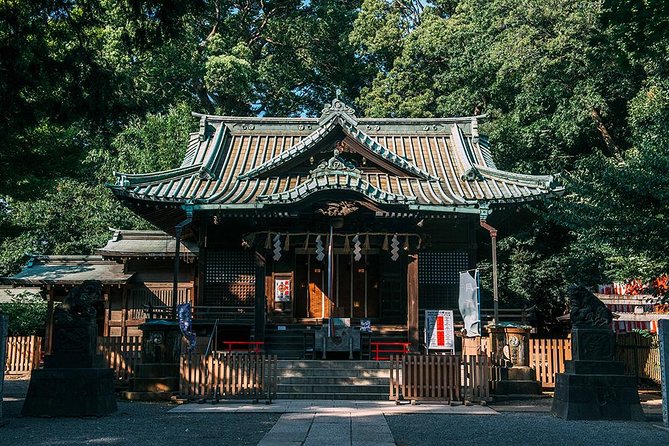
- Yoyogihachimangu with a fortune-telling paper draw at a local power spot
- Haritts donuts in a neighborhood setting where the line can be part of the experience
- Daikokuyu public bath that locals (and even TV/celebrity types) seem to keep coming back to
- Snacks, drinks, and coffee/tea that help you start the walk fueled
- English-speaking guidance that turns side streets into something you can actually read and enjoy
Where Yoyogi Uehara fits in your Tokyo plan
Most Tokyo days start with famous zones, loud crowds, and big-ticket sights. This tour takes you somewhere else: Yoyogi Uehara, close to both Shibuya and Shinjuku, but with a more residential rhythm. The area has that local feel you look for in Japan: safe streets, comfortable walking, and shop fronts that look like they’ve served regulars for years.
I like this setup because it’s a practical “in-between” option. If you want to do less jumping around and more noticing, a 2-hour guided loop is a good fit. You’ll also get structure: you meet, you eat, you walk, you stop at a shrine, you hit a donut shop, and you end at a classic sento (public bath). Then your guide can point you toward other nearby options based on what you’re into.
The tour is also positioned as a way to understand the everyday Tokyo that sits behind the postcards. Instead of just admiring architecture or famous statues, you’re learning how locals pace an afternoon: snacks first, a shrine stop for spiritual luck (and the fortune paper), and a public bath that still functions like it’s supposed to.
Readers booked these Tokyo options in the same breath. Here is how each one scored:
- Mt Fuji and Hakone 1-Day Bus Tour Return by Bullet Train
★ 5.0 · 26,383 reviews - 1-Day Tokyo Bus Tour
★ 5.0 · 14,250 reviews - Tokyo: teamLab Planets TOKYO Digital Art Museum Entry Ticket
★ 4.6 · 9,779 reviews - Mt Fuji & Hakone Cruise, Drum Show Bullet Train 1 Day from Tokyo
★ 4.0 · 7,413 reviews
Meet at Yoyogi Uehara Station, then let the neighborhood do the talking
The plan starts around 2:00pm at Yoyogi Uehara Station by the ticket gate. You’ll look for your guide holding a banner so you can spot them quickly. Your guide is English-speaking, and the group stays small, with a maximum of 8 people—so you’re not stuck listening from the back of a crowd.
A smart detail here is that the tour is built to work for real life. After you meet, you don’t just immediately start walking. There are snacks & drinks included, plus coffee and/or tea. That matters in Tokyo. Even “short” walks can add up, and food stops make the route feel like a conversation rather than a checklist.
You also get an unofficial benefit: since the area is tucked into a residential pocket, it’s the kind of place where you can walk past interesting things without realizing they matter. A guide helps you slow down and notice the right stuff—temples and shrines, everyday storefronts, and the kinds of places locals treat as normal.
One practical note: transportation to and from the station is not included, so factor in your local transit route when you choose the rest of your day.
Stop 1: Yoyogihachimangu and the fortune paper draw
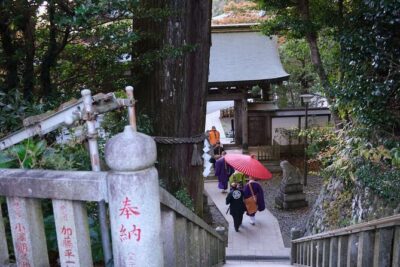
The tour’s first major highlight is Yoyogihachimangu, described as a popular power spot with a fortune-telling paper draw. This is the kind of shrine stop that feels more interactive than a quick photo at a landmark.
What you’re really getting from this stop is context. A shrine like this isn’t only about sightseeing. It’s about a local ritual—people come here with hopes, questions, and curiosity. The fortune paper element gives the moment a light, human energy. Even if you don’t read every sign, you can still participate in the main activity.
What to watch for
- Look for the flow of visitors and how people proceed through the space
- Treat the fortune draw as a playful moment, not a complicated task
- Take a minute to notice the shrine setting—these spaces are designed for pause
Possible drawback
If you arrive during a busy window, shrine spaces can feel crowded. That’s not a reason to skip it; it just means you might want to keep your expectations flexible for timing.
Stop 2: Haritts donuts in a real neighborhood queue
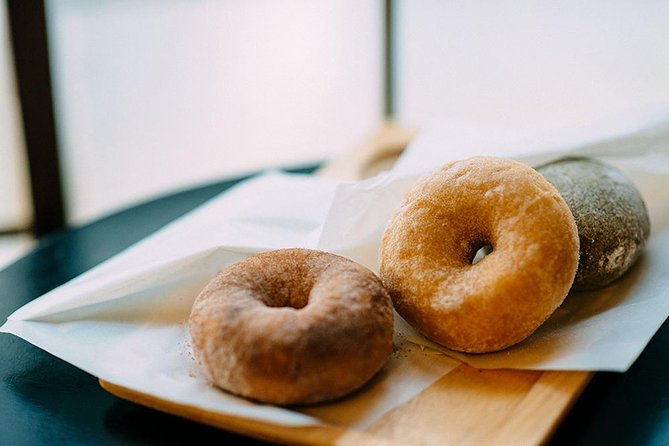
Next up is Haritts, a donut shop that’s said to be among the top five in Tokyo. Even if you’ve eaten your share of sweets already, this one matters because it’s not an airport-style “grab-and-go.” It’s part of the neighborhood rhythm. The shop is popular, and lines can happen.
The good news is the tour is timed to make that waiting more enjoyable. Since you’ve already had snacks and drinks, you’re not starving while you queue. And because you’re with an English-speaking guide, you’re not just standing there—time feels more guided.
One review note I find useful: there’s often a need to line up, but it’s considered worth it. That’s a common truth in Japan’s food scene: if something is consistently popular, it’s popular for a reason, and patience becomes part of the deal.
Tips for enjoying the donut stop
- Bring a little patience for the line
- Keep your donut protected if it’s warm out (Tokyo weather can be tricky)
- If you’re sensitive to sugar overload, consider sharing so you can still enjoy the rest of the route
Stop 3: Daikokuyu public bath, locals’ favorite
The centerpiece finish (and one of the most memorable parts of the day) is Daikokuyu, a public bath loved by locals and even visited by celebrities and people in the TV industry. For many people, a sento stop is the closest thing to understanding daily life that’s still active and lived-in. It’s not a museum scene.
This is also where you see how Yoyogi Uehara balances old and new. Public baths like this keep older routines alive. You may notice that the atmosphere feels like a neighborhood institution, not a staged experience.
What to expect (staying practical)
- It’s a bathhouse experience, so you’ll likely follow staff guidance and basic etiquette
- Dress and prepare according to the norms you see at the facility
- The tour format means you’re not trying to figure it all out alone
Because details like changing-room rules or what amenities are provided aren’t listed here, the smartest move is to be ready to follow the facility’s instructions once you arrive. Your guide is there for a reason—use that support.
- Tokyo: Shinjuku Food Tour (13 Dishes at 4 Local Eateries)★ 5.0 · 6,603 reviews
- Tokyo Mt Fuji 5th St & Hakone Cruise Bus Tour w/Bullet Train★ 4.4 · 5,024 reviews
- Flagship 2-Hours Official Street Go-Kart Tour – Tokyo Bay Shop★ 5.0 · 4,974 reviews
- From Tokyo: Mount Fuji Full-Day Sightseeing Trip★ 4.5 · 4,970 reviews
- Tokyo: Hop-On Hop-Off Sightseeing Bus Ticket★ 3.9 · 4,207 reviews
The walking part: short loop, real street impressions
The total duration is about 2 hours, ending around 4:00pm. In that time, the tour doesn’t try to cover every inch of Tokyo. Instead, it focuses on a compact area where you can see the neighborhood feel clearly: older downtown atmosphere, locally loved shop types (tofu spots, donut shops, trendy cafés), and local landmarks like the shrine and the public bath.
That’s the practical value. When you visit Tokyo in a hurry, you tend to see signage and major streets only. Here, you get side streets, residential calm, and small businesses that don’t exist to entertain tourists. That shift can be a big deal for first-timers and repeat visitors alike.
It’s also why this works well as a half-day plan. You can place it between bigger sightseeing blocks. For example, it’s a good choice if you already plan to cover Shibuya or Shinjuku, but you want one part of your day to feel quieter and more human.
Snacks, drinks, and coffee/tea: not a side detail
In a lot of tours, food is a bonus. Here it’s part of the structure. The itinerary includes snacks & drinks, and also coffee and/or tea.
I like that because it changes how the day feels. Your energy stays steady, and you’re not forced into the common visitor trap of walking first and eating later. In Japan, where shops close and lines form fast, starting with something light makes you more flexible.
Also, the guide’s food stops help you understand local tastes beyond what’s written on menus for tourists. Even if you don’t go deep into “Japanese food history,” you still pick up how locals choose where to eat and what they treat as everyday treats.
Group size and guide support: why max 8 matters
The tour caps at 8 travelers. That’s not a random number. In a neighborhood like this, a larger group becomes noise: you move slower, you lose attention to detail, and it’s harder to ask questions. With a smaller group, the walking feels smoother and the stops feel more personal.
The guide’s English ability is also a key part of the value. In the reviews, the guide named Harumi is specifically mentioned for excellent English and a friendly approach. Even if you don’t speak Japanese, you’ll be able to connect the dots between what you see—shrines, shops, and the sento—so the experience feels less like you’re following instructions and more like you’re learning how the place works.
Price and value: what $36.43 buys you
At $36.43 per person, the tour is priced like a genuine half-day experience rather than a budget walk. Here’s what you’re actually paying for:
- English-speaking guide for about 2 hours
- Included snacks & drinks, plus coffee and/or tea
- Entry into the cultural rhythm of the area through three named highlights
- Small-group size (max 8), which improves the pacing
The only cost you should plan for is transportation to and from Yoyogi-Uehara Station, since that’s not included. If you’re careful with your timing and already know how you’ll get there, the rest feels straightforward.
In plain terms: if you want a guided, food-and-culture afternoon in a less-touristy Tokyo neighborhood, the value looks solid.
Who this tour suits best
This is a good fit if you:
- Want local Tokyo without committing to a full-day plan
- Like walking, but prefer a structured route
- Enjoy food stops and small cultural moments (shrines, everyday institutions)
- Are tired of only doing the biggest attractions
It might be less ideal if you:
- Don’t want to walk at all (the tour expects moderate physical fitness)
- Hate any chance of queues (Haritts can draw lines)
- Need long stays at each stop (this is designed to be efficient in 2 hours)
How to enjoy it even more (without overthinking)
A few simple choices can make the tour feel smoother:
- Wear comfortable shoes. Even short Tokyo walks add up fast.
- Bring a water bottle. Snacks and drinks are included, but Tokyo weather can be unpredictable.
- Keep your schedule flexible around peak food times, especially near donut shops.
- If you care about bathhouse etiquette, act like you’re learning in real time—ask questions when you can and follow staff instructions.
Should you book the Yoyogi Uehara local-life tour?
I’d book it if you want a calmer slice of central Tokyo that still feels authentic. The mix of Yoyogihachimangu, Haritts, and Daikokuyu hits three everyday pillars: spirituality, popular local food culture, and a living community ritual.
Skip it if you’re only chasing big-name sights or you want a totally low-walking day. Also, if you strongly dislike lines, know that popularity can kick in at least at the donut stop.
If your goal is to leave Tokyo with a neighborhood memory—not just a checklist of photos—this is a smart afternoon investment.
FAQ
How long is the Yoyogi Uehara experience?
It runs for about 2 hours, with the end time listed around 4:00pm.
What does the tour cost?
The price is $36.43 per person.
Where do we meet, and when?
You meet at Yoyogi Uehara Station by the ticket gate at 2:00pm.
Is there an English-speaking guide?
Yes. The tour includes an English-speaking guide.
What are the main stops on the tour?
The tour includes sample stops at Yoyogihachimangu, Haritts, and Daikokuyu, with your guide also taking you to other local places.
What’s included in the price?
Snacks & drinks are included, along with coffee and/or tea.
Is transportation to and from the station included?
No. Transportation to and from Yoyogi-Uehara Station is not included.
What’s the maximum group size?
The tour has a maximum of 8 travelers.
Does it require moderate walking or fitness?
Yes, travelers should have a moderate physical fitness level.
More Tour Reviews in Tokyo
- Mt Fuji and Hakone 1-Day Bus Tour Return by Bullet Train
★ 5.0 · 26,383 reviews - 1-Day Tokyo Bus Tour
★ 5.0 · 14,250 reviews - Tokyo: teamLab Planets TOKYO Digital Art Museum Entry Ticket
★ 4.6 · 9,779 reviews - Mt Fuji & Hakone Cruise, Drum Show Bullet Train 1 Day from Tokyo
★ 4.0 · 7,413 reviews - Tokyo: Shinjuku Food Tour (13 Dishes at 4 Local Eateries)
★ 5.0 · 6,603 reviews