
Reviewed · TOKYO
Explore Local Tokyo: Buddhism & Shinto
Tokyo has a quiet spiritual side—Monzennakacho delivers. This small-group tour in Shitamachi (East Tokyo) trades the big-name crowds for a local neighborhood feel, while your guide explains Buddhism and Shinto in plain, human terms. I especially like how you start with a short cafe briefing, so the temples and shrines make sense as you walk, not as random photo stops.
Two standouts: you get the chance to watch a fire ceremony at a local Buddhist temple, and you visit places like Fudo-son Temple and Tomioka Hachimangu Shrine with context for how Japan’s religions actually show up in daily life. One thing to consider: the whole experience is fairly short (about 1 to 2 hours), so it’s not a marathon stroll if you want unlimited time in each building.
In This Review
- Key things to look forward to
- Why Monzennakacho Is a Different Side of Tokyo
- Meeting at Monzen-nakacho and the Cafe Briefing That Helps Everything Click
- Shitamachi Water Channels and the Edokko Point of View
- Fudo-son Temple: Buddhist Manners, Daily Ritual Time, and a Fire Ceremony Chance
- Tomioka Hachimangu Shrine: Shinto Practices in a Tokyo Neighborhood Setting
- The Small-Group Advantage: Questions, Pace, and Seeing What You’d Miss Alone
- Price and Timing: Is $58.53 Actually Good Value?
- Who This Tour Suits Best (and Who Might Want Something Else)
- Should You Book This Buddhism & Shinto Tour?
- FAQ
- How long is the Explore Local Tokyo: Buddhism & Shinto tour?
- What is the group size?
- Where does the tour start?
- Which temples and shrines are included?
- Is a Buddhist ritual included?
- Will I be able to watch the fire ceremony?
- Is offering money required?
- Can I cancel for a full refund?
Key things to look forward to
- Monzennakacho + Shitamachi context: you learn what locals mean by Edokko and why this area matters
- A calm start at a cafe: quick orientation before you hit the streets and sacred spaces
- Water channels and local pride: geography tied to how this neighborhood supported Edo-era life
- Fudo-son Temple ritual time: you’re visiting a Buddhist daily ritual (included)
- Fire ceremony viewing chance: you might be able to watch a temple fire ritual during the visit
- Small group, max six: easier questions, slower pace, and less pressure to keep up
Why Monzennakacho Is a Different Side of Tokyo
Most Tokyo sightseeing makes you feel like you’re always rushing. This tour does the opposite by placing you in Monzennakacho, in the part locals often call Shitamachi—East Tokyo, between the big rivers. It’s the side of Tokyo that feels more like real neighborhood life, where history isn’t a theme park.
I like that the tour doesn’t treat religion like a museum. Instead, Buddhism and Shinto are introduced as lived practices: daily rhythms, manners, and the way people show respect in public spaces. That approach changes how you experience temples and shrines—your brain stops guessing and starts noticing.
A bonus for first-timers and repeat Tokyo visitors: even if you’ve seen plenty of shrines, this area is less over-saturated. You’ll get a sense of Tokyo’s “everyday sacred,” not only its postcard sacred.
Readers booked these Tokyo options in the same breath. Here is how each one scored:
- Mt Fuji and Hakone 1-Day Bus Tour Return by Bullet Train
★ 5.0 · 26,383 reviews - 1-Day Tokyo Bus Tour
★ 5.0 · 14,250 reviews - Tokyo: teamLab Planets TOKYO Digital Art Museum Entry Ticket
★ 4.6 · 9,779 reviews - Mt Fuji & Hakone Cruise, Drum Show Bullet Train 1 Day from Tokyo
★ 4.0 · 7,413 reviews
Meeting at Monzen-nakacho and the Cafe Briefing That Helps Everything Click
You meet at Monzen-nakacho Station (2 Chome-4, Monzennakacho, Koto City). From there, you begin with a short orientation at a nearby cafe. That briefing is small but important: it gives you a framework for what you’re about to see and why it’s meaningful.
You’re not just walking into temples hoping for the best. The guide prepares you with context so you know what questions to ask—and what details to watch for—once you’re surrounded by incense, ritual spaces, and shrine gates.
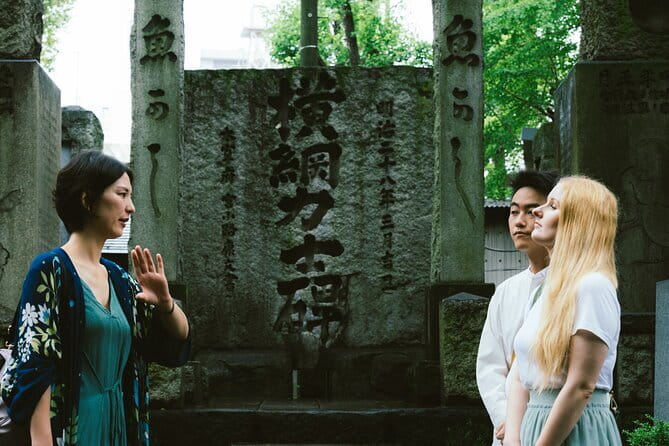
The guide for this tour is Manami. Based on her background and the way she teaches, she’s the kind of person who can explain big topics without turning them into lectures. She’s patient, and she answers questions in a way that feels like a conversation, not a classroom. If you like learning you can actually use later in Japan, you’re in the right place.
Practical tip: because this is a walking tour format, wear shoes you can trust for uneven sidewalks and temple-area paths. You’ll also want to check the weather—Tokyo can be sunny one minute and damp the next.
Shitamachi Water Channels and the Edokko Point of View
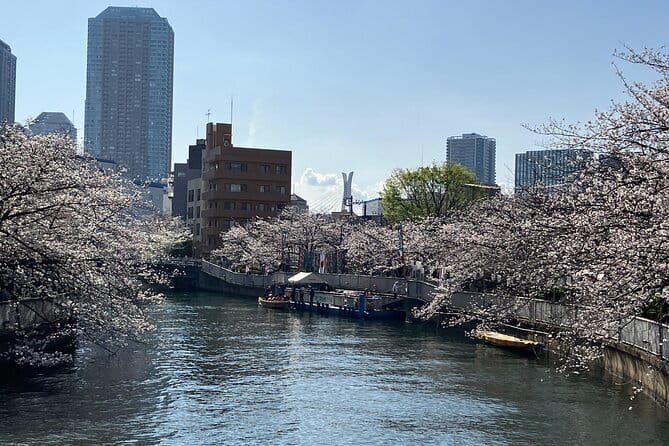
One of the most interesting parts of the walk comes early: water channels. Your guide connects local geography to the way the Shitamachi economy formed and how residents developed pride from that environment.
This is the kind of explanation that makes the neighborhood feel real. Instead of “pretty streets,” you start seeing why this area existed the way it did. The rivers and waterways weren’t just scenery; they influenced work, movement, and the everyday survival of the people who lived here.
Then you get introduced to the local self-image: locals call themselves Edokko, people who see themselves as builders and supporters of Edo (the predecessor of Tokyo) for centuries. That framing matters because it colors how you interpret what you see. When you understand the mindset, the rituals feel less like performances for tourists and more like continuity.
If you like cultural context—why a place looks the way it does—this section is a big reason the tour feels worth it.
Fudo-son Temple: Buddhist Manners, Daily Ritual Time, and a Fire Ceremony Chance
The tour’s centerpiece is your visit to Fudo-son Temple. Here, you learn about Japan’s religious traditions and how people behave with respect in these spaces. The goal isn’t intimidation; it’s helping you understand the basic idea of manners so you don’t feel lost.
You also get a free visit to a Buddhist daily ritual, which is one of the most valuable parts of the tour. This is the difference between seeing a temple and actually seeing religion at work in the rhythm of the day. Even if you’re not sure what each element means, you’ll have enough explanation to follow what’s happening.
The highlight to watch for is the chance to see a fire ceremony at a local Buddhist temple. The phrasing matters: it’s an opportunity, not a guaranteed show. Still, when it happens, it adds a powerful sensory layer to what you’ve been learning. Fire rituals change the atmosphere fast—suddenly it’s not only quiet architecture; it’s active spiritual practice.
What to expect here:
- More time inside ritual spaces than you’d get on a quick shrine-and-selfie loop
- Explanations about how Buddhism shows up in Japan’s daily life
- A calmer pace so you can notice details instead of sprinting for photos
If your travel style is “I want to understand before I photograph,” you’ll likely enjoy Fudo-son the most.
Tomioka Hachimangu Shrine: Shinto Practices in a Tokyo Neighborhood Setting
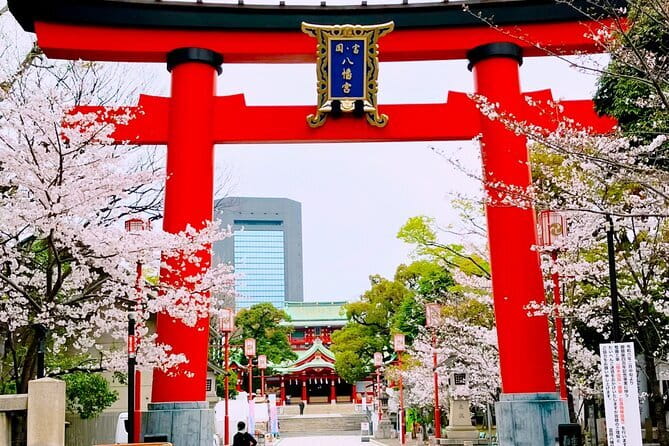
Next, the tour shifts from Buddhism to Shinto with Tomioka Hachimangu Shrine. This is where you’ll notice how Japanese religions can feel different but still fit together in the same city fabric.
Your guide helps connect the dots so the shrine doesn’t become a generic checklist stop. Instead, you’ll learn how people approach shrine spaces and what Shinto means in this specific neighborhood context.
One small detail that can change how you experience shrines: you’ll hear about throwing small coins into the offering box. The tour notes that these coins aren’t mandatory. That’s helpful because it means you can participate in the spirit of the custom without feeling pressured to buy something on the spot.
In a short tour, Tomioka Hachimangu is a smart choice because it gives you a clear contrast. You’ll walk away with a better sense of how Buddhism and Shinto each express reverence, and how visitors can behave respectfully without turning the experience into a guessing game.
- Tokyo: Shinjuku Food Tour (13 Dishes at 4 Local Eateries)★ 5.0 · 6,603 reviews
- Tokyo Mt Fuji 5th St & Hakone Cruise Bus Tour w/Bullet Train★ 4.4 · 5,024 reviews
- Flagship 2-Hours Official Street Go-Kart Tour – Tokyo Bay Shop★ 5.0 · 4,974 reviews
- From Tokyo: Mount Fuji Full-Day Sightseeing Trip★ 4.5 · 4,970 reviews
- Tokyo: Hop-On Hop-Off Sightseeing Bus Ticket★ 3.9 · 4,207 reviews
The Small-Group Advantage: Questions, Pace, and Seeing What You’d Miss Alone
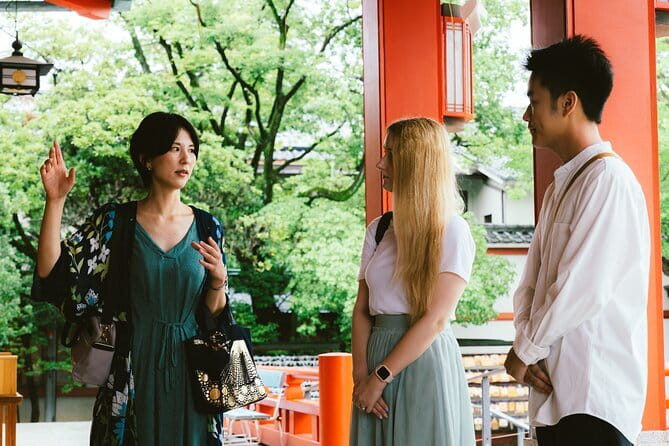
This is a maximum of six travelers, which sounds small because it is small. That size matters on foot. You can ask questions that come up mid-walk—about specific ritual details, manners, or local neighborhood history—without feeling like you’re interrupting a large group.
It also affects pacing. Your guide can slow down when something needs explaining. That’s how you end up noticing things you’d normally speed past: the subtle changes around temple and shrine entrances, the way spaces guide movement, and the reason certain locations feel important.
If you’ve ever done a big walking tour and spent half your time trying to keep up, this will feel easier. You’re not competing with twenty strangers for guide attention. You’re getting a neighborhood-style walk with enough structure to stay grounded.
Price and Timing: Is $58.53 Actually Good Value?
The price is $58.53 per person for about 1 to 2 hours. That’s not the cheapest option in Tokyo, but it’s also not priced like a private tour. The value comes from three things you can’t easily replicate on your own in the same way:
- You get a guide who explains both Buddhism and Shinto with local neighborhood context
- You’re included for a Buddhist daily ritual visit (admission is listed as free for that portion)
- You may have a chance to see a fire ceremony during the visit
Without a guide, you can still visit Fudo-son and Tomioka Hachimangu, of course. But you’d be relying on signage and guesswork. For many visitors, the guide’s explanations are the whole point—because the meaning is often what turns a temple into a memory.
Timing-wise, the tour is short enough to fit into a packed Tokyo itinerary. That said, you’ll likely want to schedule it when you’re not rushing immediately to your next reservation. Once you’re done, you’ll still have energy to explore nearby streets at your own pace.
Who This Tour Suits Best (and Who Might Want Something Else)
This tour fits especially well if you:
- Want a religion-focused Tokyo experience that isn’t just photo stops
- Like small groups and hate feeling swept along
- Enjoy local context like the Edokko identity and Shitamachi geography
- Want a guide who can explain manners and what to pay attention to
It might not be the best match if you:
- Prefer long museum-style visits with lots of free time inside one location
- Want a very structured, step-by-step itinerary that guarantees a specific ceremony (this includes an opportunity to see a fire ceremony, not a stated certainty)
Should You Book This Buddhism & Shinto Tour?
If you want Tokyo that feels lived-in—not just famous—this is a strong yes. The mix of Monzennakacho neighborhood orientation, Fudo-son Temple with a daily ritual visit, and Tomioka Hachimangu Shrine gives you a rounded look at how belief and daily life share the same streets.
I’d book it if your goal is to understand what you’re seeing and to learn manners so you don’t feel awkward in sacred spaces. With a max six-person group and a guide like Manami, the experience is built for questions and real comprehension, not speed.
If you’re on the fence because you think it might be too short, remember the tour is designed to be efficient. It gets you oriented, places you at the right sacred sites, and explains what matters so you can carry that understanding into the rest of your Tokyo days.
FAQ
How long is the Explore Local Tokyo: Buddhism & Shinto tour?
It’s listed as about 1 to 2 hours long, with an activity time of around 1 hour 40 minutes.
What is the group size?
The tour has a maximum of six travelers.
Where does the tour start?
You start at Monzen-nakacho Station (2 Chome-4, Monzennakacho, Koto City, Tokyo 135-0048, Japan).
Which temples and shrines are included?
You visit Fudo-son Temple and Tomioka Hachimangu Shrine, with exploration focused on the Monzennakacho/Shitamachi area.
Is a Buddhist ritual included?
Yes. A free visit to a Buddhist daily ritual is included.
Will I be able to watch the fire ceremony?
There is an opportunity to watch a fire ceremony at a local Buddhist temple during the tour.
Is offering money required?
No. Small coins for temple and shrine offerings are mentioned, but they are not mandatory.
Can I cancel for a full refund?
Yes. You can cancel up to 24 hours in advance for a full refund.
More Tour Reviews in Tokyo
- Mt Fuji and Hakone 1-Day Bus Tour Return by Bullet Train
★ 5.0 · 26,383 reviews - 1-Day Tokyo Bus Tour
★ 5.0 · 14,250 reviews - Tokyo: teamLab Planets TOKYO Digital Art Museum Entry Ticket
★ 4.6 · 9,779 reviews - Mt Fuji & Hakone Cruise, Drum Show Bullet Train 1 Day from Tokyo
★ 4.0 · 7,413 reviews - Tokyo: Shinjuku Food Tour (13 Dishes at 4 Local Eateries)
★ 5.0 · 6,603 reviews





