
Reviewed · MOUNT FUJI TOURS
From Tokyo: Must-Visit Mount Fuji Highlight Full-Day Tour
Fuji in one well-run day. This full-day Mount Fuji tour from Tokyo is built around big, recognizable viewing points plus real countryside stops, so you’re not just staring out a bus window. I especially liked the two route options (classic postcard versus calmer scenic flow) and the chance to hit the most famous Fuji angles like Chureito Pagoda and the lake reflections.
One watch-out: the pace is fast. You’ll get great stops, but each one is mostly about photos and time-efficient sightseeing, not long wandering.
In This Review
- Key things that make this tour worth your time
- From Tokyo pickup to the coach ride: start easy, stress-free
- Two route styles: Course A’s postcard chain vs Course B’s gentler loop
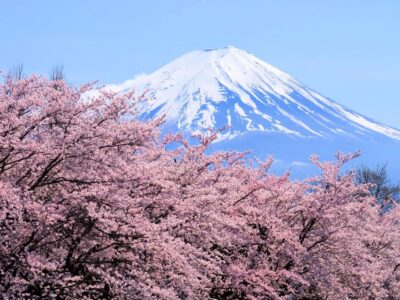
- Arakurayama Sengen Park and Chureito Pagoda: the steps are real, but the view pays
- Honcho Street, Lawson Fujikawaguchiko, and the photo logistics you can control
- Lake Kawaguchi and Oishi Park: reflections and color when Fuji cooperates
- Shiraito Waterfall and the lunch-less reality: plan snacks like a local
- Oshino Hakkai and the Mt. Fuji World Heritage Centre: where the day gets meaning
- Lake Yamanaka and Obuchi Sasaba: calmer pacing, big sky, and tea fields
- Guide energy matters: names you’ll hear and why they help
- Timing, group size, and why the schedule can shift
- Price and value: why $69 can make sense for most first-timers
- Who should book this Mount Fuji tour
- Should you book this Mount Fuji day trip from Tokyo?
- FAQ
- How long is the Mount Fuji highlight full-day tour?
- What pickup locations are offered in Tokyo?
- Are there different routes or only one itinerary?
- Is lunch included in the tour?
- What language support does the tour provide?
- Is round-trip transportation included?
- How large are the groups?
- What should I bring for the day?
- What if the weather is cloudy and Fuji isn’t visible?
- Is the tour wheelchair-accessible or stroller-friendly?
Key things that make this tour worth your time
- Two route styles (Course A vs Course B) so you can match the day to your mood: iconic photo hunt or quieter nature-and-culture loop
- Arakurayama Sengen Park + Chureito Pagoda with the classic framing view of Fuji
- Lakeside hits at Lake Kawaguchi and Lake Yamanaka, including Oishi Park and Hirano Beach
- Oshino Hakkai spring ponds plus the Mt. Fuji World Heritage Centre for context beyond the photos
- A pro guide-driver combo that keeps the day moving and helps you position for the clearest views
- Big-group convenience: transport and timing handled for you, with rest stops along the way
From Tokyo pickup to the coach ride: start easy, stress-free
This trip runs from central Tokyo with two pickup options tied to Shinjuku (Shinjuku L Tower) and Tokyo Station (Marunouchi area). That matters because getting to the Fuji region on your own can turn into a lot of train-hopping and schedule stress.
Once you’re on board, you’re in for a long day by design. You’ll spend serious time on the coach, then do shorter hops between viewpoints around the base of Mount Fuji, which is part of how this works: it maximizes the number of chances you’ll see Fuji clearly.
More Fuji day trips our readers rated highly
- Mt Fuji and Hakone 1-Day Bus Tour Return by Bullet Train
★ 5.0 · 26,383 reviews - Mt Fuji & Hakone Cruise, Drum Show Bullet Train 1 Day from Tokyo
★ 4.0 · 7,413 reviews - Tokyo Mt Fuji 5th St & Hakone Cruise Bus Tour w/Bullet Train
★ 4.4 · 5,024 reviews - From Tokyo: Mount Fuji Full-Day Sightseeing Trip
★ 4.5 · 4,970 reviews
Two route styles: Course A’s postcard chain vs Course B’s gentler loop
You choose between two course styles, and that choice can seriously affect what the day feels like.
Course A is built like a photo itinerary. You start at the Arakurayama Sengen Park area, then continue through Shimoyoshida’s Honcho Street vibe, grab lake reflections at Lake Kawaguchi and the flower scenes of Oishi Park, and add Shiraito Waterfall mist and coolness. The payoff is a very classic “Mount Fuji greatest hits” day, designed for people who want the recognizable images.
Course B leans more into variety and pacing. You still get the big Fuji view areas, but the flow includes the Oshino Hakkai ponds and Lake Yamanaka’s lakeside walk feel. You’ll also see the Mt. Fuji Museum area (with an option to swing by a nearby matcha café), which adds a bit of cultural grounding without turning the day into a classroom.
Arakurayama Sengen Park and Chureito Pagoda: the steps are real, but the view pays
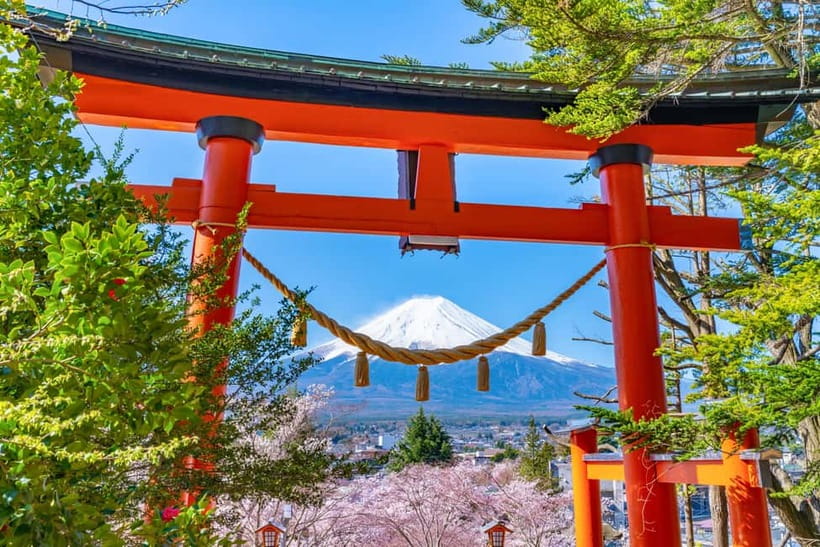
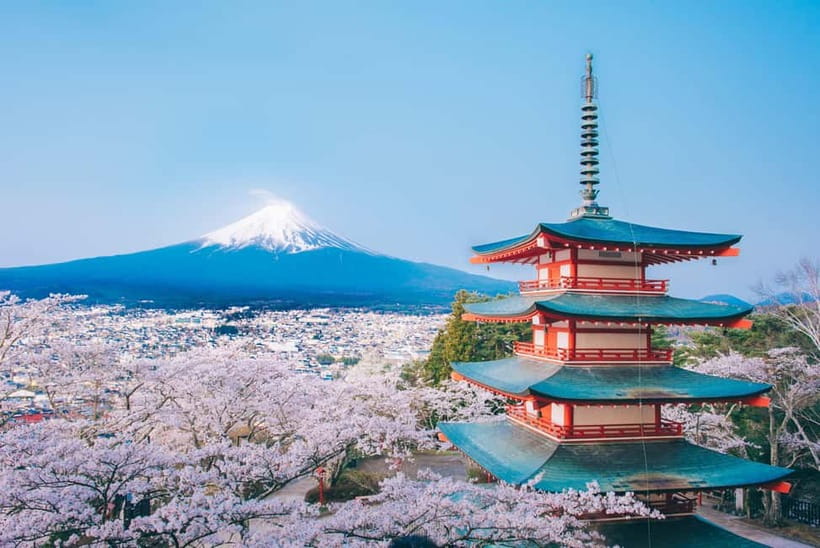
Most people come here for one reason: the iconic Fuji framing with the pagoda. Arakurayama Sengen Park is the stage, and Chureito Pagoda is the star.
Plan for a short climb. It’s not an all-day hike, but it can feel steep in spots, and one review noted around 400 steps up and down for the pagoda area. If your legs aren’t great on stairs, you’ll want to pace yourself and treat this as the one place in the day where “fast walking” is not the same as “no effort.”
What I like about this stop is that it’s timed in a way that often gives you your best chance for clear views. On days with good weather, the pagoda-to-Fuji angle becomes the kind of photo you’ll remember longer than the postcard version.
Honcho Street, Lawson Fujikawaguchiko, and the photo logistics you can control
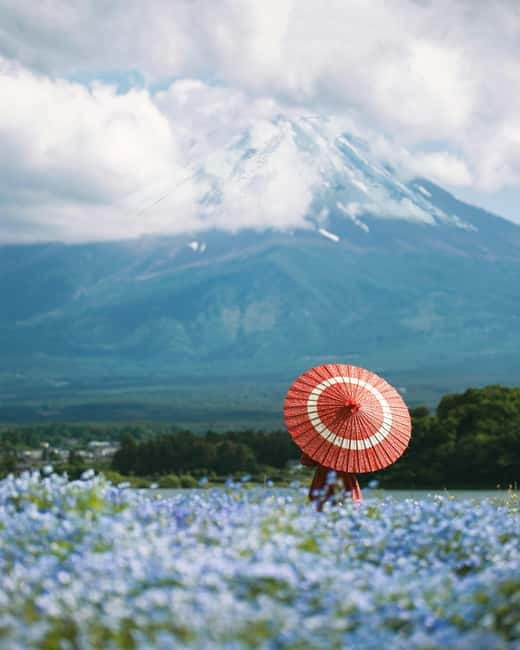
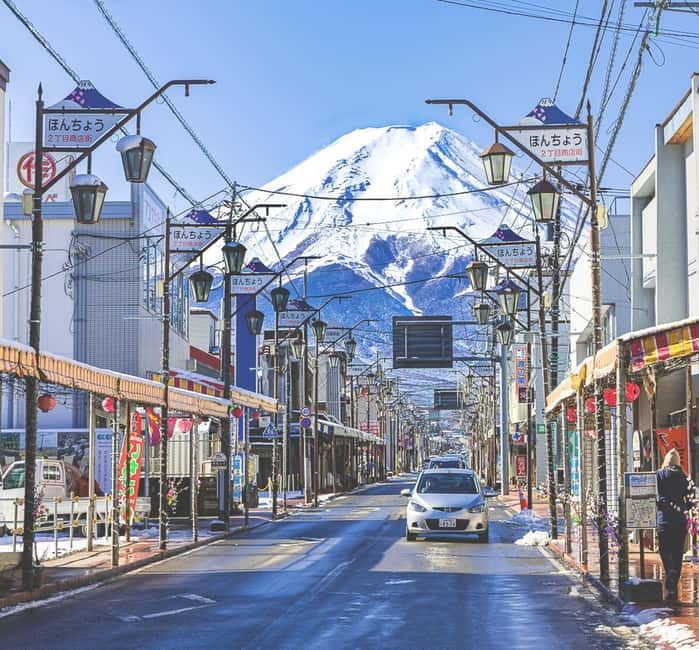
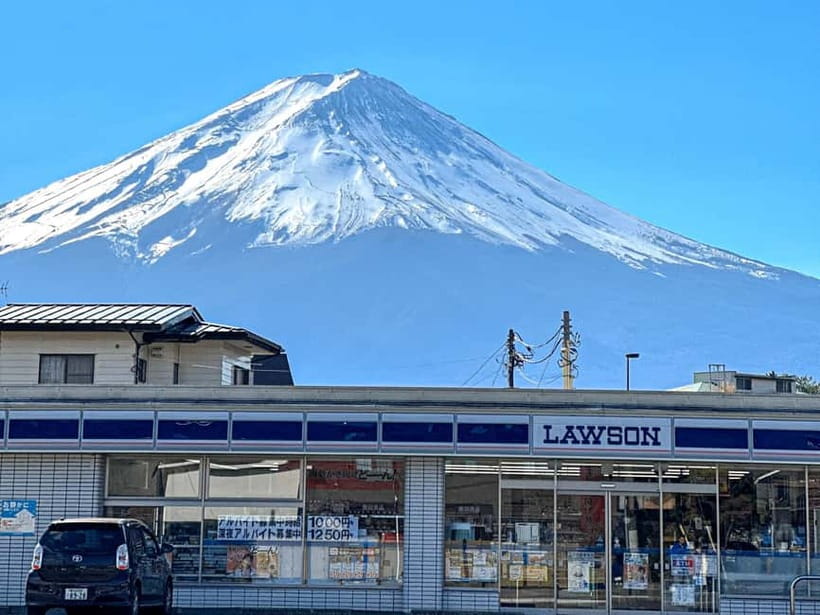
There’s a reason the itinerary includes a Lawson in Fujikawaguchiko and a stretch of Honcho Street. These aren’t random stops. They’re positioned where Fuji often shows up in the background, and you get a quick break to reset your eyes and camera battery before the next viewpoint.
Honcho Street is the older-street atmosphere piece: small shops, local snack energy, and that slightly nostalgic feel that makes the Fuji look less like a backdrop and more like part of everyday life. It’s also a good place to grab a quick bite without turning the whole schedule into a meal search.
One practical tip that came up in real-world experience: sitting on the left side of the bus can improve your photo angles while you’re riding between stops. It’s not a guarantee, but it’s the kind of small move that costs nothing and can pay off.
Lake Kawaguchi and Oishi Park: reflections and color when Fuji cooperates
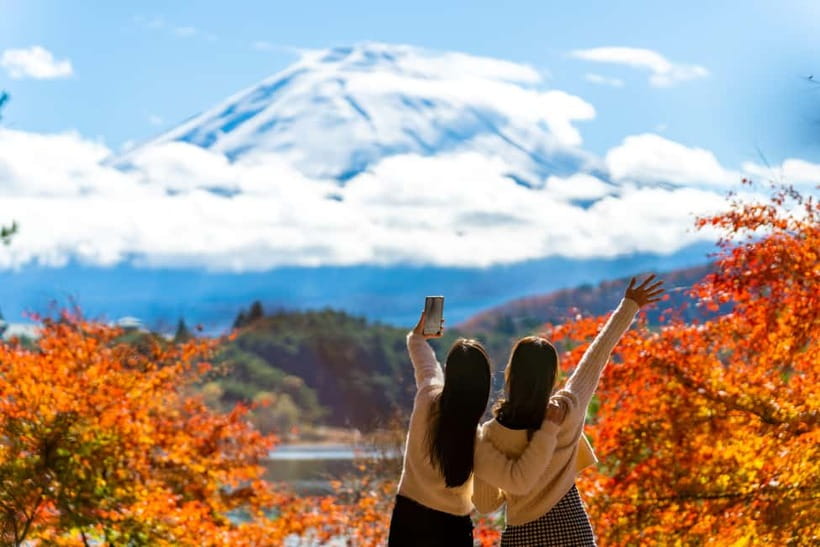
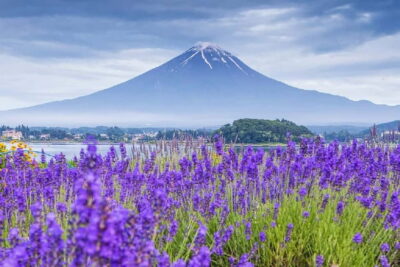
Lake Kawaguchi is a core part of the Fuji “wow” factor because water reflections can make the mountain look twice. At Lake Kawaguchi and Oishi Park, you’re aiming for a combination of clear visibility and scenic foreground details—flowers and lakeshore viewpoints that make the image feel complete.
Oishi Park is the flowerbed portion, and it’s where seasonal color can do a lot of the heavy lifting for your photos. Even if Fuji is partially obscured, you still get a pretty lakeside scene, plus enough time to walk, frame shots, and take in the view slowly for a moment.
When the weather is clear, this is often the point in the day where Fuji looks sharp and dramatic. If the weather is cloudy, the lake areas can still be worth it, but you’ll likely manage expectations toward glimpses rather than perfect mountain symmetry.
Readers also shortlisted these Tokyo bookings:
- Mount Fuji Full-Day Private Tour from Tokyo (Customizable)★ 4.9 · 1,470 reviews
- From Tokyo: Mount Fuji Full Day Customizable Private Tour★ 4.9 · 912 reviews
- Tokyo Private Full-Day Tour by Car or Van★ 5.0 · 684 reviews
- From Tokyo: Must-Visit Mount Fuji Highlight Full-Day Tour★ 4.7 · 532 reviews
- Tokyo: Mount Fuji and Hakone Full Day Tour with Ramen Making★ 4.5 · 476 reviews
Shiraito Waterfall and the lunch-less reality: plan snacks like a local
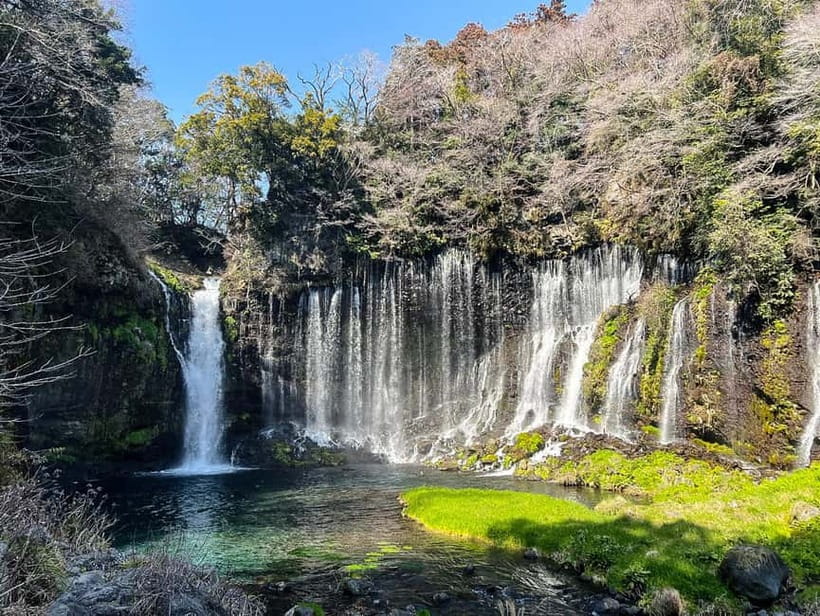
Shiraito Waterfall (Shiraito no Taki) is the misty break in the schedule. It’s the kind of stop where the sound and spray add energy, and it also gives you a cool-weather moment in a day that can otherwise be all sun and walking.
Here’s the practical part: lunch is not included. The schedule builds in a lunch break at the waterfall area, but it’s on you to buy your own food or bring snacks. I’d treat this like a day hike in terms of planning—pack a snack, then buy extras on the way if you want.
One thing that helps: there are generally opportunities for snacks and drinks at designated stops along the route. That means you won’t be stuck finding food from scratch, but you should still come prepared so you can spend your energy on sightseeing.
Oshino Hakkai and the Mt. Fuji World Heritage Centre: where the day gets meaning
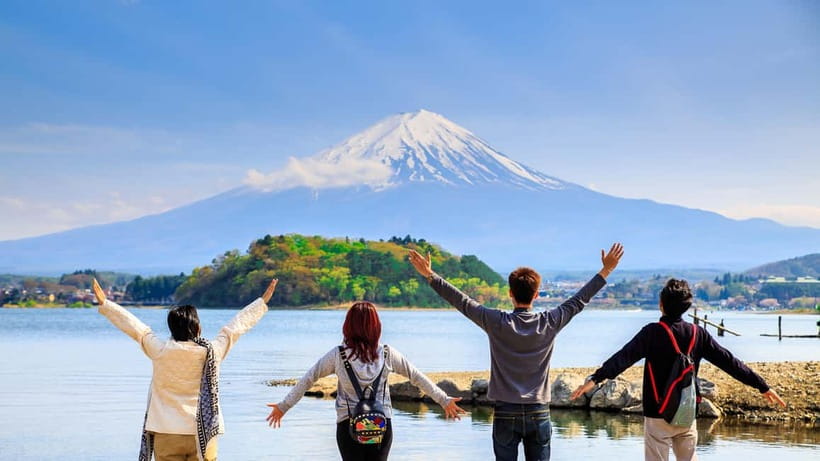
If you only chase photos, Oshino Hakkai can still surprise you. The spring ponds area is known for crystal-clear water that feeds the local landscape, and it gives you a different side of Fuji: not just views, but the living water system connected to the mountain.
The Mt. Fuji World Heritage Centre adds context. Even when your time here is just about an hour, it’s useful because it explains how the region is understood beyond postcard angles—geology, culture, and why these areas matter.
This is also one of the stops where being with a guide helps. A good guide turns the scenery into a story, so you know what you’re looking at rather than just photographing it.
Lake Yamanaka and Obuchi Sasaba: calmer pacing, big sky, and tea fields
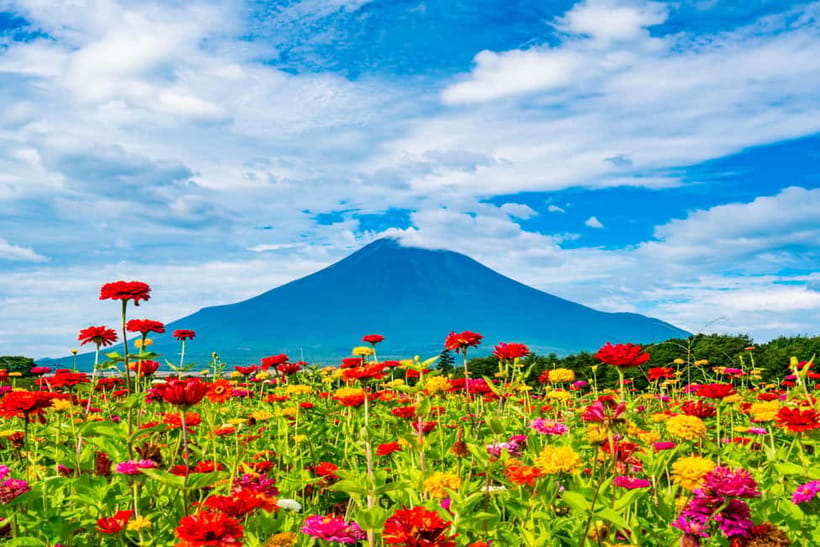
Lake Yamanaka is the calmer cousin in the Fuji lineup. Hirano Beach gives you a lakeside walk option and a fresh angle on Fuji, depending on the day’s visibility. This is the stop where the photos can look more open and airy, especially if you’re getting wide mountain views.
Then there’s Obuchi Sasaba, the tea plantation viewpoint. You get rolling green fields with Fuji in the distance, and that mix of texture (tea rows) plus the mountain shape is a strong visual combination. One of the best parts is that it feels like you’re in rural Japan, not just in photo zones.
If you’re lucky with clear skies, these later stops can turn the whole day into a steady build rather than one brief peak early on.
Guide energy matters: names you’ll hear and why they help
The tour’s success depends heavily on the guide and driver, and the pattern in feedback is consistent: the better the guide, the smoother your day feels.
Kei is mentioned as an enthusiastic, organized guide who keeps people on track and helps with positioning for Fuji views. Goldie (also written as Golddie in one account) stands out for maintaining high spirits even when weather isn’t perfect, plus giving thoughtful recommendations around the stops.
Jun and Yui show up in the same theme: friendly, caring guides who work hard to connect with different groups and keep the schedule functioning. In at least a couple experiences, guides also adjusted the order depending on the sky conditions, which is a big deal because Fuji visibility can change fast.
And yes, some guides go beyond information into small moments. One example: Kei offered extra treats and even helped with photo-taking for solo travelers. Another guide’s communication style included step-by-step guidance and easy meet-up directions using maps and a group chat. That kind of support is why a day like this feels manageable instead of chaotic.
Timing, group size, and why the schedule can shift
This isn’t a tiny van tour. One day described it as a full-size bus experience with lots of legroom, and the group can reach a maximum of 49 people. For many people, that’s the trade: more faces on board, but you get a smooth, guided circuit with transport handled.
Also, there’s a real-world constraint. Japan law limits vehicle operation for more than 10 hours, so the guide may adjust the itinerary based on real-time conditions. Weather and traffic matter too, and sometimes you might lose a stop if conditions get ugly. The upside is that the guide usually tries to protect the most important viewing opportunities.
One more helpful idea: sit with intention. If Fuji is visible at a stop, you’ll get better results by moving quickly to the right spot and using the guide’s directions. If Fuji isn’t visible, you still want to soak in the stop that does work (waterfalls, ponds, tea fields, street views).
Price and value: why $69 can make sense for most first-timers
At about $69 per person for an 11-hour, guided round-trip from central Tokyo, the value comes from what’s included: transportation and a live multilingual guide (English, Korean, plus Chinese for live guidance).
If you tried to DIY this, the “hidden” costs add up fast: train tickets, bus transfers, entrance fees you didn’t plan for, and the time you lose trying to match routes to weather. Here, the day is packaged around time-efficient stops that are hard to stitch together smoothly on your own.
The trade-off is that meals are not included, and you’re buying lunch at convenience points. But even then, having those planned breaks is part of the cost-saving. You’re paying for the structure.
Who should book this Mount Fuji tour
This is a strong choice if you:
- want multiple Fuji viewpoints without driving
- like iconic photo stops such as Chureito Pagoda and the lakes
- prefer a guide to handle logistics, timing, and navigation
- can handle a long day with short walks and quick photo windows
It’s less ideal if you:
- want lots of free time at one site
- need wheelchair access (the tour is not wheelchair-accessible)
- want a slow, deep hike across fewer locations instead of many viewpoints
Should you book this Mount Fuji day trip from Tokyo?
I think you should book it if your priority is maximum Fuji access with minimal planning. The two route choices help you tailor the day, and the best-case days can feel like a highlight reel: pagoda framing, lake reflections, a waterfall mist break, and ponds and lakeside walks that go beyond the obvious.
But book with eyes open. Fuji visibility is weather-dependent, and your time at each stop is structured for efficiency. If you’re okay with that trade, this tour is one of the simplest ways to get a real Mount Fuji day from Tokyo without turning your trip into a transport puzzle.
FAQ
How long is the Mount Fuji highlight full-day tour?
The tour lasts about 11 hours.
What pickup locations are offered in Tokyo?
You can start from either Starbucks Coffee at Shinjuku L Tower or Starbucks Coffee near Tokyo Station at Marunouchi (north side, exit 2).
Are there different routes or only one itinerary?
Yes. There are two course styles: Course A focuses on highlight photo spots, while Course B includes signature scenic spots with a slightly different flow.
Is lunch included in the tour?
No. Meals are not included. There is time that can be used for a lunch break, and you’ll need to buy food or snacks yourself.
What language support does the tour provide?
You’ll have a live guide with English, Korean, and Chinese support.
Is round-trip transportation included?
Yes. Round-trip transport from central Tokyo is included.
How large are the groups?
Groups can include up to 49 people per group, with a minimum of 1 pax.
What should I bring for the day?
Bring comfortable shoes and some snacks, since lunch is not included.
What if the weather is cloudy and Fuji isn’t visible?
The itinerary may be adjusted based on real-time conditions. Your day can still include scenic stops even if Fuji is partially visible or obscured.
Is the tour wheelchair-accessible or stroller-friendly?
The tour is not wheelchair-accessible. It is stroller-friendly, but you should inform the operator if you’ll bring a baby stroller.
More Tours in Tokyo
- Mt Fuji and Hakone 1-Day Bus Tour Return by Bullet Train
★ 5.0 · 26,383 reviews - 1-Day Tokyo Bus Tour
★ 5.0 · 14,250 reviews - Tokyo: Shinjuku Food Tour (13 Dishes at 4 Local Eateries)
★ 5.0 · 6,603 reviews - Tokyo Mt Fuji 5th St & Hakone Cruise Bus Tour w/Bullet Train
★ 4.4 · 5,024 reviews - Flagship 2-Hours Official Street Go-Kart Tour – Tokyo Bay Shop
★ 5.0 · 4,974 reviews
More Tour Reviews in Tokyo
- Mt Fuji and Hakone 1-Day Bus Tour Return by Bullet Train
★ 5.0 · 26,383 reviews - 1-Day Tokyo Bus Tour
★ 5.0 · 14,250 reviews - Tokyo: teamLab Planets TOKYO Digital Art Museum Entry Ticket
★ 4.6 · 9,779 reviews - Mt Fuji & Hakone Cruise, Drum Show Bullet Train 1 Day from Tokyo
★ 4.0 · 7,413 reviews - Tokyo: Shinjuku Food Tour (13 Dishes at 4 Local Eateries)
★ 5.0 · 6,603 reviews
More Mount Fuji Days We Have Reviewed
- Mt Fuji and Hakone 1-Day Bus Tour Return by Bullet Train
★ 5.0 · 26,383 reviews - Mt Fuji & Hakone Cruise, Drum Show Bullet Train 1 Day from Tokyo
★ 4.0 · 7,413 reviews - Tokyo Mt Fuji 5th St & Hakone Cruise Bus Tour w/Bullet Train
★ 4.4 · 5,024 reviews - From Tokyo: Mount Fuji Full-Day Sightseeing Trip
★ 4.5 · 4,970 reviews - Tokyo: Mt. Fuji Tour, Hakone Ropeway, Owakudani, Lake Ashi
★ 4.7 · 4,002 reviews
Latest Tokyo reviews off our desk

Mount Fuji Tours, compared.
 ★ 5.0Mt Fuji and Hakone 1-Day Bus Tour Return by Bullet TrainFrom $16326,383 reviews
 ★ 4.0Mt Fuji & Hakone Cruise, Drum Show Bullet Train 1 Day from TokyoFrom $1497,413 reviews
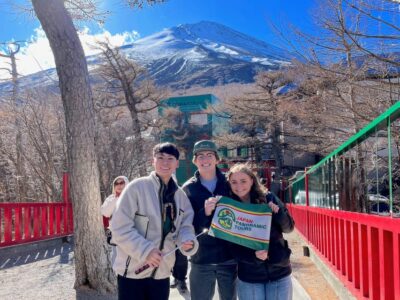 ★ 4.4Tokyo Mt Fuji 5th St & Hakone Cruise Bus Tour w/Bullet TrainFrom $1545,024 reviews
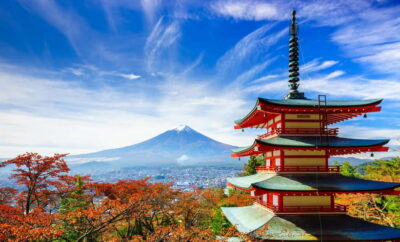 ★ 4.5From Tokyo: Mount Fuji Full-Day Sightseeing TripFrom $684,970 reviews
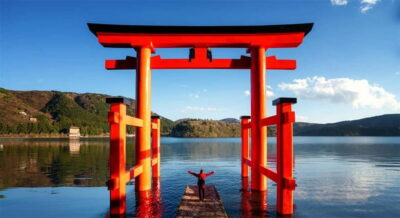 ★ 4.7Mt. Fuji Tour, Hakone Ropeway, Owakudani, Lake AshiFrom $544,002 reviews
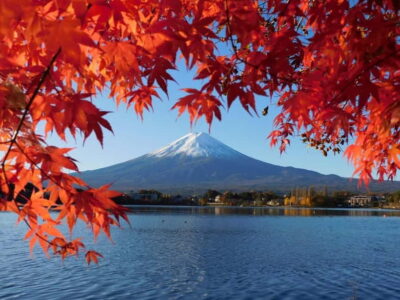 ★ 4.4Mt.Fuji,Kawaguchiko Oishi Park,Arakurayama Sengen ParkFrom $542,682 reviews
 ★ 4.2Mt. Fuji 5th Station & Hakone Cruise 1-Day Bus TourFrom $1292,381 reviews
 ★ 4.7Mt Fuji Top 5 Spots Day Tour: Arakurayama Park,Oshino HakkaiFrom $532,066 reviews