
Reviewed · GUIDED
Get Unique Insights into Tokyo – Private Tour with local Guide
Tokyo feels easier when someone guides you. This private tour gives you a fast, real-world overview of the city with a local guide who can stop for photos and share practical tips as you go. I especially like the mix of classic Tokyo icons plus time spent in everyday neighborhoods, and I really appreciate that you can choose your start time and the length of your walk. One thing to keep in mind: it’s still a walking tour, so you’ll want good shoes and a plan for breaks if you pick the longer options.
A huge plus is that you’re not stuck with a big group pace. This is just your party, with transportation between destinations handled, and small included comforts like tea/coffee and a Japanese snack. If you’re short on time or arriving with jet lag, this kind of guided “lay of the land” setup can save your whole trip.
In This Review
- Key highlights that make this tour worth your time
- Why this Tokyo overview tour clicks so well
- Price and what you actually get for about $82.90
- The route: Harajuku, Shibuya, Shinjuku, plus extra Tokyo if you have time
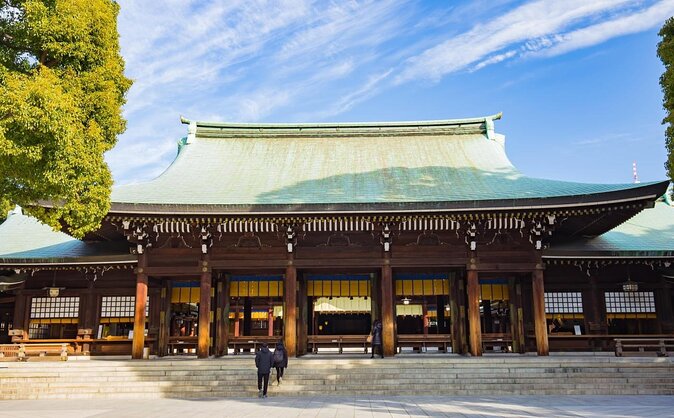
- Meiji Jingu Shrine: a calmer Tokyo start that teaches etiquette
- Harajuku and Takeshita Street: fashion energy with a sense of direction
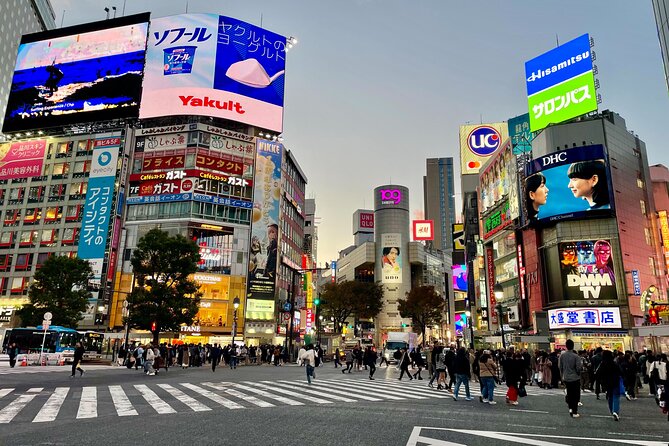
- Shibuya Crossing and Shinjuku skyscrapers: the Tokyo “wow” segment
- Kabukichō Tower and Neon Tokyo views
- Odaiba: futuristic Tokyo with clear, iconic stops
- Asakusa: the Edo-era entertainment spirit, still visible in the streets
- Akihabara: tech and fandom with a history lesson attached
- Ueno Park and the Imperial Palace East Gardens: green breaks and old power
- Your guide experience: photos, tea, and real city tips
- Walking comfort and timing tips that will save your feet
- Where the tour ends: Shinjuku and an easy next step
- Who should book this private Tokyo tour?
- Should you book this private tour with a local guide?
- FAQ
- How long is the Tokyo private tour?
- Where does the tour start and end?
- Is transportation between the stops included?
- Does the tour include food or drinks?
- Are photos included in the tour?
- Can I choose the start time or the length of the tour?
Key highlights that make this tour worth your time
- Private, photo-friendly walking with solo and group pictures at major stops
- Flexible timing with morning or afternoon start options and selectable duration
- Meiji Jingu customs help so you know how to behave at the shrine
- Icon-to-icon Tokyo flow through Harajuku, Shibuya, and Shinjuku
- Optional add-ons like Odaiba, Akihabara, Asakusa, Ueno Park, and Imperial Palace East Gardens
- Tea/coffee and a snack included to keep energy up on the move
Why this Tokyo overview tour clicks so well
Tokyo can feel like a video game when you first land. You see amazing places, then suddenly you’re lost in train connections, crowds, and signage you cannot read fast enough. This tour is built to solve that problem early by stitching together several neighborhoods that most visitors want to understand, without turning the whole day into a sprint.
I like that the guide can take photos at each landmark. That sounds small, but it changes how you experience the city. You spend less time waving strangers away and more time actually looking at what’s in front of you.
I also like the “new visitor” logic behind the route. You hit the big emotional stops that define Tokyo, then you get enough local context to return later on your own with better instincts.
One potential drawback: because the tour is flexible and the walk distance can add up, you may feel it more than you expect if you pick the longer duration.
Readers also shortlisted these Tokyo bookings:
- Tokyo 6hr Private Tour with Government-Licensed Guide
★ 5.0 · 3,902 reviews - Tokyo: Shinjuku Local Bar and Izakaya Guided Walking Tour
★ 4.9 · 1,794 reviews - Tokyo: Private City Highlights Tour with Local Guide
★ 4.8 · 1,433 reviews - Tokyo: Tsukiji Fish Market Guided Walking Tour
★ 4.9 · 1,397 reviews
Price and what you actually get for about $82.90
At $82.90 per person for a private tour, the value depends on how you compare it. If you’re thinking of doing this alone, you’d still pay for transit, and you’d likely spend time figuring out routes and etiquette on your own. Here, transportation between destinations is included, and you get a guide who can talk through what you’re seeing instead of just pointing.
A practical way to judge it: you’re paying for three things that cost real energy.
- Time saved by not planning neighborhood-to-neighborhood movement
- Convenience by having transit between destinations handled
- Meaning added by explanations and local tips as you walk
There’s also a small but real comfort factor: coffee or tea plus a typical Japanese snack are included. That can keep you from turning your tour into a food-search mission.
If you’re traveling as a couple or small family, private tours often feel like a better deal because you’re sharing one guide experience instead of splitting attention across strangers.
The route: Harajuku, Shibuya, Shinjuku, plus extra Tokyo if you have time
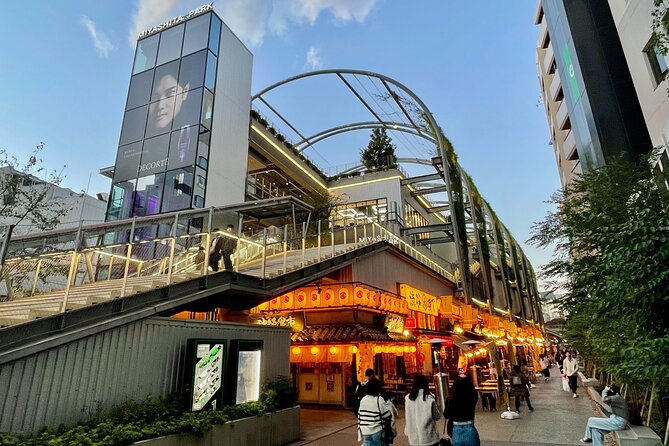
The itinerary is flexible, with a chosen duration (about 2 to 6 hours). That matters because Tokyo is spread out. In shorter versions, you’ll likely focus on the high-impact cluster around Harajuku and Shibuya, then roll into Shinjuku. With longer choices, the tour can extend farther into areas like Odaiba, Asakusa, Akihabara, Ueno Park, and the Imperial Palace East Gardens.
Think of it like a menu:
- The “main Tokyo hits” center on Harajuku → Shibuya → Shinjuku
- The optional add-ons broaden into Odaiba, Asakusa, Akihabara, Ueno, and the Palace gardens
Your guide can also adjust based on your interests and pace. In the reviews, the guides (like Jero, and also Franz) were praised for tailoring the walk and adjusting on the fly after learning what you want to see.
Meiji Jingu Shrine: a calmer Tokyo start that teaches etiquette
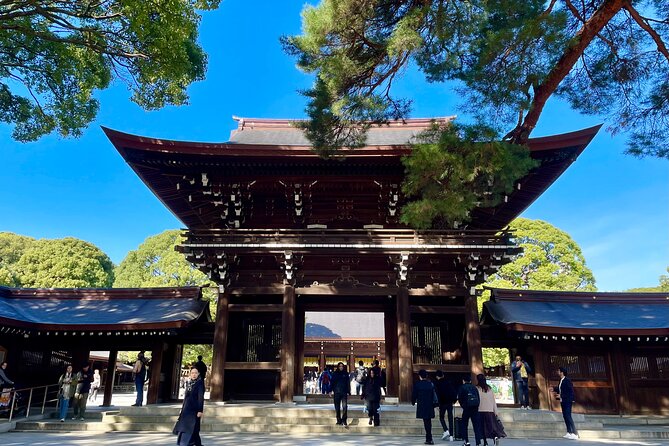
Most Tokyo first-timers go straight to neon. This tour starts you near Meiji Jingu Ichino Torii, and that shift helps your brain. The walk to the main shrine building puts you into a more grounded atmosphere right at the beginning, before the city noise takes over.
What makes this stop useful is that you’re not just touring a pretty gate and forest. You’re guided through cultural context and shrine traditions. One strong theme from the guide approach is learning the proper customs and how to be respectful in the shrine area. That’s a big quality-of-life benefit in Japan, where doing things the right way makes everything feel smoother.
Practical advice: if it’s warm or crowded, plan to take a few slow minutes. The shrine area is where you can reset before you step back into street-level Tokyo.
Harajuku and Takeshita Street: fashion energy with a sense of direction
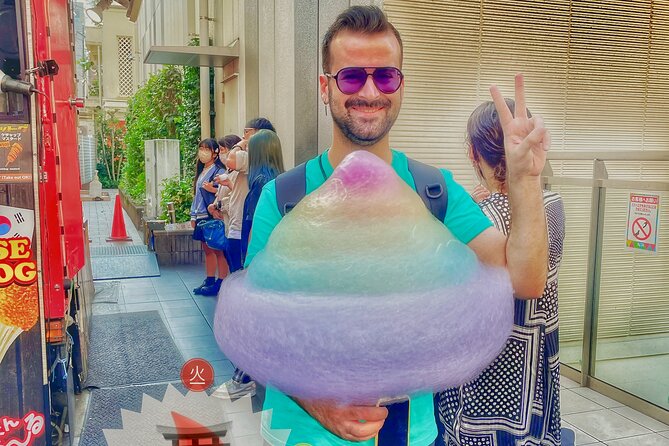
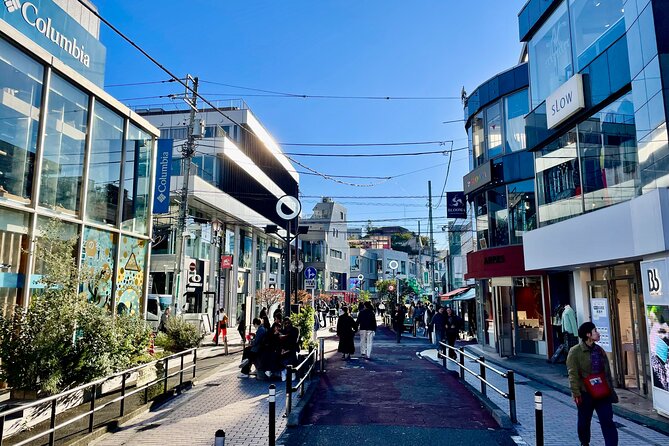
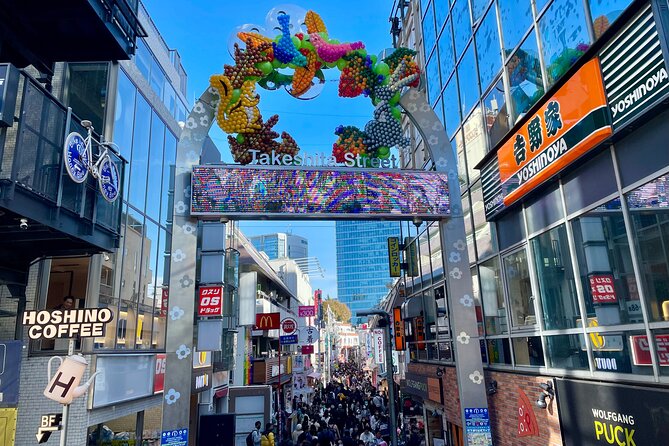
After Meiji Jingu, you head into Harajuku, including the famous Takeshita Street. This is where the city shows its youth culture in full color. It’s also where crowds can build fast, especially if you go at peak times.
This stop works best with a guide because you get both the spectacle and the navigation. You’re not just walking through noise; you’re learning what you’re seeing and how the area fits into Tokyo’s bigger story of style, trends, and neighborhoods.
The guide also connects street-style scenes to practical recommendations, like where to linger and how to avoid wasting time in the most chaotic lanes.
Readers also shortlisted these Tokyo bookings:
- Tokyo 6hr Private Tour with Government-Licensed Guide★ 5.0 · 3,902 reviews
- Private Tour to Mt. Fuji and Hakone (Fully Licenced Operator)★ 5.0 · 1,910 reviews
- Tokyo Customized Private Tour (Must See Places in 1 Day)★ 5.0 · 1,499 reviews
- Mount Fuji Full-Day Private Tour from Tokyo (Customizable)★ 4.9 · 1,470 reviews
- Tokyo: Private City Highlights Tour with Local Guide★ 4.8 · 1,433 reviews
Shibuya Crossing and Shinjuku skyscrapers: the Tokyo “wow” segment
If Tokyo has a movie scene, it’s Shibuya Crossing. You arrive at the famous intersection and experience the crowd choreography up close. The point here is not just the photo. It’s understanding how busy Tokyo flows in real time without everyone panicking.
Then you travel onward to Shinjuku, where the mood changes again. Shinjuku’s towers and lights create that cinematic skyline effect even in daylight. The tour format helps because you’re not trying to connect these places by yourself while carrying bags, dodging crowds, and hunting for the right train platform.
Kabukichō Tower and Neon Tokyo views
From Shinjuku, the tour finishes with a stop near Kabukichō Tower to see “Neon Tokyo.” Even if you’re not a nightlife person, this is a strong visual primer for how Tokyo sells energy after dark.
This part of the walk is a good match for travelers who like contrast: calm shrine atmosphere earlier, then street-level density later. It’s also a nice moment to slow down and take photos before you head onward to your next destination.
Odaiba: futuristic Tokyo with clear, iconic stops
If you choose a longer duration, the itinerary expands to Odaiba and highlights places like Aqua City and DECKS Tokyo Beach. Odaiba is a different Tokyo style: more planned, more waterfront, and built for visitors who want big modern sights.
The stop also includes Hikara Yokocho and the Unicorn Gundam statue. Those are the kinds of landmarks that make Odaiba easy to understand quickly. You can walk, look, take photos, and feel like you’ve actually landed in a distinct pocket of the city instead of just riding trains between neighborhoods.
A practical note: because Odaiba can involve more walking once you’re there, bring water and plan for slower pace if you’re tired.
Asakusa: the Edo-era entertainment spirit, still visible in the streets
Asakusa is listed as part of the tour plan for when you have extra time, and it’s a smart addition because it connects Tokyo to its older identity. The tour approach frames Asakusa as Tokyo’s entertainment district during the Edo period, with history tied to kabuki theaters, geisha houses, and street performers.
You don’t need to be a Japan scholar to enjoy this. The key is that you get a sense of why the area feels the way it does. Even though much has changed, the neighborhood vibe still carries that past energy.
This is also a great stop for travelers who like street scenes and “walkable atmosphere” more than museum hours.
Akihabara: tech and fandom with a history lesson attached
Akihabara (often called Akiba) is part of the tour when you extend beyond the Harajuku-Shibuya-Shinjuku core. The description explains how it started as a post-war black market for radio parts and grew into what it is today.
That tiny bit of context makes the area easier to appreciate. If you walk in knowing the story, the shops and street culture stop feeling random. You start noticing why certain things exist there, not just that they’re there.
If you love gadgets, pop culture, gaming, or just weird fascinating stores, this is a strong Tokyo highlight to add.
Ueno Park and the Imperial Palace East Gardens: green breaks and old power
Two “reset” stops show up in the longer versions: Ueno Park and Imperial Palace East Gardens.
Ueno Park is known as one of Tokyo’s beloved green spaces, and it’s described as offering seasonal beauty and cultural offerings. It also has historical roots linked to Kaneiji Temple, which later became public land. This is a nice way to break up the day when Tokyo starts to feel too dense.
Then there’s the Imperial Palace East Gardens, presented as a peaceful retreat and a glimpse of feudal-era Tokyo. The description points out remnants like stone walls, gates, and a moat connected to Edo Castle. Even if you don’t go deep into Japan’s political history, the physical layout helps you understand the scale of how the city’s center used to operate.
These gardens are also a practical win: they give you a chance to cool down, sit for a bit, and keep your energy for later neighborhoods.
Your guide experience: photos, tea, and real city tips
This tour stands out because you’re not just moving from point A to point B. Your guide adds helpful layers in three ways.
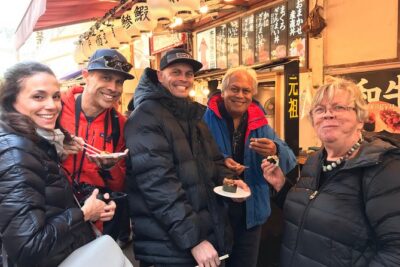
First, you get solo-pictures and group-pictures at famous stops. In several experiences, the guide also took videos and shared them afterward. That turns your walk into something you can actually remember later, not just something you delete from your camera roll.
Second, you get included refreshments. The tour includes coffee and/or tea, plus a typical Japanese snack. In practice, guides showed up with warm tea drinks to start off cold or early mornings, which is a small touch that makes you feel cared for.
Third, the guide gives practical navigation help. In the reviews, people appreciated tips for using the metro and simple advice that makes you less dependent on guessing. For first-time Tokyo visitors, that confidence can matter as much as the sights.
Guide names matter too. You may meet Jero or Franz (English-speaking guides are available), and both were praised for being friendly, flexible, and ready to tailor the day to your interests and pace.
Walking comfort and timing tips that will save your feet
Even with transit between stops, you’ll still be walking a lot. One review noted a day that added up to over 8 miles, which is a good reminder that 2 to 6 hours can feel very different depending on route choices and your pace.
Here’s how to make it more comfortable:
- Wear shoes you can walk in for an hour at a time
- Plan for short snack and water pauses since tea/coffee and a snack are included but not full meals
- Bring your phone fully charged because you’ll want to use the photos your guide captures
Also, expect crowds at Takeshita Street and around Shibuya Crossing. A guide helps you handle that without wasting time circling or standing in the wrong spots.
Where the tour ends: Shinjuku and an easy next step
You finish near Shinjuku Station, specifically close to the Giant 3D Cat area. That’s a smart ending point because Shinjuku is a transportation hub. The tour also notes that from there you can ask how to return to the station and reach your next destination.
In other words, you get a clean landing pad. You’re not left somewhere obscure with your stomach asking where the nearest train is.
Who should book this private Tokyo tour?
This tour is a strong fit if:
- You’re in Tokyo for a short time and want a fast overview with context
- You want a private guide who can adjust to your pace and interests
- You like mixing iconic photos with less obvious street-level moments
- You value shrine etiquette guidance and practical city navigation tips
It may be less ideal if:
- You hate walking and want zero pavement time
- You want only museums or only indoor attractions (this is a walking-focused day)
- You’re trying to pack a super tight schedule with no room for breaks
Should you book this private tour with a local guide?
Yes, if you want Tokyo to feel organized early. This is the kind of tour that helps you get your bearings, understand what neighborhoods are about, and walk away with photos and real tips you can use all week. The included transit between destinations, the tea/coffee snack, and the guide-led shrine and neighborhood context make it feel more “helpful” than a simple sightseeing circuit.
If you’re choosing between durations, pick based on your energy, not ambition. A shorter option can still give you the Harajuku–Shibuya–Shinjuku backbone. A longer option is where you’ll unlock the extra Tokyo variety like Odaiba, Asakusa, Akihabara, Ueno Park, and the Imperial Palace East Gardens.
FAQ
How long is the Tokyo private tour?
The duration is approximately 2 to 6 hours, depending on the option you choose.
Where does the tour start and end?
It starts near Meiji Jingu Ichino Torii (Jingūmae, Shibuya) and ends near the Giant 3D Cat in Shinjuku City, close to Shinjuku Station.
Is transportation between the stops included?
Yes. Transportation between tour destinations is included.
Does the tour include food or drinks?
Yes. Coffee and/or tea are included, along with a typical Japanese snack. Food and drinks beyond that are not included.
Are photos included in the tour?
Yes. The guide can take solo pictures and group pictures at the landmarks.
Can I choose the start time or the length of the tour?
Yes. You can choose from morning and afternoon tour times and select your preferred duration when booking.
More Guided in Tokyo
- Tokyo 6hr Private Tour with Government-Licensed Guide
★ 5.0 · 3,902 reviews - Tokyo: Shinjuku Local Bar and Izakaya Guided Walking Tour
★ 4.9 · 1,794 reviews - Tokyo: Private City Highlights Tour with Local Guide
★ 4.8 · 1,433 reviews - Tokyo: Tsukiji Fish Market Guided Walking Tour
★ 4.9 · 1,397 reviews - Tokyo 4hr Private Tour with Government-Licensed Guide
★ 5.0 · 1,394 reviews
More Tours in Tokyo
- Mt Fuji and Hakone 1-Day Bus Tour Return by Bullet Train
★ 5.0 · 26,383 reviews - 1-Day Tokyo Bus Tour
★ 5.0 · 14,250 reviews - Tokyo: Shinjuku Food Tour (13 Dishes at 4 Local Eateries)
★ 5.0 · 6,603 reviews - Tokyo Mt Fuji 5th St & Hakone Cruise Bus Tour w/Bullet Train
★ 4.4 · 5,024 reviews - Flagship 2-Hours Official Street Go-Kart Tour – Tokyo Bay Shop
★ 5.0 · 4,974 reviews
More Tour Reviews in Tokyo
- Mt Fuji and Hakone 1-Day Bus Tour Return by Bullet Train
★ 5.0 · 26,383 reviews - 1-Day Tokyo Bus Tour
★ 5.0 · 14,250 reviews - Tokyo: teamLab Planets TOKYO Digital Art Museum Entry Ticket
★ 4.6 · 9,779 reviews - Mt Fuji & Hakone Cruise, Drum Show Bullet Train 1 Day from Tokyo
★ 4.0 · 7,413 reviews - Tokyo: Shinjuku Food Tour (13 Dishes at 4 Local Eateries)
★ 5.0 · 6,603 reviews
Latest Tokyo reviews off our desk






Guided, compared.
 ★ 5.0Tokyo 6hr Private Tour with Government-Licensed GuideFrom $1553,902 reviews
 ★ 4.9Shinjuku Local Bar and Izakaya Guided Walking TourFrom $341,794 reviews
 ★ 4.8Private City Highlights Tour with Local GuideFrom $1061,433 reviews
 ★ 4.9Tsukiji Fish Market Guided Walking TourFrom $221,397 reviews
 ★ 5.0Tokyo 4hr Private Tour with Government-Licensed GuideFrom $1091,394 reviews
 ★ 5.0Tokyo Guided Small-Group Biking TourFrom $1061,250 reviews
 ★ 4.6Samurai Ninja Museum Guided tour and ExperienceFrom $271,010 reviews
 ★ 5.0Tsukiji Fish Market Guided Tour and Sushi Making with Pro ChefFrom $104775 reviews