
Reviewed · GO-KARTS
Go Karting Tokyo Old Town Experience | 8 Destinations in 100 Mins
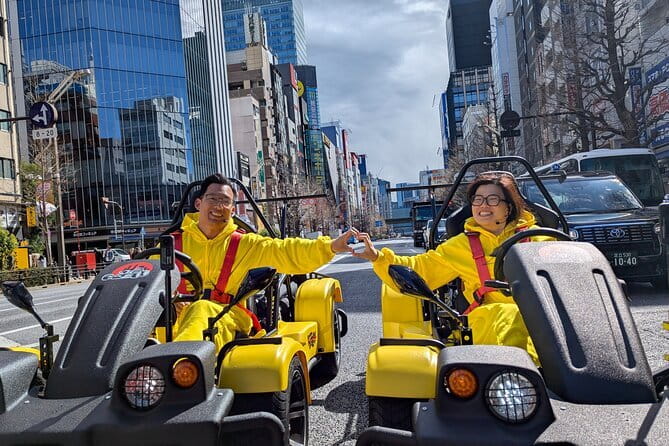
Tokyo in a go-kart turns streets into a ride. This Tokyo Old Town go-kart experience mixes famous landmarks with hands-on driving, guided stops, and photo/video moments, so sightseeing feels active instead of passive. With 8 destinations packed into about 100 minutes of driving-style touring (plus time for setup), it’s a fast way to see more of the city without cramming in another walking day.
What I like most is the mix of “big-name Tokyo” and street-level variety. You start with the Tokyo Skytree area views, then roll through places with serious identity like Ryogoku sumo territory, Tokyo Station’s Marunouchi backdrop, Akihabara’s electronics and pop-culture reputation, and Asakusa’s low-city atmosphere. The second win for me is the onboard support: you get a tour guide, costume, and photo & video included, plus fuel, insurance, and drinking water—so you’re not juggling extra purchases mid-ride.
One consideration is driving documents. This is a public-road driving activity, and you’ll need your original local driving license plus an International Driving Permit (IDP) (1949 Geneva Convention). Digital copies or email proof don’t cover the legal requirement, and failure to show the real documents can mean cancellation with no refund.
In This Review
- Key things that make this go-kart Tokyo tour worth your time
- Go-Karting Tokyo Old Town: what kind of trip is this, really?
- Price and value: does $91.45 make sense?
- Meeting point in Higashiyotsugi: how to start clean and stress-free
- The biggest logistics checkpoint: license and IDP, no shortcuts
- The 8 stops route: what you’ll see and why each area matters
- Tokyo Skytree: skyline views at the start
- Ryogoku area and the sumo stadium setting
- Tokyo Sword Museum stop: samurai swords as art and symbols
- Tokyo Station and Marunouchi: architecture with a fast-moving view
- Akihabara: electronics, anime culture, and Meiji-era roots
- Ueno: from Edo-era beginnings to modern culture
- Asakusa: old Tokyo and the low-city feel
- Tokyo Imperial Palace area: the emperor’s residence grounds
- Costumes, photo/video, and the fun factor you can actually use later
- Weather and timing: what to expect from a mostly outdoor route
- Who should book this go-kart Tokyo Old Town experience?
- Should you book? My take on the decision
- FAQ
- FAQ
- How long is the Go Karting Tokyo Old Town experience?
- How much does it cost?
- What’s the group size limit?
- Where do I meet for the tour?
- Do I need a physical IDP and driving license?
- What documents are required besides the IDP?
- Is the tour wheelchair accessible?
- What’s included in the price?
- What is not included?
- What happens if the weather is bad?
Key things that make this go-kart Tokyo tour worth your time
- 10 people max keeps the pace personal and the route less chaotic than bigger groups
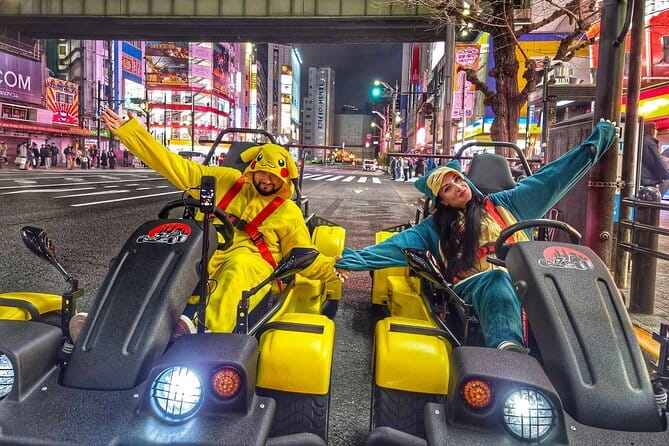
- Costume + guide + photo/video means you don’t just race past sights—you get moments to remember
- Insurance and fuel included lowers the usual “what’s extra?” anxiety
- 8 landmark stops cover Skytree, Ryogoku, Tokyo Sword Museum, Tokyo Station, Akihabara, Ueno, Asakusa, and the Imperial Palace area
- Mobile ticket makes check-in simpler
- Wheelchair accessible is specifically noted, which is rare for activities this hands-on
Go-Karting Tokyo Old Town: what kind of trip is this, really?
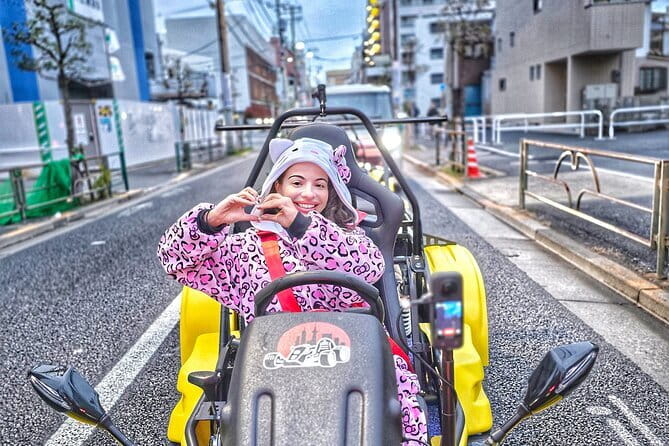
This tour is built for people who want Tokyo to feel like a movie scene. You’ll be in the driver’s seat on a go-kart while a guide steers you through a string of well-known districts and landmarks. The end result is part sightseeing tour, part playful activity—more like moving your way through the city than standing in lines and aiming your camera every ten steps.
If you like your Tokyo days to include energy, this format helps. Tokyo can be overwhelming when you try to do everything on foot, and it’s easy to burn time just traveling between neighborhoods. A guided go-kart route compresses that problem: you cover a lot of ground while still stopping to take in what makes each area Tokyo.
The atmosphere is also more relaxed than you might expect from something fast-moving. The cap of 10 travelers matters here. Smaller groups usually mean you can keep track of what’s happening, ask questions, and stay close enough to the guide’s timing.
Readers booked these Tokyo options in the same breath. Here is how each one scored:
- Mt Fuji and Hakone 1-Day Bus Tour Return by Bullet Train
★ 5.0 · 26,383 reviews - 1-Day Tokyo Bus Tour
★ 5.0 · 14,250 reviews - Tokyo: teamLab Planets TOKYO Digital Art Museum Entry Ticket
★ 4.6 · 9,779 reviews - Mt Fuji & Hakone Cruise, Drum Show Bullet Train 1 Day from Tokyo
★ 4.0 · 7,413 reviews
Price and value: does $91.45 make sense?
At $91.45 per person, the question isn’t only price—it’s what you’re getting for that spend. This tour bundles a lot that is often separate on other activities:
- Go-kart rental
- Tour guide
- Costume
- Fuel
- Insurance
- Photo & video
- Drinking water
That’s a strong value mix because you’re paying for the whole experience setup, not just the vehicle. The notable extras are things you’d expect: no pickup/drop-off, no food, and an Insta360 data card isn’t included (it’s available for purchase). So if you’re okay meeting at the start location on your own and keeping snacks for another time, the package cost feels more “complete” than many add-on-heavy tours.
Duration is listed as about 1 hour 40 minutes (approx.). The title also emphasizes 100 minutes across 8 destinations, which tells you the route is designed for steady momentum rather than long museum-style stops. If you like shorter visits and more motion, this fits well.
Meeting point in Higashiyotsugi: how to start clean and stress-free
The tour begins and ends back at the meeting location in Tokyo:
Katsushika City, Higashiyotsugi, 1-chōme202 小島貸事務所 (124-0014 Tokyo, Japan)
The good news is that it’s noted as being near public transportation, so you’re not locked into a taxi ride. Since there’s no pickup/drop-off, you’ll want to build in enough buffer to arrive without rushing.
Also, you’ll receive a mobile ticket, which is helpful if you like keeping everything in one place. Still, for a driving activity, your most important “document item” isn’t on your phone—it’s the paper you physically bring.
The biggest logistics checkpoint: license and IDP, no shortcuts
This is the part I’d treat as non-negotiable. The tour requires:
- Original local driving license
- International Driving Permit (IDP) issued under the 1949 Geneva Convention
- Passport is also listed as required
The rule is strict: if you don’t provide the originals on the day, the tour can be canceled without refund. That includes cases where you only have a digital proof of the IDP. In Japan, legal driving requirements for public-road activities depend on the physical documentation being presented.
There are also country-specific notes. Nationals of Switzerland, Germany, France, Belgium, Monaco, and Taiwan can drive if they have a Japanese translation of their driving license, and they’re asked to contact the operator about a month in advance for assistance. For US Forces in Japan, a SOFA Driving License is required.
If you’re visiting from somewhere else, don’t assume anything. Bring the IDP style that matches the requirement, and bring the real paper copy in your bag, not just a scanned email.
The 8 stops route: what you’ll see and why each area matters
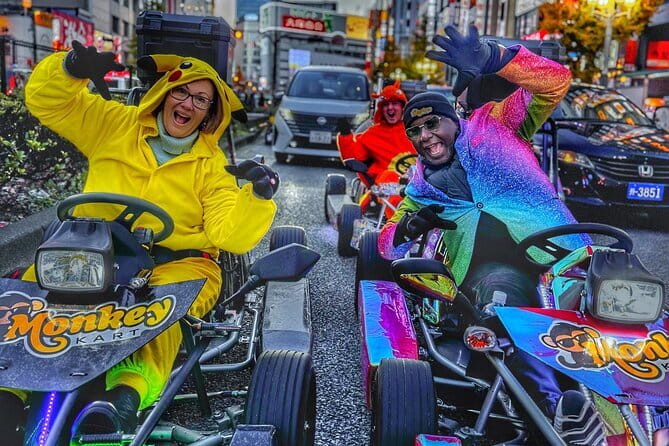
Think of this tour as a guided highlight reel of Tokyo’s identities. Some stops are famous for scenery and scale, others for culture, and others for what Tokyo feels like at street level.
- Tokyo: Shinjuku Food Tour (13 Dishes at 4 Local Eateries)★ 5.0 · 6,603 reviews
- Tokyo Mt Fuji 5th St & Hakone Cruise Bus Tour w/Bullet Train★ 4.4 · 5,024 reviews
- Flagship 2-Hours Official Street Go-Kart Tour – Tokyo Bay Shop★ 5.0 · 4,974 reviews
- From Tokyo: Mount Fuji Full-Day Sightseeing Trip★ 4.5 · 4,970 reviews
- Tokyo: Hop-On Hop-Off Sightseeing Bus Ticket★ 3.9 · 4,207 reviews
Tokyo Skytree: skyline views at the start
Your ride starts with the Tokyo Skytree, described as the world’s tallest broadcasting and communication tower and the third tallest structure. This kind of landmark matters because it sets a visual anchor for the whole day. You’re not guessing where you are—you’re riding near one of the most recognizable silhouettes in the city.
The practical side: this also helps you orient yourself. Even if you don’t go up into the tower, seeing it from the street during a moving route gives you a sense of Tokyo’s scale and how neighborhoods stack around major hubs.
Ryogoku area and the sumo stadium setting
Next comes Ryogoku, where the sumo stadium is a focal point. Even if you’re not a hardcore sumo fan, Ryogoku is one of those Tokyo places where tradition has a visible address. Using a go-kart route through this area helps you connect the dots between what you’ve heard about Japanese sports culture and where it lives in the city.
A small drawback to expect with any driving-based sightseeing: you won’t get the same deep, slow look you would on a walking-only route. If you love reading every detail at street-level, you might want to pair this with a later neighborhood stroll.
Tokyo Sword Museum stop: samurai swords as art and symbols
You’ll visit the Tokyo Sword Museum, where Japanese swords are treated as more than weapons. The description emphasizes swords as symbols of authority, works of art, and objects of worship, and the museum preserves important Japanese swords and samurai related items.
This stop adds a different flavor than electronics and old-town shopping streets. It’s a reminder that Tokyo’s modern image sits on top of long-standing cultural traditions. Even if your time is limited by the driving schedule, the guide-led framing helps make the stop feel purposeful, not random.
Tokyo Station and Marunouchi: architecture with a fast-moving view
Then it’s Tokyo Station through the Marunouchi district. Tokyo Station is presented as a symbol of architectural brilliance, and the station dates to the early 20th century. Seeing it from the kart route can be fun because you get wide views without needing to time a long walk.
The tradeoff: you’ll likely get more “context and quick photo angles” than a deep architectural tour. If you’re the type who wants to study details like a guidebook nerd, plan a separate visit later. If you want snapshots plus motion, this works.
Akihabara: electronics, anime culture, and Meiji-era roots
Akihabara is next, described as the heart of Japan’s electronic and pop culture, with history dating to the Meiji period. It’s also noted as the epicenter for anime and known as the otaku capital of the world.
This is a smart stop on a go-kart day because Akihabara is the kind of district where you understand it best by getting around quickly. You’ll recognize storefront energy, signage styles, and the overall vibe without spending your whole day deciding where to eat.
If you’re sensitive to crowds, it’s worth noting that Akihabara is famous for being busy. The tour format keeps you moving with a guide, which can reduce the chance you get stuck in decision loops.
Ueno: from Edo-era beginnings to modern culture
Ueno comes with a time-travel angle. It’s described as gaining prominence after the Tokugawa Shogunate in Edo in 1603, starting with Buddhist temples and townsfolk, then evolving into a hub for modern Japanese art and culture during the Meiji period.
That history mix makes Ueno more than just another stop name. You’re passing through an area that has layered identity, and that’s exactly what feels interesting when you’re driving through Tokyo instead of just hopping from one train station to the next.
Asakusa: old Tokyo and the low-city feel
Asakusa is one of the most satisfying stops on this route because it’s explicitly framed as authentic shitamachi, or low city. Its origin is said to date back about 1400 years to the Asuka period, and you’ll ride through the heart of that old-town character.
This is where you’ll likely feel the contrast most. After technology-heavy Tokyo areas, Asakusa’s old-city vibe tends to reset your sense of place. The go-kart format can be a fun way to get your bearings quickly before you decide how much you want to explore later on foot.
Tokyo Imperial Palace area: the emperor’s residence grounds
Finally, the tour heads to the Tokyo Imperial Palace. The description focuses on it as the residence of the Japanese emperor and empress, with construction in 1457 by Ota Dokan within the expansive grounds of Edo Castle.
This closing stop gives your day a “big significance” finish. It’s one thing to see palace-area photos online; it’s another to ride near it with a guide explaining what you’re looking at. Even if you don’t spend long time in any one spot, the framing helps the area feel less like a landmark sticker and more like a real historical space.
Costumes, photo/video, and the fun factor you can actually use later
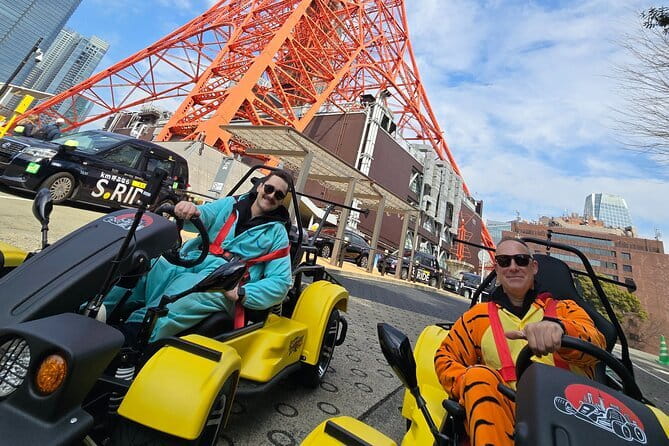
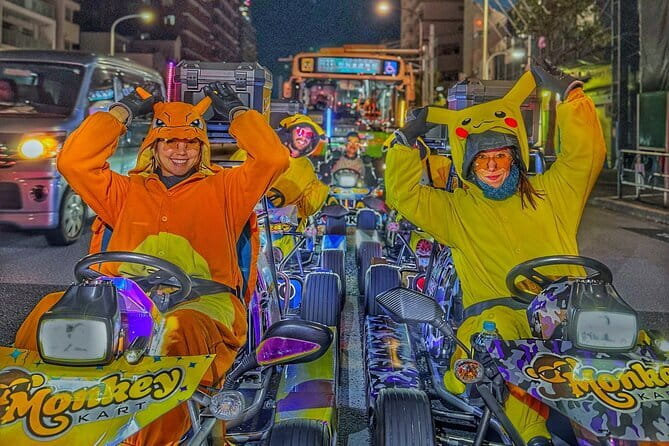
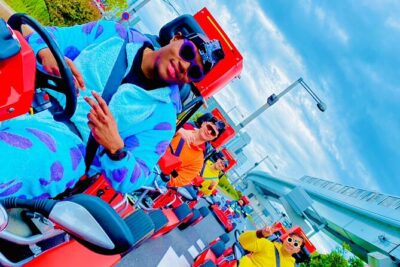
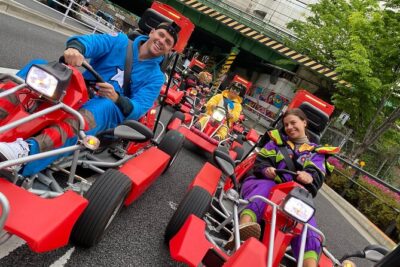
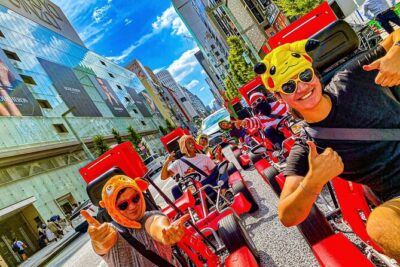
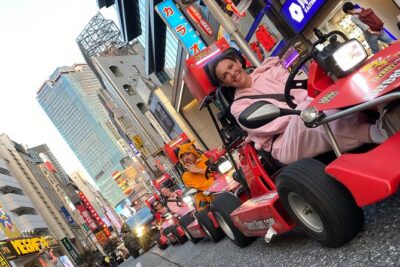
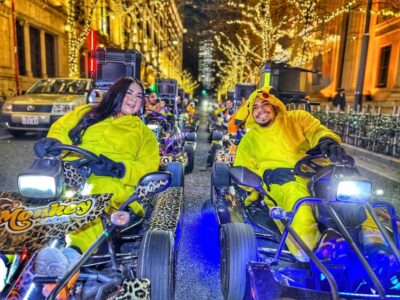
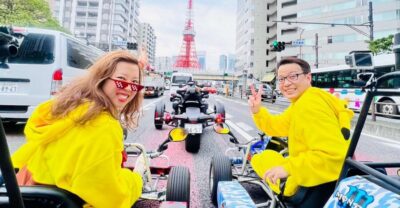
You can pick up quirky costumes for the drive, and the tour includes photo & video. That combination matters because it turns the ride into something you can share later without needing to coordinate with strangers or set up your camera for every stop.
The costume part is especially nice for tourists. Tokyo is photogenic, but it’s also easy to feel “just another visitor.” A costume helps you lean into the experience instead of just documenting it.
Photo/video inclusion also adds value if you’re traveling with friends and don’t want to spend the day trading smartphones. Someone else captures the action while you focus on driving and seeing the city.
Weather and timing: what to expect from a mostly outdoor route
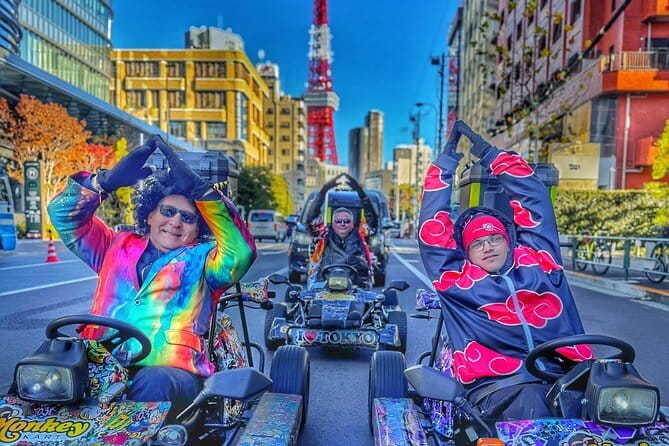
This tour requires good weather. If weather cancels the experience due to poor conditions, you’ll be offered a different date or a full refund. That’s important because go-kart activities depend on visibility and road conditions, not just comfort.
Timing is also built for movement. You should expect a schedule that balances driving time with short guided stops at major points. If you’re the type who loves long museum reading sessions, you may find the pace fast. If you want a Tokyo sampler with momentum, it’s designed for you.
Who should book this go-kart Tokyo Old Town experience?
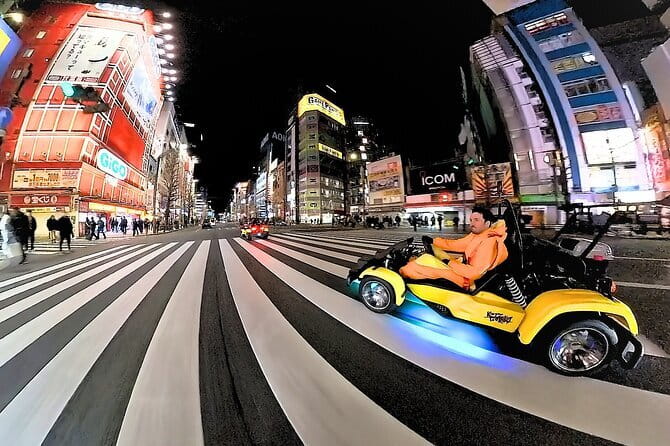
This tour makes the most sense if:
- You want a high-energy sightseeing day without spending hours walking between neighborhoods
- You like landmarks that mix modern icons (Skytree, Tokyo Station) with cultural districts (Akihabara, Asakusa, Ueno)
- You want the driver’s-seat experience plus a guide to help connect what you’re seeing
- You value convenience: insurance, fuel, costume, and photo/video are included
It may not be ideal if:
- You’re worried you might not have the exact driving documents in physical form
- You want slow, in-depth time at one attraction rather than coverage across 8 destinations
- You can’t handle outdoor time and weather uncertainty
Also, the ride is capped at 10 travelers, which typically helps with flow and personal attention. And it’s specifically noted as wheelchair accessible, which can matter if you’re comparing options.
Should you book? My take on the decision
Book this if you want Tokyo in motion. The core value isn’t just the go-kart itself—it’s the pairing of driving fun with a guided route through major identity zones: Skytree, Ryogoku, Tokyo Station/Marunouchi, Akihabara, Ueno, Asakusa, and the Imperial Palace area. The included extras—costume, photo & video, insurance, fuel, and water—also help the price feel more grounded.
Don’t book it if you’re unsure about your IDP situation. For this activity, the physical documents matter. If you can bring the required originals, you’re in the clear. If not, you risk losing the experience on the day.
If your goal is a memorable Tokyo highlight day that isn’t just standing in lines, this is a strong pick.
FAQ
FAQ
How long is the Go Karting Tokyo Old Town experience?
It lasts about 1 hour 40 minutes (approx.).
How much does it cost?
The price is $91.45 per person.
What’s the group size limit?
The tour has a maximum of 10 travelers.
Where do I meet for the tour?
The meeting point is 124-0014 Tokyo, Katsushika City, Higashiyotsugi, 1-chōme202 小島貸事務所. The tour ends back at the same meeting point.
Do I need a physical IDP and driving license?
Yes. You must present the original local driving license and an International Driving Permit (IDP) issued under the 1949 Geneva Convention. The rules require originals on the day.
What documents are required besides the IDP?
A passport is listed as required as well.
Is the tour wheelchair accessible?
Yes, the experience is described as wheelchair accessible.
What’s included in the price?
Included items are go-kart rental, tour guide, costume, fuel, insurance, photo & video, and drinking water.
What is not included?
Not included are pickup and dropoff, a data card for an Insta360 camera (available for purchase), and food.
What happens if the weather is bad?
It requires good weather. If the tour is canceled due to poor weather, you’ll be offered a different date or a full refund.
More Tour Reviews in Tokyo
- Mt Fuji and Hakone 1-Day Bus Tour Return by Bullet Train
★ 5.0 · 26,383 reviews - 1-Day Tokyo Bus Tour
★ 5.0 · 14,250 reviews - Tokyo: teamLab Planets TOKYO Digital Art Museum Entry Ticket
★ 4.6 · 9,779 reviews - Mt Fuji & Hakone Cruise, Drum Show Bullet Train 1 Day from Tokyo
★ 4.0 · 7,413 reviews - Tokyo: Shinjuku Food Tour (13 Dishes at 4 Local Eateries)
★ 5.0 · 6,603 reviews
Latest Tokyo reviews off our desk






Go-Karts, compared.
 ★ 5.0Flagship 2-Hours Official Street Go-Kart Tour – Tokyo Bay ShopFrom $644,974 reviews
 ★ 5.0Official Street Go-Kart in ShibuyaFrom $763,435 reviews
 ★ 5.0Official Street Go-Kart Tour – AkihabaraFrom $611,578 reviews
 ★ 5.0Tokyo Go Kart: Asakusa, Skytree, and Akihabara **IDP MUST**From $99988 reviews
 ★ 5.0Shibuya Official Street Go-Kart in Shibuya AnnexFrom $69972 reviews
 ★ 4.7Asakusa, Skytree & Akhihabara Go-Kart City ExperienceFrom $96761 reviews
 ★ 4.7Premium Go-Kart Tour with Tower & Shibuya CrossingFrom $116528 reviews
Browse the lists this tour appears in