
Reviewed · GO-KARTS
Go Karting Tokyo Uptown Experience|7 Top Destinations in 120 Mins
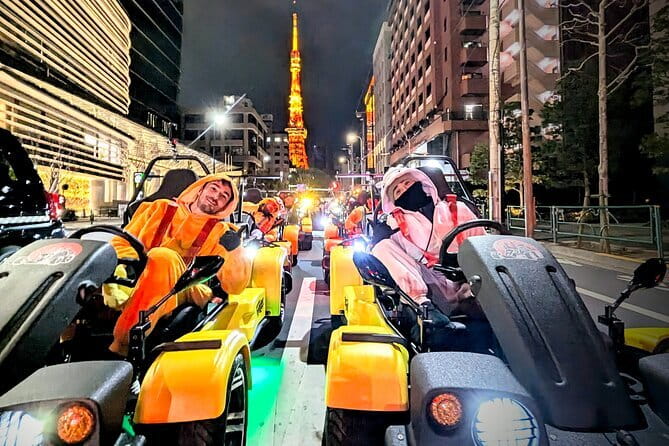
Tokyo from a go-kart feels like magic. This small-group ride swaps slow transit for a fun loop past big-name sights, with included costumes and a guide who captures photos and video along the way. It’s a hands-on way to see Tokyo’s layout without the bus-trap feeling.
I also like how the route stacks major highlights—Tokyo Skytree, Imperial Palace, Tokyo Tower, Ginza—into about 1 hour 40 minutes, so you can get your bearings fast. The main drawback to plan around is the driving paperwork: you’ll need the original local license and an International Driving Permit (IDP). Without the originals, your tour can be canceled with no refund.
In This Review
- Key things that make this go-kart tour worth it
- Price and what you actually get for $117.27
- The meeting point: where you’ll start and end (and why it matters)
- Getting licensed to drive: the rule that can make or break the day
- Small-group format: why it feels different from bus tours
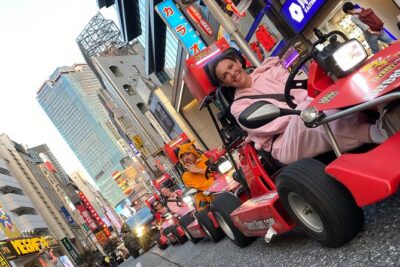
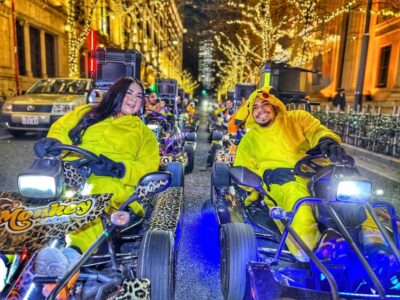
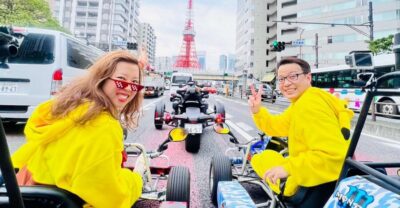
- Costumes and guide-captured photos: fun, but also practical
- Fuel, insurance, and water: the “quiet” inclusions that reduce stress
- Tokyo Skytree: a skyline landmark you can ride past
- Ryogoku and the Sumo Stadium area: tradition next to modern streets
- Tokyo Station and Marunouchi: architectural landmark spotting at speed
- The Imperial Palace: seeing Japan’s center without the slow grind
- Tokyo Tower: 333 meters of post-recovery symbolism
- Ginza: upscale shopping and dining, from the street level
- Kabukiza Theater: a culture stop that doesn’t feel like a detour
- So who should book this go-kart Tokyo experience?
- Quick practical tips before you go
- Should you book this go-kart tour?
- FAQ
- How long is the go-kart tour?
- How much does it cost per person?
- What’s included in the price?
- What’s not included?
- Where does the tour start and end?
- Do I need a driving license to participate?
- Are there any special rules for US Forces in Japan?
- How large is the group?
- What if the weather is bad?
- What’s the cancellation policy?
Key things that make this go-kart tour worth it
- A capped group size (max 10): less waiting, more actual driving time, and easier photo moments
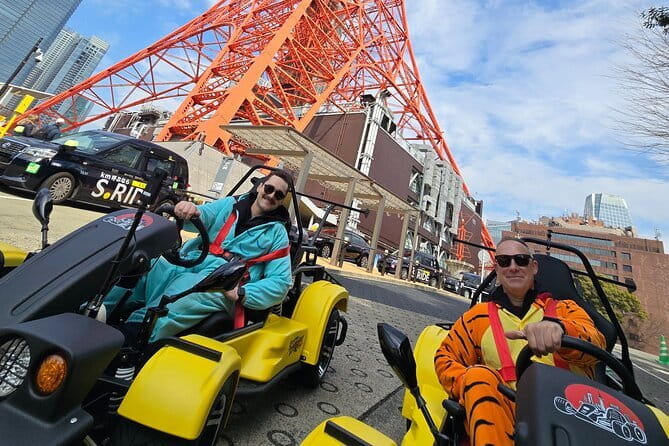
- Costumes + guided photo/video: you’re dressed for landmark snapshots without extra rentals
- Landmarks in one sweep: Tokyo Skytree, Ryogoku/Sumo Stadium area, Tokyo Station, Imperial Palace, Tokyo Tower, Ginza, and Kabukiza Theater
- Real ride essentials included: go-kart rental, fuel, insurance, and water
- You’re on wheels for the sightseeing: great if you hate the stop-and-go churn of crowded trains
- Weather matters: the experience requires good weather, and the operator will adjust if conditions are poor
Price and what you actually get for $117.27
At about $117.27 per person, this isn’t a budget-only activity. But for that price, you get a full set of things that usually cost extra if you DIY: the go-kart rental, fuel, insurance, a tour guide, and the support pieces that make the whole thing work—costume, plus the guide capturing photos and video while you ride.
The value shows up in the details. You’re not just driving in a random loop; you’re rolling past a chain of Tokyo icons in a short window. And because it’s a small group (up to 10), the ride feels more personal than those big buses where you mostly watch other people’s heads in front of you.
Readers booked these Tokyo options in the same breath. Here is how each one scored:
- Mt Fuji and Hakone 1-Day Bus Tour Return by Bullet Train
★ 5.0 · 26,383 reviews - 1-Day Tokyo Bus Tour
★ 5.0 · 14,250 reviews - Tokyo: teamLab Planets TOKYO Digital Art Museum Entry Ticket
★ 4.6 · 9,779 reviews - Mt Fuji & Hakone Cruise, Drum Show Bullet Train 1 Day from Tokyo
★ 4.0 · 7,413 reviews
The meeting point: where you’ll start and end (and why it matters)
You start and end back at the same spot: Higashiyotsugi 1-chōme 20-2, Katsushika City, Tokyo (124-0014), 小島貸事務所. It’s listed as near public transportation, and that’s important because this is not a pickup-and-drop-off tour.
So if you’re staying in central Tokyo (like around Ginza or Shinjuku), plan for a transit jump to get out to the meeting area. Give yourself a little buffer time so you’re not stressed when it’s time to gear up.
The tour uses a mobile ticket, so have it ready on your phone before you arrive.
Getting licensed to drive: the rule that can make or break the day
This experience includes driving, so it has driving-document requirements. The key points you should treat as non-negotiable:
- For US Forces in Japan under SOFA, a SOFA Driving License is required.
- For other visitors: you need a local driving license plus an International Driving Permit (IDP) issued under the 1949 Geneva Convention.
- You must present the original local driving license and the original IDP. If you don’t have the originals, the tour can be canceled and there’s no refund.
- For nationals of Switzerland, Germany, France, Belgium, Monaco, and Taiwan, driving may be allowed with a Japanese translation of the driving license, but you’re asked to contact the operator a month in advance if you need assistance.
- You should bring your passport.
If you’re not sure whether your permit qualifies, check early. The whole “last-minute fun” plan can fall apart fast if your documents aren’t in the right form.
Small-group format: why it feels different from bus tours
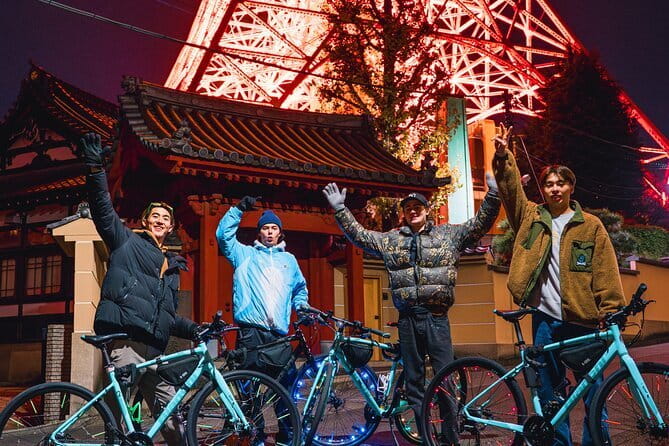
A maximum of 10 people changes the vibe immediately. You’re guided through the landmark route as a tighter group, with less time lost to bottlenecks. It also helps with the photos and video moments, since the guide can manage stops and framing without herding a giant crowd.
If you like active sightseeing—short stops, quick context, then back on the road—this format matches that style well. It’s also a nice option if you want to see several areas but don’t want to spend the day transferring between train lines.
Costumes and guide-captured photos: fun, but also practical
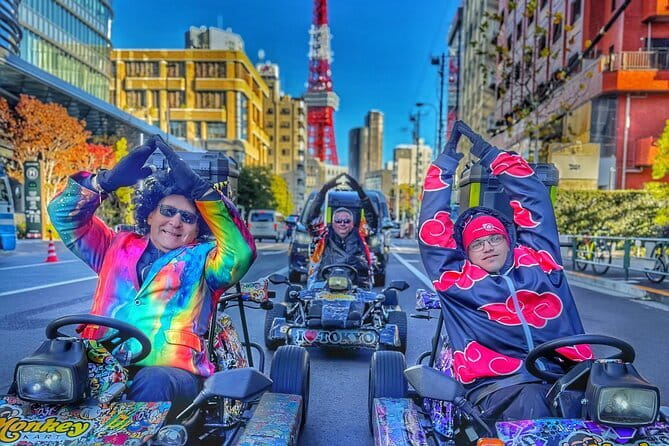
Costumes sound silly until you see how they work for sightseeing. They make your photos look like an event, not just a snapshot. And since the tour includes photo and video capture by the guide, you aren’t stuck trying to balance a phone while you’re driving.
One practical note: a separate Insta360 data card is not included, and you can purchase it if you want. If you’re relying on that setup, confirm what you need before you go so you don’t end up with an incomplete file later.
- Tokyo: Shinjuku Food Tour (13 Dishes at 4 Local Eateries)★ 5.0 · 6,603 reviews
- Tokyo Mt Fuji 5th St & Hakone Cruise Bus Tour w/Bullet Train★ 4.4 · 5,024 reviews
- Flagship 2-Hours Official Street Go-Kart Tour – Tokyo Bay Shop★ 5.0 · 4,974 reviews
- From Tokyo: Mount Fuji Full-Day Sightseeing Trip★ 4.5 · 4,970 reviews
- Tokyo: Hop-On Hop-Off Sightseeing Bus Ticket★ 3.9 · 4,207 reviews
Fuel, insurance, and water: the “quiet” inclusions that reduce stress
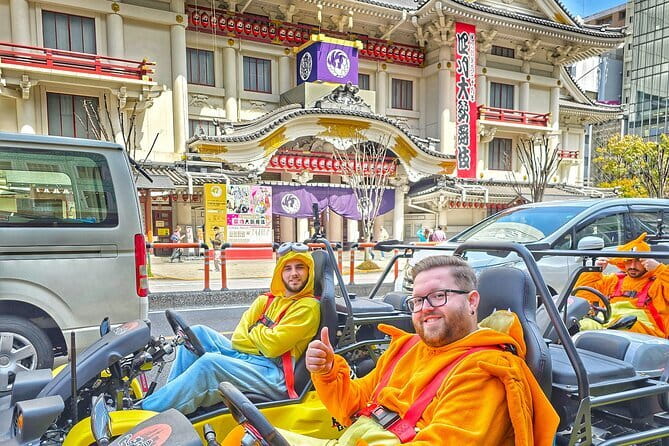
Included items are a big part of why this feels hassle-free:
- Go-kart rental
- Fuel
- Insurance
- Tour guide
- Costume
- Photo & video
- Water
Those are the kinds of details that can kill your momentum if they’re not already handled. With this setup, you focus on driving and enjoying the views rather than doing paperwork or chasing extra rentals.
Tokyo Skytree: a skyline landmark you can ride past
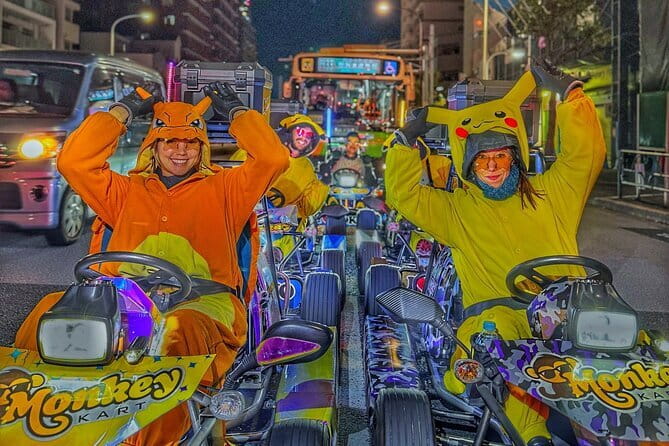
One of the first major icons on your route is Tokyo Skytree, towering over Sumida City. The tour description calls it the world’s tallest broadcasting and communications tower, and also notes it’s the third tallest structure.
What you get from seeing Skytree this way is speed and angles. Instead of waiting in a single viewing spot, you get landmark views while you’re already moving through the city. If you like skyline photos, costumes help a lot here because your outfit reads clearly against the tower’s clean vertical shape.
Ryogoku and the Sumo Stadium area: tradition next to modern streets
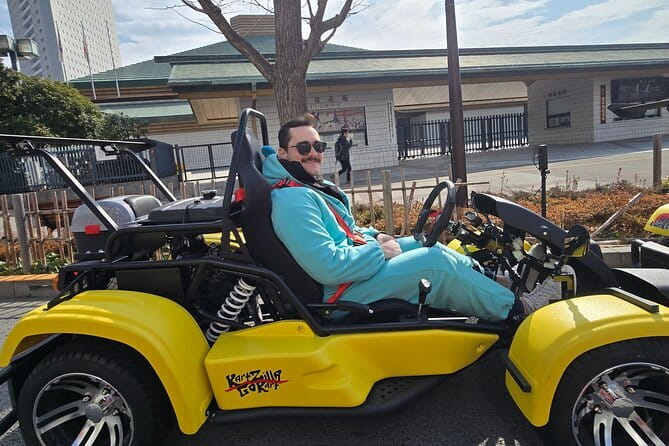
From there, the ride heads through Ryogoku, where the Sumo Stadium takes center stage. The area is framed as a mix of tradition and modern city life, which is exactly why this stop works in a go-kart format: you’re seeing the symbol of sumo culture without turning it into a slow, single-purpose trip.
For what to pay attention to: look for neighborhood cues that feel uniquely Ryogoku—then capture them while you’re still rolling. That moving perspective is part of the charm. A bus stop photo can feel staged; a go-kart pass feels like you’re on the streets, not parked beside them.
Tokyo Station and Marunouchi: architectural landmark spotting at speed
Tokyo Station appears next, with a focus on the Marunouchi district. The station is described as an architectural symbol, and it’s noted as dating to the early 20th century.
Why this matters for your day: Tokyo Station is one of those places where most visitors either rush through or experience it only as a train hub. Here, you see it as part of a broader visual route. Since you’re also getting costume photos and guide-captured video, you’ll likely end up with images that feel less like commuting and more like sightseeing.
The Imperial Palace: seeing Japan’s center without the slow grind
The route also includes the Imperial Palace area, described as the residence of the Japanese Emperor and Empress. The background detail is specific: it was constructed in 1457 by Ota Dokan within the expansive grounds of Edo Castle.
What you’ll appreciate in a go-kart context is the contrast. This part of Tokyo can feel ceremonial and formal when you visit on foot. On wheels, it becomes a memorable visual segment within a busy day—one that breaks up shopping streets and commercial districts.
If you want photos that aren’t crowded, driving by is a decent strategy. You’re not locked into one spot with everyone else; you get a moving pass and a curated route feel.
Tokyo Tower: 333 meters of post-recovery symbolism
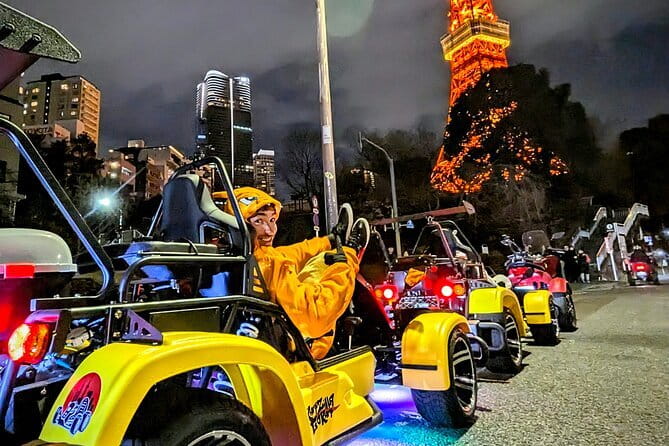
Next up is Tokyo Tower, described as an architectural marvel at 333 meters, and noted for surpassing the Eiffel Tower by nearly 3 meters. The description also frames it as a symbol tied to Japanese resilience and rebirth after a period of economic recovery.
This stop is a good “big visual moment” in the middle of your ride. Tokyo Tower is instantly recognizable, so even if you’re not the type to read signage, you’ll feel like you’re inside a postcard. And because you’re still in your costume phase, the photos often land better than they would in plain clothes.
Ginza: upscale shopping and dining, from the street level
Ginza is included as Tokyo’s premier upscale shopping, dining, and entertainment district. The ride positioning matters because Ginza is one of those areas where you can easily spend hours wandering—and still see only a slice if you’re going on your own.
By passing through with a guide, you get the district’s vibe quickly: boutiques, art galleries, restaurants, nightclubs, and cafes are all part of the description. If you’re planning a separate shopping stop later, this segment helps you decide what kind of Ginza experience you want—more fashion, more galleries, or just coffee-and-stroll energy.
Kabukiza Theater: a culture stop that doesn’t feel like a detour
The route finishes with Kabukiza Theater, presented as a cultural and historical landmark tied to Kabuki, a classical Japanese dance-drama with stylized drama, elaborate makeup, and costumes.
In go-kart terms, this is a strong pairing: you’ve been dressed up the whole time, and then you end near one of Tokyo’s most famous stages. Even if you’re not attending a performance, the theater stop gives your day a cultural anchor beyond the skyscrapers and shopping streets.
It also helps you remember Tokyo as more than buildings. Kabukiza gives context that makes the ride feel like it belongs to the city, not just through it.
So who should book this go-kart Tokyo experience?
This tour fits best if you want:
- Landmark coverage in a short window without the bus-tour feel
- A small-group atmosphere (max 10)
- A guided route where someone handles logistics like routing through key areas
- A fun photo plan with costumes and guide-captured media included
- An active sightseeing day rather than another “sit and watch” outing
It’s probably less ideal if:
- You don’t have the correct driving documents (local license + 1949 Geneva IDP, originals required)
- You need a pickup service since the tour has no pickup and no drop-off beyond returning to the meeting point
- Your schedule is extremely weather-sensitive, since the experience requires good weather
Quick practical tips before you go
- Bring your passport and both documents you need to drive (local license + IDP) as originals.
- Wear something comfortable for driving and moving quickly during check-in and costume time.
- Charge your phone and keep your mobile ticket accessible.
- If you’re interested in Insta360-style extras, read the fine print on what’s included vs what’s available for purchase (the data card is not included).
Should you book this go-kart tour?
Book it if you want an energy-heavy Tokyo day that still hits the big hits—Skytree, Imperial Palace, Tokyo Tower, Ginza, and more—in about 1 hour 40 minutes with minimal hassle. The best part is the value stack: kart rental, fuel, insurance, costume, guide, water, and photo/video all bundled together.
Skip it if your driving paperwork isn’t 100% ready, or if getting to the meeting point far from central hotels will make you late or stressed.
If you’re clear on the license requirements and you’re craving a different way to see Tokyo, this is a strong pick.
FAQ
How long is the go-kart tour?
The tour lasts about 1 hour 40 minutes (approx.).
How much does it cost per person?
The price listed is $117.27 per person.
What’s included in the price?
Included: go-kart rental, tour guide, costume, fuel, insurance, photo & video, and water.
What’s not included?
Not included: pickup & drop off, an Insta360 data card (available for purchase), and food.
Where does the tour start and end?
It starts and ends back at the meeting point in Katsushika City, Tokyo (124-0014). The exact address listed is 124-0014 Tokyo, Katsushika City, Higashiyotsugi, 1-chōme20-2 小島貸事務所.
Do I need a driving license to participate?
Yes. The tour requires a local driving license plus an International Driving Permit (IDP) issued under the 1949 Geneva Convention, and you must present the originals.
Are there any special rules for US Forces in Japan?
Yes. For US Forces in Japan under SOFA, a SOFA Driving License is required.
How large is the group?
The experience has a maximum size of 10 travelers.
What if the weather is bad?
The tour requires good weather. If it’s canceled due to poor weather, you’ll be offered a different date or a full refund.
What’s the cancellation policy?
Free cancellation is available up to 24 hours in advance for a full refund. If you cancel less than 24 hours before the start time, the amount paid is not refunded.
More Tour Reviews in Tokyo
- Mt Fuji and Hakone 1-Day Bus Tour Return by Bullet Train
★ 5.0 · 26,383 reviews - 1-Day Tokyo Bus Tour
★ 5.0 · 14,250 reviews - Tokyo: teamLab Planets TOKYO Digital Art Museum Entry Ticket
★ 4.6 · 9,779 reviews - Mt Fuji & Hakone Cruise, Drum Show Bullet Train 1 Day from Tokyo
★ 4.0 · 7,413 reviews - Tokyo: Shinjuku Food Tour (13 Dishes at 4 Local Eateries)
★ 5.0 · 6,603 reviews
Latest Tokyo reviews off our desk






Go-Karts, compared.
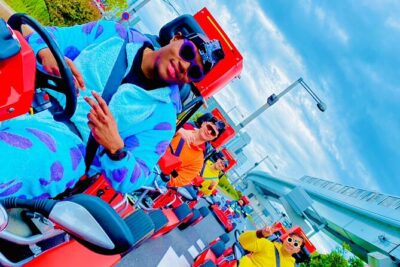 ★ 5.0Flagship 2-Hours Official Street Go-Kart Tour – Tokyo Bay ShopFrom $644,974 reviews
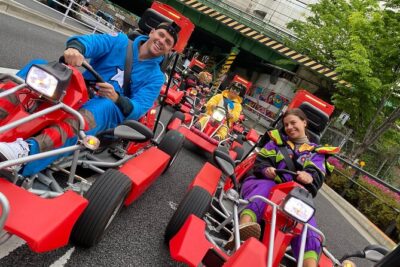 ★ 5.0Official Street Go-Kart in ShibuyaFrom $763,435 reviews
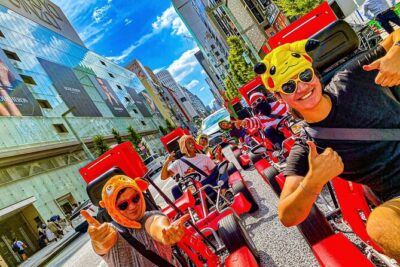 ★ 5.0Official Street Go-Kart Tour – AkihabaraFrom $611,578 reviews
 ★ 5.0Tokyo Go Kart: Asakusa, Skytree, and Akihabara **IDP MUST**From $99988 reviews
 ★ 5.0Shibuya Official Street Go-Kart in Shibuya AnnexFrom $69972 reviews
 ★ 4.7Asakusa, Skytree & Akhihabara Go-Kart City ExperienceFrom $96761 reviews
 ★ 4.7Premium Go-Kart Tour with Tower & Shibuya CrossingFrom $116528 reviews
Browse the lists this tour appears in