
Reviewed · GO-KARTS
Iconic Tokyo Uptown Landmarks Go Kart Tour (120 Minutes)
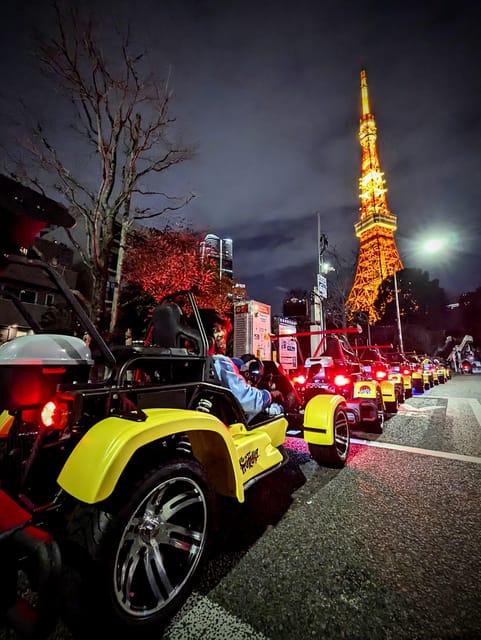
Tokyo looks different when you drive it. This 2-hour street-legal go-kart tour is guided start to finish, with two-way radio coaching so you can focus on the ride and the sights.
I especially like the comfort-focused karts and the real-time guide attention. The karts are built for stability, with suspension for a smoother feel, hydraulic brakes, and reinforced frames that handle big-and-tall riders better than typical rental karts.
One thing to think through first: you need a valid driving license (and the exact type matters), or you won’t be able to ride on the day.
In This Review
- Key things I’d circle before you book
- Tokyo Uptown Route: what you’re really buying
- Meeting at Kartzilla: getting there without stress
- The go-karts: comfort and control (not just speed)
- Safety on two-way radio: how the guidance actually helps
- Skytree to Ryogoku: first skyline views from street level
- Tokyo Station and the Imperial Palace surroundings: big-city icons at slow speed
- Tokyo Tower and Ginza: iconic photos, plus real driving energy
- Kabuki-za area: ending with culture and camera time
- Included comfort items you’ll actually notice
- Price and value: why $116 can feel fair
- Who this tour fits best (and who should skip it)
- Should you book the Tokyo Uptown Landmarks go-kart tour?
- FAQ
- How long is the Tokyo Uptown Landmarks Go Kart tour?
- What does the tour cost and what’s included?
- Where is the meeting point?
- Do I need a driver’s license, and what kinds are accepted?
- Can I use an on-board Insta360 camera during the ride?
- What languages are the live guides?
- Is the tour wheelchair accessible?
Key things I’d circle before you book
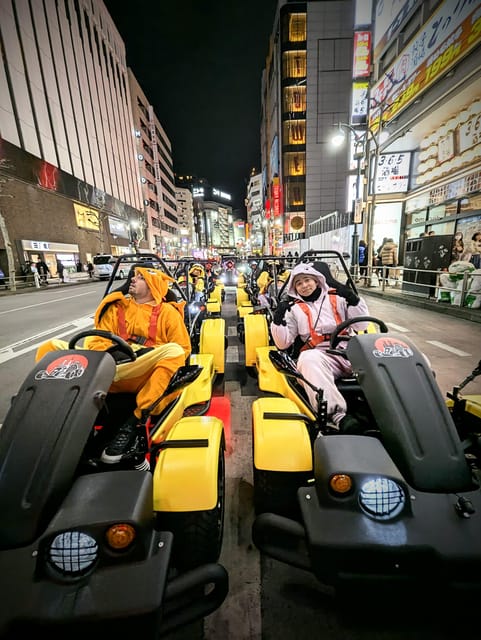
- Two-way radio guidance keeps you informed and relaxed while traffic moves around you
- Comfort-built karts with suspension, hydraulic brakes, and stable handling for first-timers
- Iconic stops at street level including Skytree, Ryogoku Sumo Stadium area, Tokyo Station, Imperial Palace surroundings, Ginza, and Kabukiza
- Optional on-board Insta360 recording, with Micro SD card required
- Small group size (up to 10) plus an English, German, or Spanish live guide
- Fuel, drinks, and accident insurance are included, so the real cost feels more predictable
Tokyo Uptown Route: what you’re really buying
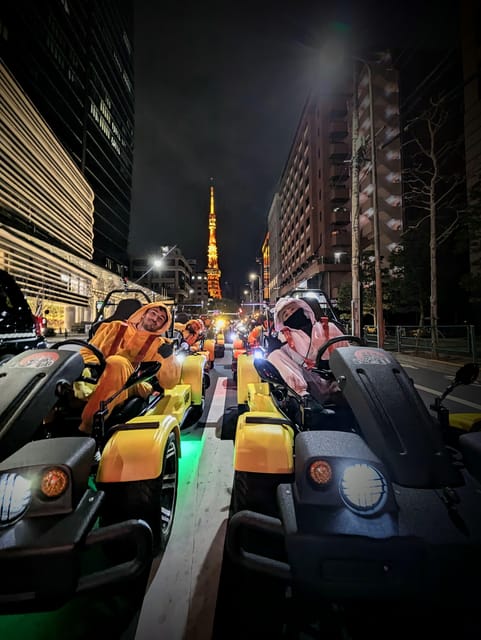
You’re paying for a two-part experience: the fun of driving a kart in real streets, plus a guided loop that strings famous Tokyo landmarks to everyday neighborhoods. It’s not about racing. It’s about seeing Tokyo from the driver’s seat, at human scale, while someone keeps the pace smooth and the route makes sense.
The format matters. A go-kart tour can be chaotic when the group stretches out and nobody knows what to do next. Here, you’re guided at all times, and you get live landmark storytelling and real-time safety guidance through two-way radio.
The value also comes from what’s included. You get the street-legal kart, fuel, your guide, accident insurance, and even drinks like water, tea, and coffee. Add in costume rental and the optional photo/video tools, and the cost starts to feel like a full package rather than a basic rental.
Readers booked these Tokyo options in the same breath. Here is how each one scored:
- Mt Fuji and Hakone 1-Day Bus Tour Return by Bullet Train
★ 5.0 · 26,383 reviews - 1-Day Tokyo Bus Tour
★ 5.0 · 14,250 reviews - Tokyo: teamLab Planets TOKYO Digital Art Museum Entry Ticket
★ 4.6 · 9,779 reviews - Mt Fuji & Hakone Cruise, Drum Show Bullet Train 1 Day from Tokyo
★ 4.0 · 7,413 reviews
Meeting at Kartzilla: getting there without stress
The tour starts at the Kartzilla Go Kart facility, which is about an 8–10 minute walk from Yotsugi Station on the Keisei Line. The building is clearly marked, and the Google Map route is straightforward.
A small but helpful reality check: you need to arrive early. You’ll check in and go through a mandatory safety briefing, and they ask you to be there 40 minutes before your scheduled start time. That timeline is one of the main reasons this tour works. You’ll be settled before you’re expected to drive.
If you’re using transit, expect a short walk through quieter residential streets before you reach the facility. That isn’t a problem, just something to keep in mind when you’re looking for the kart place instead of a bright landmark.
The go-karts: comfort and control (not just speed)
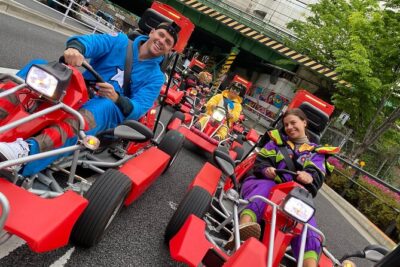
Kartzilla’s karts are purpose-built for city driving. That translates into a ride that feels less jittery and more controlled than the average toy-like go-kart.
Here’s what you can count on from the kart design:
- Advanced suspension for a smoother ride over uneven pavement
- Hydraulic brakes for precise stopping
- Reinforced frames that accommodate big and tall riders more comfortably
- Stable handling that’s designed for first-time drivers
That combination is the difference between a tour that feels like a fun mission and one that turns into white-knuckle steering. You still need to drive attentively, but you’re not fighting the vehicle.
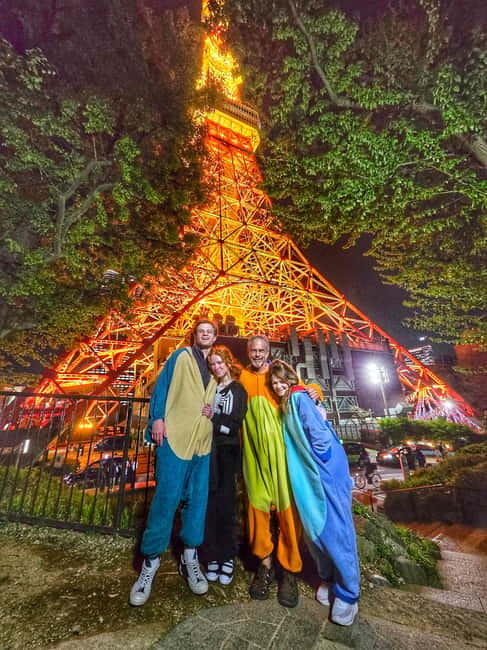
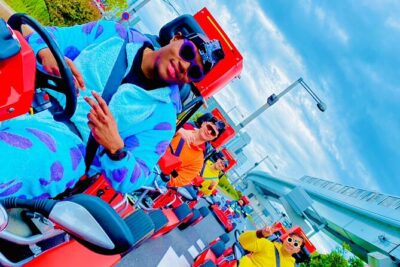
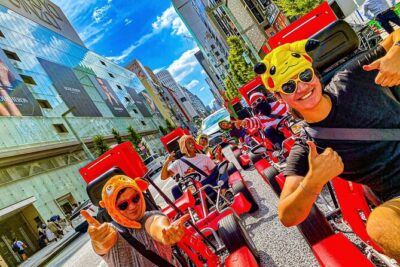
You also have options for themed fun. Anime costume rental is included, which is great if you want a silly photo moment without paying extra at a souvenir shop.
Safety on two-way radio: how the guidance actually helps
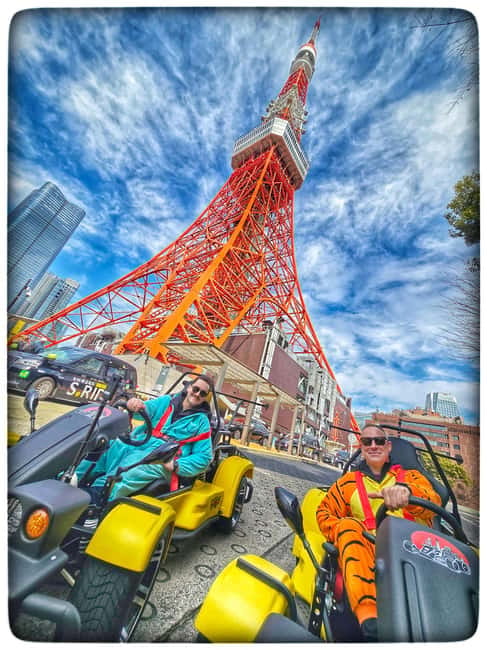
This is one of the strongest parts of the experience. Your guide uses two-way radio communication, so you’re not relying on hand signals in moving traffic. You get real-time instructions and safety reminders while the tour stays organized.
From a practical point of view, that means less guesswork for you at turns and stops. It also helps if you’re new to driving on crowded streets because the guide can adjust the pace and keep everyone aligned.
If you’re the kind of person who worries about group chaos, this is the fix. If you’re an easygoing driver, it’s still a plus because it lets you enjoy the landmark moments without constantly checking mirrors or scanning for what’s next.
Skytree to Ryogoku: first skyline views from street level
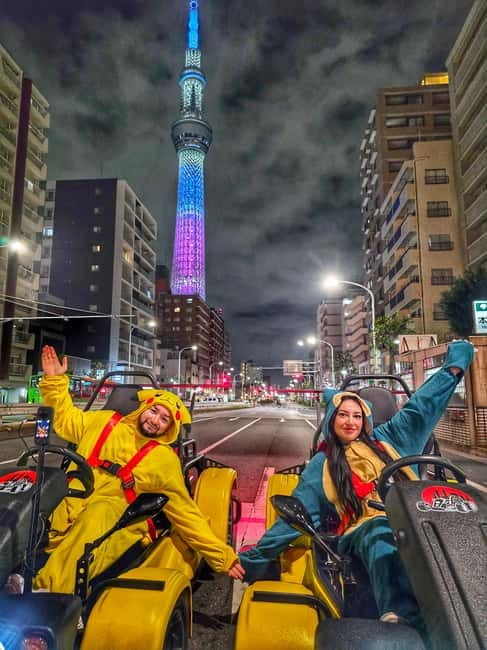
Your ride kicks off near Tokyo Skytree, after a safety briefing and simple driving instructions. Skytree is a natural warm-up stop. Even before you reach the most famous spots, you’re already getting that Tokyo sense of scale, framed from a low driver’s-eye perspective.
From there, you head toward Ryogoku Kokugikan, the sumo arena area. This stop adds a cultural contrast to the modern skyline moments. You’re not only seeing famous buildings; you’re passing through neighborhoods tied to Tokyo’s everyday rhythm.
The “street level” part matters more than you’d think. From a car or bus, you tend to see landmarks as backdrops. From a kart, you experience the surroundings as you roll past them—side streets, shopfronts, and the in-between spaces that don’t show up on most photo stops.
- Mt Fuji and Hakone 1-Day Bus Tour Return by Bullet Train★ 5.0 · 26,383 reviews
- 1-Day Tokyo Bus Tour★ 5.0 · 14,250 reviews
- Tokyo: teamLab Planets TOKYO Digital Art Museum Entry Ticket★ 4.6 · 9,779 reviews
- Mt Fuji & Hakone Cruise, Drum Show Bullet Train 1 Day from Tokyo★ 4.0 · 7,413 reviews
- Tokyo: Shinjuku Food Tour (13 Dishes at 4 Local Eateries)★ 5.0 · 6,603 reviews
Tokyo Station and the Imperial Palace surroundings: big-city icons at slow speed
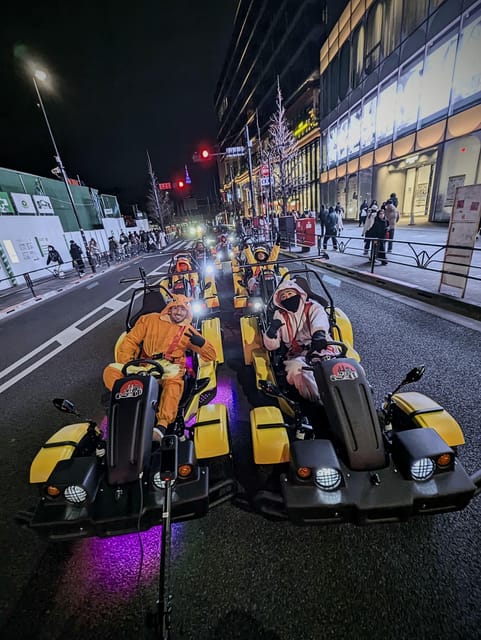
Next up is Tokyo Station, one of the most recognizable transport hubs in the country. It’s the kind of place where you can understand Tokyo’s pace without ever stepping inside. The drive-through gives you a quick visual orientation: where the major lines connect, and how the city organizes itself around movement.
Then you pass the Imperial Palace surroundings. Even if you don’t spend time inside, the area gives you a different Tokyo texture—more formal and open in feel compared with shopping districts. The kart format keeps it active, though. You’re still driving through, not just looking from afar.
One caution here: these are popular areas, so expect that you’ll see more activity near major landmark corridors. The tour’s radio guidance helps you stay calm and follow instructions without trying to outguess traffic patterns.
Tokyo Tower and Ginza: iconic photos, plus real driving energy
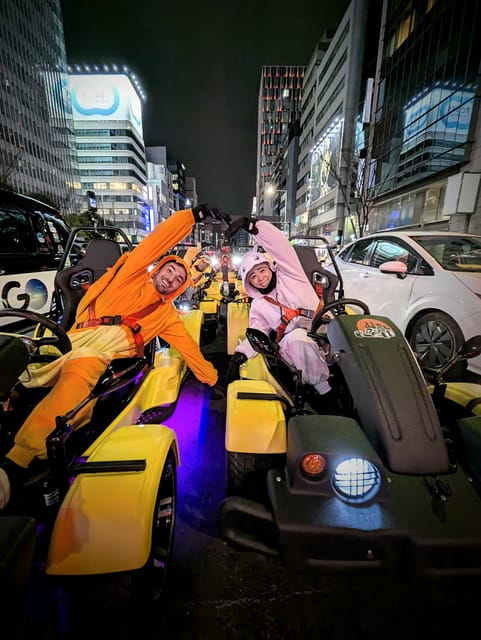
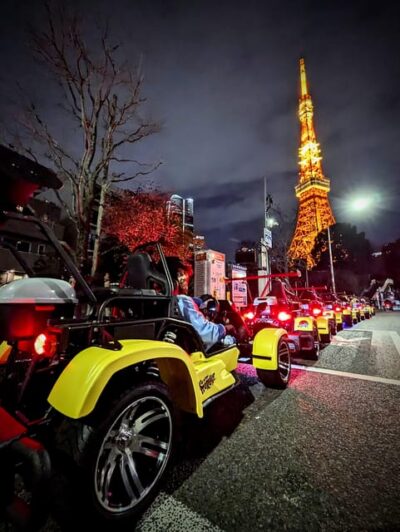
Tokyo Tower comes next. It’s one of those landmarks you recognize instantly, and driving by it gives you that instant payoff without needing a separate ticketed viewpoint. You get scenic drive moments en route, plus guided time at the landmark area so you’re not rushing to line up photos.
Then you reach Ginza, Tokyo’s famous upscale shopping district. This is where the tour shifts from “I recognize that” to “I’m experiencing Tokyo now.” Ginza can feel visually busy, and on foot you might wander in circles. From the kart, it’s more like a moving street gallery: you catch storefront rhythms, signage, and pedestrian flows as you pass.
If you’re choosing your start time, there’s a smart tip here: the ride can be extra memorable after dark, especially for the neon look people talk about. The itinerary doesn’t force a night schedule, but if your tour is scheduled for evening, lean into it and plan for the weather.
Kabuki-za area: ending with culture and camera time
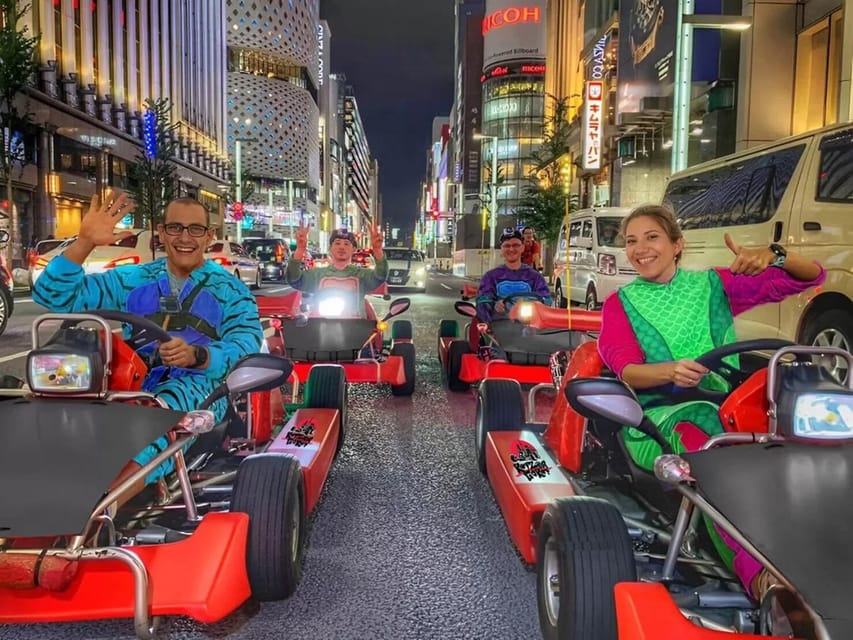
The final landmark stop is Kabukiza Theatre, tied to kabuki. Passing by this theater gives you a cultural anchor before you roll back to the facility.
Toward the end of the tour, you’ll likely feel more comfortable driving. You’ve had time to adjust to steering, braking, and the stop-and-go rhythm. That makes the last portion feel more fun and less like practice.
This is also when the camera options matter most. Each kart gives you the option to use an on-board Insta360 camera. You can record the journey hands-free from the driver’s seat, which is ideal for capturing landmarks you might otherwise forget while focusing on driving.
Just know the practical requirement: you’ll need a Micro SD card to use the camera. They say it’s available for purchase on-site, but if you want zero stress, consider bringing one in advance.
Included comfort items you’ll actually notice
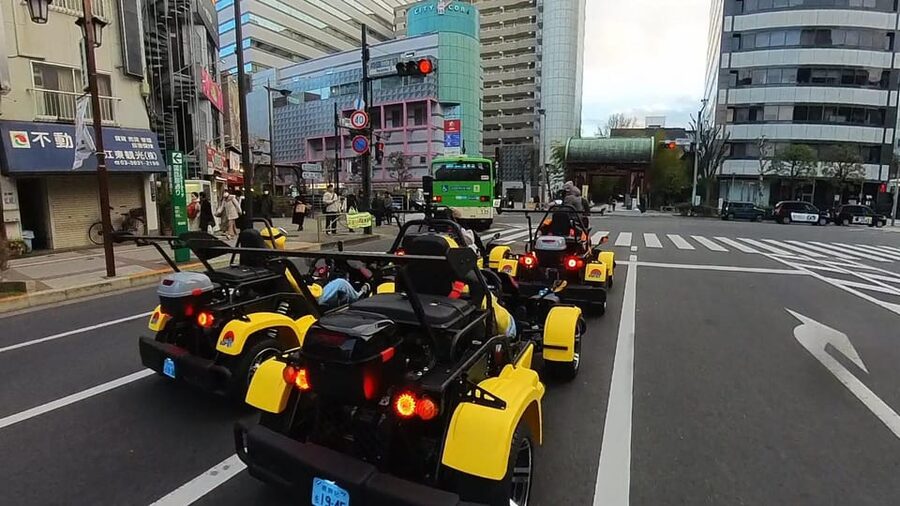
Tours sometimes include “extras” that turn out to be forgettable. Here, several inclusions are genuinely useful for a kart ride.
What you get:
- Drinks: water, tea, coffee
- Accident insurance
- The local professional guide
- Fuel for the entire tour
- Anime costume rental
- Accident insurance
And based on experience-style feedback, you might also want to plan for the real possibility of weather. If it rains, rain gear may be available, and it’s smart to have something for the end-of-ride cleanup too. (You don’t need to pack like you’re hiking, but you should be ready for the kart ride reality.)
Price and value: why $116 can feel fair
At $116 per person for 2 hours, you’re not just renting a kart. You’re getting:
- A street-legal guided drive
- Live storytelling tied to well-known landmarks
- Real-time radio communication
- Fuel, drinks, and accident insurance
That bundle affects value in two ways. First, it cuts down the usual add-ons that inflate the final number on tours like this. Second, the guide isn’t optional. The two-way system and continuous guidance are what make the experience less stressful and more sightseeing-friendly.
The main “cost” you might feel isn’t the ticket price—it’s the upfront requirement to have the correct driving license and bring what they need on the day. If you don’t meet the requirements, you can end up stuck without being able to ride, and that’s not a budget issue, it’s a eligibility issue.
Also, there’s no hotel pickup or drop-off. You’ll need to make your own way to Kartzilla near Yotsugi Station, which is usually easy, but it’s something to factor if you’re staying far from transit.
Who this tour fits best (and who should skip it)
This is a strong fit if you:
- Have a driving license and want a hands-on way to see Tokyo’s center
- Like landmarks but also want a sense of daily street life, not only viewpoints
- Are okay driving a vehicle at a beginner-friendly pace, not racing
It may be less suitable if you:
- Don’t have the required driving license format
- Need a tour tailored for visual impairment (it’s listed as not suitable for people who are visually impaired)
- Are traveling with kids, since it’s not for children under 18
The age limits are strict on the high end too, with the tour listed as not suitable for people over 95. If you’re unsure about physical comfort with harness-style restraint and sitting posture, this is the kind of activity where I’d check your comfort level before booking.
Should you book the Tokyo Uptown Landmarks go-kart tour?
I’d book it if you want a Tokyo experience that feels playful but still structured. The two-way radio safety guidance and the comfort-focused karts make it a better choice than random go-kart rentals because you’re not improvising the route or the pace.
Skip it if driving paperwork is a headache for you. The tour depends on the right license, and the day-of eligibility rules are firm. If you can meet the requirements, though, this is a fun way to see major Tokyo icons like Skytree, Tokyo Station, Imperial Palace surroundings, Ginza, and Kabukiza while also getting the lived-in feeling of the city around them.
If you’re going in cooler or rainy months, plan to stay flexible. The ride can still work, but you’ll want to dress with weather in mind and arrive early so you’re not rushing in the check-in line.
FAQ
How long is the Tokyo Uptown Landmarks Go Kart tour?
It lasts 120 minutes.
What does the tour cost and what’s included?
The price is $116 per person, and it includes street-legal go-kart rental, fuel, a professional local guide, anime costume rental, optional on-board Insta360 camera use (with Micro SD card required), accident insurance, and drinks (water, tea, coffee).
Where is the meeting point?
The Kartzilla Go Kart facility is under an 8–10 minute walk from Yotsugi Station (Keisei Line). The building is marked with signage.
Do I need a driver’s license, and what kinds are accepted?
A valid driving license is required. Accepted licenses include a Japanese driving license, an International Driving Permit issued under the 1949 Geneva Convention for non-residents, or certain country licenses (Switzerland, Germany, France, Belgium, Monaco, or Taiwan) with an official Japanese translation issued by JAF. Digital licenses, photos, or expired licenses are not accepted.
Can I use an on-board Insta360 camera during the ride?
Yes, each kart offers optional on-board Insta360 camera use. You will need a Micro SD card, which you can purchase on-site.
What languages are the live guides?
Guides are available in English, German, and Spanish.
Is the tour wheelchair accessible?
Yes, it is listed as wheelchair accessible.
If you tell me your travel dates and whether you want a daytime or evening start time, I can help you decide what’s the best way to plan the rest of your Tokyo day around this 2-hour loop.
More Tours in Tokyo
- Mt Fuji and Hakone 1-Day Bus Tour Return by Bullet Train
★ 5.0 · 26,383 reviews - 1-Day Tokyo Bus Tour
★ 5.0 · 14,250 reviews - Tokyo: Shinjuku Food Tour (13 Dishes at 4 Local Eateries)
★ 5.0 · 6,603 reviews - Tokyo Mt Fuji 5th St & Hakone Cruise Bus Tour w/Bullet Train
★ 4.4 · 5,024 reviews - Flagship 2-Hours Official Street Go-Kart Tour – Tokyo Bay Shop
★ 5.0 · 4,974 reviews
More Tour Reviews in Tokyo
- Mt Fuji and Hakone 1-Day Bus Tour Return by Bullet Train
★ 5.0 · 26,383 reviews - 1-Day Tokyo Bus Tour
★ 5.0 · 14,250 reviews - Tokyo: teamLab Planets TOKYO Digital Art Museum Entry Ticket
★ 4.6 · 9,779 reviews - Mt Fuji & Hakone Cruise, Drum Show Bullet Train 1 Day from Tokyo
★ 4.0 · 7,413 reviews - Tokyo: Shinjuku Food Tour (13 Dishes at 4 Local Eateries)
★ 5.0 · 6,603 reviews
Latest Tokyo reviews off our desk
Go-Karts, compared.
 ★ 5.0Flagship 2-Hours Official Street Go-Kart Tour – Tokyo Bay ShopFrom $644,974 reviews
 ★ 5.0Official Street Go-Kart in ShibuyaFrom $763,435 reviews
 ★ 5.0Official Street Go-Kart Tour – AkihabaraFrom $611,578 reviews
 ★ 5.0Tokyo Go Kart: Asakusa, Skytree, and Akihabara **IDP MUST**From $99988 reviews
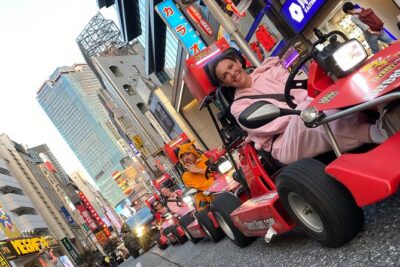 ★ 5.0Shibuya Official Street Go-Kart in Shibuya AnnexFrom $69972 reviews
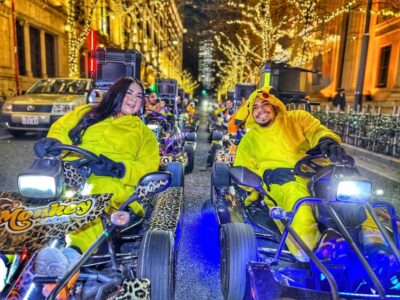 ★ 4.7Asakusa, Skytree & Akhihabara Go-Kart City ExperienceFrom $96761 reviews
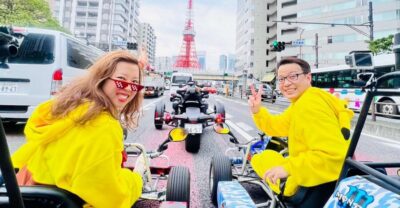 ★ 4.7Premium Go-Kart Tour with Tower & Shibuya CrossingFrom $116528 reviews
Browse the lists this tour appears in