
Reviewed · TOURS
Japanese Garden & Western Architecture: Akasaka exploration tour
Tokyo hides its calm corners.
This Akasaka walk swaps skyscraper glare for the soft rules of Japanese gardens and the formality of state-level architecture, with Edo-period stories threaded through the day.
I like two things most. You get real variety—a long-lived garden, the Akasaka Palace reception site, a dome museum focused on the Meiji era, and a ginkgo-lined street built for seasonal looks. And I also like that the guides—people like Ayako-san, Sayaka, Mutsuko Takano, and Ume—tend to be flexible, English-friendly, and ready to answer questions as you go.
One thing to keep in mind: there’s no dining stop, and entrance fees aren’t included. If you want lunch nearby, plan it yourself before or after.
In This Review
- Quick hits before you go
- Akasaka’s Edo-Period Calm in 3–4 Hours
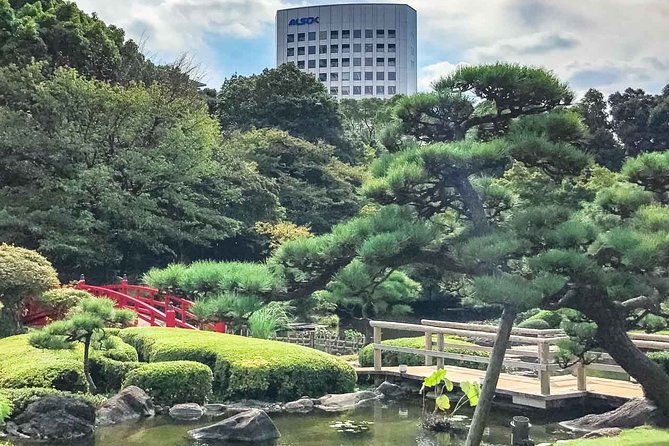
- Hotel New Otani Japanese Garden: The 400-Year Anchor
- Akasaka Palace: A Castle-Like State Guesthouse Moment
- Meiji Memorial Picture Gallery: Art Inside a Dome
- Jingu Gaien Ginkgo Street: Four-Season Tokyo Views
- Inari Shrine and Shimizudani Park: The Edo-Spirit Side
- How the Tour Paces You (Private, Walk-Heavy, No Lunch)
- Price and Value: What You Pay vs. What You Add
- Start at Akasaka-Mitsuke, End at Gaiemmae
- Who This Akasaka Tour Fits Best
- Should You Book This Japanese Garden & Akasaka Palace Tour?
- FAQ
- How long is the Akasaka exploration tour?
- Is this tour private?
- Where does the tour start and end?
- Are entrance fees included in the tour price?
- Should I bring cash?
- Is lunch or a meal included?
- What should I wear?
- What if the weather is bad?
Quick hits before you go
- 400-year Hotel New Otani Japanese Garden: waterfalls, seasonal plants, and a slow pace that makes Tokyo feel far away.
- Akasaka Palace (State Guesthouse): a rare, VIP-feeling look at Japanese state hospitality.
- Meiji Memorial Picture Gallery: a dome setting with paintings and murals tied to the Meiji era.
- Jingu Gaien ginkgo street: a classic Tokyo scene that changes with the seasons.
- Inari Shrine + Shimizudani Park: Edo-period flavor beyond the postcard sights.
- Private group: your group only, so questions and timing stay easy.
Akasaka’s Edo-Period Calm in 3–4 Hours
Akasaka is the kind of Tokyo district where you can be surrounded by offices one block and then suddenly hit quiet paths and garden views. This tour is built for that switch-up. You’ll move at a walking pace through spots tied to the Tokugawa shogunate era and Japan’s later transformations, with guides explaining what you’re looking at and why it mattered.
Think of it as a guided “how Tokyo got like this” stroll. The day leans historical, but it doesn’t feel like a museum lecture. You’ll also get the physical experience—standing near pond views, shifting your direction for shrine etiquette, and stepping into seasonal scenery.
Because it’s private, it’s also easier to slow down when something catches your eye. If you’re the type who stops for details (or takes photos like a normal human), this format usually fits better than a fast group circuit.
Readers booked these Tokyo options in the same breath. Here is how each one scored:
- Mt Fuji and Hakone 1-Day Bus Tour Return by Bullet Train
★ 5.0 · 26,383 reviews - 1-Day Tokyo Bus Tour
★ 5.0 · 14,250 reviews - Tokyo: teamLab Planets TOKYO Digital Art Museum Entry Ticket
★ 4.6 · 9,779 reviews - Mt Fuji & Hakone Cruise, Drum Show Bullet Train 1 Day from Tokyo
★ 4.0 · 7,413 reviews
Hotel New Otani Japanese Garden: The 400-Year Anchor
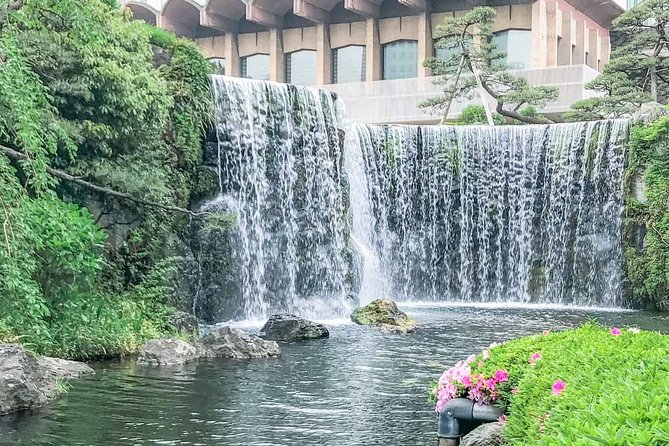
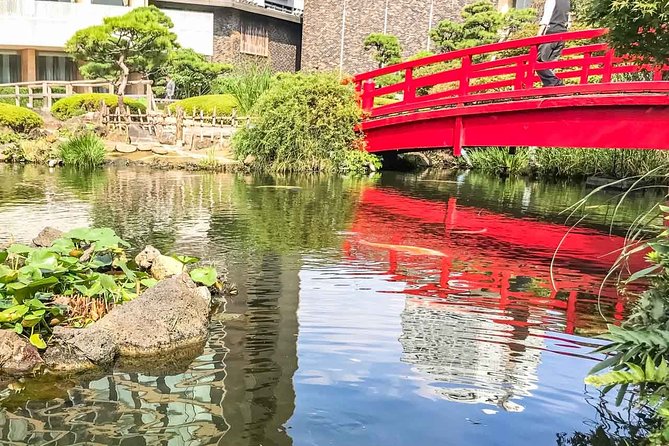
The day starts at the Hotel New Otani Japanese Garden, known for its long history—about 400 years. This is your “reset button.” Even in a city of constant motion, the garden asks you to slow down and follow its rhythms.
What to look for:
- Water features: you’ll see waterfalls, which are the garden’s natural sound track.
- Seasonal plants: the garden changes by time of year, so spring, summer, and autumn can feel like different gardens.
- Pond-and-path pacing: it’s not a place where you race to the next viewpoint. The best experience is letting the layout guide you.
One practical note: the garden’s value isn’t just the visuals—it’s the way it teaches you how Japanese garden design tends to work: framing views, layering natural elements, and creating “borrowed calm” even when you’re still in Tokyo.
If you’re visiting during cherry blossom season, you’ll likely catch those familiar spring moments. If you’re there in deeper greenery months, expect a calmer, greener tone. And when lights are used for seasonal illumination, it can feel extra special—just dress for walking.
Akasaka Palace: A Castle-Like State Guesthouse Moment
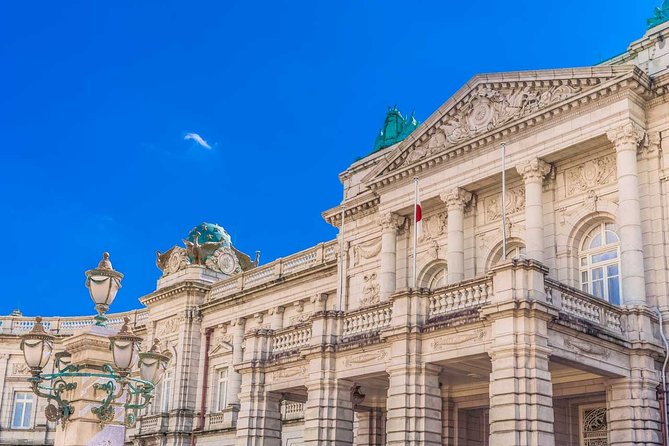
Next comes Akasaka Palace (State Guesthouse), where Japan hosts major dignitaries. The description says the look is “like a castle,” and that matches the mood—more formal, more ceremonial, and clearly about state-level presence.
Here’s why this stop is worth it: you’re not just seeing a building. You’re seeing a modern public-facing expression of how Japan presents itself. The tour gives context so the place doesn’t feel random or overly staged.
Cost-wise, the entrance fee is ¥2,000 per person and is not included in the base price. You’ll want to plan for that before you arrive. Also, some locations don’t accept credit cards, so keep cash handy.
If you care about architecture, history, or political symbolism, this is the stop that tends to land the hardest. Even people who are not “palace people” usually come away with a stronger sense of Japan’s official image and how it’s carefully managed.
Meiji Memorial Picture Gallery: Art Inside a Dome
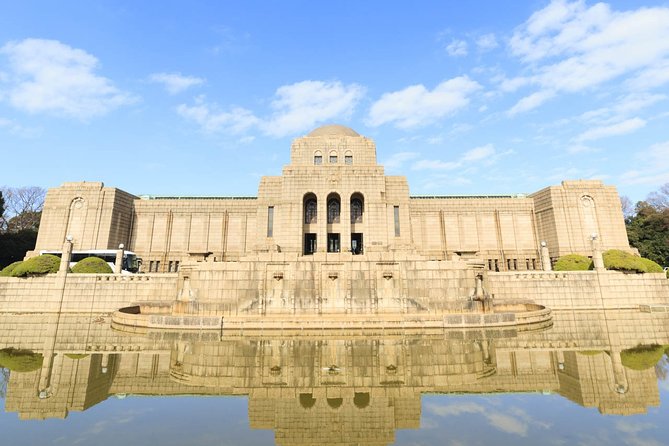
After the palace formality, you shift to Meiji Memorial Picture Gallery, a dome-shaped museum space focusing on the Meiji era. This is not just about wandering rooms—it’s about reading history through visual storytelling.
Inside, you’ll see:
- Paintings and murals displayed within the dome setting
- Museum-style context tied to how the Meiji period shaped the country
Why I think this stop works well in the middle of the tour: it bridges the gap between the earlier Tokugawa framing and Japan’s later modernization. You get history, but it’s handled through visual interpretation rather than only dates and facts.
This is also one of those “good if the weather changes” stops because it’s indoors. If rain shows up or the day feels hot and tiring, you’ll appreciate having a museum moment built into the route.
Jingu Gaien Ginkgo Street: Four-Season Tokyo Views
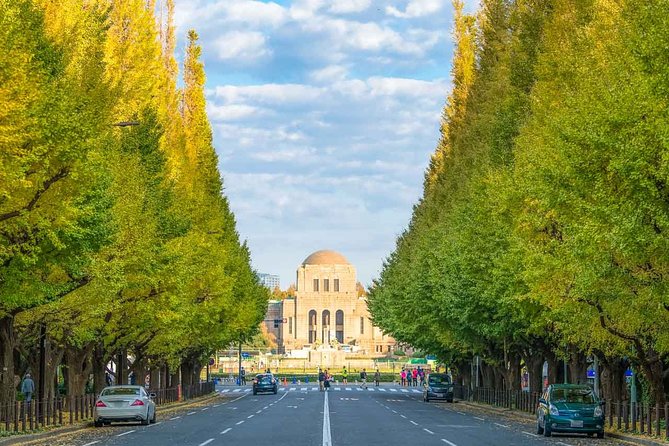
Then it’s out again for a classic Tokyo scene: Jingu Gaien ginkgo tree-lined street. The highlight here is the ginkgo arches, which create a tunnel-like effect that photographers love for good reason.
The big idea is seasonality. This street is designed to look different depending on when you’re there—so you’re not just seeing one view. You’re seeing Tokyo’s seasonal rhythm in a relatively small space.
Timing tip: this stop is shorter (about 20 minutes), so if ginkgo season is in full swing when you visit, you’ll want to arrive ready to take a few minutes for photos and just enjoy the straight-line geometry.
Even if you’re tired, this is the kind of walk that gives you a “release valve” before you head toward the end station.
- Tokyo: Shinjuku Food Tour (13 Dishes at 4 Local Eateries)★ 5.0 · 6,603 reviews
- Tokyo Mt Fuji 5th St & Hakone Cruise Bus Tour w/Bullet Train★ 4.4 · 5,024 reviews
- Flagship 2-Hours Official Street Go-Kart Tour – Tokyo Bay Shop★ 5.0 · 4,974 reviews
- From Tokyo: Mount Fuji Full-Day Sightseeing Trip★ 4.5 · 4,970 reviews
- Tokyo: Hop-On Hop-Off Sightseeing Bus Ticket★ 3.9 · 4,207 reviews
Inari Shrine and Shimizudani Park: The Edo-Spirit Side
The tour isn’t only gardens and museums. It also includes Edo-flavored cultural stops like Inari Shrine and nature time at Shimizudani Park.
Inari Shrine is described as a place to kick out bad spirits. That means you’ll be doing a shrine-related experience with cultural etiquette, not just looking around. This is where your guide’s explanations matter. Shrine behavior can feel confusing if you don’t know what’s expected, and a good guide makes it feel natural and respectful.
Shimizudani Park adds the outdoor breathing room. Even if you’re used to big-city parks, the point here is the combination: Edo-period context plus everyday nature breaks. You’re not escaping Tokyo so much as you’re switching to a Tokyo that lives by quieter rules.
If you’re the kind of traveler who likes “the spiritual, but practical” side of Japan, these stops are where the day becomes more than sightseeing.
How the Tour Paces You (Private, Walk-Heavy, No Lunch)
The tour runs about 3 to 4 hours, and it’s private, meaning it’s only your group. That matters more than it sounds. In a private setup, you don’t lose time to waiting for strangers to figure out where they are. You can also ask questions in real time without feeling like you’re slowing the whole group down.
The downside is you’ll be walking. The guidance is to wear comfortable clothing, because you’ll cover several locations in one session.
Also, this tour does not include a dining spot. If you’re coming during lunch hours, decide ahead of time where you’ll eat after you wrap up. The finish point is different from the start, so pick a meal plan that’s convenient for where you’ll end up.
Weather is another pacing factor. If conditions are bad, the route or destinations may shift. That’s not a failure; it’s how Tokyo tours stay realistic.
Price and Value: What You Pay vs. What You Add
The base price is $82.42 per person, and that’s for the guided experience. The tour includes:
- A tour guide
- Private tour setup (your group only)
- Necessary guide expenses during the tour
What isn’t included:
- Entrance fees for certain sites
- Food and drink
- Any extra spending you choose to do
The additional costs you should expect are listed clearly. You may pay an estimated 2,000 JPY per person for admission-type costs, and Akasaka Palace specifically is ¥2,000 per person. In other words, your final spend is the base tour price plus a small, predictable chunk for entrances.
Is it good value? For me, it works when you want a guided story that connects Japanese garden design, Edo-era context, and later-era Meiji visuals—all inside one half-day frame. If you’re comfortable reading on your own and you’re only after one main site, you might do it cheaper independently. But if you want someone to explain what you’re seeing while you walk, the price starts to look fair quickly.
And the guides’ support matters here. In past tours, Ayako-san helped with a reservation for an authentic tea shop, and other guides were praised for being flexible and professional—those little extras can be worth more than you’d think on a time-limited trip.
Start at Akasaka-Mitsuke, End at Gaiemmae
Logistics are a big deal for a short tour like this.
- Start: Akasaka-Mitsuke Station (address listed: 3-chōme-1-6 Akasaka, Minato City)
- End: Gaiemmae Station
Because the finish spot differs from the start, you’ll want your next plan—hotel return, shopping, or dinner—to match the Gaiemmae area. If you like to keep mornings smooth, this one requires a little up-front planning, but it’s manageable.
One more practical point: some locations don’t accept credit cards. Bring cash so you’re not stuck at the wrong moment, especially for entrances like Akasaka Palace.
Who This Akasaka Tour Fits Best
I’d put this tour at the top of the list if you:
- Want Tokyo history that actually connects to what you’re walking past
- Like Japanese gardens and appreciate seasonal change
- Prefer a slower, respectful pace over a checklist sprint
- Want a guide who can answer questions and adjust calmly if timing or weather shifts
You might not love it as much if you:
- Only care about one “headline” attraction and don’t want multiple stops
- Want a guaranteed included lunch (this one doesn’t include dining)
- Hate walking, even at a moderate pace, because the flow is location-to-location
Should You Book This Japanese Garden & Akasaka Palace Tour?
If you like Tokyo when it’s quiet, this is a strong pick. The Hotel New Otani Japanese Garden gives you that 400-year calm. Akasaka Palace gives you the VIP-state feeling. And Meiji Memorial Picture Gallery adds the art-and-era layer so the day feels connected, not random.
I’d book it if you’re aiming for an authentic, guided half-day that blends garden design, shrine culture, and architectural/political presence. Just budget for the entrance fees (especially the palace) and plan food yourself.
FAQ
How long is the Akasaka exploration tour?
It runs about 3 to 4 hours.
Is this tour private?
Yes. It’s a private tour/activity, so only your group participates.
Where does the tour start and end?
It starts at Akasaka-Mitsuke Station and ends at Gaiemmae Station.
Are entrance fees included in the tour price?
Not all entrance fees are included. The Akasaka Palace entrance fee is ¥2,000 per person, and other admission costs may apply.
Should I bring cash?
Yes. Some spots visited on the day do not accept credit cards, so bring cash.
Is lunch or a meal included?
No. There is no dining spot included.
What should I wear?
Wear comfortable clothing, since you’ll be walking a lot.
What if the weather is bad?
If weather is poor, there’s a possibility the transportation, destinations, and routes may change.
More Tours in Tokyo
- Mt Fuji and Hakone 1-Day Bus Tour Return by Bullet Train
★ 5.0 · 26,383 reviews - 1-Day Tokyo Bus Tour
★ 5.0 · 14,250 reviews - Tokyo: Shinjuku Food Tour (13 Dishes at 4 Local Eateries)
★ 5.0 · 6,603 reviews - Tokyo Mt Fuji 5th St & Hakone Cruise Bus Tour w/Bullet Train
★ 4.4 · 5,024 reviews - Flagship 2-Hours Official Street Go-Kart Tour – Tokyo Bay Shop
★ 5.0 · 4,974 reviews
More Tour Reviews in Tokyo
- Mt Fuji and Hakone 1-Day Bus Tour Return by Bullet Train
★ 5.0 · 26,383 reviews - 1-Day Tokyo Bus Tour
★ 5.0 · 14,250 reviews - Tokyo: teamLab Planets TOKYO Digital Art Museum Entry Ticket
★ 4.6 · 9,779 reviews - Mt Fuji & Hakone Cruise, Drum Show Bullet Train 1 Day from Tokyo
★ 4.0 · 7,413 reviews - Tokyo: Shinjuku Food Tour (13 Dishes at 4 Local Eateries)
★ 5.0 · 6,603 reviews
Latest Tokyo reviews off our desk






Tours, compared.
 ★ 5.0Mt Fuji and Hakone 1-Day Bus Tour Return by Bullet TrainFrom $16326,383 reviews
 ★ 5.01-Day Tokyo Bus TourFrom $12914,250 reviews
 ★ 5.0Shinjuku Food Tour (13 Dishes at 4 Local Eateries)From $866,603 reviews
 ★ 4.4Tokyo Mt Fuji 5th St & Hakone Cruise Bus Tour w/Bullet TrainFrom $1545,024 reviews
 ★ 5.0Flagship 2-Hours Official Street Go-Kart Tour – Tokyo Bay ShopFrom $644,974 reviews
 ★ 4.7Mt. Fuji Tour, Hakone Ropeway, Owakudani, Lake AshiFrom $544,002 reviews
 ★ 5.0Tokyo 6hr Private Tour with Government-Licensed GuideFrom $1553,902 reviews
 ★ 5.0Tokyo Bar Hopping Tour in Shinjuku (All-You-Can-Drink + Dinner)From $1063,587 reviews