
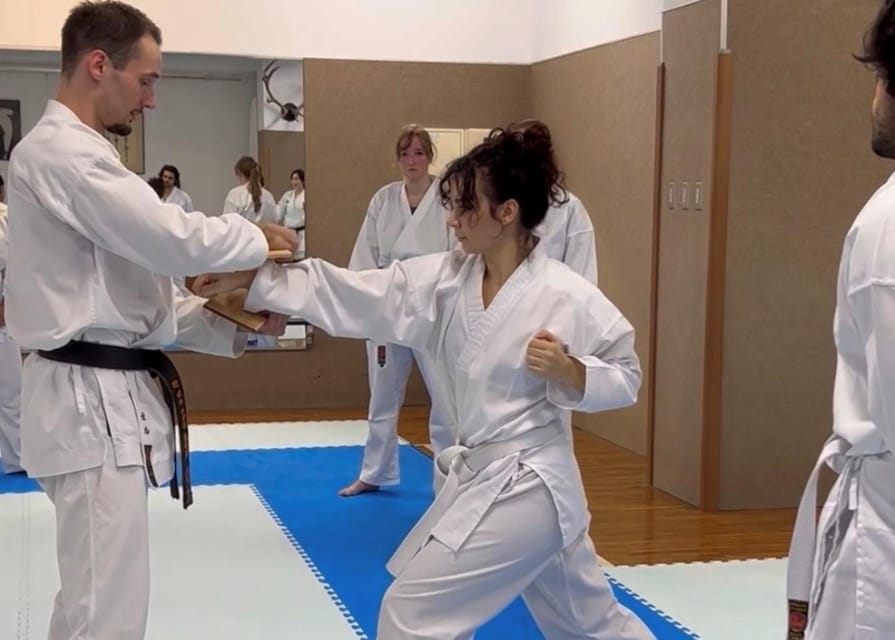
Reviewed · TOKYO
Karate Experience with the Shotokan Karate-do Instructor
Karate at the SKIF HQ feels serious. This Shotokan Karate-do lesson in Honshu pulls you into training culture you can’t fake, led by the instructors from the SKIF network at their own headquarters dojo.
I especially like two things here: you start with a short history and philosophy setup that makes the drills feel purposeful, and you get hands-on reps in fundamentals instead of just watching. One thing to consider: the session is only 90 minutes, so if you show up late, the class can’t be extended.
- Small group (max 10) for real attention and fewer awkward pauses
- Instruction in striking, kicking, kata, and promise kumite for a full beginner-to-intermediate mix
- Try board splitting plus watch a stronger demonstration by the instructor
- SKIF Headquarters dojo where world champions train and teach
- English-speaking instructor and a chance to ask technique and Japanese term questions
In This Review
- Karate at SKIF Headquarters: Why This Location Feels Different
- Price, Time, and the Real Value of a 90-Minute Session
- Finding Kugahara Station and Showing Up the Right Way
- The 10-Minute Philosophy Setup That Changes How You Train
- Fundamentals Workout: Striking, Kicking, Kata, and Promise Kumite
- Striking and kicking
- Kata
- Promise kumite
- Board Splitting Try: The Moment People Remember
- The Instructor Demonstration and Q&A Exchange
- Uniform Rental, What to Wear, and What to Skip
- Who Should Book This Shotokan Class (and Who Should Rethink It)
- Should You Book It at SKIF? My Practical Take
- FAQ
- Where is the meeting point?
- How long is the karate experience?
- How many people are in the group?
- Is the instruction available in English?
- What techniques will I practice?
- Is board breaking included?
- Are uniforms provided?
- What should I bring?
- Is the experience suitable for children?
- What if I arrive late?
- Is there a way to cancel if my plans change?
Karate at SKIF Headquarters: Why This Location Feels Different
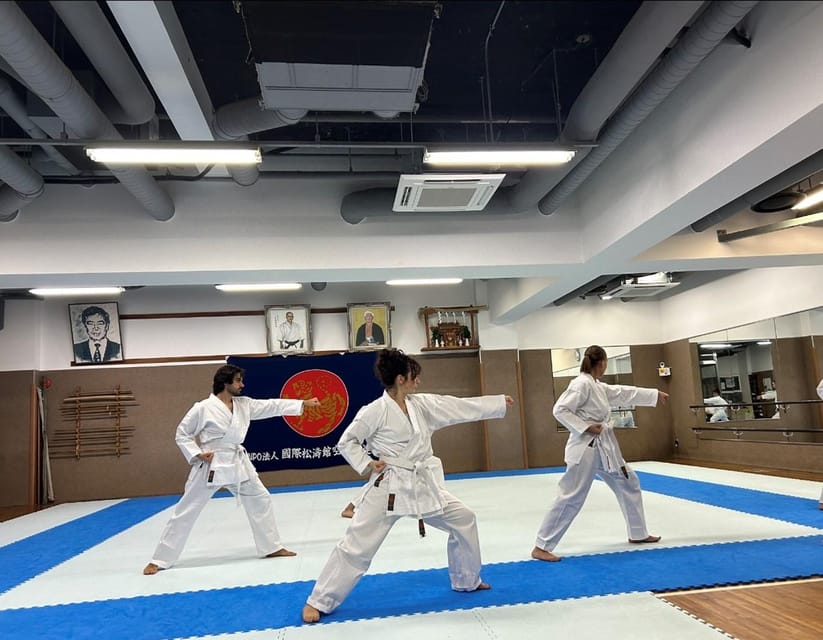
The address matters with martial arts. Here, you’re training at the Shotokan Karate-do International Federation headquarters dojo, a place tied to the top competition circuit and the instructors who teach at that level. That’s what makes this class more than a standard tourist demo.
You’re not just getting a random “try karate” experience. You’re learning basics from people who’ve competed in high-stakes environments. And because it’s SKIF, the style and structure tend to stay consistent: you’ll see a clear path from stance and movement to forms and then to pre-arranged sparring.
Even if your goal is cultural, not athletic, the setting helps. A traditional dojo has a different rhythm than a gym class: more focus on basics, etiquette, and doing things the same way every time. If you care about authentic Japan, this is the kind of activity that quietly rewards attention.
Price, Time, and the Real Value of a 90-Minute Session
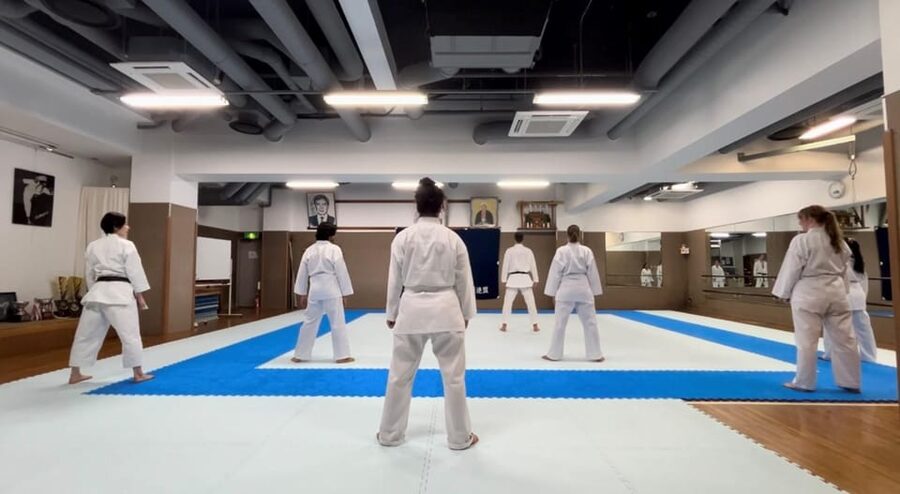
At $220 per person for 90 minutes, this isn’t the cheapest thing you can book in Japan. The value comes from what’s included, and what isn’t.
Here’s what you’re paying for:
- Direct instruction in fundamental techniques (not a passive talk)
- Structured practice covering striking, kicking, kata, and promise kumite
- An opportunity to try board breaking yourself
- A powerful instructor demonstration you can observe
- A uniform rental
- Small group size (limited to 10)
The trade-off is obvious: it’s short. You won’t leave with years of training packed into an hour and a half. But you will leave with a practical starter map: what kata looks like when it’s taught properly, how promise kumite is framed, and which basics matter most.
If you’re someone who likes focused experiences—less wandering, more doing—this timing works. If you want a long, multi-session progression, you might prefer booking additional training time elsewhere later.
Readers booked these Tokyo options in the same breath. Here is how each one scored:
- Mt Fuji and Hakone 1-Day Bus Tour Return by Bullet Train
★ 5.0 · 26,383 reviews - 1-Day Tokyo Bus Tour
★ 5.0 · 14,250 reviews - Tokyo: teamLab Planets TOKYO Digital Art Museum Entry Ticket
★ 4.6 · 9,779 reviews - Mt Fuji & Hakone Cruise, Drum Show Bullet Train 1 Day from Tokyo
★ 4.0 · 7,413 reviews
Finding Kugahara Station and Showing Up the Right Way
Logistics are simple, but don’t treat them casually.
The meeting point is a 2-minute walk from Tokyu Ikegami Line Kugahara Station. If you’re unsure of the exact route, you can ask in advance and they can help pick you up at the station. Transportation to and from the dojo is not included, so plan your own trip to Kugahara.
Timing matters. You must arrive at least 10 minutes before the session begins. Late arrivals can’t be accommodated by extending the experience. With a fixed 90-minute block, arriving early is the difference between settling in and constantly getting pulled back into the schedule.
What to bring is basic but important:
- Towel
- Drinks
A towel isn’t provided, and there’s no bottled water listed as included.
Quick etiquette note: no smoking, and no food during the experience. If you’re coming straight from sightseeing, grab water beforehand and keep snacks for later.
The 10-Minute Philosophy Setup That Changes How You Train
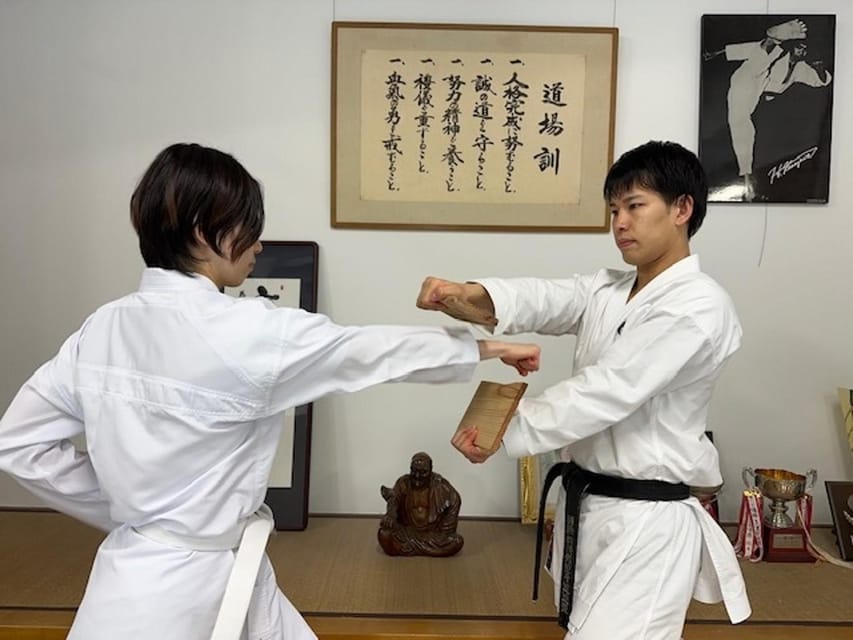
Before drills, you’ll get a short introduction to the history and philosophy of karate. That doesn’t sound “hands-on,” but it matters because it tells you what the movements are for.
Instead of doing techniques as random physical actions, you’ll learn how karate training connects to discipline, form, and controlled effort. For many beginners, this reduces that awkward feeling of not knowing what you’re supposed to be doing. For people with some experience, it gives you the style context so your practice stays aligned.
If you’re curious about Japanese terms, you’ll also appreciate the chance to ask. One review specifically highlighted how the instructor explained techniques and Japanese terms clearly, especially when the teacher adjusted to the student’s prior knowledge.
This “thinking before training” step is a big reason I like this format. It turns the session into something you can actually carry home mentally, not just muscle memory for the day.
Fundamentals Workout: Striking, Kicking, Kata, and Promise Kumite
Now the fun part: you practice.
The training focuses on fundamental techniques in a way that works for both newcomers and people who already know karate basics. You’ll cover:
- Striking (how to generate power with proper form)
- Kicking (control, distance, and body positioning)
- Kata (forms)
- Promise kumite (pre-arranged sparring)
Let’s translate that into what you’ll feel as a student.
Striking and kicking
You’ll likely spend more time on foundations than fireworks. Expect attention on stance, alignment, and timing. Even if you’ve taken karate before, this portion is where you correct habits that sneak in over time.
- Tokyo: Shinjuku Food Tour (13 Dishes at 4 Local Eateries)★ 5.0 · 6,603 reviews
- Tokyo Mt Fuji 5th St & Hakone Cruise Bus Tour w/Bullet Train★ 4.4 · 5,024 reviews
- Flagship 2-Hours Official Street Go-Kart Tour – Tokyo Bay Shop★ 5.0 · 4,974 reviews
- From Tokyo: Mount Fuji Full-Day Sightseeing Trip★ 4.5 · 4,970 reviews
- Tokyo: Hop-On Hop-Off Sightseeing Bus Ticket★ 3.9 · 4,207 reviews
Kata
Kata can look like a “dance” to outsiders. In a good lesson, it becomes the skeleton of technique: your transitions explain how strikes and blocks connect. A kata portion also helps you learn rhythm and posture, not just single moves.
If you already practice karate, this is where the instructor can tailor the guidance. They even note that experienced participants can get a more satisfying program if you tell them your style and what kind of training you want.
Promise kumite
Promise kumite is a structured way to spar without chaos. Think of it as sparring with a script: both sides know what’s coming, so you can focus on execution, distancing, and response rather than pure reaction. For beginners, that’s a relief. For more advanced students, it’s a chance to clean up mechanics under pressure.
Board Splitting Try: The Moment People Remember
Board breaking is listed as one of the top highlights, and it’s included. This is usually the part that turns a cultural activity into a memory you can’t easily replace.
Even if you’re nervous, the format matters. You’re not just being handed a board and told good luck. The experience includes instruction in basics, an instructor demonstration, and then time to try yourself. That order helps you understand what makes board breaking work in principle: body alignment, commitment, and correct technique.
One practical tip: treat the board breaking time like training, not a stunt. If you’re stiff or tense, the technique won’t feel right. Focus on control and form first.
The Instructor Demonstration and Q&A Exchange
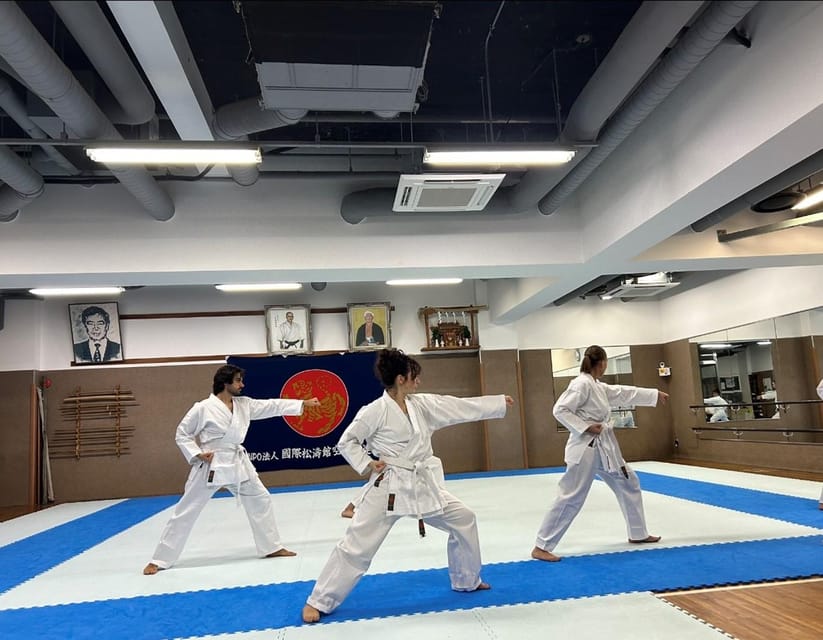
Right after the practical segments, there’s:
- Observation of a powerful demonstration by the instructor
- A friendly exchange session and a photo opportunity
The demonstration matters because it puts the lesson into context. You’ll see how the fundamentals look when they’re delivered with conviction and timing. It’s also a useful reality check: you can compare what you just tried to what the instructor can do at competition-level control.
Then comes the “human part.” The session ends with an exchange, plus a photo opportunity. If you enjoy meeting instructors and learning the story behind the movements, this gives you a calmer way to interact than a typical class photo moment.
Uniform Rental, What to Wear, and What to Skip
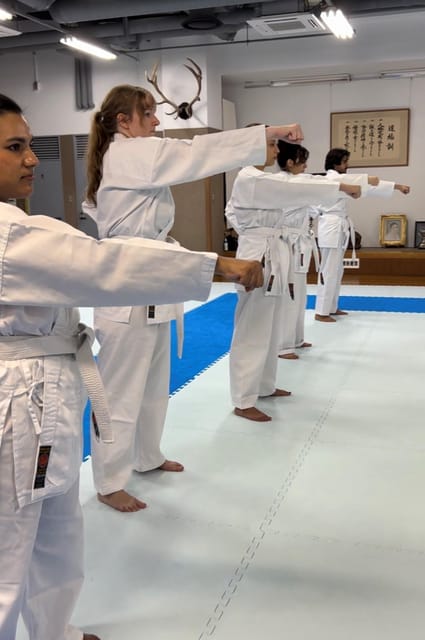
Uniforms are available for rental, which is helpful if you don’t want to buy gear on a short trip. You still need your own towel and drinks.
What I’d recommend wearing:
- Something you can move in easily
- Comfortable layers you can adjust during training
What to skip:
- Alcohol and drugs are not allowed
- Smoking is not allowed
- Food is not allowed
Also, note the wheelchair and access rules: non-folding wheelchairs and electric wheelchairs are not allowed. If accessibility is a concern, contact the provider first so you don’t waste time coordinating.
Who Should Book This Shotokan Class (and Who Should Rethink It)
This class is a good fit if you:
- Want an authentic martial arts experience at a serious dojo
- Like small-group instruction (max 10 participants)
- Want to learn kata and basic sparring structure, not just poses
- Prefer English explanations and the ability to ask questions
It’s also a smart choice for people with at least basic fitness who are open to striking and kicking drills, plus promise kumite. Board breaking is a bonus, but it’s still technique-based rather than random spectacle.
Who might rethink it:
- Children under 7 years old (not suitable)
- Anyone who wants a purely observational program with no hands-on elements
- People who are likely to arrive late and miss parts of the session
If you do have karate experience, send your style and what you want from training in advance. The instructors can tune the approach, and that’s exactly what made one recent participant’s experience feel especially personal and traditional.
Should You Book It at SKIF? My Practical Take
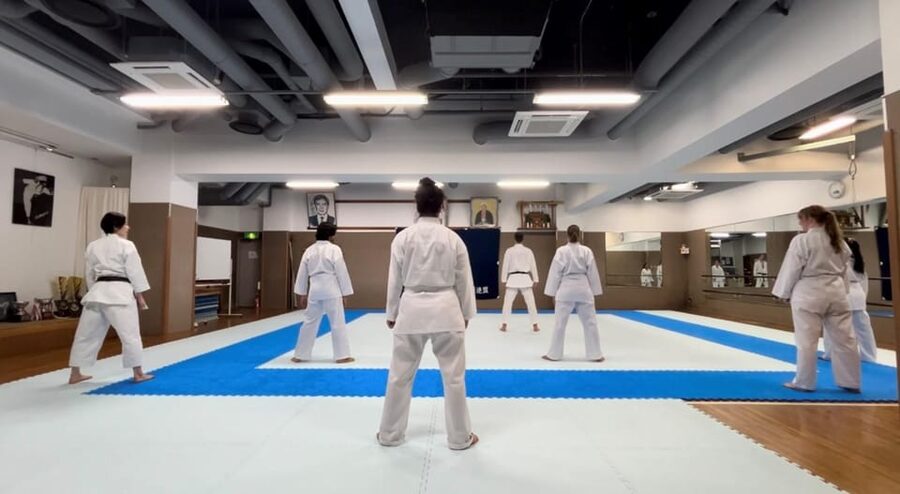
Book this if you’re after a hands-on, teacher-led Shotokan session in a real dojo setting, with English instruction and a small group. The $220 price makes more sense when you look at what’s included: uniform rental, board breaking try, kata, promise kumite, and an instructor demonstration inside SKIF HQ.
Skip it or consider alternatives if:
- You need long training time to feel satisfied (this is 90 minutes)
- You’d struggle with arriving early (they can’t extend for late arrivals)
- You’re traveling with accessibility needs that conflict with the listed restrictions
- You’re bringing little ones under 7 (not suitable)
If your schedule has space and you want a culturally grounded activity that also trains your body, this is one of the cleaner “do the thing” experiences in Tokyo-area karate culture.
FAQ
Where is the meeting point?
It’s a 2-minute walk from Tokyu Ikegami Line Kugahara Station. If you’re unsure of the route, you can ask in advance so they can pick you up at the station.
How long is the karate experience?
It lasts 90 minutes.
How many people are in the group?
The group is limited to 10 participants.
Is the instruction available in English?
Yes, the instructor provides instruction in English.
What techniques will I practice?
You’ll work on basic techniques including striking, kicking, kata (forms), and promise kumite (pre-arranged sparring).
Is board breaking included?
Yes. You’ll have the chance to try board splitting, and you can also observe an instructor demonstration.
Are uniforms provided?
Uniforms are available for rental.
What should I bring?
Bring a towel and drinks.
Is the experience suitable for children?
Children under 7 years old are not suitable. The provider asks you to contact them if you have a child under 7 or over 7 who would like to visit only.
What if I arrive late?
If you arrive late, the experience cannot be extended. Plan to arrive at least 10 minutes before the starting time.
Is there a way to cancel if my plans change?
Yes, you can cancel up to 24 hours in advance for a full refund.
More Tour Reviews in Tokyo
- Mt Fuji and Hakone 1-Day Bus Tour Return by Bullet Train
★ 5.0 · 26,383 reviews - 1-Day Tokyo Bus Tour
★ 5.0 · 14,250 reviews - Tokyo: teamLab Planets TOKYO Digital Art Museum Entry Ticket
★ 4.6 · 9,779 reviews - Mt Fuji & Hakone Cruise, Drum Show Bullet Train 1 Day from Tokyo
★ 4.0 · 7,413 reviews - Tokyo: Shinjuku Food Tour (13 Dishes at 4 Local Eateries)
★ 5.0 · 6,603 reviews





