Reviewed · TOKYO
Learn to Make Home Style Tempura Udon and Gyoza
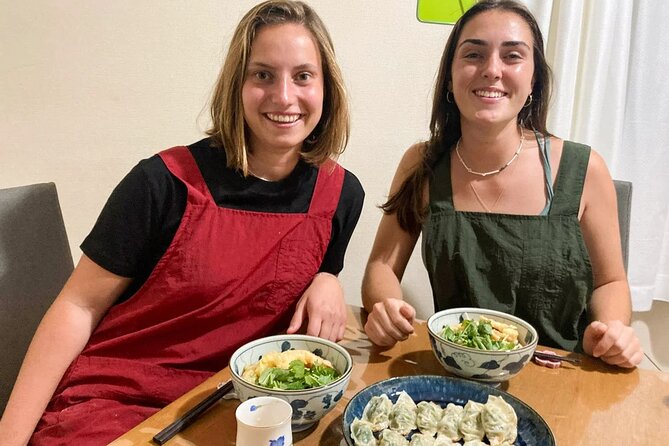
Tokyo smells amazing when you cook. In this hands-on private class, you’ll make tempura udon and gyoza from scratch, guided step-by-step by Emi at a cozy studio near Nerima Station. What I like most is how practical it feels from minute one, with clear instruction and time to practice the key techniques.
You also get a built-in win for value: an English recipe booklet to take home plus a full meal where you eat what you create. The class format is designed for real understanding, not just watching—Emi explains the why behind steps, like how your prep choices affect the final dish.
One consideration: this is a private class, so you’ll need to check the solo-participant rule—a single male cannot join on their own, and transport to the meeting point isn’t included. If you’re visiting in busy spring or autumn, plan early too, because the studio fills quickly.
In This Review
- Key things that make this class worth your time
- Nerima Station meet-up: a studio class where you actually cook
- Hand-kneading udon dough and building dashi for tempura udon
- Frying tempura the right way: crispness starts before the frying
- Choosing your gyoza filling and learning how folds become flavor
- Barley tea and the real payoff: sitting down to eat what you made
- English recipe booklet: why it matters more than you think
- Price and timing: a clear value play in Tokyo cooking
- Dietary needs, WhatsApp, and practical rules you should know
- What to expect from Emi’s teaching style
- Should you book this class?
- FAQ
- What dishes will I make in this Tokyo cooking class?
- Where is the meeting point for the class?
- How long does the experience take?
- What gyoza fillings can I choose from?
- Can vegetarians or pescatarians join?
- Is it a private class, and can I join alone?
- What’s the cancellation policy?
Key things that make this class worth your time
- Emi’s step-by-step teaching focuses on why each step matters, not just what to do
- You hand-knead udon dough, so you learn the texture changes that make udon work
- Tempura and gyoza are taught together, which gives you a full meal with connected skills
- Choose your gyoza filling at booking (pork, pork+shrimp, or vegetables only)
- Barley tea + sitting down to eat keeps it relaxed and fun while you cook
- English recipe booklet included, so you can recreate it back home
Nerima Station meet-up: a studio class where you actually cook
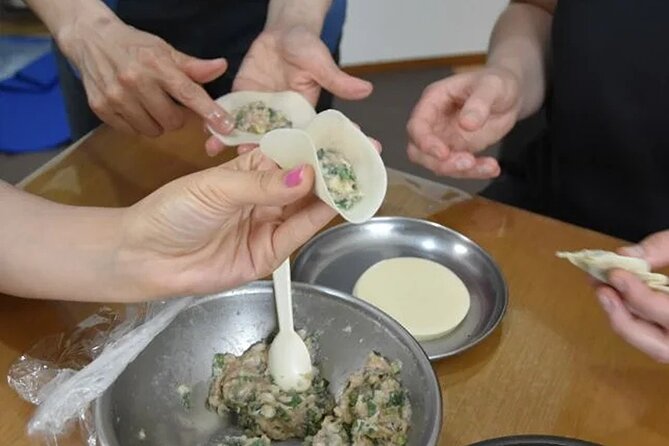
This class starts at a studio near Nerima Station (1-chōme-3-5 Nerima, Nerima City). The location matters, because you’re not doing this in a giant demonstration room—you’re in a work space designed for kneading dough, frying, and assembling dumplings. Expect a 2 hours 30 minutes experience with a mobile ticket.
Because it’s private, your group stays together through the whole session. That’s a big deal if you want hands-on feedback while you’re working—especially when folding gyoza or shaping udon dough, where small differences show up fast.
The meeting point is close to public transport, but transportation to and from the class isn’t included. If you’re staying far from Nerima, you’ll want to budget time to get there and back so the class feels calm, not rushed.
Readers booked these Tokyo options in the same breath. Here is how each one scored:
- Mt Fuji and Hakone 1-Day Bus Tour Return by Bullet Train
★ 5.0 · 26,383 reviews - 1-Day Tokyo Bus Tour
★ 5.0 · 14,250 reviews - Tokyo: teamLab Planets TOKYO Digital Art Museum Entry Ticket
★ 4.6 · 9,779 reviews - Mt Fuji & Hakone Cruise, Drum Show Bullet Train 1 Day from Tokyo
★ 4.0 · 7,413 reviews
Hand-kneading udon dough and building dashi for tempura udon
The core of the experience is learning how the meal comes together: udon, tempura, and gyoza. You’ll start by rolling up your sleeves and working on hand-kneading udon dough, which is where a lot of home-style success begins. Kneading isn’t just busywork—it’s how you develop the right dough feel so the noodles turn out chewy and satisfying.
You’ll also work on preparing dashi, the broth foundation that shows up in many Japanese dishes. Even if you’ve eaten dashi-based soup before, making it yourself gives you a clearer mental model: it’s not just flavor, it’s the base structure that lets fried items like tempura and chewy noodles taste balanced.
One thing Emi is known for in the way she teaches: she doesn’t only point to the outcome. She talks through what you’re looking for at each step, like how specific prep impacts the dish. That kind of guidance is especially helpful when you’re learning something new and you’re trying to guess what “right” looks like.
Frying tempura the right way: crispness starts before the frying
Tempura sounds simple—batter, fry, done. But the texture is everything, and this class aims to make that clear. You’ll learn the process of frying crispy tempura, guided closely so you can understand what makes tempura crisp instead of heavy.
What helps most is that the class treats tempura as technique, not luck. When your instructor explains the reasoning behind steps, you can adjust while you work—whether that’s how you handle batter, how you think about timing, or what you’re aiming for visually.
I also like that the class is built around an actual meal. You’re not frying tempura as an isolated stunt; you’ll connect it back to the dish you’ll eat afterward. That makes the skills easier to remember when you’re cooking later at home.
Choosing your gyoza filling and learning how folds become flavor
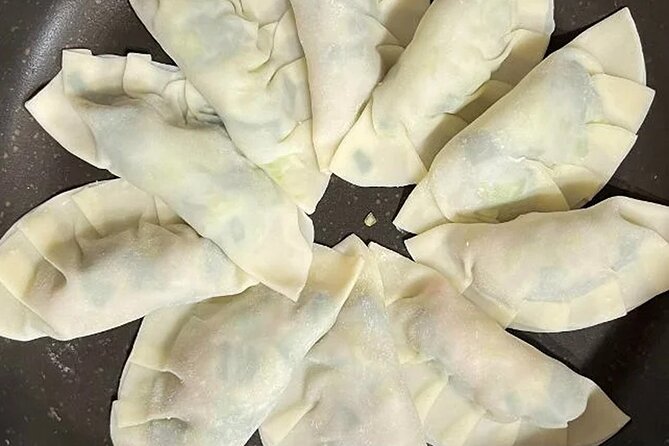
Next up: gyoza. You’ll fold gyoza after filling them, and you get to choose your filling preference during booking:
- A) Minced pork
- B) Minced pork and shrimp
- C) Vegetables only
That choice is more than a preference box. It changes the whole cooking feel of the dumplings—how the filling tastes, how dense it feels, and how satisfying the final bite is. If you’re traveling with someone who has dietary preferences, picking the right option ahead of time helps you keep the meal together.
You’ll learn the folding process, including the pleats that make gyoza recognizable. Folding sounds like “craft time,” but it’s actually practical: the way the wrapper closes helps the dumpling hold together, and it affects how each bite feels.
Emi’s teaching style shows up here, too. In the reviews, the common theme is that she explains what to do and why you’re doing it. That’s exactly what you need when you’re staring at a stack of wrappers thinking, Will this fold even work?
Barley tea and the real payoff: sitting down to eat what you made
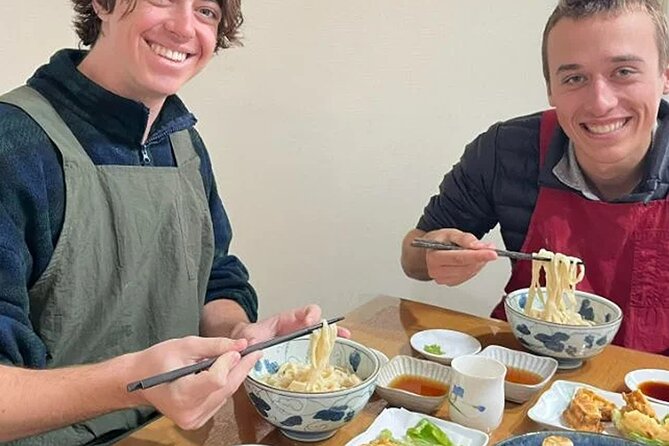
After the work, you sit down and dine on your creations. This is one of the easiest ways to judge value in a cooking class: you don’t just leave with skills and photos—you leave with lunch or dinner taste-tested by your own hands.
The class includes barley tea, so you can keep hydrated while you cook. It also keeps the session more comfortable overall, since working with dough and frying can be tiring even when it’s fun.
And because the menu is cohesive—tempura udon plus gyoza—you’re learning how multiple techniques fit together on one plate. That’s better than classes where you make one dish only and never learn the “meal logic” behind Japanese home cooking.
- Mt Fuji and Hakone 1-Day Bus Tour Return by Bullet Train★ 5.0 · 26,383 reviews
- 1-Day Tokyo Bus Tour★ 5.0 · 14,250 reviews
- Tokyo: teamLab Planets TOKYO Digital Art Museum Entry Ticket★ 4.6 · 9,779 reviews
- Mt Fuji & Hakone Cruise, Drum Show Bullet Train 1 Day from Tokyo★ 4.0 · 7,413 reviews
- Tokyo: Shinjuku Food Tour (13 Dishes at 4 Local Eateries)★ 5.0 · 6,603 reviews
English recipe booklet: why it matters more than you think
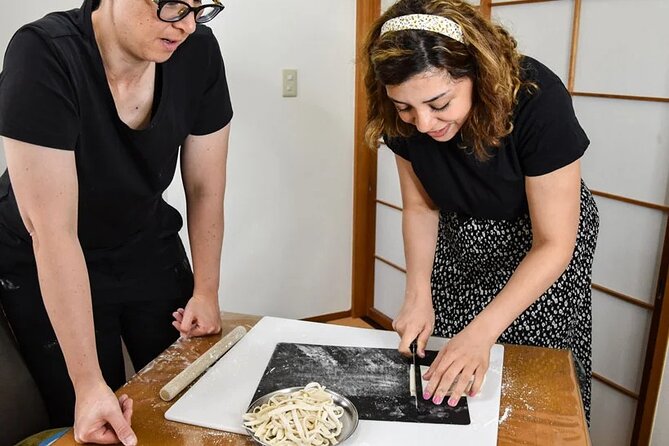
You’ll receive a recipe booklet in English to take home. I think this is one of the strongest parts of the experience because it turns a 2.5-hour class into an ongoing resource.
A good recipe booklet isn’t just ingredient lists. It helps you recreate the steps later without having to remember every detail. That’s especially useful for:
- udon dough texture cues
- building the dashi base
- understanding how to approach gyoza filling and folding
If you’re the type who cooks at home and likes repeating success, this booklet is what makes the class stick beyond the day you took it.
Price and timing: a clear value play in Tokyo cooking
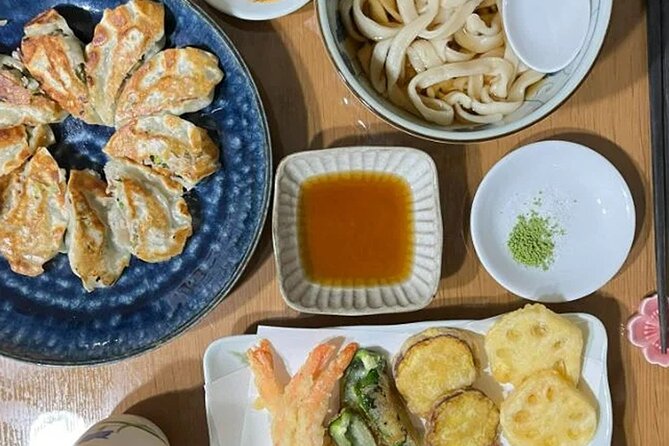
The price is $95.23 per person for about 2 hours 30 minutes, and the class includes all ingredients and tools, plus the meal and barley tea. On paper, that can sound pricey compared to buying food outside. In practice, you’re paying for something harder to measure: instruction, hands-on practice, and a meal that’s built around technique.
This type of class is often strongest when you compare it to:
- going to a restaurant and wishing you knew how to cook what you ate
- doing online videos without feedback when your dough or folds don’t look right
For timing, booking is usually made about 81 days in advance on average, and the studio tends to fill quickly during busy spring and autumn seasons. If you’re traveling then, book early.
For groups of three or more, the class is held in the cooking studio, and it’s recommended to book 2–3 months ahead to ensure availability. Even if you’re a smaller group, early booking can reduce stress and help you choose your gyoza filling option.
Dietary needs, WhatsApp, and practical rules you should know
This experience can accommodate Vegetarian and Pescetarian dietary requirements, but you need to inform the host in advance. If you’re booking vegetable-only gyoza, that aligns well with the C option, but it’s still worth communicating your needs clearly so the class can handle the full meal.
Communication matters here. For seamless coordination, you’ll provide a WhatsApp registered number when booking. That’s not a random extra step—it helps the host reach you quickly if anything needs confirming.
Also note Japan’s legal drinking age is 20+. Since the class includes barley tea, the practical impact depends on what beverages are served, but it’s a good reminder to follow local rules.
Finally, there’s a specific participation rule: a single male participant cannot take part on their own. If you’re traveling solo (and you’re a man), you’ll need to plan around that restriction.
What to expect from Emi’s teaching style
Emi is the heart of this class. The reviews highlight how she:
- clearly demonstrates what to do at each stage
- talks through why you need to take each step
- explains what you should look for in your ingredients and prep
That teaching style is valuable because Japanese cooking depends on small changes. For example, cut sizes and prep details can change how vegetables cook or how flavors balance in the final dish. When your instructor explains the reasoning, you stop guessing and start learning a repeatable method.
The reviews also mention Emi’s kindness and personable approach, which matters more than you’d think in a hands-on setting. If you feel comfortable, you’ll ask questions, and you’ll remember the instructions better.
Should you book this class?
Book it if you want a real Tokyo food skill, not just a meal. This is a strong choice if you like Japanese comfort food and want to learn how udon dough, tempura frying, and gyoza folding connect into one home-style spread.
I’d also recommend it if you’re traveling with someone who learns best by doing. The private format means you get more direct attention while you knead, fry, and fold.
Skip or rethink it if:
- you can’t meet the solo-participant rule (single male cannot join alone)
- you’ll struggle to get to Nerima Station on time
- your travel dates fall in peak spring or autumn and you haven’t booked early enough
If you do book, pick your gyoza filling option thoughtfully (pork, pork+shrimp, or vegetables only) and plan to use that English recipe booklet soon after your trip while the steps are still fresh in your mind.
FAQ
What dishes will I make in this Tokyo cooking class?
You’ll learn to make tempura udon and gyoza. The class includes making udon dough, preparing dashi, frying tempura, and folding gyoza with your chosen filling.
Where is the meeting point for the class?
The class starts at Nerima Station near 1-chōme-3-5 Nerima, Nerima City, Tokyo 176-0001. The activity ends back at the meeting point.
How long does the experience take?
The duration is about 2 hours 30 minutes.
What gyoza fillings can I choose from?
At booking, you specify one of these options: A) minced pork, B) minced pork and shrimp, or C) vegetables only.
Can vegetarians or pescatarians join?
Yes. The experience can accommodate Vegetarian and Pescetarian dietary requirements, and you should inform the host in advance about your dietary restrictions.
Is it a private class, and can I join alone?
It’s a private tour/activity, meaning only your group participates. Also, the experience notes that a single male participant cannot take part on their own.
What’s the cancellation policy?
You can cancel for a full refund if you cancel at least 24 hours before the start time. Cancellation within 24 hours of the start time isn’t refundable.
More Tour Reviews in Tokyo
- Mt Fuji and Hakone 1-Day Bus Tour Return by Bullet Train
★ 5.0 · 26,383 reviews - 1-Day Tokyo Bus Tour
★ 5.0 · 14,250 reviews - Tokyo: teamLab Planets TOKYO Digital Art Museum Entry Ticket
★ 4.6 · 9,779 reviews - Mt Fuji & Hakone Cruise, Drum Show Bullet Train 1 Day from Tokyo
★ 4.0 · 7,413 reviews - Tokyo: Shinjuku Food Tour (13 Dishes at 4 Local Eateries)
★ 5.0 · 6,603 reviews