
Reviewed · MOUNT FUJI TOURS
Mount Fuji E-Bike Tour: Explore Nature and History
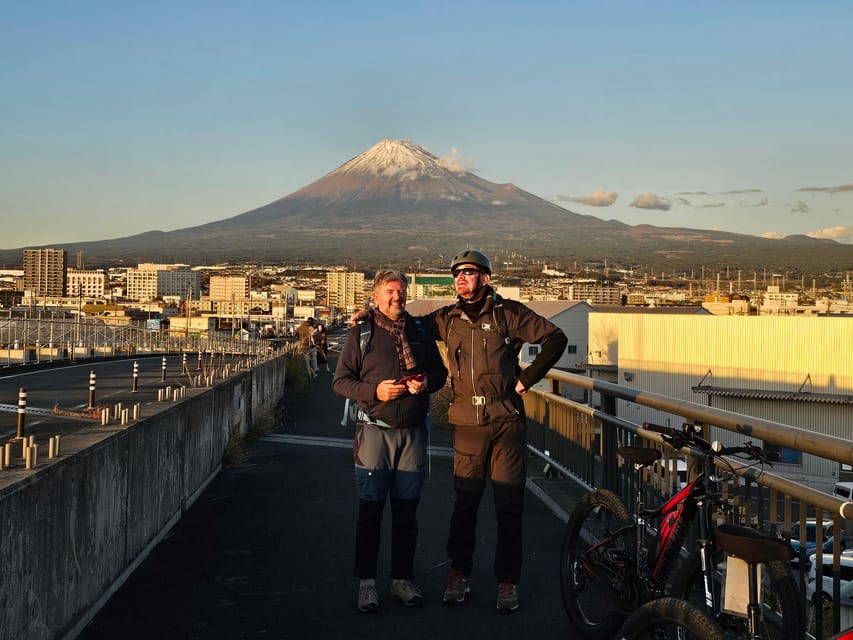
Mt Fuji looks different when you’re close. This e-bike tour works as a smooth same-day outing from Tokyo, with Mt Fuji views as the main payoff and real local stops along the coast and in town.
I especially liked how the guide turns the ride into a story, not just photos, with lessons about water from Mt Fuji and the area’s quake history.
My second big favorite is the human side: warm hospitality and tea. In different groups, guides including Yasu and Aiko have shared tea moments that feel personal rather than staged, with time to slow down, ask questions, and get your bearings.
One consideration: Mt Fuji visibility is not guaranteed due to weather, and the experience is active enough that it’s not for everyone who can’t comfortably ride a bike.
In This Review
- Key highlights worth planning for
- Shin-Fuji: the smart base for a same-day Mt Fuji hit
- The e-bike setup: easy riding, guided pacing, helmet included
- Stop by stop: parks, photo moments, and the water that comes from Mt Fuji
- Mount Fuji’s geology and earthquake history, explained in human terms
- The tea moments: more than a break
- Guides who actually guide: Yasu and Aiko’s style
- What it’s like timing-wise: 150 minutes that don’t feel rushed
- Price and value: $109 for a guided e-bike day with history and water stops
- What to bring (and what to skip)
- When Mt Fuji hides: how to still enjoy the day
- Who should book this tour (and who should skip it)
- Should you book Mount Fuji E-Bike Tour?
- FAQ
- FAQ
- Where do I meet the guide?
- How long is the tour?
- How many people are in the group?
- What language is the tour guide?
- Is Mt Fuji guaranteed to be visible?
- What’s included in the price?
- What should I bring?
- Are meals included?
- What’s not allowed on the tour?
- Who is the tour not suitable for?
- Can I cancel for a full refund?
Key highlights worth planning for
- Small group of just 5 means you get more attention and easier conversation
- Shin-Fuji area stays within reach of Tokyo, then you return the same day
- Spring water stops show how Mt Fuji supports local life through underground reservoirs
- Earthquake and geology context helps you connect what you see to why it matters
- Tea stops can be memorable, including time at a guide’s home and a tea shop tasting
- Easy e-bike riding makes the route doable without turning it into a workout
Shin-Fuji: the smart base for a same-day Mt Fuji hit
This tour is set up for one clear goal: experience Mt Fuji without eating your whole trip day. You start at Shin-Fuji Station, and the itinerary is structured so you can get out, visit several meaningful spots, and be back at the station by the end of your 150-minute slot. For first-timers in Japan, that timing matters. You avoid the “we have to decide between sleep and sightseeing” trap.
It also helps that Shin-Fuji and Shimizu are part of the wider Mt Fuji region story. You’re not only chasing a view; you’re seeing how people live with the mountain’s presence. The tour is also described as welcoming for cruise-ship arrivals at Shimizu Port, which hints at how smooth their flow tends to be for visitors with tight schedules.
More Fuji day trips our readers rated highly
- Tokyo: Mt. Fuji 5th Station & Hakone Cruise 1-Day Bus Tour
★ 4.2 · 2,381 reviews - Tokyo: Mount Fuji 5th Station & Onsen Day Trip
★ 4.3 · 75 reviews - Mt. Fuji Drive Tour (Includes Visit to Local Speedway)
★ 5.0 · 19 reviews - Halfway Up Mt,Fuji, Oshino Hakkai, Kawaguchiko from Tokyo
★ 3.6 · 13 reviews
The e-bike setup: easy riding, guided pacing, helmet included
The whole point of the e-bike is control. You move under your own power, but you’re not punished by hills or wind. E-bike rental and a helmet are included, and the small group size (limited to 5 participants) keeps the ride comfortable. You’re not threading through crowds or waiting forever at traffic lights.
Most of your timing feels like a mix of short cycling segments and photo/visit stops, with transfers between areas. Those transfers matter because they keep the day from becoming an endurance test. In the reviews, people pointed out that the riding felt easy thanks to the e-bikes, which is exactly what you want when your main focus is history, water sites, and the Mt Fuji region rather than training for a century ride.
The practical takeaway: if you can ride a bike comfortably at a relaxed pace, you’re in good shape. If you can’t, skip it. The tour is not positioned as a slow “push the bike” experience.
Stop by stop: parks, photo moments, and the water that comes from Mt Fuji
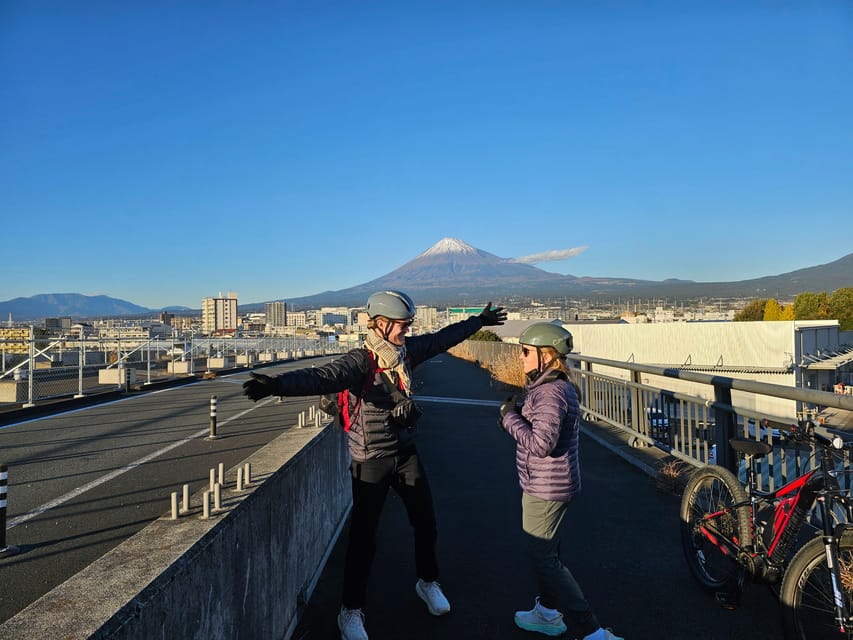
The itinerary moves through several short, focused stops, each with a clear purpose.
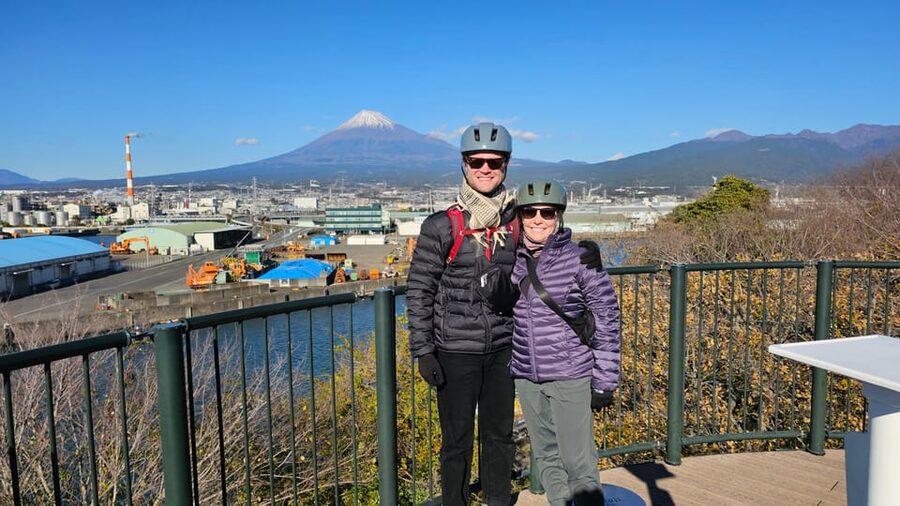
Suzukawaminato Park is your early photo/visit moment. This is where you start building the visual story—coastal air, Mt Fuji views if the weather cooperates, and an easy place to take in the area before you start piecing together the meaning behind the geography.
Next is a photo stop at 13-32 Suzukawanishichō, where the goal is atmosphere and place. These brief stops are common on guided bike tours: you get the “look” without losing the rhythm of the ride.
Then comes Izuminosato Yusui Park, a key highlight for anyone who likes “how does the natural world support daily life?” questions. The tour frames this around sacred spring water flowing from Mt Fuji’s underground reservoirs. Even if you’ve seen water fountains before, this angle is different. You’re not just drinking or photographing; you’re learning why the region has always been able to grow and sustain communities thanks to the mountain’s hidden plumbing.
Finally, Hounji offers a temple stop to connect the landscape of daily life with spiritual practice. Temples and shrines are part of how people interpret natural forces in Japan, and this short visit gives you that cultural layer without turning the day into a long museum marathon.
Mount Fuji’s geology and earthquake history, explained in human terms
The tour description makes one promise clearly: you’ll learn how plate tectonics shaped Mt Fuji over thousands of years, and how volcanic and tectonic forces continue to affect the region today. It also emphasizes earthquakes and disaster preparedness. That’s not just trivia. When you understand the mountain as an active geological system, it changes how you read what you see—especially the water.
The connection is smart: Mt Fuji’s presence isn’t only scenic. It’s also practical and ongoing. The tour ties geology to life, culture, and traditions for generations, which is what turns a viewpoint into something you can actually remember.
You don’t need to be a science fan to enjoy this part. The value is in hearing how locals make sense of forces that are bigger than any one person—then seeing how that understanding shows up in daily habits, sacred water, and community memory.
The tea moments: more than a break
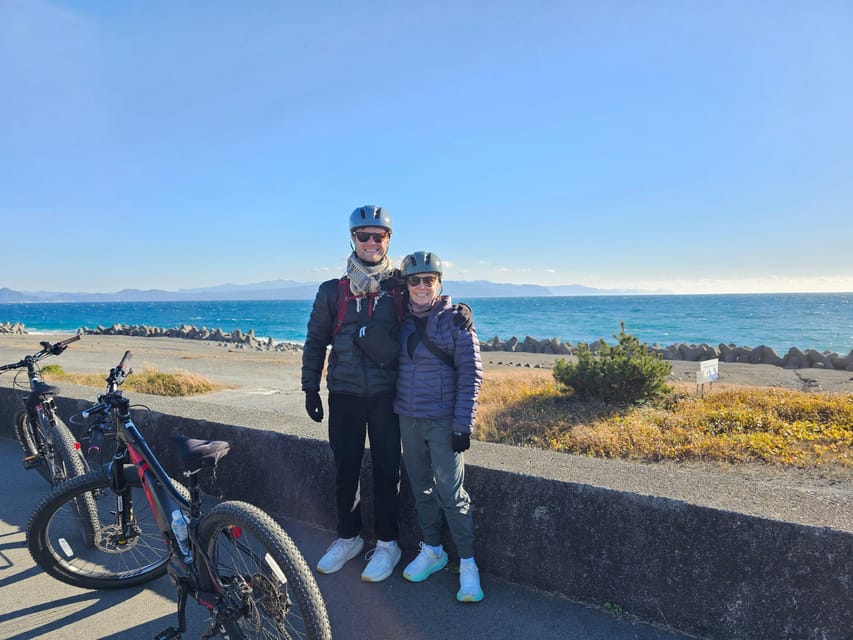
If there’s a single thing that repeatedly shows up as a standout, it’s tea hospitality. Different guides have taken groups to experience tea in a way that feels personal—like a morning tea visit at a guide’s mother’s house, described as a sweet and heart-warming Japanese experience. Some itineraries also include a tea tasting at a tea shop where you’re shown how green tea is made and served.
Here’s why this matters beyond being “nice”: tea ties back to the region’s identity and the everyday culture you can miss when you only do big, famous sights. One review also referenced learning about tea and paper industry as part of the local story, which fits the broader idea that Shizuoka-area culture has long been tied to craft and community life.
So yes, it’s a break from riding. But it’s also a way to understand the people behind the photos.
- Private Fuji Full-day Car Tour with Hotel Pickup -Local Guide★ 5.0 · 12 reviews
- Mount Fuji E-Bike Tour: Explore Nature and History★ 5.0 · 7 reviews
Guides who actually guide: Yasu and Aiko’s style
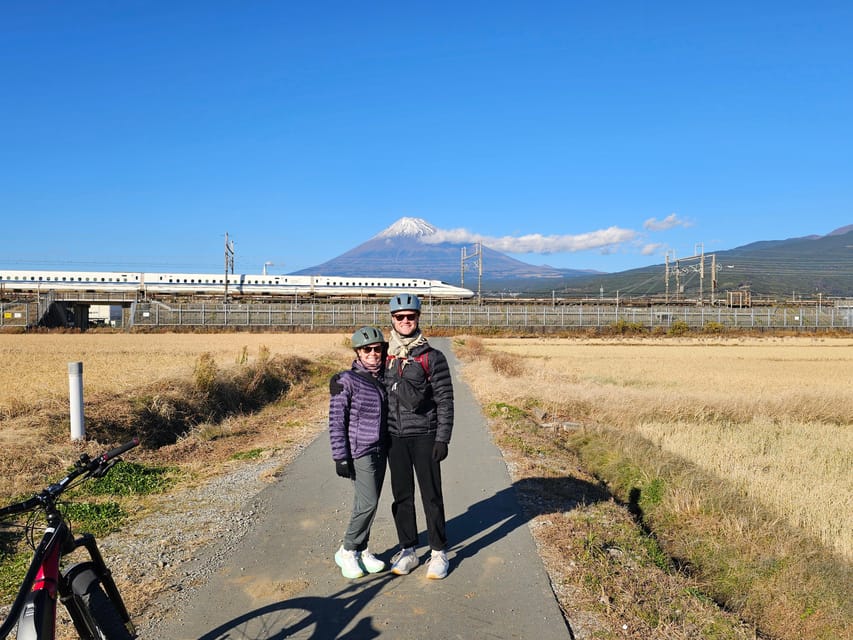
The tour runs with local guides speaking English and Japanese, and the small group size helps you feel like you’re with a person who knows where to stop and why. In reviews, guides like Yasu and Aiko were praised for going above and beyond—taking time to take pictures of the group, explaining sites clearly, and keeping the pace friendly.
One practical detail you’ll care about: bike tours can be awkward when schedules go sideways. In one case, a guest arrived late due to getting on the wrong train, and the guide was described as gracious. That kind of calm response is a real quality marker for a tour operator. It means you’re less likely to feel stressed and more likely to enjoy the day even if your travel timing doesn’t match the plan.
What it’s like timing-wise: 150 minutes that don’t feel rushed
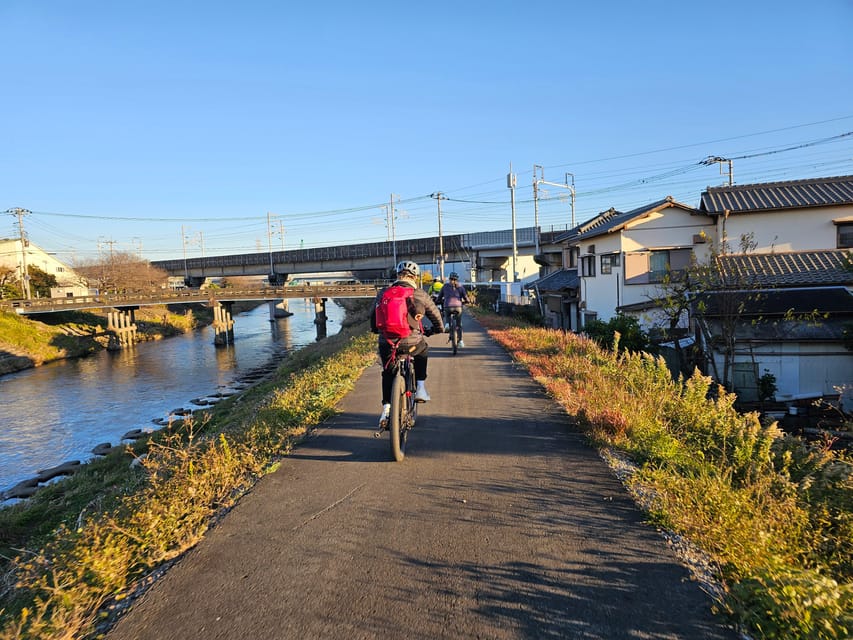
Your total duration is 150 minutes. Within that, you’re not stuck in one long activity. You’ll cycle between short segments, have photo stops, and handle transfers between the different areas. The typical pattern is: move, stop briefly, listen, take pictures, repeat.
This structure is good for a few reasons:
- You can handle the day even if you’re not sporty.
- You get to see multiple kinds of places: parks, streets, water spots, and a temple.
- You spend time understanding, not just moving through.
If you’re short on time in Japan, this is the kind of tour that gives you a lot of meaning per hour.
Price and value: $109 for a guided e-bike day with history and water stops
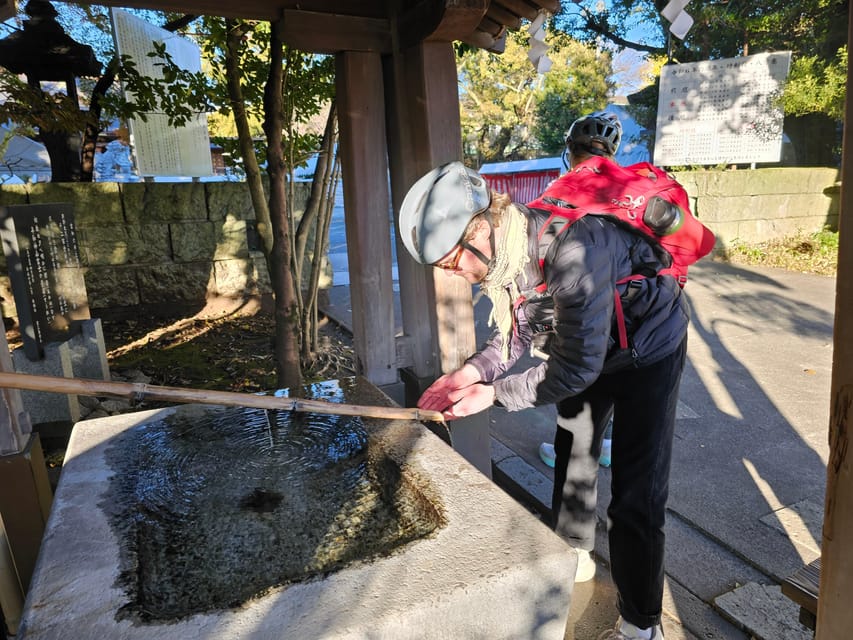
At $109 per person for a 150-minute guided e-bike tour, you’re paying for more than the vehicle. The included basics (e-bike rental, helmet, and a local guide) already reduce friction compared to renting and self-navigating. Then you add the “you’d never find this on your own easily” factor: curated photo/visit spots, context about Mt Fuji’s geology and earthquake history, and specifically framed sacred spring water sites.
Meals are not included, so plan to grab something before or after. But the tour’s value isn’t measured only in “how much you ate.” It’s in how much you learn, how smoothly the day is paced, and how close you get to the local story without needing Japanese navigation skills.
What to bring (and what to skip)
Bring comfortable shoes and water. You’re also advised to bring a water bottle you can refill at the spring water spots, since that’s part of what you’ll see. A small backpack for personal items is useful because you’ll want somewhere for your phone, cash for tea shops if applicable, and any extra layers.
Wear comfortable clothing suitable for biking. That sounds basic, but it’s the difference between enjoying the ride and spending the day thinking about your outfit.
Don’t bring pets or smoke during the tour. Also follow the clear rules about who can join: the tour isn’t suitable for pregnant women, people with back problems, people with mobility impairments, anyone who can’t ride a bike, wheelchair users, or visually impaired people. There are also height and weight limits listed, plus an upper age limit.
When Mt Fuji hides: how to still enjoy the day
Mt Fuji visibility is not guaranteed due to weather. That’s important to accept up front. If you’re planning around a single perfect photo, you might feel disappointed.
But the tour is built around more than one viewpoint. You’ll still visit the spring water site and the temple stop, and you’ll still learn the geology and earthquake history context. If the mountain is cloudy, you can treat the day as a deeper look at how the region works with and around Mt Fuji rather than only a sky show.
My advice: check the forecast, dress for changing conditions, and decide in advance that learning and local culture are also your goal.
Who should book this tour (and who should skip it)
This tour fits best if you:
- want a same-day Mt Fuji region experience from Tokyo
- like guided walking/talking mixed with light cycling
- enjoy local culture stops, especially tea-related hospitality
- can comfortably ride a bike at a relaxed pace for a short guided day
Skip it if any of these apply:
- you can’t ride a bike comfortably
- you have mobility or back issues that make cycling difficult
- you fall outside the listed age/height/weight guidelines
- you need accessibility accommodations beyond what the tour supports
That sounds strict, but it’s the kind of clarity that protects your enjoyment. A smooth tour depends on everyone being physically ready.
Should you book Mount Fuji E-Bike Tour?
Book it if you want value in time and meaning. You’re paying for a guided route, e-bike support, and context that connects Mt Fuji’s presence to water, culture, and earthquake history—all within a schedule that doesn’t steal your whole day.
Don’t book it if your trip is built around guaranteed Mt Fuji visibility or if you’re unsure about bike comfort. The weather factor is real, and the activity has clear physical requirements.
If you’re flexible, enjoy learning while you move, and you like the idea of tea hospitality with a local guide, this is exactly the kind of Mt Fuji experience that feels personal instead of generic.
FAQ
FAQ
Where do I meet the guide?
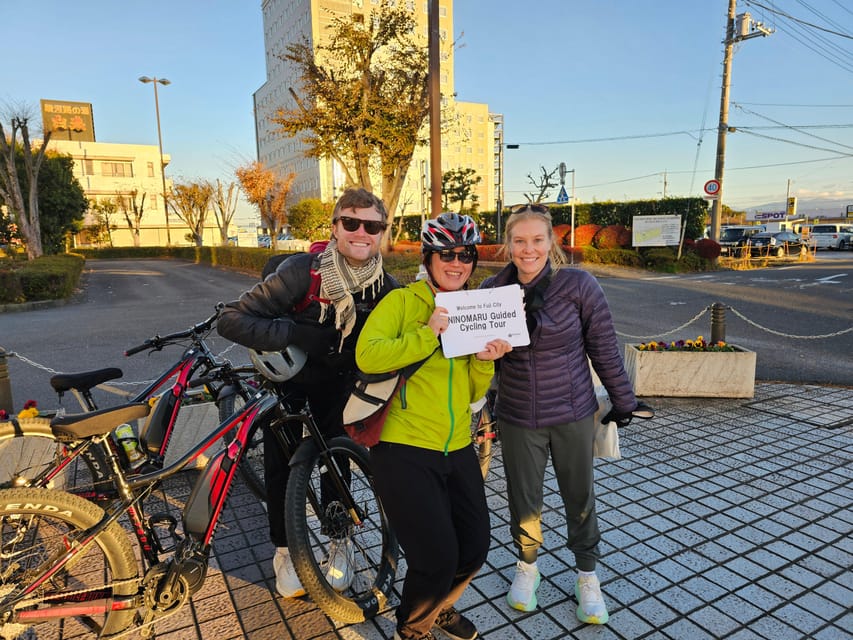
Meet at the south exit of Shin-Fuji Station. Look for the guide holding a NINOMARU Guided Cycling Tour sign.
How long is the tour?
The tour lasts about 150 minutes.
How many people are in the group?
The group is small, limited to 5 participants.
What language is the tour guide?
The live tour guide speaks English and Japanese.
Is Mt Fuji guaranteed to be visible?
No. Visibility of Mt Fuji depends on weather conditions.
What’s included in the price?
Included are insurance enrollment steps after reservation confirmation, the local guide, e-bike rental, and a helmet.
What should I bring?
Bring comfortable shoes and water. You should also bring your own water bottle for refilling at the spring water spots.
Are meals included?
No. Meals are not included.
What’s not allowed on the tour?
Pets and smoking are not allowed.
Who is the tour not suitable for?
It’s not suitable for pregnant women, people with back problems, people with mobility impairments, people who can’t ride a bike, wheelchair users, people under 4 ft 9 in (150 cm), people over 65 years, visually impaired people, and people over 230 lbs (104 kg).
Can I cancel for a full refund?
Yes. You can cancel up to 24 hours in advance for a full refund.
More Tours in Fujinomiya
- Tokyo: Mt. Fuji 5th Station & Hakone Cruise 1-Day Bus Tour
★ 4.2 · 2,381 reviews - Mt. Fuji Drive Tour (Includes Visit to Local Speedway)
★ 5.0 · 19 reviews - Private Fuji Full-day Car Tour with Hotel Pickup -Local Guide
★ 5.0 · 12 reviews - Tokyo: Fuji Cable Car Tour (Ticket Inc.) – Kawaguchiko Views
★ 4.8 · 12 reviews
More Tour Reviews in Fujinomiya
- Tokyo: Mt. Fuji 5th Station & Hakone Cruise 1-Day Bus Tour
★ 4.2 · 2,381 reviews - Tokyo: Mount Fuji 5th Station & Onsen Day Trip
★ 4.3 · 75 reviews - Mt. Fuji Drive Tour (Includes Visit to Local Speedway)
★ 5.0 · 19 reviews - Halfway Up Mt,Fuji, Oshino Hakkai, Kawaguchiko from Tokyo
★ 3.6 · 13 reviews - Private Fuji Full-day Car Tour with Hotel Pickup -Local Guide
★ 5.0 · 12 reviews
More Mount Fuji Days We Have Reviewed
- Tokyo: Mt. Fuji 5th Station & Hakone Cruise 1-Day Bus Tour
★ 4.2 · 2,381 reviews - Tokyo: Mount Fuji 5th Station & Onsen Day Trip
★ 4.3 · 75 reviews - Mt. Fuji Drive Tour (Includes Visit to Local Speedway)
★ 5.0 · 19 reviews - Halfway Up Mt,Fuji, Oshino Hakkai, Kawaguchiko from Tokyo
★ 3.6 · 13 reviews - Private Fuji Full-day Car Tour with Hotel Pickup -Local Guide
★ 5.0 · 12 reviews
Latest Fujinomiya reviews off our desk

Mount Fuji Tours, compared.
 ★ 5.0Mt Fuji and Hakone 1-Day Bus Tour Return by Bullet TrainFrom $16326,383 reviews
 ★ 4.0Mt Fuji & Hakone Cruise, Drum Show Bullet Train 1 Day from TokyoFrom $1497,413 reviews
 ★ 4.4Tokyo Mt Fuji 5th St & Hakone Cruise Bus Tour w/Bullet TrainFrom $1545,024 reviews
 ★ 4.5From Tokyo: Mount Fuji Full-Day Sightseeing TripFrom $684,970 reviews
 ★ 4.7Mt. Fuji Tour, Hakone Ropeway, Owakudani, Lake AshiFrom $544,002 reviews
 ★ 4.4Mt.Fuji,Kawaguchiko Oishi Park,Arakurayama Sengen ParkFrom $542,682 reviews
 ★ 4.2Mt. Fuji 5th Station & Hakone Cruise 1-Day Bus TourFrom $1292,381 reviews
 ★ 4.7Mt Fuji Top 5 Spots Day Tour: Arakurayama Park,Oshino HakkaiFrom $532,066 reviews
Browse the lists this tour appears in