Reviewed · TOKYO
RAMEN Noodle Making Experience! Made from flour in 30min!
Flour, a knife, and ramen in 30 minutes. This SOBAGIRI noodle-making experience in Kappabashi turns a basic bowl into a hands-on lesson, with guided steps that take you from kneading to thin hand-sliced noodles using a special noodle knife and a traditional cutting approach. I love that it is not just mixing packaged ingredients, and I love that you can swap to 100% buckwheat soba if wheat flour is an issue in your group. The main consideration: if anyone in your party has buckwheat allergies, entry is not allowed.
You get a structured, fast pace built for real people (kids through adults), with an instructor and English support so you can keep moving without stress. The setup also feels efficient because each person makes noodles at their own table, and group size stays small.
In This Review
- Key Highlights You’ll Care About
- Kappabashi’s Knife Town Meets Ramen Noodle Skills
- What You Actually Do: Flour to Thin Ramen in About 50 Minutes
- The Hand-Slicing Technique That Keeps It Traditional
- Choosing Your Bowl: Six Flavors, Including Vegan
- English Support, One Table Per Person, and How the Room Works
- Where You Start in Tokyo: Easy Public Transit Access
- Timing It With Kappabashi Shopping (and Why Last Day Helps)
- Price and Value: What You’re Really Paying For
- Who This Is Best For (and Who Might Skip)
- The Biggest Practical Takeaways You’ll Remember
- Should You Book SOBAGIRI 楽常Soba Ramen Studio?
- FAQ
- How long is the ramen noodle making experience?
- What does the experience include?
- Can I make soba instead of ramen?
- Are there vegan options?
- How many people are in each session?
- Is there free cancellation?
Key Highlights You’ll Care About
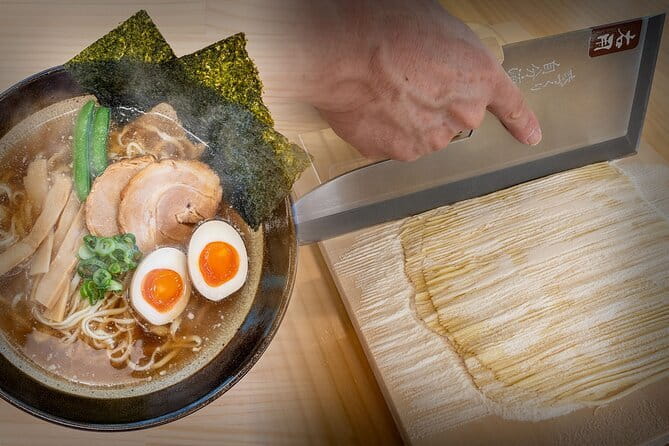
- Knife-made noodles, no machines: You cut thin strands by hand with a purpose-built noodle knife.
- Choose ramen or soba: Wheat flour ramen is the default, and 100% buckwheat soba is available if needed.
- Six soup flavors plus vegan: You pick what goes with your noodles.
- Make, then eat right away: Staff boil and serve your noodles after you finish cutting.
- Toppings at your seat: You stay seated for the fun part, with a drink included.
- Small group size: Limited spots at a time keeps instruction practical.
Kappabashi’s Knife Town Meets Ramen Noodle Skills
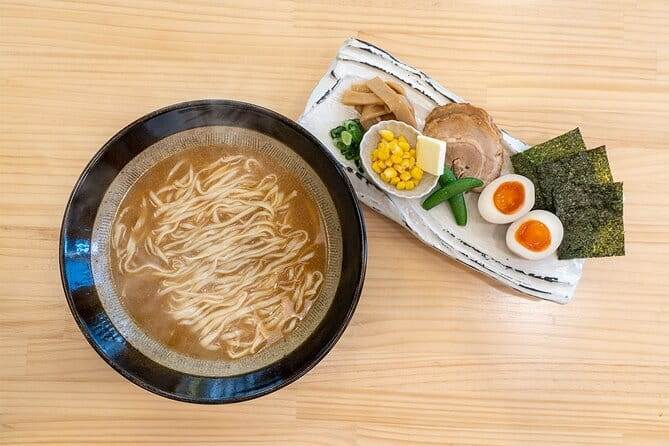
Kappabashi is the Tokyo neighborhood for kitchen tools, tableware, and anything that would make a home cook smile. This experience fits the area perfectly, because your noodle technique is built around the same idea as a great knife: sharp control and repeatable results.
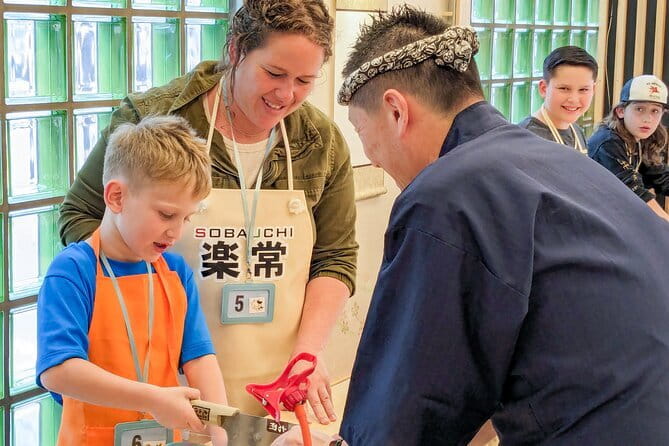
What makes this workshop feel more authentic than many cooking classes is the focus on the noodle-cutting method itself. You are not just learning a recipe. You are learning what thin strands require: timing, pressure, and consistent slices. And because the technique is done with a large kitchen knife designed for noodle making, you get a very Japanese kind of hands-on skill.
Also, it helps that the class format is designed for mixed groups. One person uses one table to make noodles for that person, and an instructor guides you through the process with English support.
Readers booked these Tokyo options in the same breath. Here is how each one scored:
- Mt Fuji and Hakone 1-Day Bus Tour Return by Bullet Train
★ 5.0 · 26,383 reviews - 1-Day Tokyo Bus Tour
★ 5.0 · 14,250 reviews - Tokyo: teamLab Planets TOKYO Digital Art Museum Entry Ticket
★ 4.6 · 9,779 reviews - Mt Fuji & Hakone Cruise, Drum Show Bullet Train 1 Day from Tokyo
★ 4.0 · 7,413 reviews
What You Actually Do: Flour to Thin Ramen in About 50 Minutes
The whole experience runs about 50 minutes. The hands-on noodle part is fast, and the shop emphasizes getting you to finished noodles in about 30 minutes, then shifting to boiling and serving so you can eat without waiting forever.
Here’s the flow you should expect:
First, you start with Japanese ramen flour and follow four steps: add water, knead, roll, and cut. Each step is guided, which matters because kneading and rolling set you up for how easily the noodles slice thinly.
Next, once your noodles are shaped, staff boil them for you and bring them out. That is a smart division of labor: you do the craft, they handle the pot timing so your noodles are ready to eat while the class is still moving.
Finally, you get to choose a favorite soup flavor and enjoy toppings at your seat, with a drink included. It keeps the experience from feeling like a long kitchen chore that ends in a sad bowl.
The Hand-Slicing Technique That Keeps It Traditional
This is where the experience earns its money. Instead of using machinery, the shop uses a noodle-slicing method sometimes described as the soba-soba slicing technique, with historical roots going back to the Edo period. That phrasing matters because it signals something practical: the method has been used long enough to become a repeatable skill, not just a modern gimmick.
You’ll be cutting thin noodles without machines, which means you’ll feel the difference in your hands as you roll and slice. The shop also includes an original systematic tool designed to make the traditional process manageable within a short timeframe.
Will you turn into a noodle artisan by the end? Probably not. But you should finish feeling like you understand how noodles go from dough to bowl. That’s the kind of takeaway you can actually use later, even if you never buy the same knife at home.
One more practical detail: the class is capped at a small group size (maximum 16 people at a time). With fewer people, the instructor can keep an eye on your form and the pace of the tables.
Choosing Your Bowl: Six Flavors, Including Vegan
After you finish cutting noodles, you move into the eating phase. You choose from six soup flavors, including soy sauce and miso ramen, plus a vegan ramen option.
That variety is more than menu decoration. It helps make the experience work for groups with different tastes, including picky eaters. It also makes the noodle effort feel worth it because you are not stuck with one default bowl.
You also get toppings selection while you are seated. The shop includes a drink with your seat-time experience, which helps break up the class tempo: work at the table, then relax and build your bowl.
If your group wants to avoid wheat, the soba option is a real advantage. The experience can switch to a soba-making path using 100% buckwheat flour, so you’re not forcing anyone to watch and wait if wheat flour is a dealbreaker.
English Support, One Table Per Person, and How the Room Works
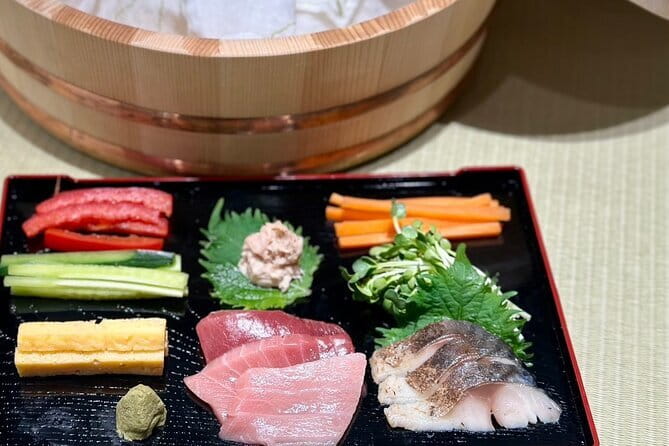
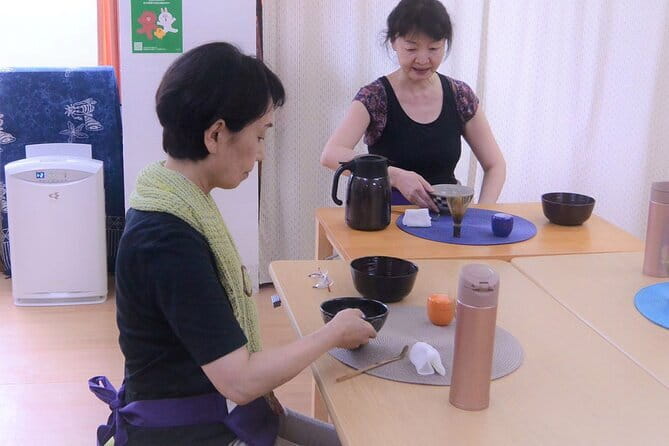
This workshop is structured so you can focus. You work at your own table, and the instructor leads the process. There is a dedicated English application used during the activity, which helps you understand what’s happening even if you are not fluent in Japanese.
The one-person-per-table approach is a big deal. In many “cooking together” classes, you end up sharing a station and waiting your turn while someone else does the real work. Here, you’re making noodles yourself, then you eat what you made.
Group size matters too. With a maximum of 16 people, the pace stays controlled. You should expect a guided, step-by-step flow rather than a chaotic room where you only catch bits and pieces.
One small note if language is a concern: the shop says if you bring an interpreter who can speak Japanese, you can receive a discount based on the number of guides. If you have a friend who can handle Japanese, that could be a useful way to lower costs for your group.
- Tokyo: Shinjuku Food Tour (13 Dishes at 4 Local Eateries)★ 5.0 · 6,603 reviews
- Tokyo Mt Fuji 5th St & Hakone Cruise Bus Tour w/Bullet Train★ 4.4 · 5,024 reviews
- Flagship 2-Hours Official Street Go-Kart Tour – Tokyo Bay Shop★ 5.0 · 4,974 reviews
- From Tokyo: Mount Fuji Full-Day Sightseeing Trip★ 4.5 · 4,970 reviews
- Tokyo: Hop-On Hop-Off Sightseeing Bus Ticket★ 3.9 · 4,207 reviews
Where You Start in Tokyo: Easy Public Transit Access
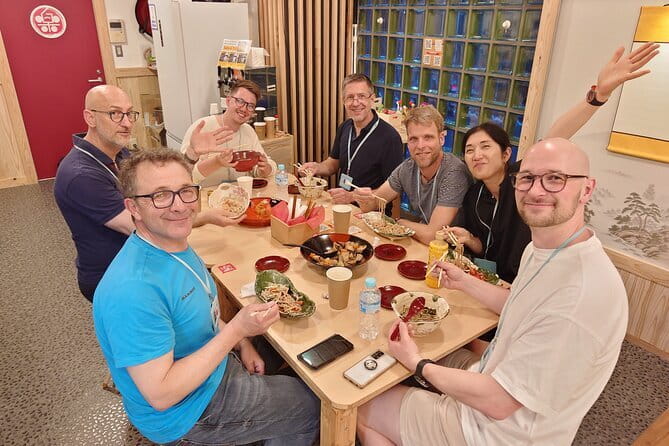
You meet at SOBAGIRI 楽常Soba Ramen Studio in Taito City, Matsugaya, in the building at 1F. The address is:
SOBAGIRI 楽常Soba Ramen Studio
111-0036 Tokyo, Taito City, Matsugaya, 3-chōme 112 Matsugaya Center Building 1F
The key practical upside is that it’s near public transportation, so you can fit it into an already planned day. It also ends back at the meeting point, which keeps logistics simple when you still want to explore afterward.
Timing It With Kappabashi Shopping (and Why Last Day Helps)
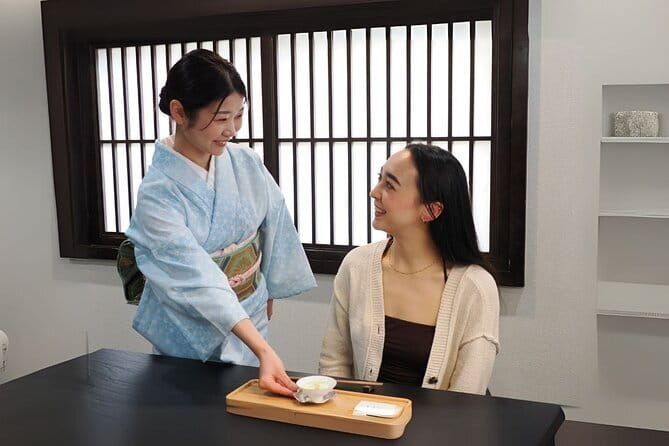
I like recommending this on your last day in Japan, and not just because it’s a nice finale. It’s in Kappabashi, the kitchen-tool district, and that means you can pair the lesson with shopping for knives, tableware, and kitchenware.
If you go on your last day, you can shop without worrying about having to carry heavy things for days. You also get to choose souvenirs with a clearer eye after you’ve handled the “real skill” angle of Japanese tools in the noodle workshop.
A bonus: since the experience ends back where you start, you can turn it into a clean block of time—no hunting for a new drop-off point before your evening plans.
Price and Value: What You’re Really Paying For
At $51.64 per person, this isn’t a bargain ramen lunch. But it is also not a ticket to a staged show. You’re paying for:
- guided instruction through four noodle steps
- use of a specialized noodle-making setup (including the big knife tool)
- a structured process that gets you to eatable noodles within a short timeframe
- boiling and serving your noodles
- six flavor choices plus toppings at your seat
- an included drink
In other words, you’re paying for technique, not just food. And because the noodles are made by you at the table, the meal has a story built in. That’s why people tend to leave feeling proud, not just full.
If you like hands-on food experiences, this lands in the “worth it” category because you’ll remember the process as much as the taste. If you’re only after the cheapest meal possible, you might decide you’d rather spend less elsewhere. But if you want something that feels like it belongs in Tokyo, this does.
Who This Is Best For (and Who Might Skip)
This is a strong fit if you want a food activity that is active, short, and understandable. It also works well for families. The experience is designed to be enjoyable for children and adults, and the process is guided so you are not stuck translating every step alone.
You’ll also like it if your group includes different diet needs. You can make ramen by default, switch to buckwheat soba if wheat flour is an issue, and choose a vegan ramen flavor option.
You might skip it if:
- someone in your party has buckwheat allergies (entry is not allowed)
- you strongly dislike any interaction with flour dough and slicing tasks
- you’re looking for a more open-ended cooking experience where you do everything in the kitchen for a longer time (this one is compact and structured)
The Biggest Practical Takeaways You’ll Remember
The noodle skill itself is the obvious highlight. But I also think the deeper value is how quickly you learn the “logic” of good noodles.
You’ll notice that thinness isn’t magic. It comes from how dough is rolled and how cutting is executed with control. You also learn that boiling and serving matter, because your noodles are boiled by staff after your work is done. That division of labor is why you get a satisfying bowl instead of an experiment that ends in disappointment.
And because your bowl comes with a drink and topping choices at your seat, the class ends on the reward phase rather than lingering on cleanup. That pacing is one of the reasons it feels like fun, not work.
Should You Book SOBAGIRI 楽常Soba Ramen Studio?
If you want a Tokyo food experience that feels real, skill-based, and still relaxed enough for a half-hour noodle challenge, I’d book it. The small group size, guided steps, and chance to choose ramen or 100% buckwheat soba make it easier to accommodate mixed tastes.
I’d especially book it if you’re spending time in Kappabashi anyway or if you want a last-day activity that sets you up to shop for knives and kitchenware afterward. It’s a smart way to turn a meal into an actual Japanese craft you can talk about long after you leave.
If you’re traveling with someone who has buckwheat allergies, skip. Otherwise, this is one of those experiences that leaves you with a bowl in front of you and a skill story in your head.
FAQ
How long is the ramen noodle making experience?
It lasts about 50 minutes.
What does the experience include?
You’re guided through four noodle steps (adding water, kneading, rolling, and cutting). After you make the noodles, staff boil and serve them. You also choose a soup flavor and toppings at your seat, and a drink is included.
Can I make soba instead of ramen?
Yes. The experience can switch to soba-making using 100% buckwheat flour if there is someone in your group who does not like wheat flour.
Are there vegan options?
Yes. The menu includes a vegan ramen option, and you can choose from six flavors overall.
How many people are in each session?
There is a maximum of 16 people at a time, and the activity has a maximum of 15 travelers.
Is there free cancellation?
Yes, you can cancel for a full refund up to 24 hours before the experience’s start time.
More Tour Reviews in Tokyo
- Mt Fuji and Hakone 1-Day Bus Tour Return by Bullet Train
★ 5.0 · 26,383 reviews - 1-Day Tokyo Bus Tour
★ 5.0 · 14,250 reviews - Tokyo: teamLab Planets TOKYO Digital Art Museum Entry Ticket
★ 4.6 · 9,779 reviews - Mt Fuji & Hakone Cruise, Drum Show Bullet Train 1 Day from Tokyo
★ 4.0 · 7,413 reviews - Tokyo: Shinjuku Food Tour (13 Dishes at 4 Local Eateries)
★ 5.0 · 6,603 reviews