
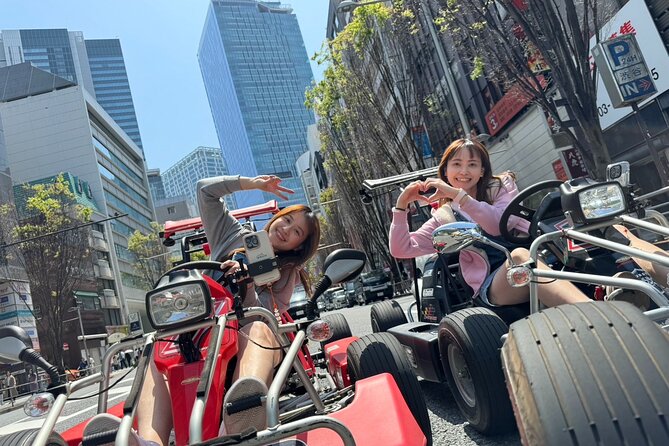
Reviewed · SHIBUYA EXPERIENCES
Ride Through The Streets Of Shibuya and Sinjuku By Go Kart
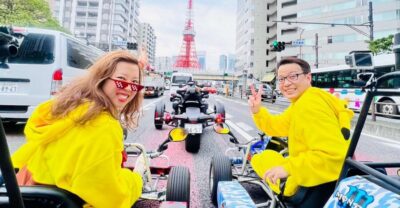
Tokyo moves faster from a go-kart. In Shibuya and Shinjuku, you’ll ride public roads where cars can’t go, guided start to finish for about an hour. It’s a strong choice for first-timers who want major city vibes without spending half the day just getting oriented.
Two things I like a lot: the tour is designed around seeing more than you would on foot, and your guide helps you snap photos at the right moments instead of forcing you to figure it all out solo. The karts are road-ready for Japan, so the experience feels more controlled than you might expect from a street ride.
One thing to consider up front is the driving-permit rules. You’ll need the right International Driving Permit format and eligibility, and the operator lists specific countries where driving isn’t allowed. If you’re not sure you qualify, check before you book.
In This Review
- Key Highlights You’ll Actually Feel
- Driving Requirements: The IDP Rules That Matter Most
- Meeting Point in Nishishinjuku: What to Expect Day-Of
- The Safety Briefing: How This Turns Chaos Into Control
- Go Where Cars Can’t: Why Shibuya and Sinjuku Feel Different by Kart
- Photo Stops and City Insights: Getting More Than a Ride
- Timing Tips: What I’d Choose for Day vs Night
- One Hour in Tokyo: How Efficient Is It, Really?
- Value for Money: Is $99.10 Worth It?
- Who Should Book This Go-Kart Tour?
- Should You Book It? My Practical Recommendation
- FAQ
- What is the approximate duration of the go-kart tour?
- Where is the meeting point?
- Do I need an International Driving Permit (IDP) to drive?
- What IDP format is accepted?
- Are there restrictions based on passport country?
- Does the tour run in bad weather?
- How does cancellation work?
Key Highlights You’ll Actually Feel
- Road-legal go-karts designed for driving on public roads in Japan
- Guided photo stops so you’re not just riding and hoping
- Shibuya + Shinjuku in one hour, built for efficient first-time sightseeing
- Mobile ticket for easy access day-of
- Late-afternoon/evening slots can be a hit, with one review calling out a 6 pm onwards night drive
Driving Requirements: The IDP Rules That Matter Most
This tour is thrilling, but it comes with a very real paperwork checkpoint: to drive the go-kart on Tokyo streets, you must have an eligible license/IDP for Japan. The operator is explicit about this, and they also say refunds aren’t available if you bring incorrect or invalid documents on the activity day. So treat your permit like a key, not a detail.
Here’s what you should know based on the rules provided:
- You must confirm your country’s driving license/IDP is eligible for Japan, and the IDP must be booklet format.
- Digital IDP, card-type IDP, pictures, or copies are not accepted.
- You must make sure your IDP is under the 1949 convention (Japan Automobile Federation guidance is referenced by the operator).
- Some passport-country residents are not allowed to drive, including people from China, Mexico, Indonesia, Pakistan, Saudi Arabia, Kuwait, and Qatar.
- For people from Switzerland, Germany, France, Taiwan, Belgium, Estonia, or Monaco, the rules say you must bring original driving license + official Japanese translation by an authorized organization + your passport. All three are required.
Also note the alcohol rule: participants aren’t allowed to participate if under the influence of alcohol.
Practical tip: if your IDP is in the right format but you’re unsure it meets Japan’s expectations, pause and verify using the referenced Japan Automobile Federation page the operator points to. This is one of those experiences where being off by a technicality is the difference between riding and sitting out.
More booked around Shibuya Crossing
- Official Street Go-Kart in Shibuya
★ 5.0 · 3,435 reviews - Tokyo: Street Kart Experience in Shibuya
★ 4.9 · 1,484 reviews - Shibuya Meltdown Nightlife Tour: All-You-Can-Drink Bar Hopping
★ 5.0 · 1,058 reviews - Shibuya Official Street Go-Kart in Shibuya Annex
★ 5.0 · 972 reviews
Meeting Point in Nishishinjuku: What to Expect Day-Of
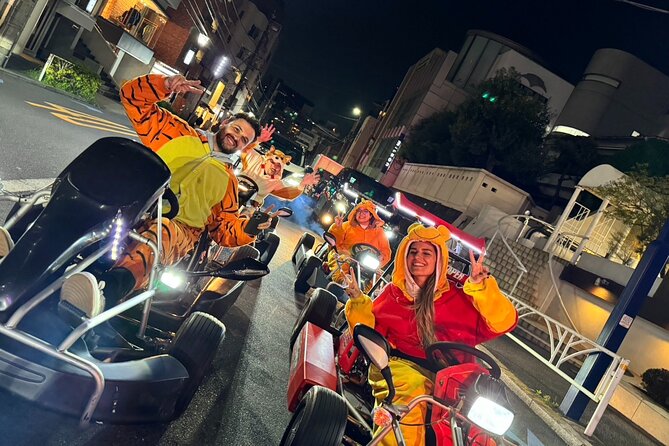
The meeting point is 4-chōme-18-2 Nishishinjuku, Shinjuku City, Tokyo 160-0023, Japan. The operator says it’s near public transportation, so you should be able to reach it without a car.
Here’s the part that can trip you up: at least one review noted the location can be a little challenging to find and suggested signage could be better. That matches how many Tokyo meeting points work, even when they’re not far from transit. The address will help, but don’t plan to arrive at the last second and wing it.
My advice:
- Give yourself extra time to get there and do one quick orientation pass before your start time.
- If you’re using navigation, double-check you’re dropping at the right neighborhood (Nishishinjuku can feel close to Shinjuku while still being a different pocket).
- Aim to arrive calm, because you’ll need time for a safety briefing before you ride.
The Safety Briefing: How This Turns Chaos Into Control
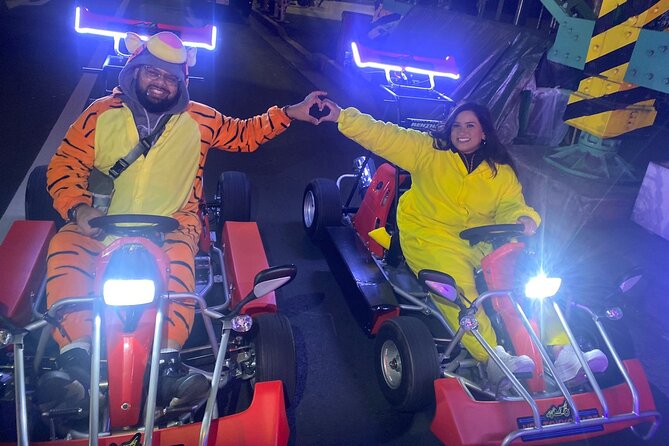
After you check in, you’ll get a safety briefing before hopping into your single-person go-kart. The whole idea is that you’re driving on public roads, not riding a closed track, so they’re setting expectations right away.
Even if you’re comfortable driving elsewhere, don’t skip the briefing. Road rules in Japan are one thing, but the tour format is another: you’re riding as part of a guided route, you’ll stop for photos, and you’ll need to follow the leader’s pace.
What helps here is the operator’s clear positioning: the karts are designed for driving on public roads in Japan. That matters for your confidence, because it signals the experience is built for real street riding, not pretend driving in a fenced area.
And since you’re riding with an experienced guide, you’re not just thrown into the city and told good luck. They’re there to help you along the way.
Go Where Cars Can’t: Why Shibuya and Sinjuku Feel Different by Kart
The headline is simple: you’ll go where cars can’t on a go-kart tour around Shibuya and Sinjuku. (The tour also spells the name Sinjuku, though most people see it written as Shinjuku.) The value isn’t just speed. It’s the angle.
Walking in Tokyo is great, but it’s slow. Buses and trains are efficient, but you’re not actually experiencing street-level motion. With a go-kart, you get:
- Closer, faster city views in a short window
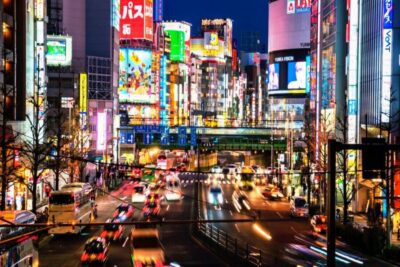
- A chance to see incredible architecture and the busy street energy around the districts
- Motion that helps your brain connect what you saw to where you are, so the city makes more sense afterward
Because this is a guided route, you’re also more likely to notice things than if you were trying to navigate on your own. The tour includes stops for photographs, and your guide will share insights as you go.
In other words, this isn’t only about driving. It’s about making the city legible quickly.
Photo Stops and City Insights: Getting More Than a Ride
One detail I really appreciate from the provided reviews: the guide took photos and then sent them at the end. That’s a smart way to handle street riding. If you had to stop constantly to manage your own camera, the experience would be slower and more chaotic.
The tour is also built around taking photographs during the route. That matters because Tokyo streets have a lot going on. Without prompts, it’s easy to miss the best photo moments, especially when you’re focused on steering.
Also, since the guide is local and on hand, you’ll get quick context while you’re actually passing the sights. That’s how you walk away feeling like you did more than just drive in circles.
If you want to get the most out of this part, do two things:
- Wear what you can move in and keep your hands free for steering.
- Put your phone away until the guide indicates a photo stop, so you don’t break the flow.
- Tokyo: Shinjuku Food Tour (13 Dishes at 4 Local Eateries)★ 5.0 · 6,603 reviews
- Tokyo Mt Fuji 5th St & Hakone Cruise Bus Tour w/Bullet Train★ 4.4 · 5,024 reviews
- Flagship 2-Hours Official Street Go-Kart Tour – Tokyo Bay Shop★ 5.0 · 4,974 reviews
- From Tokyo: Mount Fuji Full-Day Sightseeing Trip★ 4.5 · 4,970 reviews
- Tokyo: Hop-On Hop-Off Sightseeing Bus Ticket★ 3.9 · 4,207 reviews
Timing Tips: What I’d Choose for Day vs Night
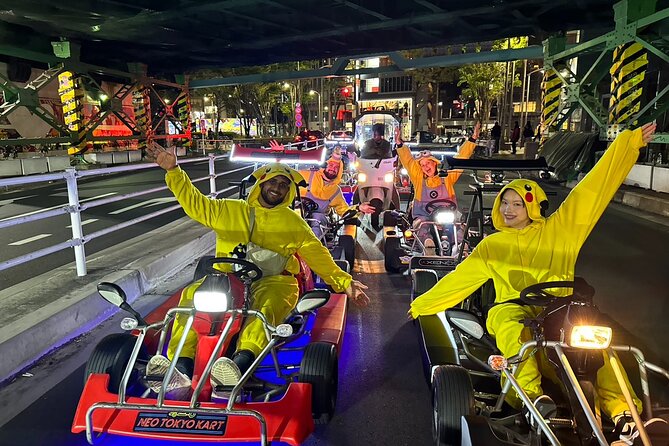
This is one of those tours where the timing can change the feeling. The information you provided includes a review strongly recommending a 6 pm onwards time slot for a night drive, calling it amazing.
I can’t promise every departure time will be night-focused, but here’s the logic you should use: Tokyo after dark has a different glow, and street motion can make that feel cinematic. If your schedule allows, late afternoon into evening is often when the city feels more textured and the lights start doing their thing.
If you’re planning for comfort, remember the operator says this experience requires good weather. So if the forecast looks shaky, you may want to prioritize a backup time slot rather than forcing the ride.
One Hour in Tokyo: How Efficient Is It, Really?
The duration is about 1 hour, and that number is part of the appeal. Tokyo is big, and first days are full of logistics: getting from airport to hotel, figuring out subway lines, and finding the neighborhoods you actually care about.
A go-kart tour compresses the payoff. You’re spending your time moving through Shibuya and Sinjuku rather than spending it in transit or walking long stretches just to reach the next viewpoint.
That said, keep expectations realistic. One hour means you won’t cover every famous landmark in both districts. Instead, think of this as a fast primer: you’ll see major district energy and architecture, stop for photos, and come away with a clearer mental map.
If you’re the type who wants to maximize your first day, this works. If you’d rather slow travel with long photo walks, you might find it a bit rushed. But for a value-packed intro to Tokyo street life, it’s hard to beat.
Value for Money: Is $99.10 Worth It?
The price listed is $99.10 per person. That’s not “cheap,” but it’s also not crazy for a guided, equipment-supported street-driving experience in central Tokyo.
Where the value shows up:
- You get a full hour of guided driving instead of just a brief ride or a ticketed viewing.
- The guide handles key parts of the experience, including safety guidance and photo opportunities.
- You see more of the city in less time than you likely would on foot.
The hidden cost to consider isn’t money—it’s your IDP prep. If you already have an eligible permit, the tour becomes straightforward. If you don’t, the permit requirement can be a deal-breaker or at least a scheduling headache. For me, that’s the only real “fine print” that affects value.
So I’d frame it like this:
- If your paperwork is ready and you want a high-energy, first-timer-friendly introduction to Tokyo streets, the price feels justified.
- If you’re not sure you’ll be able to drive, or you want a low-effort sightseeing day, another activity might make more sense.
Who Should Book This Go-Kart Tour?
This tour is best for:
- First-time visitors who want to see a lot quickly
- People who like hands-on experiences more than museum-and-metro days
- Anyone who wants street-level Tokyo energy without spending hours walking
- Travelers who can handle the driving-permit rules and want to confirm eligibility ahead of time
It’s less ideal if:
- You dislike driving on roads or get nervous following instructions closely
- You don’t have the correct 1949 booklet IDP (or you’re not sure)
- Weather is questionable and you’d rather avoid the possibility of a reschedule
Should You Book It? My Practical Recommendation
If you can meet the driving requirements and you’re comfortable following a guide, I think this is a strong booking. You’re getting Shibuya and Sinjuku in an efficient one-hour format, with a safety briefing and photo stops that add real memories to the ride. The cost also makes sense when you factor in the guidance and the fact you’re experiencing street motion, not just watching from the sidewalk.
Before you decide, do one quick check list:
- Do you have the correct IDP booklet format under the 1949 convention?
- Are you allowed to drive based on your passport issuing country rules?
- Can you reach the Nishishinjuku meeting point without stress?
- Is the weather looking decent?
If those boxes are checked, book it. It’s the kind of Tokyo experience that feels different from the usual walking-heavy itinerary.
FAQ
What is the approximate duration of the go-kart tour?
It’s listed as about 1 hour.
Where is the meeting point?
The start point is 4-chōme-18-2 Nishishinjuku, Shinjuku City, Tokyo 160-0023, Japan, and the tour ends back at the meeting point.
Do I need an International Driving Permit (IDP) to drive?
Yes. The experience requires that participants confirm their country’s driving license/IDP is eligible for Japan, and the operator specifies requirements for an IDP format.
What IDP format is accepted?
The IDP must be booklet format. The operator states that digital IDP, card type IDP, pictures, or copies are not accepted.
Are there restrictions based on passport country?
Yes. The operator lists several countries whose residents are not allowed to drive in Japan, including China, Mexico, Indonesia, Pakistan, Saudi Arabia, Kuwait, and Qatar.
Does the tour run in bad weather?
The operator says the experience requires good weather. If it’s canceled due to poor weather, you’ll be offered a different date or a full refund.
How does cancellation work?
The policy states you can cancel up to 24 hours in advance for a full refund. If you cancel less than 24 hours before the start time, the amount paid is not refunded.
More Tour Reviews in Tokyo
- Mt Fuji and Hakone 1-Day Bus Tour Return by Bullet Train
★ 5.0 · 26,383 reviews - 1-Day Tokyo Bus Tour
★ 5.0 · 14,250 reviews - Tokyo: teamLab Planets TOKYO Digital Art Museum Entry Ticket
★ 4.6 · 9,779 reviews - Mt Fuji & Hakone Cruise, Drum Show Bullet Train 1 Day from Tokyo
★ 4.0 · 7,413 reviews - Tokyo: Shinjuku Food Tour (13 Dishes at 4 Local Eateries)
★ 5.0 · 6,603 reviews
More Around Shibuya Crossing
- Official Street Go-Kart in Shibuya
★ 5.0 · 3,435 reviews - Tokyo: Street Kart Experience in Shibuya
★ 4.9 · 1,484 reviews - Shibuya Meltdown Nightlife Tour: All-You-Can-Drink Bar Hopping
★ 5.0 · 1,058 reviews - Shibuya Official Street Go-Kart in Shibuya Annex
★ 5.0 · 972 reviews - Tokyo: Shibuya Food Tour (13 dishes and 4 Eateries)
★ 5.0 · 770 reviews
Latest Tokyo reviews off our desk


Shibuya Experiences, compared.
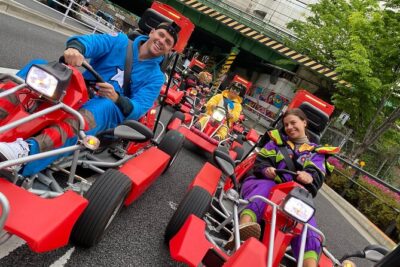 ★ 5.0Official Street Go-Kart in ShibuyaFrom $763,435 reviews
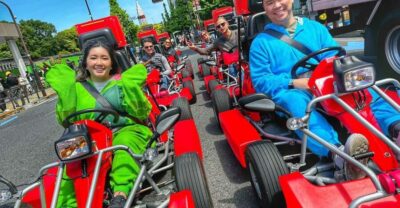 ★ 4.9Street Kart Experience in ShibuyaFrom $741,484 reviews
 ★ 5.0Shibuya Meltdown Nightlife Tour: All-You-Can-Drink Bar HoppingFrom $1061,058 reviews
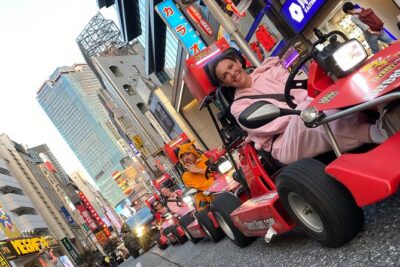 ★ 5.0Shibuya Official Street Go-Kart in Shibuya AnnexFrom $69972 reviews
 ★ 5.0Shibuya Food Tour (13 dishes and 4 Eateries)From $77770 reviews
 ★ 5.0Best of Shibuya Food TourFrom $217612 reviews
 ★ 4.8Shibuya Highlights Walking TourFrom $19601 reviews
 ★ 4.7Premium Go-Kart Tour with Tower & Shibuya CrossingFrom $116528 reviews
Browse the lists this tour appears in