
Tokyo on four wheels feels different. Shibuya Kart mixes real city sightseeing with fast, guided go-karting through some of the most famous streets in the area.
I especially like that the experience is built around clear safety instructions and a friendly, professional local guide (often named San or Omar in past groups). One drawback to plan for: you must have the right driving paperwork, since you need a valid international driving permit (IDP) in the correct format to ride.
In This Review
- Quick hits before you book Shibuya Kart
- Driving Shibuya: Why this goes beyond a gimmick
- Route preview: Togoshi start, Tokyo Tower views, and Shibuya traffic moments
- The guide and safety briefing: what “professional” actually means here
- Costumes and photo package: the included extras that make it feel complete
- Picking your ride length: 45, 60, or 90 minutes in the real world
- What you need to drive in Japan: IDP rules that can’t be hand-waved
- Price and value: what $63 covers, and what it doesn’t
- Comfort tips that come straight from real rides
- Who this is best for (and who should skip it)
- Should you book Shibuya Kart?
- FAQ
- How long is the Shibuya Kart tour?
- How much does Shibuya Kart cost?
- Where does the tour start and end?
- What do I need to bring to drive?
- What IDP rules apply for Japan?
- Is the tour guided?
- Are photos included?
- Are drinks or alcohol allowed during the ride?
- Is cancellation free?
- Can I pay later?
Quick hits before you book Shibuya Kart
- Shibuya Scramble Crossing + Tokyo Tower on the route, not just a generic loop
- English-speaking live guide plus extra guidance during traffic stops
- Costumes and accessories for fun photos (yes, you can go full character)
- Photo shooting and digital photo data included, with staff capturing shots along the way
- 45–90 minutes so you can match it to your schedule and energy level
- Lockers included, which makes it easier to carry essentials
Driving Shibuya: Why this goes beyond a gimmick
Tokyo has plenty of ways to look cool on vacation, but this one is more hands-on. You’re not just watching street life from the curb—you’re moving through it at kart speed while your guide keeps you pointed in the right direction and organized through traffic-heavy areas.
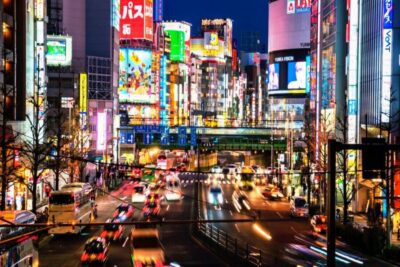
What makes Shibuya Kart feel worth it is the mix of two things tourists usually separate: sightseeing and adrenaline. You’ll zip past big-name areas like Roppongi, then swing toward the Shibuya Scramble Crossing area and keep going into Omotesando territory. The route is designed so you see major landmarks without turning the day into a checklist marathon.
I also like that the ride is guided in a way that feels practical. A go-kart in a city can sound chaotic on paper, but the operation is built around a proper briefing and driving instructions before you start. That’s a huge part of why so many people come away saying they felt safe.
More booked around Shibuya Crossing
- Official Street Go-Kart in Shibuya
★ 5.0 · 3,435 reviews - Tokyo: Street Kart Experience in Shibuya
★ 4.9 · 1,484 reviews - Shibuya Meltdown Nightlife Tour: All-You-Can-Drink Bar Hopping
★ 5.0 · 1,058 reviews - Shibuya Official Street Go-Kart in Shibuya Annex
★ 5.0 · 972 reviews
Route preview: Togoshi start, Tokyo Tower views, and Shibuya traffic moments
Your tour starts and ends at the shop in Togoshi. From there, you head out for your kart time with a guide who manages the flow for the group so you’re not navigating on your own.
Here’s what the route is built around, based on the experience description:
- Tokyo Tower zip-by: This is one of those sights that instantly reads as Tokyo, even if you’re not a hardcore skyline person.
- Roppongi streets: Expect flashier city energy—good for photos and for that “I’m really in the middle of it” feeling.
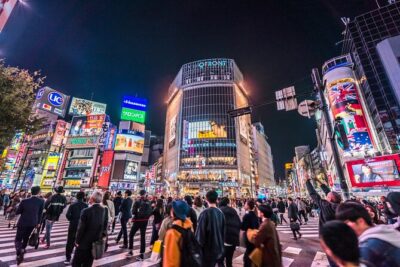
- Shibuya Scramble Crossing: The crossing is the headline, and riding close to it changes it from a video clip into a lived moment.
- Omotesando racing section: This gives you a more stylish, boulevard-like feel compared with some of the other areas.
Two practical notes I’d keep in mind as you plan:
1) You’ll enjoy the tour more if you go in with a photo mindset. The staff takes pictures throughout, and you’ll likely want to be ready when stops happen.
2) Traffic conditions matter. One review specifically praised choosing an earlier slot (like 10am) to reduce congestion, which made it easier to cruise and sightsee without constant slowdowns.
The guide and safety briefing: what “professional” actually means here
This is where Shibuya Kart earns its high marks. The tour includes a safety briefing and driving instructions, and that isn’t window dressing—it sets expectations for how the kart handles, how you’ll move through streets, and what you should do at key points.
In reviews, guides are repeatedly mentioned by name, especially San and Omar. The pattern is consistent: the guides explain clearly, take photos during the ride, and keep the pace organized through traffic stops. That matters because you want excitement, not confusion.
You should also pay attention to the strict rules:
- No intoxication
- No drinks in the vehicle
- No alcohol and drugs
If you’re thinking you can “just be a passenger,” this isn’t that kind of experience. The activity is set up for people who can drive the kart themselves, so make sure you’re comfortable following instructions quickly.
Costumes and photo package: the included extras that make it feel complete
A lot of go-kart tours stop at the ride. This one adds playful visual moments and a photo workflow so you don’t leave with only a few shaky clips.
You get:
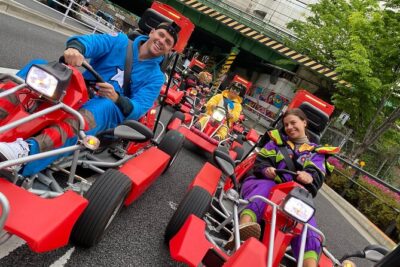
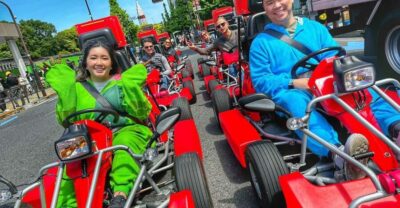
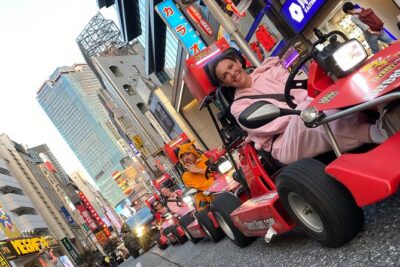
- Costume and accessories to wear during the karting
- Photo shooting during the experience
- Digital photo data afterward
- Extra photo stops that happen naturally as the group pauses
In reviews, people kept calling out how the photo process works in real life—guides take pictures throughout and share them digitally afterward. Some groups also mention printed photos, which is a nice souvenir if you like having something physical in hand.
Costumes aren’t just for laughs either. Wearing something fun helps you look less like a random tourist on a roadside stop and more like part of the moment. Plus, it’s a great way to get better group photos without everyone squeezing into the same “standard travel pose.”
Picking your ride length: 45, 60, or 90 minutes in the real world
You can choose 45 minutes, 60 minutes, or up to 90 minutes. That choice is more important than it sounds, because a longer session usually means more time to get comfortable with the kart and more chances to enjoy the views without feeling rushed.
From the reviews and common sense about city driving, here’s how I’d think about the timing:
- 45–60 minutes: Ideal if it’s your only karting activity, or if you’re mixing it with Shibuya nightlife plans and dinner.
- 90 minutes: Great if you want a full “Tokyo at speed” memory and you’re visiting during colder months or at night when landmark lighting looks dramatic.
One review specifically recommended a time around 3:30pm as a sweet spot before it got dark. Another praised doing 90 minutes at night for the lit-up views of Shibuya Scramble and Tokyo Tower. If you’re the kind of traveler who likes atmosphere, night slots can be a good call.
- Tokyo: Shinjuku Food Tour (13 Dishes at 4 Local Eateries)★ 5.0 · 6,603 reviews
- Tokyo Mt Fuji 5th St & Hakone Cruise Bus Tour w/Bullet Train★ 4.4 · 5,024 reviews
- Flagship 2-Hours Official Street Go-Kart Tour – Tokyo Bay Shop★ 5.0 · 4,974 reviews
- From Tokyo: Mount Fuji Full-Day Sightseeing Trip★ 4.5 · 4,970 reviews
- Tokyo: Hop-On Hop-Off Sightseeing Bus Ticket★ 3.9 · 4,207 reviews
What you need to drive in Japan: IDP rules that can’t be hand-waved
If you don’t get the paperwork right, you don’t ride. The tour requires:
- Passport or ID card
- International driving permit (IDP) in the accepted format
The fine print here is serious:
- You need hard copies. Digital versions aren’t accepted.
- Your IDP must be the version that’s valid in Japan under the 1949 Geneva convention (and the validity window matters).
- For licenses issued in Switzerland, Germany, France, Taiwan, Belgium, and Monaco, the setup requires a Japanese translation from JAF, not an international driving license.
- If your license is from a country not covered by the 1949 Geneva convention (examples listed include Mexico, Kuwait, China, Colombia, Saudi Arabia), you cannot operate in Japan.
- If you don’t have a valid IDP for Japan, you can’t receive a refund based on the information provided.
For travelers from India: the document notes there are multiple IDP types with validity differences, and it strongly suggests contacting the provider directly before booking so you don’t waste your trip time.
My practical advice: before you pay, double-check the exact IDP type and validity dates on paper. With go-karting, the cost of being wrong is the whole experience.
Price and value: what $63 covers, and what it doesn’t
At $63 per person, this is priced like a premium city activity, and the value comes from what’s included.
What’s included:
- Professional local guide
- Safety briefing & driving instructions
- Photo shooting & digital photo data
- Go-kart vehicle rental
- Fuel
- Costume and accessories
- Lockers
- Insurance for the customer
What’s not included (notably):
- Kart insurance, described as solely for the kart and not personal insurance.
So how should you judge the price? Think of it as paying for more than driving time. You’re covering city route management, guide-led safety, gear like costumes, and a photo package you don’t have to arrange yourself.
If you’ve ever tried to assemble a comparable “photo + activity + transport-managed sightseeing” setup in Tokyo, it usually turns expensive fast. Here, a lot of the coordination is handled for you.
Comfort tips that come straight from real rides
Some of the most useful advice in the experience feedback isn’t about landmarks—it’s about comfort on the road.
- Cold weather gear helps: One review notes they offered gloves and a hat when it was cold, and that the outfits helped with warmth.
- Eye comfort matters: A reviewer suggested bringing sunglasses, since wind can get cold in your eyes.
- Exhaust smell can be strong: One person recommended bringing a face mask because the exhaust can be an issue.
Also, if you’re big on action footage, one review urges you to bring your own GoPro or action camera (and says GoPros can be rented if you want). That’s worth considering if you want more than the staff’s photo package.
Who this is best for (and who should skip it)
Shibuya Kart works best for:
- Couples looking for a shared, silly-but-memorable activity
- Small groups of friends who want movement and photos without planning
- Solo travelers who want structure, a guide, and instant momentum
- People who like their sightseeing with an activity attached
It’s not for you if:
- You don’t have a driver’s license that meets the tour’s rules (the activity is clearly not suitable for people without a driver’s license)
- You’re expecting a purely passive experience
If you’re comfortable driving and following instructions, this can be one of the easiest “high impact” activities to fit into a Tokyo trip.
Should you book Shibuya Kart?
I’d book it if you want a Tokyo highlight that feels personal fast—something where you drive through iconic areas like Shibuya Scramble Crossing, get Tokyo Tower in the mix, and come away with photos without having to stop and coordinate everything yourself.
Skip it if you’re worried about the driving requirements or you’re missing the correct IDP format. The paperwork is the gatekeeper here, not the kart.
If you’re good on documents and you’re open to a guided, high-energy city ride, this is a strong pick. It’s playful, well managed, and built for memorable street-level Tokyo moments.
FAQ
How long is the Shibuya Kart tour?
The ride time is offered in 45 minutes, 60 minutes, or 90 minutes options. The exact starting time depends on availability.
How much does Shibuya Kart cost?
The price is $63 per person.
Where does the tour start and end?
It starts and ends at the shop in Togoshi.
What do I need to bring to drive?
Bring a passport or ID card and a valid international driving permit (IDP). The IDP must be a hard copy.
What IDP rules apply for Japan?
The tour notes the IDP must be the accepted version valid in Japan under the 1949 Geneva convention, and it must be valid for the period required. It also warns that some countries are not covered, and some license issuers need a Japanese translation from JAF instead of an IDP.
Is the tour guided?
Yes. You’ll ride with a live tour guide (English and Japanese are listed).
Are photos included?
Yes. The experience includes photo shooting and digital photo data.
Are drinks or alcohol allowed during the ride?
No. Drinks in the vehicle aren’t allowed, and alcohol and drugs are prohibited. Intoxication is also not allowed.
Is cancellation free?
The experience offers free cancellation up to 24 hours in advance for a full refund.
Can I pay later?
Yes. The listing states reserve now & pay later, so you can book and pay nothing today.
More Tours in Tokyo
- Mt Fuji and Hakone 1-Day Bus Tour Return by Bullet Train
★ 5.0 · 26,383 reviews - 1-Day Tokyo Bus Tour
★ 5.0 · 14,250 reviews - Tokyo: Shinjuku Food Tour (13 Dishes at 4 Local Eateries)
★ 5.0 · 6,603 reviews - Tokyo Mt Fuji 5th St & Hakone Cruise Bus Tour w/Bullet Train
★ 4.4 · 5,024 reviews - Flagship 2-Hours Official Street Go-Kart Tour – Tokyo Bay Shop
★ 5.0 · 4,974 reviews
More Tour Reviews in Tokyo
- Mt Fuji and Hakone 1-Day Bus Tour Return by Bullet Train
★ 5.0 · 26,383 reviews - 1-Day Tokyo Bus Tour
★ 5.0 · 14,250 reviews - Tokyo: teamLab Planets TOKYO Digital Art Museum Entry Ticket
★ 4.6 · 9,779 reviews - Mt Fuji & Hakone Cruise, Drum Show Bullet Train 1 Day from Tokyo
★ 4.0 · 7,413 reviews - Tokyo: Shinjuku Food Tour (13 Dishes at 4 Local Eateries)
★ 5.0 · 6,603 reviews
More Around Shibuya Crossing
- Official Street Go-Kart in Shibuya
★ 5.0 · 3,435 reviews - Tokyo: Street Kart Experience in Shibuya
★ 4.9 · 1,484 reviews - Shibuya Meltdown Nightlife Tour: All-You-Can-Drink Bar Hopping
★ 5.0 · 1,058 reviews - Shibuya Official Street Go-Kart in Shibuya Annex
★ 5.0 · 972 reviews - Tokyo: Shibuya Food Tour (13 dishes and 4 Eateries)
★ 5.0 · 770 reviews
Latest Tokyo reviews off our desk


Shibuya Experiences, compared.
 ★ 5.0Official Street Go-Kart in ShibuyaFrom $763,435 reviews
 ★ 4.9Street Kart Experience in ShibuyaFrom $741,484 reviews
 ★ 5.0Shibuya Meltdown Nightlife Tour: All-You-Can-Drink Bar HoppingFrom $1061,058 reviews
 ★ 5.0Shibuya Official Street Go-Kart in Shibuya AnnexFrom $69972 reviews
 ★ 5.0Shibuya Food Tour (13 dishes and 4 Eateries)From $77770 reviews
 ★ 5.0Best of Shibuya Food TourFrom $217612 reviews
 ★ 4.8Shibuya Highlights Walking TourFrom $19601 reviews
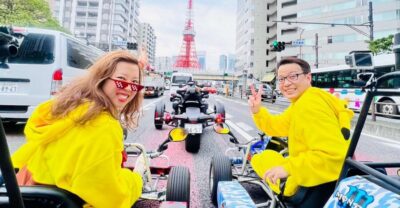 ★ 4.7Premium Go-Kart Tour with Tower & Shibuya CrossingFrom $116528 reviews
Browse the lists this tour appears in