
Reviewed · SHIBUYA EXPERIENCES
Shibuya: Ramen Dojo Tokyo | Make All 3 (Tonkotsu/Shoyu/Miso)
Ramen-making in Shibuya feels like a workshop and dinner. You’ll learn how fresh noodles become three distinct bowls, with tonkotsu, shoyu, and miso tasting side by side. It’s built for beginners, so you get real technique without feeling out of your depth.
One thing to factor in: this class uses wheat, egg, soy, chicken, and pork, so it’s not a fit for severe allergies or celiac.
The studio is an easy hop from Shibuya Station (about a 10-minute walk), and the class is run in English with a small group size (max 8). Many recent sessions highlight instructors such as Kazuki and Kensei for clear pacing and lots of helpful answers, which matters if you’re nervous about cooking in a foreign language.
In This Review
- Key things to know before you go
- Shibuya’s best kind of break: hands-on ramen near the station
- 90 minutes, timed and practical: what happens in the studio
- Check-in and briefing (10 minutes)
- Chicken chashu prep (5 minutes)
- Noodle making (20 minutes)
- Chicken chashu finishing (10 minutes)
- Boiling noodles / soup preparation (10 minutes)
- Plating (5 minutes)
- Tasting and photo time (30 minutes)
- Tonkotsu, shoyu, miso: the real reason this class clicks
- Instructors, English guidance, and the small-group advantage
- What you actually take home: noodles, chashu, and a recipe you can use
- Price and value: is $64 per person worth it?
- Practical tips that make the class smoother
- Arrive the right amount early
- Wear clothes you’re okay with (flour happens)
- Come hungry, but don’t time it badly
- If you have allergies, read carefully
- Photography is welcome
- Who should book Ramen Dojo Tokyo, and who might skip it
- Should you book Ramen Dojo Tokyo in Shibuya?
- FAQ
- How long is the ramen making class?
- Where is the studio located?
- What language is the class taught in?
- How many people are in each group?
- What do you make and eat during the workshop?
- What’s included in the price?
- Are drinks included?
- What dietary restrictions should I know about?
- What should I wear?
- How early should I arrive?
- Is free cancellation available?
Key things to know before you go
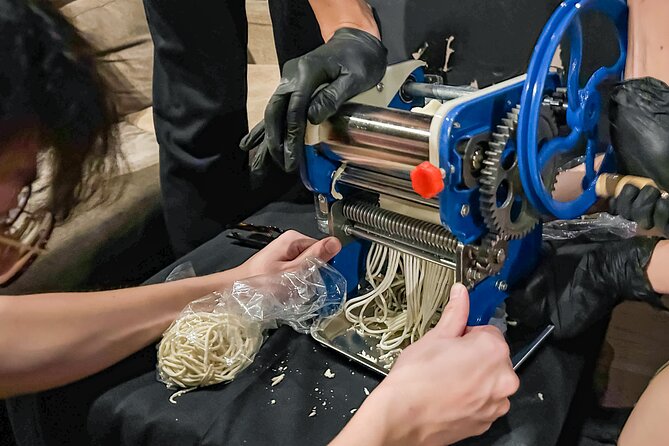
- Professional noodle machine work: you’ll knead, roll, and cut fresh noodles with equipment made for the job.
- Three ramen styles in one sitting: you don’t just taste one bowl—you compare tonkotsu, shoyu, and miso together.
- Small-group, English-guided instruction: max 8 guests, step-by-step support, and plenty of time for questions.
- Chicken chashu hands-on: you’ll prep and finish it, then build mini bowls with your own toppings.
- Photo-friendly experience: photography is welcome, and the studio encourages sharing with #RamenDojoTokyo.
- A session that ends where you start: you can finish and head right into Shibuya afterward.
Shibuya’s best kind of break: hands-on ramen near the station
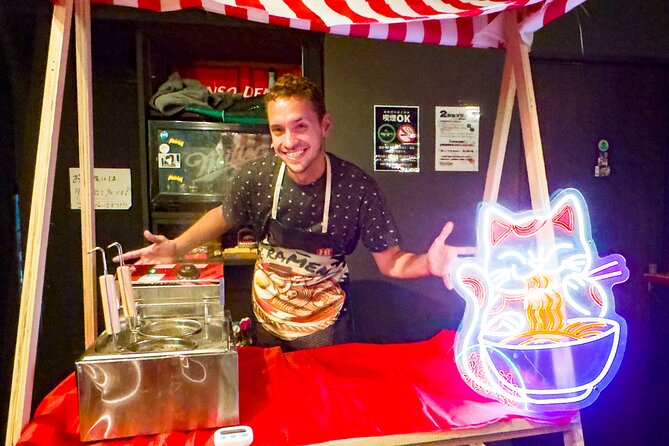
If your Tokyo days are already packed with shrines, trains, and tight schedules, this is the kind of activity that gives you a focused “food story” without turning into a whole logistical project. The studio is about a 10-minute walk from Shibuya Station, so you can realistically slot it in without losing half a day to transit.
What I like about the setup is that it feels like a complete experience, not a rushed demo. You make noodles from scratch, prepare chicken chashu, adjust soup strength to your preference, and then sit down to eat what you made. The class runs 90 minutes, which is long enough to learn a few real skills, but short enough that it doesn’t crowd out the rest of your Shibuya plans.
You’re also not stuck waiting around. The schedule is structured from check-in through cooking, plating, and a dedicated tasting/photo window—so the “when do I eat” question gets answered early, and then again at the end when you’re actually enjoying your bowls.
More booked around Shibuya Crossing
- Official Street Go-Kart in Shibuya
★ 5.0 · 3,435 reviews - Tokyo: Street Kart Experience in Shibuya
★ 4.9 · 1,484 reviews - Shibuya Meltdown Nightlife Tour: All-You-Can-Drink Bar Hopping
★ 5.0 · 1,058 reviews - Shibuya Official Street Go-Kart in Shibuya Annex
★ 5.0 · 972 reviews
90 minutes, timed and practical: what happens in the studio
This is a step-by-step workshop, and knowing the flow helps you relax. Here’s how the 90 minutes generally break down, and what you should watch for at each stage.
Check-in and briefing (10 minutes)
You’ll arrive, check in, and get a quick run-through so you know what’s happening and how the workshop will move. This is where you’ll get the basics on noodle handling and hygiene rules, plus the overall plan for making all three ramen styles.
Tip: pay attention here. If the instructor explains the “why” behind a step, your noodles are usually better and less stressful later.
Chicken chashu prep (5 minutes)
You’ll start working on the chicken chashu. The pace is quick, but the class is designed for beginners—so you’re not expected to already know Japanese cooking technique.
Why this matters: chashu is part of the identity of ramen. Getting involved early helps you understand how the flavor base builds.
Noodle making (20 minutes)
This is the centerpiece: you’ll knead, roll, and cut noodles using a professional noodle machine. You don’t just watch someone else operate it. You’ll do the hands-on steps, with staff guidance when needed.
This is also where you’ll likely feel the difference between “restaurant ramen noodles” and “home noodles.” Even if you’ve cooked pasta before, ramen noodle texture is a specific thing—and the machine helps you get close without needing years of practice.
- Tokyo: Shinjuku Food Tour (13 Dishes at 4 Local Eateries)★ 5.0 · 6,603 reviews
- Tokyo Mt Fuji 5th St & Hakone Cruise Bus Tour w/Bullet Train★ 4.4 · 5,024 reviews
- Flagship 2-Hours Official Street Go-Kart Tour – Tokyo Bay Shop★ 5.0 · 4,974 reviews
- From Tokyo: Mount Fuji Full-Day Sightseeing Trip★ 4.5 · 4,970 reviews
- Tokyo: Hop-On Hop-Off Sightseeing Bus Ticket★ 3.9 · 4,207 reviews
Chicken chashu finishing (10 minutes)
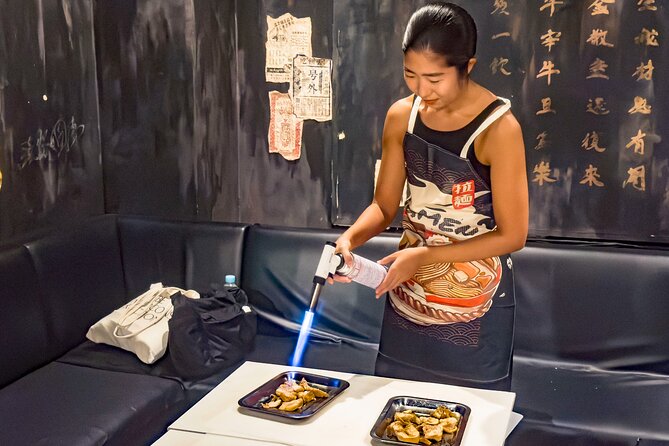
Next comes finishing the chashu so it’s ready for the bowls. The class structure suggests you’re doing the parts that affect final flavor and texture, not only assembly.
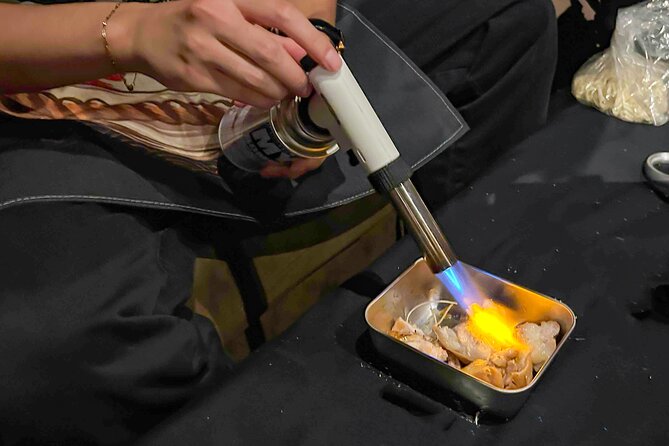
One recent session even mentioned an instructor skilled with high-heat tools like a blowtorch. That’s not something you should plan your day around, but it does hint that the finishing step may involve techniques beyond plain boiling.
Boiling noodles / soup preparation (10 minutes)
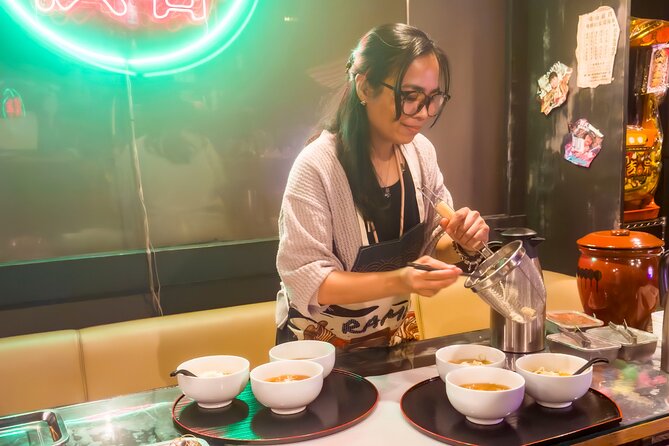
While some prep is already handled so the class stays on time, this is where soup and noodle timing come together. You’re coordinating noodles and broth so you can actually taste three styles in one session.
Plating (5 minutes)
You’ll build mini bowls—so your work shows up on the table. This is also when you’ll add toppings and make small choices that affect your final bowl.
Tasting and photo time (30 minutes)
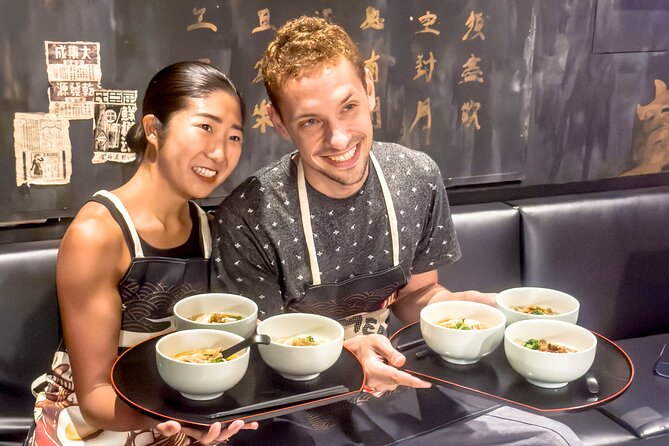
This long tasting window is a gift. You’ll enjoy your three mini bowls—tonkotsu, shoyu, and miso—side by side. You can compare broth richness, saltiness, and flavor weight, and you’ll likely spot which one matches your taste.
Photo-friendly moment included: the experience is set up so you’ll have time for pictures after the work is done, not just right before you eat.
Tonkotsu, shoyu, miso: the real reason this class clicks
Many food experiences end at the cooking part. This one keeps going, and that’s where the value shows up. The class is specifically built around tasting three ramen styles in one go—so you’re not just learning technique, you’re learning preference.
Here’s what you’ll get from that comparison:
- Tonkotsu tasting teaches you what “deep” broth feels like and how richness coats noodles.
- Shoyu tasting shows you the balance of soy-based flavor and how that differs from heavier broths.
- Miso tasting helps you understand how savory and slightly sweet, fermented notes change the whole bowl.
Also, you adjust the soup base strength to your preference. That’s a small detail, but it’s smart: ramen is personal. Some people want punchy flavor; others want lighter broth so the toppings and noodles still lead.
Instructors, English guidance, and the small-group advantage
With cooking classes, the difference between good and great often comes down to communication. This workshop is conducted in English, and the group is capped at 8 guests.
In recent reviews, instructors like Kai, Kazuki, Kensei, and Arata come up repeatedly for clear instructions and a friendly pace. People also describe the vibe as comfortable and supportive, which matters when you’re learning noodle handling for the first time.
You’ll likely get help when you need it, but the structure still keeps you doing the work. That mix—guidance without taking over—helps you walk away with confidence instead of just a full stomach.
Who this suits best: beginners who want hands-on cooking, people who learn by doing, and anyone who likes food facts tied to actual steps rather than lectures.
What you actually take home: noodles, chashu, and a recipe you can use
The best souvenir here isn’t a postcard. It’s the knowledge you can repeat.
You’ll leave with:
- a digital recipe provided after class
- the ability to make fresh noodles using the same basic process you practice during the workshop
- understanding of how chicken chashu fits into ramen flavor and assembly
One of the reasons this class earns strong praise is that it’s teachable. Some participants note that what they learned is something they can do back home without needing exotic equipment. You’ll still want decent tools for best results, but the steps are explained in a way that translates.
If you’re the kind of traveler who likes to recreate meals a few times after a trip, this is a perfect match. If you’re only looking for dinner, the three-bowl tasting and the noodle-making effort might feel like extra—but it’s exactly that effort that makes the meal memorable.
Price and value: is $64 per person worth it?
At $64 per person for 90 minutes, you’re paying for more than broth and noodles. You’re buying:
- guided noodle production with a professional machine
- hands-on chicken chashu preparation
- instruction in English (so you’re not just “watching” in a language barrier)
- ingredients and equipment included
- tasting of three ramen styles in one sitting
- an apron loan and a digital recipe after
The “value” angle here comes from the fact that you’re not choosing between learning and eating. You do both. And because the class is small-group, you’re more likely to get actual help instead of crowd-control energy.
Could you eat three ramen bowls elsewhere for less? Maybe. But you won’t come away with the same cooking context or the ability to make it yourself. For many people, that practical skill is the real reason they book.
Practical tips that make the class smoother
Here are the details that tend to matter on the day.
Arrive the right amount early
Doors open 10 minutes before start time, and you’re asked not to arrive earlier than that (there’s no waiting area for early entry). Try to be on time, not fast-walking late. If you show up 5+ minutes late, you may be put in progress or possibly refused for safety/class flow.
Wear clothes you’re okay with (flour happens)
You’ll get an apron loan, but the nature of noodle making means flour can still end up on your outfit. If you’re wearing something you care about a lot, consider a dedicated outfit for cooking activities.
Come hungry, but don’t time it badly
The class includes three mini bowls plus photo time, so you want enough hunger to enjoy the tasting. One practical point from reviews: people who ate right before the workshop sometimes found the final bowls less satisfying. I’d treat this as your meal, not a snack.
If you have allergies, read carefully
Allergens used include wheat (gluten), egg, soy, chicken, and pork. The studio also can’t guarantee complete prevention of cross-contamination. It’s not suitable for severe wheat/egg/soy allergies or celiac disease, and strict dietary compliance needs special attention.
If your situation is vegetarian/vegan or you need to avoid chicken/pork, partial accommodation may be possible, but you’ll need to ask in advance.
Photography is welcome
Bring your phone ready. The workshop is designed so you can capture moments during/after the tasting. Sharing with #RamenDojoTokyo is encouraged.
Who should book Ramen Dojo Tokyo, and who might skip it
This workshop is a strong fit if you:
- want an English-friendly, beginner-accessible cooking class
- like learning by doing (not only eating)
- enjoy ramen and want to understand differences between tonkotsu, shoyu, and miso
- want a meal you can remember, plus a recipe for later
You might want to skip (or carefully reconsider) if you:
- have severe allergies, celiac, or strict dietary needs that match the listed limitations
- can’t use stairs (the studio has stairs only)
- prefer low-effort food experiences with no hands-on cooking
Also, because the class starts and ends at the same studio, it’s easy to build into a Shibuya day. You don’t lose time coordinating pick-ups or changing locations.
Should you book Ramen Dojo Tokyo in Shibuya?
I think this is a smart booking if you want Tokyo food that’s more than a meal. The combination of fresh noodle making, chicken chashu prep, and tasting three ramen styles in one 90-minute session is exactly the kind of “learn something real and eat what you make” experience that pays off later when you try it again at home.
Book it when you’re:
- staying near Shibuya and want a convenient activity
- traveling with a partner or friends who also love food (small groups make it better)
- curious about ramen beyond just ordering whichever bowl looks best
If your diet has major restrictions or you need a no-stairs, no-flour environment, it’s better to look elsewhere. For everyone else, this is a well-run workshop that turns ramen from restaurant mystery into something you can actually reproduce.
FAQ
How long is the ramen making class?
The class runs for 90 minutes.
Where is the studio located?
It’s at 1F, 2-16-29 Ohashi, Meguro-ku, Tokyo 153-0044, Japan, near Shibuya Station (about a 10-minute walk).
What language is the class taught in?
The workshop is conducted in English, with Japanese also listed as part of instruction support.
How many people are in each group?
The group size is limited to a maximum of 8 guests.
What do you make and eat during the workshop?
You make fresh noodles, prepare chicken chashu, and taste three mini bowls: tonkotsu, shoyu, and miso.
What’s included in the price?
The price includes an English-speaking instructor, all ingredients and use of kitchen equipment, tasting of the three ramen styles, apron loan, and a digital recipe provided after the class.
Are drinks included?
No. Drinks and alcoholic beverages are not included.
What dietary restrictions should I know about?
Ingredients used include wheat (gluten), egg, soy, chicken, and pork. The studio cannot guarantee complete prevention of cross-contamination. Partial accommodation may be possible for no chicken/pork, vegetarian, and vegan diets with advance inquiry, but it is not suitable for severe wheat/egg/soy allergies or celiac disease.
What should I wear?
Aprons are provided, but you may still get flour on your clothes during noodle making.
How early should I arrive?
Doors open 10 minutes before the start time. You should not arrive earlier than 10 minutes, and arriving 5+ minutes late may affect participation for safety and class flow.
Is free cancellation available?
Yes. You can cancel up to 24 hours in advance for a full refund.
More Tour Reviews in Tokyo
- Mt Fuji and Hakone 1-Day Bus Tour Return by Bullet Train
★ 5.0 · 26,383 reviews - 1-Day Tokyo Bus Tour
★ 5.0 · 14,250 reviews - Tokyo: teamLab Planets TOKYO Digital Art Museum Entry Ticket
★ 4.6 · 9,779 reviews - Mt Fuji & Hakone Cruise, Drum Show Bullet Train 1 Day from Tokyo
★ 4.0 · 7,413 reviews - Tokyo: Shinjuku Food Tour (13 Dishes at 4 Local Eateries)
★ 5.0 · 6,603 reviews
More Around Shibuya Crossing
- Official Street Go-Kart in Shibuya
★ 5.0 · 3,435 reviews - Tokyo: Street Kart Experience in Shibuya
★ 4.9 · 1,484 reviews - Shibuya Meltdown Nightlife Tour: All-You-Can-Drink Bar Hopping
★ 5.0 · 1,058 reviews - Shibuya Official Street Go-Kart in Shibuya Annex
★ 5.0 · 972 reviews - Tokyo: Shibuya Food Tour (13 dishes and 4 Eateries)
★ 5.0 · 770 reviews
Latest Tokyo reviews off our desk




Shibuya Experiences, compared.
 ★ 5.0Official Street Go-Kart in ShibuyaFrom $763,435 reviews
 ★ 4.9Street Kart Experience in ShibuyaFrom $741,484 reviews
 ★ 5.0Shibuya Meltdown Nightlife Tour: All-You-Can-Drink Bar HoppingFrom $1061,058 reviews
 ★ 5.0Shibuya Official Street Go-Kart in Shibuya AnnexFrom $69972 reviews
 ★ 5.0Shibuya Food Tour (13 dishes and 4 Eateries)From $77770 reviews
 ★ 5.0Best of Shibuya Food TourFrom $217612 reviews
 ★ 4.8Shibuya Highlights Walking TourFrom $19601 reviews
 ★ 4.7Premium Go-Kart Tour with Tower & Shibuya CrossingFrom $116528 reviews
Browse the lists this tour appears in