
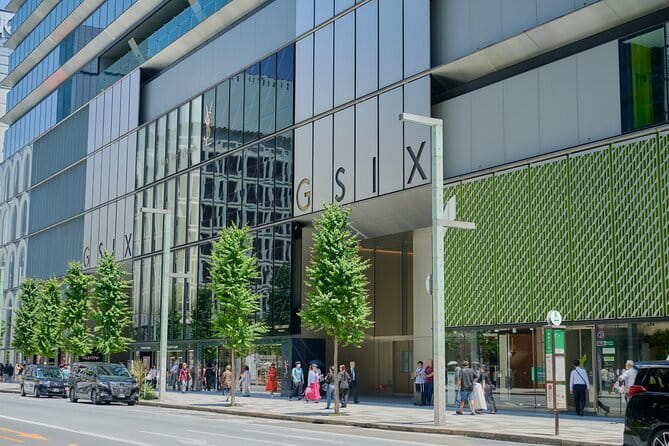
Reviewed · TOURS
Small-Group Architecture Tour in Ginza, Tokyo
Ginza teaches you to slow down. This small-group architecture walk lets you linger on details you’d otherwise miss, with regular photo stops instead of racing past in a car, plus context on how the Shogun era and natural disasters shaped the look of the area. I love how the guide turns façades into stories, and I also like that the group stays intimate at max 6 travelers so you can actually ask questions and get specific recommendations. One thing to consider: it’s still a walking tour, so if you’re not comfortable on your feet for about 3.5 hours, you’ll feel it.
I also appreciate the mix of showpiece and quiet contrast in Ginza—flashy brand architecture beside religious and civic spaces. The pace includes a cozy drinks pause along the way, which helps when the stops involve quick walks inside and back out again. If you only want a full-on museum-style experience, the quick-hit format at each building might feel brief.
In This Review
- Key points before you go
- Ginza looks different when you walk it, slowly
- The small-group format: your secret weapon in Tokyo
- Price and what you actually get for $84.70
- The 3.5-hour flow: from Tsukiji meeting point to Ginza finish
- Stop 1: Ginza streetscape and photo framing
- Stop 2: Tsukiji Hongwanji Temple (step inside, then notice the details)
- Stop 3: Kabukiza Theater (where function and style meet)
- Stop 4: Nicolas G. Hayek Center (modern design with a story)
- Stop 5: Toyoiwa Inari Shrine (small visit, real atmosphere)
- Stop 6: Ginza Maison Hermes Le Forum (luxury architecture you can actually enter)
- Stop 7: Mikimoto Boutique Ginza 2-chome (quick hit if you have time)
- Stop 8: UNIQLO Tokyo (outside viewing: how retail scale works)
- Stop 9: Mikimoto Ginza 4-chome Honten (another exterior read)
- Stop 10: Wako Ginza (street icon geometry)
- Stop 11: Okuno Building (one final inside look)
- The architectural theme: Shogun-era influence and disaster-proof thinking
- Guides make or break a tour like this
- Who should book this Ginza architecture walk
- Quick practical tips so you enjoy it more
- Should you book? My take
- FAQ
- How long is the Small-Group Architecture Tour in Ginza?
- How many people are in the group?
- What is the meeting point and start time?
- Where does the tour end?
- Is hotel pickup included?
- Is the ticket mobile?
- Are there admissions or entrance fees for the stops?
- Will there be time to go inside buildings and temples?
- What kind of walking fitness level should I have?
- What if the weather is bad?
Key points before you go
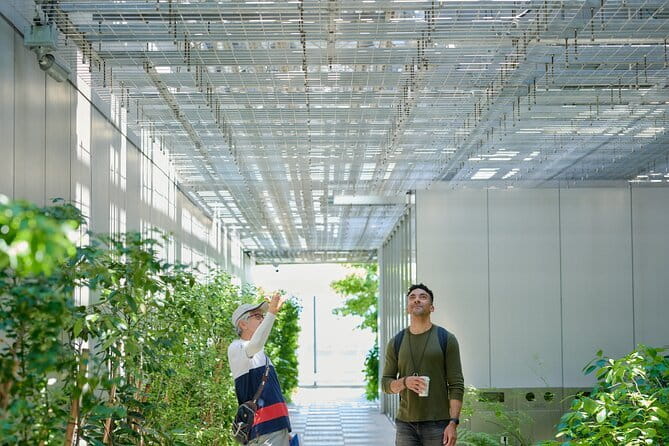
- Small group of up to 6 means less waiting and more conversation
- Photo-first pacing so you can frame buildings instead of just walking by
- Free entries at every stop keeps the day from turning into surprise costs
- Ginza + Tsukiji contrast gives you a wider architectural picture in one run
- Licensed guides with real planning/architecture perspective (including former urban planner/architect backgrounds)
Ginza looks different when you walk it, slowly
Ginza’s reputation is all lights, luxury, and polished storefronts. This tour reframes that same stretch as architecture you can read—materials, proportions, entrances, and how public space is designed for movement.
What makes it work is the rhythm. You stop regularly for photos, so you’re not just catching glimpses through crowds or train-station foot traffic. You also get prompted to look at the small stuff: how a building steps, where the lines pull your eye, and why certain design choices feel intentional instead of random.
Readers booked these Tokyo options in the same breath. Here is how each one scored:
- Mt Fuji and Hakone 1-Day Bus Tour Return by Bullet Train
★ 5.0 · 26,383 reviews - 1-Day Tokyo Bus Tour
★ 5.0 · 14,250 reviews - Tokyo: teamLab Planets TOKYO Digital Art Museum Entry Ticket
★ 4.6 · 9,779 reviews - Mt Fuji & Hakone Cruise, Drum Show Bullet Train 1 Day from Tokyo
★ 4.0 · 7,413 reviews
The small-group format: your secret weapon in Tokyo
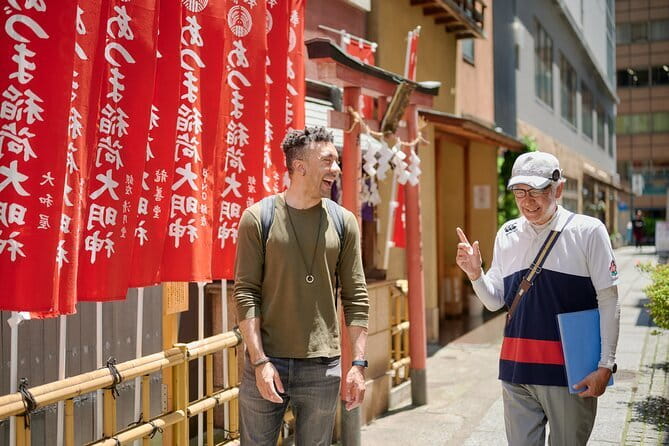
With a maximum group size of 6 travelers, you get the opposite of the usual big-tour problem: no one gets ignored. When guides have time to tailor answers, you can ask follow-ups instead of just collecting facts.
It also changes the walk itself. In a tiny group, you move as a unit, which makes the photo stops less chaotic and the inside visits smoother. You can even ask for extra local architectural suggestions beyond what’s on the schedule.
If you’re the type who likes to understand the why behind what you’re seeing, you’ll feel at home here. One guide I met for context had a background as a former urban planner and architect, which showed in the way they explained modern Ginza buildings and how the whole area developed.
Price and what you actually get for $84.70
At $84.70 per person for about 3 hours 30 minutes, this isn’t a bargain ticket. But the value is in what’s bundled and how the day is structured.
You’re paying for a licensed guide, a walking route paced for photos, and multiple stops where you go inside rather than just stare from the sidewalk. Admission is free at the listed stops, and the tour includes a drinks pause—those add up in a city where even small conveniences can cost real money.
A good way to judge whether this is worth it for you: if you enjoy architecture and you want context (not just sightseeing), the guide time is the main value. If you’re mostly after the shopping streets, you might prefer a self-guided walk.
The 3.5-hour flow: from Tsukiji meeting point to Ginza finish
You start at Tsukiji, near Tsukiji Station (3-chōme), Exit 1, and the tour ends at the Ginza 4-chōme intersection in front of Mitsukoshi. That arc matters because it helps you connect Tsukiji’s established urban fabric with Ginza’s signature modern luxury style.
The schedule is structured as short, focused segments. You’ll spend limited time inside each place, then quickly move to the next viewpoint. That keeps the energy up and makes the walk feel efficient without turning it into a sprint.
Stop 1: Ginza streetscape and photo framing
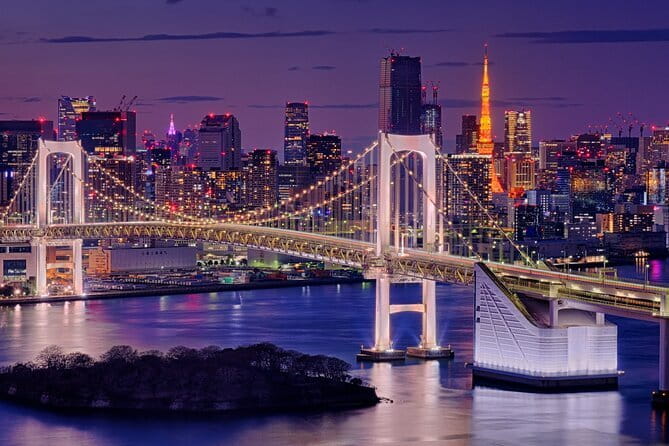
You begin in Ginza itself, with a short on-foot transfer between sites that’s timed to get you ready for the visual part of the day. This first stretch is less about one single building and more about teaching your eyes how to read the neighborhood.
Look for patterns: how streets meet at angles, how entrances are designed for foot traffic, and how signage and façade rhythm guide your movement. Ginza is famous for big commercial landmarks, but the point here is learning to see the smaller architectural choices too.
A practical tip: on the first stop, take one minute to decide what you want your photos to communicate—lines, materials, or a sense of scale. The guide’s stops are timed for those kinds of shots.
- Tokyo: Shinjuku Food Tour (13 Dishes at 4 Local Eateries)★ 5.0 · 6,603 reviews
- Tokyo Mt Fuji 5th St & Hakone Cruise Bus Tour w/Bullet Train★ 4.4 · 5,024 reviews
- Flagship 2-Hours Official Street Go-Kart Tour – Tokyo Bay Shop★ 5.0 · 4,974 reviews
- From Tokyo: Mount Fuji Full-Day Sightseeing Trip★ 4.5 · 4,970 reviews
- Tokyo: Hop-On Hop-Off Sightseeing Bus Ticket★ 3.9 · 4,207 reviews
Stop 2: Tsukiji Hongwanji Temple (step inside, then notice the details)
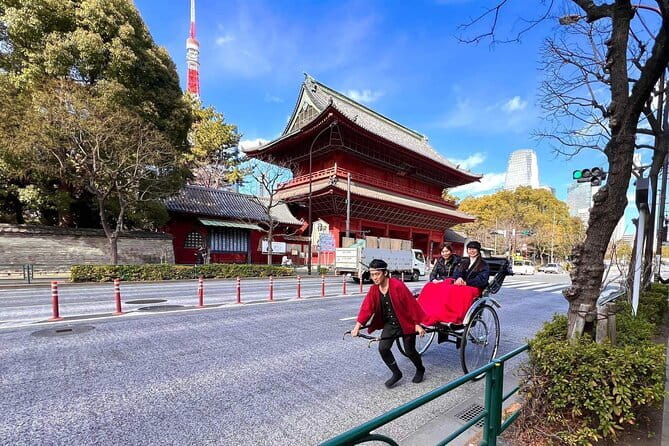
Next comes Tsukiji Hongwanji Temple, and you go inside to see it up close rather than treating it as a quick photo stop. Even if you’re not religious, temple architecture rewards slow looking: entry transitions, roof shapes, and the way the space is organized for quiet movement.
This stop is valuable because it shifts the tone. Ginza’s style can feel like pure spectacle. A temple gives you contrast, and contrast makes architecture easier to understand.
The visit window is short, so it helps to focus on one or two things. I’d pick the main interior view or the spatial layout first, then circle back for smaller elements.
Stop 3: Kabukiza Theater (where function and style meet)
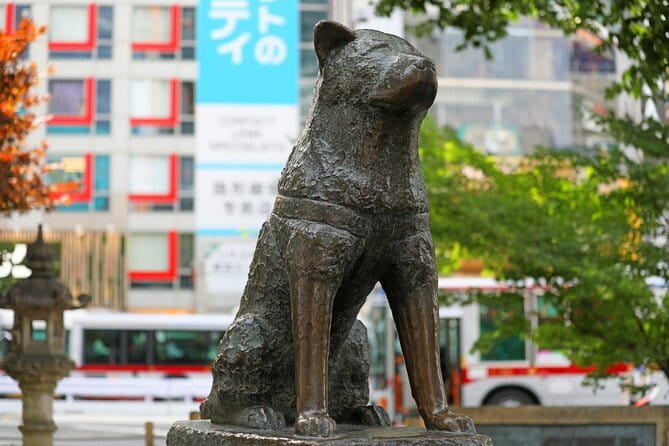
Kabukiza Theater is one of those places you can recognize instantly in Tokyo, but the tour uses it for a different reason: understanding how performance spaces shape architectural decisions.
You’ll go inside here to enjoy its features, which is key. Theater buildings aren’t just pretty boxes; they’re built around audience sightlines, movement, and experience. Even during a quick visit, you can notice how the building addresses spectatorship.
Drawback to plan around: entrances and viewing angles can be crowded around popular venues. The tour’s small group size helps, but you still might want to arrive with patience.
Stop 4: Nicolas G. Hayek Center (modern design with a story)
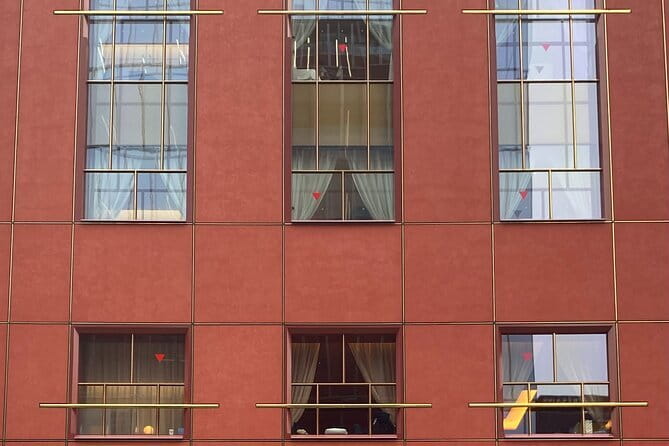
Then you step into the Nicolas G. Hayek Center, another stop built for inside viewing. This is where the tour starts to feel especially “architecture-minded,” not just “tourist landmarks.”
You’ll likely notice how modern design handles public presence—how the building communicates identity without turning the whole street into one long billboard. Places like this help you connect Ginza’s luxury image to a broader pattern: Tokyo retools spaces for new uses while keeping the city’s urban logic intact.
If you like technical explanations, you’ll probably enjoy this part. One guide highlighted the Hayek Center as a personal favorite, which matched the way the stop feels: structured, intentional, and designed to be understood.
Stop 5: Toyoiwa Inari Shrine (small visit, real atmosphere)
After a more modern stop, you go to Toyoiwa Inari Shrine for a brief visit. This is the kind of stop that works in a walking tour because it refreshes your senses without draining time.
Shrine spaces often feel distinct because of how they shape movement—approach, pause, and sightline. Even in a short window, you can usually pick up the rhythm of the area and the way the shrine’s presence changes the street mood around it.
If you tend to rush, remind yourself to slow down for this one stop. It’s short, but it’s also the most likely to surprise you emotionally.
Stop 6: Ginza Maison Hermes Le Forum (luxury architecture you can actually enter)
Next is Ginza Maison Hermes Le Forum, and you’ll go inside to see it. This is part of Ginza’s core identity: high-end retail as architecture, not just shopping.
Inside stops are where luxury buildings become more than façades. You can see how materials are chosen, how lighting supports display areas, and how the space manages customer flow. That’s a kind of design literacy you can carry forward when you walk the streets on your own afterward.
One consideration: if you’re uncomfortable in retail spaces or you just want exterior views, this part might feel like a lot of looking at branding. But even then, the design choices are worth noticing.
Stop 7: Mikimoto Boutique Ginza 2-chome (quick hit if you have time)
You get a flexible stop at Mikimoto Boutique Ginza 2-chome, visited if there’s time. The short duration makes it a good “extra” stop rather than a guaranteed anchor.
Mikimoto is a clue to what Ginza does well: it blends craft and spectacle. Even with limited time, you can focus on how the brand space handles elegance—presentation, line, and how the interior supports the product story.
If your schedule is tight that day, this stop can be a win. It’s optional-feeling but still part of the architecture education.
Stop 8: UNIQLO Tokyo (outside viewing: how retail scale works)
You’ll view UNIQLO Tokyo from the outside here. This is a smart contrast: luxury inside visits, then a broad, recognizable retail space you can study as a street object.
Even from the outside, you can examine scale. Notice how a big retail building handles transparency, entrances, and the relationship between street and interior. It’s architecture designed for volume, not for exclusivity.
If you like comparing design philosophies, this is a good moment. You’ll see how the neighborhood handles different brands and different audiences.
Stop 9: Mikimoto Ginza 4-chome Honten (another exterior read)
Another short exterior viewpoint comes at Mikimoto Ginza 4-chome Honten. This helps you compare how the same brand language can change depending on location and building role.
Exterior stops are where you practice architectural “reading.” Look at rooflines, façade rhythm, and how entrances line up with pedestrian lanes. It’s the simplest way to get something useful out of a city that’s otherwise too easy to walk through on autopilot.
Stop 10: Wako Ginza (street icon geometry)
You’ll also view Wako Ginza from outside. It’s a familiar Tokyo name, and the tour uses it for shape and street presence—how a landmark building anchors a corner and frames the flow of passersby.
This is a good spot to take one step back and photograph the building in context, not just up close. Architecture in Ginza is all about the relationship between structure and crowd movement.
Stop 11: Okuno Building (one final inside look)
The last stop is Okuno Building, where you go inside and enjoy its features. This ending matters because it gives you a chance to see a different kind of interior experience before you finish at Ginza 4-chōme.
By now, you’ll have trained your eye. You’ll likely spot patterns more quickly—how spaces handle light, how entrances signal purpose, and how circulation is designed to keep people moving comfortably.
If the tour leaves you wanting more, that’s a good sign. You’ll start noticing architectural choices everywhere you go next.
The architectural theme: Shogun-era influence and disaster-proof thinking
The tour isn’t just brand names and famous buildings. It focuses on the idea that architectural style in Tokyo was shaped by the Shogun era and by natural disasters.
Even without turning every stop into a lecture, that theme changes how you interpret what you see. You start looking for clues in structure and design choices: durability, spatial planning, and how buildings manage public life under real-world conditions.
It’s the kind of context that makes a city feel less random. Once you connect architecture to history and resilience, Ginza’s mix of old and new stops feeling like contrast for contrast’s sake. It feels like continuity.
Guides make or break a tour like this
A major plus here is the guide quality. In one tour I studied through, Hal stood out for technical insight and energy, explaining how projects became iconic. Another guide, Taka, impressed with a background in urban planning and architecture, and he highlighted modern Ginza projects with a planner’s eye.
That matters because architecture tours can go two ways: either you get basic descriptions, or you get explanations that help you see. This one aims for the second.
When the guide is strong, the inside visits become more than photo ops. They become mini lessons in design, layout, and why a building feels the way it does.
Who should book this Ginza architecture walk
This is a great match if you:
- Enjoy architecture details and want more than sightseeing
- Like small groups where you can ask questions
- Want a route that includes inside access rather than only exterior shots
- Prefer a paced experience with a drinks stop and regular breaks for photos
It may not be ideal if you:
- Want long, slow time in only one or two buildings
- Dislike retail spaces or brand-heavy interiors
- Struggle with moderate walking for about 3.5 hours
Quick practical tips so you enjoy it more
- Wear comfortable shoes. You’ll be moving between multiple stops for about 3 hours 30 minutes.
- Bring a phone with enough battery for photo framing. The stop pattern is built around photos.
- If you see a building you really want to understand, ask early in the walk. Guides can often point you toward extra architectural gems you might like afterward.
- Go in with a mindset shift: try to spot design choices, not just famous names.
Should you book? My take
Yes, you should book this if you want Ginza to feel legible. The combination of small group size, inside access at several major stops, and a guide who can explain how architecture works makes it more rewarding than a typical walk.
If you mainly want shopping or you don’t care about architectural context, you might find the price harder to justify. But for $84.70, the free admissions, licensed guide time, and photo-friendly pacing do a lot of heavy lifting.
I’d book it early in your Tokyo planning, not last-minute. The tour is often booked about a month ahead, and you’ll want a time slot when you can give it your full attention.
FAQ
How long is the Small-Group Architecture Tour in Ginza?
It runs for about 3 hours 30 minutes.
How many people are in the group?
The tour has a maximum of 6 travelers.
What is the meeting point and start time?
You meet at Tsukiji, Japan (Tsukiji Station 3-chōme, Exit 1 area) and the start time is 10:00 am.
Where does the tour end?
It finishes at the Ginza 4-chōme intersection, in front of Mitsukoshi department store.
Is hotel pickup included?
No. Hotel pickup and drop-off are not included.
Is the ticket mobile?
Yes, it uses a mobile ticket.
Are there admissions or entrance fees for the stops?
Admission is free for the listed stops.
Will there be time to go inside buildings and temples?
Yes. Several stops include going inside to see and enjoy the features, while a few are outside viewing.
What kind of walking fitness level should I have?
Moderate physical fitness is recommended.
What if the weather is bad?
The experience requires good weather. If it’s canceled due to poor weather, you’ll be offered a different date or a full refund.
More Tours in Tokyo
- Mt Fuji and Hakone 1-Day Bus Tour Return by Bullet Train
★ 5.0 · 26,383 reviews - 1-Day Tokyo Bus Tour
★ 5.0 · 14,250 reviews - Tokyo: Shinjuku Food Tour (13 Dishes at 4 Local Eateries)
★ 5.0 · 6,603 reviews - Tokyo Mt Fuji 5th St & Hakone Cruise Bus Tour w/Bullet Train
★ 4.4 · 5,024 reviews - Flagship 2-Hours Official Street Go-Kart Tour – Tokyo Bay Shop
★ 5.0 · 4,974 reviews
More Tour Reviews in Tokyo
- Mt Fuji and Hakone 1-Day Bus Tour Return by Bullet Train
★ 5.0 · 26,383 reviews - 1-Day Tokyo Bus Tour
★ 5.0 · 14,250 reviews - Tokyo: teamLab Planets TOKYO Digital Art Museum Entry Ticket
★ 4.6 · 9,779 reviews - Mt Fuji & Hakone Cruise, Drum Show Bullet Train 1 Day from Tokyo
★ 4.0 · 7,413 reviews - Tokyo: Shinjuku Food Tour (13 Dishes at 4 Local Eateries)
★ 5.0 · 6,603 reviews
Latest Tokyo reviews off our desk






Tours, compared.
 ★ 5.0Mt Fuji and Hakone 1-Day Bus Tour Return by Bullet TrainFrom $16326,383 reviews
 ★ 5.01-Day Tokyo Bus TourFrom $12914,250 reviews
 ★ 5.0Shinjuku Food Tour (13 Dishes at 4 Local Eateries)From $866,603 reviews
 ★ 4.4Tokyo Mt Fuji 5th St & Hakone Cruise Bus Tour w/Bullet TrainFrom $1545,024 reviews
 ★ 5.0Flagship 2-Hours Official Street Go-Kart Tour – Tokyo Bay ShopFrom $644,974 reviews
 ★ 4.7Mt. Fuji Tour, Hakone Ropeway, Owakudani, Lake AshiFrom $544,002 reviews
 ★ 5.0Tokyo 6hr Private Tour with Government-Licensed GuideFrom $1553,902 reviews
 ★ 5.0Tokyo Bar Hopping Tour in Shinjuku (All-You-Can-Drink + Dinner)From $1063,587 reviews