
Reviewed · TOKYO
Special sushi rolls only available in Japan Making Experience
Designer sushi rolls can be surprisingly simple. You’ll learn the steps for eye-catching maki, from colored rice to the final slice pattern. In this private Making Experience in Tokyo, you get one-to-one tuition and can build characters and animals that look great for photos and gifting.
I especially love the patient, step-by-step guidance from Yumi, plus the fact that you leave with your rolls neatly wrapped to take away. A private setup also means you can ask questions as you go. The only real drawback is location: the class starts in Shinkashiwa (Kashiwa, Chiba), so make time to get there unless you request an option near Asakusa or Skytree.
In This Review
- Key highlights worth knowing
- Designer sushi rolls: what makes this class special
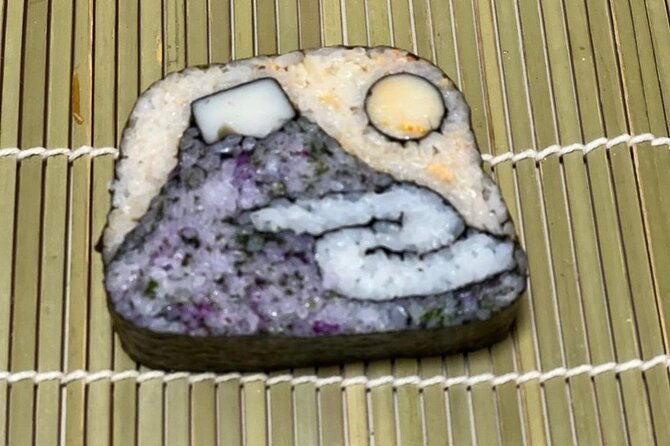
- Choosing your roll design: minions, pets, flowers, and Mount Fuji scenes
- The 2-hour flow: from colored rice to the final slice pattern
- Where you cook in Tokyo (and what to do if Shinkashiwa is far)
- What you do with your sushi: takeout containers and a calm finish
- Price and value: what $40.97 buys you in a private class
- Who this experience is best for
- Practical tips so your class goes smoothly
- Should you book this sushi-making experience?
- FAQ
- How long is the sushi-making experience?
- Is this experience private?
- Can I choose the sushi roll design?
- Are ingredients provided, and can I take the sushi home?
- Where is the meeting point, and can it be closer to central Tokyo?
- What’s the cancellation policy?
Key highlights worth knowing
- One-to-one coaching from Yumi in a private class, so you don’t get rushed or handed a vague worksheet
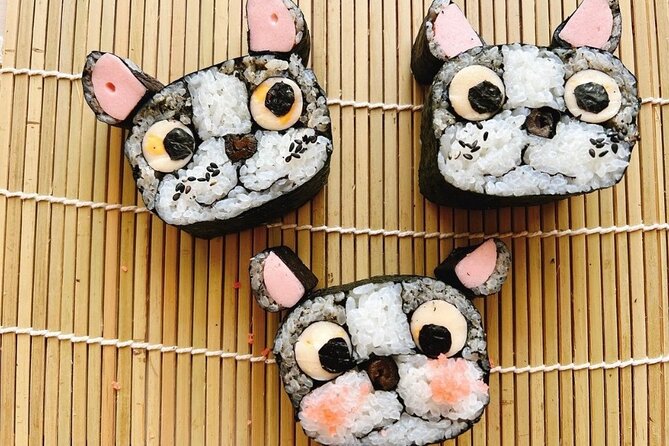
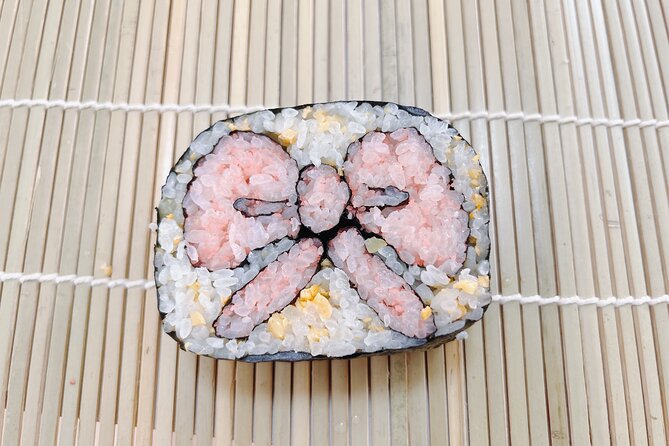
- Designer roll themes you can choose, from minions to dogs, cats, flowers, and Mount Fuji scenes
- A repeatable workflow: colored rice, seaweed prep, decoration placement, rolling, then slicing to reveal your pattern
- Take-home packaging: your sushi gets wrapped and put into takeout containers so you can enjoy it later
- Flexible kitchen locations: small groups go to a more home-style setup, larger groups use a communal kitchen
Designer sushi rolls: what makes this class special
Sushi classes can be either very basic or very showy. This one lands in a sweet spot: you learn how to roll maki properly, then you apply that technique to a design you actually care about.
The private format matters. When it’s just your group, Yumi can correct your hand position, adjust how you place rice, and help you get clean edges while you’re building the roll. That’s how those crisp animal and character patterns become possible instead of turning into a sticky, blurry mess.
Another thing I like is the promise that the result is photoworthy. You’re not only making sushi for eating on the spot. You’re making a specific pattern that shows when the roll is cut into pieces.
Readers booked these Tokyo options in the same breath. Here is how each one scored:
- Mt Fuji and Hakone 1-Day Bus Tour Return by Bullet Train
★ 5.0 · 26,383 reviews - 1-Day Tokyo Bus Tour
★ 5.0 · 14,250 reviews - Tokyo: teamLab Planets TOKYO Digital Art Museum Entry Ticket
★ 4.6 · 9,779 reviews - Mt Fuji & Hakone Cruise, Drum Show Bullet Train 1 Day from Tokyo
★ 4.0 · 7,413 reviews
Choosing your roll design: minions, pets, flowers, and Mount Fuji scenes
Before you start rolling, you get to pick a theme. The options listed include minions, flowers, Mount Fuji scenes, dogs, and cats—plus the idea of animal-themed sushi. That variety is more than cute branding. It changes where the colored rice and decorations go, which makes you practice the real mechanics of creating a consistent pattern.
In practice, you’ll work with colored rice and extra decorations. The class walks you through building those elements so the design survives the roll—and then shows clearly after cutting.
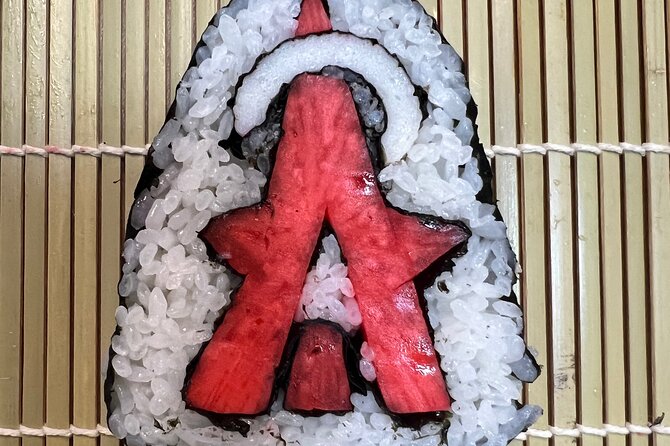
If you want a design that feels festive, there’s also an example of a Santa-themed roll. It’s a good reminder that these classes aren’t limited to one style. You can lean playful, seasonal, or just pick something that matches the people you’re eating with.
The 2-hour flow: from colored rice to the final slice pattern
The timing is tight in the best way. The experience runs about 2 hours, and the steps are arranged so you’re always doing something rather than waiting around.
Here’s how the class typically moves, step by step:
1) Mix the rice for your design
You start by mixing rice with ingredients to make colored rice. This is the foundation for everything that comes after. The goal is rice that’s consistent in color and ready to spread cleanly.
2) Cut the seaweed
Then you cut the seaweed. This matters because the size and shape affect how neatly the roll comes together and how stable your decorations stay.
3) Build the roll layer by layer
Next comes the fun part: you place the colored rice and add other decorations. The class focuses on putting everything where it needs to be, not just stuffing it in. That’s what helps your pattern show after slicing.
4) Roll it up
Once you’ve built the layers, you roll. This is where Yumi’s one-to-one coaching helps most, because a small adjustment in pressure or alignment can make the difference between a sharp-looking pattern and a smudged one.
5) Cut into four pieces to reveal the pattern
Finally, you cut the roll into four pieces. That’s when you get the payoff: you’ll see the pattern you created—like a flower, an animal, or a character style.
Even if you’ve never made sushi at home, this structure keeps you from guessing. You’ll know what each step is doing for the final result.
Where you cook in Tokyo (and what to do if Shinkashiwa is far)
The experience starts at Shinkashiwa Clinic in Shinkashiwa, Kashiwa, Chiba. That’s outside central Tokyo, so you’ll want to plan transit time with a little buffer.
The good news: if Shinkashiwa feels too far, you can request a different location. The class notes that it’s possible to arrange lessons in Tokyo, and it recommends areas near Asakusa and Skytree. You add a special request for where you want to enter, and kitchens can be rented for a fee.
Once you meet up, the location can vary based on group size:
- If you’ve booked for a small number of people, you’ll head to Yumi’s parents house.
- For larger groups, you’ll go to a communal kitchen.
That’s a meaningful difference. A home-style setup can feel more relaxed and personal. A communal kitchen setup tends to be more structured for groups. Either way, you still get the private class approach with your group.
After the class, you’re taken back to the pickup point, and the activity ends there.
What you do with your sushi: takeout containers and a calm finish
You don’t just make rolls and walk away. The class wraps your sushi so it’s ready to take home. Takeout containers are provided, which is a huge practical win if you want to keep the rolls for dinner later, share with family, or bring them back to your hotel.
After the rolling and wrapping, you get coffee, tea, and snacks. This is also where the pressure comes off. You can relax a bit, look at the patterns you made, and enjoy a simple break before heading back.
It’s a nice way to keep the experience from feeling like a rushed workshop. You finish with food in-hand and time to enjoy it, not just to pack it up immediately.
- Tokyo: Shinjuku Food Tour (13 Dishes at 4 Local Eateries)★ 5.0 · 6,603 reviews
- Tokyo Mt Fuji 5th St & Hakone Cruise Bus Tour w/Bullet Train★ 4.4 · 5,024 reviews
- Flagship 2-Hours Official Street Go-Kart Tour – Tokyo Bay Shop★ 5.0 · 4,974 reviews
- From Tokyo: Mount Fuji Full-Day Sightseeing Trip★ 4.5 · 4,970 reviews
- Tokyo: Hop-On Hop-Off Sightseeing Bus Ticket★ 3.9 · 4,207 reviews
Price and value: what $40.97 buys you in a private class
At $40.97 per person for about two hours, you’re paying for three big things: private instruction, design-focused technique, and a take-home meal.
Most casual sushi lessons cost less, but they often involve more demo time and less hands-on coaching. Here, the experience is specifically one-to-one tuition in a private class, which changes the value calculation. When you’re paying for personal correction and guidance, you’re buying better results and a smoother learning curve.
You’re also getting ingredients and a structured workflow, plus the wrapping and takeout containers. In other words, you’re not just learning theory—you’re leaving with edible sushi you made.
One thing to keep in mind is that you’re paying for the design elements. These designer rolls require colored rice and additional decorations, and the class is built around making that pattern visible after slicing.
So if you want a straightforward, traditional sushi lesson only, this might feel more playful than necessary. But if you like the idea of making a themed roll that looks intentional, the price starts to make sense quickly.
Who this experience is best for
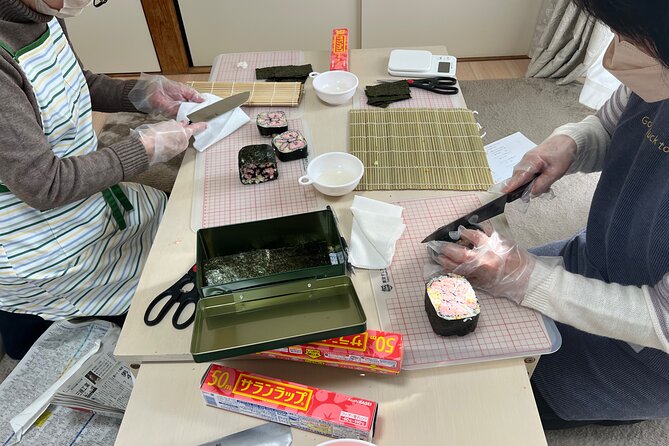
This class fits best if you want a hands-on Tokyo activity that feels personal and a little artistic.
It’s especially good for:
- First-timers who want step-by-step help, not just a quick tutorial
- People who enjoy playful food presentation, like animal themes and character-style rolls
- Families, since the class is comfortable with groups and can be patient while kids get involved
- Anyone who wants a private experience where questions are welcome while you cook
If you’re traveling with a partner or friends, you’ll also like the private setup because it keeps the attention on your group rather than spreading it across strangers.
Practical tips so your class goes smoothly
A few small choices can make your time easier.
Plan your transit to Shinkashiwa first, then adjust via request if needed. The meeting point is in Shinkashiwa, Kashiwa, Chiba, and it ends back at the meeting point. If you’d rather be closer to central sights, use the special request option for areas near Asakusa or Skytree.
Bring the mindset of a craft class. You’re not memorizing recipes. You’re learning how colored rice, seaweed, decorations, rolling, and cutting work together to reveal a pattern.
Use the private time to ask questions. The experience is designed so you can check in with Yumi while you build. If something feels off—rice thickness, decoration placement, or how tight to roll—ask right away.
Think about when you’ll eat. You’ll take the sushi home in containers, so you can plan to eat it later that day. The class also includes coffee, tea, and snacks, which can help you time the meal comfortably.
Should you book this sushi-making experience?
Book it if you want sushi-making that feels personal, photo-ready, and actually guided from start to finish. The best reasons are the one-to-one coaching, the ability to create designer themes like pets, flowers, minions, and Mount Fuji scenes, and the clear step-by-step path that leads to a visible pattern after cutting.
Skip or reconsider if the Shinkashiwa starting point is a deal-breaker for your schedule. You can request an option closer to central Tokyo, but if you need a guaranteed location inside the city without requests, you’ll want to think carefully.
Overall, this is a strong choice for a short Tokyo activity where you leave with a real skill and a take-home meal.
FAQ
How long is the sushi-making experience?
It lasts about 2 hours (approx.).
Is this experience private?
Yes. It’s a private tour/activity, and only your group participates.
Can I choose the sushi roll design?
Yes. You can choose imaginative designs such as minions, flowers, Mount Fuji scenes, dogs, or cats.
Are ingredients provided, and can I take the sushi home?
Yes. Ingredients are provided by your instructor, and takeout containers are provided. The sushi is wrapped so you can take it away.
Where is the meeting point, and can it be closer to central Tokyo?
The start point is Shinkashiwa Clinic in Shinkashiwa, Kashiwa, Chiba. If Shinkashiwa is too far, you can make a special request for an area near Asakusa and Skytree (kitchens can be rented for a fee).
What’s the cancellation policy?
You can cancel for a full refund up to 24 hours in advance of the experience start time. Confirmation is received at time of booking.
More Tour Reviews in Tokyo
- Mt Fuji and Hakone 1-Day Bus Tour Return by Bullet Train
★ 5.0 · 26,383 reviews - 1-Day Tokyo Bus Tour
★ 5.0 · 14,250 reviews - Tokyo: teamLab Planets TOKYO Digital Art Museum Entry Ticket
★ 4.6 · 9,779 reviews - Mt Fuji & Hakone Cruise, Drum Show Bullet Train 1 Day from Tokyo
★ 4.0 · 7,413 reviews - Tokyo: Shinjuku Food Tour (13 Dishes at 4 Local Eateries)
★ 5.0 · 6,603 reviews





