
Reviewed · TOKYO
Tokyo : Authentic Soba Noodle Making Experience
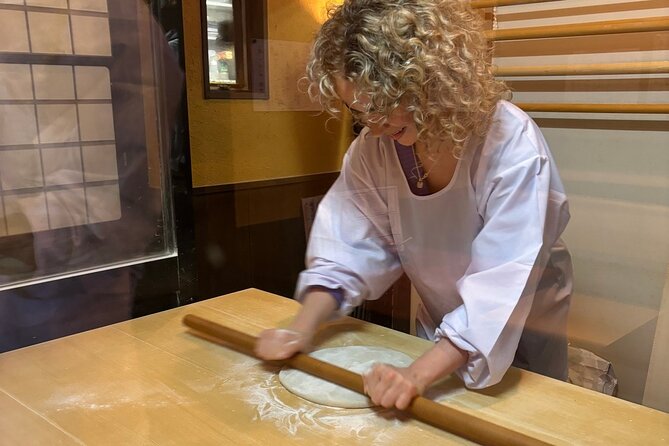
Handmade soba beats takeout every time. In Tokyo, you get hands-on training in a real soba shop and learn how soba noodles are made and cooked, step by step. You work at the master’s workspace, guided by an English-speaking support person, and you end by eating the noodles you made.
I love two things most: first, the small group size (max 6) keeps the class personal, not like a demo you watch from the sidelines. Second, you get real teaching from people running the kitchen day-to-day. In past groups, the English guide Nori and the chef Ken were specifically called out as excellent, and that kind of on-the-ground attention really shows.
The main drawback to consider is the allergy rule. This class involves buckwheat flour, plus wheat and soy cross-ingredients in typical soba-making environments, so anyone with buckwheat, wheat, or soy allergies can’t join. Also, you’ll handle flour, so plan for clothes that can take a little mess.
In This Review
- Key highlights before you book
- Why this Tokyo soba class feels more authentic than a show-and-taste
- The 2-hour flow: what happens from check-in to your first bite
- Nori and Ken: how the teaching keeps it fun and not stressful
- Soba technique you’ll actually remember (and why it matters)
- Clothes, cleanliness, and the allergy reality check (read this twice)
- Price and value: why $156.76 can make sense (if this is your thing)
- Who this soba-making experience is best for
- Practical tips to get the most from your class
- Should you book this Tokyo soba noodle making class?
- FAQ
- How long is the soba noodle making experience?
- Where is the meeting point in Tokyo?
- What time does the experience start?
- How many people are in a group?
- What’s included in the price?
- Are vegetarians allowed?
- Can people with buckwheat, wheat, or soy allergies join?
- FAQ
- Is there free cancellation?
Key highlights before you book
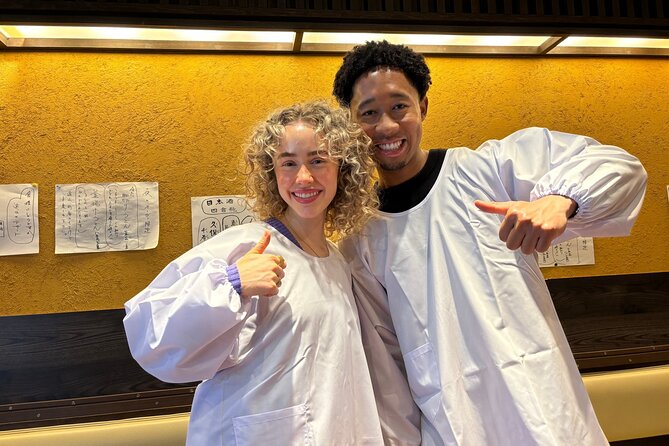
- Make your own soba noodles at the master’s workspace, not just watch and taste.
- Small group (up to 6) for better coaching and easier photo moments.
- English-speaking support so you can follow the steps without guessing.
- In-shop experience in a working soba place, where the pace feels real.
- Vegetarian welcome, with dietary notes handled in advance.
- No extra food or drinks included beyond what you’re served from your own noodles.
Why this Tokyo soba class feels more authentic than a show-and-taste
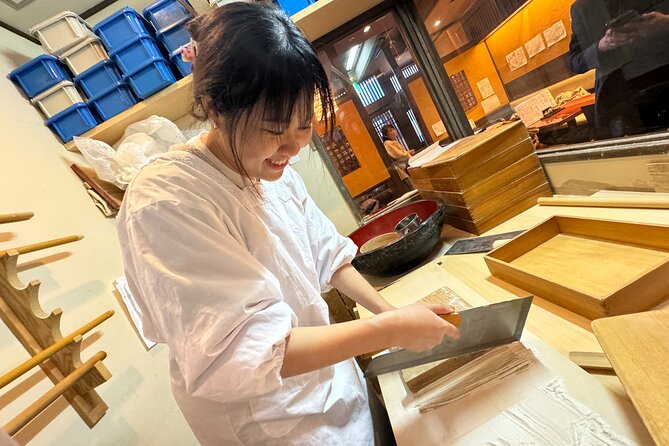
Tokyo has plenty of food experiences, but the ones that stick are usually the ones where you do the work. This one is built around that idea: you train with a Japanese soba noodles master, use the workspace, and get to try making noodles yourself. That matters because soba is not just a flavor. It’s technique, texture, and timing.
The setting is also part of the value. You’re not in a generic cooking studio with one camera angle. You’re in a real soba shop environment, where the tools and workflow match how soba is actually produced and cooked. People who love Japanese cuisine often look for that feeling of getting close to the real process. This class is designed for it.
Finally, you get a guide who supports you in English. That keeps you from missing the key “why” behind each step. Soba-making has small decisions that affect the outcome, and having real-time clarification is what turns a fun activity into a learning experience you can repeat later.
Readers booked these Tokyo options in the same breath. Here is how each one scored:
- Mt Fuji and Hakone 1-Day Bus Tour Return by Bullet Train
★ 5.0 · 26,383 reviews - 1-Day Tokyo Bus Tour
★ 5.0 · 14,250 reviews - Tokyo: teamLab Planets TOKYO Digital Art Museum Entry Ticket
★ 4.6 · 9,779 reviews - Mt Fuji & Hakone Cruise, Drum Show Bullet Train 1 Day from Tokyo
★ 4.0 · 7,413 reviews
The 2-hour flow: what happens from check-in to your first bite
This runs about 2 hours, starting at 2:30 pm, and it finishes back at the meeting point. You meet at McDonald’s at 2-chōme-18-7 Nishinippori, Arakawa City, Tokyo (easy to find and easy as a landmark). From there, the class takes place at the soba shop workspace.
Once you arrive, you’ll get the basics and then move into hands-on work quickly. The experience is structured so you’re not waiting around. You’re learning cooking and soba technique as you go, with step-by-step instructions and access to the master’s professional setup.
Here’s what the class experience generally feels like:
- You follow instructions in sequence, with help from the English-speaking guide.
- You use the workspace and professional cooks’ area, which helps you learn the real flow of soba prep.
- You make your own handmade soba noodles, not a pre-portioned craft.
- You’re allowed to take photos and videos, so you can document what you’re doing without feeling like you have to rush silently.
The part that often surprises first-timers is how many techniques there are. One review mentioned learning more techniques than expected and wanting to try again. That’s exactly the payoff: even in a short class, you come away understanding that soba is a craft, not a single-step recipe.
And yes, the class ends with food. You get to eat the noodles you made, so the last moment isn’t just applause and packing up. It’s the satisfaction of tasting your own work.
Nori and Ken: how the teaching keeps it fun and not stressful
Small classes can either feel personal or chaotic. This one is designed to stay on track.
In past classes, the English guide Nori and chef Ken were called out as awesome, and that lines up with the most important ingredient in any hands-on cooking tour: clear guidance. You’re working with flour and learning technique, so if instructions are fuzzy, the whole thing turns frustrating.
Instead, the vibe is usually practical:
- The guide helps you understand what to do next, so you don’t spend the class translating in your head.
- You use a professional workspace, which means the tools and workflow are set up for real cooking—not just for show.
- You’re supported while you try shaping your own noodles, so you can keep moving rather than waiting for someone else’s rhythm to come around.
There’s also a cultural component baked in. You’re not only learning how to cook soba; you’re learning how it fits into Japanese food culture. That might sound broad, but in practice it shows up as attention to process and respect for ingredients. It changes the way you think about the dish when you eat it again later.
Soba technique you’ll actually remember (and why it matters)
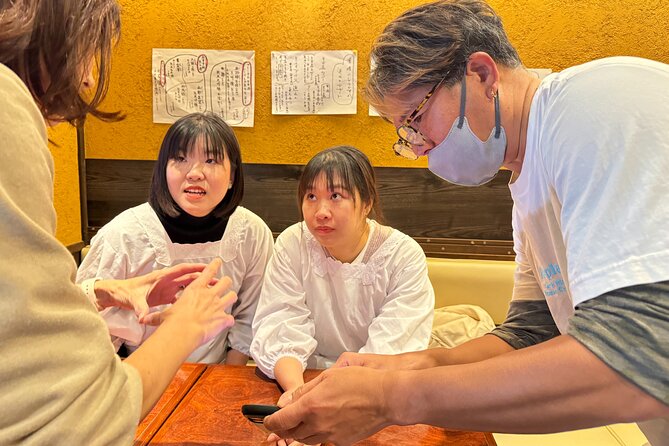
Soba is made from buckwheat flour, and this class is honest about the practical reality: you’ll handle buckwheat flour and flour. That’s why they ask you to wear clothes you don’t mind getting dirty, even with an apron on hand.
So what do you learn, beyond the final dish? You learn the handling side of soba:
- how the process feels in real time (you can’t fully learn it from a recipe alone)
- how to follow steps in order without rushing
- how professional technique helps you get better texture and shape
One of the best parts of this class is that it’s taught as a sequence of techniques. That’s why people who’ve never made soba before often come away saying it was more interesting than expected. You end up learning tips you can use later, which is the difference between a one-time activity and a skill you keep.
Also, because the class uses natural ingredients and focuses on traditional method, you don’t leave with a bunch of “chef tricks” that only work in a special setting. You leave with an approach you can apply when you cook again.
Clothes, cleanliness, and the allergy reality check (read this twice)
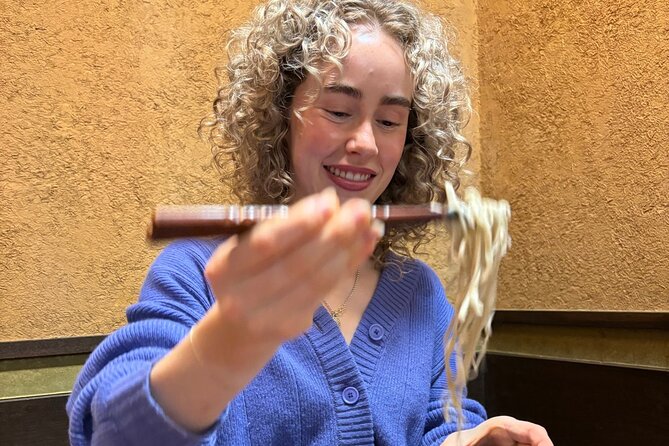
This is one of those experiences where you should prepare like you’re doing real cooking work. They explicitly warn that you’ll handle buckwheat flour and flour, so you should come in clothes you can get dirty. The apron helps, but it won’t stop flour from being flour.
Now the bigger concern: allergies and participation rules.
- People allergic to buckwheat cannot join.
- People allergic to wheat or soybeans cannot join.
If you’re vegetarian, you’re welcome. Just tell them in advance if you have any dietary restrictions. That’s important because the class includes ingredients used to make soba noodles, and the team needs to plan around your needs.
If you’re unsure about your sensitivity to cross-contact, the safest move is to avoid booking. This experience is very hands-on with the core soba ingredients.
- Tokyo: Shinjuku Food Tour (13 Dishes at 4 Local Eateries)★ 5.0 · 6,603 reviews
- Tokyo Mt Fuji 5th St & Hakone Cruise Bus Tour w/Bullet Train★ 4.4 · 5,024 reviews
- Flagship 2-Hours Official Street Go-Kart Tour – Tokyo Bay Shop★ 5.0 · 4,974 reviews
- From Tokyo: Mount Fuji Full-Day Sightseeing Trip★ 4.5 · 4,970 reviews
- Tokyo: Hop-On Hop-Off Sightseeing Bus Ticket★ 3.9 · 4,207 reviews
Price and value: why $156.76 can make sense (if this is your thing)
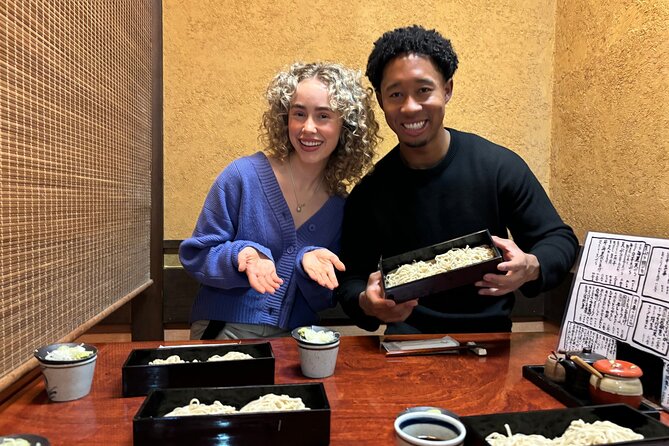
At $156.76 per person, this is not a budget activity. But value here comes from the mix of factors that are hard to replicate cheaply:
1) Small group coaching (max 6)
You’re paying for instruction that’s closer to tutoring than group entertainment. Less crowd means more attention per person.
2) Hands-on access to a working soba shop
You’re using the master’s workspace and the professional setup, not a simplified station. That kind of access is usually where the cost comes from.
3) Includes ingredients and equipment
The price covers ingredients used to make soba noodles and the use of all cooking equipment. That matters because cooking classes often nickel-and-dime by adding ingredient fees or “extra tasting” costs.
4) You eat what you make
The experience includes the soba noodles you produce. Since the class ends with that meal, you’re not just paying for the cooking session.
What’s not included is also clear: additional foods or drinks you order are not part of the price. That’s good to know because it prevents surprise upsells. If you want a full meal, plan to eat nearby before or after, depending on how hungry you are when the class starts at 2:30 pm.
Who this soba-making experience is best for
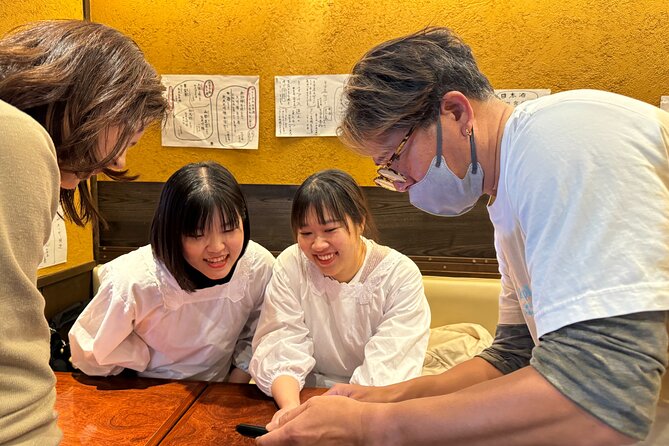
This class is a great fit if you:
- love Japanese food and want to learn technique, not just eat.
- want a short, focused activity (about 2 hours) that ends with a meal.
- prefer smaller groups where you can ask questions.
- enjoy hands-on cooking experiences where mess is part of the fun.
It may not be the best fit if:
- you have buckwheat, wheat, or soy allergy constraints.
- you want a low-flour, zero-mess experience.
- you’re looking for a long evening course with multiple dishes beyond your noodles (this focuses on the soba making experience).
If you’re traveling in Tokyo and you find yourself repeating restaurant meals, a class like this can break the pattern. It gives you a story you’ll remember, and a skill you can carry home.
Practical tips to get the most from your class
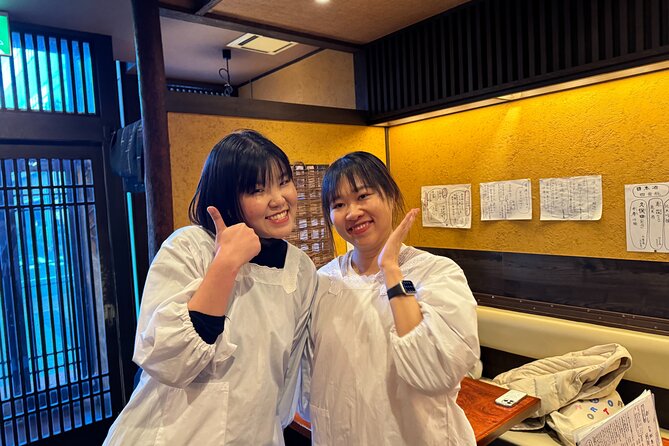
A few small choices will make your 2-hour session smoother.
- Wear something you can clean off later. Aprons help, but flour happens.
- Arrive on time for the 2:30 pm start. Meeting at a familiar landmark like McDonald’s makes it easier, but you still want to start when the class starts.
- Bring your phone, but don’t turn it into a production. Photos and videos are allowed, so capture the moments that show your process. Then stay present for the hands-on steps.
- Mention dietary restrictions when booking. Vegetarians are welcome, and the team needs your info in advance.
- Be ready for a real workshop pace. This is not a sit-and-listen tour. You’ll be doing the work.
Should you book this Tokyo soba noodle making class?
If you want a fun, hands-on way to learn Japanese soba technique in a real shop setting, this is a strong choice. The small group size, English support, and the chance to use a professional workspace are the big reasons it works.
I’d book it when your travel plans include time for a focused, 2-hour activity and you’re comfortable with the ingredient reality: buckwheat flour is part of the process, and clothes may get messy. If you fall into that camp, you’ll leave with noodles you made and a better feel for what makes soba what it is.
If you have buckwheat, wheat, or soy allergies, skip this one. The rules are strict for good reason, and there’s no point gambling with your health.
FAQ
How long is the soba noodle making experience?
It lasts about 2 hours.
Where is the meeting point in Tokyo?
The start meeting point is McDonald’s, 2-chōme-18-7 Nishinippori, Arakawa City, Tokyo 116-0013, Japan.
What time does the experience start?
The start time is 2:30 pm.
How many people are in a group?
The experience has a maximum of 6 travelers.
What’s included in the price?
You’ll get the ingredients used to make soba noodles and the use of all cooking equipment.
Are vegetarians allowed?
Yes, vegetarians are welcome. You should let the provider know in advance about any dietary restrictions.
Can people with buckwheat, wheat, or soy allergies join?
No. People allergic to buckwheat, wheat, or soybeans cannot participate.
FAQ
Is there free cancellation?
Yes. You can cancel for a full refund up to 24 hours in advance of the experience’s start time.
More Tour Reviews in Tokyo
- Mt Fuji and Hakone 1-Day Bus Tour Return by Bullet Train
★ 5.0 · 26,383 reviews - 1-Day Tokyo Bus Tour
★ 5.0 · 14,250 reviews - Tokyo: teamLab Planets TOKYO Digital Art Museum Entry Ticket
★ 4.6 · 9,779 reviews - Mt Fuji & Hakone Cruise, Drum Show Bullet Train 1 Day from Tokyo
★ 4.0 · 7,413 reviews - Tokyo: Shinjuku Food Tour (13 Dishes at 4 Local Eateries)
★ 5.0 · 6,603 reviews





