
Reviewed · CITY TOURS
Tokyo City Attractive One Day Tour
Tokyo is big, but this day tour is organized. You’ll get a private guide feel with a calm, no-stress route through major sights in one shot. I like the air-conditioned vehicle and round-trip hotel transfers, which matters fast in Tokyo heat. One thing to consider: it’s a full day with paid skyline stops (Skytree and Tokyo Tower), and the schedule can feel busy if you want slow wandering and long shopping breaks.
I also like that you can customize the order. You’ll still hit the big emotional beats—temples, food, and iconic neighborhoods—without feeling like you’re bouncing from one problem to the next. The guide is also your driver on the day, so expect that the driving and guiding are a combined role, not two separate people.
In This Review
- Key things to know before you book
- A smart way to see Tokyo in one day (without frying)
- Price and value: when $500 per group makes sense
- Start in Asakusa: Sensoji and Nakamise street
- Go up: Tokyo Skytree and Solamachi’s mix of food, tech, and views
- Tokyo Tower: the classic skyline symbol (and a different vibe than Skytree)
- Tsukiji Outer Market: snack-smart food streets for real Tokyo flavor
- Shinjuku Gyoen and Meiji Jingu: Tokyo’s pause buttons
- Shinjuku Gyoen National Garden: lawns, paths, and seasonal beauty
- Meiji Jingu Shrine: a forested shrine experience with deep context
- Shibuya: the Scramble’s controlled chaos and the Hachiko moment
- Hachiko: the story behind the statue
- Harajuku and Takeshita Street: youth fashion on a hill
- How to shop without getting lost
- What you actually get from a private, hotel-transfer style tour
- Timing tips so you don’t lose the day to queues
- Who this Tokyo highlights day tour fits best
- Should you book this Tokyo City Attractive One Day Tour?
- FAQ
- What’s the duration of the Tokyo City Attractive One Day Tour?
- How many people are in a private group?
- Are hotel pickup and drop-off included?
- What tickets are not included?
- Is admission required for all the stops?
- Is there a mobile ticket for the tour?
- What is the cancellation timeframe?
Key things to know before you book
- Private pacing with hotel transfers: you start and end at Tokyo Station Hotel, with round-trip pickup included
- Two skyline options, separate tickets: Skytree (about $12) and Tokyo Tower (about $7) are not included
- Air-conditioned comfort all day: especially helpful with Tokyo’s summer humidity
- Built-in Wi-Fi-style support: there’s a hotspot on board
- Skytree lines can change your day: it’s worth planning your timing for that stop
- A lot fits into 9 hours: you’ll see many areas, but don’t expect a relaxed, linger-and-snack kind of day for every stop
A smart way to see Tokyo in one day (without frying)
Tokyo can overwhelm you in two ways: the sheer size of the city, and the way neighborhoods feel like separate worlds. What I like about this tour is that it’s designed to give you a guided path through those worlds. You’re not trying to solve train routes between every stop, and you’re not guessing what’s worth your time.
You’ll ride in a comfortable air-conditioned vehicle and move between areas that would take a lot longer on your own. That matters because Tokyo travel time isn’t just distance—it’s transfers, stairs, and figuring out platforms. With pickup and the day ending back at the meeting point, you don’t lose energy at the start or finish.
The other nice part is customization. Even with a classic set of highlights, you can adjust the order to match your interests. If you care more about shopping or photos, you can steer the day that way.
Readers also shortlisted these Tokyo bookings:
- Tokyo: Private City Highlights Tour with Local Guide
★ 4.8 · 1,433 reviews - Tokyo: Asakusa, Skytree & Akhihabara Go-Kart City Experience
★ 4.7 · 761 reviews - Tokyo: 3-Hour Bike or E-Bike City Highlights Tour
★ 4.8 · 435 reviews - Tokyo: Sumo Morning Practice Tour at Sumida City
★ 4.8 · 308 reviews
Price and value: when $500 per group makes sense
The price is $500 per group (up to 5 people). That sounds steep until you do the math for Tokyo. If you’re traveling as a small group and want hotel transfers plus a private guide-driven route, it starts to look like real value—especially on a day when you’d otherwise burn time figuring out transit and timing.
Also, you’re basically buying back your attention. Instead of map work and route planning, you get a focused day with “see this, understand that” context. If you’re solo, the cost per person is still high compared with group tours, but if your priorities are convenience and hitting multiple top sights efficiently, it can still feel worth it.
Start in Asakusa: Sensoji and Nakamise street
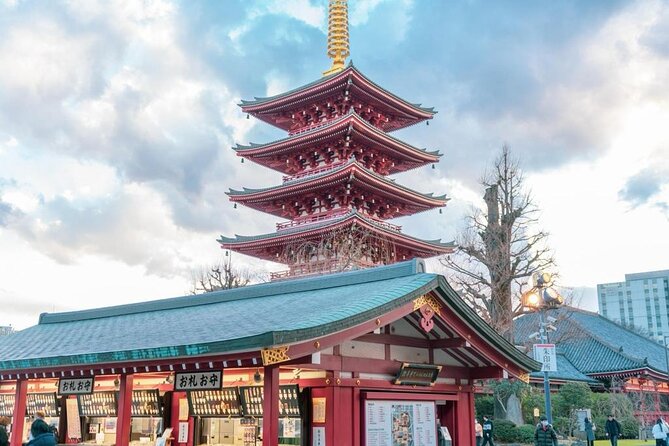
Your day kicks off at Asakusa’s main temple area—Sensoji (also called Asakusa Kannon Temple). This is one of Tokyo’s most colorful and popular temples, and it’s old, too. The story ties the temple to a Kannon statue fished out of the Sumida River in 628, with the temple completed in 645. Whether you take the legend literally or just enjoy the vibe, it gives the area real weight.
Right from the gates, the sensory setup is strong. Nakamise is the long shopping street that runs from the outer gate toward the temple gates, about 200 meters of snack stops and souvenirs. If you want a classic “first day in Tokyo” feeling—temple + street life—this is it.
What to do here (practical tips):
- Keep a bit of cash or card ready for quick snacks and small purchases on Nakamise
- Walk slowly through the approach area. That’s where the atmosphere lives, not only at the main hall
- If you’re visiting in peak season, go early enough to enjoy the area before it gets intense
Possible drawback: Asakusa can get crowded. If you’re the type who hates shoulder-to-shoulder crowds, plan to spend your time with patience and short breaks.
Go up: Tokyo Skytree and Solamachi’s mix of food, tech, and views
Next comes Tokyo Skytree, the world’s tallest free-standing broadcast tower at 634 meters. There are two observation levels—around 350 meters and 450 meters—so you get flexibility in how high you go. The admission isn’t included, but the stop is still easy to justify because the views are a major “Tokyo skyline” milestone.
Skytree is part of Skytree Town, plus the big Solamachi complex. Solamachi includes a huge mix of shops and restaurants (it’s listed as 312 places), and that matters because it gives you an option if the sky decks are crowded or you want a break. You’ll also find a few specific attractions inside that can shape the mood of your visit:
- A local-crafts retail focus (Sumida Machidokoro)
- A robot-tech exhibition space (Chiba Institute of Technology area)
- Sumida Aquarium, with penguins
- The Postal Museum
What I’d optimize: If you’re paying to go up, timing matters. Even if the tower is the highlight, lines can stretch. One practical tip I learned from the experience context: it helps to plan your time slot in advance for Skytree, so you’re not standing around wondering when you’ll finally step inside.
Possible drawback: Even with good planning, you might still hit a waiting period, depending on the day and your specific entry time.
Tokyo Tower: the classic skyline symbol (and a different vibe than Skytree)
After Skytree, you can also visit Tokyo Tower—333 meters high and historically significant. It was completed in 1958 and was Japan’s tallest structure until Skytree surpassed it in 2012. It still works as a symbol of post-war rebirth and economic growth, and it also serves as a broadcast antenna.
The ticket for Tokyo Tower isn’t included, but the stop is valuable if you like contrasts. Skytree gives you a modern, tall, newer-feeling skyline moment; Tokyo Tower feels more classic and more “Tokyo postcard” in its silhouette.
How to think about it: If you’re choosing between the two, ask yourself what you want most:
- If you want the highest wide view and a modern experience, lean Skytree
- If you want the iconic, classic steel-tower feel, Tokyo Tower fits
Possible drawback: Two skyline stops means two ticket costs and potentially two sets of waits. If you’re on a tight time budget or hate lines, you may want to choose one.
Readers also shortlisted these Tokyo bookings:
- Mt Fuji and Hakone 1-Day Bus Tour Return by Bullet Train★ 5.0 · 26,383 reviews
- 1-Day Tokyo Bus Tour★ 5.0 · 14,250 reviews
- Mt Fuji & Hakone Cruise, Drum Show Bullet Train 1 Day from Tokyo★ 4.0 · 7,413 reviews
- Tokyo: DisneySea 1-Day Passport★ 4.5 · 2,726 reviews
- Tokyo Disneyland 1-Day Passport★ 4.6 · 2,512 reviews
Tsukiji Outer Market: snack-smart food streets for real Tokyo flavor
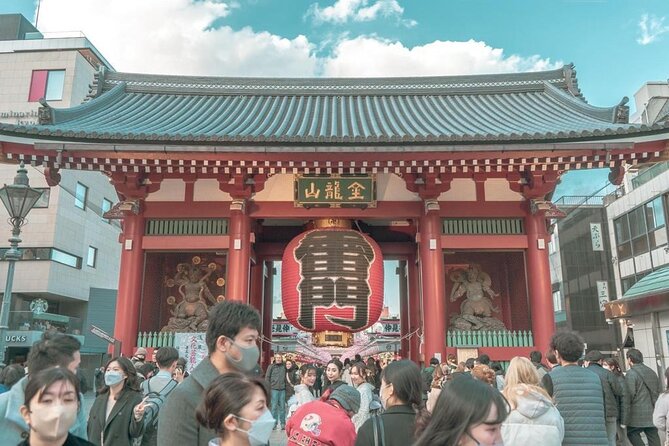
Tsukiji Fish Market is famous, and the Outer Market is where you’ll actually enjoy the street-level experience. It’s often described as Japan’s Food Town, mixing wholesale and retail shops with restaurants. The best part is how easy it is to sample.
Tsukiji started as a market built for professionals, so items were often too large for typical households. Over time, the shift toward visitors changed the format—some shops now offer smaller, ready-to-eat meals and bite-size versions of favorites. That’s great for you if you want to taste several things without committing to one heavy meal.
What to do here:
- Go hungry enough to snack, but not so hungry that you need a full sit-down lunch
- Use the guide’s suggestions to avoid spinning your wheels on menus you can’t read quickly
- Try small portions across a few stalls instead of one big meal
Possible drawback: The market is active. If you want quiet, this is not the stop for that mood. It’s more about energy and food browsing.
Shinjuku Gyoen and Meiji Jingu: Tokyo’s pause buttons
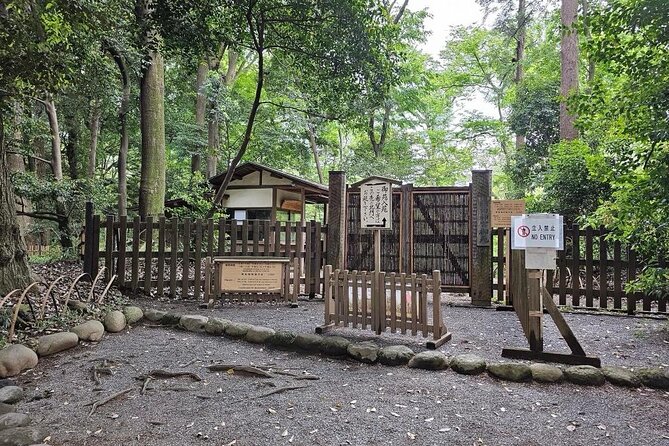
After busy food and skyline moments, the tour wisely pivots into calmer green space and shrine grounds.
Shinjuku Gyoen National Garden: lawns, paths, and seasonal beauty
Shinjuku Gyoen is one of Tokyo’s largest and most popular parks. It’s close to Shinjuku Station, but it feels like a different world once you’re inside. The mix here is practical: spacious lawns, gentle walking paths, and quiet scenery that gives your brain a break from traffic and crowds.
In spring, Shinjuku Gyoen becomes a top cherry blossom viewing spot. Even if you’re not there for sakura, it’s still a strong choice because it lets you walk at an easier pace.
Possible drawback: In cherry blossom season, the park can be busy, and that can affect how much you linger.
Meiji Jingu Shrine: a forested shrine experience with deep context
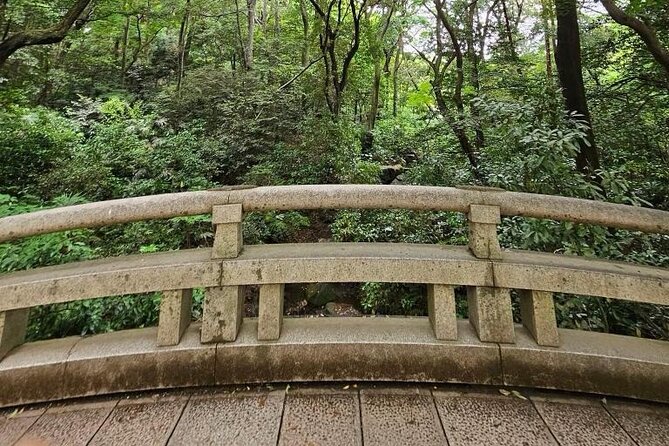
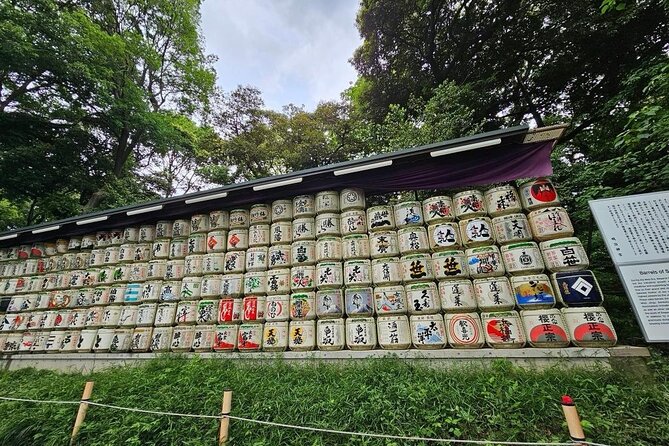
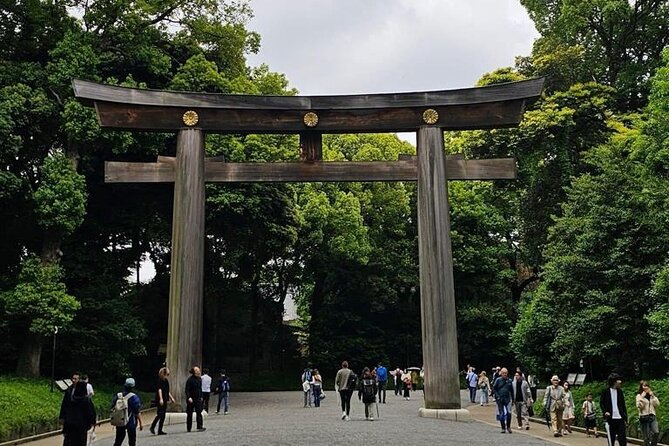
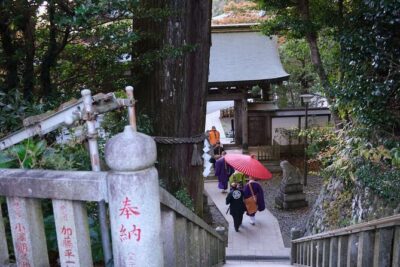
Then you’ll visit Meiji Jingu Shrine, dedicated to Emperor Meiji and Empress Shoken. It was completed in 1920, then destroyed during the war and rebuilt shortly after. The story here matters because it connects modern Japan to a specific turning point: the Meiji Restoration era, when Japan moved from feudal rule toward centralized modern government.
Emperor Meiji is framed as the first emperor of modern Japan. He was born in 1852, ascended in 1867 at the height of the Meiji Restoration, and died in 1912. That’s the kind of historical background that turns a walk through the shrine grounds into something more meaningful than just photos.
What you’ll enjoy: The shrine’s tone is restful. You get a sensory shift: less street noise, more ceremony atmosphere. It’s a great moment to slow down your pace and reset.
Shibuya: the Scramble’s controlled chaos and the Hachiko moment
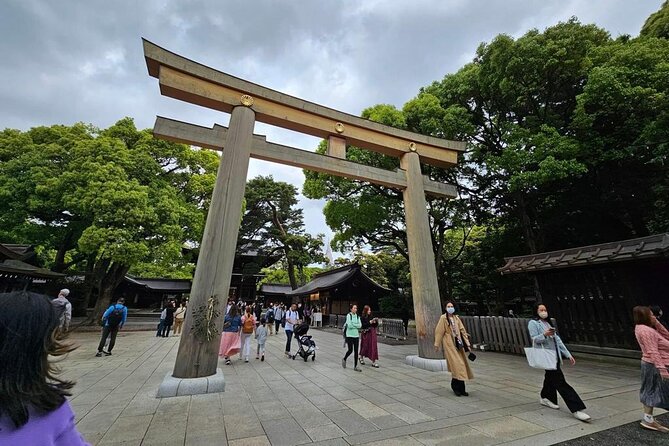
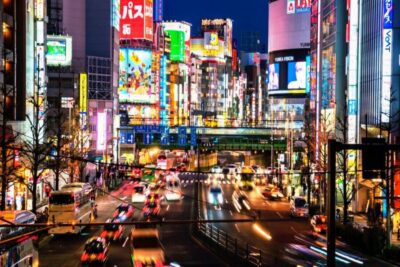
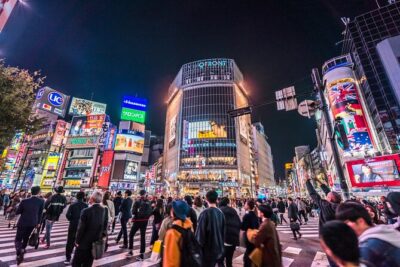
No Tokyo one-day tour feels complete without Shibuya. Here you see the famous Scramble crossing—10 lanes of traffic and five major crosswalks meeting at once. It’s described as efficient madness, and in real life that means you’ll experience a designed stampede of people moving in sync.
The area also connects to modern celebrations, including Times Square-style New Year’s Eve countdown energy and Halloween festivities that have grown into something famous. You’re not just walking through a neighborhood—you’re watching one of Tokyo’s stage sets.
Hachiko: the story behind the statue
Near Shibuya Station, you’ll find Hachiko, the loyal dog who became part of Japanese hearts. The story says Hachiko was adopted by professor Hidesaburo Ueno and waited for him at the station every day even after Ueno’s death in 1925. Hachiko died in 1935, and the tale later inspired the film Hachi: A Dog’s Tale.
This stop is quick, but it lands because it’s emotional and specific. It’s not a generic landmark. It’s a story that people recognize immediately.
Possible drawback: Shibuya can feel intense. If you’re sensitive to crowds, you’ll want to give yourself a couple minutes of breathing room before you head into the densest areas.
Harajuku and Takeshita Street: youth fashion on a hill
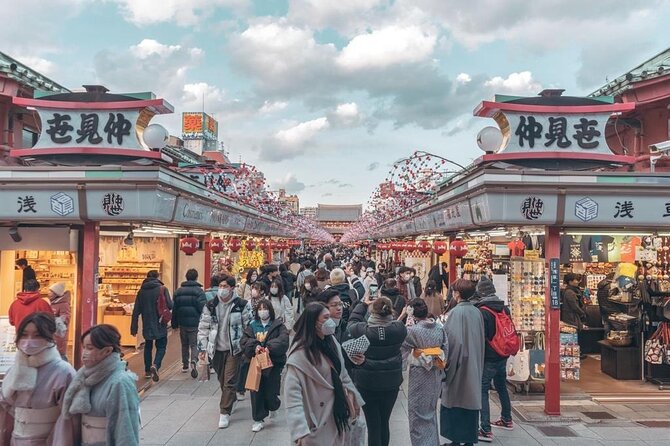
Your last big neighborhood stop is Harajuku Station and the area around Takeshita Street. This is one of Tokyo’s must-walk zones for youth culture and fashion experimentation. The street itself is known for clothing shops, cafes, dessert shops, and even quirky accessory stores.
The vibe can shift by day. On weekends and holidays, it gets especially packed with tourists and high school students. A lot of people crowd around the gateway that marks the entrance, and then funnel into Takeshita’s main drag.
How to shop without getting lost
If you want value in your browsing time, keep an eye out for accessory stores that offer trendy items at reasonable prices. The tour info highlights a specific spot called Paris Kids as an early stop on the accessory trail. That’s useful because it gives you a reference point when you’re surrounded by dozens of options.
Possible drawback: This is peak people-watching territory. If you prefer quiet shopping, Harajuku might feel like information overload.
What you actually get from a private, hotel-transfer style tour
This tour’s real strength is not just the list of places—it’s how the day is stitched together.
You’re in an air-conditioned vehicle, you’re not managing transit between far-apart districts, and you’re starting and ending in a central place near Tokyo Station. You also have a hotspot on board, which is handy when you want to double-check transit for anything not covered by the route.
And here’s a useful detail: the company context indicates the driver is also the guide. That can be a plus because it means continuity on the day. You’re not waiting for someone else to catch up or re-explain. The tradeoff is that the role combines driving and guiding, so the flow can be tighter than with a team of two.
Timing tips so you don’t lose the day to queues
Even with a great route, Tokyo is a city where timing affects your mood fast. The tour hits multiple famous stops where lines are common.
If you’re planning for the best experience possible, focus your energy on:
- Skytree timing, since observation queues can be a real factor
- The skyline choice. If you don’t care about both, consider prioritizing the one you’re most excited about
- Leaving time for short food snacks at Tsukiji rather than expecting a full sit-down meal there
Also, booking earlier helps. The experience data says the average booking window is about 38 days in advance, which lines up with the reality that popular dates sell out first.
Who this Tokyo highlights day tour fits best
This works especially well if:
- You’re a first-time Tokyo visitor who wants the main highlights without transit stress
- You have limited time and want to hit temple, market, skyline, and modern neighborhoods in one day
- You’re traveling as a small group (up to 5) and want private pacing
It’s less ideal if:
- You want a slow, unhurried day with lots of independent wandering
- You’re allergic to crowds and want maximum quiet at every stop
- You plan to spend lots of time buying and trying things at each neighborhood
Should you book this Tokyo City Attractive One Day Tour?
If your goal is a high-traction Tokyo sampler—Asakusa temple energy, Skytree height, Tsukiji food street vibes, Meiji Jingu calm, and the Shibuya-Harajuku modern buzz—this is a strong match. The value improves when you travel with others and want private comfort plus hotel transfers.
My main caution is the day density. You’ll be moving between districts and spending time at major attractions that can be crowded. If you want serenity and long stops, you may feel rushed. But if you want the biggest hits with smart logistics, this tour is the kind of day that helps you get your bearings fast.
FAQ
What’s the duration of the Tokyo City Attractive One Day Tour?
It runs for about 9 hours.
How many people are in a private group?
It’s a private tour for your group only, with up to 5 people per group.
Are hotel pickup and drop-off included?
Yes. Round-trip hotel transfers are included, and the tour starts and ends at Tokyo Station Hotel.
What tickets are not included?
Lunch and dinner are not included. Entry tickets for Tokyo Skytree and Tokyo Tower are also not included (Skytree is listed at about $12 USD, Tokyo Tower about $7 USD).
Is admission required for all the stops?
Not for all stops. Places like Sensoji, Tsukiji Outer Market, Shinjuku Gyoen, Meiji Jingu Shrine, Shibuya Scramble Square, Hachiko, and Harajuku Station are described as free admission in the tour info, while Skytree and Tokyo Tower require tickets.
Is there a mobile ticket for the tour?
Yes, mobile tickets are provided.
What is the cancellation timeframe?
You can cancel for a full refund up to 24 hours in advance of the experience start time. If you cancel less than 24 hours before, the amount paid is not refunded.
More City Tours in Tokyo
- Tokyo: Private City Highlights Tour with Local Guide
★ 4.8 · 1,433 reviews - Tokyo: Asakusa, Skytree & Akhihabara Go-Kart City Experience
★ 4.7 · 761 reviews - Tokyo: 3-Hour Bike or E-Bike City Highlights Tour
★ 4.8 · 435 reviews - Tokyo: Sumo Morning Practice Tour at Sumida City
★ 4.8 · 308 reviews - Private Haneda Airport (HND) to Central Tokyo City Transfer
★ 4.5 · 260 reviews
More Tours in Tokyo
- Mt Fuji and Hakone 1-Day Bus Tour Return by Bullet Train
★ 5.0 · 26,383 reviews - 1-Day Tokyo Bus Tour
★ 5.0 · 14,250 reviews - Tokyo: Shinjuku Food Tour (13 Dishes at 4 Local Eateries)
★ 5.0 · 6,603 reviews - Tokyo Mt Fuji 5th St & Hakone Cruise Bus Tour w/Bullet Train
★ 4.4 · 5,024 reviews - Flagship 2-Hours Official Street Go-Kart Tour – Tokyo Bay Shop
★ 5.0 · 4,974 reviews
More Tour Reviews in Tokyo
- Mt Fuji and Hakone 1-Day Bus Tour Return by Bullet Train
★ 5.0 · 26,383 reviews - 1-Day Tokyo Bus Tour
★ 5.0 · 14,250 reviews - Tokyo: teamLab Planets TOKYO Digital Art Museum Entry Ticket
★ 4.6 · 9,779 reviews - Mt Fuji & Hakone Cruise, Drum Show Bullet Train 1 Day from Tokyo
★ 4.0 · 7,413 reviews - Tokyo: Shinjuku Food Tour (13 Dishes at 4 Local Eateries)
★ 5.0 · 6,603 reviews
Latest Tokyo reviews off our desk

City Tours, compared.
 ★ 4.8Private City Highlights Tour with Local GuideFrom $1061,433 reviews
 ★ 4.7Asakusa, Skytree & Akhihabara Go-Kart City ExperienceFrom $96761 reviews
 ★ 4.83-Hour Bike or E-Bike City Highlights TourFrom $45435 reviews
 ★ 4.8Sumo Morning Practice Tour at Sumida CityFrom $116308 reviews
 ★ 4.5Private Haneda Airport (HND) to Central Tokyo City TransferFrom $119260 reviews
 ★ 4.83-hour Guided E-Bike Tour of the City’s Hidden GemsFrom $65251 reviews
 ★ 5.03-Hour Bike/E-Bike Tour of the City’s HighlightsFrom $63209 reviews
 ★ 4.5Private departure transfer from Tokyo city to Tokyo Haneda Airport(HND)From $118123 reviews
Browse the lists this tour appears in