
Reviewed · TOKYO
Tokyo: Exquisite Wagyu Beef Experience at Yakiniku Nikunone
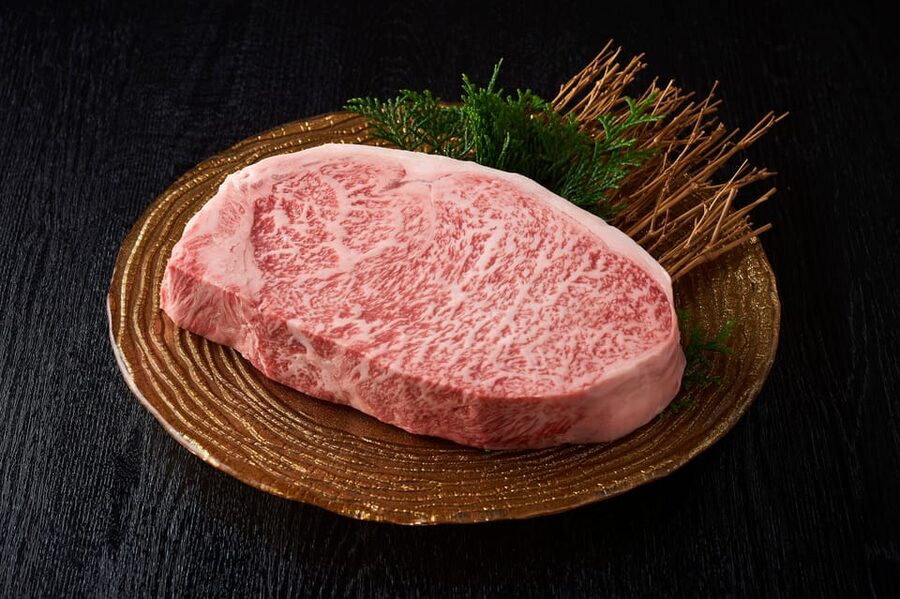
A five-course bite can change your mood. At Yakiniku Nikunone in Tokyo, you book a fixed A5 wagyu dining course in a quiet private room inspired by Japan’s seasons. The meal is built like a show, but the focus stays on top beef and clean, thoughtful flavors.
I especially like the blend of grilled wagyu with big “Japanese dinner” touches, like a tender beef tongue platter and a spicy chige stew that actually shows up on the table. I also like that the menu isn’t just meat: you get seared wagyu sushi with caviar, plus one course even spotlights fruit champagne and caviar jars.
One drawback to plan for: this is a set-course restaurant booking, not a casual stop. With 2 hours at the table and a set menu format, you’ll want to arrive hungry and ready to commit to the whole sequence.
In This Review
- Key things that make Nikunone worth your time
- A reservation-only wagyu course that feels like a private ceremony
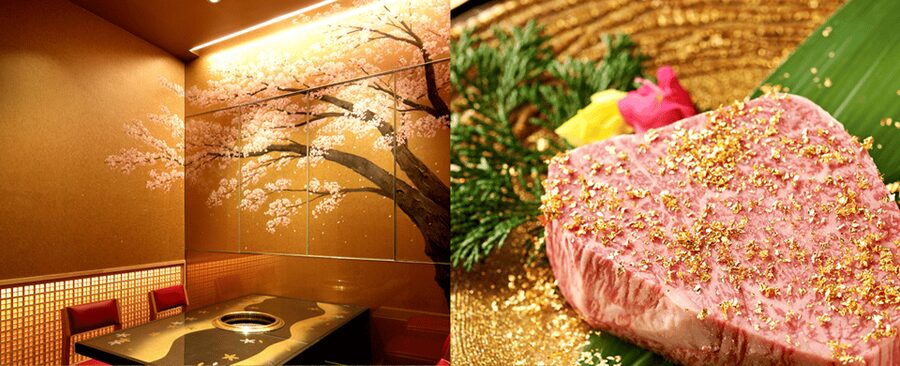
- Private dining rooms inspired by Japan’s four seasons
- The three courses: Nikunone vs Kirameki vs Kinzakura
- Nikunone Course (12 dishes)
- Kirameki Course (14 dishes)
- Kinzakura Course (14 dishes, higher drink and caviar energy)
- What you should actually taste: tongue, shabu-shabu, and the sushi-with-caviar moment
- Wine and wagyu: how the drinks fit the meal
- Timing and how to make the most of the 2-hour slot
- Price and value: what $113 buys you (and what it doesn’t)
- Service style: attentive, not pushy
- Who should book Nikunone, and who should skip it
- Should you book? My straightforward take
- FAQ
- Where is the meeting point?
- Is this a guided tour with a meeting and walking route?
- How long is the dining experience?
- What’s included in the price?
- What’s not included?
- What are the main course options?
- Do all courses include caviar?
- Is there an age requirement for drinking?
- Can I request dietary restrictions?
- Can I cancel?
- Is the restaurant wheelchair accessible?
Key things that make Nikunone worth your time
- A5 wagyu only: this is a restaurant specialized around wagyu, not a mixed grill spot
- Private rooms with “four seasons” styling: dining feels calm and intentional, not loud and crowded
- Caviar shows up in wagyu sushi: you get seared wagyu sushi with caviar, plus extra caviar options in the top course
- Rare ingredients included in the experience: you may see specialty items like Dragon Eggs and Algae Salt Rice
- Three different course styles: pick Nikunone, Kirameki, or Kinzakura based on your drink and dish priorities
- Wine-and-wagyu pairing approach: the courses include welcome drinks meant to match the beef
A reservation-only wagyu course that feels like a private ceremony
This isn’t a typical tour where someone herds you from place to place. Yakiniku Nikunone is a restaurant reservation experience. You arrive for your set timing, go straight in, and then you’re guided by the menu sequence for about two hours.
That structure is the value. Instead of spending time deciding what to order, you get a plan already built around quality A5 wagyu and a handful of “Japanese fine dining” surprises. It’s a great fit when you want a memorable night without turning your evening into homework.
Also, the restaurant is wagyu-focused. If you’re serious about tasting the best version of Japanese beef, that specialization matters. You can taste more clearly what the kitchen is trying to highlight—fat texture, salt balance, and how different cuts behave on heat.
Readers booked these Tokyo options in the same breath. Here is how each one scored:
- Mt Fuji and Hakone 1-Day Bus Tour Return by Bullet Train
★ 5.0 · 26,383 reviews - 1-Day Tokyo Bus Tour
★ 5.0 · 14,250 reviews - Tokyo: teamLab Planets TOKYO Digital Art Museum Entry Ticket
★ 4.6 · 9,779 reviews - Mt Fuji & Hakone Cruise, Drum Show Bullet Train 1 Day from Tokyo
★ 4.0 · 7,413 reviews
Private dining rooms inspired by Japan’s four seasons
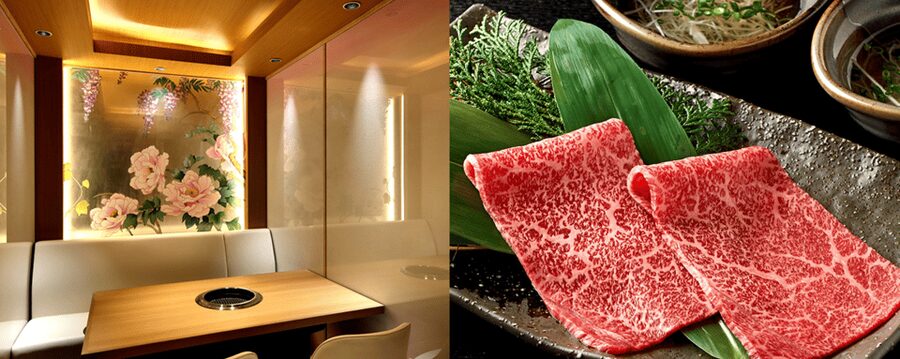
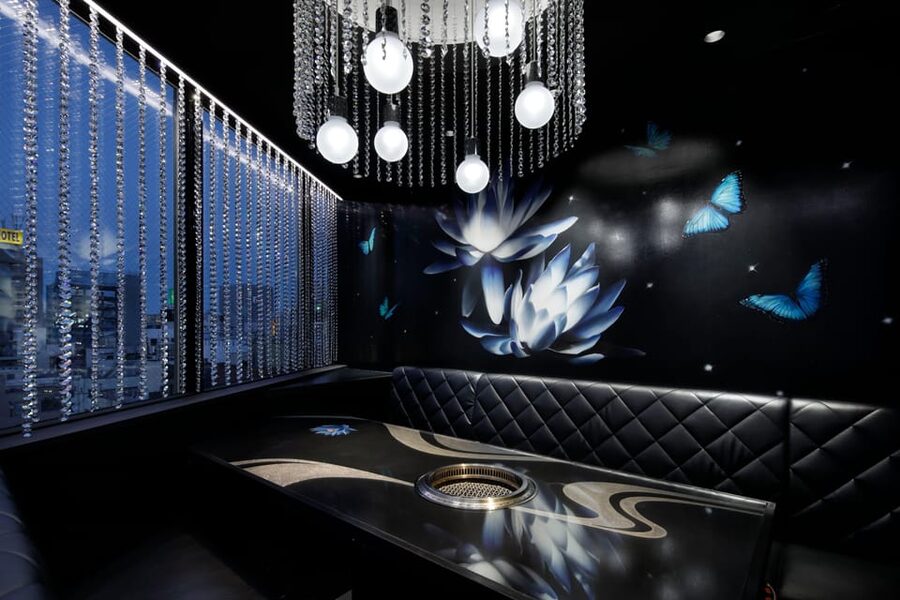
The big comfort win here is privacy. You dine in a private room, and the rooms are inspired by Japan’s four seasons. That means the atmosphere is part of the meal, not just background.
It also changes how the service lands. In a quiet room, staff attention feels more personal and less “assembly line.” You’re more likely to slow down and actually notice details like how a stew is seasoned, or how a shabu-shabu portion is finished.
One practical note: seat types can’t be guaranteed, and your meal is slotted for a maximum 2-hour seating window. So if you’re celebrating something and care about room specifics, build your expectations around “private, calm, and well-run,” not a guaranteed exact room layout.
The three courses: Nikunone vs Kirameki vs Kinzakura
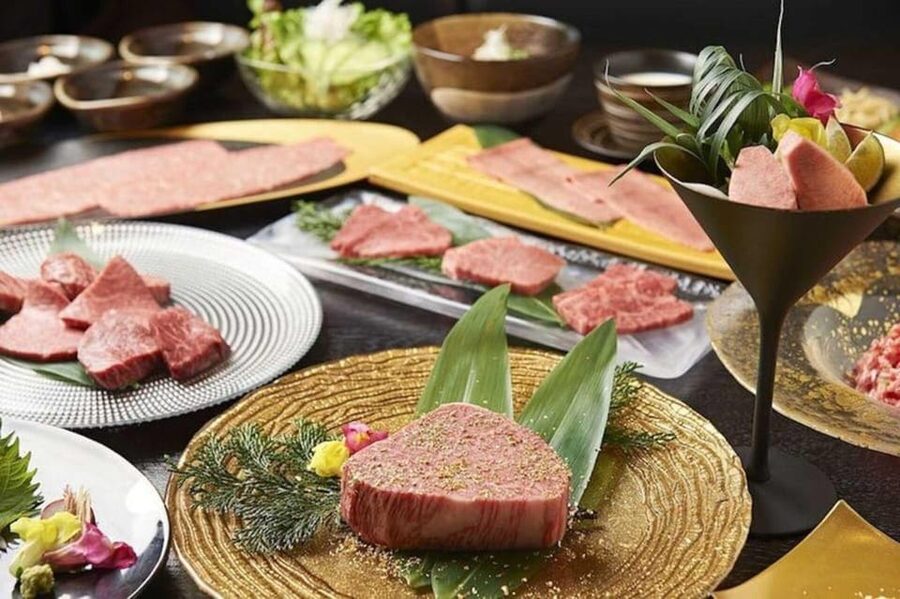
All three menu options follow the same overall rhythm: welcome drink(s), small starters, wagyu-focused mains, a special wagyu sushi moment (with caviar), then a dessert finish. The differences are in the featured dishes and how the drinks and caviar scale up.
Here’s how to choose quickly.
Nikunone Course (12 dishes)
This is the shorter-feeling option at 12 dishes. You get one welcome drink, plus one piece of seared wagyu sushi with caviar that’s exclusive to this course.
The menu highlights include:
- Two kinds of kimchi and namul
- WAGYU sinew stew (slow-cooked depth instead of only char-grill flavors)
- Salad
- Special tongue grilled shabu-shabu
- A “today’s special” set of three exclusive salted parts
- Chestnuts grilled shabu-shabu
- Two kinds of lean meat, marinated
- Grilled wagyu sushi (2 pieces)
- Dessert: citrus yuzu sorbet
If you like classic wagyu progression—stew, then shabu-shabu, then grilled, then dessert—Nikunone is a clean pick. It also keeps the caviar element tight and intentional.
Kirameki Course (14 dishes)
Kirameki adds more variety and a seafood-forward highlight. You still get one welcome drink and a seared wagyu sushi with caviar piece exclusive to this course.
This course leans into:
- Kimchi and namul
- WAGYU sinew stew
- Miyazaki beef sashimi with sea urchins
- Grilled wagyu sushi with caviar (1 piece)
- Salad
- Special tongue grilled shabu-shabu
- Special skirt steak with fresh wasabi
- “Today’s special” salted exclusive parts (2 kinds)
- Three kinds of marinated lean meat
- Sirloin or rump steak
- Meal choice: cold noodles or WAGYU ochazuke
- Dessert: your choice
If you want a more “wow” mix—sashimi plus wasabi plus either cold noodles or ochazuke—Kirameki is the most balanced middle path.
- Tokyo: Shinjuku Food Tour (13 Dishes at 4 Local Eateries)★ 5.0 · 6,603 reviews
- Tokyo Mt Fuji 5th St & Hakone Cruise Bus Tour w/Bullet Train★ 4.4 · 5,024 reviews
- Flagship 2-Hours Official Street Go-Kart Tour – Tokyo Bay Shop★ 5.0 · 4,974 reviews
- From Tokyo: Mount Fuji Full-Day Sightseeing Trip★ 4.5 · 4,970 reviews
- Tokyo: Hop-On Hop-Off Sightseeing Bus Ticket★ 3.9 · 4,207 reviews
Kinzakura Course (14 dishes, higher drink and caviar energy)
Kinzakura is the most celebratory option on paper. You get two drinks (including fruit champagne) plus one jar of caviar, and it includes a hand-roll sea urchin tartar sushi with caviar. It also includes a small bottle of caviar you can use as you like during the meal.
Highlights include:
- Kimchi and namul
- Hand-roll sea urchin tartar sushi with caviar
- Salad
- Tongue grilled shabu-shabu
- Chateaubriand with truffle salt
- Today’s special: two exclusive salted parts
- Two kinds of marinated lean meat
- Chuck flap grilled sukiyaki
- Selected wagyu steak sandwich
- Meal choice: cold noodles or sea urchin wagyu sushi (2 pieces)
- Dessert: your choice
- Extra caviar bottle for personal use
Choose Kinzakura if you want the highest “occasion” factor and you’re excited about caviar scaling up from one moment to multiple moments.
What you should actually taste: tongue, shabu-shabu, and the sushi-with-caviar moment
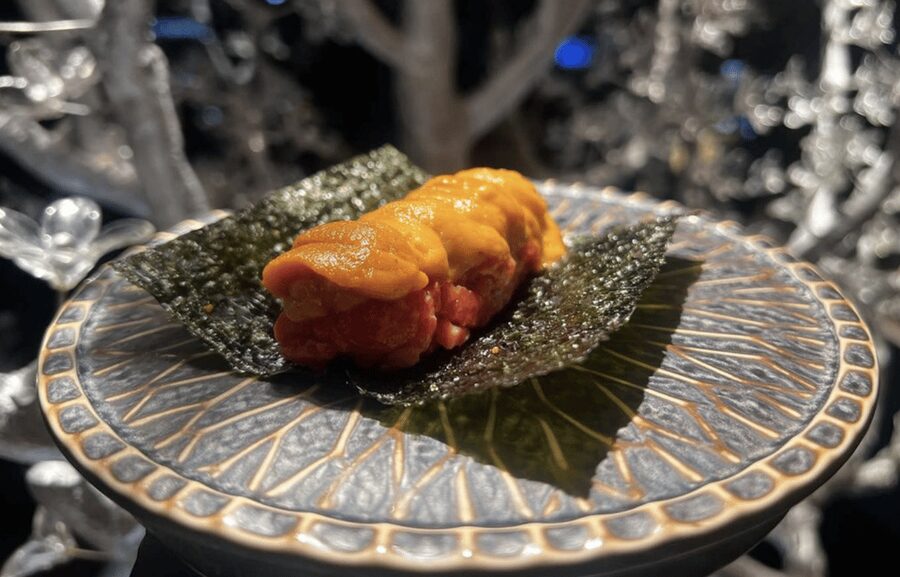
This is a wagyu menu, but it isn’t only about grilling. The sequence includes stew, shabu-shabu, seafood, and sushi elements designed to show different textures.
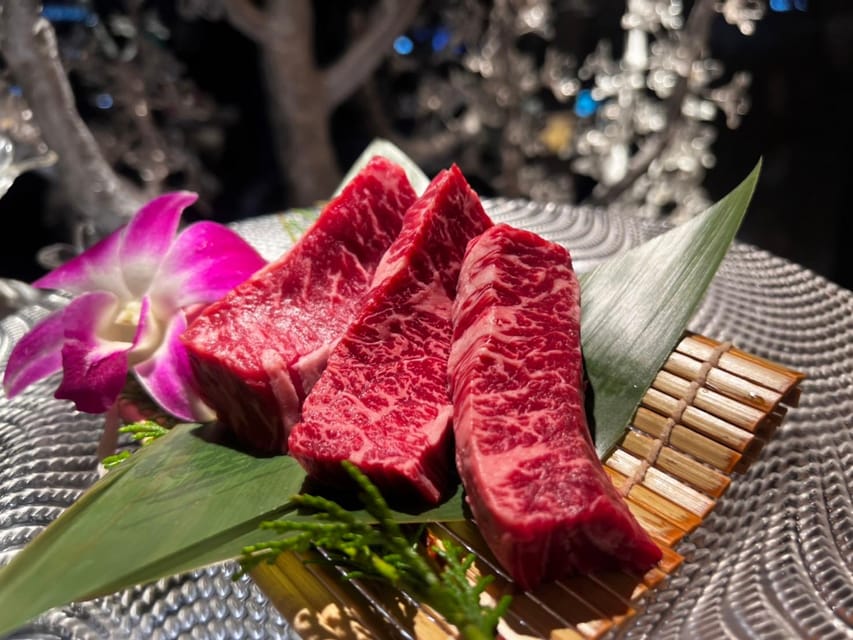
One of the most praised parts is the beef tongue focus. Tongue works because it takes seasoning well and stays tender when handled right. On a menu like this, tongue isn’t a filler—it’s a showcase. You also see tongue in a shabu-shabu style, which shifts the experience from char-grilled to clean, delicate warmth.
Then there’s the signature pivot: seared wagyu sushi with caviar. The sear brings a caramelized edge, while the caviar adds a salty pop that makes the wagyu’s richness feel even brighter. It’s the kind of dish that makes the whole course feel “premium,” even if you’re not a caviar person—because it’s used with purpose, not as decoration.
You may also encounter specialty items flagged by the restaurant: Dragon Eggs from Oita and Algae Salt Rice from the Oki Islands. Even when they’re not the center of every dish, they signal a kitchen that cares about ingredient origins. If you’re a foodie who loves “what region did this come from,” these components are part of the fun.
Wine and wagyu: how the drinks fit the meal
Each course includes welcome drinks, and that’s not an afterthought here. The experience is framed around the marriage of wine and wagyu, which usually means your drink pacing is meant to match the shift from starters to hotter mains to richer beef moments.
- Nikunone and Kirameki include one drink with the course (plus the included wagyu sushi-with-caviar piece as noted above).
- Kinzakura includes two drinks, including fruit champagne, and it pairs that celebratory energy with the extra caviar.
Practical advice: if you’re drinking, take the meal slowly. Rich beef + alcohol can hit fast, especially when the menu includes multiple warm dishes and a dessert course. Pace your sips so you can taste the differences between the shabu-shabu and the grilled items.
Also, Japan’s legal drinking age is 20+, so plan accordingly.
Timing and how to make the most of the 2-hour slot
You’ll have a 2-hour dining window. That’s enough time for a full course meal, but it does mean the kitchen keeps momentum. The best strategy is simple: don’t arrive rushing from another plan.
A good way to think about it is this:
- You’ll start with welcome drinks and small starters.
- Then come the beef-forward hot dishes: stew, shabu-shabu, salted set parts, marinated lean meats.
- You’ll get the sushi-with-caviar moments during the middle beats.
- The meal ends with a choice-based main (noodles/ochazuke/sushi options depending on the course) and a dessert finish.
If you’re coming with appetite anxiety (too much food, too fast), pick Nikunone for fewer dish steps. If you’re excited about a wide range—sashimi, wasabi, seafood, steak variety—Kirameki. If it’s a milestone night and you want the most “all-out” sequence, Kinzakura.
Price and value: what $113 buys you (and what it doesn’t)
The listed price is $113 per person, which for Tokyo fine dining is usually only reasonable when you get several high-cost components—top A5 grade beef, premium add-ons like caviar, and service in a private room.
Here’s what you are paying for, specifically:
- A5 wagyu selected for quality
- A full course menu (not a single dish)
- Private dining room experience with a curated atmosphere
- Included drink(s), plus caviar elements depending on your course
- Sales tax included in the package price
What you aren’t paying extra for (based on what’s included): the course itself, reservation, and tax. What you may pay elsewhere: personal expenses.
Is it “cheap”? No. But it’s also not just charging for fancy décor. If you care about taste and texture in wagyu—sinew stew depth, tongue tenderness, and the contrast between seared sushi and grilled cuts—this format gives you more quality bites per yen than most à la carte nights.
If you’re simply hungry and want budget yakiniku, there are cheaper options in Tokyo. But if you want one standout dinner that feels controlled, private, and ingredient-obsessed, this price structure makes sense.
Service style: attentive, not pushy
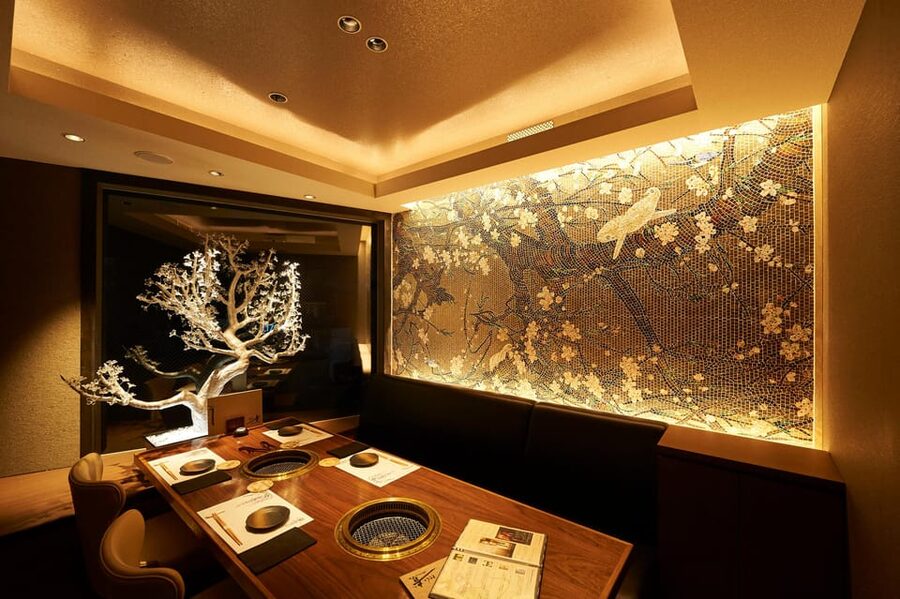
The vibe described is professional and polite, with staff attention that’s careful without feeling intrusive. A private room also helps. When there’s no crowd noise to manage, service can feel calmer and more focused on your course pacing.
The staff also explain the menu with care. That matters because the dishes are not all “standard yakiniku ordering.” When you understand what you’re eating—tongue shabu-shabu, salted special parts, marinated lean meats—you get more out of every bite.
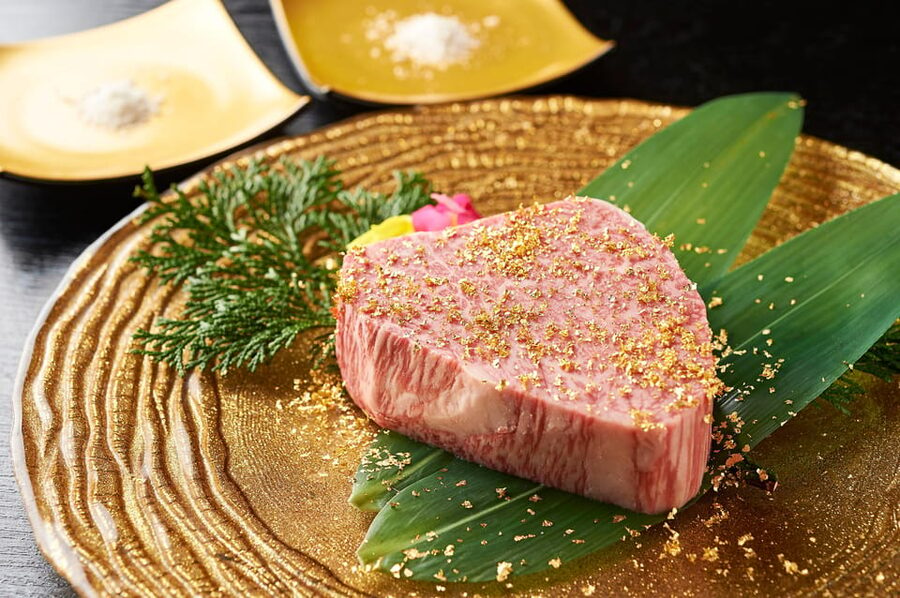
And for photo-ready moments: at least one course experience includes wagyu presented with gold leaf on top. That kind of detail is brief, but it turns an already luxe meal into something you’ll remember.
Who should book Nikunone, and who should skip it
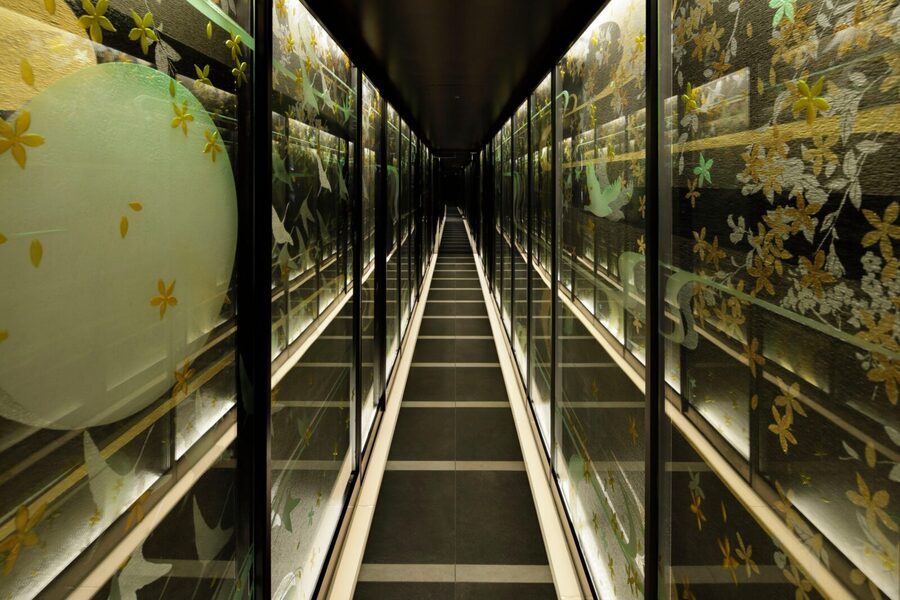
This experience is best for you if:
- You want A5 wagyu in a controlled, high-end format
- You’re celebrating something and want privacy
- You like the idea of caviar and sushi elements paired with wagyu
- You appreciate ingredient sourcing and regional specialty items like those from Oita and the Oki Islands
You might skip it if:
- You want a casual, flexible meal where you order small bits à la carte
- You’re short on time and hate fixed timing
- You’re very sensitive to rich food and alcohol, and you don’t want a multi-beat course
Should you book? My straightforward take
If you’re spending time in Tokyo and you want one “proper” wagyu night, this is the kind of booking that delivers. The private-room setting, the full course menu structure, and the caviar-and-wine approach are all aligned around making the evening feel special without wasting your time.
Book Nikunone if you want the clean A5 wagyu progression with yuzu dessert and a caviar sushi highlight. Pick Kirameki if you want the most variety: sashimi with sea urchins, wasabi skirt steak, and a choice between noodles or ochazuke. Choose Kinzakura for the celebration build: fruit champagne, caviar jar, truffle salt Chateaubriand, sukiyaki, and the extra caviar bottle.
FAQ
Where is the meeting point?
It’s across from Lawson Gran Customa.
Is this a guided tour with a meeting and walking route?
No. It’s a restaurant reservation experience, and when it’s time for your booking, you enter the restaurant directly. No guide is provided.
How long is the dining experience?
The seating is reserved for a maximum of 2 hours.
What’s included in the price?
A full course menu is included, along with sales tax and the reservation.
What’s not included?
Other personal expenses are not included.
What are the main course options?
There are three full course menus: Nikunone, Kirameki, and Kinzakura.
Do all courses include caviar?
Each course includes a seared wagyu sushi with caviar as noted for Nikunone and Kirameki, and Kinzakura includes a jar of caviar plus additional caviar options during the meal.
Is there an age requirement for drinking?
Yes. Japan’s legal drinking age is 20 years or older.
Can I request dietary restrictions?
Yes. If you have dietary restrictions, leave a comment during checkout.
Can I cancel?
Free cancellation is available up to 2 days in advance for a full refund.
Is the restaurant wheelchair accessible?
Yes, it is listed as wheelchair accessible.
If you want, tell me which course you’re leaning toward (Nikunone, Kirameki, or Kinzakura) and whether you drink wine or prefer minimal alcohol, and I’ll help you pick the best match.
More Tour Reviews in Tokyo
- Mt Fuji and Hakone 1-Day Bus Tour Return by Bullet Train
★ 5.0 · 26,383 reviews - 1-Day Tokyo Bus Tour
★ 5.0 · 14,250 reviews - Tokyo: teamLab Planets TOKYO Digital Art Museum Entry Ticket
★ 4.6 · 9,779 reviews - Mt Fuji & Hakone Cruise, Drum Show Bullet Train 1 Day from Tokyo
★ 4.0 · 7,413 reviews - Tokyo: Shinjuku Food Tour (13 Dishes at 4 Local Eateries)
★ 5.0 · 6,603 reviews





