
Reviewed · TOKYO
Tokyo: Karate Experience with Former All-Japan Champion
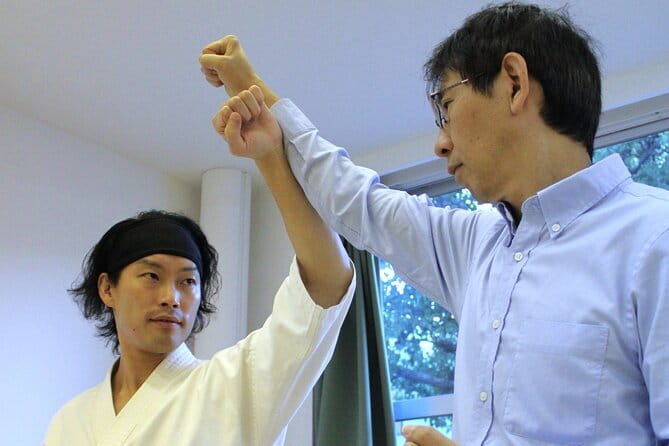
If you think karate is all speed and toughness, this is the lesson for you—because it starts with calm basics. This 90-minute class in Tokyo is taught by Ryo (Karate Comic Ryo), a former All-Japan champion with 20 years of experience, and it’s built for small-group attention, step-by-step learning, and a very practical mind-body workout.
Two things I really like: first, the pace and structure. You go from bowing to belly breathing, then into stretching and core techniques broken down into a few clear steps. Second, you get safety plus skill-building: the sparring-style portion is kumite training without physical contact, so you can learn defense and timing without turning it into an injury risk.
One thing to consider: this is physical. The tour notes a moderate fitness level, and kicks need mobility—so if your hips or ankles feel stiff, plan to communicate that early.
In This Review
- Key Points to Know Before You Go
- Entering the Lesson: The Bow, the Breathing, the Focus
- Meeting Ryo at Azumabashi Hall: Clear Coaching You Can Follow
- The Core Posture Moment: Standing Zen Training in Practice
- The 90-Minute Flow: Stretching to Punches, Blocks, and Kicks
- Safe Kumite Training: Defense Skills Without Physical Contact
- Price and Value: Is $66.99 Worth 90 Minutes?
- What It Feels Like for Different Types of Visitors
- How to Make the Most of Your Class Day
- Should You Book This Tokyo Karate Experience?
- FAQ
- How long is the karate class in Tokyo?
- What is the maximum group size?
- Where does the class meet?
- Does the class include any sparring?
- Are karate uniforms and pads provided?
- Are there different class times?
- What do we learn during the 90 minutes?
- What fitness level is needed?
- How much does it cost?
- Is there a cancellation window for a full refund?
Key Points to Know Before You Go
- Former All-Japan champion, 20 years coaching with a focus on clear instruction and corrections
- Small group size (max 8) so you’re not lost in the crowd
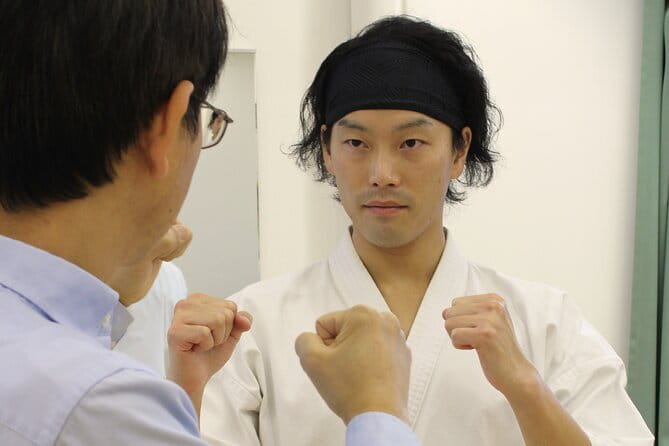
- Standing Zen Training position as a core theme for posture and balance
- Kumite without contact to practice defense and efficiency safely
- Gi and pads included, so you can pack light and train comfortably
- Morning or afternoon class options with a central meeting point near trains
Entering the Lesson: The Bow, the Breathing, the Focus
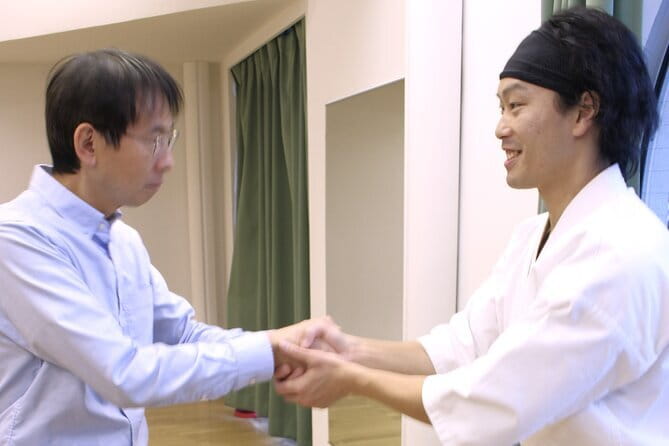
Carrying a gi jacket around Tokyo is one thing. Training in a dojo mindset is another. The class begins exactly the way karate is supposed to: with bowing. It’s not just ritual. It sets the tone that this is a training session, not a show. You’ll also be guided into belly breathing, the kind that helps you get focus without tensing up everything at once.
Then you ease into it with stretching for the major areas you actually use in karate: leg muscles, hip joints, shoulder blade area, and chest. This matters because the class moves quickly into stances and lower-body movement. If you show up cold, you’ll feel it once the stance work starts.
I also like the calm-to-physical progression. It’s easier to follow. It’s also safer. You’re not thrown into kicking first; you build control first, then speed and power have somewhere to go.
Readers booked these Tokyo options in the same breath. Here is how each one scored:
- Mt Fuji and Hakone 1-Day Bus Tour Return by Bullet Train
★ 5.0 · 26,383 reviews - 1-Day Tokyo Bus Tour
★ 5.0 · 14,250 reviews - Tokyo: teamLab Planets TOKYO Digital Art Museum Entry Ticket
★ 4.6 · 9,779 reviews - Mt Fuji & Hakone Cruise, Drum Show Bullet Train 1 Day from Tokyo
★ 4.0 · 7,413 reviews
Meeting Ryo at Azumabashi Hall: Clear Coaching You Can Follow
The instructor for this class is Ryo, teaching out of Karate Comic Ryo. Based on what he’s described as providing, his style is direct and student-friendly: he demonstrates techniques, explains what to do, and adjusts based on participants’ experience.
English communication is a big part of why this works for international visitors. You don’t have to guess. You can ask questions, and you can understand the corrections. That combination is what makes the class feel useful, not just entertaining.
The meeting point is at Azumabashi Hall in Sumida City (1-chōme-23-27 Azumabashi, Tokyo). The activity ends back at the meeting point, so you’re not juggling transfers right after training. Since it’s near public transportation, getting there is usually straightforward.
Tip: arrive a few minutes early. You’ll get your gi sorted and your body warmed up mentally before the bowing starts.
The Core Posture Moment: Standing Zen Training in Practice
One of the standout promises here is learning to master the Standing Zen Training position. In karate terms, that’s not just standing. It’s a foundation for posture, balance, and control—especially when your legs start burning later.
Expect time spent on what your stance should feel like: where your weight sits, how your hips align, and how you keep your upper body stable while your lower body does the work. This is the kind of skill that helps whether you’re brand-new or you’ve done karate before, because it’s about fundamentals, not memorizing flashy moves.
If you’ve ever tried martial arts and felt like your body is doing the opposite of what you think you’re doing, this is where training pays off. You’ll be coached through corrections so the stance becomes easier to repeat.
This is also where you’ll notice how the group setup helps. With up to 8 people, the instructor can spot common issues and fix them before they harden into habits.
The 90-Minute Flow: Stretching to Punches, Blocks, and Kicks
After the warm-up, the class moves into technique training. You’ll practice punches, blocks, and kicks, all with proper stance. The key detail is that techniques are divided into smaller parts, so everyone can learn step by step. That’s a big deal for a beginner class, because learning karate is less about guessing and more about building the chain correctly: foot → stance → hip rotation → arm/leg mechanics → follow-through.
Here’s what the pacing feels like in practice:
- You’ll start with stance-based positioning, so your body knows where to be.
- Then you drill basic attacks and defenses in controlled segments.
- Each technique links back to posture and balance, not just movement.
Stretching earlier helps you get into these positions more comfortably. And because you’re training in a small group, you’re likely to get specific feedback rather than generic corrections.
What you wear matters too. The good news: a karate uniform (gi) and pads are included, so you don’t have to hunt down gear on arrival. Still, you’ll want to wear something easy underneath and be ready to move actively during the whole session.
If you’re experienced, you may get a “new angle” on your own mechanics—posture, stomach power, and control are exactly the kinds of things that get noticed when an instructor watches carefully.
Safe Kumite Training: Defense Skills Without Physical Contact
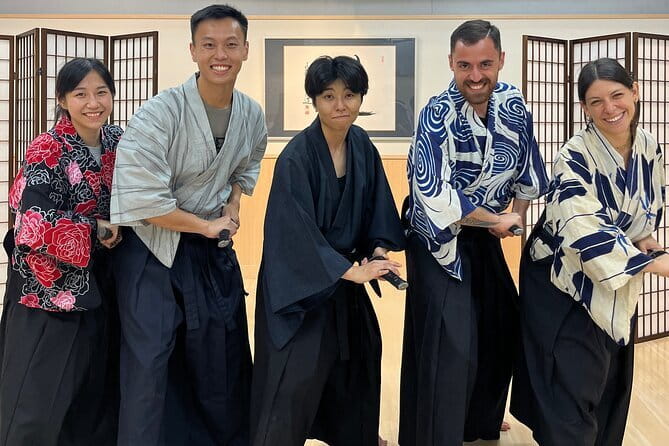
The final phase is kumite training without physical contact. That means you practice the essence of sparring—defense timing, positioning, and response—but without the actual impact risk.
You’ll learn how to defend yourself from attacks such as punches, front kicks, and low kicks. The instruction emphasizes maximum precision and efficiency, which is useful even if you’re just trying to improve fitness and coordination. The goal isn’t to “win a fight.” It’s to learn what to do when something comes toward you: how to set your stance, what your arms/legs do first, and how to avoid overcommitting.
This no-contact approach is especially good if you’re traveling. You don’t need bruises to remember the day. You get training intensity and technique growth, minus the likelihood of an accident ruining the rest of your Tokyo schedule.
One practical note: the best results come from participating fully in the control. Even without contact, you still have to commit to stance and timing. That’s where the workout shows up.
- Tokyo: Shinjuku Food Tour (13 Dishes at 4 Local Eateries)★ 5.0 · 6,603 reviews
- Tokyo Mt Fuji 5th St & Hakone Cruise Bus Tour w/Bullet Train★ 4.4 · 5,024 reviews
- Flagship 2-Hours Official Street Go-Kart Tour – Tokyo Bay Shop★ 5.0 · 4,974 reviews
- From Tokyo: Mount Fuji Full-Day Sightseeing Trip★ 4.5 · 4,970 reviews
- Tokyo: Hop-On Hop-Off Sightseeing Bus Ticket★ 3.9 · 4,207 reviews
Price and Value: Is $66.99 Worth 90 Minutes?
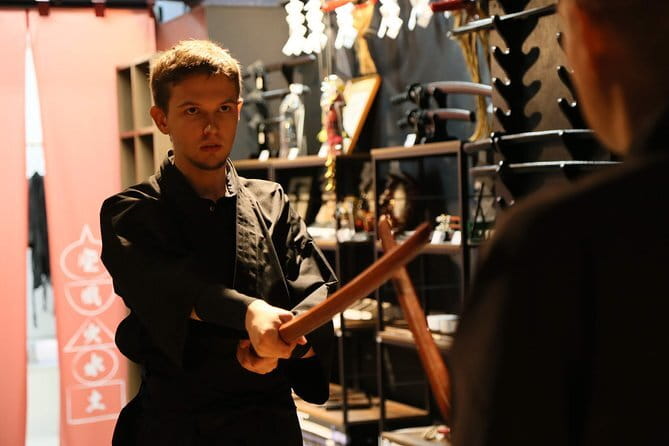
At $66.99 per person for about 1 hour 30 minutes, this isn’t a “cheap souvenir activity.” But I do think it’s good value if you care about real skill and not just photo ops.
Here’s why the pricing makes sense based on what you actually get:
- You’re paying for a high-level instructor experience—former All-Japan champion credentials and 20 years of teaching.
- It’s a small group (max 8), which tends to mean more attention per person.
- You receive training gear (a karate uniform and pads), so you’re not stuck renting or buying anything last minute.
- The class structure is complete: bowing and breathing, stretching, core technique drills, then kumite-style defense practice.
I also notice the booking pattern: it’s typically booked about 29 days in advance. That suggests demand, which is often a good sign for repeat-quality instruction. If you’re going during peak travel weeks, I’d book sooner rather than later so you can choose the morning or afternoon slot that fits your day.
What It Feels Like for Different Types of Visitors
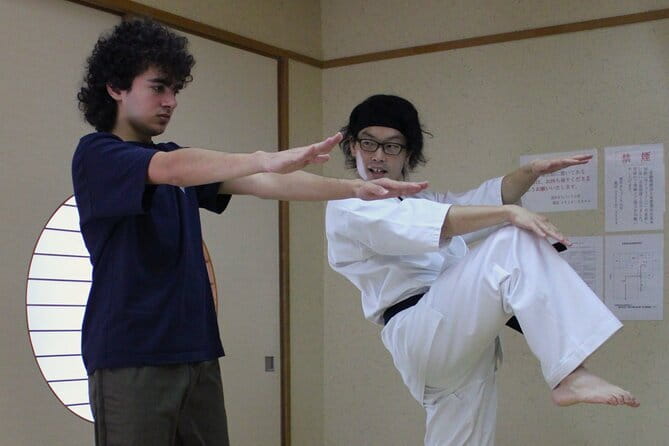
This class is designed for both beginners and people with karate experience. Beginners get a clear pathway: bowing, breathing, stretching, then foundational moves taught in steps. People with prior training can get corrections on posture and technique timing, especially through the stance work and how defense responses are framed.
For first-timers, think of it as:
- a workout that uses your whole body
- a cultural introduction to how karate training is organized
- a skill you can practice later in front of a mirror
For returning karate students, think of it as:
- a chance to reset fundamentals (stance and breathing)
- a chance to compare approaches within the Kyokushin-style training that’s referenced in participant experiences
The one caution is mobility. One participant noted they wanted more tailoring because they were still lacking mobility for kicks. That’s your cue: if you know you’re limited in your hips or flexibility, tell Ryo at the start. With a small group, the instructor can often adjust the pace or emphasis so you still get a productive session.
How to Make the Most of Your Class Day
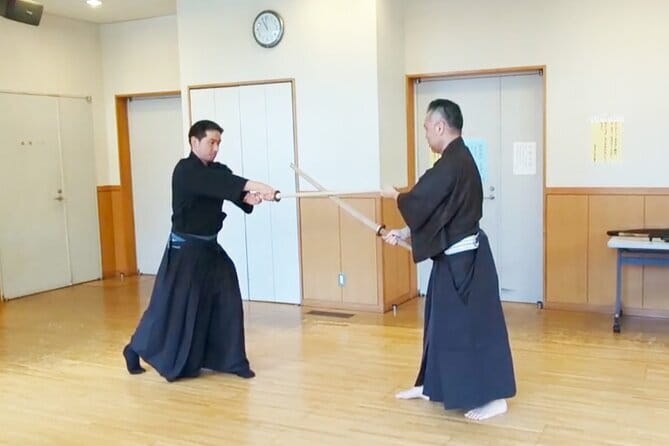
You’ll get the best result if you show up ready to move and ready to listen. A few practical ideas:
- Wear comfortable clothes underneath your provided gi setup.
- Plan for active training from start to finish—this isn’t a sit-and-watch demo.
- If you feel nervous, you’re not the only one. The class is structured, and the techniques are broken into learnable pieces.
- Ask for clarification on your stance early. Fixing posture at the start saves frustration later.
Also, take advantage of the cultural feel. The bowing and breathing parts may seem like small details, but they’re part of how karate builds discipline and calm focus under physical strain.
Should You Book This Tokyo Karate Experience?
I’d book it if you want a hands-on martial arts class with real instruction from Ryo, in a format that’s beginner-friendly and still meaningful if you’ve trained before. The combination of step-by-step technique work, Standing Zen Training posture focus, and kumite without contact makes it a strong choice for travelers who want both fitness and authentic technique learning.
I’d think twice if you’re dealing with injuries or you know your mobility is very limited. The class asks for a moderate fitness level, and kicks require usable hip and leg range. If that’s your situation, it could still be worth it—just go in prepared to communicate your limitations right away.
If your goal is to do one memorable, active, Japan-specific activity that isn’t just watching, this is a solid pick.
FAQ
How long is the karate class in Tokyo?
The class lasts about 1 hour 30 minutes (approx.).
What is the maximum group size?
The experience has a maximum of 8 travelers.
Where does the class meet?
You meet at Azumabashi Hall, 1-chōme-23-27 Azumabashi, Sumida City, Tokyo 130-0001, Japan.
Does the class include any sparring?
Yes, but the kumite training is done without physical contact to reduce injury risk.
Are karate uniforms and pads provided?
Yes. A karate uniform and pads are included for ease.
Are there different class times?
Yes. You can choose from morning and afternoon classes to fit your schedule.
What do we learn during the 90 minutes?
You’ll practice bowing, belly breathing, stretching, and basic punches, blocks, and kicks. You’ll also learn defense skills and kumite training without contact.
What fitness level is needed?
The tour notes a moderate physical fitness level. The class is designed for beginners and those with prior experience, but you should be ready for active movement and stances.
How much does it cost?
The price is $66.99 per person.
Is there a cancellation window for a full refund?
You can cancel up to 24 hours in advance for a full refund.
More Tour Reviews in Tokyo
- Mt Fuji and Hakone 1-Day Bus Tour Return by Bullet Train
★ 5.0 · 26,383 reviews - 1-Day Tokyo Bus Tour
★ 5.0 · 14,250 reviews - Tokyo: teamLab Planets TOKYO Digital Art Museum Entry Ticket
★ 4.6 · 9,779 reviews - Mt Fuji & Hakone Cruise, Drum Show Bullet Train 1 Day from Tokyo
★ 4.0 · 7,413 reviews - Tokyo: Shinjuku Food Tour (13 Dishes at 4 Local Eateries)
★ 5.0 · 6,603 reviews





