
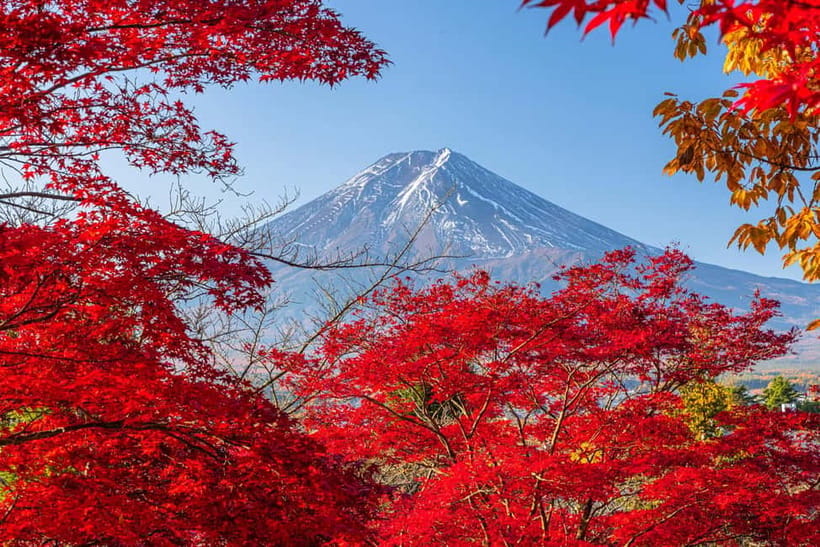
Reviewed · MOUNT FUJI TOURS
Tokyo: Mt. Fuji, Arakurayama Sengen Park, Oshino Hakkai Tour
One mountain. Five big views. That’s the feel of this Fuji day trip. You start in Shinjuku and spend the day chasing postcard angles—especially at Arakurayama Sengen Park, where the five-story pagoda lines up with Mount Fuji like a built-in photo set.
I like two things most: first, the route is tightly planned, so you get multiple classic Fuji scenes without having to coordinate trains or transfers. Second, the guide makes it easier to move through each stop, including what to look for at the viewpoints and how to handle small timing squeezes.
One consideration: the day includes hills and stairs, and the most photo-friendly spots can get busy. If you’re traveling with mobility limits, plan extra caution.
In This Review
- Key highlights at a glance
- Why This Mount Fuji Day Trip Starts in Shinjuku
- Arakurayama Sengen Park: Where the Pagoda and Fuji Line Up
- The Fujiyoshida Pair: Honcho Street and Hikawa Clock Shop
- Oshino Hakkai: Clear Spring Water and Fuji Reflections
- Oishi Park’s Short Photo Stop (Weekdays Only)
- Saiko Iyashi-no-Sato Nenba: Thatched-Roof Calm and Warmth
- Timing, Crowds, and the Walking You’ll Actually Feel
- Price and Value: What You’re Really Paying For
- Should You Book This Tokyo to Mt Fuji Tour?
- FAQ
- Where is the meeting point in Shinjuku?
- How long is the tour?
- Which attractions are included in the tour?
- Is an English-speaking guide included?
- Is Oishi Park visited every day?
- Do I need to bring cash?
- Are meals included?
- What should I do on the day if something unexpected happens?
Key highlights at a glance
- Arakurayama Sengen Park delivers the pagoda-and-Fuji view in every season, with dramatic snow in winter
- Fujiyoshida Honcho Street adds traditional storefront vibes alongside easy sightseeing
- Oshino Hakkai gives calm, clear spring-water scenery that reflects Mount Fuji
- Saiko Iyashi-no-Sato Nenba uses ticketed access to reach a relaxing thatched-roof village atmosphere
- Oishi Park is a short but iconic photo stop, and it’s weekdays only
Why This Mount Fuji Day Trip Starts in Shinjuku
This is built for people who want a Fuji day without turning it into a logistics project. You meet at the front of Kogakuin University at the Shinjuku West Exit, near the Tokyo Metropolitan Government Building area, and you’re pointed toward the Wonder Tour flag. The timing is set up for a full loop with several bus hops, so you can focus on views rather than navigating.
The total time is about 570 minutes (close to 9.5 hours). That matters because Mount Fuji sightseeing isn’t just “arrive, take a photo, leave.” The route spreads your viewing chances across different spots—Arakurayama, Oshino Hakkai, Oishi Park, plus the thatched village—so you’re not betting the whole day on one angle.
Also, there’s real value in the guide setup. You get an English-speaking guide as part of the experience, and the tour notes the languages as Chinese and English. Even when the commentary style changes by vehicle type, the goal stays the same: help you get to the right places and keep the day moving with minimal stress.
One more practical point: there’s no meal included, so build in your own quick snack or plan to buy food on your own during free time. A long bus day plus sightseeing adds up fast.
More Fuji day trips our readers rated highly
- Mt Fuji and Hakone 1-Day Bus Tour Return by Bullet Train
★ 5.0 · 26,383 reviews - Mt Fuji & Hakone Cruise, Drum Show Bullet Train 1 Day from Tokyo
★ 4.0 · 7,413 reviews - Tokyo Mt Fuji 5th St & Hakone Cruise Bus Tour w/Bullet Train
★ 4.4 · 5,024 reviews - From Tokyo: Mount Fuji Full-Day Sightseeing Trip
★ 4.5 · 4,970 reviews
Arakurayama Sengen Park: Where the Pagoda and Fuji Line Up
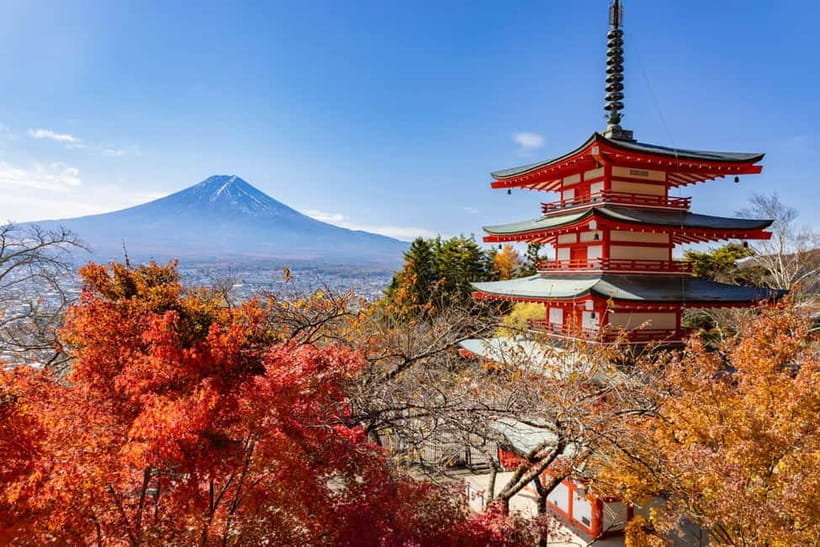
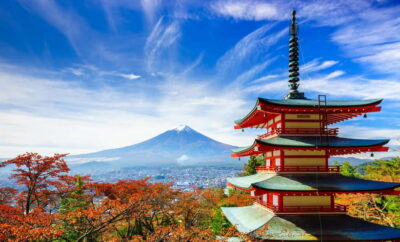
If you want the most classic Mount Fuji look from this trip, Arakurayama Sengen Park is the reason to book. The big draw is the five-story pagoda framed against Mount Fuji. Even if the clouds play games, the park is designed for that “Fuji appears behind the structure” effect.
You get about one hour of free time here, which is enough for a slow walk, photos from a few angles, and finding a spot before the crowd thickens. This stop also works well as your first major Fuji target. If the weather is good, it sets the tone for the day. If it’s not perfect, you still get a memorable temple-park scene.
What I love is how the seasonal mood shifts the feeling of the same view:
- Spring: cherry blossoms around 650 trees make the scene look dreamy and soft
- Summer: greenery and a clearer blue-sky backdrop help Mount Fuji look crisp
- Autumn: red leaves turn the hillside romantic, with orange and red tones behind the pagoda
- Winter: snow can cover both the pagoda roof and the mountain peak, creating a striking white-on-white effect
Photo tip, plain and simple: if the weather is clear, this is where you’ll want to spend the most time. If the weather turns, stay flexible and keep an eye on Fuji changing through breaks in cloud.
The Fujiyoshida Pair: Honcho Street and Hikawa Clock Shop
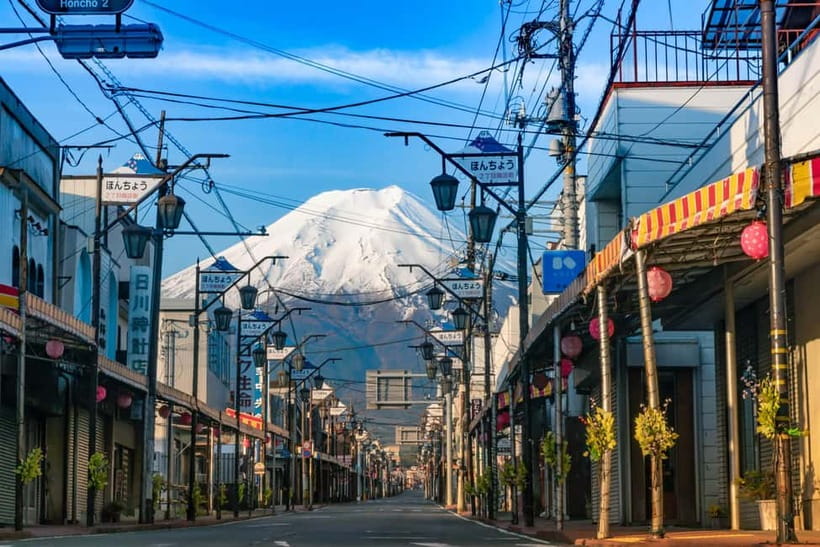
Between the mountain viewpoints, the tour adds a human-scale break in Fujiyoshida. That’s where Fujiyoshida Honcho Street comes in, with traditional Japanese buildings and storefront energy. You’re not just watching scenery—you’re seeing how the area lives around the tourism that Fuji draws.
There’s also a quick stop at the Hikawa Clock Shop with about 30 minutes for free time. It’s not the centerpiece, but it adds variety. On a day packed with views, that kind of change helps you enjoy the next stop more.
Honcho Street has different vibes across the year:
- Spring: cherry blossoms line the street, and Mount Fuji can appear at the end of the road
- Summer: festivals and fireworks can add a lively, seasonal atmosphere
- Autumn: yellow and red leaves blend with the street colors
- Winter: crisp early air often makes distant snow-covered Fuji look sharp
One practical note: this is a photo-friendly area, and photo-friendly areas tend to collect people. I’d keep your expectations realistic—comfortable pace, not empty streets.
Oshino Hakkai: Clear Spring Water and Fuji Reflections
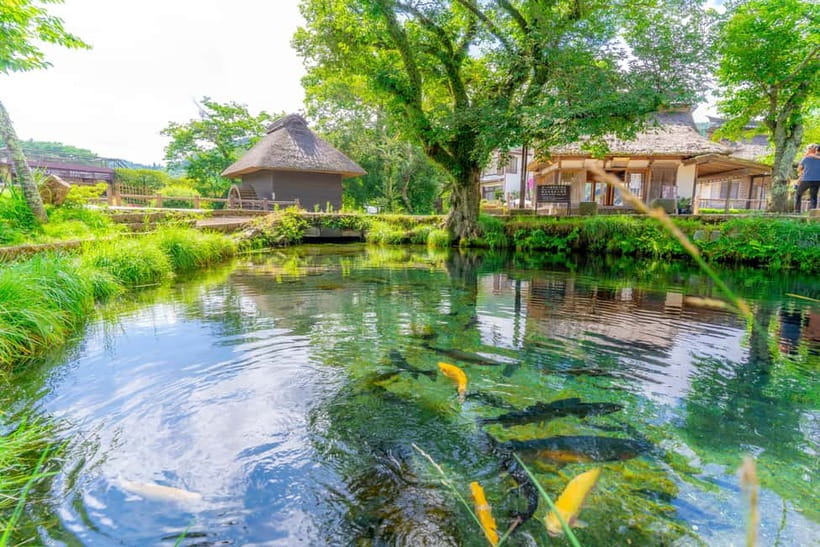
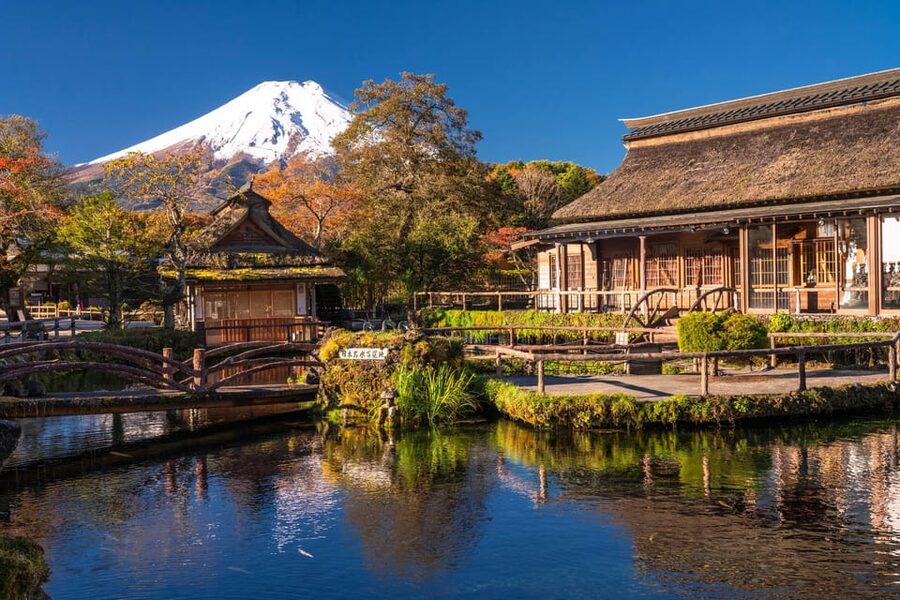
Next up is Oshino Hakkai, a calm village-style sightseeing area known for spring-fed ponds and natural water channels. You’ll have about 1.5 hours to explore at an easy pace. This is a great counterbalance to the bus and the hills because the experience is built around walking short distances between views of water.
The standout is how the scenery changes with the seasons, especially in the way Mount Fuji can reflect across the spring water:
- Spring: blossoms by the water create a poetic, soft look
- Summer: clear, cool water feels refreshing, with mirrored greenery
- Autumn: red leaves gently fall onto the water for a quiet, elegant mood
- Winter: snow can blanket the village while the spring water remains crystal clear
Because this is a natural setting, don’t expect it to be a single instant photo. Plan for small moments: the water surface, the framing of Fuji across ponds, and the calm that creeps in when you slow down.
If you’re the type who likes to wander a bit, this is where you’ll enjoy it. If you want strict, minimal walking, keep your shoes comfortable and pace yourself.
Oishi Park’s Short Photo Stop (Weekdays Only)
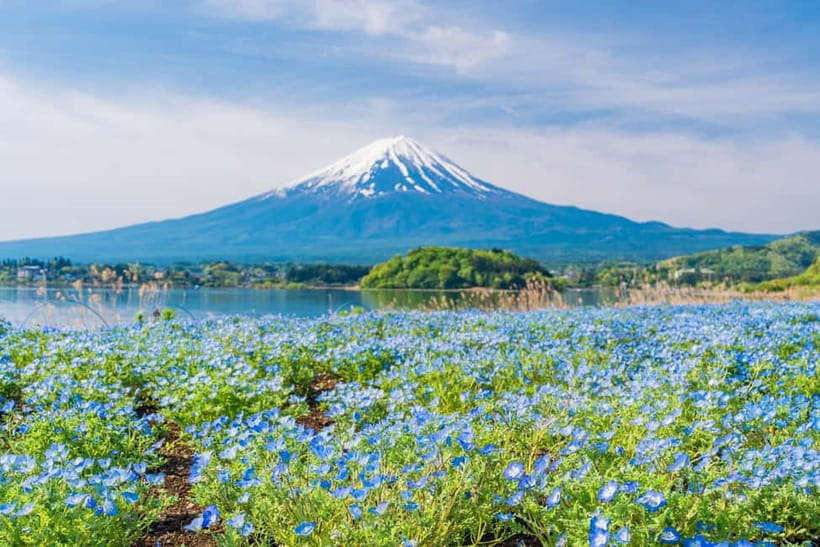
Oishi Park is a quick photo stop with about 30 minutes of free time. That sounds short, but it’s usually enough to get the classic lake-and-Fuji sightlines if the weather cooperates.
The big thing to know: Oishi Park is open only on weekdays. It’s closed on weekends, holidays, and during Golden Week (April 29 to May 5). If you’re traveling on a weekday but the tour runs behind due to traffic delays, this stop can be canceled. So think of it as an add-on bonus that you’ll take if you get it.
Seasonal highlights at Oishi Park:
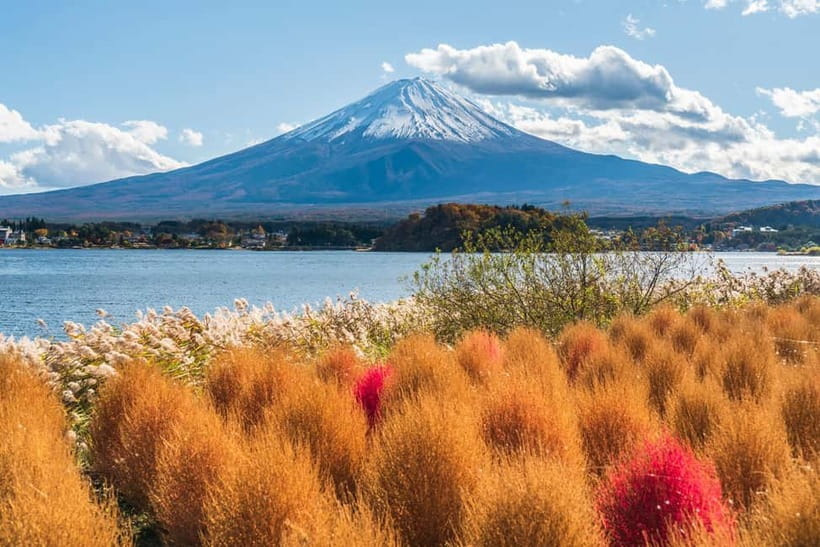
- Spring: tulips and moss phlox by the lakeside, with Lake Kawaguchi and Fuji behind it
- Summer: lavender blooms that bring fragrance and that “French-something” vibe people associate with Provence
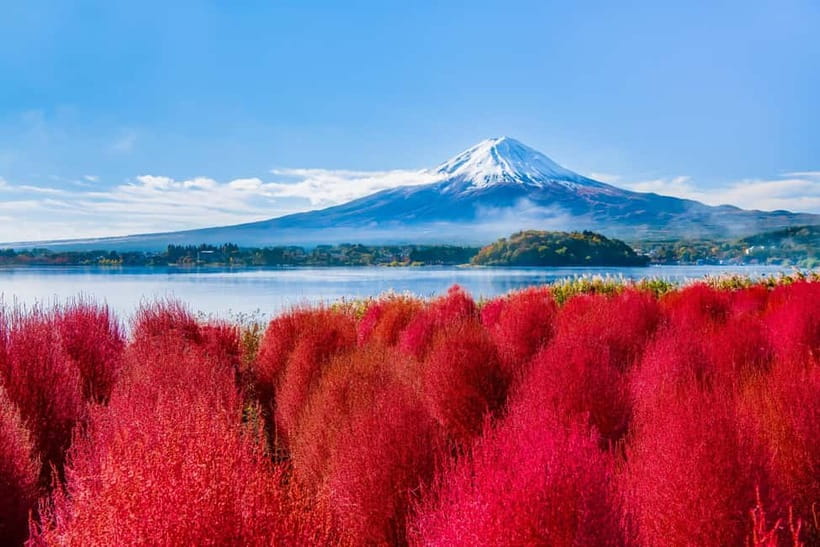
- Autumn: golden lakeside grass and Fuji’s first snow in the distance
- Winter: snowy mountain reflections on the lake with a quiet, still feeling
Since your time here is limited, I’d treat it like a checklist stop:
- Get your first wide photo early
- Then do a second round for the best reflection angles
- Keep moving so you don’t lose the moment to crowd congestion
- Tokyo: Shinjuku Food Tour (13 Dishes at 4 Local Eateries)★ 5.0 · 6,603 reviews
- Tokyo Mt Fuji 5th St & Hakone Cruise Bus Tour w/Bullet Train★ 4.4 · 5,024 reviews
- Flagship 2-Hours Official Street Go-Kart Tour – Tokyo Bay Shop★ 5.0 · 4,974 reviews
- From Tokyo: Mount Fuji Full-Day Sightseeing Trip★ 4.5 · 4,970 reviews
- Tokyo: Hop-On Hop-Off Sightseeing Bus Ticket★ 3.9 · 4,207 reviews
Saiko Iyashi-no-Sato Nenba: Thatched-Roof Calm and Warmth
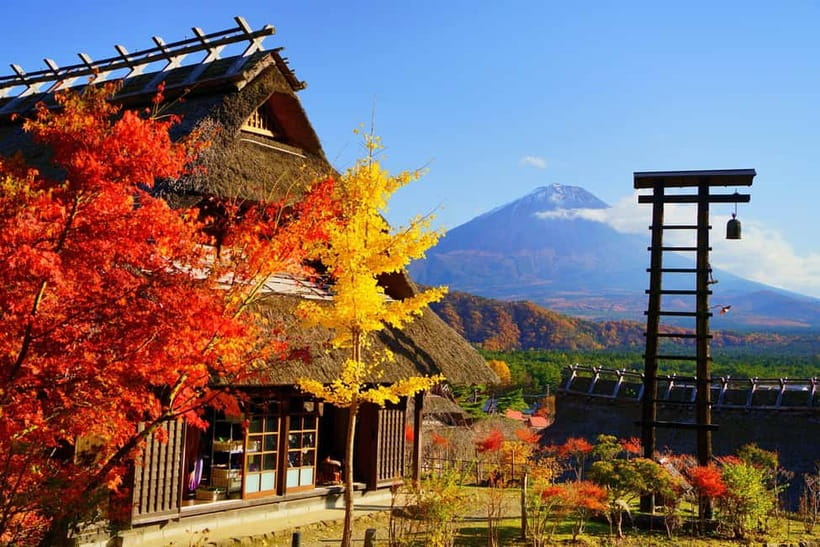
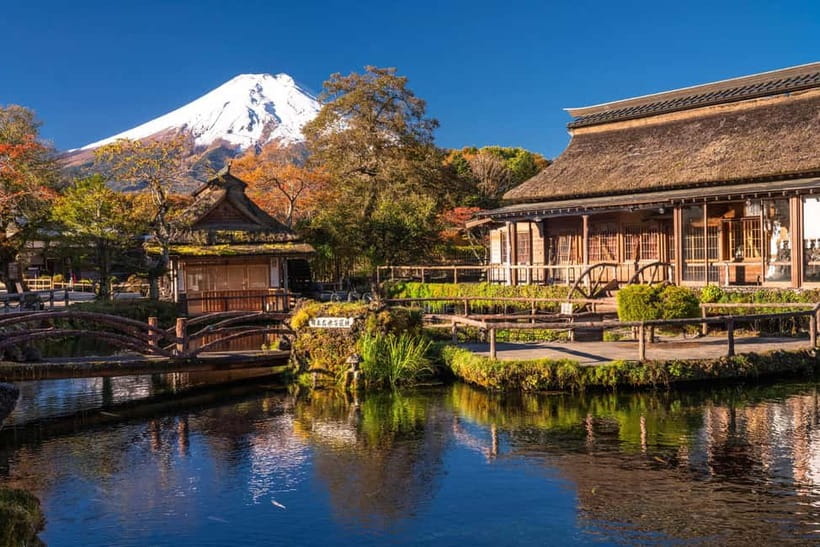
For a more healing, slower-feeling segment, the tour goes to Saiko Iyashi-no-Sato Nenba. This is a ticketed stop, and the Nenba ticket is included, which is a real convenience when you want to avoid extra steps.
You’ll have about one hour to look around. This is the kind of place that helps reset the pace after multiple outdoor viewpoints. The focus is on traditional rural atmosphere—especially the thatched-roof houses.
Season-by-season, the mood shifts in satisfying ways:
- Spring: ancient thatched houses with cherry blossoms nearby
- Summer: rice fields and streams, with fresh mountain-air scents
- Autumn: red leaves covering the hillside, creating a time-travel feeling
- Winter: snow on rooftops, plus steam rising from hot springs for a fairytale kind of scene
I like that this stop isn’t trying to compete with Fuji for attention. It complements it. You still get iconic scenery, but you also get something quieter and more tactile: texture, thatch, steam, and rural geometry.
Timing, Crowds, and the Walking You’ll Actually Feel
This is a day trip with energy. You’ll move between places by bus, but there’s also time on your feet, including long stairs and uphill sections. The tour doesn’t hide that. It also notes it’s not recommended for seniors who require crutches, and it’s not suitable for people over 70.
From a practical standpoint:
- Wear shoes you can walk in for 1–2 hours total throughout the day, not just casual sightseeing sandals
- Bring a small layer, especially in winter and at higher viewpoints
- Plan to slow down at each stop when people bunch up for the same photo angle
One detail that matters for your comfort: the route includes multiple free-time windows, so you can adjust on the fly. If Arakurayama is crowded, you can spend a little less time there and pick up your pace. If Oshino Hakkai feels calm, that’s where you can slow down and linger.
Price and Value: What You’re Really Paying For
At $50 per person, this feels like strong value if you want the classic Fuji checklist in one go. The price includes:
- Roundtrip transportation
- Entry/ticket for Saiko Iyashi-no-Sato Nenba
- An English-speaking guide
Meals are not included, and that’s normal for group day trips. Personal expenses are on you.
So what makes it good value? It’s the combo of transportation plus guided coordination plus at least one ticketed admission. If you’ve tried to plan a one-day Mount Fuji loop by yourself, you know the hidden costs: time, multiple transfers, and the risk of missing one of the key viewpoints because you underestimated distance or timing.
The tradeoff is what you’d expect at this price point: it’s a group tour format, so you accept crowd dynamics and a structured pace. For many people, that’s exactly what they want—someone else handles the hard parts.
Should You Book This Tokyo to Mt Fuji Tour?
Book it if you want a classic Mount Fuji day with several major stops—Arakurayama pagoda views, Oshino Hakkai water scenery, the thatched village at Saiko, and a traditional street break in Fujiyoshida. The guide support and included transport make it much easier than building your own route from Shinjuku.
Skip it (or look for a different style) if you have limited mobility or you rely on crutches, since there are stairs and uphill sections. Also consider your travel date carefully if you’re hoping for Oishi Park—weekdays only, and it can be dropped if traffic causes delays.
If you’re a first-timer to Mount Fuji, this route gives you a lot of the iconic scenes without turning the day into a puzzle.
FAQ
Where is the meeting point in Shinjuku?
You meet at the front of Kogakuin University Shinjuku Station West Exit. The notes say to walk 1–2 minutes toward the Tokyo Metropolitan Government Building area, and look for the Wonder Tour flag.
How long is the tour?
The total duration is about 570 minutes.
Which attractions are included in the tour?
The day includes Arakurayama Sengen Park, Hikawa Clock Shop, Oshino Hakkai, Oishi Park (photo stop), and Saiko Iyashi-no-Sato Nenba, plus time at Fujiyoshida Honcho Street.
Is an English-speaking guide included?
Yes. The activity includes an English-speaking guide, and the tour states Chinese and English are available.
Is Oishi Park visited every day?
No. Oishi Park is open only on weekdays. It’s closed on weekends, holidays, and during Golden Week (April 29 to May 5). It may also be canceled on weekdays if there are traffic delays.
Do I need to bring cash?
Yes. The tour notes say to bring cash.
Are meals included?
No. Meals are not included.
What should I do on the day if something unexpected happens?
The notes say emergency contact is available before departure only. On the day, contact the guide directly.
More Tours in Tokyo
- Mt Fuji and Hakone 1-Day Bus Tour Return by Bullet Train
★ 5.0 · 26,383 reviews - 1-Day Tokyo Bus Tour
★ 5.0 · 14,250 reviews - Tokyo: Shinjuku Food Tour (13 Dishes at 4 Local Eateries)
★ 5.0 · 6,603 reviews - Tokyo Mt Fuji 5th St & Hakone Cruise Bus Tour w/Bullet Train
★ 4.4 · 5,024 reviews - Flagship 2-Hours Official Street Go-Kart Tour – Tokyo Bay Shop
★ 5.0 · 4,974 reviews
More Tour Reviews in Tokyo
- Mt Fuji and Hakone 1-Day Bus Tour Return by Bullet Train
★ 5.0 · 26,383 reviews - 1-Day Tokyo Bus Tour
★ 5.0 · 14,250 reviews - Tokyo: teamLab Planets TOKYO Digital Art Museum Entry Ticket
★ 4.6 · 9,779 reviews - Mt Fuji & Hakone Cruise, Drum Show Bullet Train 1 Day from Tokyo
★ 4.0 · 7,413 reviews - Tokyo: Shinjuku Food Tour (13 Dishes at 4 Local Eateries)
★ 5.0 · 6,603 reviews
More Mount Fuji Days We Have Reviewed
- Mt Fuji and Hakone 1-Day Bus Tour Return by Bullet Train
★ 5.0 · 26,383 reviews - Mt Fuji & Hakone Cruise, Drum Show Bullet Train 1 Day from Tokyo
★ 4.0 · 7,413 reviews - Tokyo Mt Fuji 5th St & Hakone Cruise Bus Tour w/Bullet Train
★ 4.4 · 5,024 reviews - From Tokyo: Mount Fuji Full-Day Sightseeing Trip
★ 4.5 · 4,970 reviews - Tokyo: Mt. Fuji Tour, Hakone Ropeway, Owakudani, Lake Ashi
★ 4.7 · 4,002 reviews
Latest Tokyo reviews off our desk






Mount Fuji Tours, compared.
 ★ 5.0Mt Fuji and Hakone 1-Day Bus Tour Return by Bullet TrainFrom $16326,383 reviews
 ★ 4.0Mt Fuji & Hakone Cruise, Drum Show Bullet Train 1 Day from TokyoFrom $1497,413 reviews
 ★ 4.4Tokyo Mt Fuji 5th St & Hakone Cruise Bus Tour w/Bullet TrainFrom $1545,024 reviews
 ★ 4.5From Tokyo: Mount Fuji Full-Day Sightseeing TripFrom $684,970 reviews
 ★ 4.7Mt. Fuji Tour, Hakone Ropeway, Owakudani, Lake AshiFrom $544,002 reviews
 ★ 4.4Mt.Fuji,Kawaguchiko Oishi Park,Arakurayama Sengen ParkFrom $542,682 reviews
 ★ 4.2Mt. Fuji 5th Station & Hakone Cruise 1-Day Bus TourFrom $1292,381 reviews
 ★ 4.7Mt Fuji Top 5 Spots Day Tour: Arakurayama Park,Oshino HakkaiFrom $532,066 reviews