
Reviewed · JDM & DRIFT CAR MEETS
Tokyo Night Drive: Daikoku PA Car Culture & Wangan Midnight
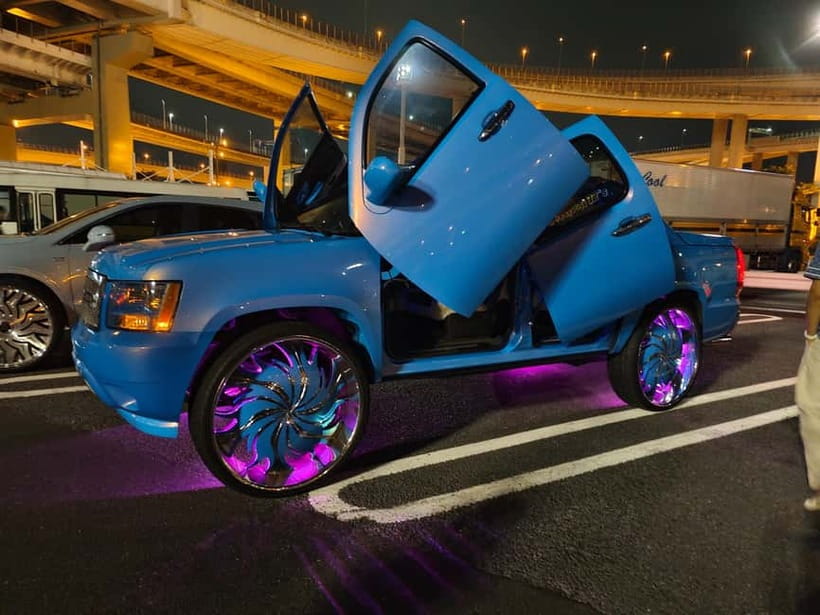
Daikoku at night feels like the game, but real. I like how the tour takes you to Daikoku PA for a modified-car meetup, and keeps the mood very much in Wangan Midnight territory. You’re not just watching from afar either, you’re riding the route and seeing Tokyo’s night skyline like it was designed for photos.
What I also like is the pacing: quick, well-timed stops for the big sights, then time on the ground when the cars matter. A guide like Lee or Kaku (depending on your night) sets a friendly tone and helps you work the meetup without feeling lost. There’s also a practical touch: the tour includes a charger, so your phone stays ready for night shots.
One thing to weigh: it’s a tight 4-hour experience. If you’re expecting a long, slow, all-night car festival, this is more guided transport plus focused time at key spots. And there’s no food or drink included, so you’ll want to eat before you go.
In This Review
- Key Takeaways Before You Go
- Why Daikoku PA Feels Like Real-Life Wangan Midnight
- The Night Drive That Puts Tokyo’s Icons on Your Camera
- The Akihabara Start and the Autobacs Shinonome Stop
- Daikoku Parking Area: How to Spend Your Hour Well
- A PIT Autobacs as a Final Stop (Car Gear, Memes, and Parts)
- Price and What You’re Actually Paying For
- Small Group Energy: Why Up to Four Changes the Whole Feel
- Practical Stuff That Saves Your Night
- Who Should Book This Night Drive (and Who Should Skip It)
- Should You Book Tokyo Night Drive: Daikoku PA Car Culture and Wangan Midnight?
- FAQ
- How long is the Tokyo Night Drive experience?
- Where does the tour usually start and where can it end?
- What is the meeting point method?
- What languages are the guides?
- What should I bring, and what’s not allowed?
- Is food included?
Key Takeaways Before You Go
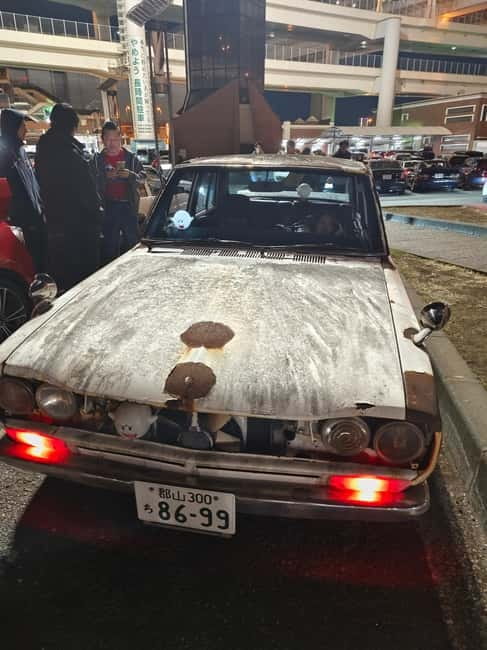
- Daikoku PA at night: the modified-car meetup energy you came for, with a full hour to look and photograph
- Wangan route feel: street-racing vibes without turning it into a risky scene
- Tokyo Tower and Rainbow Bridge: short but worthwhile night views that fit the tour schedule
- A PIT Autobacs stop: tuner parts and car merch for a strong finale
- Small group of up to 4: easier conversations with your English/Japanese guide
- Charger included: less stress about dead battery while you chase night photos
Why Daikoku PA Feels Like Real-Life Wangan Midnight
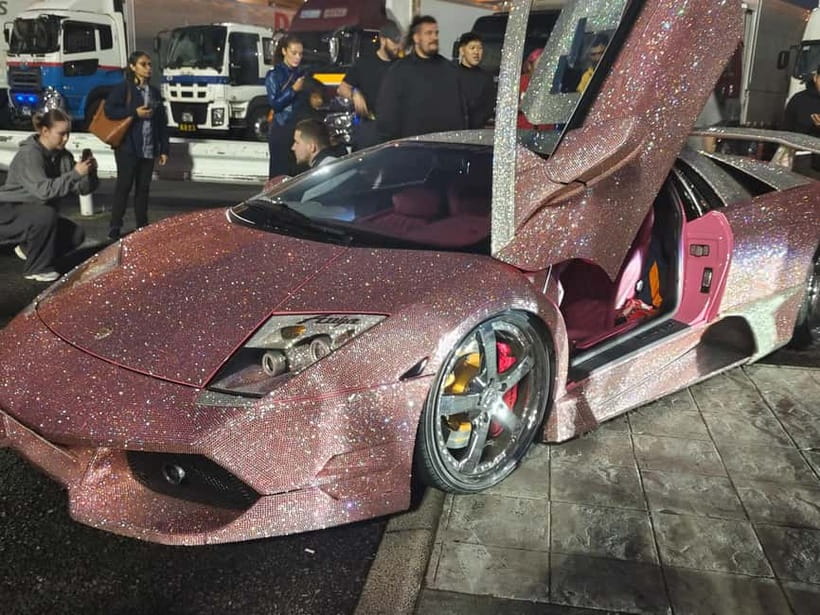
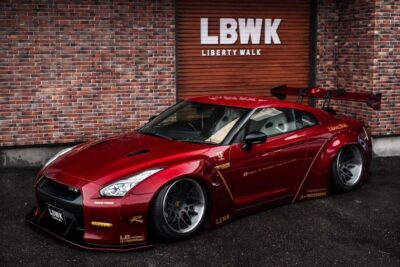
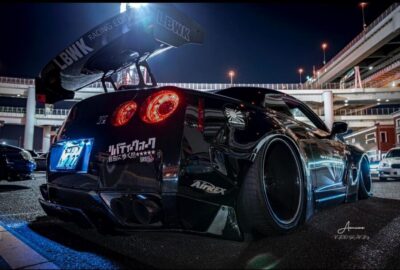
Daikoku Parking Area is one of those Tokyo places where the cars come first. The whole atmosphere is built around modified machines showing up, owners mixing with each other, and everyone walking the lanes to compare builds. That’s exactly the feeling you want if you like the Wangan Midnight look: low cars, loud details, and the sense that horsepower has a personality.
I particularly like that you’re given real time there, not just a quick glance from a bus window. An hour on-site is enough to walk the rows a couple of times, get a sense of the different styles, and talk briefly with people if they’re in the mood. One review also pointed out the acoustics inside the highway loop as uniquely noticeable, which makes the whole place feel more physical than just “cool cars behind glass.”
The other plus is that a guide helps you read what you’re seeing. Even if you don’t know tuning jargon, you can still spot patterns: how owners present their builds, how the cars are spaced, and why certain designs look right under Tokyo’s night lighting. And if you care about photography, you’ll benefit from moving with the group instead of wandering randomly with no plan.
More Daikoku nights and JDM runs, rated
- Tokyo: Fast & Furious Tokyo Drift III Experience
★ 4.8 · 2,432 reviews - GT-R35 800hp Club Membership – secret underground car meet
★ 4.8 · 998 reviews - Tokyo: Daikoku JDM Car Meet & Night Car Culture Tour
★ 4.8 · 626 reviews - Secret Car Meet: R34 Skyline Car Club Membership
★ 4.8 · 494 reviews
The Night Drive That Puts Tokyo’s Icons on Your Camera
This tour is not only about cars. It’s also about the night drive itself, with that satisfying Tokyo feeling of neon, bridges, and big-city scale. You’ll pass by major sights, and the schedule gives you small windows to actually see them, not just hear the guide say their names.
Rainbow Bridge gets a quick sightseeing stop, and Tokyo Tower gets a longer one. Ten minutes here and thirty minutes there might sound brief, but at night in a city this big, speed is the point. You’re trading extra walking for more “wow per minute,” especially when your goal is car photos that happen to include skyline backdrops.
Tokyo Tower is a great target because it photographs well after dark, when the lights sharpen the silhouette. Rainbow Bridge works because it gives you lines and depth, and it tends to look dramatic from a few angles as the traffic rhythm moves around you. If you like city photos, this is the part where you’ll feel like the tour is doing more than transporting you.
The Akihabara Start and the Autobacs Shinonome Stop
The night usually starts in Akihabara, which is an efficient choice. It’s easy to reach for most visitors, and it sets a playful tone before the roadshow gets serious. You’re also not thrown into the deep end instantly. There’s a stop at autobacs Shinonome for about thirty minutes, which helps you gear up mentally for what’s coming.
This is where the tour makes sense for people who don’t just want cars, but want the ecosystem around them. You get a taste of the parts-and-gear culture without needing to understand everything on shelves. Even if you don’t buy anything, it’s a useful warm-up: you’ll start noticing the design choices you’ll later see at Daikoku, and you’ll recognize the general vibe of Japanese tuning retail.
And if you’re traveling with a teen or a friend who isn’t as hardcore about meets, this stop can do the heavy lifting. It gives them something to do for a short, concrete block of time before you all funnel back into the main event.
Daikoku Parking Area: How to Spend Your Hour Well
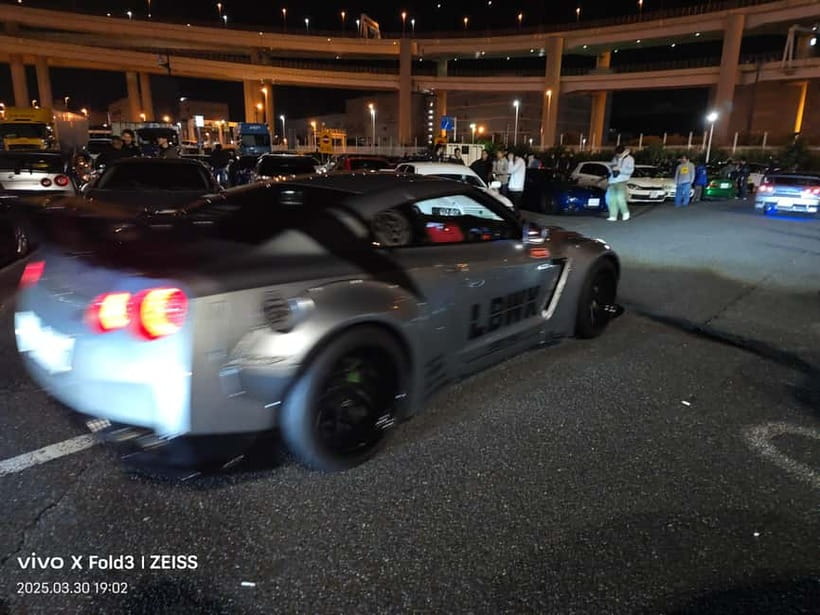
Your main block is one hour at Daikoku Parking Area. That hour is short enough to feel exciting, but long enough to do it properly if you have a plan.
Here’s how I’d structure your time:
- First walk the outer edges. You’ll often spot standout cars early and figure out where the best viewing lanes are.
- Then do a second loop more slowly, focusing on details like wheel setup, paint finish, and how the car’s stance matches the overall style.
- Keep your phone ready for low-light shots, but don’t chase only photos. A quick hello with an owner, when appropriate, tells you more than a hundred online captions.
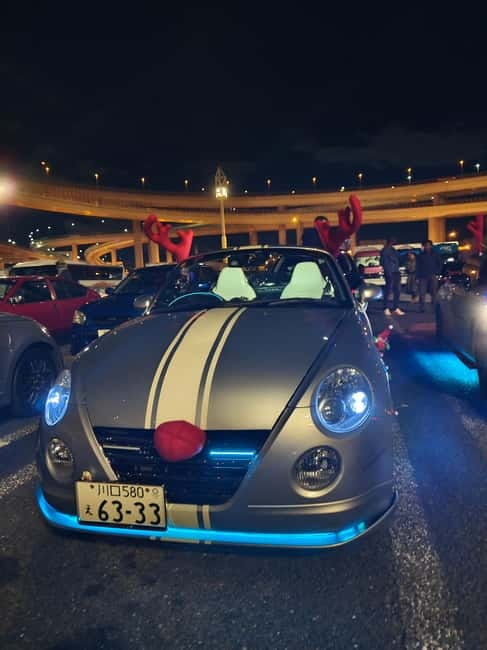
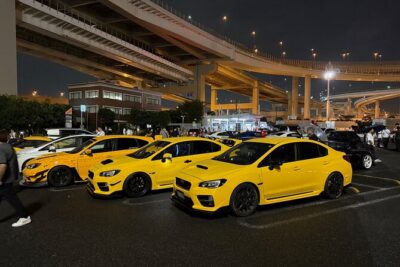
One review specifically highlighted the variety: older and newer builds, and lots of “special” paint and tuned setups. That’s what makes Daikoku work as a car-spotting experience, not just a single themed display. You’re seeing multiple eras and multiple tastes under one roof-like open-air setup.
Also, don’t ignore the sound. The highway loop setting can make the whole meetup feel louder and more alive than you’d expect from a parking area. Even if you’re not chasing adrenaline, that sensory layer adds to the realism.
The hour also matters because you’ll likely be back in motion soon. Tokyo’s night scenes are time-sensitive. If you use your time well at Daikoku, you won’t feel like you rushed, even though the schedule is tight.
A PIT Autobacs as a Final Stop (Car Gear, Memes, and Parts)
A PIT Autobacs shows up as a key highlight and tends to act like the tour’s finale. In at least one account, it came after Daikoku, which works well. You get the real cars first, then you shift into the store mode where you can see products, memorabilia, and the broader tuner culture in a more organized setting.
This stop is useful even if you’re not shopping for parts. It helps you bring the experience home mentally. You’ll connect what you saw outside with what the culture sells inside, and you’ll leave with something tangible, or at least a clearer sense of what Japan’s tuner community values.
If you like browsing, this part can turn the night from a photo hunt into a story you can keep telling back home. If you hate shopping, don’t worry too much: you’re not expected to buy. You’re here because the store is part of how this scene gets packaged for visitors.
Readers also shortlisted these Tokyo bookings:
- Tokyo Night Foodie Tour in Shinjuku – Seasonal Sushi, Wagyu Beef★ 5.0 · 1,161 reviews
- Tokyo: Daikoku JDM Car Meet & Night Car Culture Tour★ 4.8 · 626 reviews
- Tokyo After 5: Authentic Japanese Food & Drink Night Tour★ 4.5 · 560 reviews
- Tokyo: Samurai Entertainment Night Show in Kanda Shrine★ 4.6 · 417 reviews
- The Dark Side of Tokyo – Night Walking Tour Shinjuku Kabukicho★ 4.5 · 297 reviews
Price and What You’re Actually Paying For
The tour price is listed at $93 per person for a 4-hour night experience. Is that expensive? It depends on your expectations.
Here’s the value case:
- You’re paying for guided timing and transportation, including highway travel.
- You get a friendly intro and help interpreting what you’re seeing.
- You’re paying for the friction-free route: pickup and drop-off planning, plus the structure that keeps a small group moving.
- You’re also getting that charger included, which sounds small until you’re out in the dark with a half-dead battery.
Now the drawback case (and it’s a fair one): for the money, some people may feel it’s more “transport + stops” than a full immersion that lasts longer than a couple hours of active time. If your goal is purely to park-hop and spend hours roaming on your own, you could feel the limit.
My suggestion: decide what you want most.
- If you want the Daikoku meetup experience with a guided flow and night-sightseeing context, this price starts to make sense.
- If you only care about one location and would rather do it independently, you may judge the cost more harshly.
Small Group Energy: Why Up to Four Changes the Whole Feel
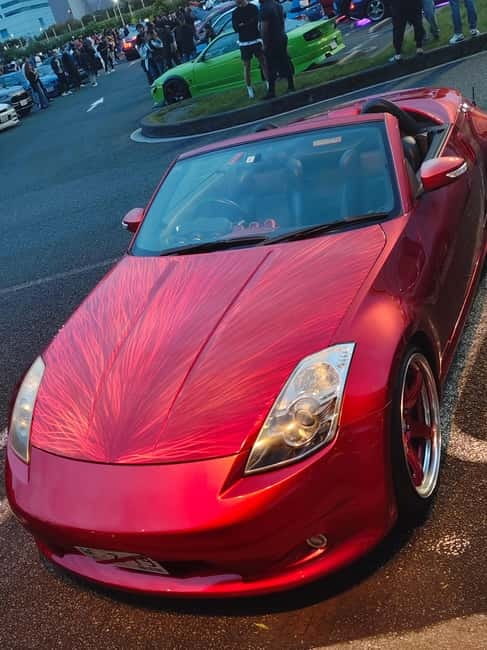
This tour runs with a small group limited to 4 participants. That’s not just a comfort detail. It changes the experience in three ways.
First, you can actually talk to the guide without feeling like you’re interrupting a crowd. Reviews point to guides being relaxed and communicative, including names like Lee and Kaku. In a small group, their explanations land better.
Second, the schedule stays workable. When you’re in a larger group, a scenic stop can become a waiting game. Here, the pace stays closer to the plan, which matters for night photography.
Third, it feels like you’re being brought into a local hobby scene rather than being processed like a ticket number. The guides can steer you where it makes sense to look, and you’re less likely to end up distracted by the big-city chaos.
Practical Stuff That Saves Your Night
This is a night tour. Tiny decisions matter.
Bring your passport. That’s explicitly required.
Alcohol and drugs are not allowed. Keep it simple: the goal is cars and sightseeing, not partying in the car culture zone.
Meeting point details come through WhatsApp, and your guide contacts you the day before the tour to confirm the plan. That last part matters, because night logistics can shift depending on traffic and your group.
One more note: the tour usually starts in Akihabara, and you may end in either Akihabara or Ginza depending on the night. So before you lock in plans, leave some breathing room for your post-tour evening.
Who Should Book This Night Drive (and Who Should Skip It)
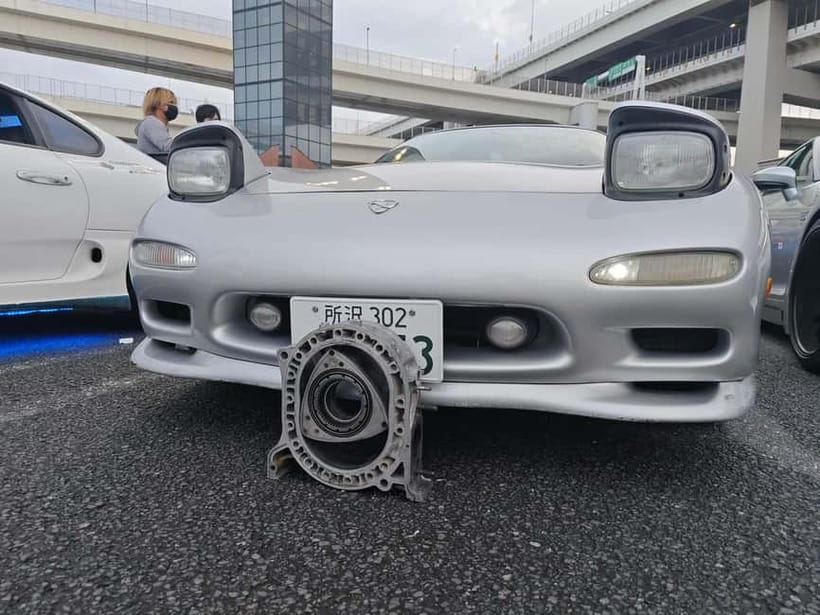
This one fits best if you’re:
- a car enthusiast who wants the Daikoku meetup atmosphere
- someone who likes photography and wants night skyline backdrops (Tokyo Tower and Rainbow Bridge are key)
- traveling with teens or friends who enjoy car culture but might need a few structured stops to stay engaged
It’s not suitable for children under 10, wheelchair users, or people over 70. Also, if you’re traveling with the expectation of a long food-focused night, note that food and drink aren’t included.
Should You Book Tokyo Night Drive: Daikoku PA Car Culture and Wangan Midnight?
If you want a short, well-organized night that hits Tokyo’s iconic views and drops you at Daikoku PA with a real car-meet vibe, I think it’s a strong pick. The small group size and the guide help turn it from “just transportation” into a guided taste of Tokyo’s tuner culture.
Book it if:
- you care about Daikoku and want time there that’s long enough to actually notice details
- you want Tokyo Tower and Rainbow Bridge on the same night as the car scene
- you like the idea of ending with an A PIT Autobacs browse
Skip it or reconsider if:
- you hate structured schedules and would rather explore a car scene completely on your own
- you want meals included (they aren’t)
- you’re looking for a multi-hour car festival, not a tight 4-hour route
FAQ
How long is the Tokyo Night Drive experience?
The tour lasts 4 hours.
Where does the tour usually start and where can it end?
It usually starts in Akihabara. You may choose to end the tour in either Akihabara or Ginza.
What is the meeting point method?
Meeting point details are sent by WhatsApp. Your guide also contacts you the day before the tour to confirm details.
What languages are the guides?
The live tour guide speaks English and Japanese.
What should I bring, and what’s not allowed?
Bring your passport. Alcohol and drugs are not allowed.
Is food included?
No. Food and drink are not included.
More Evening Experiences in Tokyo
- Tokyo Night Foodie Tour in Shinjuku – Seasonal Sushi, Wagyu Beef
★ 5.0 · 1,161 reviews - Tokyo: Daikoku JDM Car Meet & Night Car Culture Tour
★ 4.8 · 626 reviews - Tokyo After 5: Authentic Japanese Food & Drink Night Tour
★ 4.5 · 560 reviews - Tokyo: Samurai Entertainment Night Show in Kanda Shrine
★ 4.6 · 417 reviews - The Dark Side of Tokyo – Night Walking Tour Shinjuku Kabukicho
★ 4.5 · 297 reviews
More Tour Reviews in Tokyo
- Mt Fuji and Hakone 1-Day Bus Tour Return by Bullet Train
★ 5.0 · 26,383 reviews - 1-Day Tokyo Bus Tour
★ 5.0 · 14,250 reviews - Tokyo: teamLab Planets TOKYO Digital Art Museum Entry Ticket
★ 4.6 · 9,779 reviews - Mt Fuji & Hakone Cruise, Drum Show Bullet Train 1 Day from Tokyo
★ 4.0 · 7,413 reviews - Tokyo: Shinjuku Food Tour (13 Dishes at 4 Local Eateries)
★ 5.0 · 6,603 reviews
More JDM and Drift Nights
- Tokyo: Fast & Furious Tokyo Drift III Experience
★ 4.8 · 2,432 reviews - GT-R35 800hp Club Membership – secret underground car meet
★ 4.8 · 998 reviews - Tokyo: Daikoku JDM Car Meet & Night Car Culture Tour
★ 4.8 · 626 reviews - Secret Car Meet: R34 Skyline Car Club Membership
★ 4.8 · 494 reviews - Tokyo Drift: Daikoku PA Supreme Car Experience 大黒PA
★ 4.7 · 372 reviews
Latest Tokyo reviews off our desk






JDM & Drift Car Meets, compared.
 ★ 4.8Fast & Furious Tokyo Drift III ExperienceFrom $1502,432 reviews
 ★ 4.8GT-R35 800hp Club Membership – secret underground car meetFrom $205998 reviews
 ★ 4.8Daikoku JDM Car Meet & Night Car Culture TourFrom $98626 reviews
 ★ 4.8Secret Car Meet: R34 Skyline Car Club MembershipFrom $236494 reviews
 ★ 4.9EVO, WRX, Skyline – JDM Night Run to Daikoku Car MeetFrom $125478 reviews
 ★ 4.7Tokyo Drift: Daikoku PA Supreme Car Experience 大黒PAFrom $58372 reviews
 ★ 4.9Legendary JDM CAR Daikoku Underground MeetupFrom $82360 reviews
 ★ 4.6Go Daikoku PA Fast & Furious 3 Sports Car MeetupFrom $49356 reviews
Browse the lists this tour appears in