
Reviewed · MOUNT FUJI TOURS
2-Days FUJI & Tokyo Retreat: A Private Tour
A two-day mix of Tokyo and Fuji can work. I like the private car setup for moving fast without wrestling transit, and I like that fuel, tolls, and parking are covered so there are fewer surprises. The main catch is that the day is packed with major sights, and meals aren’t included, so plan for lunch costs and ticket extras like Tokyo Skytree.
Day 1 is built for the classic Tokyo hits, but you can steer the route toward your style, whether that means iconic landmarks or quieter local moments. Day 2 leans into Mount Fuji views with a lake-and-shrine loop that feels like you’re leaving the city for good scenery time, not just a quick stop-and-go.
One more reality check: Mount Fuji views depend on conditions, so even with a smart route (including the 5th Station option mentioned in the plan), you’ll want to keep expectations flexible.
In This Review
- Key Things to Love About This Private 2-Day Plan
- Why This Tour Feels Different: Private Comfort Meets Real Routing
- Day 1 Tokyo: Asakusa Classics to Shibuya Crossings (Without Transit Stress)
- Stop-by-Stop: Senso-ji, Skytree, Imperial Gardens, Tsukiji, Meiji, Harajuku, Shibuya
- Senso-ji Temple (Asakusa) — Tokyo’s big classic
- Tokyo Skytree — Optional ticket time for skyline views
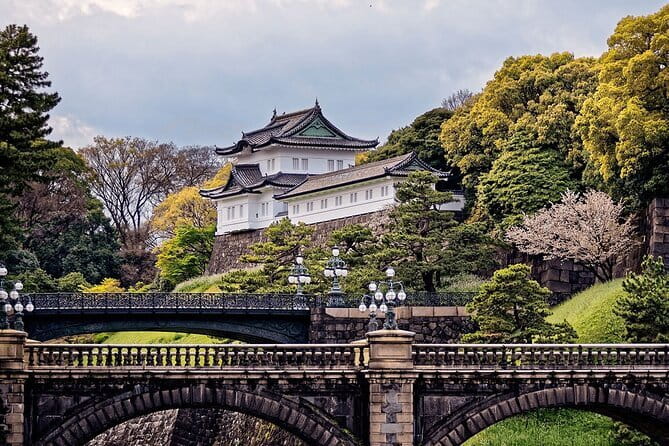
- Imperial Palace East Gardens — Edo Castle ruins in a calm space
- Tsukiji Fish Market (Outer Market) — Lunch with street-food energy
- Meiji Jingu Shrine — A major shrine plus Yoyogi Park vibes
- Takeshita Street (Harajuku) — Candy, crepes, and loud fashion
- Shibuya Crossing — The world-famous ending photo
- Day 2 Mount Fuji: Lakeside Sights and Shrine Stops That Feel Like a Break
- Fuji Stop Breakdown: Oshino Hakkai, Kawaguchiko, Iyashi no Sato, Saiko Lake
- Oshino Hakkai — Eight springs from Fuji water
- Kitaguchi Hongu Fuji Sengen Jinja Shrine — Forest paths and stone lanterns
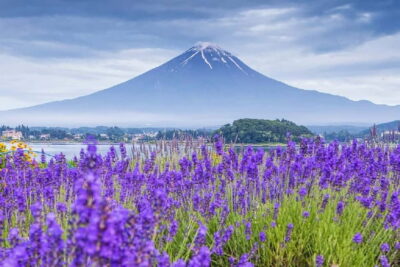
- Lake Kawaguchiko — Fuji views plus an easy lakeside stroll
- Iyashi no Sato Sarai — Thatched-roof houses and local crafts
- Saiko Lake — Another Fuji Five Lakes choice for quieter scenery
- Price and Logistics: Is $1,067 for Up to 4 Worth It?
- The Guide and Driver Factor: How Service Changes the Day
- Practical Tips So the Day Runs Smooth
- Plan your meal strategy
- Budget ticket extras
- Start strong at 8:00 am
- Comfort choices matter
- Who This Tour Suits Best (And Who Might Want Another Option)
- Should You Book This Private 2-Day Tokyo and Fuji Retreat?
- FAQ
- Is this tour a private experience?
- Where does the tour start, and what time does it begin?
- Are meals included?
- Is Tokyo Skytree admission included?
- What’s included for transportation and comfort?
- What ticket costs are free on the itinerary?
- Can I cancel for a full refund?
Key Things to Love About This Private 2-Day Plan
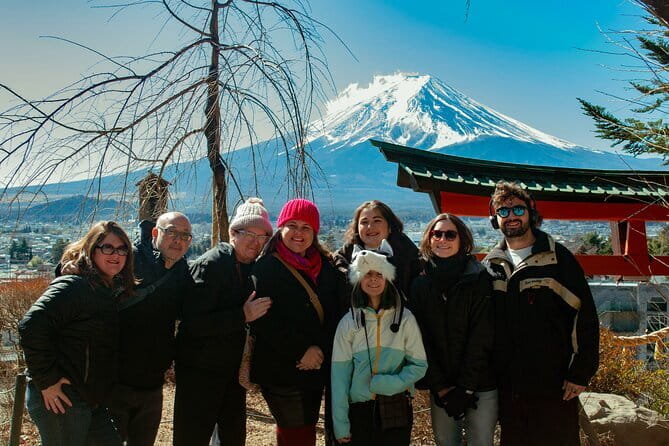
- Private, air-conditioned car with Wi‑Fi on board, so Tokyo feels less like a maze
- All transport costs covered (petrol, highway tolls, parking), plus bottled water and snacks
- Day 1 is customizable, letting you choose between famous stops and local favorites
- Fuji day focuses on scenery and culture with Oshino Hakkai, shrines, and Fuji Five Lakes area spots
- Built-in flexibility from a real guide and driver team, including punctual, problem-solving service noted by name (Affan and Mian)
Why This Tour Feels Different: Private Comfort Meets Real Routing
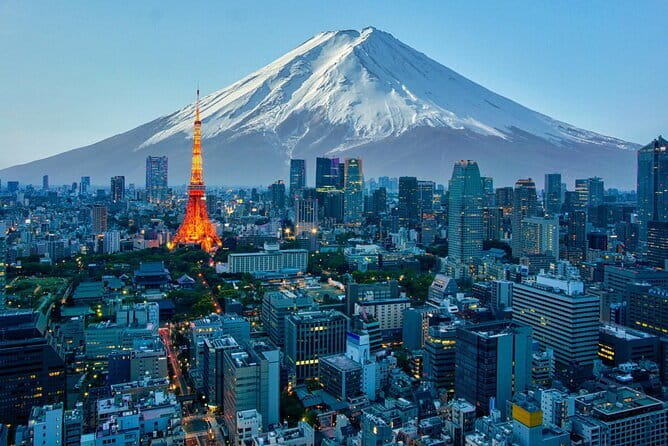
This is the kind of tour where the value shows up in small, practical ways. A private car means you can keep momentum. You’re not watching everyone else hop on and off trains while you’re stuck reading station signs. And the air-conditioning matters in Tokyo, even in calmer seasons, because you’ll be out and about for long stretches.
What I especially like is that the basics are handled: Wi‑Fi in the car, bottled water, and snacks keep you comfortable between stops. Add that with petrol, tolls, and parking included, and the budget stays cleaner. You’re mostly budgeting for tickets and meals, not transportation math.
More Fuji day trips our readers rated highly
- Mt Fuji and Hakone 1-Day Bus Tour Return by Bullet Train
★ 5.0 · 26,383 reviews - Mt Fuji & Hakone Cruise, Drum Show Bullet Train 1 Day from Tokyo
★ 4.0 · 7,413 reviews - Tokyo Mt Fuji 5th St & Hakone Cruise Bus Tour w/Bullet Train
★ 4.4 · 5,024 reviews - From Tokyo: Mount Fuji Full-Day Sightseeing Trip
★ 4.5 · 4,970 reviews
Day 1 Tokyo: Asakusa Classics to Shibuya Crossings (Without Transit Stress)
Tokyo can overwhelm you fast. This itinerary does the opposite: it strings together areas that make sense for a single day, while still leaving room to tweak what you care about most.
You start at 8:00 am, which is a big deal in Tokyo. Earlier light often means easier walks and less standing around. And since it’s a private tour, your timing doesn’t have to match a bus schedule.
The arc of the day runs like this:
- Traditional Tokyo first
- Market and lunch next
- Then major shrine and youth neighborhoods
- Finish with Shibuya Crossing for that big-city snapshot
Even if you don’t love every neighborhood, the day works as a fast “Tokyo sampler” with sensible breaks.
Stop-by-Stop: Senso-ji, Skytree, Imperial Gardens, Tsukiji, Meiji, Harajuku, Shibuya
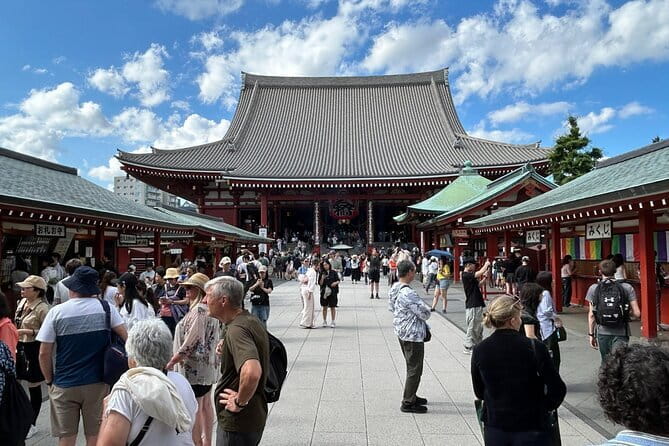
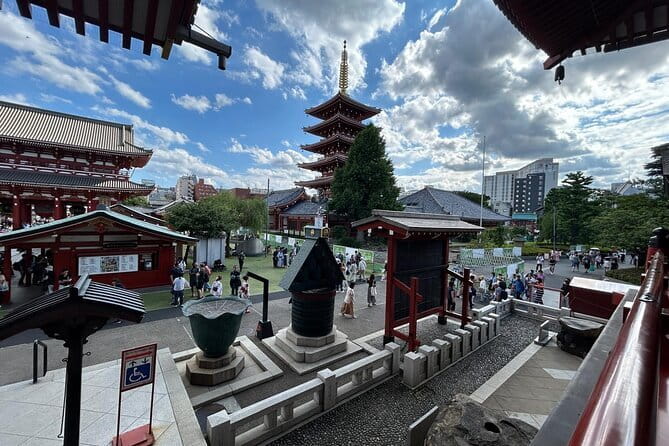
Senso-ji Temple (Asakusa) — Tokyo’s big classic
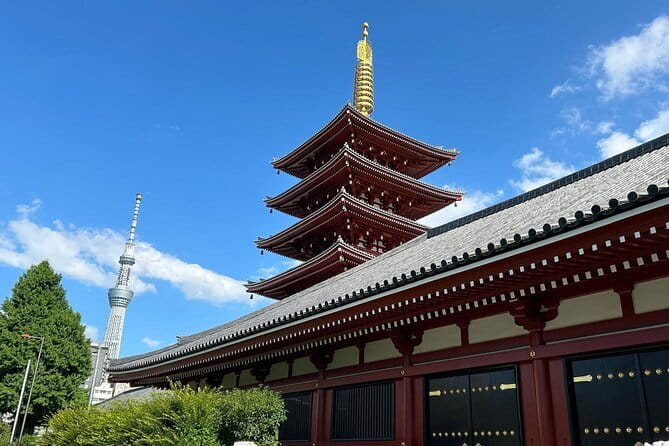
You begin at Senso-ji, one of Tokyo’s most prominent temples and a city symbol for Asakusa. It’s described as almost 1,400 years old, and it’s the kind of place where even quick time feels meaningful because the atmosphere is the point. Admission is free.
Practical tip: go in with a camera ready. The area is visually loud in a good way, and you’ll want a few photos even if temples aren’t your main interest.
Tokyo Skytree — Optional ticket time for skyline views
Next is Tokyo Skytree, the world’s tallest tower at 634m (the plan notes the “world’s tallest tower” claim). It takes about an hour, and admission isn’t included.
This is one of those stops you choose based on your priorities. If you like skyline views and want a clear Tokyo “from above” moment, Skytree is a strong use of time. If not, it’s a ticket you can skip without breaking the day’s flow.
Readers also shortlisted these Tokyo bookings:
- Private Tour to Mt. Fuji and Hakone (Fully Licenced Operator)★ 5.0 · 1,910 reviews
- Tokyo Customized Private Tour (Must See Places in 1 Day)★ 5.0 · 1,499 reviews
- Mount Fuji Full-Day Private Tour from Tokyo (Customizable)★ 4.9 · 1,470 reviews
- Private Custom Tour: Tokyo in a Day★ 5.0 · 1,432 reviews
- Tokyo 4hr Private Tour with Government-Licensed Guide★ 5.0 · 1,394 reviews
Imperial Palace East Gardens — Edo Castle ruins in a calm space
Then you head to the East Gardens of the Imperial Palace, part of the inner palace area and described as the former site of Edo Castle’s innermost circles of defense. Admission is free.
This works well as a reset after busier neighborhoods. It gives you a break from crowds and shopping streets, and it’s a different kind of Tokyo—more built, more quiet, more “slow walk.”
Tsukiji Fish Market (Outer Market) — Lunch with street-food energy
For lunch, you’ll stop at Tsukiji Outer Market, known for street food stalls and restaurants serving both raw and cooked fish. Admission is free, but lunch is paid at your own expense.
This is where you should slow down a bit. Look around first, then decide. If you’re cautious about fish, stick to cooked items. If you’re adventurous, this is one of the best places to test different flavors without turning it into a formal sit-down meal.
Meiji Jingu Shrine — A major shrine plus Yoyogi Park vibes
After lunch time, you go to Meiji Jingu Shrine, dedicated to the deified spirits of Emperor Meiji and Empress Shoken, with completion noted as 1920. Admission is free. The plan also mentions Yoyogi Park as optional, with youth cosplay and street culture to observe.
This pairing is smart because it blends shrine stillness with a modern Tokyo atmosphere nearby. If you’re into people-watching, the Yoyogi option can be a fun extra without adding another long commute.
Takeshita Street (Harajuku) — Candy, crepes, and loud fashion
Then it’s Takeshita Street, known for wacky youth-driven shops and a sweets scene. The plan specifically calls out fluffy, sugary crepes.
This part is short—about 30 minutes—which is perfect. It gives you the Harajuku feel without turning the day into a full shopping marathon.
Shibuya Crossing — The world-famous ending photo
Finally, you end at Shibuya Crossing, described as the busiest intersection in the world and a must-see landmark. Admission is free.
It’s a strong finale because it’s instantly recognizable. And since it’s the last stop, you can treat it like your victory lap: photos, a slow look at the crowd flow, then you’re done for the day.
Day 2 Mount Fuji: Lakeside Sights and Shrine Stops That Feel Like a Break
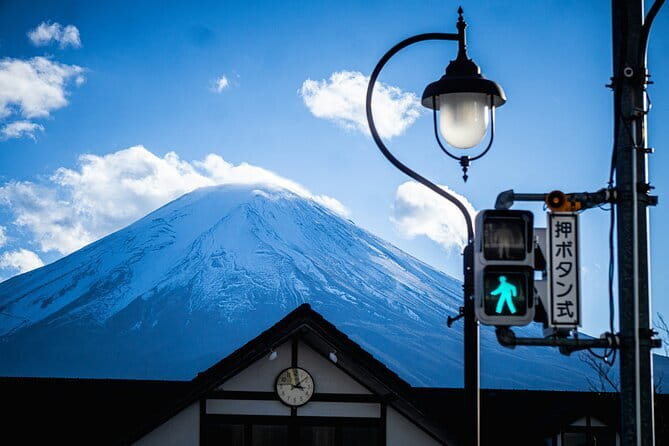
Day 2 is where the tour changes gears. Instead of jumping between Tokyo neighborhoods, you head toward Mount Fuji area highlights with a route built around viewpoints, traditional stops, and lakes.
Even though the time window is the same “two-day” wrapper, the vibe is different. You’re trading crowds for space and trading street noise for scenery.
The plan starts with Oshino Hakkai, then moves through shrines and lake time, and includes Iyashi no Sato before reaching Saiko Lake. The overview also references a 5th Station view, which is the classic Fuji moment most people hope for.
Fuji Stop Breakdown: Oshino Hakkai, Kawaguchiko, Iyashi no Sato, Saiko Lake
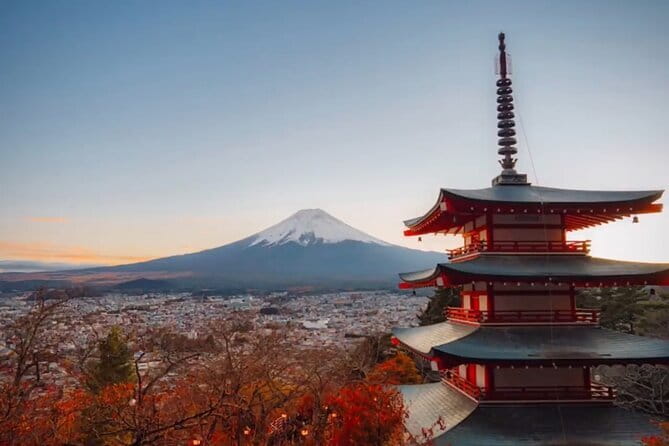
Oshino Hakkai — Eight springs from Fuji water
You start at Oshino Hakkai, described as eight springs in Oshino where aquifer water from Mount Fuji comes to the ground. It’s labeled a Natural monument of Japan and part of the Mount Fuji World Heritage Site.
It’s also admission free, which makes it easy to enjoy fully without worrying about ticket value. This is one of those stops where the details matter: the water features are the main event.
Kitaguchi Hongu Fuji Sengen Jinja Shrine — Forest paths and stone lanterns
Next is Kitaguchi Hongu Fuji Sengen Jinja Shrine, with wooden structures and stone lanterns lining paths through the forest. Admission is free.
This adds cultural texture to a landscape-focused day. You’re not just looking at Fuji; you’re also seeing how people mark it spiritually and seasonally.
Lake Kawaguchiko — Fuji views plus an easy lakeside stroll
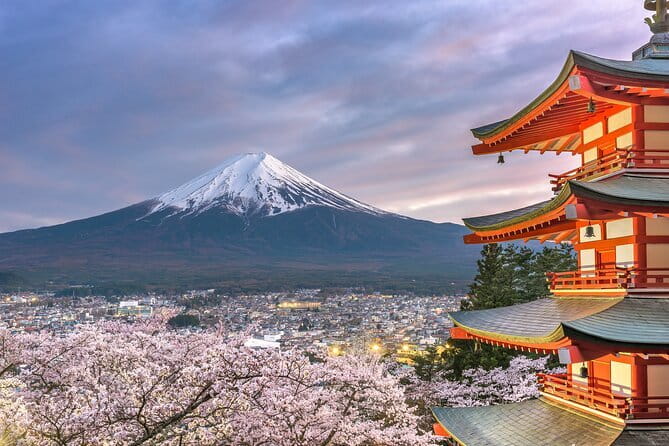
Then you move to Lake Kawaguchiko, a Fuji gateway known for stunning views of Japan’s highest peak. The plan highlights a lakeside promenade for leisurely strolling and mentions vibrant cherry blossoms.
Admission is free with about one hour of time. If you like photography, this is where you slow down and get your “right-angle” shots. If you don’t, it still works as a calm break where you can breathe.
Iyashi no Sato Sarai — Thatched-roof houses and local crafts
After the lake, you go to Iyashi no Sato Sarai, described as an open-air museum with thatched-roof houses, crafts, and local cuisine. The plan also notes serenity and Fuji views.
It’s a cultural stop that doesn’t feel like homework. You’re walking around a setting that’s meant to feel like everyday life, with the Fuji backdrop doing the heavy lifting.
Saiko Lake — Another Fuji Five Lakes choice for quieter scenery
You finish at Saiko Lake (also referred to as Western Lake), one of the Fuji Five Lakes. The plan gives specific stats: it’s the fourth by surface area and second deepest, with a maximum water depth of 71.1 metres.
Admission is free, and the timing gives you a final scenic look that isn’t just another viewpoint platform. For people who like variety within the Fuji area, this stop can be a nice change of pace.
Price and Logistics: Is $1,067 for Up to 4 Worth It?
At $1,067 per group (up to 4), this is not a budget tour. It’s aimed at people who value less hassle over low cost.
Here’s where the math turns in your favor. You’re paying for:
- a private car for two days
- air-conditioning and Wi‑Fi on board
- bottled water and snacks
- petrol, highway tolls, and parking
The hidden costs of independent travel add up fast in Tokyo and the Fuji area: tolls, parking, and the time cost of coordinating transit with luggage and timing. This tour trades money for stress reduction and better flow.
What you still pay for:
- meals (not included)
- Tokyo Skytree admission (not included)
- anything else you choose to add
If you split the total across four people, it can start to feel reasonable compared to paying for multiple taxis or dealing with complicated logistics. For couples, it’s still pricier than group tours, but the private pacing can be worth it if you hate wasting time.
The Guide and Driver Factor: How Service Changes the Day
This tour leans on a human touch: punctuality, local problem-solving, and smart recommendations.
In the feedback, a guide named Affan is highlighted for being punctual and knowledgeable, with recommendations that help in busy zones like Ginza and Akihabara. That matters because Tokyo isn’t just landmarks; it’s also timing, walking routes, and knowing how to avoid unnecessary backtracking.
A driver named Mian is praised for finding parking when needed and handling last-minute requests quickly. That’s the real-world skill you want on a private day because the “ideal plan” rarely survives contact with actual crowds, weather, or your own energy level.
Practical Tips So the Day Runs Smooth
Plan your meal strategy
Lunch at Tsukiji Outer Market is on you. Meals are listed as not included overall, even though you’ll have snacks and water in the car. If you have dietary limits, decide in advance what you’ll eat at Tsukiji so you’re not pressured in the moment.
Budget ticket extras
Two categories are called out:
- Tokyo Skytree: admission not included
- Anything else you might add during customization: only what’s listed is guaranteed
Start strong at 8:00 am
An 8:00 am start means you’ll want to be ready early. That’s how you get a calmer morning for Asakusa and reduce the chance that later stops feel rushed.
Comfort choices matter
Bring layers. You’ll be outside for temples, shrine grounds, and lakeside strolls, but the car ride is air-conditioned. Also, good walking shoes will make Harajuku and the crossing areas much easier.
Who This Tour Suits Best (And Who Might Want Another Option)
This tour is ideal if you:
- want a private experience for Tokyo and Fuji
- care about efficient routing and fewer logistics headaches
- like a mix of major sights and some room for customizing
- have a group size up to four and want to share the total cost
It might be less ideal if you:
- want zero schedule pressure and plenty of downtime
- hate sightseeing on consecutive days
- expect meals to be included
If you’re a solo traveler, it can still be a great choice because private pacing can feel safer and less tiring. Just know you’re paying the full group price, since the cap is up to four.
Should You Book This Private 2-Day Tokyo and Fuji Retreat?
I’d book it if you want Tokyo and Mount Fuji in one clean, well-run package with minimal stress. The big selling point is that you’re not managing transport costs or figuring out the logistics between distant areas. You get a private car, Wi‑Fi, snacks and water, and a route that covers Tokyo’s greatest hits on Day 1 and Fuji area culture and lakes on Day 2.
Skip it if you’re traveling super budget-first or you want meals and ticket costs handled for you automatically. Also, if you’re chasing Mount Fuji views with total certainty, keep in mind that weather can affect how dramatic the scenery looks from viewpoint areas.
FAQ
Is this tour a private experience?
Yes. It’s listed as a private tour/activity, so only your group will participate.
Where does the tour start, and what time does it begin?
The meeting time is 8:00 am.
Are meals included?
No. Meals are not included.
Is Tokyo Skytree admission included?
No. Tokyo Skytree admission is listed as not included.
What’s included for transportation and comfort?
The tour includes a private car with air-conditioning and Wi‑Fi on board. It also covers petrol, highway tolls, and parking, plus bottled water and snacks.
What ticket costs are free on the itinerary?
Several stops are listed as free, including Senso-ji, the Imperial Palace East Gardens, Tsukiji Outer Market, Meiji Jingu, Oshino Hakkai, Kitaguchi Hongu Fuji Sengen Jinja Shrine, Lake Kawaguchiko, Iyashi no Sato Sarai, and Saiko Lake.
Can I cancel for a full refund?
Yes. Free cancellation is available if you cancel at least 24 hours before the experience’s start time.
More Tours in Tokyo
- Mt Fuji and Hakone 1-Day Bus Tour Return by Bullet Train
★ 5.0 · 26,383 reviews - 1-Day Tokyo Bus Tour
★ 5.0 · 14,250 reviews - Tokyo: Shinjuku Food Tour (13 Dishes at 4 Local Eateries)
★ 5.0 · 6,603 reviews - Tokyo Mt Fuji 5th St & Hakone Cruise Bus Tour w/Bullet Train
★ 4.4 · 5,024 reviews - Flagship 2-Hours Official Street Go-Kart Tour – Tokyo Bay Shop
★ 5.0 · 4,974 reviews
More Tour Reviews in Tokyo
- Mt Fuji and Hakone 1-Day Bus Tour Return by Bullet Train
★ 5.0 · 26,383 reviews - 1-Day Tokyo Bus Tour
★ 5.0 · 14,250 reviews - Tokyo: teamLab Planets TOKYO Digital Art Museum Entry Ticket
★ 4.6 · 9,779 reviews - Mt Fuji & Hakone Cruise, Drum Show Bullet Train 1 Day from Tokyo
★ 4.0 · 7,413 reviews - Tokyo: Shinjuku Food Tour (13 Dishes at 4 Local Eateries)
★ 5.0 · 6,603 reviews
More Mount Fuji Days We Have Reviewed
- Mt Fuji and Hakone 1-Day Bus Tour Return by Bullet Train
★ 5.0 · 26,383 reviews - Mt Fuji & Hakone Cruise, Drum Show Bullet Train 1 Day from Tokyo
★ 4.0 · 7,413 reviews - Tokyo Mt Fuji 5th St & Hakone Cruise Bus Tour w/Bullet Train
★ 4.4 · 5,024 reviews - From Tokyo: Mount Fuji Full-Day Sightseeing Trip
★ 4.5 · 4,970 reviews - Tokyo: Mt. Fuji Tour, Hakone Ropeway, Owakudani, Lake Ashi
★ 4.7 · 4,002 reviews
Latest Tokyo reviews off our desk






Mount Fuji Tours, compared.
 ★ 5.0Mt Fuji and Hakone 1-Day Bus Tour Return by Bullet TrainFrom $16326,383 reviews
 ★ 4.0Mt Fuji & Hakone Cruise, Drum Show Bullet Train 1 Day from TokyoFrom $1497,413 reviews
 ★ 4.4Tokyo Mt Fuji 5th St & Hakone Cruise Bus Tour w/Bullet TrainFrom $1545,024 reviews
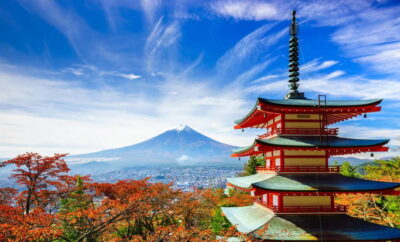 ★ 4.5From Tokyo: Mount Fuji Full-Day Sightseeing TripFrom $684,970 reviews
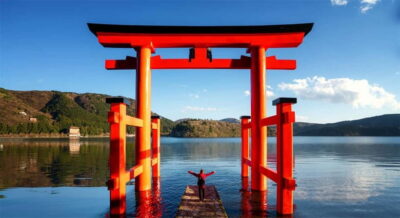 ★ 4.7Mt. Fuji Tour, Hakone Ropeway, Owakudani, Lake AshiFrom $544,002 reviews
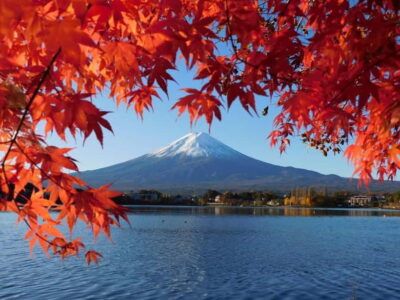 ★ 4.4Mt.Fuji,Kawaguchiko Oishi Park,Arakurayama Sengen ParkFrom $542,682 reviews
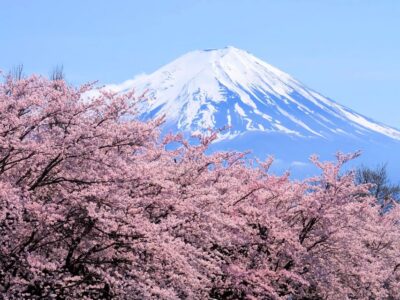 ★ 4.2Mt. Fuji 5th Station & Hakone Cruise 1-Day Bus TourFrom $1292,381 reviews
 ★ 4.7Mt Fuji Top 5 Spots Day Tour: Arakurayama Park,Oshino HakkaiFrom $532,066 reviews
Browse the lists this tour appears in