
Reviewed · AKIHABARA ANIME TOURS
Akihabara: Go-Kart Experience with Local Guide in Tokyo
One hour of Tokyo street chaos, safely guided. I love the Akihabara neon and the fact that your kart ride is turned into actual sightseeing, not just a quick loop. I also like the included costume, which makes the whole thing feel like you stepped into the anime zone for real. The main catch is simple: you need the correct driving paperwork, or you won’t be able to ride.
You meet your guide near Akihabara Station, get a solid safety lecture first, then hit the streets with just enough structure to feel confident and still spontaneous. The group stays small (max 7), and each kart is for one person, so you’re not squeezed in or sharing control. Just come prepared for stoplights, because Tokyo intersections love their red signals.
In This Review
- Key things you’ll notice on this Akihabara go-kart tour
- Entering the Akihabara scene: meeting Building Sasage B1F
- The driving paperwork check (this is the make-or-break step)
- Safety briefing and training: how they make the streets feel manageable
- Costumes in Akihabara: fun factor with a clear expectation
- Driving the neon maze: Akihabara streets, photo stops, and anime-style sights
- Photo stops: why they matter more than you think
- Tokyo skyline and top attractions: what you get beyond Akihabara
- How long should you book? 1 hour vs longer night sessions
- Group size, comfort, and what it feels like on the road
- Price value at about $72.66: what you’re really paying for
- Who this is for (and who might want a different Tokyo plan)
- Should you book Beauty of Japan’s Akihabara go-kart experience?
- FAQ
- Where is the meeting point for the Akihabara go-kart tour?
- What driving documents are required to participate?
- Is there a safety briefing before driving?
- What’s included in the price?
- What’s not included?
- What are the height and weight limits?
Key things you’ll notice on this Akihabara go-kart tour
- You start at Building Sasage B1F right by Akihabara Station (easy to reach, but easy to miss if there’s no clear signage).
- A mandatory 15–20 minute safety talk happens before you drive, and you’ll present your license there.
- Costume included, with limits (fun for photos, but there are no Mario costumes available).
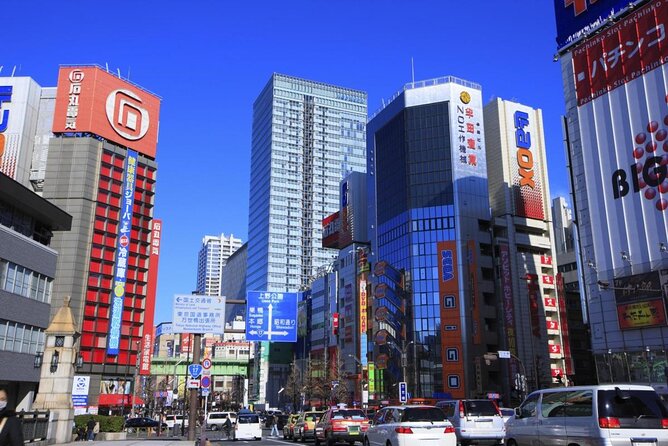
- Neon Akihabara + anime-style street moments as you weave through manga and electronics storefront areas.
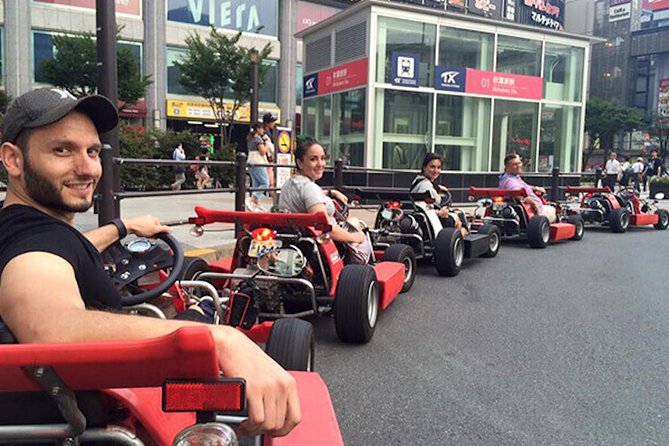
- Small-group pacing (about 5–6 people per slot, up to 7 total), and each rider drives solo.
- Night driving can mean fewer traffic headaches and more time actually rolling through the streets.
Entering the Akihabara scene: meeting Building Sasage B1F
Your tour begins at Akiba CartJapan, in Sotokanda, Chiyoda—specifically outside Building Sasage B1F. It’s a short walk from Akihabara Station, which helps when you’re bouncing between other Tokyo stops.
Here’s the practical part: come 10 minutes early. This isn’t the kind of activity where the staff hangs out to wait for you, and late riders may miss the chance to join. If you’ve ever tried to find a small Tokyo business with only a pin drop and no obvious storefront, you’ll appreciate that it’s worth arriving early and checking the entrance twice.
Tip: if you’re using a map app, go by directions from Google Maps rather than only the listing address text. Some people find the venue hard to locate because there’s often no big sign out front.
More of Akihabara, ranked by our reviewers
- Official Street Go-Kart Tour – Akihabara
★ 5.0 · 1,578 reviews - Tokyo Go Kart: Asakusa, Skytree, and Akihabara **IDP MUST**
★ 5.0 · 988 reviews - Akihabara Anime & Game Adventure Walking Tour (Group or Private)
★ 5.0 · 404 reviews - Tokyo: Gameboy Mod Workshop at Akihabara
★ 5.0 · 253 reviews
The driving paperwork check (this is the make-or-break step)
Before you even climb into the kart, you’ll go through a safety briefing and present your driving document. This is the biggest reason this experience goes smoothly—or falls apart.
You need one of these, and you must bring the right combination of documents:
- A Japanese driver’s license (issued in Japan)
- An International Driving Permit (IDP) + passport
The IDP must be in the Geneva Convention format, and you’ll need your passport to show your identity.
- A foreign driver’s license from approved countries + Japanese translation + passport
The approved countries listed are Switzerland, Germany, France, Belgium, Monaco, or Taiwan, with the translation rules specified.
- A SOFA driver’s license (USFJ) only (military IDs are not accepted)
Two details matter:
1) IDP rules are strict about format and recognition.
2) If you can’t show the correct documentation at check-in, you won’t be allowed to participate and there’s no refund.
If you’re unsure whether your license and IDP will work in Japan, send a copy ahead for confirmation. It’s one of those annoying steps that saves you from a very expensive disappointment.
Safety briefing and training: how they make the streets feel manageable
Once you arrive, expect 15 to 20 minutes of mandatory safety instruction. You’ll review how the kart works, what to do at intersections, and how to stay in control while still driving like a Tokyo street ninja (but, you know, the safe version).
This is especially reassuring if you’re not used to driving on the opposite side. In this tour setup, the key is listening during the training and following the guide’s directions on the road.
Small note from riders: go-karts can have brake sounds (some describe a squeal). It’s not a sign of trouble; you just get used to it after a few turns.
Costumes in Akihabara: fun factor with a clear expectation
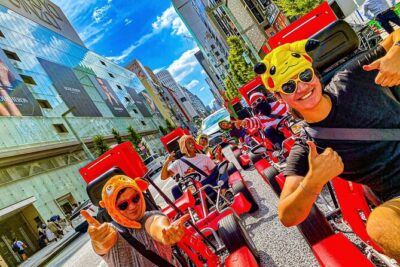
You’ll get a costume to wear while you drive. It’s part of what makes the whole experience feel uniquely Akihabara, even if you’re not a lifelong anime superfan.
A couple of practical points:
- There are no Mario costumes available, so don’t count on it.
- It can help to choose something that you can wear comfortably in movement. If you’re driving in cooler months, wearing the costume can add extra warmth.
- Skip high heels. Wear sneakers and clothing that won’t restrict your legs.
Most importantly, the costume is there to boost the vibe and make photos more fun—not to complicate your driving. Think comfortable and secure over flashy.
Driving the neon maze: Akihabara streets, photo stops, and anime-style sights
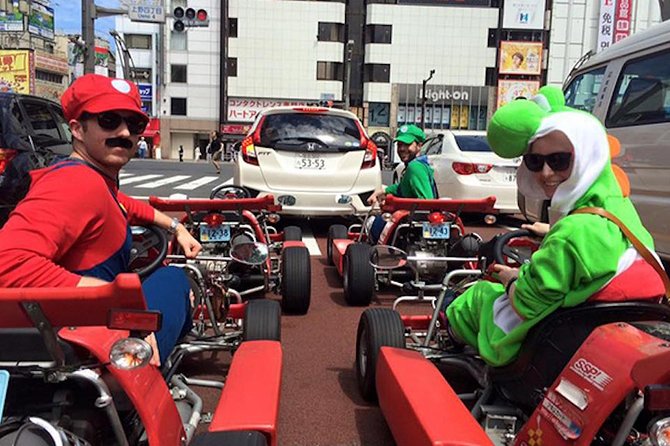
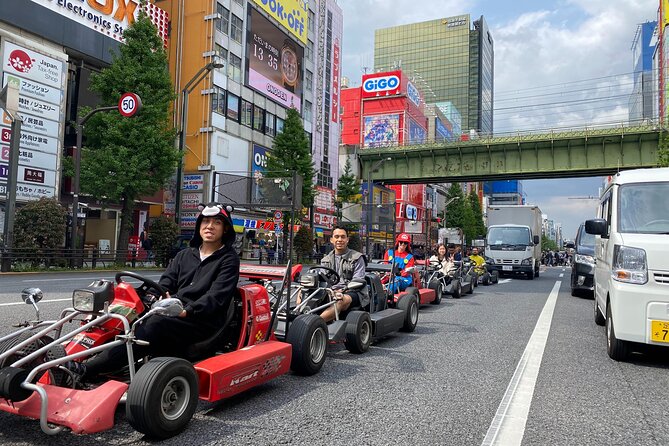
After training, you’re ready to roll through Akihabara’s signature mix of neon shopfronts. This is where you’ll see the manga and electronics vibe up close, not just from a distance on a walking tour.
Expect the road to feel like a real Tokyo street—signs, storefronts, and that sense of constant visual motion. One of the best parts is spotting residents in costumes inspired by manga and anime. You’ll feel like you’re steering through a live character scene.
Your guide is there to do two jobs at once:
- keep you safe and organized
- help tailor what you see within the time you booked
That means if you have favorites—areas for photos, particular streets, or just the best viewpoints—the guide can respond to your preferences.
Readers also shortlisted these Tokyo bookings:
- Tokyo 6hr Private Tour with Government-Licensed Guide★ 5.0 · 3,902 reviews
- Tokyo: Shinjuku Local Bar and Izakaya Guided Walking Tour★ 4.9 · 1,794 reviews
- Tokyo: Private City Highlights Tour with Local Guide★ 4.8 · 1,433 reviews
- Tokyo: Tsukiji Fish Market Guided Walking Tour★ 4.9 · 1,397 reviews
- Tokyo 4hr Private Tour with Government-Licensed Guide★ 5.0 · 1,394 reviews
Photo stops: why they matter more than you think
The tour pacing includes stops at lights and intersections, and that’s where the experience really becomes personal. Many riders end up with lots of photos because the guide times stops for picture moments, and you can also capture your own shots from the kart.
There may be a spot to put your phone for shots at red lights, which is a clever way to get a little action footage without trying to hold your device awkwardly while moving.
Tokyo skyline and top attractions: what you get beyond Akihabara
The tour description mentions top attractions and city views, and in practice you’re not stuck in one tiny pocket. You’ll venture beyond the immediate Akihabara area to hit neighborhoods and sights your guide considers best for the time slot.
One useful way to think about it: this isn’t a museum-style tour with deep narration. It’s more like a guided city drive where you get the big visual hits and photo moments, then keep moving.
That said, route quality can vary by day and by time. If you were expecting a specific blockbuster stop every time, temper expectations. Some riders felt the route didn’t include the sights they hoped for, while others were thrilled with the major sites covered around central Tokyo.
How long should you book? 1 hour vs longer night sessions
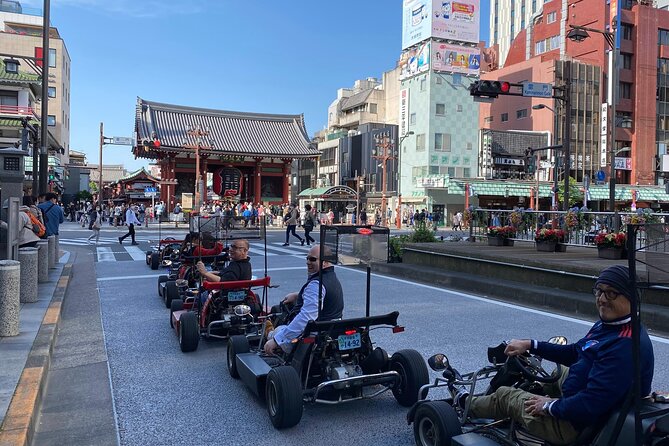
This version lists about 1 hour, but the overall go-kart experience commonly comes in longer time slots too. If you’re deciding how much time to spend, here’s the trade-off:
- Shorter sessions feel like a hit of adrenaline. You’ll get the core Akihabara drive, but there’s less time for extra stops and photo moments.
- Longer sessions are better if you want daylight-to-night atmosphere. People like the late afternoon into night window because Tokyo buildings look very different once the lights come on.
Night driving is often the sweet spot for a couple reasons:
- city lights look dramatic
- traffic can be lighter than other popular districts, so you spend more time actually driving and less time stuck
Even then, plan for stoplights. In Tokyo, red means red, and that’s part of the rhythm.
Group size, comfort, and what it feels like on the road
This tour runs with a maximum of 7 travelers, and some slots are around 5–6. Karts are single-rider only, so you’re always driving your own vehicle.
Comfort is a real factor because you’re in a small cockpit for the full time you book. The limits are clear:
- Minimum age: 18
- Height: 150 cm to 185 cm
- Weight: under 100 kg (220 lb)
If you fall outside these ranges, the check-in won’t work out. If you’re in range, wear practical clothing and don’t overpack your pockets—Japan’s streets are full of signs, but your kart has limited space for anything extra.
Also, come with a mindset of following instructions. It’s easy to get excited, but this is the kind of activity where discipline and attention make the fun safe.
Price value at about $72.66: what you’re really paying for
At about $72.66 per person for roughly an hour, this isn’t cheap in the way a basic walking tour is cheap. But it’s also not just paying for a kart.
You’re paying for:
- the go-kart rental for your booked duration
- an insurance fee
- a local guide
- a costume
- the full safety briefing and license check process
What’s not included: food and beverages, plus hotel pickup/drop-off. So you’ll want to eat earlier or plan to grab a snack before or after.
In value terms, this is often worth it if you want:
- a guided, structured way to see Akihabara at street level
- the energy of driving instead of just walking
- lots of photo moments during stops
If you’d rather sightsee mostly on foot, you might feel the cost harder to justify. But if you want an activity that’s genuinely different from the usual Tokyo checklist, this one has strong appeal.
Who this is for (and who might want a different Tokyo plan)
Book this if you:
- want a fun, interactive way to see Akihabara without spending hours walking
- are comfortable driving in a new environment as long as the guide leads
- like photos and don’t mind stoplights as part of the picture rhythm
- can bring the correct license paperwork and passport/IDP combo
Skip it if you:
- don’t have the right driving documentation and you’re hoping for flexibility (there isn’t any)
- expect a long narrative tour with lots of detailed commentary
- can’t handle being in a small seat and following safety rules for the whole session
Should you book Beauty of Japan’s Akihabara go-kart experience?
I’d book it if you’re excited by the idea of riding through Akihabara’s neon streets in a kart you control—guided, insured, and tied to photo-friendly stops. The combination of a local guide, included costume, and a structured safety setup turns Tokyo into something more playful than typical sightseeing.
Just be ruthless about the paperwork. If you don’t know your IDP format rules or you can’t confirm your license translation requirements, solve that before you go. Arrive early, wear comfortable shoes, and plan for red lights. Do those basics, and you’ll spend an hour feeling like you’re part of Tokyo’s anime-electric energy—without taking reckless chances.
FAQ
Where is the meeting point for the Akihabara go-kart tour?
You meet outside Building Sasage B1F at Akiba CartJapan (Akihabara area). The end point is back at the same meeting location.
What driving documents are required to participate?
You’ll need a Japanese driver’s license or an International Driving Permit plus your passport, or another approved option listed by the operator (including specific foreign license + Japanese translation rules, or a SOFA USFJ license).
Is there a safety briefing before driving?
Yes. You’re required to attend a mandatory safety lecture that runs about 15 to 20 minutes before you go on the road.
What’s included in the price?
Included: go-kart rental for your selected duration, insurance fee, local guide, and a costume to wear while driving.
What’s not included?
Food and beverages are not included, and there’s no hotel pickup and drop-off.
What are the height and weight limits?
Minimum age is 18. Height must be between 150 cm and 185 cm, and your weight must be under 100 kg. High heels are not recommended.
More Guided in Tokyo
- Tokyo 6hr Private Tour with Government-Licensed Guide
★ 5.0 · 3,902 reviews - Tokyo: Shinjuku Local Bar and Izakaya Guided Walking Tour
★ 4.9 · 1,794 reviews - Tokyo: Private City Highlights Tour with Local Guide
★ 4.8 · 1,433 reviews - Tokyo: Tsukiji Fish Market Guided Walking Tour
★ 4.9 · 1,397 reviews - Tokyo 4hr Private Tour with Government-Licensed Guide
★ 5.0 · 1,394 reviews
More Tour Reviews in Tokyo
- Mt Fuji and Hakone 1-Day Bus Tour Return by Bullet Train
★ 5.0 · 26,383 reviews - 1-Day Tokyo Bus Tour
★ 5.0 · 14,250 reviews - Tokyo: teamLab Planets TOKYO Digital Art Museum Entry Ticket
★ 4.6 · 9,779 reviews - Mt Fuji & Hakone Cruise, Drum Show Bullet Train 1 Day from Tokyo
★ 4.0 · 7,413 reviews - Tokyo: Shinjuku Food Tour (13 Dishes at 4 Local Eateries)
★ 5.0 · 6,603 reviews
More of Akihabara, Reviewed
- Official Street Go-Kart Tour – Akihabara
★ 5.0 · 1,578 reviews - Tokyo Go Kart: Asakusa, Skytree, and Akihabara **IDP MUST**
★ 5.0 · 988 reviews - Akihabara Anime & Game Adventure Walking Tour (Group or Private)
★ 5.0 · 404 reviews - Tokyo: Gameboy Mod Workshop at Akihabara
★ 5.0 · 253 reviews - Akihabara: Private Anime and Pop Culture Tour
★ 4.8 · 152 reviews
Latest Tokyo reviews off our desk

Akihabara Anime Tours, compared.
 ★ 5.0Official Street Go-Kart Tour – AkihabaraFrom $611,578 reviews
 ★ 5.0Tokyo Go Kart: Asakusa, Skytree, and Akihabara **IDP MUST**From $99988 reviews
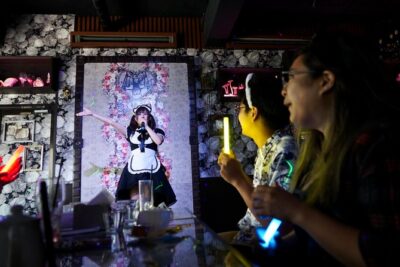 ★ 5.0Akihabara Anime & Game Adventure Walking Tour (Group or Private)From $90404 reviews
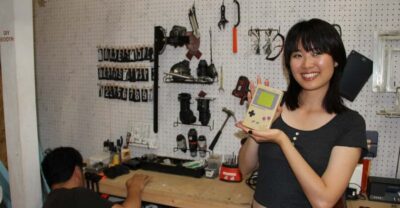 ★ 5.0Gameboy Mod Workshop at AkihabaraFrom $360253 reviews
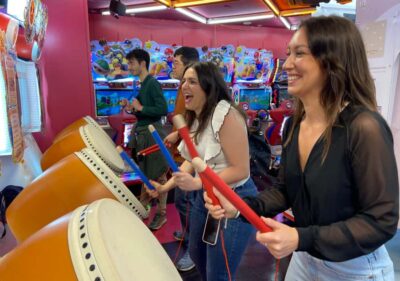 ★ 4.8Akihabara: Private Anime and Pop Culture TourFrom $95152 reviews
 ★ 5.0Akihabara Tailor-made Private Tour for Anime FansFrom $132142 reviews
 ★ 5.0Original Street Kart Experience from AkihabaraFrom $51111 reviews
 ★ 5.0Ramen Making from Scratch +Akihabara Tour –Tokyo Cooking ClassFrom $123107 reviews
Browse the lists this tour appears in