
Fuji and Hakone in one day can work—if you plan it right. This private, licensed-guide tour is built for big sight stops with real time to look, not just rush. You’ll pair the dramatic Mount Fuji views with Hakone’s calmer scenery, plus a laid-back Lake Ashi boat cruise.
I especially like the mix of viewpoints: the 5th Station look at Fuji, then the ropeway ride up Mt. Komagatake for higher, clearer angles. I also like the steady pacing around Lake Kawaguchi and the photo-friendly stops like Chureito Pagoda—enough time to get the shot and still breathe.
One drawback to keep in mind: weather controls the show. Mt. Fuji visibility isn’t guaranteed, and if conditions are poor the plan may shift.
In This Review
- Key points worth knowing before you go
- A day that turns Mount Fuji into more than a postcard
- Pickup from Tokyo (and other bases) without the whole day going to transit
- Mount Fuji 5th Station and the Komagatake ropeway: the highest “wow” factor
- Oshino Hakkai, Chureito Pagoda, and the Fuji-side shrines for classic scenery
- Oshino Hakkai (the ponds)
- Chureito Pagoda (photo time done right)
- Arakura Fuji Sengen Shrine and Kitaguchi-hongu Fuji Sengen Shrine
- Lake Kawaguchi: Oishi Park, walking breaks, and Fuji angles you can actually enjoy
- Hakone’s Owakudani Valley and the Open-Air Museum: more than a pit stop
- Lake Ashi cruise: the relaxing half of the day
- Gotemba Premium Outlets: a practical ending if you need it
- Price and value: $321 for up to 6 is about convenience, not just “a ride”
- Weather reality and comfort tips (so you don’t suffer for the view)
- Who this tour fits best (and who should think twice)
- What the guide style tends to get right
- Should you book this Mount Fuji full-day private tour?
- FAQ
- How long is the Mt. Fuji and Hakone full-day private tour?
- What does it cost, and how many people can be in the group?
- Where can the tour pickup happen?
- Where does the tour end?
- Does the tour include Mount Fuji 5th Station?
- Is there a ropeway involved?
- Do you visit Lake Ashi?
- Is lunch included?
- What should I bring for this day trip?
- What happens if the weather is bad for seeing Mt. Fuji?
- Can I cancel, and is there a pay later option?
Key points worth knowing before you go
- National Government Licensed English-speaking guide means less guessing and more context as you move
- Lake Ashi cruise adds a slower, scenic break between viewpoints
- Fuji 5th Station + Komagatake ropeway covers both the iconic and the high-view moments
- Oshino Hakkai and Chureito Pagoda give you the classic Fuji-side scenery with time to look
- Hakone stops like Owakudani Valley and the Open-Air Museum add variety beyond just views
- Private group for up to 6 makes the day feel flexible, especially with photo breaks
A day that turns Mount Fuji into more than a postcard
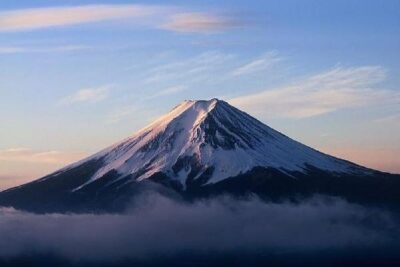
Mount Fuji looks huge in photos. In real life, it’s the kind of huge that makes you stop walking and just stare for a minute. This tour leans into that feeling by building the day around a chain of viewpoints—some dramatic, some scenic and quiet—so you get multiple chances to see the mountain from different angles.
The big practical win: you’re not trying to stack trains, buses, and transfers while fighting crowds. You’re in a private car with a guide who can explain what you’re seeing and keep your schedule sensible. And because it’s a private group (up to 6), you’re not stuck with the speed of strangers.
More Fuji day trips our readers rated highly
- Mt Fuji and Hakone 1-Day Bus Tour Return by Bullet Train
★ 5.0 · 26,383 reviews - Mt Fuji & Hakone Cruise, Drum Show Bullet Train 1 Day from Tokyo
★ 4.0 · 7,413 reviews - Tokyo Mt Fuji 5th St & Hakone Cruise Bus Tour w/Bullet Train
★ 4.4 · 5,024 reviews - From Tokyo: Mount Fuji Full-Day Sightseeing Trip
★ 4.5 · 4,970 reviews
Pickup from Tokyo (and other bases) without the whole day going to transit
You can start from several pickup locations: Tokyo, Fujikawaguchiko, Chiba, or Shinjuku City. Drop-off options are also flexible, including Shinjuku City, Tokyo, Fujikawaguchiko, and Chiba.
That matters because Fuji and Hakone days often get eaten alive by transportation logistics. With this setup, you can choose the base that makes sense for where you’re staying. If you’re in central Tokyo, Shinjuku pickup tends to be the easiest anchor point for most itineraries. If you’re already closer to Fuji, starting from Fujikawaguchiko can make the whole day feel less compressed.
The tour runs about 10 hours, so it’s long enough to hit the main sights without feeling like a sprint.
Mount Fuji 5th Station and the Komagatake ropeway: the highest “wow” factor
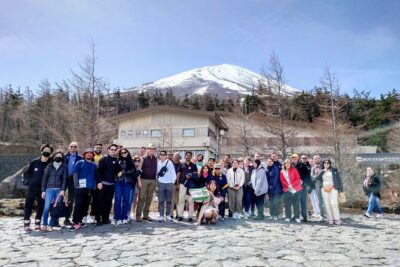
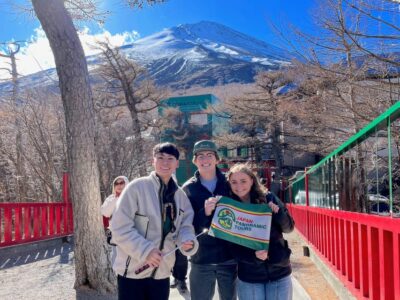
The day’s core Fuji moment is the stop at Mt. Fuji 5th Station. This is where you go from seeing Fuji in the distance to feeling the scale up close. Even when the mountain is partially obscured, the area around the station still gives you that sense of altitude and atmosphere.
From there, you take a ropeway up to the summit of Mt. Komagatake. This is a smart pairing because it adds a second layer of perspective: you’re not just viewing Fuji—you’re also looking over the surrounding Hakone/Fuji-side terrain from a higher vantage point. The tour highlights that you’ll get amazing views of the nearby Hakone National Park area, and that’s exactly the kind of “extra” you want on a day trip.
Just be ready for moderate walking. The tour info also flags warmth as important, which is key at altitude.
Oshino Hakkai, Chureito Pagoda, and the Fuji-side shrines for classic scenery
After the first big Fuji look, the itinerary shifts into the spots most people picture when they think of Fuji country.
Oshino Hakkai (the ponds)
You’ll visit Oshino Hakkai for about 30 minutes. This is one of those places where a short stop works well because you can take in the core sights without turning it into a half-day detour. Expect you’ll want your camera out—this is the kind of scene people come for.
Readers also shortlisted these Tokyo bookings:
- Tokyo 6hr Private Tour with Government-Licensed Guide★ 5.0 · 3,902 reviews
- Private Tour to Mt. Fuji and Hakone (Fully Licenced Operator)★ 5.0 · 1,910 reviews
- Tokyo Customized Private Tour (Must See Places in 1 Day)★ 5.0 · 1,499 reviews
- Mount Fuji Full-Day Private Tour from Tokyo (Customizable)★ 4.9 · 1,470 reviews
- Tokyo: Private City Highlights Tour with Local Guide★ 4.8 · 1,433 reviews
Chureito Pagoda (photo time done right)
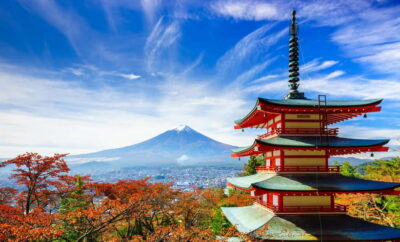
Chureito Pagoda gets about 45 minutes. That time window is useful because it lets you (1) find your angles and (2) still enjoy the area instead of rushing. If you’ve ever tried to get photos at popular Japanese landmarks, you know timing and patience matter. This tour gives you breathing room.
Arakura Fuji Sengen Shrine and Kitaguchi-hongu Fuji Sengen Shrine
You’ll also stop at Arakura Fuji Sengen Shrine and Kitaguchi-hongu Fuji Sengen Shrine. These stops aren’t just “walk around and look.” They help connect the scenery to how people traditionally view and approach Fuji in everyday life. It’s a good reminder that this mountain is not only a view—it’s part of culture.
Lake Kawaguchi: Oishi Park, walking breaks, and Fuji angles you can actually enjoy
Lake Kawaguchi shows up as a major part of the day, with multiple stops and sightseeing time: Lake Kawaguchi itself, Oishi Park, and a stop at LAWSON Kawaguchiko Station (about 30 minutes). There’s also time around Shimoyoshida Honcho Street for about 30 minutes, plus the shrine stop mentioned earlier.
Here’s what I like about this layout: it spreads the “Fuji angles” around a lake setting so you’re not stuck with one view only. Lake views tend to change with weather and light. Multiple short stops give you more chances to catch Fuji cleanly, even if fog or cloud comes and goes.
Also, you’ll see the rhythm of the day includes self-guided sightseeing blocks and brief safety check-ins. That’s helpful because it means you can spend your energy on walking and photos—not constantly stopping to ask where to go next.
Hakone’s Owakudani Valley and the Open-Air Museum: more than a pit stop
Once the tour reaches Hakone, it’s not just about Lake Ashi and “the mountain look.” You’ll have time in Hakone National Park, plus stops at Owakudani Valley (shopping and sightseeing for about 1 hour) and the Hakone Open-Air Museum (about 1 hour).
Owakudani Valley adds variety because it feels different from the lakeside Fuji areas. It’s the kind of place where the setting alone changes your mood—more dramatic, more rugged, more “Hakone.” Even if your time is limited, having about an hour is enough to walk a loop, look around, and understand why it’s famous.
Then the Open-Air Museum gives you a break from pure landscape viewing and shifts you into something calmer and more cultural. It’s a nice contrast point in a long day: sights in nature, then art and objects you can slow down with.
Lake Ashi cruise: the relaxing half of the day
The tour finishes the major scenery section with a stop at Lake Ashi and a cruise (about 30 minutes at Lake Ashi).
This is one of the best “value additions” on any Fuji/Hakone day. You get time on the water without needing to plan it yourself, and it adds a different view angle on the surrounding area. After hours of walking and viewpoints, being on a boat gives you a simple reset—camera out, shoulders down, just watch.
The Lake Ashi segment also helps break up the day so it doesn’t feel like you’re only sprinting between photo stops.
Gotemba Premium Outlets: a practical ending if you need it
At the back end of the day, you’ll have time at Gotemba Premium Outlets for about 1 hour.
This isn’t for everyone, but it can be convenient. If you want snacks, last-minute gifts, or just a place to sit down and recharge for an hour, this stop does that job.
If you don’t shop, you can think of this as optional downtime. Since you’re in a private tour, your guide can help you get what you need from the time window without wasting it.
Price and value: $321 for up to 6 is about convenience, not just “a ride”
At $321 per group up to 6 for a 10-hour private tour, the headline price looks high compared to DIY transport. But here’s the real value math: you’re paying for a licensed guide, private vehicle, and a day structured to hit the key sights without you coordinating everything.
For couples, this can be good value if your alternative is spending time plus money on multiple transfers and entrance logistics. For families or small friend groups, it can be even better because you’re splitting the cost across more people while keeping the day flexible.
Also, the tour includes skip the ticket line. The exact places aren’t listed in the details, but the point is clear: fewer delays when you’re trying to keep the day on track.
The tour info also mentions a Japanese-style lunch at a local restaurant if you select that option. If you’re planning to eat efficiently and you’d rather not hunt for a place near scenic areas, that convenience has real value too.
Weather reality and comfort tips (so you don’t suffer for the view)
Fuji days are famous for changing conditions. The tour explicitly notes that Mt. Fuji visibility can be affected by weather, and sightings can’t be guaranteed. It also says the plan may be altered if conditions are poor.
So pack like you’re going to climb a little, even if you’re not: warm clothing and comfortable walking shoes are strongly advised. A camera helps because even when Fuji is partly visible, angles can be worth it.
Finally, the tour notes no smoking, and it includes moderate walking. If your feet get tired easily, consider bringing layers you can remove as the day warms up.
Who this tour fits best (and who should think twice)
This tour is built for people who want a guided, efficient day and don’t want to manage the moving parts themselves. You’ll likely enjoy it most if:
- you want a private group format with flexible photo pacing
- you care about seeing the iconic Fuji moments plus Hakone’s highlights
- you like having an English-speaking guide to explain what you’re seeing
The tour info also says it’s not suitable for pregnant women, people with back problems, and wheelchair users. At the same time, it’s listed as wheelchair accessible. That contradiction is worth resolving directly with the provider before booking.
What the guide style tends to get right
One reason this tour has strong satisfaction is the guide-and-driver teamwork. In one case, people praised Malik for showing Mount Fuji from multiple vantage points and for adding extra local stops such as cultural areas, gardens, and even a reported ice cave. Another experience highlighted Ali with family-friendly timing, including a kids’ area at Fuji-Q Highland, plus scenic photo spots around the Fuji-side villages.
That’s a useful clue for you: a private format can mean your guide may adjust the route to your group’s rhythm—without turning the day into chaos. Still, keep your expectations realistic: weather and crowds can affect what’s possible.
There’s also one outlier complaint with a verified booking where someone felt the guide didn’t arrive. If you book, I’d treat pickup details as sacred—double-check timing and meet in a very clear spot so there’s no confusion.
Should you book this Mount Fuji full-day private tour?
If you want the best shot at seeing Fuji and you’d rather spend your energy enjoying places than managing transit, I think this is a strong pick. The combination of Fuji 5th Station, the Komagatake ropeway, a Lake Ashi cruise, and Hakone stops like Owakudani Valley and the Open-Air Museum is a solid “greatest hits” mix that still leaves you time to actually look.
Book it if you:
- are traveling with up to 6 people and want shared costs
- value a licensed guide over DIY explanations
- like structured time with enough breathing room for photos
Skip it (or switch plans) if:
- you’re very sensitive to walking or have mobility/back concerns
- your schedule can’t flex if Fuji is obscured (because visibility isn’t guaranteed)
- you need guaranteed wheelchair compatibility (because the info lists both wheelchair access and not-suitable-for-wheelchair-user)
FAQ
How long is the Mt. Fuji and Hakone full-day private tour?
The tour duration is 10 hours.
What does it cost, and how many people can be in the group?
It costs $321 per group, up to 6 people.
Where can the tour pickup happen?
Pickup options include Tokyo, Fujikawaguchiko, Chiba, and Shinjuku City.
Where does the tour end?
Drop-off locations include Shinjuku City, Tokyo, Fujikawaguchiko, and Chiba.
Does the tour include Mount Fuji 5th Station?
Yes. The itinerary includes a stop at the 5th Station of Mount Fuji.
Is there a ropeway involved?
Yes. After the 5th Station stop, you take a ropeway to the summit of Mt. Komagatake.
Do you visit Lake Ashi?
Yes. You’ll visit Lake Ashi and take a sightseeing cruise there.
Is lunch included?
A Japanese-style lunch at a local restaurant is included only if you select the lunch option.
What should I bring for this day trip?
Bring comfortable shoes, warm clothing, and a camera.
What happens if the weather is bad for seeing Mt. Fuji?
Mt. Fuji visibility can be affected by weather, sightings are not guaranteed, and in poor conditions the tour may provide an alternative itinerary.
Can I cancel, and is there a pay later option?
Free cancellation is available up to 24 hours in advance for a full refund, and there is a reserve now & pay later option.
More Tours in Tokyo
- Mt Fuji and Hakone 1-Day Bus Tour Return by Bullet Train
★ 5.0 · 26,383 reviews - 1-Day Tokyo Bus Tour
★ 5.0 · 14,250 reviews - Tokyo: Shinjuku Food Tour (13 Dishes at 4 Local Eateries)
★ 5.0 · 6,603 reviews - Tokyo Mt Fuji 5th St & Hakone Cruise Bus Tour w/Bullet Train
★ 4.4 · 5,024 reviews - Flagship 2-Hours Official Street Go-Kart Tour – Tokyo Bay Shop
★ 5.0 · 4,974 reviews
More Tour Reviews in Tokyo
- Mt Fuji and Hakone 1-Day Bus Tour Return by Bullet Train
★ 5.0 · 26,383 reviews - 1-Day Tokyo Bus Tour
★ 5.0 · 14,250 reviews - Tokyo: teamLab Planets TOKYO Digital Art Museum Entry Ticket
★ 4.6 · 9,779 reviews - Mt Fuji & Hakone Cruise, Drum Show Bullet Train 1 Day from Tokyo
★ 4.0 · 7,413 reviews - Tokyo: Shinjuku Food Tour (13 Dishes at 4 Local Eateries)
★ 5.0 · 6,603 reviews
More Mount Fuji Days We Have Reviewed
- Mt Fuji and Hakone 1-Day Bus Tour Return by Bullet Train
★ 5.0 · 26,383 reviews - Mt Fuji & Hakone Cruise, Drum Show Bullet Train 1 Day from Tokyo
★ 4.0 · 7,413 reviews - Tokyo Mt Fuji 5th St & Hakone Cruise Bus Tour w/Bullet Train
★ 4.4 · 5,024 reviews - From Tokyo: Mount Fuji Full-Day Sightseeing Trip
★ 4.5 · 4,970 reviews - Tokyo: Mt. Fuji Tour, Hakone Ropeway, Owakudani, Lake Ashi
★ 4.7 · 4,002 reviews
Latest Tokyo reviews off our desk






Mount Fuji Tours, compared.
 ★ 5.0Mt Fuji and Hakone 1-Day Bus Tour Return by Bullet TrainFrom $16326,383 reviews
 ★ 4.0Mt Fuji & Hakone Cruise, Drum Show Bullet Train 1 Day from TokyoFrom $1497,413 reviews
 ★ 4.4Tokyo Mt Fuji 5th St & Hakone Cruise Bus Tour w/Bullet TrainFrom $1545,024 reviews
 ★ 4.5From Tokyo: Mount Fuji Full-Day Sightseeing TripFrom $684,970 reviews
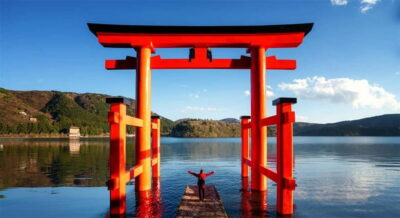 ★ 4.7Mt. Fuji Tour, Hakone Ropeway, Owakudani, Lake AshiFrom $544,002 reviews
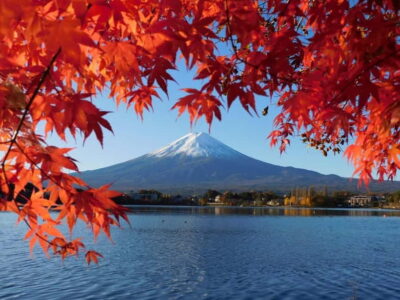 ★ 4.4Mt.Fuji,Kawaguchiko Oishi Park,Arakurayama Sengen ParkFrom $542,682 reviews
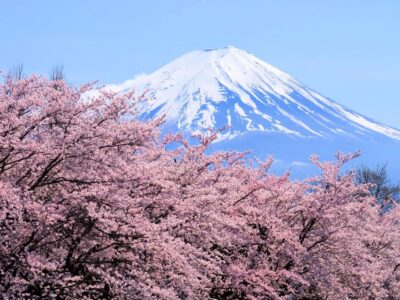 ★ 4.2Mt. Fuji 5th Station & Hakone Cruise 1-Day Bus TourFrom $1292,381 reviews
 ★ 4.7Mt Fuji Top 5 Spots Day Tour: Arakurayama Park,Oshino HakkaiFrom $532,066 reviews