
Reviewed · FULL-DAY
Full Day Private Tokyo Tour for Wheelchair Users
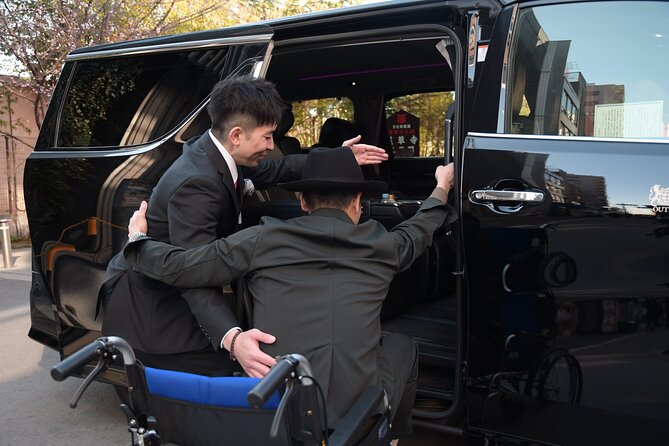
A day in Tokyo can feel like a puzzle. This private tour is built to make it fit together, with accessible planning and a guide who keeps your schedule realistic. You get an easy ride in a private vehicle (no train/bus transfers), plus a route you can shape around your interests.
What I like most is the combination of private transportation and a guide who actually adjusts to your day. From what I’ve seen in how guides handle the details, this is the kind of setup where people can use a mobility scooter more smoothly, instead of wrestling logistics.
One drawback to think about: several stops are brief and viewed from the car window, so if you want long, slow time inside every attraction, you may feel a bit rushed. Also, lunch and dinner aren’t included, and Hama Rikyu gardens admission is not included.
In This Review
- Key Things That Make This Tour Work in Real Life
- A Wheelchair-Friendly Tokyo Day Without the Usual Transfers
- Price and Value: $731.60 per Group (Up to 9)
- Pickup at Tokyo Station and How the 8-Hour Schedule Feels
- Tsukiji Jogai Market: Shopping and Snacks Without Tokyo’s Usual Rush
- Hama Rikyu Gardens: A Green Break, With Extra Ticket Consideration
- Ginza and the Big-City Landmarks: Short Stops, Clear Sightlines
- Senso-ji Temple and Asakusa Mode: Old Tokyo Energy, Managed Well
- Omotesando and Harajuku: Fashion Streets Without the Exhaustion Tax
- Meiji Jingu Shrine: A Calm Reset Away From the Street Noise
- Shibuya Crossing: The World’s Busiest Intersection, Briefly and Effectively
- Daikanyama: A Softer Side of Tokyo Shopping and Cafes
- Guide Matters: Umi, Roberto, and Gen Keep the Day Real
- What You’ll Get On the Road (Not Just the List of Stops)
- Should You Book This Private Wheelchair Tour?
- FAQ
- Is this tour only for wheelchair users?
- How long is the private tour?
- What does the price include?
- Where does the tour start and end?
- What is the maximum group size?
- Are attraction tickets included?
- Is lunch or dinner included?
- Does the tour let you customize the route?
- Is the tour private?
- What if we use a mobility scooter?
Key Things That Make This Tour Work in Real Life
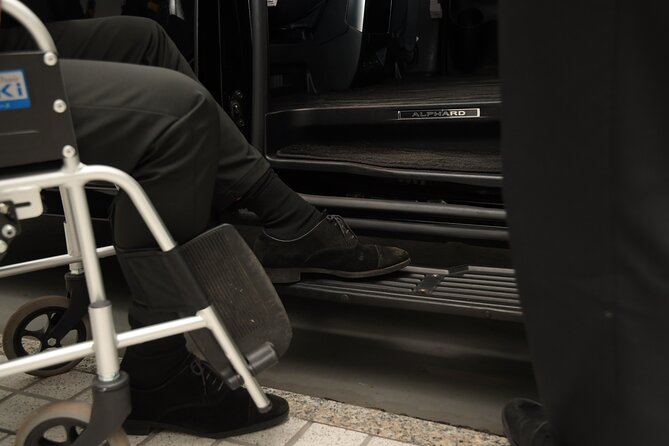
- Private vehicle means no train math: you skip routes, transfers, and stairs that slow a wheelchair day down.
- Wi-Fi onboard: you can stay connected while you travel between neighborhoods.
- Snack + bottled water comfort: small things that matter after a long morning out.
- Route is customizable: the day can bend to what you care about most.
- Guide support for mobility gear: at least one guide experience included hands-on help with a scooter.
A Wheelchair-Friendly Tokyo Day Without the Usual Transfers
Tokyo is gorgeous, but it can be exhausting when every move requires planning—especially if getting from A to B takes more time than sightseeing. This tour is designed to remove the biggest friction points by handling transportation with a private vehicle and a guide.
Instead of you trying to figure out which spots work best day-of, you start with an accessibility-minded route and keep momentum. It’s also private, so the pace can be practical for your group rather than forced into the schedule of a larger tour.
You’ll spend about 8 hours in total, and the itinerary is packed with major neighborhoods and landmarks. The big win is that you can focus on experiences, not navigation stress.
Readers also shortlisted these Tokyo bookings:
- Tokyo 6hr Private Tour with Government-Licensed Guide
★ 5.0 · 3,902 reviews - Private Tour to Mt. Fuji and Hakone (Fully Licenced Operator)
★ 5.0 · 1,910 reviews - Tokyo Customized Private Tour (Must See Places in 1 Day)
★ 5.0 · 1,499 reviews - Mount Fuji Full-Day Private Tour from Tokyo (Customizable)
★ 4.9 · 1,470 reviews
Price and Value: $731.60 per Group (Up to 9)
The tour costs $731.60 per group for up to 9 people. That sounds pricey if you think in per-person terms, but the value changes quickly depending on your group size.
If you’re traveling with family or friends and can share the cost, a private, guided day with accessible transport becomes a smart trade. You’re not just paying for a guide—you’re paying for a dedicated vehicle, bottled water, snacks, and Wi-Fi onboard, which are all included.
The other reason this can be good value: accessibility planning is often what drives the true cost of a smooth day. When you remove transfers and reduce time spent figuring things out, the day feels less like a chore and more like a vacation.
Pickup at Tokyo Station and How the 8-Hour Schedule Feels
The tour starts at Tokyo Station (1 Chome-9 Marunouchi, Chiyoda City) and ends back at the same place. That matters because Tokyo Station is a major hub with a lot of services nearby, so you’re not trying to start from some obscure corner of the city.
The published operating window shows 7:00 AM–2:00 PM depending on dates (mid-winter through mid-January). Since the tour is listed at about 8 hours, your guide will manage timing so you’re not pushing into late hours.
You also get a mobile ticket, and it’s confirmed within 48 hours of booking, subject to availability. That means you can usually plan with some confidence once you book, even if you’re not doing it months ahead.
Tsukiji Jogai Market: Shopping and Snacks Without Tokyo’s Usual Rush
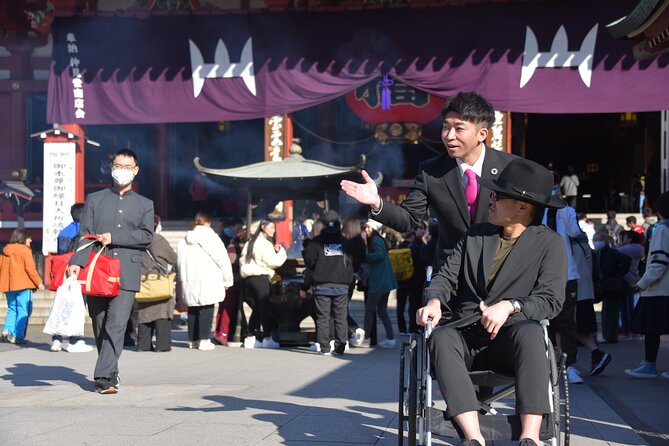
Your first stop is Tsukiji Jogai Market for about 1 hour. The main Tsukiji Market moved to Toyosu in 2018, but the outer market at Tsukiji still operates, with shops and restaurants that keep the area interesting.
For a wheelchair-friendly day, a market start is a smart choice because it’s a built-in “hang out” environment. You can browse, point, and choose what you want—rather than trying to sprint between distant attractions.
If you like food culture but don’t want the stress of a fast-moving crowd, this is a good opening act. Admission is listed as free here.
Practical note: markets can be compact and crowded, so it helps to go in with a flexible plan. With a guide and private transport later, you can adjust as you go without losing the whole day.
Hama Rikyu Gardens: A Green Break, With Extra Ticket Consideration
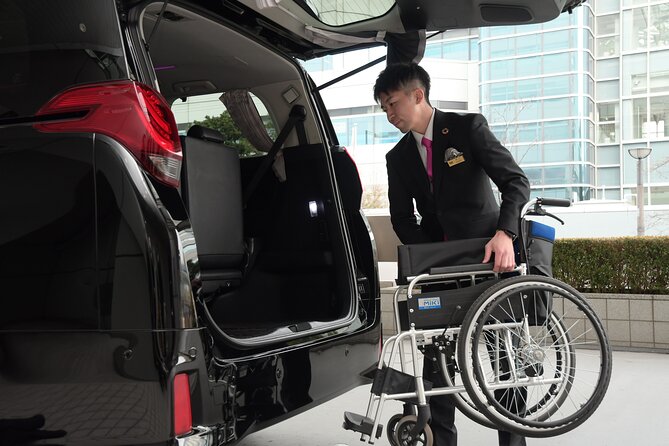
Next is Hama Rikyu Gardens for about 1 hour. This garden has served different roles over centuries—originally connected to a feudal lord’s Tokyo residence and duck hunting grounds—then later becoming a garden.
The key value here is the change of pace. After shopping streets and city streets, gardens give you a calmer sensory break—more sitting, more walking at your own rhythm, and views that don’t require high-speed movement.
Admission is listed as not included, so budget for the entry fee. If you’re the type who likes at least one scenic “pause” on a sightseeing day, this stop is worth keeping in the plan.
Readers also shortlisted these Tokyo bookings:
- From Tokyo: Mount Fuji Full-Day Sightseeing Trip★ 4.5 · 4,970 reviews
- From Tokyo: Mount Fuji Full Day Customizable Private Tour★ 4.9 · 912 reviews
- Tokyo Private Full-Day Tour by Car or Van★ 5.0 · 684 reviews
- From Tokyo: Must-Visit Mount Fuji Highlight Full-Day Tour★ 4.7 · 532 reviews
- Tokyo: Mount Fuji and Hakone Full Day Tour with Ramen Making★ 4.5 · 476 reviews
Ginza and the Big-City Landmarks: Short Stops, Clear Sightlines
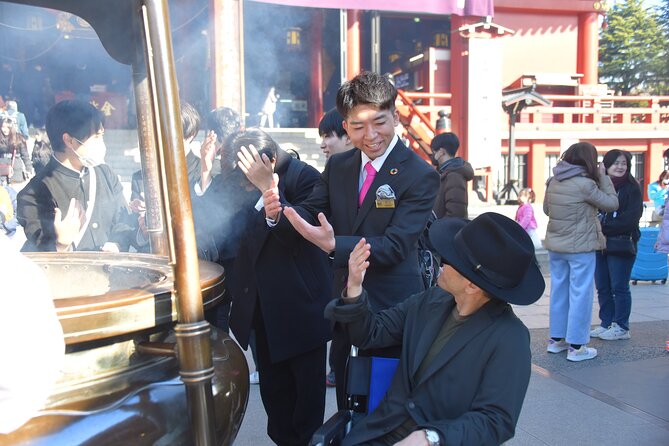
Then you roll through Ginza for about 1 hour. In this part of Tokyo you get eclectic boutiques, galleries, Japanese craft stores, and a strong mix of modern architecture with upscale shopping.
From a wheelchair-day standpoint, this segment works well because you’re not stuck trying to do everything on foot. The tour describes sightseeing through the car window for some stops, which helps you conserve energy.
After Ginza, you get Imperial Palace and the National Diet Building viewed from the car window. Imperial Palace is associated with the Tokugawa shogun family (1603–1868) and then later became the Imperial Palace when political power returned to the Emperor Meiji. The National Diet Building survived the 1945 air raids and was built in 1936.
Both are listed with free admission. You’re getting a fast, meaningful look at what shapes modern Japan’s political identity—without needing a long, complicated walk.
Senso-ji Temple and Asakusa Mode: Old Tokyo Energy, Managed Well
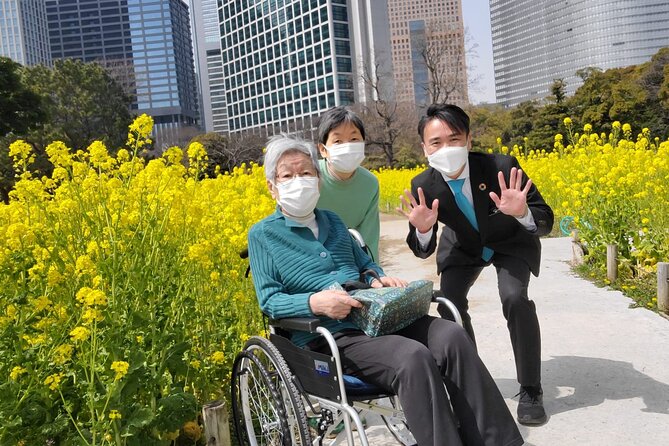
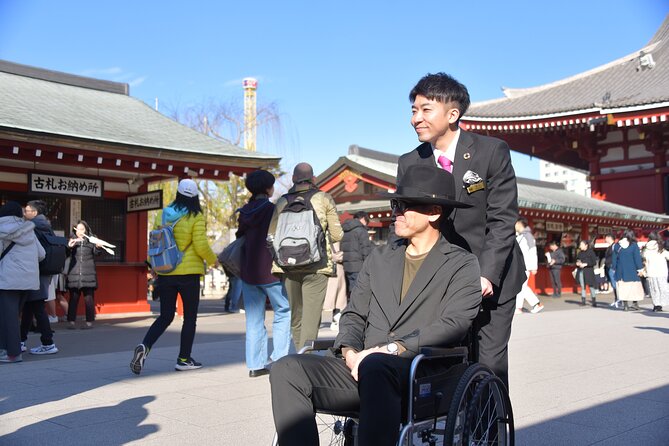
Senso-ji Temple is scheduled for about 1 hour, with admission listed as free. It’s described as the oldest temple in Tokyo, and the area ties into the early history of Asakusa through the story of a Kannon statue found by fishermen.
This stop is a strong emotional anchor on the route because temples feel like Tokyo’s soul—busy, historic, and photogenic. Even if you don’t spend a full hour inside every hall, you can still absorb the atmosphere and landmarks.
The practical win is that you’re not forced to do temple-and-traffic back-to-back with intense transit planning. Your guide and private vehicle keep the flow moving, so you arrive with energy rather than dread.
Omotesando and Harajuku: Fashion Streets Without the Exhaustion Tax
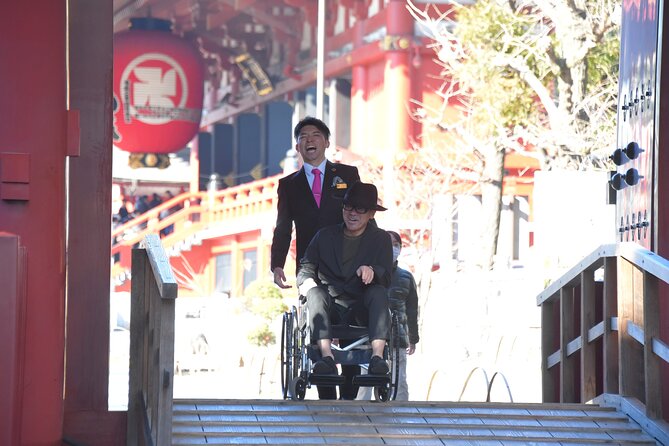
Two of the most interesting neighborhoods for people-watching are Omotesando (about 30 minutes) and Harajuku (about 30 minutes). Omotesando is known for buildings designed by major architects, and Harajuku is where you see youth culture expressed through bold fashion and unusual styles.
Both stops are listed with free admission, and the descriptions indicate sightseeing through the car window for these time blocks. That’s a good setup if you want the vibe without being stuck in long stretches of crowd flow.
You’ll still get the sense of how Tokyo experiments with design and style. And because your guide is managing pacing, you can spend your energy where you actually want to be.
If your group likes photos, these are your best “visual check-in” stops. If your group prefers quiet, you can keep it short and let the day breathe.
Meiji Jingu Shrine: A Calm Reset Away From the Street Noise
After the fashion and intersection energy, you reach Meiji Jingu Shrine for about 1 hour. The shrine is known for a pleasant atmosphere, and it’s described as a nice break from the busy streets.
This is where the day often turns from sightseeing sprint into something more restful. Shrines and forested surroundings are naturally slower-feeling, so it’s easier to take your time, pause, and just watch.
There’s also a scheduling detail that could interest you: on Saturdays and Sundays, you might be able to see a traditional Japanese wedding ceremony. If that’s something you’d enjoy, it’s worth considering which day you book.
Admission is listed as free.
Shibuya Crossing: The World’s Busiest Intersection, Briefly and Effectively
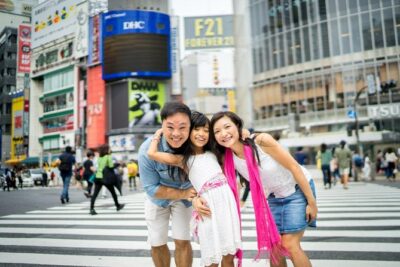
Then comes Shibuya Crossing for about 30 minutes, again with free admission listed. It’s described as the busiest intersection in the world and a place that makes other famous crossings feel small.
Even if you don’t love crowds, the value is seeing the scale of it. Tokyo does this intersection thing with a kind of organized chaos—lights, waves of people, and that feeling that the city is always moving.
Because this stop is short, it works as a highlight rather than a time drain. You can take photos, absorb the spectacle, and keep the day on track.
Daikanyama: A Softer Side of Tokyo Shopping and Cafes
For the final neighborhood stop, you go to Daikanyama for about 30 minutes. This area (and nearby Nakameguro) is described as filled with boutiques and cafes, with a different atmosphere and less intense pace than more famous shopping zones.
This ending is smart. By the time you reach Daikanyama, you’ve already seen the major “headline” Tokyo sights, and now you can enjoy something more human-scale and relaxed.
Admission is listed as free, and this is a great place to look for last souvenirs or simply soak up the neighborhood mood. Then you return back to Tokyo Station, ending the day where you started.
Guide Matters: Umi, Roberto, and Gen Keep the Day Real
The biggest difference between a stressful day and a comfortable one is your guide’s attention to the human details. In this tour, the guide isn’t just giving directions—they’re thinking about your comfort, your priorities, and how your group moves.
One guide experience included Umi and Roberto taking extra care on a hot day. They worked to keep people cool and asked what experiences mattered most. Even better, they handled mobility support for a group using a mobility scooter, which reduced pressure on the person managing it.
Another guide, Gen, focused on kindness and customization. The tour can be tailored to your liking, and Gen’s approach made the day feel like it belonged to your interests instead of a fixed checklist.
That guide flexibility is the real heart of this kind of private accessibility tour. A route on paper helps, but the guide’s judgment turns it into a day you can actually enjoy.
What You’ll Get On the Road (Not Just the List of Stops)
This tour includes a lot of small comfort items that add up over an 8-hour day: air-conditioned vehicle, bottled water, snacks, and Wi-Fi on board.
Those extras sound basic, but they matter when your schedule is tight and your mobility needs extra thinking. Having water and snacks ready helps you avoid decision fatigue and lets you keep a steady energy level between stops.
The onboard Wi-Fi is also practical. If you’re checking map details, coordinating with family, or simply resting, you can stay online without saving battery or hunting for signal during transit.
Lunch and dinner aren’t included, so plan to either grab something on your own near the station after the tour or coordinate with your guide if you want food breaks. (Just keep in mind the tour time is built around the listed stops.)
Should You Book This Private Wheelchair Tour?
If you want a Tokyo day that feels organized, accessible, and guided—this is a strong option. It’s especially worth it if your group includes wheelchair users and you’d rather avoid the friction of train and bus navigation.
Book it when:
- you want a full day of major sights without spending extra energy on transport transfers
- your group appreciates short, manageable stops
- you need a guide who will help your day run smoothly (including mobility scooter support when used)
- you can share the group price to make it better value
Skip it or adjust expectations if:
- you want long time inside every site (this route includes some car-window sightseeing and tight time blocks)
- you’re not okay paying extra for Hama Rikyu Gardens admission
- your group is small and you’d feel the cost more than you’d benefit from the private setup
If you’re choosing between “DIY Tokyo with planning” and “a guided accessible day,” this tour leans clearly toward the second option. It’s designed for people who want Tokyo without turning the trip into a logistics project.
FAQ
Is this tour only for wheelchair users?
It’s designed with accessibility in mind for wheelchair users, using private transportation so you don’t have to navigate trains or buses.
How long is the private tour?
The tour lasts about 8 hours.
What does the price include?
The price includes air-conditioned private transportation, bottled water, snacks, and Wi-Fi onboard.
Where does the tour start and end?
It starts at Tokyo Station (1 Chome-9 Marunouchi, Chiyoda City) and ends back at the same meeting point.
What is the maximum group size?
The tour price is per group, up to 9 people.
Are attraction tickets included?
Most stops are listed as free admission. Hama Rikyu Gardens admission is not included.
Is lunch or dinner included?
Lunch and dinner are not included.
Does the tour let you customize the route?
Yes. The route can be tailored to your interests and preferred schedule.
Is the tour private?
Yes. It’s a private tour/activity, and only your group participates.
What if we use a mobility scooter?
The experience is designed with accessibility in mind, and there is a documented example of the guide handling a mobility scooter as part of making the day easier.
More Private in Tokyo
- Tokyo 6hr Private Tour with Government-Licensed Guide
★ 5.0 · 3,902 reviews - Private Tour to Mt. Fuji and Hakone (Fully Licenced Operator)
★ 5.0 · 1,910 reviews - Tokyo Customized Private Tour (Must See Places in 1 Day)
★ 5.0 · 1,499 reviews - Mount Fuji Full-Day Private Tour from Tokyo (Customizable)
★ 4.9 · 1,470 reviews - Tokyo: Private City Highlights Tour with Local Guide
★ 4.8 · 1,433 reviews
More Tours in Tokyo
- Mt Fuji and Hakone 1-Day Bus Tour Return by Bullet Train
★ 5.0 · 26,383 reviews - 1-Day Tokyo Bus Tour
★ 5.0 · 14,250 reviews - Tokyo: Shinjuku Food Tour (13 Dishes at 4 Local Eateries)
★ 5.0 · 6,603 reviews - Tokyo Mt Fuji 5th St & Hakone Cruise Bus Tour w/Bullet Train
★ 4.4 · 5,024 reviews - Flagship 2-Hours Official Street Go-Kart Tour – Tokyo Bay Shop
★ 5.0 · 4,974 reviews
More Tour Reviews in Tokyo
- Mt Fuji and Hakone 1-Day Bus Tour Return by Bullet Train
★ 5.0 · 26,383 reviews - 1-Day Tokyo Bus Tour
★ 5.0 · 14,250 reviews - Tokyo: teamLab Planets TOKYO Digital Art Museum Entry Ticket
★ 4.6 · 9,779 reviews - Mt Fuji & Hakone Cruise, Drum Show Bullet Train 1 Day from Tokyo
★ 4.0 · 7,413 reviews - Tokyo: Shinjuku Food Tour (13 Dishes at 4 Local Eateries)
★ 5.0 · 6,603 reviews
Latest Tokyo reviews off our desk






Full-Day, compared.
 ★ 4.5From Tokyo: Mount Fuji Full-Day Sightseeing TripFrom $684,970 reviews
 ★ 4.9Mount Fuji Full-Day Private Tour from Tokyo (Customizable)From $3931,470 reviews
 ★ 4.9From Tokyo: Mount Fuji Full Day Customizable Private TourFrom $407912 reviews
 ★ 5.0Tokyo Private Full-Day Tour by Car or VanFrom $321684 reviews
 ★ 4.7From Tokyo: Must-Visit Mount Fuji Highlight Full-Day TourFrom $69532 reviews
 ★ 4.5Mount Fuji and Hakone Full Day Tour with Ramen MakingFrom $94476 reviews
 ★ 4.5Mt. Fuji, Hakone Full-Day Private Tour with English Driver GuideFrom $495458 reviews
★ 4.8From Tokyo: Mount Fuji Full-Day Customizable Private TourFrom $483451 reviews