
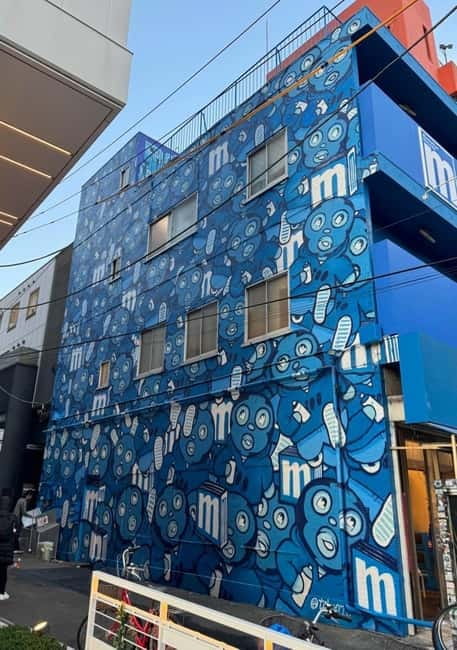
Reviewed · SHIBUYA EXPERIENCES
Graffiti in Tokyo Walking Tour: Shibuya and Harajuku
Graffiti is Tokyo’s street diary. What I love most about this Shibuya and Harajuku walk is meeting Elena Calderon (Totemo) and getting pointed toward hidden graffiti spots you would likely miss on your own. You’re not just seeing walls—you’re learning how tags, stickers, and murals work in the real streets of Honshu.
The main thing to consider is that this tour is built for walking. If you need mobility support, it’s not suitable, and you’ll want comfortable shoes for roughly two hours outdoors in changing weather.
In This Review
- Key things I’d circle before you go
- Why Tokyo Graffiti in Shibuya and Harajuku Feels Personal
- Meeting at Manhattan Records (and how to start with confidence)
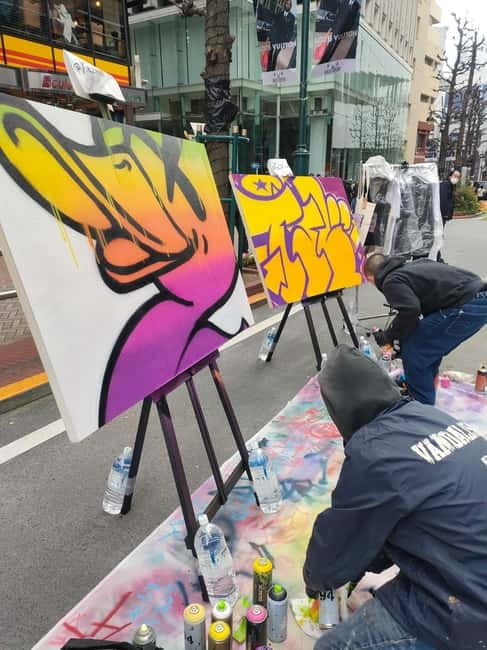
- Shibuya Street Corners: tags, throw-ups, stickers, and mural stories
- Harajuku for about 10 minutes: street art meets a fashion-forward neighborhood
- Why Elena Calderon (Totemo) makes this tour hit harder
- What to do with your photos and your curiosity during the walk
- Price and value: what $38 includes (and what you should plan for)
- Who this Shibuya and Harajuku graffiti tour is best for
- Should you book this graffiti walk in Shibuya and Harajuku?
- FAQ
- Where is the meeting point?
- How long is the tour?
- How much does it cost?
- What languages are offered for the live guide?
- What’s included in the tour price?
- What should I bring?
- Is transportation or meals included?
- Is it free to cancel?
- Is the tour suitable for everyone?
Key things I’d circle before you go
- Exclusive access to hidden graffiti spots that are hard to find without local guidance
- A graffiti researcher and art curator leading the walk with context you can actually use
- Shibuya focus, Harajuku taste: most time spent on the streets where street art shows up often
- Legal walls and secret street spots so you see the full range of how Tokyo handles street art
- Discounts in art galleries and restaurants that can stretch your yen budget after the walk
Why Tokyo Graffiti in Shibuya and Harajuku Feels Personal
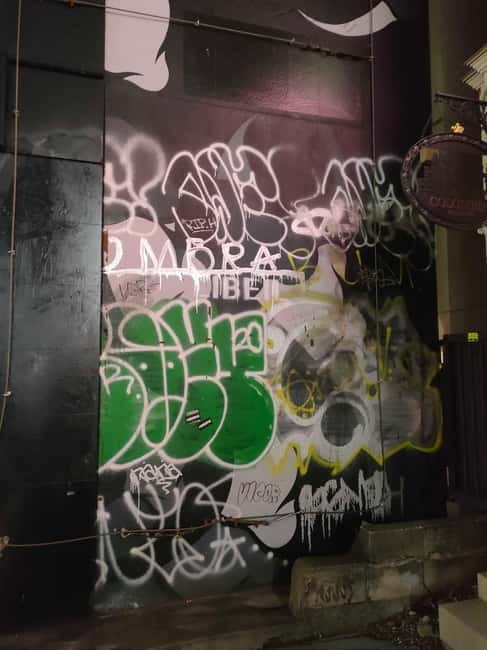
Shibuya and Harajuku are already famous on the map, but street art in Tokyo works on a different level. The pieces you’ll hunt for aren’t the kind that always scream for attention from the main drag. They’re tucked into side streets, behind angles, and on surfaces that only make sense once someone points out what you’re looking at.
This is what makes the tour worth your time: it turns random-looking marks into readable stories. You’ll hear how tags and throw-ups fit into artist crews and community habits, and you’ll learn what different styles tend to signal in Tokyo’s urban art culture. That context is exactly the difference between snapping a photo and understanding why the art is there.
And yes, some of what you’ll see falls into the often-illegal side of street art. The tour doesn’t ask you to break rules; it asks you to respect local laws, stay aware, and treat the city like a living space, not a photo set.
More booked around Shibuya Crossing
- Official Street Go-Kart in Shibuya
★ 5.0 · 3,435 reviews - Tokyo: Street Kart Experience in Shibuya
★ 4.9 · 1,484 reviews - Shibuya Meltdown Nightlife Tour: All-You-Can-Drink Bar Hopping
★ 5.0 · 1,058 reviews - Shibuya Official Street Go-Kart in Shibuya Annex
★ 5.0 · 972 reviews
Meeting at Manhattan Records (and how to start with confidence)
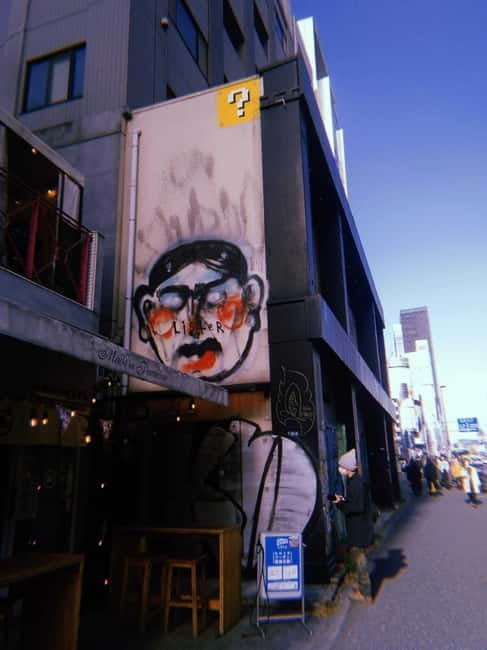
Your meetup point is Manhattan Records Shop (Shibuya). From there, you’ll step into the part of Shibuya most guidebooks don’t linger in for long—alley edges, storefront sides, and those in-between streets where Tokyo’s art scene shows its real personality.
Timing-wise, plan for a 2-hour experience with a short Harajuku visit (about 10 minutes) as part of the route. Most of your time will be spent in Shibuya City, which matters because street art spotting gets easier once your eyes adjust to the local visual language.
This tour runs with a live guide in English and Spanish. If you’re the type who likes asking questions as you walk, this format works well because you can get explanations right when you see the piece—not later, not in a museum, not as a vague recap.
Practical start checklist:
- Bring cash (useful for small purchases and any gallery-related stops)
- Bring a camera if you want to revisit spots afterward
- Pack water and comfortable shoes for constant turning, stopping, and looking up
- Don’t plan to rely on snacks—meals and drinks aren’t included
Shibuya Street Corners: tags, throw-ups, stickers, and mural stories
Shibuya is where this tour earns its name. The streets are packed with visual noise, and that’s exactly why the guide’s role matters. Elena is trained to spot what most people miss: tags that look like scribbles until you know the hand, stickers placed like calling cards, and larger works that sit quietly until you approach from the right angle.
One of the most praised parts of the experience is how Elena explains context. I like this approach because it keeps you from getting stuck at the surface level. Instead of just pointing at art, you learn how style and placement connect to creators and crews, and you get a sense of how Tokyo’s street art culture operates in real life.
You’ll also get a sense of the underground ecosystem: the contrast between more accepted formats like legal walls and the riskier, more spontaneous expressions that appear on secret street spots. That doesn’t mean you need to obsess over legality to enjoy the walk. It just means you’ll notice Tokyo’s “rules of the street,” and you’ll understand why some work disappears faster than others.
A small but meaningful bonus is the way the tour helps your future photos. Multiple people highlight that Elena points out murals and specific spots worth photographing after the tour. That’s great for you because it turns the walk into a mini scouting mission—you can spend the rest of your Shibuya time shooting the pieces you liked most, without second-guessing where to look.
Harajuku for about 10 minutes: street art meets a fashion-forward neighborhood
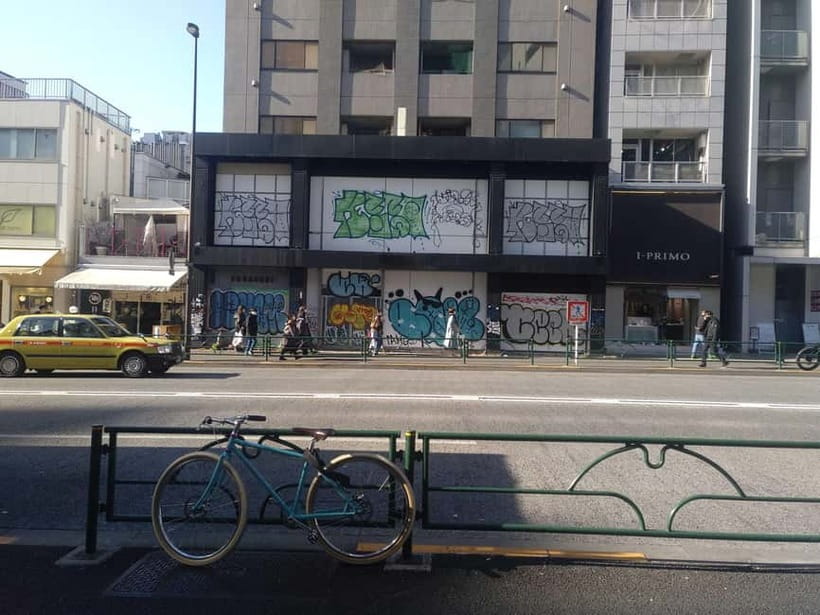
After Shibuya, the route includes a brief Harajuku stop. It’s short, so don’t expect a full neighborhood tour. Think of it as a quick shift in texture: same city, different crowd, different street rhythms, and street art that blends into the area’s attitude.
In practical terms, this stop helps you connect dots. If Shibuya feels like the urban art “workshop,” Harajuku often reads as the “styling room”—a place where style culture and street visuals travel together. You’re still there for graffiti and street art, but you’re also seeing how Tokyo’s street creativity overlaps with everyday fashion and youth culture.
Because the Harajuku segment is brief, I’d treat it like a bonus chapter. If you want longer time in Harajuku after the walk, that’s easy to do: use what you learned to spot similar visual cues on your own.
Why Elena Calderon (Totemo) makes this tour hit harder
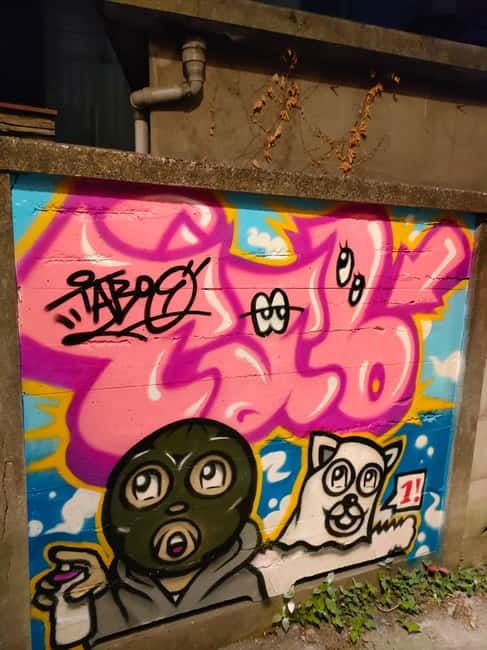
This is led by Elena Calderon, associated with Totemo, and the background matters. The tour describes her as both a graffiti researcher (more than 10 years) and an art curator. That mix shows up in how the walk balances street-level details with cultural context.
What I’d expect from that kind of guide:
- She notices the micro-signals: tags, stickers, and placement patterns
- She gives you stories behind the art, not just names and arrows
- She ties what you see to how the scene functions in Tokyo
From the feedback, you also get the sense that Elena’s enthusiasm is part of the package. It’s not a lecture. It’s more like walking with someone who sees Tokyo as a living archive of urban expression and wants you to see it too.
Another reason this tour can feel more valuable than a generic walking route: you get insider pointers about top art galleries and even discounts at art galleries and restaurants. Even if you don’t enter every place the tour mentions, having a shortlist from a local art-minded guide is how you avoid wasting time browsing aimlessly.
Readers also shortlisted these Tokyo bookings:
- Tokyo Tsukiji Fish Market Food and Culture Walking Tour★ 5.0 · 3,184 reviews
- Tokyo: Imperial Palace and Shogun Historical Walking Tour★ 5.0 · 2,251 reviews
- Tokyo: Shinjuku Local Bar and Izakaya Guided Walking Tour★ 4.9 · 1,794 reviews
- Tokyo: Tsukiji Fish Market Food and Walking tour★ 5.0 · 1,724 reviews
- Tokyo: Asakusa Walking Tour with Sensoji Temple Visit★ 4.8 · 1,583 reviews
What to do with your photos and your curiosity during the walk
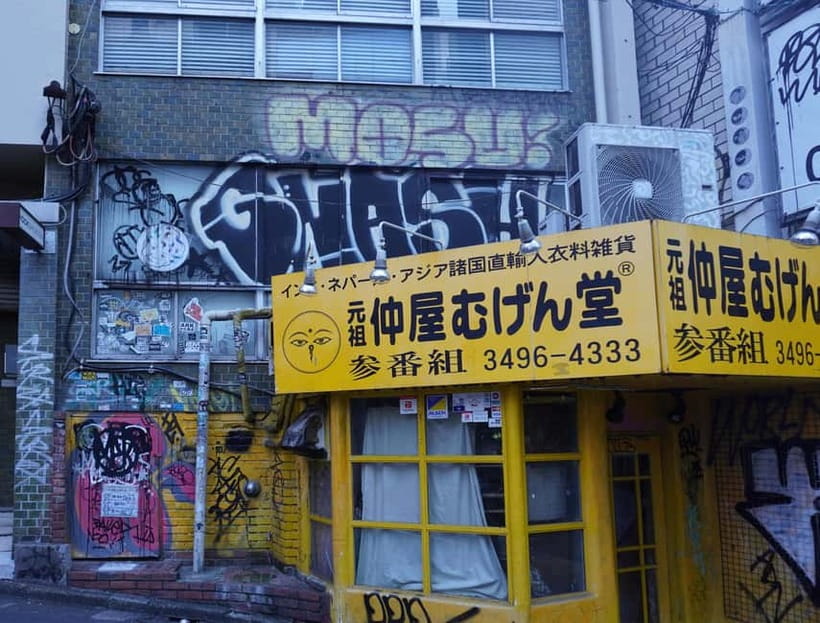
Street art can be tricky to photograph in Tokyo—not because it’s impossible, but because you’re moving. You’ll spend time looking for pieces that are partially hidden, placed at specific viewing angles, or set among more ordinary storefront textures.
So here’s what helps:
- Use your camera, but also slow down long enough to look with your eyes first
- When Elena points out a mural or a specific spot, take the photo, then note where you’re standing so you can return later
- Don’t crowd the wall—Tokyo streets are narrow, and the art is part of public space
Also keep in mind what the tour requests from you. Smoking, alcohol and drugs, and littering are not allowed. It’s a small list, but it’s the difference between enjoying street culture and becoming an annoyance in someone else’s neighborhood.
Weather happens. The experience is outdoors, and the materials you carry—water, layers, and comfortable shoes—will shape how much you enjoy the walk. If you’re expecting to stay comfortable, you’ll actually keep looking instead of rushing.
Price and value: what $38 includes (and what you should plan for)
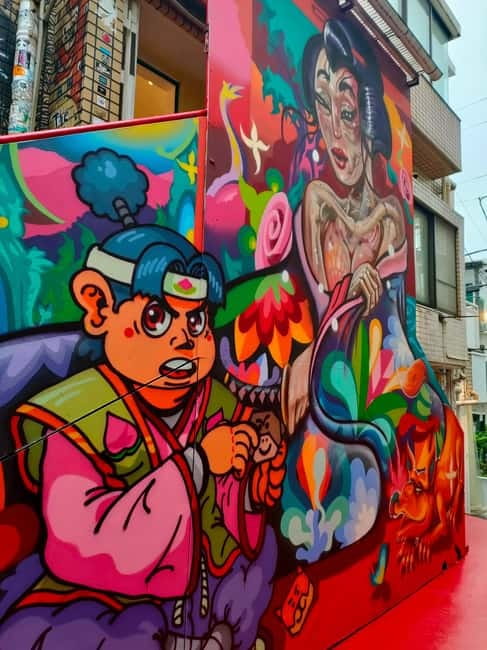
The price is $38 per person for a 2-hour walk. That’s not the cheapest way to spend time in Tokyo, but it’s also not trying to compete with mass tours. Here’s where the value shows up:
What’s included:
- An expert guide (graffiti researcher and art curator)
- Exclusive access to hidden graffiti spots
- Insider knowledge on Tokyo’s graffiti scene
- Insider knowledge on top art galleries
- Discounts in art galleries and restaurants
What’s not included:
- Meals and drinks
- Transportation to the meeting point
- Entrance fees to art galleries/museums (most are free of charge, though entry is not described as guaranteed)
For you, the best way to think about the price is this: the tour buys you interpretation. Street art is easy to miss. Most people walk past marks they don’t understand. This tour helps you spot and understand what you’re seeing, then points you toward places worth continuing the hunt.
If you’re the kind of traveler who likes to plan photos and avoid randomness, this price can feel like a shortcut. You’re paying for time with someone who already knows where the visuals are—and who can explain why they matter.
Who this Shibuya and Harajuku graffiti tour is best for
This experience is a good fit if:
- You like street art and graffiti and want the story behind it
- You want Tokyo off the main sightseeing lane
- You enjoy walking and discovering side streets
- You’re open to seeing both legal walls and more underground street spots
It also works well for families who want something different from a classic itinerary, as long as everyone can manage the walking time and attention span.
It’s not suitable for:
- People with mobility impairments
- Babies under 1 year
- People over 95 years
If you fall into any of those categories, it’s better to look for a different kind of street art option with less walking or more accessibility support.
Should you book this graffiti walk in Shibuya and Harajuku?
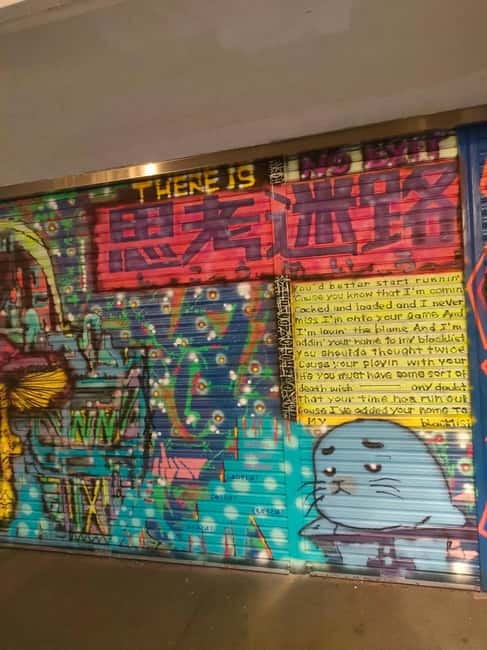
If your goal is to see Tokyo the way locals experience it, I’d strongly consider booking. This tour is built to help you notice what most people miss: street art that’s present, but not always obvious. You’ll leave with a stronger eye for tags, stickers, throw-ups, and murals—and with a shortlist of art places you can check out later.
Skip it if you only want headline sights, or if walking around with no guaranteed museum-style stops isn’t your thing. Also, if you need a fully seated or highly accessible format, this one isn’t designed for that.
My call: book it if you want a short, focused Tokyo experience that trades big attractions for real street-level culture, guided by someone who studies the scene and helps you see it clearly.
FAQ
Where is the meeting point?
You meet at MANHATTAN RECORDS SHOP in Shibuya.
How long is the tour?
The duration is 2 hours.
How much does it cost?
The price is $38 per person.
What languages are offered for the live guide?
The live tour guide is available in English and Spanish.
What’s included in the tour price?
Included are an expert guide, exclusive access to hidden graffiti spots, insider knowledge on Tokyo’s graffiti scene and top art galleries, and discounts in art galleries and restaurants.
What should I bring?
Bring comfortable shoes, a camera, water, and cash.
Is transportation or meals included?
No. Meals and drinks are not included, and transportation to the meeting point is also not included.
Is it free to cancel?
Yes. You can cancel up to 24 hours in advance for a full refund.
Is the tour suitable for everyone?
It is not suitable for people with mobility impairments, babies under 1 year, or people over 95 years.
More Tours in Tokyo
- Mt Fuji and Hakone 1-Day Bus Tour Return by Bullet Train
★ 5.0 · 26,383 reviews - 1-Day Tokyo Bus Tour
★ 5.0 · 14,250 reviews - Tokyo: Shinjuku Food Tour (13 Dishes at 4 Local Eateries)
★ 5.0 · 6,603 reviews - Tokyo Mt Fuji 5th St & Hakone Cruise Bus Tour w/Bullet Train
★ 4.4 · 5,024 reviews - Flagship 2-Hours Official Street Go-Kart Tour – Tokyo Bay Shop
★ 5.0 · 4,974 reviews
More Tour Reviews in Tokyo
- Mt Fuji and Hakone 1-Day Bus Tour Return by Bullet Train
★ 5.0 · 26,383 reviews - 1-Day Tokyo Bus Tour
★ 5.0 · 14,250 reviews - Tokyo: teamLab Planets TOKYO Digital Art Museum Entry Ticket
★ 4.6 · 9,779 reviews - Mt Fuji & Hakone Cruise, Drum Show Bullet Train 1 Day from Tokyo
★ 4.0 · 7,413 reviews - Tokyo: Shinjuku Food Tour (13 Dishes at 4 Local Eateries)
★ 5.0 · 6,603 reviews
More Around Shibuya Crossing
- Official Street Go-Kart in Shibuya
★ 5.0 · 3,435 reviews - Tokyo: Street Kart Experience in Shibuya
★ 4.9 · 1,484 reviews - Shibuya Meltdown Nightlife Tour: All-You-Can-Drink Bar Hopping
★ 5.0 · 1,058 reviews - Shibuya Official Street Go-Kart in Shibuya Annex
★ 5.0 · 972 reviews - Tokyo: Shibuya Food Tour (13 dishes and 4 Eateries)
★ 5.0 · 770 reviews
Latest Tokyo reviews off our desk






Shibuya Experiences, compared.
 ★ 5.0Official Street Go-Kart in ShibuyaFrom $763,435 reviews
 ★ 4.9Street Kart Experience in ShibuyaFrom $741,484 reviews
 ★ 5.0Shibuya Meltdown Nightlife Tour: All-You-Can-Drink Bar HoppingFrom $1061,058 reviews
 ★ 5.0Shibuya Official Street Go-Kart in Shibuya AnnexFrom $69972 reviews
 ★ 5.0Shibuya Food Tour (13 dishes and 4 Eateries)From $77770 reviews
 ★ 5.0Best of Shibuya Food TourFrom $217612 reviews
 ★ 4.8Shibuya Highlights Walking TourFrom $19601 reviews
 ★ 4.7Premium Go-Kart Tour with Tower & Shibuya CrossingFrom $116528 reviews
Browse the lists this tour appears in