
Reviewed · TSUKIJI MARKET FOOD TOURS
Tokyo Tsukiji Fish Market Food and Culture Walking Tour
Tokyo’s Tsukiji market can feel like sensory overload. This tour turns that chaos into a guided walk with actual bites. You start at Tsukiji Hongan-ji Temple and work your way through the seafood world, stopping for samples while you learn why chefs shop here every day.
I especially like the food mix: things like Wagyu beef skewers, fish cakes, seasonal fruit, plus either sushi or a seafood bowl at the end. Second, I like the way the guide helps you move through the market without wasting your energy getting lost among hundreds of stalls.
One drawback to plan for: this is a fish-focused experience. If you can’t eat fish, you can’t join, and the tour also does not accommodate vegetarian, halal, gluten-free, or allergy requests. Also, some items may not be available on closed market days.
In This Review
- Key reasons this Tsukiji walk works so well
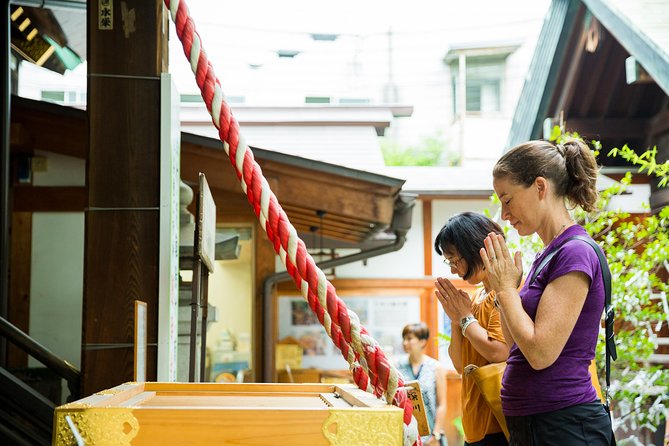
- Starting at Tsukiji Hongan-ji’s main gate (and why that matters)
- Tsukiji Jogai Market: the outer market that teaches you what you’re seeing
- The Old Tsukiji Market stop: tasting while the vibe shifts
- Tsukiji Uogashi: a mini wholesale look with real timing rules
- Wrapping at Tsukiji Fish Market: sushi or a seafood bowl, plus the bigger hits
- Price and value: what $99.49 is really paying for
- What the guides bring (Kiyo, Naz, Miky, Kayoko, Yuki, Masa, and more)
- When the tour menu changes (and how to not feel surprised)
- Should you book this Tsukiji Fish Market food and culture tour?
- FAQ
- Where is the meeting point for this tour?
- How long is the Tokyo Tsukiji Fish Market food tour?
- What should I wear?
- What food is included?
- Do you serve sushi or seafood bowls?
- Is this tour suitable for vegetarians, halal diets, gluten-free diets, or allergies?
- Can I join if I can’t eat fish?
- Does the tour change on Wednesdays or Sundays?
- Can I get a refund if I cancel?
Key reasons this Tsukiji walk works so well
- Temple start, clear route: Meet at Tsukiji Hongan-ji’s main gate and get moving on time.
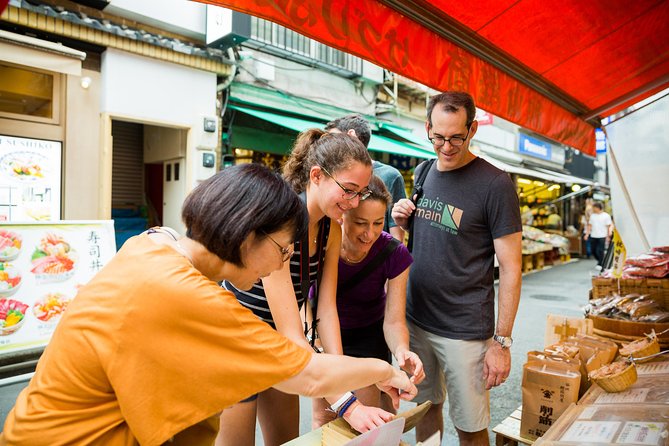
- The “see and taste” rhythm: Look at what’s for sale, then eat your way along the route.
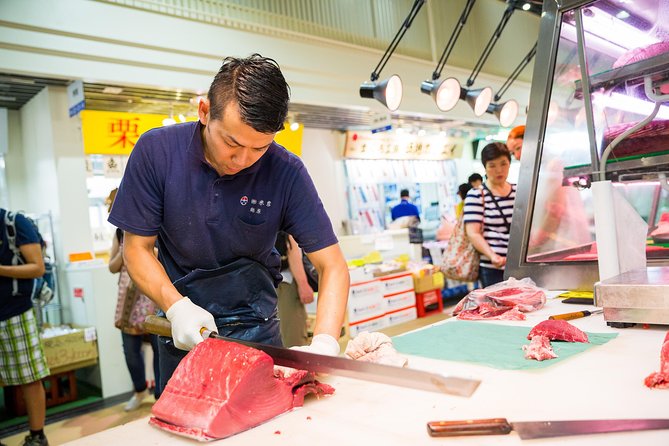
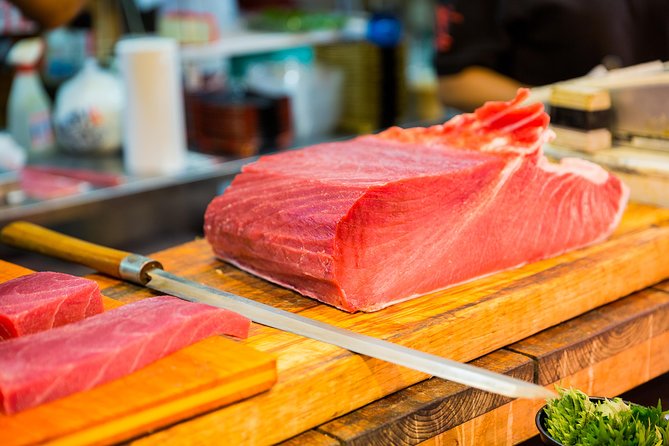
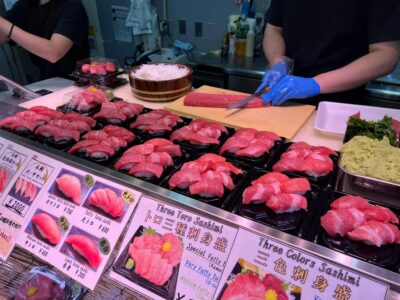
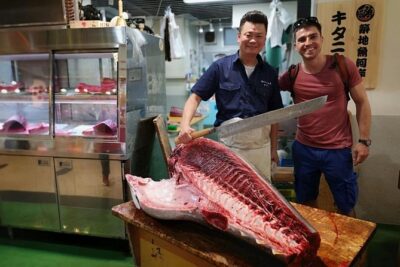
- High-end seafood you might not seek out: You could run into uni boxes, bluefin tuna prep, and pufferfish tanks.
- Lunch plus snack included: You’re not just sampling water and vibes.
- Small group feel: Max 20 people, so questions stay possible.
- Day-dependent menu: Some tastings change when Uogashi is closed (like Wednesdays and Sundays).
Starting at Tsukiji Hongan-ji’s main gate (and why that matters)
The tour kicks off at the main gate of Tsukiji Hongan-ji Temple. It’s not a suggestion. The group leaves at the start time, so you’ll want to arrive early enough to find the right entrance without stress.
This area is tricky with navigation. Even if you use Google Maps, it may steer you toward the temple’s back side. The tour specifically says to use the front, so do yourself a favor and confirm you’re at the main gate before the time hits.
A couple practical notes make the start smoother:
- Wear comfortable walking shoes. You’re on your feet for much of the experience.
- Plan for a short, fast pace. The tour is about 3 hours total, and it’s built around moving through a maze of stalls.
- You’ll travel with a group size capped at 20 people, which usually keeps the experience from turning into a stampede.
If you drink alcohol, know the tour sets a minimum drinking age of 20. For anyone under 20, they offer another drink.
More market breakfasts our reviewers scored
- Tokyo Tsukiji Fish Market Food and Culture Walking Tour
★ 5.0 · 3,184 reviews - Tokyo: Tsukiji Fish Market Food and Walking tour
★ 5.0 · 1,724 reviews - Tokyo: Tsukiji Fish Market Guided Walking Tour
★ 4.9 · 1,397 reviews - Tokyo Sushi Making Class in Tsukiji with Professional Chef
★ 5.0 · 1,177 reviews
Tsukiji Jogai Market: the outer market that teaches you what you’re seeing
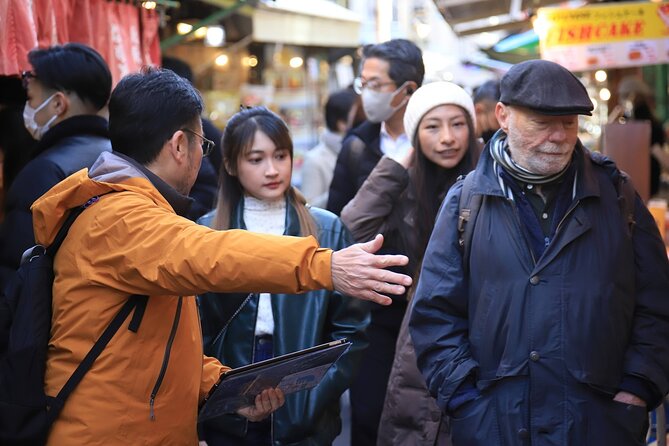
Your walk begins inside the Tsukiji orbit at Tsukiji Jogai Market. This is the part where the market’s personality hits you first: smells, chatter, seafood displays, and vendors doing their thing like it’s a Tuesday morning everywhere else.
This stop is also where the guide’s context really helps. You’ll hear about Tsukiji’s 80-year history and why so many of Japan’s top chefs come in daily to buy fresh ingredients. That matters because Tsukiji isn’t a museum. It’s a working food marketplace, and the energy changes based on time of day and what’s landing.
What you might notice (or be pointed toward) here includes:
- Sea urchin (uni) stacked neatly in boxes
- Vendors carving bluefin tuna
- Pufferfish floating in tanks
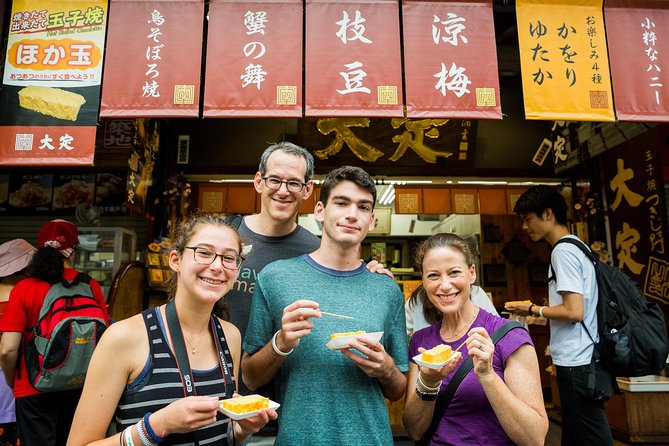
You’ll also get early samples as you stroll past outer stalls. Expect typical snack-style items like dashi soup and green tea. These are small, but they’re useful. They help you taste the flavors that show up later in bigger dishes.
The Old Tsukiji Market stop: tasting while the vibe shifts
Next is the Old Tsukiji Market segment. In practical terms, this is the place where the tour keeps you moving and eating rather than standing still for photos.
This stop runs about 30 minutes and is geared as a continuation of the food-focused walk. You’ll keep sampling along the way, and the guide’s job is to connect what you’re tasting with what you’re seeing in the stalls.
Why this stop matters: Tsukiji can be overwhelming if you only wander. A guide helps you read the scene. You learn what’s a snack, what’s ingredient-grade, and what’s better for cooking vs. eating right there. If you’ve ever stood in a market thinking I want to try something but don’t know what to pick, this portion is built to solve that.
One thing to keep in mind: the tour description includes a stop where you can pick up kitchen tools if you need them. That can be a fun bonus if you’re shopping for gadgets like sushi-making supplies or small kitchen items. If you’re not, it’s still useful to know that this walk isn’t only about eating.
Tsukiji Uogashi: a mini wholesale look with real timing rules
Then you pass through Tsukiji Uogashi, described as a mini wholesale area where you’ll see hundreds of kinds of fish. This is a good moment to slow down mentally, even if your feet don’t.
You’ll get to see the scale and variety that most people never get to notice on their own. It’s also where wholesale logic becomes clearer. Even if you don’t speak Japanese, you’ll start picking up how vendors categorize fish and what looks popular that day.
There’s one big limitation you should plan around: Uogashi is closed on Wednesdays, Sundays, and other closed market days. When it’s closed, the tour notes that some tastings won’t be served, including:
- Japanese omelette
- Fish cake
- Fruits
So if you’re visiting on one of those days, don’t be surprised if your exact menu feels slightly different. The tour still runs, but the food pieces tied to open shops won’t happen.
Wrapping at Tsukiji Fish Market: sushi or a seafood bowl, plus the bigger hits
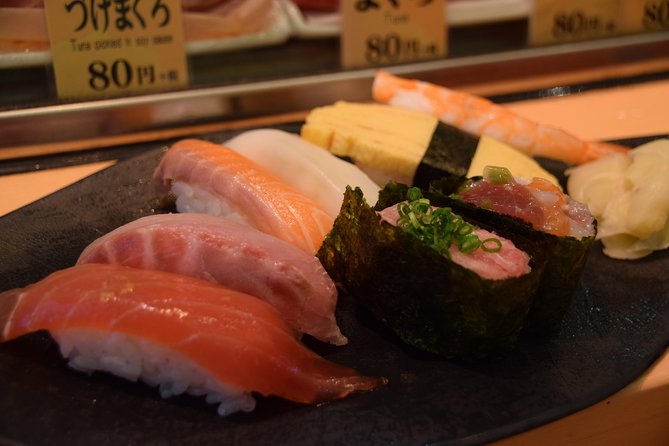
You finish with a meal at the Tsukiji Fish Market stop, about 30 minutes. This is the payoff part. You’ll wrap up with either:
- a sushi serving, or
- a seafood bowl
The tour states that depending on the day and time, you’ll get one of those two.
Along the route, you’re also told you’ll sample high-quality items such as:
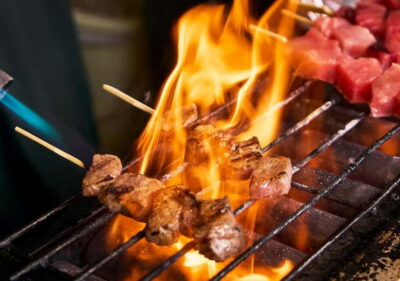
- Wagyu beef skewers
- fresh sushi or a seafood bowl
- fish cakes
- seasonal fruit
And yes, seafood watchers often love how Tsukiji feels like a live ingredient show. If earlier you saw tanks and tuna prep, this final stop is where the story turns into dinner.
A useful mindset for this ending: Tsukiji is not subtle. It’s loud, it’s fast, and it’s heavy on seafood. If you’re picky about strong flavors or you need bland food, this probably won’t be your easiest meal. But if you like tasting your way through ingredients, the finale is where the tour feels worth the price.
Readers also shortlisted these Tokyo bookings:
- Tokyo Tsukiji Fish Market Food and Culture Walking Tour★ 5.0 · 3,184 reviews
- Tokyo: Imperial Palace and Shogun Historical Walking Tour★ 5.0 · 2,251 reviews
- Tokyo: Shinjuku Local Bar and Izakaya Guided Walking Tour★ 4.9 · 1,794 reviews
- Tokyo: Tsukiji Fish Market Food and Walking tour★ 5.0 · 1,724 reviews
- Tokyo: Asakusa Walking Tour with Sensoji Temple Visit★ 4.8 · 1,583 reviews
Price and value: what $99.49 is really paying for
At $99.49 per person for about 3 hours, you’re not just paying for food. You’re paying for:
- guided navigation through a complicated market layout
- explanations that help you understand what you’re eating
- access to tastings you might not know how to order on your own
- a structured ending with sushi or a seafood bowl
Is it cheap? No. But it’s also not pretending to be a casual stroll. You’re in a real market with real vendors, and the tour includes lunch and snack plus multiple tasting moments.
Some reviews mention the walk can feel slow at times or that certain stops felt less like a food experience and more like observation. That’s a fair caution. This isn’t an all-you-can-eat marathon. It’s a guided sequence of tastings and a final meal, and your experience will depend heavily on guide energy and the day’s shop openings.
What the guides bring (Kiyo, Naz, Miky, Kayoko, Yuki, Masa, and more)
A pattern shows up in the guide names and how people describe them. When the tour clicks, it’s because the guide is good at two things:
1) reading the market so you don’t waste time
2) turning what you’re seeing into food choices and context
Examples you’ll hear from the tour’s standout guides include Kiyo, Naz, Miky, Kayoko, Yuki, Joy, and Masa. People also mention guides like Hanako, Mari, and Hedeki in positive ways.
What that means for you: if you’re choosing this tour, you’re choosing a human filter between you and Tsukiji’s chaos. Your guide helps you get from stall to stall without turning your day into a scavenger hunt.
Also, small-group size helps with this. With max 20 people, it’s easier to hear instructions and pivot if your group wants to shop a bit.
When the tour menu changes (and how to not feel surprised)
Tsukiji is schedule-driven. The tour explicitly warns that some foods can’t be served when Uogashi is closed: Wednesdays, Sundays, and other closed market days.
That affects items like Japanese omelette, fish cake, and fruits. It also notes that at the end you’ll get sushi or a seafood bowl depending on day and time. So your exact lineup won’t be identical every day.
My advice: if you have a must-eat item (for example, sushi vs. seafood bowl), treat it as a preference, not a promise. The tour is built to adapt, but closed shops change what vendors can hand you.
Should you book this Tsukiji Fish Market food and culture tour?
Book it if:
- you love seafood and you eat fish
- you want a guided way to understand Tsukiji without guessing what to order
- you like food history and ingredient context while you walk
- you’d rather pay for help than spend hours figuring it out yourself
Skip it if:
- you need vegetarian, halal, gluten-free, or allergy accommodations (the tour can’t support these)
- you can’t eat fish at all
- you expect a huge quantity buffet-style meal. You’ll get lunch and snack, plus tastings, but it’s still a tasting walk with a final serving, not unlimited eating
If your goal is to get a solid first taste of Tokyo’s seafood culture fast, this tour is a strong bet. Just go in hungry, wear good shoes, and show up at the temple’s main gate like you mean it.
FAQ
Where is the meeting point for this tour?
Meet at the main gate of Tsukiji Hongan-ji Temple (Tsukiji). The tour notes to use the front side of the temple, since directions may lead you to the back side.
How long is the Tokyo Tsukiji Fish Market food tour?
It runs for about 3 hours.
What should I wear?
Wear comfortable walking shoes. The experience is mainly a walking tour.
What food is included?
Lunch and snack are included, and you also receive food samples along the way.
Do you serve sushi or seafood bowls?
Depending on the day and time, the tour serves either sushi or a seafood bowl at the end.
Is this tour suitable for vegetarians, halal diets, gluten-free diets, or allergies?
No. The tour does not accommodate vegetarian, halal, gluten-free requests, or allergy-related requests.
Can I join if I can’t eat fish?
No. If you cannot eat fish, you won’t be able to join the tour.
Does the tour change on Wednesdays or Sundays?
Yes. The fish market (Uogashi wholesaler market) is closed on Wednesdays, Sundays, and other closed market days, and some tastings like Japanese omelette, fish cake, and fruits cannot be served when shops are closed.
Can I get a refund if I cancel?
Yes. Free cancellation is available up to 24 hours in advance for a full refund.
More Tours in Tokyo
- Mt Fuji and Hakone 1-Day Bus Tour Return by Bullet Train
★ 5.0 · 26,383 reviews - 1-Day Tokyo Bus Tour
★ 5.0 · 14,250 reviews - Tokyo: Shinjuku Food Tour (13 Dishes at 4 Local Eateries)
★ 5.0 · 6,603 reviews - Tokyo Mt Fuji 5th St & Hakone Cruise Bus Tour w/Bullet Train
★ 4.4 · 5,024 reviews - Flagship 2-Hours Official Street Go-Kart Tour – Tokyo Bay Shop
★ 5.0 · 4,974 reviews
More Tour Reviews in Tokyo
- Mt Fuji and Hakone 1-Day Bus Tour Return by Bullet Train
★ 5.0 · 26,383 reviews - 1-Day Tokyo Bus Tour
★ 5.0 · 14,250 reviews - Tokyo: teamLab Planets TOKYO Digital Art Museum Entry Ticket
★ 4.6 · 9,779 reviews - Mt Fuji & Hakone Cruise, Drum Show Bullet Train 1 Day from Tokyo
★ 4.0 · 7,413 reviews - Tokyo: Shinjuku Food Tour (13 Dishes at 4 Local Eateries)
★ 5.0 · 6,603 reviews
More Tsukiji Market Breakfasts
- Tokyo: Tsukiji Fish Market Food and Walking tour
★ 5.0 · 1,724 reviews - Tokyo: Tsukiji Fish Market Guided Walking Tour
★ 4.9 · 1,397 reviews - Tokyo Sushi Making Class in Tsukiji with Professional Chef
★ 5.0 · 1,177 reviews - Tsukiji Fish Market Guided Tour and Sushi Making with Pro Chef
★ 5.0 · 775 reviews - Tokyo: Tsukiji Fish Market Food and Culture Walking Tour
★ 4.7 · 757 reviews
Latest Tokyo reviews off our desk






Tsukiji Market Food Tours, compared.
 ★ 5.0Tsukiji Fish Market Food and Walking tourFrom $301,724 reviews
 ★ 4.9Tsukiji Fish Market Guided Walking TourFrom $221,397 reviews
 ★ 5.0Tokyo Sushi Making Class in Tsukiji with Professional ChefFrom $491,177 reviews
 ★ 5.0Tsukiji Fish Market Guided Tour and Sushi Making with Pro ChefFrom $104775 reviews
 ★ 4.7Tsukiji Fish Market Food and Culture Walking TourFrom $96757 reviews
 ★ 5.0Tsukiji Fish Market: Street Food & Culture Walking TourFrom $33669 reviews
 ★ 5.0Tsukiji Fish Market Small-Group Food Walking TourFrom $87621 reviews
 ★ 4.9Tsukiji Fish Market Sushi Making Class with Pro ChefFrom $63506 reviews
Browse the lists this tour appears in