
Reviewed · SHIBUYA EXPERIENCES
Shibuya and Harajuku Highlights Walking Tour
A fast day in Tokyo. You’ll connect Meiji Jingu, Takeshita Street, and the famous Shibuya Crossing in one tight route. The big win is the small group size, so the guide can explain what you’re seeing without shouting over the crowd.
I also like the built-in break for matcha near Harajuku Station. You get to choose a non-sweet matcha tea, a sweet matcha latte, or matcha ice cream, which saves time you would otherwise spend hunting for a place to recharge.
One consideration: you’re on your feet for a few hours, and the tour includes a walk from Harajuku to Shibuya (about 20 minutes). If you can’t walk properly, this won’t feel good.
In This Review
- Key highlights at a glance
- Why this Shibuya–Harajuku Highlights walk fits a 3–4 hour Tokyo plan
- Starting at @cosme in Jingūmae: an easy way to begin
- Meiji Jingu Shrine: the quiet reset before Harajuku
- Takeshita Street: shopping energy with a guide’s context
- Harajuku Station matcha break: included and actually useful
- Yoyogi Park and Shibuya PARCO: seeing the in-between
- Shibuya Crossing: iconic views, better with guidance
- Hachiko outside Shibuya Station: the story behind the statue
- Price and value: what $78.04 buys you (and why it’s fair)
- Who this tour suits best
- Should you book this Shibuya and Harajuku Highlights walking tour?
- FAQ
- What is the tour price?
- How long is the tour?
- What time does it start?
- Where is the meeting point?
- Where does the tour end?
- How many people are in the group?
- What’s included in the price?
- What matcha options are available?
- Is admission required for the main stops?
- Can I cancel for a full refund?
Key highlights at a glance
- Max 10 travelers keeps the group manageable and helps you hear the guide
- Matcha drink or ice cream included right by Harajuku Station, with 3 menu choices
- Icon stop order makes sense: shrine calm, style street energy, then Shibuya neon
- Shibuya Crossing + Hachiko at the end so you leave with the two most famous landmarks
- Mostly free-entry stops are noted at multiple key sights, reducing the cost of admission
Why this Shibuya–Harajuku Highlights walk fits a 3–4 hour Tokyo plan
This tour is built for people who want a lot of Tokyo flavor without turning the day into a transit puzzle. You get a guided route through two neighborhoods that are often visited separately: Harajuku’s youth fashion vibe and Shibuya’s iconic city intensity.
The pacing is the selling point. It’s short enough to be realistic for a first-time visit, but structured enough that you’re not just wandering around wondering what to look at next.
The other smart move is the small group. With up to 10 people, you’re less likely to feel swallowed by the crowd, especially around photo-heavy spots like Shibuya Crossing.
More booked around Shibuya Crossing
- Official Street Go-Kart in Shibuya
★ 5.0 · 3,435 reviews - Tokyo: Street Kart Experience in Shibuya
★ 4.9 · 1,484 reviews - Shibuya Meltdown Nightlife Tour: All-You-Can-Drink Bar Hopping
★ 5.0 · 1,058 reviews - Shibuya Official Street Go-Kart in Shibuya Annex
★ 5.0 · 972 reviews
Starting at @cosme in Jingūmae: an easy way to begin
The meeting point is @cosme TOKYO (Jingūmae, Shibuya). It’s convenient for getting started in the broader Shibuya area, and you’re not trekking far before the first sight.
You’ll also use a mobile ticket, which keeps check-in quick. Start time is 9:30am, so you’re out early enough to get moving before the busiest crush fully takes over.
From there, the day flows logically—Meiji Jingu first, then you pivot toward Harajuku, and finally you wind up in Shibuya for the big landmarks.
Meiji Jingu Shrine: the quiet reset before Harajuku
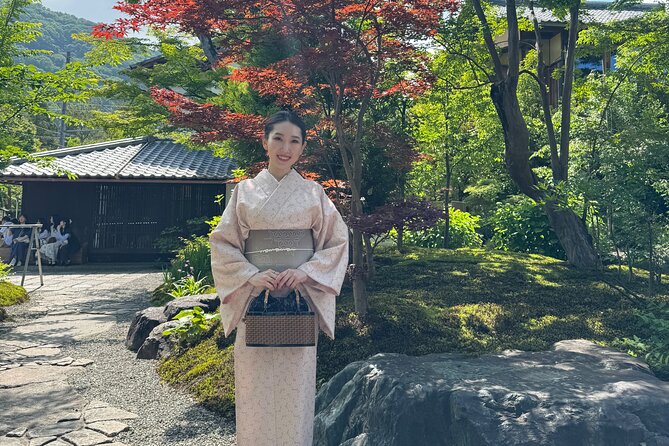
Your walk begins at Meiji Jingu Shrine, a must-see in the Shibuya area. It’s a Shinto shrine dedicated to Emperor Meiji and Empress Shoken, and the setting is forested, so the atmosphere shifts fast from the city street to something calmer and more ceremonial.
I love tours that start like this because it changes how you experience Tokyo. Instead of jumping straight from neon to neon, you get a moment of pause that makes the rest of the day feel more intentional.
Admission is free here, so you’re paying only for the guide and the structure—not a shrine ticket. Expect that this stop sets the tone: quiet walking, looking closely, and listening to the context.
Takeshita Street: shopping energy with a guide’s context
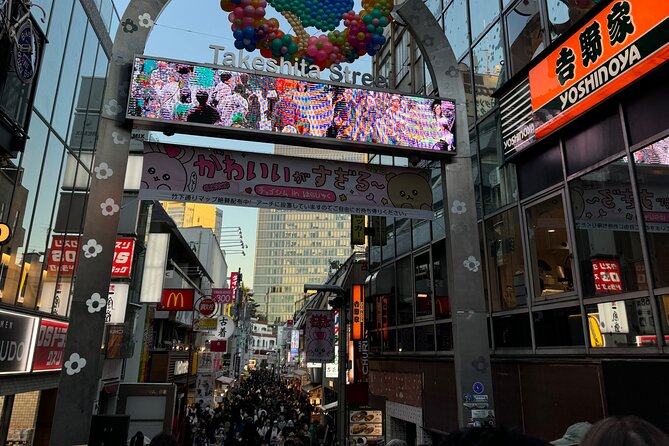
Next you head to Takeshita Street in Harajuku. This is the pedestrian strip known for trendy shops and the whole kawaii fashion and youth culture scene, and it tends to be packed when the day is going strong.
A guided approach helps because you’re not just scanning storefronts randomly. You get the context for what you’re seeing, so it feels less like a blur of hats and accessories and more like a window into a specific part of Tokyo culture.
This stop is also listed with free admission, so the cost stays in check. The main thing to plan for is simply time and space: it’s a street where you’ll want to slow down and let the group move together.
Harajuku Station matcha break: included and actually useful
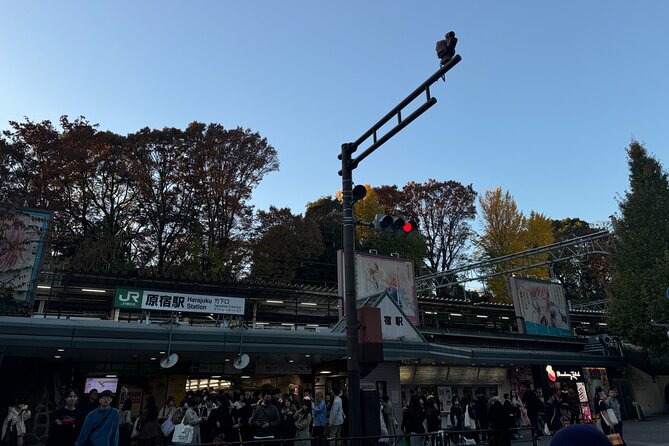
Right near Harajuku Station, you’ll get an included stop at a matcha shop. The key detail is choice: you can pick matcha tea (non-sweet), matcha latte (sweet), or matcha ice cream.
I think this is one of the best parts of the tour because it’s not a token snack. It’s scheduled when you likely need a breather, and it keeps you from spending extra time searching for a café mid-walk.
You also avoid a common Tokyo travel problem: deciding what to eat when you’re already juggling crowds. Here, the decision is simplified, and you get about a 30-minute break to reset before you keep moving.
Readers also shortlisted these Tokyo bookings:
- Tokyo Tsukiji Fish Market Food and Culture Walking Tour★ 5.0 · 3,184 reviews
- Tokyo: Shinjuku Local Bar and Izakaya Guided Walking Tour★ 4.9 · 1,794 reviews
- Tokyo: Tsukiji Fish Market Food and Walking tour★ 5.0 · 1,724 reviews
- Tokyo: Asakusa Walking Tour with Sensoji Temple Visit★ 4.8 · 1,583 reviews
- Tokyo: Tsukiji Fish Market Guided Walking Tour★ 4.9 · 1,397 reviews
Yoyogi Park and Shibuya PARCO: seeing the in-between
On the way to Shibuya Crossing, you pass Yoyogi Park. The park is described as one of Tokyo’s largest, and it’s used for things like picnics and jogging, which makes it a nice contrast to the shopping intensity that comes before.
Then you also pass by Shibuya PARCO, a major shopping complex in the area. You don’t have to plan for another entry-ticket stop here—just use it as a visual marker for what Shibuya feels like day to day.
These “pass-by” moments matter more than they sound. They help you connect the geography between Harajuku and Shibuya, so the walk doesn’t feel like you teleport from one famous spot to the next.
Shibuya Crossing: iconic views, better with guidance
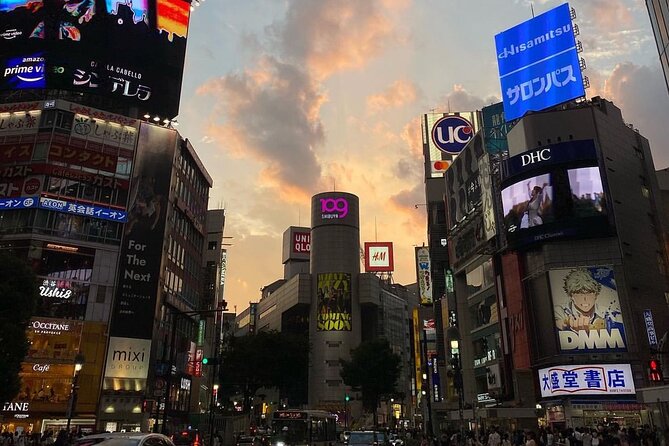
The tour’s headline moment is Shibuya Scramble Crossing, located in front of Shibuya Station. This is one of the world’s busiest and most recognizable intersections, with neon lights and giant video screens that turn it into an instant, full-sensory scene.
Your best advantage here is group guidance. Around crossings like this, people tend to surge toward the same angles and trip over each other. A small group tour helps you stay oriented and keep your timing under control, so you’re not constantly checking which direction you’re supposed to be going.
Admission is noted as free, so your experience is mostly about the atmosphere and the story the guide shares. You’ll have about 30 minutes at this stop, which is enough time to take photos and still feel human afterward.
Hachiko outside Shibuya Station: the story behind the statue
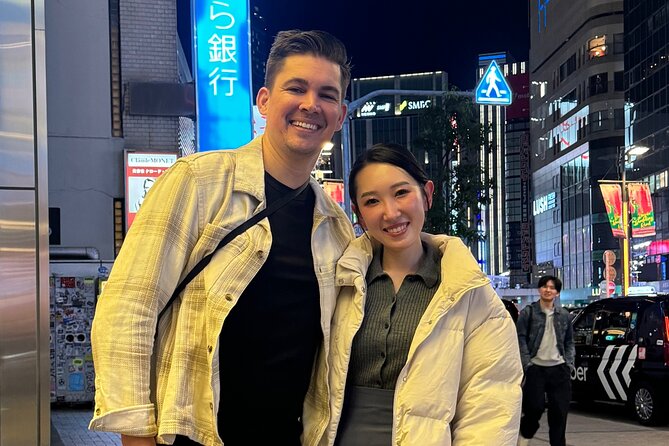
After Shibuya Crossing, the tour finishes at the Hachiko statue, located outside Shibuya Station. It commemorates Hachiko, a loyal Akita dog who waited for his deceased owner at the station every day.
This ending feels right because it ties the modern city energy to a human-scale story. Shibuya is all motion and screens, and then suddenly you’re looking at something still—something that explains why Tokyo’s most famous transit hub also has an emotional landmark attached to it.
This is also a free stop and takes about 10 minutes as the tour wraps up. You’ll finish right there, so you’re not sent back into another layer of transit planning.
Price and value: what $78.04 buys you (and why it’s fair)
At $78.04 per person, this isn’t a budget street-walk, but it does include the parts that are usually where walking tours lose value: a real guide and a food moment.
You get a professional English-speaking guide, plus the matcha shop inclusion (a drink or ice cream). That matcha component alone removes a decision and some extra expense, especially if you’d otherwise pause to find a place near the action.
Also, you hit multiple major landmarks across both neighborhoods, without paying for entry tickets at several stops. Meiji Jingu, Takeshita Street, Yoyogi Park (pass by), Shibuya Crossing, and Hachiko are all listed with free admission.
The small-group limit (maximum 10 travelers) is another value driver. In crowded areas, being able to hear your guide clearly is worth paying for, and it tends to make the whole experience feel more organized.
Who this tour suits best
This is ideal if you want a focused highlights route through Harajuku + Shibuya and you prefer a guided plan over self-navigation. It also works well for travelers who like cultural context, not just photo stops—since the guide explains what each place represents.
You’ll especially enjoy it if matcha is your thing. The included shop is timed for a break, and the menu choices are clearly defined.
It’s not a great match if walking is tough for you. The tour includes about 20 minutes walking from Harajuku to Shibuya, plus ongoing walking across the stops, and it’s described as not recommended for people who cannot walk properly. If you can handle a few hours on foot with breaks built in, you’re set.
Should you book this Shibuya and Harajuku Highlights walking tour?
If your Tokyo day is short and you want the must-sees—Meiji Jingu, Takeshita Street, Shibuya Crossing, and Hachiko—this is a strong choice. The small-group size and the included matcha make it feel like more than a basic self-guided stroll.
I’d skip it only if you’re very sensitive to crowds or you struggle with walking. The route is designed for people with moderate walking ability, and the Shibuya Crossing area is exactly the kind of place where you’ll feel it if you can’t comfortably move with the group.
If you want a Tokyo intro that feels efficiently planned but still “on the street,” book it.
FAQ
What is the tour price?
The tour costs $78.04 per person.
How long is the tour?
It runs about 3 to 4 hours.
What time does it start?
The start time is 9:30am.
Where is the meeting point?
The meeting point is at @cosme TOKYO 1-chōme-14-27 Jingūmae, Shibuya, Tokyo 150-0001, Japan.
Where does the tour end?
The tour ends at Shibuya Station 2-chome-24, Shibuya, Tokyo 150-0002, Japan, after visiting Hachiko and Shibuya Crossing.
How many people are in the group?
This tour has a maximum of 10 travelers.
What’s included in the price?
You get a professional English speaking guide and a matcha drink or matcha ice cream.
What matcha options are available?
You can choose matcha tea (non-sweet), matcha latte (sweet), or matcha ice cream.
Is admission required for the main stops?
Admission is listed as free for Meiji Jingu Shrine and for Takeshita Street, and it’s also listed as free for Shibuya Crossing and the Hachiko statue.
Can I cancel for a full refund?
Yes. There is free cancellation, and you can cancel up to 24 hours in advance for a full refund.
More Tours in Tokyo
- Mt Fuji and Hakone 1-Day Bus Tour Return by Bullet Train
★ 5.0 · 26,383 reviews - 1-Day Tokyo Bus Tour
★ 5.0 · 14,250 reviews - Tokyo: Shinjuku Food Tour (13 Dishes at 4 Local Eateries)
★ 5.0 · 6,603 reviews - Tokyo Mt Fuji 5th St & Hakone Cruise Bus Tour w/Bullet Train
★ 4.4 · 5,024 reviews - Flagship 2-Hours Official Street Go-Kart Tour – Tokyo Bay Shop
★ 5.0 · 4,974 reviews
More Tour Reviews in Tokyo
- Mt Fuji and Hakone 1-Day Bus Tour Return by Bullet Train
★ 5.0 · 26,383 reviews - 1-Day Tokyo Bus Tour
★ 5.0 · 14,250 reviews - Tokyo: teamLab Planets TOKYO Digital Art Museum Entry Ticket
★ 4.6 · 9,779 reviews - Mt Fuji & Hakone Cruise, Drum Show Bullet Train 1 Day from Tokyo
★ 4.0 · 7,413 reviews - Tokyo: Shinjuku Food Tour (13 Dishes at 4 Local Eateries)
★ 5.0 · 6,603 reviews
More Around Shibuya Crossing
- Official Street Go-Kart in Shibuya
★ 5.0 · 3,435 reviews - Tokyo: Street Kart Experience in Shibuya
★ 4.9 · 1,484 reviews - Shibuya Meltdown Nightlife Tour: All-You-Can-Drink Bar Hopping
★ 5.0 · 1,058 reviews - Shibuya Official Street Go-Kart in Shibuya Annex
★ 5.0 · 972 reviews - Tokyo: Shibuya Food Tour (13 dishes and 4 Eateries)
★ 5.0 · 770 reviews
Latest Tokyo reviews off our desk






Shibuya Experiences, compared.
 ★ 5.0Official Street Go-Kart in ShibuyaFrom $763,435 reviews
 ★ 4.9Street Kart Experience in ShibuyaFrom $741,484 reviews
 ★ 5.0Shibuya Meltdown Nightlife Tour: All-You-Can-Drink Bar HoppingFrom $1061,058 reviews
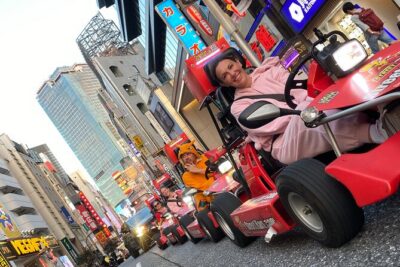 ★ 5.0Shibuya Official Street Go-Kart in Shibuya AnnexFrom $69972 reviews
 ★ 5.0Shibuya Food Tour (13 dishes and 4 Eateries)From $77770 reviews
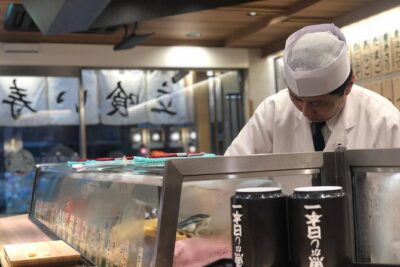 ★ 5.0Best of Shibuya Food TourFrom $217612 reviews
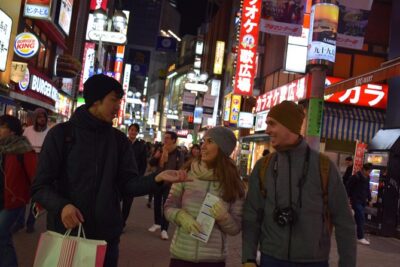 ★ 4.8Shibuya Highlights Walking TourFrom $19601 reviews
 ★ 4.7Premium Go-Kart Tour with Tower & Shibuya CrossingFrom $116528 reviews
Browse the lists this tour appears in