
Reviewed · SHIBUYA EXPERIENCES
Shibuya: Local Food & Culture Walk in Sangenjaya District
Shibuya’s neon can wait for this. In Sangenjaya, just two stops from Shibuya, you get an easygoing Tokyo evening in a neighborhood with retro bars, small izakayas, and a couple of famous local landmarks like the Gorilla Building.
I love the food pacing: grilled yakitori to start, then a hearty dinner spread with an all-you-can-drink plan. I also like the small-group format (max 4), which keeps the walk friendly and conversation easy.
One thing to consider: this is a night built around eating and drinking, so expect noise and a full schedule rather than a quiet museum-style stroll.
In This Review
- Key points before you go
- Why Sangenjaya feels like Tokyo’s local aftertaste
- Getting oriented fast: the start at Carrot Tower’s Freshness Burger
- Stop 1 on Suzuran Street: yakitori and the intro to izakaya life
- Gorilla Building and Taishido Hachiman Shrine: photos with a pause
- Chazawa-dori dinner: all-you-can-drink and the 13-dish strategy
- Carrot Tower free 360 view: a night compass for Tokyo
- Sankaku Chitai: ending in a narrow-alley bar maze
- The guide experience: friendly local context without the lecture
- Price and value: what $123.57 actually buys you
- Who this Sangenjaya walk is perfect for
- Who should think twice
- Should you book this Sangenjaya food and culture walk?
- FAQ
- How long is the Shibuya to Sangenjaya food and culture walk?
- How big is the group?
- What’s included with the 13 dishes and drinks?
- Are non-alcoholic drink options available?
- What are the main photo and view stops?
- Do you visit a shrine during the tour?
- Where does the tour start and end?
- Are admission fees required for the stops?
Key points before you go
- Max group size of 4 keeps things personal and makes it easier to ask questions as you walk.
- 13 Japanese dishes at 3 eateries means you’re not stuck ordering blindly or hungry later.
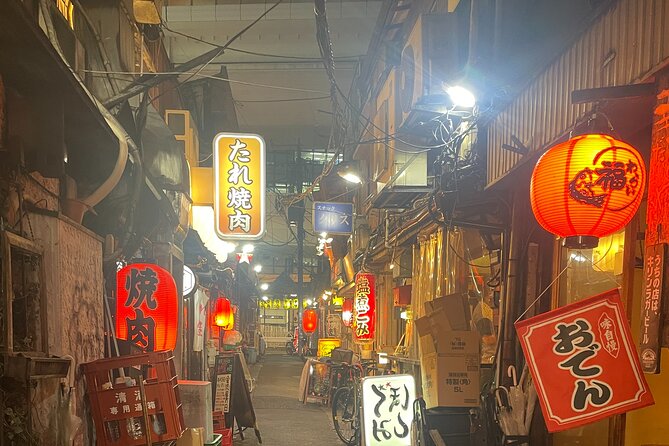
- Izakaya start on Suzuran Street gives you that lantern-lit first taste of real local nightlife.
- Gorilla Building + Taishido Hachiman Shrine mixes playful photos with a calmer, respectful stop.
- Carrot Tower free observation deck is your mid-night reset with a 360-degree city view.
- Sankaku Chitai ending lands you in a narrow-alley bar zone where the atmosphere feels very Tokyo.
Why Sangenjaya feels like Tokyo’s local aftertaste
Sangenjaya is the kind of place where you can feel the rhythm of Tokyo without it trying to entertain you. It’s close enough to Shibuya to be practical, but far enough that the crowds thin out fast. That matters on a food walk: you want to eat, look around, and actually talk to your guide—not fight through lines.
The night has a clear rhythm: start casual, warm up with classic bar snacks, take a couple of recognizable local photo stops, then settle into a dinner that’s built for lingering. Along the way, you pass shrines and bar alleys that feel like they belong to the neighborhood, not to a tour brochure.
More booked around Shibuya Crossing
- Official Street Go-Kart in Shibuya
★ 5.0 · 3,435 reviews - Tokyo: Street Kart Experience in Shibuya
★ 4.9 · 1,484 reviews - Shibuya Meltdown Nightlife Tour: All-You-Can-Drink Bar Hopping
★ 5.0 · 1,058 reviews - Shibuya Official Street Go-Kart in Shibuya Annex
★ 5.0 · 972 reviews
Getting oriented fast: the start at Carrot Tower’s Freshness Burger
The meetup point is at FRESHNESS BURGER Sangenjaya, inside the Carrot Tower North building (1F). That’s useful because it’s a real landmark you can navigate to—plus it’s right where your route naturally grows into the night views.
The tour runs about 4 hours and is designed as a walking plan. Since it’s near public transportation, you’re not committing to a long transit shuffle before things begin. And because you’ll move from spot to spot, you quickly learn where the “center” of the evening is, rather than wandering in circles.
At the end, you finish in Sangenjaya Sankaku Chitai, right near a bar about a 2-minute walk from Sangenjaya Station. So even if your dinner runs long, you’re not stuck far from the exit.
Stop 1 on Suzuran Street: yakitori and the intro to izakaya life
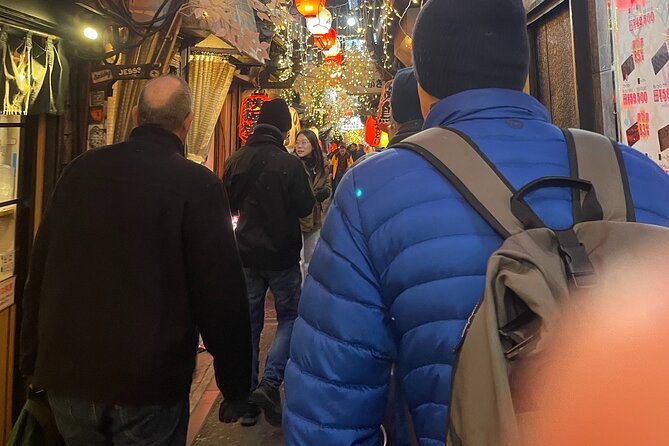
Your evening kicks off on Suzuran Street (すずらん通り) at a cozy local izakaya tucked along that nostalgic, lantern-lit alley feeling. This first stop sets the tone: you start warm, relaxed, and ready to eat.
The menu highlight here is freshly grilled yakitori—juicy chicken skewers that arrive hot and smell amazing the moment you sit down. You also get your first drink choice as part of the included plan, with options including beer, highball, or a non-alcoholic drink. That balance is practical if you’re traveling with someone who doesn’t drink, or if you just don’t want to be locked into alcohol for the whole evening.
Why I like this start: it teaches you how an izakaya evening works before you’re rushed into the next place. You learn what to order, how the pacing feels, and how locals treat the meal—more like hanging out with food than sitting down for one quick course.
Gorilla Building and Taishido Hachiman Shrine: photos with a pause
Next you head to the Sangenjaya Gorilla Building, a playful local landmark locals love because it’s weird in the best way. It’s essentially a giant gorilla climbing the facade, and it’s a popular photo spot—short stop, easy pictures, and a good break from pure eating.
Then, if your timing allows, you may stop at Taishido Hachiman Shrine. This is a small but meaningful contrast: you go from the kitschy, photo-friendly Gorilla Building to a quieter shrine setting. It was originally established in the 17th century, and even though it’s not huge, it gives the evening a respectful pause.
This mix matters. Tokyo nightlife can feel nonstop. A short shrine stop gives your eyes and mind a reset, and it also helps you feel the neighborhood as more than just bars.
Chazawa-dori dinner: all-you-can-drink and the 13-dish strategy
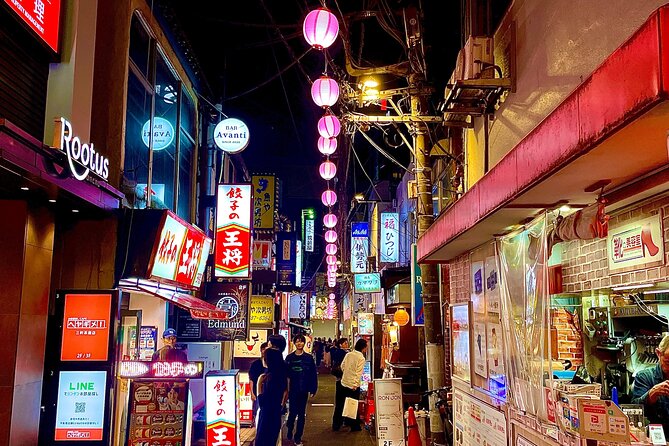
The main dinner happens on Chazawa-dori, one of Sangenjaya’s main roads known for local food culture. This is where the walk becomes a proper meal, not just a series of snacks.
You’ll eat at a lively izakaya and follow an all-you-can-drink plan. The included dinner setup is built around classic Japanese choices like karaage, sashimi, grilled fish, and edamame. And the bigger promise isn’t just one impressive dish—it’s the overall spread.
Here’s the big value angle: the experience includes 13 Japanese dishes across 3 eateries, plus a traditional street stall and an atmospheric bar as part of the route. That means you’re sampling the kinds of items you’d struggle to string together on your own in a short time. It also reduces decision fatigue—your guide handles the ordering rhythm and variety.
What I like most is that the dinner is designed for satisfying you in one go. If you’ve ever done a Tokyo food night where you end up paying for extra plates because you didn’t know what to order, this kind of structured dish plan helps prevent that.
One practical note: because there’s a lot of food and drink involved, wear comfortable clothes and pace yourself. The schedule is friendly, but you are moving through multiple eating moments.
Readers also shortlisted these Tokyo bookings:
- Tokyo Tsukiji Fish Market Food and Culture Walking Tour★ 5.0 · 3,184 reviews
- Tokyo: Shinjuku Local Bar and Izakaya Guided Walking Tour★ 4.9 · 1,794 reviews
- Tokyo: Tsukiji Fish Market Food and Walking tour★ 5.0 · 1,724 reviews
- Tokyo: Asakusa Walking Tour with Sensoji Temple Visit★ 4.8 · 1,583 reviews
- Tokyo: Tsukiji Fish Market Guided Walking Tour★ 4.9 · 1,397 reviews
Carrot Tower free 360 view: a night compass for Tokyo
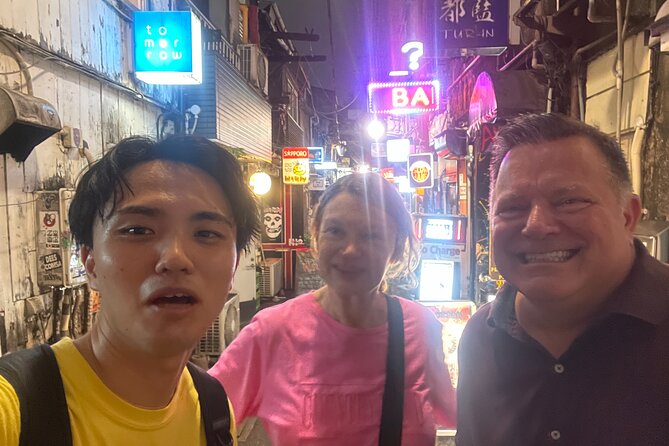
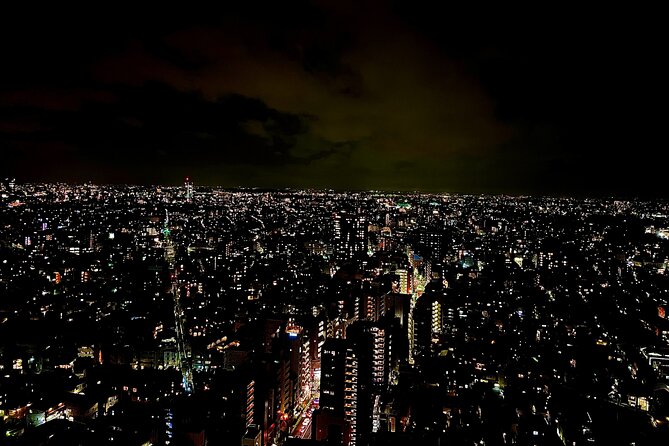
After dinner, you head to Carrot Tower, where the free observation deck gives a panoramic 360-degree night view. You can see city lights in all directions, stretching from the Shibuya area toward Tokyo’s broader skyline.
This stop is more than a view for view’s sake. It’s a smart way to get your bearings mid-night. After eating and walking through alleyways, looking out over the city helps you understand the geography—where things are relative to each other—and makes the neighborhood feel connected rather than random.
And because the deck is free, it keeps the experience feeling accessible even if you’re watching your budget.
Sankaku Chitai: ending in a narrow-alley bar maze
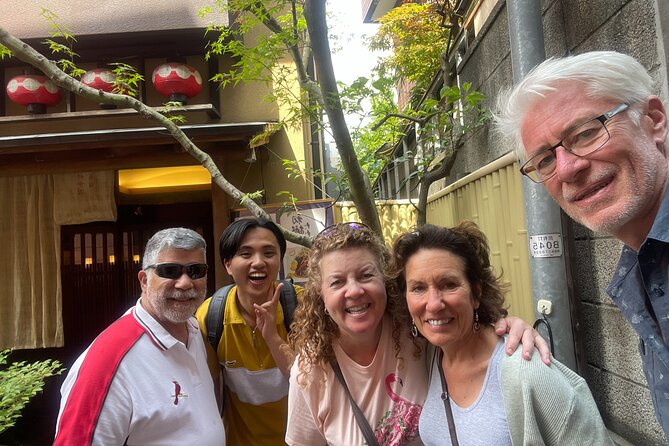
The final stretch lands you in Sangenjaya Sankaku Chitai, sometimes described as the Triangle District. This is an atmospheric maze of narrow alleys filled with tiny bars, neon hints, and that older-school Tokyo vibe where you can almost hear the conversation before you see it.
This ending is a great way to finish because it’s flexible. If you want to continue sampling the neighborhood, the area is set up for that. If you’re ready to slow down, you still get the feeling of stepping into local nightlife without being trapped in the busiest tourist zone.
It also ties the whole walk together: early izakaya comfort, a couple of culture-and-photo stops, a proper dinner, a view that reorients you, and then a classic bar-alley ending.
The guide experience: friendly local context without the lecture
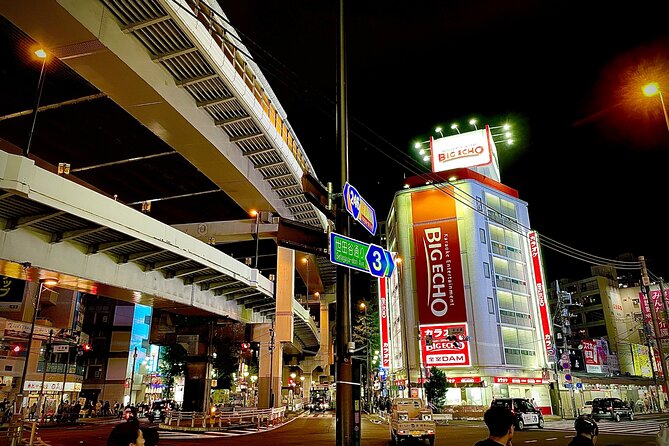
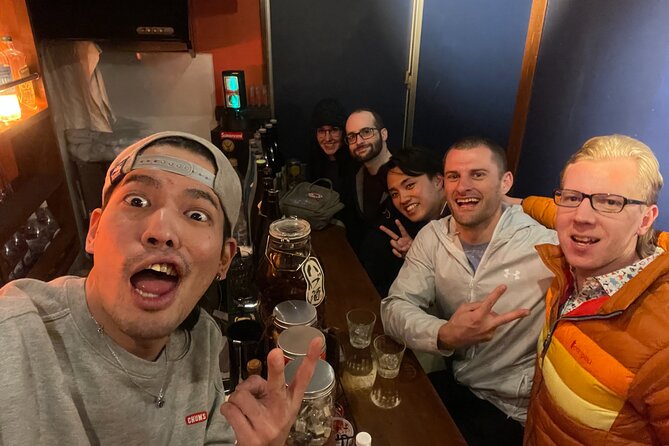
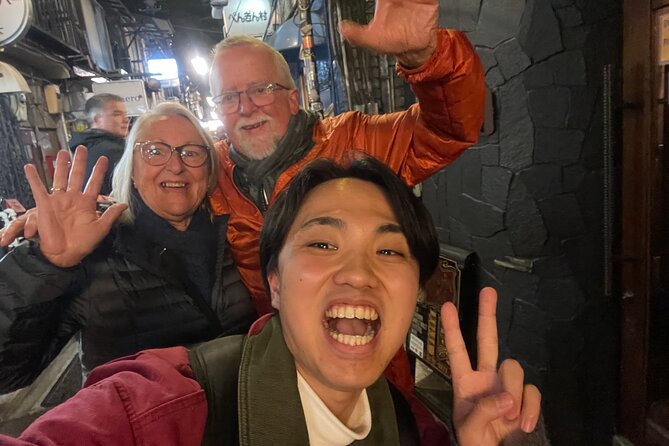
You’ll travel with a professional guide, and the tone is meant to be relaxed, not scripted. In previous experiences, a guide named Hiro has been highlighted for being welcoming, friendly, and easy to talk to while showing the local area in Setagaya.
That matters because the best part of a food walk isn’t the food alone—it’s what you learn while you’re eating. Even small context, like why a place has a certain vibe or what locals order in that moment, makes the dishes feel more personal.
Because the group stays small (max 4 people), it’s also easier to ask quick questions and adjust on the fly—like if you want to take one extra minute for photos at the Gorilla Building.
Price and value: what $123.57 actually buys you
At $123.57 per person for about 4 hours, this isn’t a bargain snack tour. But it’s also not overpriced in the way many “food experiences” can be.
Here’s what you get that supports the price:
- Professional guide
- 2 complimentary drinks (alcohol and non-alcohol options are indicated)
- City walking across multiple neighborhood spots
- A traditional street stall
- An izakaya with an all-you-can-drink plan
- 13 Japanese dishes across 3 eateries
- A visit to Carrot Tower’s free observation deck
- Admission for key stops listed as free (including the Gorilla Building area, shrine, and observation deck)
When you price this out the normal way—guide time plus multiple meals plus drinks—this starts to look like paying for convenience and variety more than paying for single-item experiences.
The fact it’s typically booked about 8 days in advance also suggests there’s real demand for this exact format: small-group, neighborhood-focused, and food-heavy enough to be satisfying.
Who this Sangenjaya walk is perfect for
This is a strong fit if you want:
- A Tokyo food night that covers multiple classic items (karaage, sashimi, grilled fish, edamame, yakitori)
- A less touristy neighborhood feel while still being easy to access from Shibuya
- A guided experience that keeps you moving without rushing you
It’s also a good choice if you like a “mix” evening—some nightlife, a shrine pause, a landmark photo stop, then a skyline view.
Who should think twice
If you hate noise, you might not love the all-you-can-drink dinner setting and the bar-heavy ending in Sankaku Chitai. Also, this isn’t a light strolling tour. It’s built around multiple eateries and 13 dishes, so come hungry and pace yourself.
Should you book this Sangenjaya food and culture walk?
I’d book it if you want a Tokyo evening that feels local fast: lantern-lit izakaya warmth, a real neighborhood landmark with the Gorilla Building, a calm shrine stop, then a proper dinner spread and a skyline view from Carrot Tower.
Skip it if you want a quiet, minimal-food cultural walk or if you’d rather shop and order entirely on your own. This experience is designed to handle choices for you, and it works best when you’re happy to let the plan do the work.
FAQ
How long is the Shibuya to Sangenjaya food and culture walk?
It’s about 4 hours (approx.).
How big is the group?
The tour has a maximum of 4 travelers.
What’s included with the 13 dishes and drinks?
You get 13 Japanese dishes across 3 eateries, a traditional street stall, and an izakaya with an all-you-can-drink plan. You also receive 2 complimentary drinks.
Are non-alcoholic drink options available?
Yes. The included drink choices mention beer, highball, or a non-alcoholic drink, and the dinner all-you-can-drink plan includes a variety of Japanese drinks.
What are the main photo and view stops?
You’ll visit the Sangenjaya Gorilla Building for photos and Carrot Tower for a free observation deck with a panoramic 360-degree night view.
Do you visit a shrine during the tour?
Yes. You can stop at Taishido Hachiman Shrine, with about 15 minutes there.
Where does the tour start and end?
It starts at FRESHNESS BURGER Sangenjaya in the Carrot Tower North building (1F). It ends in Sangenjaya Sankaku Chitai, at a bar about a 2-minute walk from Sangenjaya Station.
Are admission fees required for the stops?
The stops listed (including Suzuran Street, the Gorilla Building, the shrine, and Carrot Tower) indicate admission is free.
More Walking Tours in Tokyo
- Tokyo Tsukiji Fish Market Food and Culture Walking Tour
★ 5.0 · 3,184 reviews - Tokyo: Imperial Palace and Shogun Historical Walking Tour
★ 5.0 · 2,251 reviews - Tokyo: Shinjuku Local Bar and Izakaya Guided Walking Tour
★ 4.9 · 1,794 reviews - Tokyo: Tsukiji Fish Market Food and Walking tour
★ 5.0 · 1,724 reviews - Tokyo: Asakusa Walking Tour with Sensoji Temple Visit
★ 4.8 · 1,583 reviews
More Tour Reviews in Tokyo
- Mt Fuji and Hakone 1-Day Bus Tour Return by Bullet Train
★ 5.0 · 26,383 reviews - 1-Day Tokyo Bus Tour
★ 5.0 · 14,250 reviews - Tokyo: teamLab Planets TOKYO Digital Art Museum Entry Ticket
★ 4.6 · 9,779 reviews - Mt Fuji & Hakone Cruise, Drum Show Bullet Train 1 Day from Tokyo
★ 4.0 · 7,413 reviews - Tokyo: Shinjuku Food Tour (13 Dishes at 4 Local Eateries)
★ 5.0 · 6,603 reviews
More Around Shibuya Crossing
- Official Street Go-Kart in Shibuya
★ 5.0 · 3,435 reviews - Tokyo: Street Kart Experience in Shibuya
★ 4.9 · 1,484 reviews - Shibuya Meltdown Nightlife Tour: All-You-Can-Drink Bar Hopping
★ 5.0 · 1,058 reviews - Shibuya Official Street Go-Kart in Shibuya Annex
★ 5.0 · 972 reviews - Tokyo: Shibuya Food Tour (13 dishes and 4 Eateries)
★ 5.0 · 770 reviews
Latest Tokyo reviews off our desk






Shibuya Experiences, compared.
 ★ 5.0Official Street Go-Kart in ShibuyaFrom $763,435 reviews
 ★ 4.9Street Kart Experience in ShibuyaFrom $741,484 reviews
 ★ 5.0Shibuya Meltdown Nightlife Tour: All-You-Can-Drink Bar HoppingFrom $1061,058 reviews
 ★ 5.0Shibuya Official Street Go-Kart in Shibuya AnnexFrom $69972 reviews
 ★ 5.0Shibuya Food Tour (13 dishes and 4 Eateries)From $77770 reviews
 ★ 5.0Best of Shibuya Food TourFrom $217612 reviews
 ★ 4.8Shibuya Highlights Walking TourFrom $19601 reviews
 ★ 4.7Premium Go-Kart Tour with Tower & Shibuya CrossingFrom $116528 reviews
Browse the lists this tour appears in