
Reviewed · CYCLING TOURS
Tokyo: 2-Hour Night E-Bike Tour of the City’s Hidden Gems
Tokyo at night is made for wheels. This 2-hour e-bike tour takes you past the big name sights and also into calmer, less-obvious corners with a guide talking you through what you’re seeing. I especially like that you don’t have to hunt for a rental bike, and that you get a real guide with commentary (English and Japanese) instead of just following a map. The one thing to keep in mind: it’s built for moderate physical fitness, so you’ll want to be comfortable staying in motion for the full ride time.
What also makes this feel like value is the setup: a bike, insurance, a mini pouch for your phone/wallet/keys, and even a raincoat on rainy days. You’ll finish back at Tokyo Station, which is a handy landing spot if you want a smooth train ride to your hotel. My only caution is simple: it runs only in good weather, so plan a backup day if forecasts look messy.
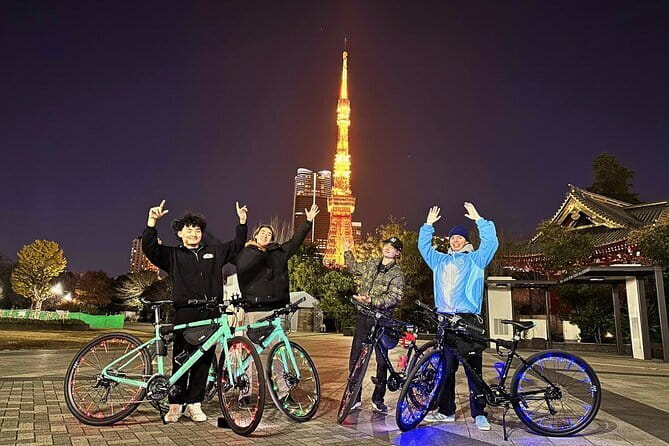
The route stacks together classic Tokyo drama—Shibuya Crossing and Tokyo Tower—with places that add texture, like Aoyama Cemetery and Zojo-ji. In the reviews, the standout is the guide, Kei (often called K): people praised how fun, friendly, and accommodating he was, and how much context he shared along the way.
In This Review
- Key highlights worth planning for
- Two hours of Tokyo night life, minus the sore feet
- Meeting at the Bell of Peace (and getting comfortable fast)
- The guide is the secret sauce (Kei makes it click)
- Yoyogi Park to Shibuya Crossing: from green calm to neon energy
- Harajuku’s fashion lanes and Japan’s stadium atmosphere
- Aoyama Cemetery and Roppongi Hills: quiet respect meets luxury streets
- The Tokyo Tower moment: postwar symbolism in steel and light
- Zojo-ji and the Imperial Palace edge: history you can feel
- Finishing at Tokyo Station: a smart end point for your night plans
- Price and value: what $147.80 buys you in real terms
- Who should book this night e-bike ride
- Should you book? My take
- FAQ
- FAQ
- What is the duration of the Tokyo night e-bike tour?
- How much does the tour cost?
- What time does the tour start?
- Where does the tour start and end?
- Do I need to bring a bike?
- What’s included with the bike ride besides the bicycle?
- Is food or drink included?
- Is the tour private?
- What fitness level do I need?
- What happens if the weather is bad?
- How does cancellation work?
Key highlights worth planning for
- E-bike + guided pacing: you cover more ground without feeling like you’re racing your legs
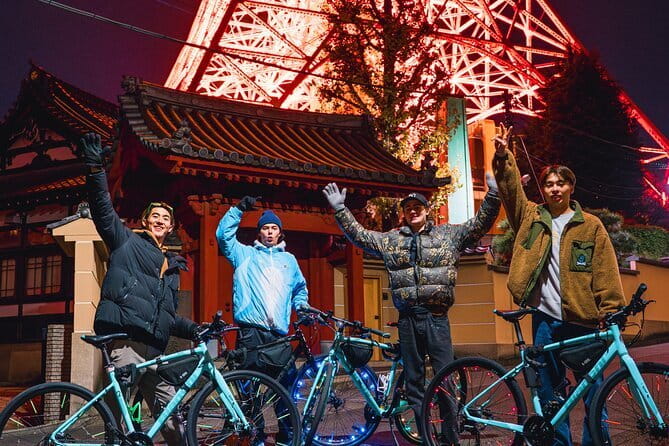
- Bike gear included: insurance, a mini pouch, and a raincoat on rainy days
- Private tour for your group: it stays personal rather than turning into a cattle-car sightseeing march
- Night-route staples: Shibuya Crossing, Harajuku, Japan National Stadium, and Tokyo Tower
- Stops with atmosphere: Aoyama Cemetery and Zojo-ji add quiet weight to the evening
- Easy finish at Tokyo Station: simple transit connection after the ride
Two hours of Tokyo night life, minus the sore feet
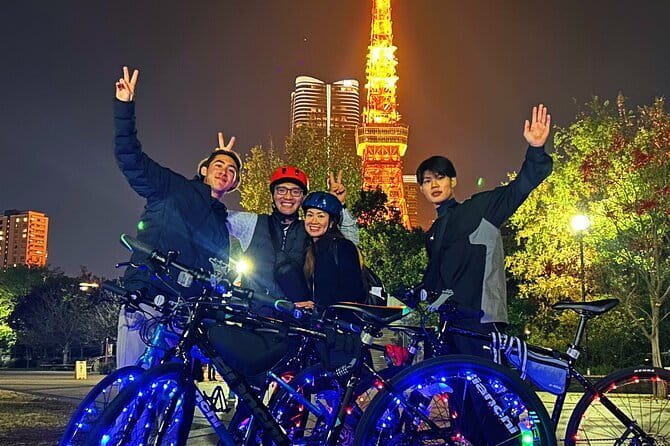
Tokyo after dark can feel like two different cities. There’s the neon-and-people energy of central neighborhoods, and then there’s the quieter Tokyo that shows up when you drift a few blocks away from the main streams.
This tour hits both, and the e-bike matters. You’re still moving under your own power, but the assist keeps the ride friendly—especially when you hit longer stretches between stops or deal with minor hills. You’re not stopping every five minutes for photos; instead, you get short viewpoint moments, plus enough time to take in what’s around you.
The timing is also smart. You start at 6:00 pm, when day crowds shift and lights begin doing their work. That’s when places like Shibuya feel cinematic. And even big landmarks don’t have to become a slog, because you’re arriving fresh instead of walking there already tired.
Readers also shortlisted these Tokyo bookings:
- Tokyo Guided Small-Group Biking Tour
★ 5.0 · 1,250 reviews - Tokyo Great Cycling Tour
★ 5.0 · 811 reviews - Tokyo Top Highlights 3h Guided E-bike Tour
★ 5.0 · 714 reviews - 3h Tokyo E-Bike Tour: Hidden Gems, and Local Life with guide
★ 5.0 · 670 reviews
Meeting at the Bell of Peace (and getting comfortable fast)
Your day begins at the Bell of Peace in Udagawacho, Shibuya. It’s a straightforward starting point in a neighborhood you’ll likely want to explore anyway, so you’re not transferring across the whole city just to start your ride.
From the start, the tour handles the logistics that usually slow people down in Tokyo: bike rental is included, and you get a mini pouch on the bike for practical stuff like phone, wallet, and keys. That means less fumbling, less time worrying about where to put items, and more time actually looking at the city.
Rain gear is also included—specifically a raincoat on rainy days—which helps you avoid the classic Tokyo problem: you plan for clear weather, then the sky changes and suddenly sightseeing turns into a soggy scramble. That said, the experience still requires good weather, so it’s not a “ride no matter what” situation.
One more detail I appreciate: bike insurance is included. It’s the kind of behind-the-scenes peace of mind you don’t notice until you really need it.
The guide is the secret sauce (Kei makes it click)
On a city bike tour, the route is only half the story. The other half is what you learn while moving through it.
This tour is led by an in-person guide with English and Japanese, and the reviews consistently point to Kei (also written as K) as the reason the experience feels personal. People said he was fun, accommodating, and very knowledgeable about Tokyo—plus he recommended things for people to do during the rest of their stay.
That matters for night riding because it’s easy to see Tokyo as a collection of famous stops. A good guide turns those stops into a story: why certain streets feel the way they do, what to notice in the skyline, and how the different neighborhoods connect.
If you’ve ever tried to “DIY” Tokyo after dark and felt like you were just chasing light and crowds, this kind of guided context is what you’re buying.
Yoyogi Park to Shibuya Crossing: from green calm to neon energy
You’ll spend time around Yoyogi Park first, close to Harajuku Station. Yoyogi gives you a reset. It’s a breather before the intensity of Shibuya—so you can shift from daytime Tokyo instincts to evening Tokyo awareness.
Then the tour swings toward Shibuya Crossing, one of the world’s best-known intersections. On foot, it’s a crush. On a bike with a guide, it’s still busy, but you get a more natural way to watch how the crossing works from different angles. You’ll get that famous “everyone moves at once” feeling, and you’ll also be able to notice the street layout around it instead of being stuck inside one crowded sidewalk pocket.
A practical tip: night photography in Shibuya can be tricky because of motion and light. If you want clean shots, take them during the short pause moments and let the ride itself do the rest. You’ll see more that way.
Harajuku’s fashion lanes and Japan’s stadium atmosphere
Next up is Harajuku, known for its mix of high-end fashion boutiques and vintage shops. The vibe is playful and a little chaotic in a good way, and a bike ride helps you absorb the area’s rhythm without walking block by block.
From there, you visit Japan National Stadium, associated with the Olympic Games Tokyo 2020 (the itinerary notes the 2020 Olympics connection). Even if you don’t care much about sports, stadiums in Tokyo carry a different kind of meaning. They feel built for big moments—concerts, events, and crowds that gather with purpose.
Short stop time is a feature here, not a bug. Two hours goes fast, and the tradeoff of a compact route is that you see more neighborhoods rather than lingering too long in just one.
If you’re the type who wants to read signage slowly and take a thousand photos, a two-hour format might feel tight. But if you want the city’s “greatest hits” plus a few calmer side stops, it’s a strong match.
Readers also shortlisted these Tokyo bookings:
- Tokyo: Private City Highlights Tour with Local Guide★ 4.8 · 1,433 reviews
- Tokyo: Asakusa, Skytree & Akhihabara Go-Kart City Experience★ 4.7 · 761 reviews
- Tokyo: 3-Hour Bike or E-Bike City Highlights Tour★ 4.8 · 435 reviews
- Tokyo: Sumo Morning Practice Tour at Sumida City★ 4.8 · 308 reviews
- Private Haneda Airport (HND) to Central Tokyo City Transfer★ 4.5 · 260 reviews
Aoyama Cemetery and Roppongi Hills: quiet respect meets luxury streets
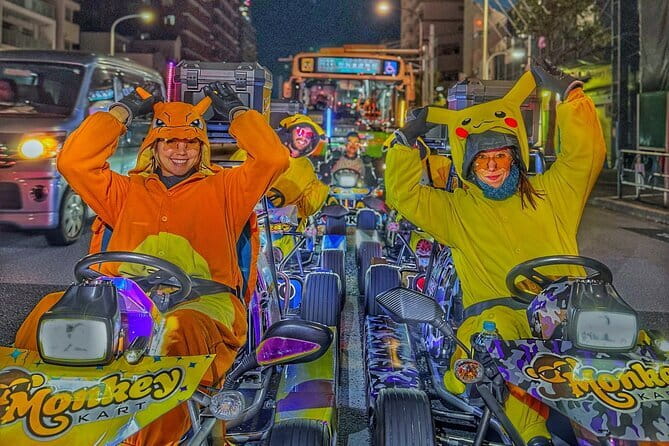
One of the more interesting turns on this ride is Aoyama Cemetery. Cemeteries aren’t what most people expect on a night e-bike tour, but that’s exactly why it works. It adds a different mood to the evening—more reflective, less performance.
Then the route moves to Roppongi Hills Shops & Restaurants. This area feels upscale and polished, with world-class art museums and high-end dining and shopping mentioned as part of the experience. It’s a sharp contrast from Shibuya’s street-level chaos and Harajuku’s style lanes.
That mix is the point. Tokyo isn’t one thing. In a short ride, you’ll see how the city can shift tone from one neighborhood to the next—sometimes within a few turns of the wheel.
The Tokyo Tower moment: postwar symbolism in steel and light
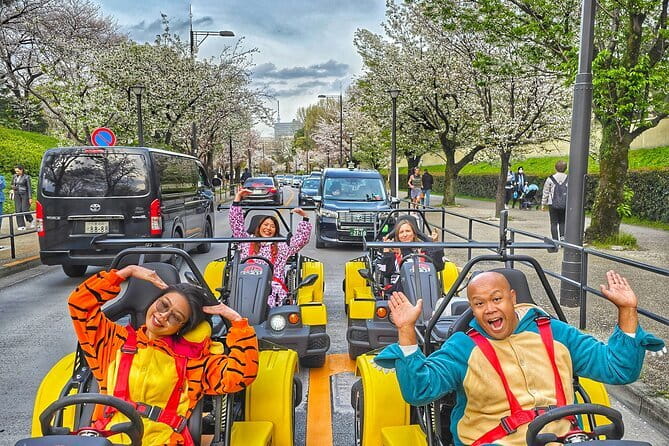
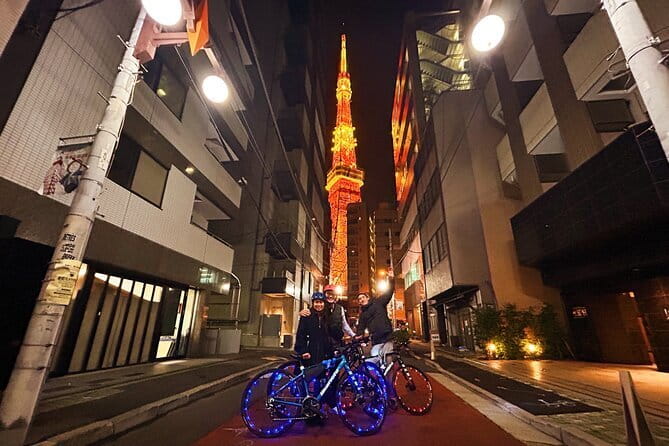
Your tour includes a stop for a closer view of Tokyo Tower, described as Japan’s post-war rebirth symbol and noted as being taller than its famous Eiffel Tower model by about three meters. This is one of those landmarks that looks great from afar, but hits harder up close because you can understand its scale in a real street context.
Tokyo Tower also looks especially good at night, when lighting does the heavy lifting. Standing near it (even briefly) gives you a chance to appreciate why it became so iconic—this isn’t just a tower, it’s part of Tokyo’s skyline identity.
Zojo-ji and the Imperial Palace edge: history you can feel
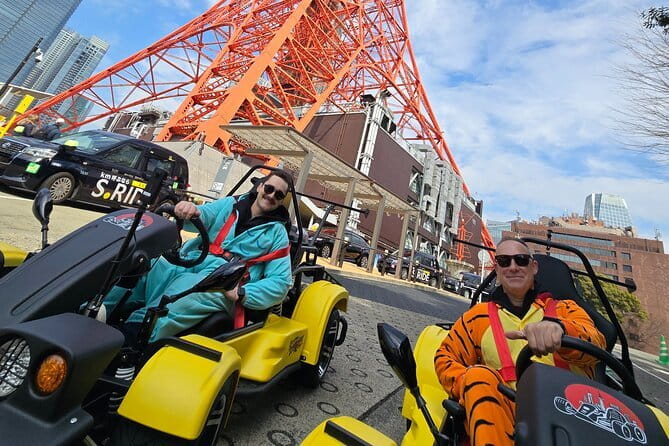
After Tokyo Tower, you head to Zojo-ji, a religious center and resting place for warlords, with huge historical importance mentioned in the tour details. Zojo-ji is also directly tied to the Tokyo Tower experience because the two are close enough to frame each other in your evening route.
Then you cycle along the Imperial Palace, where the Japanese emperor resides. You don’t need to be a politics buff to understand what this area means. It feels formal and restrained compared to the commercial intensity around it.
This portion of the ride is where the tour earns its “hidden” reputation—less because of secret spots, more because you get contrast. You’re not just chasing landmarks; you’re moving through Tokyo’s layers: modern power, religious tradition, and civic presence.
Finishing at Tokyo Station: a smart end point for your night plans
The tour ends at Tokyo Station in Marunouchi. That’s a practical finish line: Tokyo Station is one of the easiest places in the city to connect to trains heading to most areas.
It also makes timing easier. You can plan your next meal or your hotel ride without worrying about being stranded in the middle of nowhere. And because the tour is about 2 hours total (including travel time between stops), you’re usually still able to keep your evening going afterward.
If your goal is a full Tokyo night without turning it into a long commute day, ending here is a win.
Price and value: what $147.80 buys you in real terms
At $147.80 per person, this isn’t the cheapest way to see Tokyo. But it’s not just “paying for sights.” You’re paying for convenience and time.
Here’s what you’re getting that directly saves you work:
- Bike provided, not rented by you (and included equipment makes it smoother)
- Raincoat on rainy days, so weather surprises hurt less
- Bike insurance
- Guide with commentary in English and Japanese
- A route that hits multiple major areas in a compact window
Also, it’s marked as a private tour, meaning it’s only your group participating. That tends to matter more in Tokyo than in smaller cities. In crowded areas, group size affects comfort quickly, and private format usually keeps the pace sane.
One more value clue: it’s often booked about 43 days in advance, which suggests it’s popular enough to plan ahead for. If you want a specific night, earlier booking is your best friend.
In short: you’re paying for a guided, guided-by-experience kind of evening. If you already plan to do a lot of walking and you’re comfortable renting your own bike and building your own route, you might not need it. But if you want a clean, structured night with less friction, the price can make sense.
Who should book this night e-bike ride
This tour fits best if you want:
- A guided night route that covers several famous areas in a short window
- A bike-friendly way to see Tokyo without turning the evening into a walking contest
- A guide you can ask questions to during the ride (the reviews highlight Kei’s helpful recommendations)
- A balance of major landmarks and quieter stops like Aoyama Cemetery and Zojo-ji
It might be less ideal if:
- You have limited comfort staying seated and moving for the full duration
- You need long stops for deep museum-style exploring (this is more “ride and look” than “wander for hours”)
- Weather is unpredictable for the day you’re trying to go (the experience needs good weather)
Should you book? My take
I’d recommend this tour if your priority is a high-efficiency Tokyo evening with real guidance and a route that mixes modern icons with reflective stops. The standout from the reviews is the guide—Kei making it fun, memorable, and easy to enjoy even if you’re not usually the most active.
Book it if you want to start at Shibuya, see Shibuya Crossing and Harajuku, get the Tokyo Tower moment, and still end your night conveniently at Tokyo Station. If that matches your trip style, you’ll likely feel like you got your money’s worth.
FAQ
FAQ
What is the duration of the Tokyo night e-bike tour?
It runs for about 2 hours. The total duration includes travel time between stops.
How much does the tour cost?
The price is $147.80 per person.
What time does the tour start?
The start time is 6:00 pm.
Where does the tour start and end?
The tour starts at the Bell of Peace in Udagawacho, Shibuya, Tokyo, and ends at Tokyo Station in Marunouchi, Chiyoda City.
Do I need to bring a bike?
No. Bike use is included, so you don’t need to source a rental.
What’s included with the bike ride besides the bicycle?
Included items are a raincoat (on rainy days), bike insurance, a mini pouch for essentials, and an in-person guide (English and Japanese).
Is food or drink included?
No. Food and drink are not included.
Is the tour private?
Yes. It’s listed as a private tour/activity, and only your group participates.
What fitness level do I need?
The tour advises a moderate physical fitness level.
What happens if the weather is bad?
The experience requires good weather. If it’s canceled due to poor weather, you’ll be offered a different date or a full refund.
How does cancellation work?
You can cancel for free up to 24 hours in advance for a full refund. If you cancel less than 24 hours before the start time, the amount paid is not refunded.
More Cycling Tours in Tokyo
- Tokyo Guided Small-Group Biking Tour
★ 5.0 · 1,250 reviews - Tokyo Great Cycling Tour
★ 5.0 · 811 reviews - Tokyo Top Highlights 3h Guided E-bike Tour
★ 5.0 · 714 reviews - 3h Tokyo E-Bike Tour: Hidden Gems, and Local Life with guide
★ 5.0 · 670 reviews - Tokyo: 3-Hour Bike or E-Bike City Highlights Tour
★ 4.8 · 435 reviews
More Tours in Tokyo
- Mt Fuji and Hakone 1-Day Bus Tour Return by Bullet Train
★ 5.0 · 26,383 reviews - 1-Day Tokyo Bus Tour
★ 5.0 · 14,250 reviews - Tokyo: Shinjuku Food Tour (13 Dishes at 4 Local Eateries)
★ 5.0 · 6,603 reviews - Tokyo Mt Fuji 5th St & Hakone Cruise Bus Tour w/Bullet Train
★ 4.4 · 5,024 reviews - Flagship 2-Hours Official Street Go-Kart Tour – Tokyo Bay Shop
★ 5.0 · 4,974 reviews
More Tour Reviews in Tokyo
- Mt Fuji and Hakone 1-Day Bus Tour Return by Bullet Train
★ 5.0 · 26,383 reviews - 1-Day Tokyo Bus Tour
★ 5.0 · 14,250 reviews - Tokyo: teamLab Planets TOKYO Digital Art Museum Entry Ticket
★ 4.6 · 9,779 reviews - Mt Fuji & Hakone Cruise, Drum Show Bullet Train 1 Day from Tokyo
★ 4.0 · 7,413 reviews - Tokyo: Shinjuku Food Tour (13 Dishes at 4 Local Eateries)
★ 5.0 · 6,603 reviews
Latest Tokyo reviews off our desk






Cycling Tours, compared.
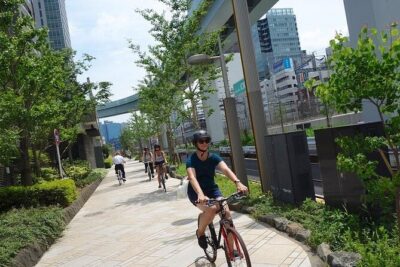 ★ 5.0Tokyo Guided Small-Group Biking TourFrom $1061,250 reviews
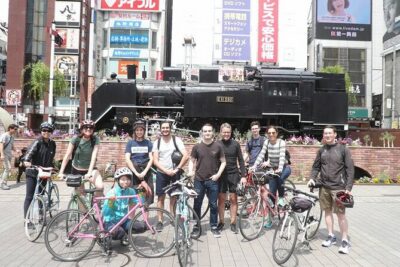 ★ 5.0Tokyo Great Cycling TourFrom $99811 reviews
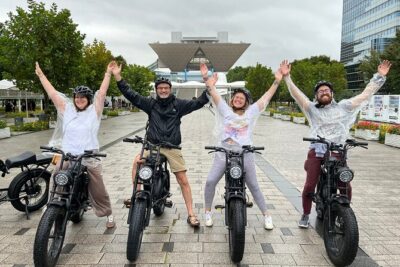 ★ 5.0Tokyo Top Highlights 3h Guided E-bike TourFrom $63714 reviews
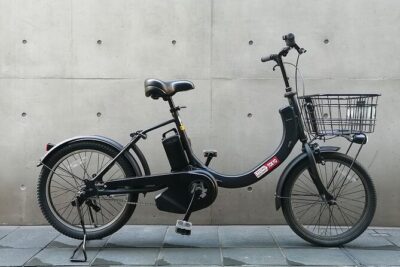 ★ 5.03h Tokyo E-Bike Tour: Hidden Gems, and Local Life with guideFrom $63670 reviews
 ★ 4.83-Hour Bike or E-Bike City Highlights TourFrom $45435 reviews
 ★ 4.83-hour Guided E-Bike Tour of the City’s Hidden GemsFrom $65251 reviews
 ★ 5.0Tokyo West-Side Cycling & Food TourFrom $99214 reviews
 ★ 5.03-Hour Bike/E-Bike Tour of the City’s HighlightsFrom $63209 reviews
Browse the lists this tour appears in