
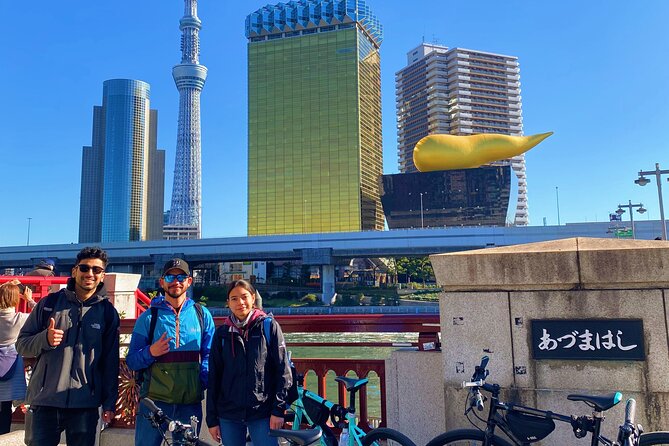
Reviewed · CYCLING TOURS
Tokyo 3 Hour E Bike Tour of the City Bayside Areas
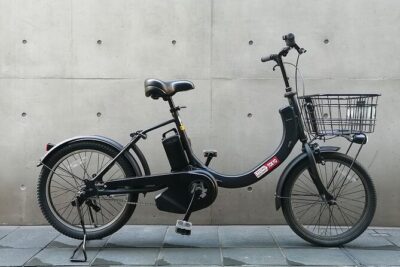
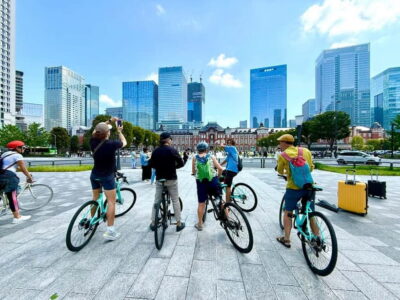
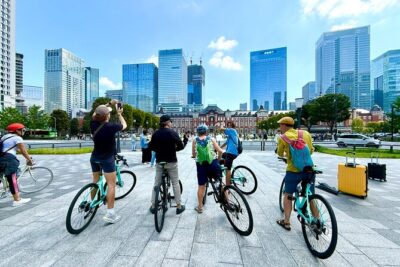
Tokyo by e-bike feels like cheating a little. You get famous sights plus day-to-day streets in just 3 hours, with electric bike support and an English-speaking guide (often Sho or Nao). The stops are short but well-chosen, so you spend more time moving through real neighborhoods and less time figuring out train transfers.
Two things I really like: first, the mix of landmarks and local texture—from Ginza and Kabuki-za down to shrines and garden calm. Second, the ride pacing works even if you are not a super cyclist; you still get viewpoints and streetscapes, while the guide handles route and safety. One thing to consider: there is an optional cash-only entrance fee (¥1000) for Fukagawa Fudodo, and food isn’t included, so you may want a small plan for snacks.
In This Review
- Key highlights you’ll actually feel during the ride
- Tokyo by e-bike in 3 hours: why this format works
- Meeting near Hibiyakōen and getting comfortable fast on the bike
- From Ginza to Kabuki-za: luxury streets and Japan’s theater world
- Tsukiji Hongwanji Temple and the Tsukiji Fish Market snack break
- Tsukishima Monja Street and Sumiyoshi Jinja for a more local Tokyo
- Kiyosumi Gardens: the walk that makes the whole ride feel worth it
- Fukagawa Fudodo end point: optional entry and the ¥1000 cash detail
- Price of $87.96: what you’re really buying
- Should you book this Tokyo E-bike bayside tour?
- FAQ
- How long is the Tokyo 3 Hour E Bike Tour of the City Bayside Areas?
- What’s included in the tour price?
- Is the Fukagawa Fudodo temple entrance included?
- Where do I meet and where does the tour end?
- What fitness level do I need?
- What is the cancellation policy?
Key highlights you’ll actually feel during the ride
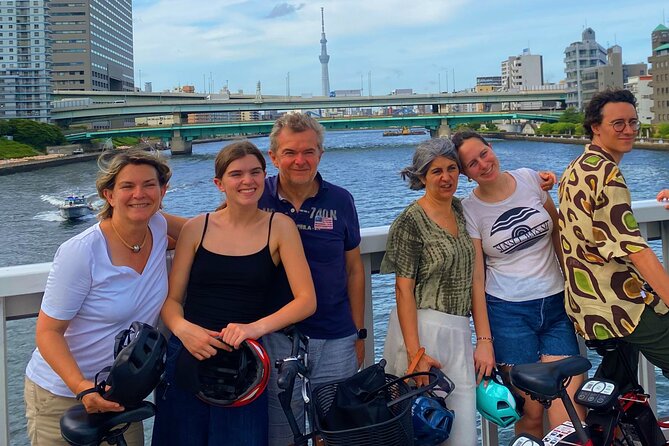
- Small group size (max 7) keeps it easier to navigate busy streets and to ask questions.
- Electric bikes make the route manageable without turning the day into a workout test.
- Ginza + Kabuki-za give you big Tokyo energy early, before you slide into calmer areas.
- Tsukiji snack stop breaks up the riding with time to grab food and watch the market vibe.
- Kiyosumi Gardens walking time is long enough (25 minutes) to feel like a real break.
- Fukagawa Fudodo is optional and you can choose whether to pay the ¥1000 cash entrance.
Tokyo by e-bike in 3 hours: why this format works
Tokyo can be a lot when you’re doing it by train and foot: one station change becomes two, and suddenly you’re exhausted before you see the good stuff. This tour is built for momentum. You start in the Hibiyakōen area, ride through key bayside districts, and end at Fukagawa Fudō-dō. The whole thing is timed around short stops—enough time to orient and take photos—without turning your day into a schedule you resent.
You’ll like that the route connects very different sides of Tokyo. You start with glamour, then shift into heritage, then into temple and market territory, then into quieter streets and a garden pause. That mix is what makes it fun: you’re not repeating the same “look, another temple” pattern, and you’re not stuck in one commercial zone either.
Also, the tour length matters for your decision-making. At about 3 hours, you can still eat a proper meal after. If you’re on a tight itinerary, this is one of the smoother ways to see multiple neighborhoods without burning your whole day in transit.
Readers also shortlisted these Tokyo bookings:
- Tokyo Guided Small-Group Biking Tour
★ 5.0 · 1,250 reviews - Tokyo Great Cycling Tour
★ 5.0 · 811 reviews - Tokyo Top Highlights 3h Guided E-bike Tour
★ 5.0 · 714 reviews - 3h Tokyo E-Bike Tour: Hidden Gems, and Local Life with guide
★ 5.0 · 670 reviews
Meeting near Hibiyakōen and getting comfortable fast on the bike
The meeting point is in the Hibiyakōen area: 1-3 Hibiyakōen, Chiyoda City, Tokyo 100-0012. It’s also described as near public transportation, which is good because Tokyo mornings can be chaotic. Your day starts with a setup phase and then you’re off—short rides between stops mean you get used to the electric bike pretty quickly.
This is where having a guide like Sho or Nao can really matter. In the reviews, guests highlight that the guides keep things moving and keep the riding safe through busier streets. That’s not just comfort—it’s practical. When you’re on an electric bike, you still need confidence around traffic, crossings, and tight lanes. A small group of up to 7 helps the guide manage pace and spacing.
Bring your basic common sense. Wear shoes you’re okay walking in at temples and markets. If you have moderate fitness, you’re fine—this is not described as an extreme ride. The goal is sightseeing, not training for a race.
From Ginza to Kabuki-za: luxury streets and Japan’s theater world
Ginza is the first stop, and it sets the tone. Even for first-timers, Ginza reads as “Tokyo in high definition”—clean streets, big storefront energy, and the kind of polished city vibe that photos love. Your time here is short (10 minutes), so think of it as orientation. You’re not trying to shop for an hour. You’re getting the feel of the district and seeing how the city transitions from old-meets-new Tokyo into modern showpiece Japan.
Next comes Kabuki-za, one of the city’s most famous venues for classical Japanese theatre. Again, your stop is brief (10 minutes), but it’s a strong moment because you’re standing near a landmark that feels deeply tied to Japanese performing arts. The tour keeps you from lingering too long, which is helpful because you still have temples and the market ahead.
The practical catch: because these early stops are fast, don’t expect long explanations or full museum-style time here. If you want a deeper theatre or architecture study, you might follow up later on your own. But as a first taste of Tokyo’s big-name culture, this timing works.
Tsukiji Hongwanji Temple and the Tsukiji Fish Market snack break
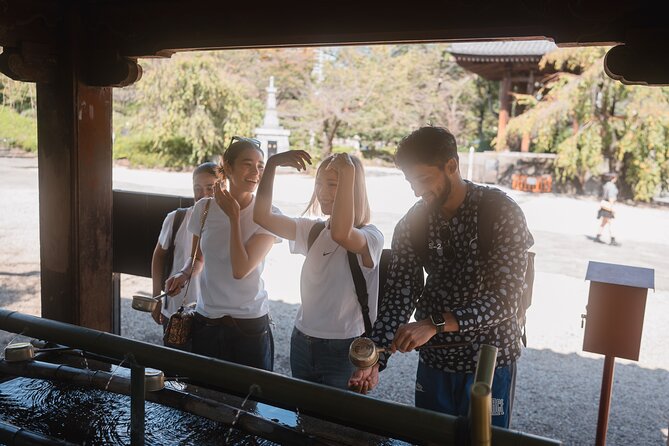
After Ginza and Kabuki-za, the tour shifts to Tsukiji territory. You first visit the Tsukiji Hongwanji Temple (15 minutes). A temple stop like this does two things: it cools down the day after the city glamour, and it gives you a more respectful, quieter lens on the neighborhood. You get time to walk, look around, and reset your senses before heading into the market zone.
Then comes the Tsukiji Fish Market area (20 minutes). You’re there to walk around and have a quick snack break. This part is practical and fun because the market environment is made for wandering—especially when you’re on a bike with a guide who can keep you pointed in the right direction.
Food isn’t included, but the tour timing gives you a chance to buy something you actually want. In reviews, guests specifically mention snacking and even grabbing sashimi. That makes sense here: you’re getting a taste of Tsukiji without needing to plan a full food hunt.
The possible drawback? Tsukiji can be busy, and your market time is limited. If you’re the type who loves to stop at every stall and read every menu, you may feel a bit rushed. But if you want a quick hit of market atmosphere and a guided path, this works well.
Tsukishima Monja Street and Sumiyoshi Jinja for a more local Tokyo
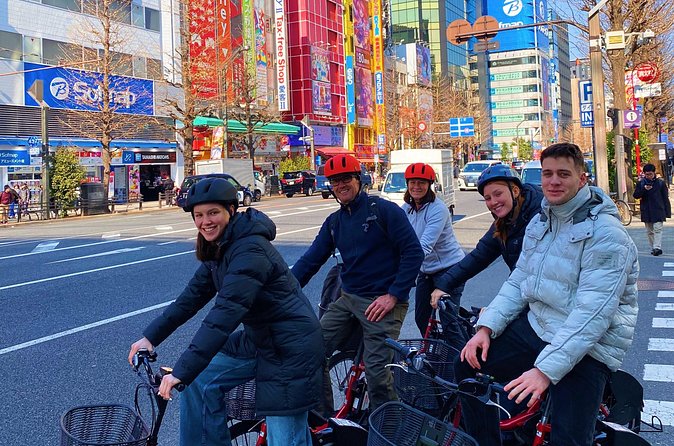
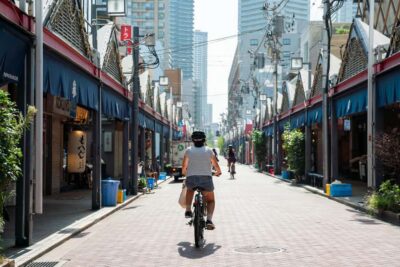
Once you leave Tsukiji, the route moves into areas that feel more like lived-in Tokyo. Tsukishima Monja Street is next (10 minutes). It’s traditional street energy, and you’ll get the sense of how people eat and socialize in this part of the city—especially because the stop is short enough to keep you moving while still giving you the vibe.
Then you visit Sumiyoshi Jinja (10 minutes). A local shrine stop is a nice contrast to the more commercial parts of the route. Instead of more shopping-window sightseeing, you’re taking in a place that’s used by locals. Even if you’re not a hardcore shrine person, it helps break up the day and gives you a moment that feels like Tokyo as residents experience it, not only as tourists photograph it.
One thing I like about this portion of the tour is the rhythm. You’re not stuck in a single “type” of neighborhood. You go street-food style, then to a shrine, then onward to gardens. That keeps the day from feeling repetitive.
Readers also shortlisted these Tokyo bookings:
- Tokyo: Private City Highlights Tour with Local Guide★ 4.8 · 1,433 reviews
- Tokyo: Asakusa, Skytree & Akhihabara Go-Kart City Experience★ 4.7 · 761 reviews
- Tokyo: 3-Hour Bike or E-Bike City Highlights Tour★ 4.8 · 435 reviews
- Tokyo: Sumo Morning Practice Tour at Sumida City★ 4.8 · 308 reviews
- Private Haneda Airport (HND) to Central Tokyo City Transfer★ 4.5 · 260 reviews
Kiyosumi Gardens: the walk that makes the whole ride feel worth it
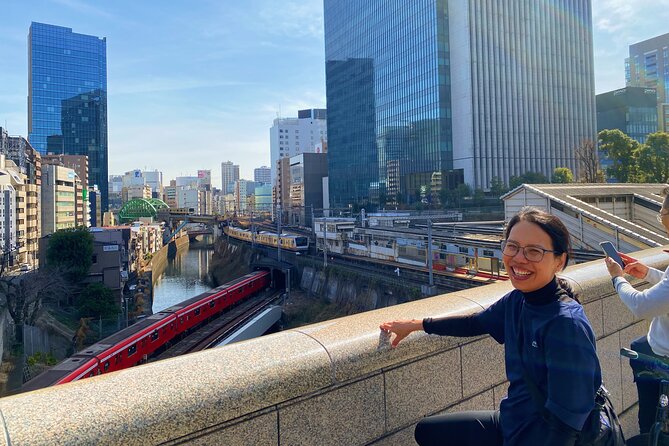
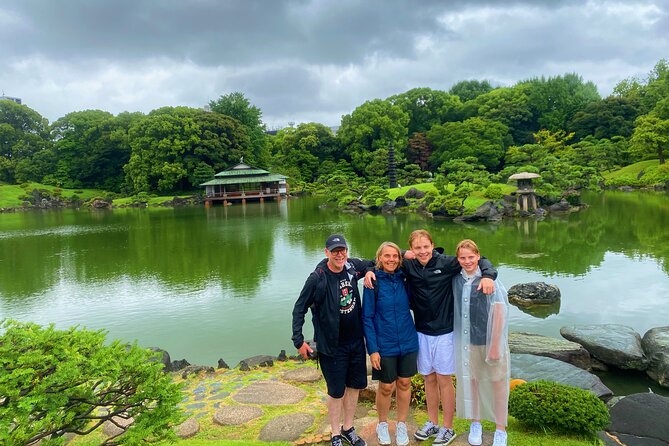
Kiyosumi Gardens is the big calm stop, with 25 minutes on foot. This is also where the tour includes the entrance fee, so you don’t have to do extra calculations or scramble for payment. Gardens are a smart inclusion after an active riding segment because they let your brain rest. You’re moving less, noticing more, and letting the city noise fade.
What I’d watch for here is your timing. Because the riding portions are scheduled tightly, you’ll want to use your garden minutes well: take a slow walk, find a good spot to pause, and don’t burn the whole time only taking photos at one angle. Gardens are often best when you let the paths guide you instead of hunting for one perfect viewpoint.
In the end, Kiyosumi Gardens is the stop that turns the tour from a “ride-by highlights” experience into something more balanced. You leave with a Tokyo contrast: high-profile sights plus a quieter, more reflective pocket of the city.
Fukagawa Fudodo end point: optional entry and the ¥1000 cash detail
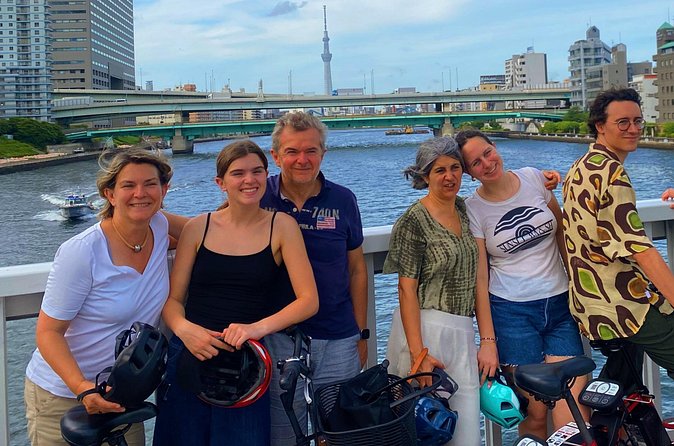
The last major stop is Naritasan Fukagawa Fudodo Honden, but the important detail is that entry is optional. You have about 20 minutes here, and the entrance fee is ¥1000 in cash only. If you decide not to go in, that’s totally fine—the tour ends at this location anyway.
This is one of those “know before you go” moments. If you’re budgeting, the base tour price is $87.96 per person, but you should be ready for this small extra cost if you want the inside experience. And because it’s cash-only, it’s worth carrying some yen.
Also, because the tour ends at Fukagawa Fudō-dō (1-chōme-17-13 Tomioka, Koto City), this is a good final stop for planning your next meal. It puts you in the right area to continue exploring on foot or transit without backtracking across town.
Price of $87.96: what you’re really buying
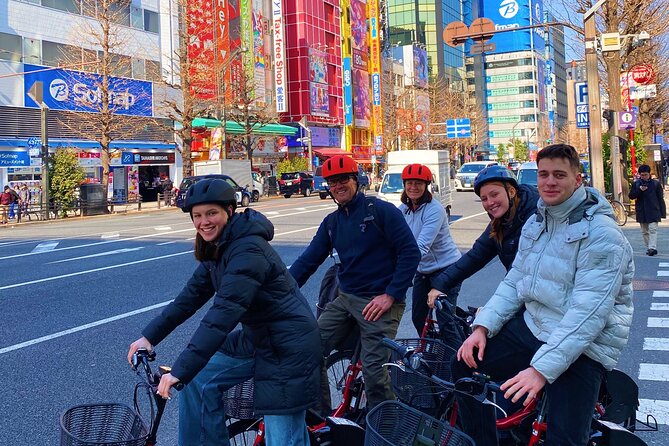
$87.96 for a 3-hour guided electric bike tour is not a bargain in the “cheap and cheerful” sense. But it can be strong value if you add up what you’re getting: guided route planning, a small group (max 7), English speaking guidance, and use of an electric bike. On top of that, Kiyosumi Gardens entrance is included, so you aren’t paying for every stop as you go.
Think of what this format replaces. It replaces the time you’d spend stitching together multiple neighborhoods by transit, plus the mental load of finding the right streets for a safe, sensible loop. When you’re trying to see Ginza, Tsukiji, shrines, and gardens without losing a full day to logistics, a guided e-bike day can be a smart use of vacation time.
Where the money can feel less “worth it” is food and extra entry. Food isn’t included, and you may pay the optional ¥1000 cash entrance fee for Fukagawa Fudodo. If you go in with a clear snack plan and you decide in advance whether you want the optional temple entry, you’ll feel better about the total spend.
Overall, if you want Tokyo sights plus neighborhoods that most people skip, and you want it done with less walking fatigue, this price can make sense.
Should you book this Tokyo E-bike bayside tour?
Book it if you like structure, small groups, and a fast way to see multiple districts without burning your energy on transit. This is especially good if you want a mix of iconic landmarks (Ginza, Kabuki-za) and places that feel more local (Tsukishima Monja Street, Sumiyoshi Jinja, and the garden walk at Kiyosumi Gardens). The ride quality and safety seem to be a strong point, with guides like Sho and Nao keeping things friendly and moving.
Skip or adjust your expectations if you hate tight time windows. Most stops are around 10 minutes, and the market time is designed for a quick snack, not a deep food quest. If you’re the type who wants hours at a single site, you’ll probably want to pair this with other unhurried sightseeing.
If you want a day that feels efficient but not soulless, this one is a solid bet.
FAQ
How long is the Tokyo 3 Hour E Bike Tour of the City Bayside Areas?
The tour is about 3 hours.
What’s included in the tour price?
You get use of an electric bicycle, an English-speaking guide, and the entrance fee for Kiyosumi Gardens.
Is the Fukagawa Fudodo temple entrance included?
The temple entrance is optional. If you choose to enter, there is an entrance fee of ¥1000 paid in cash only. If you don’t enter, the tour still ends at the same location.
Where do I meet and where does the tour end?
You start at 1-3 Hibiyakōen, Chiyoda City, Tokyo 100-0012, Japan. The tour ends at Fukagawa Fudou-dō, 1-chōme-17-13 Tomioka, Koto City, Tokyo 135-0047, Japan.
What fitness level do I need?
The tour notes a moderate physical fitness level.
What is the cancellation policy?
Cancellation is free up to 24 hours in advance for a full refund. If the tour is canceled due to poor weather, you’ll be offered a different date or a full refund.
More Cycling Tours in Tokyo
- Tokyo Guided Small-Group Biking Tour
★ 5.0 · 1,250 reviews - Tokyo Great Cycling Tour
★ 5.0 · 811 reviews - Tokyo Top Highlights 3h Guided E-bike Tour
★ 5.0 · 714 reviews - 3h Tokyo E-Bike Tour: Hidden Gems, and Local Life with guide
★ 5.0 · 670 reviews - Tokyo: 3-Hour Bike or E-Bike City Highlights Tour
★ 4.8 · 435 reviews
More Tours in Tokyo
- Mt Fuji and Hakone 1-Day Bus Tour Return by Bullet Train
★ 5.0 · 26,383 reviews - 1-Day Tokyo Bus Tour
★ 5.0 · 14,250 reviews - Tokyo: Shinjuku Food Tour (13 Dishes at 4 Local Eateries)
★ 5.0 · 6,603 reviews - Tokyo Mt Fuji 5th St & Hakone Cruise Bus Tour w/Bullet Train
★ 4.4 · 5,024 reviews - Flagship 2-Hours Official Street Go-Kart Tour – Tokyo Bay Shop
★ 5.0 · 4,974 reviews
More Tour Reviews in Tokyo
- Mt Fuji and Hakone 1-Day Bus Tour Return by Bullet Train
★ 5.0 · 26,383 reviews - 1-Day Tokyo Bus Tour
★ 5.0 · 14,250 reviews - Tokyo: teamLab Planets TOKYO Digital Art Museum Entry Ticket
★ 4.6 · 9,779 reviews - Mt Fuji & Hakone Cruise, Drum Show Bullet Train 1 Day from Tokyo
★ 4.0 · 7,413 reviews - Tokyo: Shinjuku Food Tour (13 Dishes at 4 Local Eateries)
★ 5.0 · 6,603 reviews
Latest Tokyo reviews off our desk

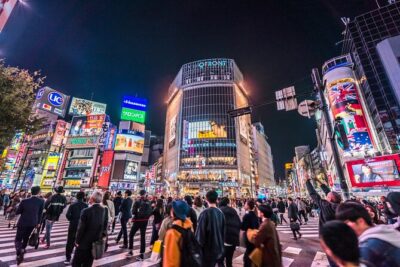
Cycling Tours, compared.
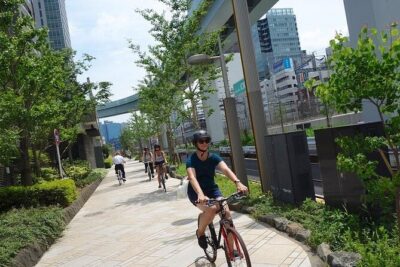 ★ 5.0Tokyo Guided Small-Group Biking TourFrom $1061,250 reviews
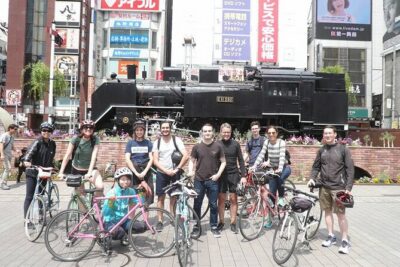 ★ 5.0Tokyo Great Cycling TourFrom $99811 reviews
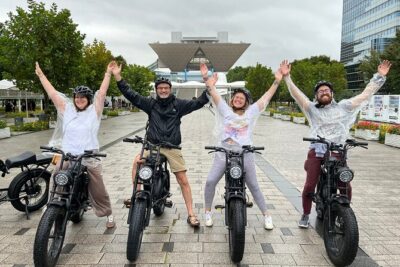 ★ 5.0Tokyo Top Highlights 3h Guided E-bike TourFrom $63714 reviews
 ★ 5.03h Tokyo E-Bike Tour: Hidden Gems, and Local Life with guideFrom $63670 reviews
 ★ 4.83-Hour Bike or E-Bike City Highlights TourFrom $45435 reviews
 ★ 4.83-hour Guided E-Bike Tour of the City’s Hidden GemsFrom $65251 reviews
 ★ 5.0Tokyo West-Side Cycling & Food TourFrom $99214 reviews
 ★ 5.03-Hour Bike/E-Bike Tour of the City’s HighlightsFrom $63209 reviews
Browse the lists this tour appears in