
Reviewed · CYCLING TOURS
Tokyo: 3-Hour E-Bike Tour of the City’s Riverside Areas
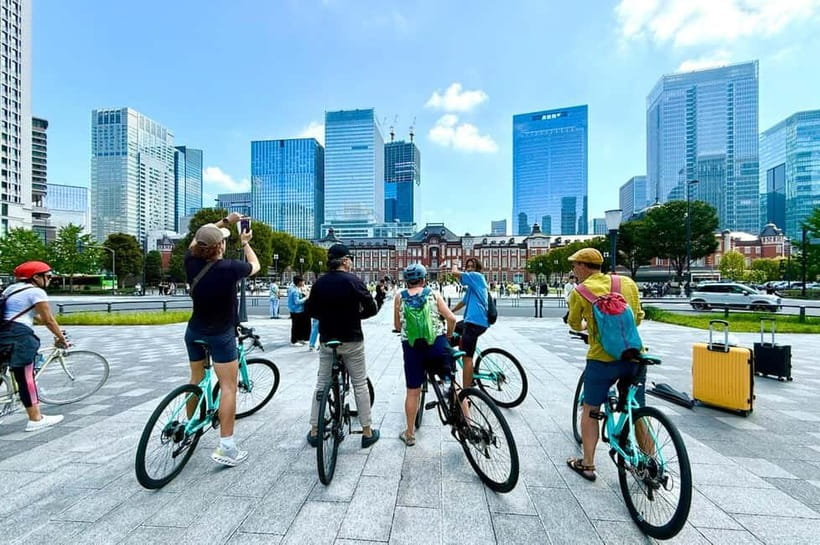
Tokyo moves faster on two wheels. This 3-hour e-bike tour threads together riverside lanes and downtown sights with photo stops and short guided explanations, so you get city context without burning half your day in stations.
I love that it’s paced for real life: small-group size (up to 8) and a guide who can keep everyone moving together. And I especially like the built-in break at Kiyosumi Gardens, since your entrance fee is included. Guides like Nooki, Casey, Naoki, and Show show up in multiple reviews as friendly and fun, with plenty of street-level perspective.
One thing to think about: it’s not for everyone. If you can’t comfortably ride a bike, you have back issues, you’re pregnant, or you’re traveling with kids under 12, this won’t fit well. And near Ginza there can be a trickier stretch in traffic, even though the rest of the route tends to feel calmer.
In This Review
- Key things I’d circle before you book
- Why Tokyo’s riverside looks better on an e-bike
- Hibiya Park meet-up: starting easy, staying organized
- Ginza photo stop and Kabuki-za: the skyline hits first
- Tsukiji: temple stillness then market energy
- Tsukishima Monja Street: street food culture you can actually see
- Sumiyoshi Jinja: a quick stop that adds depth
- Kiyosumi Gardens: the included entrance and the best breathing space
- Naritasan Fukagawa Fudōdō: the end point, plus an optional fee
- The e-bike experience: comfortable, safe, and actually practical
- What the guide really adds (and why it shows up in reviews)
- Price and value: is $78 fair for 3 hours?
- Who should book this e-bike tour
- When you should bring extra patience (and how to prepare)
- Should you book the Tokyo 3-hour riverside e-bike tour?
- FAQ
- How long is the Tokyo 3-hour E-bike tour?
- How much does it cost?
- Where do I meet the guide?
- Is the tour in English?
- What’s included with the tour price?
- Are any entrance fees included at the end temple?
- Is food included?
- Who can join the tour?
- What should I bring and wear?
Key things I’d circle before you book
- Small group (up to 8) means you’re not stuck waiting behind a crowd.
- E-bike with a basket keeps it practical for bags while you focus on the route.
- Kiyosumi Gardens entry is included, so you don’t have to budget extra for that stop.
- Tsukiji Outer Market and nearby temple stops give you contrast: food energy plus quiet religious spaces.
- Bike insurance is included, a sensible safety net for a city ride.
- Optional Fukagawa Fudōdō temple fee (¥1000 by cash) lets you decide how deep to go at the end.
Why Tokyo’s riverside looks better on an e-bike
There’s a reason Tokyo feels different when you ride instead of take trains. On a bike (especially an e-bike), you can keep your eyes up. You notice the way neighborhoods change block by block. You also catch views you just don’t get from inside a station tunnel.
This tour is built around that idea: you roll through riverside-adjacent areas and central districts, with short stops where the guide helps you make sense of what you’re seeing. It’s not a long slog. It’s a focused circuit designed for three hours of “I get it now” moments, not three hours of trying to interpret Tokyo alone.
The price, $78 per person, makes more sense when you break down what’s included. You’re not just renting wheels. You’re paying for a guide, an e-bike (with a basket), bike insurance, and at least one key attraction’s entrance fee. If you’d otherwise spend your morning figuring out routes, ticket lines, and transport transfers, the guided ride is a strong value play.
Readers also shortlisted these Tokyo bookings:
- Tokyo Guided Small-Group Biking Tour
★ 5.0 · 1,250 reviews - Tokyo Great Cycling Tour
★ 5.0 · 811 reviews - Tokyo Top Highlights 3h Guided E-bike Tour
★ 5.0 · 714 reviews - 3h Tokyo E-Bike Tour: Hidden Gems, and Local Life with guide
★ 5.0 · 670 reviews
Hibiya Park meet-up: starting easy, staying organized
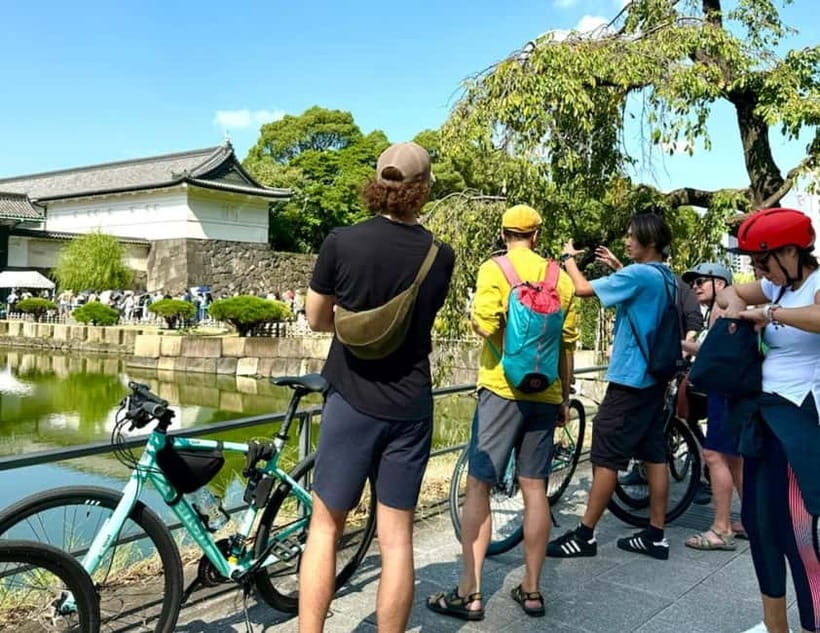
You meet at the right of the kiosk in Hibiya Park (Hibiyakōen). That matters because Tokyo park entrances can be a bit of a maze when you’re looking for a sign in a hurry. Aim to arrive about 10 minutes early so you can get your gear sorted and get your bearings fast.
You’ll want comfortable clothes and shoes since you’re cycling for the full ride. Bring water and consider sunscreen, because even a city tour has sun exposure when you’re out of the shade. Sunglasses are recommended, which sounds small but saves your eyes on bright days—especially when you’re riding along open waterfront stretches.
Also note the rules: no smoking, no alcohol or drugs, and no littering. It’s standard good-city behavior, but it’s still helpful to know what’s expected so you don’t feel awkward once you’re with the group.
Ginza photo stop and Kabuki-za: the skyline hits first
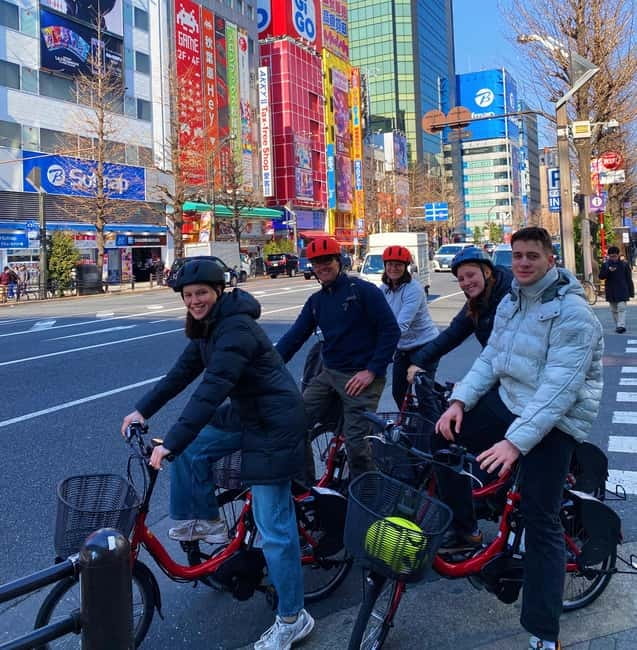
You begin the sightseeing run with quick stops in the Ginza area. Expect a photo stop and a short guided moment at Ginza, then another at Kabuki-za (the famous Kabuki theatre building). These are classic Tokyo icons—yes, you’ll see tourists here—but the bike angle changes how you experience the district.
Why this works early: Ginza gives you instant orientation. You get a sense of Tokyo’s scale—tall storefronts, tight street geometry, and that unmistakable downtown tempo. The guide’s short explanation helps you connect landmarks to the larger city story instead of just snapping photos and moving on.
Potential drawback: one review called out a stretch in Ginza traffic that can feel a bit challenging. It doesn’t mean the whole tour is difficult. It just means you should be calm, follow the guide’s cues, and be ready to ride defensively in busier areas before the route shifts into quieter lanes.
Tsukiji: temple stillness then market energy
Next up is the Tsukiji zone, with stops that balance sacred calm and everyday food life.
You’ll visit Tsukiji Hongan-ji, with a guided stop that lasts about 15 minutes. This is a useful breather. Big city rides can blur together, so popping into a temple space gives you a change of pace and a different kind of Tokyo texture—less neon, more ritual, more stillness.
Then comes the Tsukiji Outer Market area, with about 20 minutes for guided touring and time to look around. This is where Tokyo’s food world is loud and visual. Even if you don’t eat during the tour, the market context is the point: it shows how the city’s appetite shapes daily life.
A practical tip: food isn’t included, so you’ll need to budget for snacks if you want them. But the market stop gives you a natural chance to buy something on your own and watch how people move through the space.
Tsukishima Monja Street: street food culture you can actually see
From Tsukiji, the tour heads to Tsukishima Monja Street for a shorter guided visit (about 10 minutes). This part of the ride is helpful if you want Tokyo beyond the big-name photo spots.
The value here is in contrast. After the market’s busy rhythms and the temple stop’s calm, Monja Street brings you back to neighborhood food culture—more casual, more street-level, and often easier to understand because you’re seeing daily life rather than just viewing architecture.
If you’re the type who likes walking into a place and reading the crowd, this stop is a good fit. You get a snapshot of a specific Tokyo vibe without spending your whole day searching for it.
Readers also shortlisted these Tokyo bookings:
- Tokyo: Private City Highlights Tour with Local Guide★ 4.8 · 1,433 reviews
- Tokyo: Asakusa, Skytree & Akhihabara Go-Kart City Experience★ 4.7 · 761 reviews
- Tokyo: 3-Hour Bike or E-Bike City Highlights Tour★ 4.8 · 435 reviews
- Tokyo: Sumo Morning Practice Tour at Sumida City★ 4.8 · 308 reviews
- Private Haneda Airport (HND) to Central Tokyo City Transfer★ 4.5 · 260 reviews
Sumiyoshi Jinja: a quick stop that adds depth
Then you cycle to Sumiyoshi Jinja for another short guided stop (about 10 minutes). Shrine visits can feel like filler on some tours. Here, the shrine timing works better because it’s placed after your food stops, giving you that mental reset so the spiritual site doesn’t feel like an interruption.
Even in a short window, a good guide can help you see what to notice—ritual spaces, shrine layout logic, and why these places matter in everyday Tokyo. You’re not asked to become an expert. You just leave with a better sense of what you passed on the way from one neighborhood to the next.
Kiyosumi Gardens: the included entrance and the best breathing space
If I had to pick the stop that most justifies the tour’s price structure, it’s Kiyosumi Gardens. Your entrance fee is included, and you’ll spend about 25 minutes inside with guided context.
This matters because it’s easy to run a tour where the highlights are all outside. Here you get a real indoor-style pause, even though it’s a garden rather than a museum. The ride gives you movement and views, then the gardens slow your pace down. You can take in details without thinking about where your next turn is.
Also, gardens are a great spot to notice Tokyo’s skill at blending design and nature. Even if you’re not a “garden person,” the guided explanation helps you avoid the common problem: wandering around and not knowing what you’re supposed to see.
Bring a calm mindset here. This is a “look, breathe, understand a bit” stop, not a sprint.
Naritasan Fukagawa Fudōdō: the end point, plus an optional fee
The ride finishes at Fukagawa Fudōdō (Naritasan Tokyo branch temple). You’ll spend about 20 minutes with a guided stop before you reach the end.
Important practical note: the entrance fee for Fukagawa Fudōdō isn’t included. It’s listed as ¥1000 each by cash, and the tour will end there. That means you can choose to enter or simply enjoy the exterior and the guide’s final context.
This flexible ending is a good match for different travel styles. If you like temple interiors and want the full experience, budget the cash fee. If you’re tired or you’d rather spend your final time elsewhere, you’re not stuck paying just because you booked.
Either way, it’s a fitting finale for a ride that mixes food streets, shrines, and classic city landmarks. You end with something that feels like Tokyo on a slower clock.
The e-bike experience: comfortable, safe, and actually practical
This is not a rental where you fend for yourself. The tour uses electric bikes with a basket for your bag, and you get bike insurance. That combination is a real comfort factor in a city where bike lanes and pedestrian areas don’t always work the way you expect.
The tour also says it works for different skill levels, including casual riders. That’s believable because the route is built with guided short stops and a group pace. E-bikes reduce the physical stress of frequent starts and stops, especially if you’re not used to cycling in city traffic.
Still, take the “not suitable” list seriously. If you can’t ride a bike smoothly, you’ll feel stressed. If your back isn’t happy with riding posture, the physical comfort may not be worth it. And if you’re traveling with mobility constraints, this isn’t the right format for you.
What the guide really adds (and why it shows up in reviews)
What you’re paying for isn’t just wheels. It’s the explanations at each stop—brief, but pointed.
In multiple accounts, guides were credited for being friendly and enthusiastic, and for making the ride feel easy even when the route gets slightly busier near Ginza. Names that come up include Nooki, Casey, Naoki, and Show. That range of guide names is a good sign: the company appears to keep the experience consistent even when different staff lead.
You’ll also get local context at each photo stop and visit. The stops aren’t random. They’re meant to teach you how Tokyo changes from one district to the next, and how culture shows up in both everyday streets and formal places like gardens and temples.
Price and value: is $78 fair for 3 hours?
At $78 per person, you’re paying for four things at once: an English-speaking guide, an e-bike with practical storage, bike insurance, and at least one attraction entrance fee (Kiyosumi Gardens). Add the time value of not hunting transit connections, and this becomes a tidy way to see more of Tokyo in less head-spinning time.
If you’re thinking about a do-it-yourself bike rental, DIY can be cheaper on paper. But DIY doesn’t include guided explanations, built-in stop timing, or insurance included in the package. It also doesn’t automatically get you to the right set of places within a short, manageable loop.
Where the price might feel less attractive is if you already plan to do those exact spots on foot with a flexible schedule. But if you want a structured circuit with minimal wasted time, this is solid value.
Who should book this e-bike tour
This tour is a great fit if you:
- Want a 3-hour Tokyo highlight circuit without the strain of long walking days
- Like street-level Tokyo, not just the most famous landmarks
- Prefer learning from a local guide while you ride
- Are comfortable cycling and want a guided pace even if you’re not an athlete
It’s less ideal if you:
- Can’t ride a bike confidently
- Have back problems that make cycling uncomfortable
- Are traveling with children under 12
- Are pregnant and need a different kind of sightseeing format
When you should bring extra patience (and how to prepare)
Tokyo traffic can be unpredictable, even when the route is planned. The Ginza area may have a more demanding moment, and the good experience depends on group discipline: keep your spacing, watch the guide, and don’t rush to pass.
Preparation is simple. Wear shoes with grip. Bring water. Consider sunscreen and sunglasses. And arrive early enough to get your bike adjustments sorted before you start moving.
If you show up ready to ride calmly, you’ll get what makes this tour repeatedly praised: efficient access to neighborhoods that feel hard to reach by bus and a ride that feels safe while still letting you see real Tokyo.
Should you book the Tokyo 3-hour riverside e-bike tour?
If you want a fun, time-efficient way to stitch together Ginza, Tsukiji, temple stops, and Kiyosumi Gardens into one ride, I’d say yes—especially if you like the idea of learning as you go. The included e-bike, bike insurance, and Kiyosumi Gardens entrance fee make the $78 price feel more “all-in” than a basic walking tour.
Skip it if cycling isn’t in your comfort zone or if your body won’t handle bike posture. Also, if you hate any chance of traffic-adjacent riding, be aware that the Ginza stretch can feel more intense than the rest of the route.
For most people who can ride, this is the kind of Tokyo day that leaves you with both photos and understanding, and does it without turning your schedule into a puzzle.
FAQ
How long is the Tokyo 3-hour E-bike tour?
The tour lasts 3 hours.
How much does it cost?
It costs $78 per person.
Where do I meet the guide?
Meet at the right of the kiosk in Hibiya Park (Hibiyakōen).
Is the tour in English?
The live guide offers English and Japanese.
What’s included with the tour price?
Included items are a friendly English-speaking guide, electric bikes with a basket, bike insurance, local insights and stories, and the entrance fee to Kiyosumi Gardens.
Are any entrance fees included at the end temple?
The entrance fee to Fukagawa Fudōdō is not included. It’s optional and listed as ¥1000 each by cash. The tour ends there, so you don’t have to enter.
Is food included?
Food and drinks are not included.
Who can join the tour?
It’s not suitable for children under 12, pregnant women, people with back problems, or anyone who can’t ride a bike.
What should I bring and wear?
Bring comfortable shoes, water, and comfortable clothes. Sunglasses are recommended.
More Cycling Tours in Tokyo
- Tokyo Guided Small-Group Biking Tour
★ 5.0 · 1,250 reviews - Tokyo Great Cycling Tour
★ 5.0 · 811 reviews - Tokyo Top Highlights 3h Guided E-bike Tour
★ 5.0 · 714 reviews - 3h Tokyo E-Bike Tour: Hidden Gems, and Local Life with guide
★ 5.0 · 670 reviews - Tokyo: 3-Hour Bike or E-Bike City Highlights Tour
★ 4.8 · 435 reviews
More Tours in Tokyo
- Mt Fuji and Hakone 1-Day Bus Tour Return by Bullet Train
★ 5.0 · 26,383 reviews - 1-Day Tokyo Bus Tour
★ 5.0 · 14,250 reviews - Tokyo: Shinjuku Food Tour (13 Dishes at 4 Local Eateries)
★ 5.0 · 6,603 reviews - Tokyo Mt Fuji 5th St & Hakone Cruise Bus Tour w/Bullet Train
★ 4.4 · 5,024 reviews - Flagship 2-Hours Official Street Go-Kart Tour – Tokyo Bay Shop
★ 5.0 · 4,974 reviews
More Tour Reviews in Tokyo
- Mt Fuji and Hakone 1-Day Bus Tour Return by Bullet Train
★ 5.0 · 26,383 reviews - 1-Day Tokyo Bus Tour
★ 5.0 · 14,250 reviews - Tokyo: teamLab Planets TOKYO Digital Art Museum Entry Ticket
★ 4.6 · 9,779 reviews - Mt Fuji & Hakone Cruise, Drum Show Bullet Train 1 Day from Tokyo
★ 4.0 · 7,413 reviews - Tokyo: Shinjuku Food Tour (13 Dishes at 4 Local Eateries)
★ 5.0 · 6,603 reviews
Latest Tokyo reviews off our desk






Cycling Tours, compared.
 ★ 5.0Tokyo Guided Small-Group Biking TourFrom $1061,250 reviews
 ★ 5.0Tokyo Great Cycling TourFrom $99811 reviews
 ★ 5.0Tokyo Top Highlights 3h Guided E-bike TourFrom $63714 reviews
 ★ 5.03h Tokyo E-Bike Tour: Hidden Gems, and Local Life with guideFrom $63670 reviews
 ★ 4.83-Hour Bike or E-Bike City Highlights TourFrom $45435 reviews
 ★ 4.83-hour Guided E-Bike Tour of the City’s Hidden GemsFrom $65251 reviews
 ★ 5.0Tokyo West-Side Cycling & Food TourFrom $99214 reviews
 ★ 5.03-Hour Bike/E-Bike Tour of the City’s HighlightsFrom $63209 reviews
Browse the lists this tour appears in