
Reviewed · CYCLING TOURS
Tokyo Cherry Blossoms blooming spots E-bike Tour, 3hrs
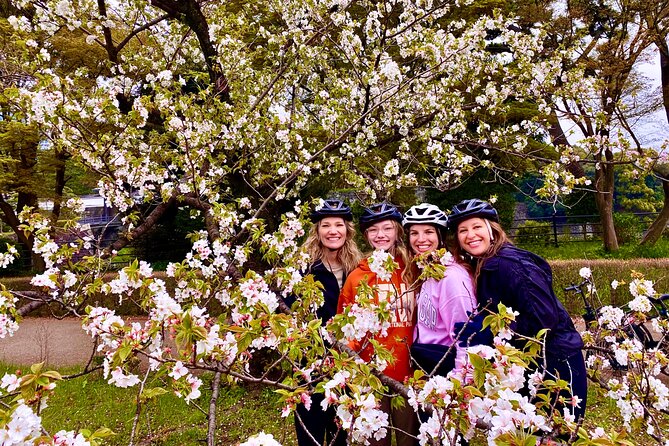
Sakura in Tokyo looks best when you can move. This 3-hour E-bike cherry blossom tour links several classic viewing spots around Kanda and central Tokyo without forcing you to fight traffic or waste time backtracking. You get guided stops (and photo moments) at places like Chidorigafuchi and Yasukuni Shrine, plus passes through parks where cherry trees line walkways and moats.
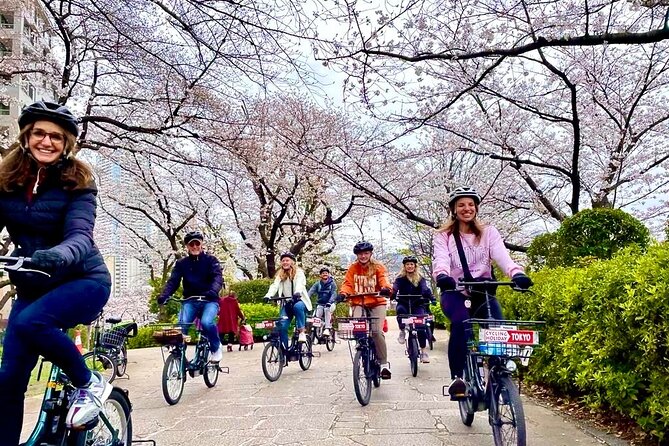
I especially love how the small group size (max 6) keeps the ride smooth and makes it easier to ask questions. I also like that the electric assist makes the tour feel doable even if your Tokyo stamina is limited, since you’re gliding rather than grinding.
One consideration: spring bloom timing can be unpredictable. If the sakura are late, you may still get beautiful viewing, but expect the guide to adjust the experience and the flowering won’t always be at peak for every stop.
In This Review
- Key tour takeaways (before you book)
- Why an E-bike works so well for Tokyo’s cherry blossoms
- Getting started at Kanda: meeting point, gear, and what you carry
- The route in plain terms: 3 hours, multiple parks, minimal backtracking
- Stop-by-stop: Chidorigafuchi and the Yasukuni Shrine photo moment
- Chidorigafuchi (about 10 minutes)
- Yasukuni Shrine (about 15 minutes)
- Sotobori Park, Hibiya Park, and how the ride stays scenic
- Sotobori Park (about 10 minutes)
- Hibiya Park (about 5 minutes)
- Kensei Kinenkan: your last on-foot viewing break
- Kensei Kinenkan (about 10 minutes)
- Guides and the human factor: why the stories add value
- The biggest variable: sakura timing and when plans get adjusted
- Comfort and safety: what you need to know before you mount up
- Price and value: what $64.57 buys in Tokyo spring
- Small-group momentum: what makes it feel personal
- Who should book this E-bike cherry blossom tour (and who should skip it)
- Should you book this tour?
- FAQ
- How long is the Tokyo cherry blossoms E-bike tour?
- Where does the tour start?
- What’s included in the price?
- Is food or drinks included?
- Are there age and height requirements?
- What if it rains or the cherry blossoms aren’t at peak?
Key tour takeaways (before you book)
- Electric assist E-bikes make central Tokyo cycling realistic for more people (as long as you can ride).
- Small group max 6 helps you navigate without feeling herded.
- Stops include major sakura zones: Chidorigafuchi, Yasukuni Shrine, Sotobori Park, Hibiya Park, Kensei Kinenkan.
- Free photo stops and short on-foot breaks keep the momentum while still letting you actually see the trees.
- Guides add context (I’ve heard everything from Tokyo stories to culture explanations, depending on who’s leading).
- Weather matters and rain gear isn’t included, so plan for spring showers.
Why an E-bike works so well for Tokyo’s cherry blossoms
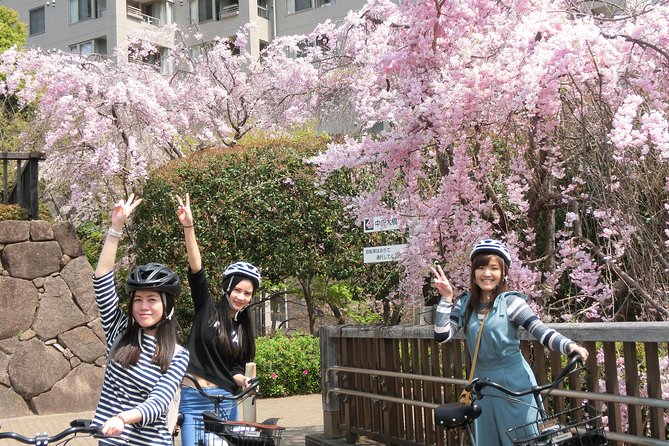
Tokyo cherry blossom season can be a time-sink. The best spots fill up fast, and getting between them by train plus walking can eat your whole day. This tour solves that by putting you on an E-bike with rental helmet and insurance, then layering in brief, planned stops for photos and viewpoints.
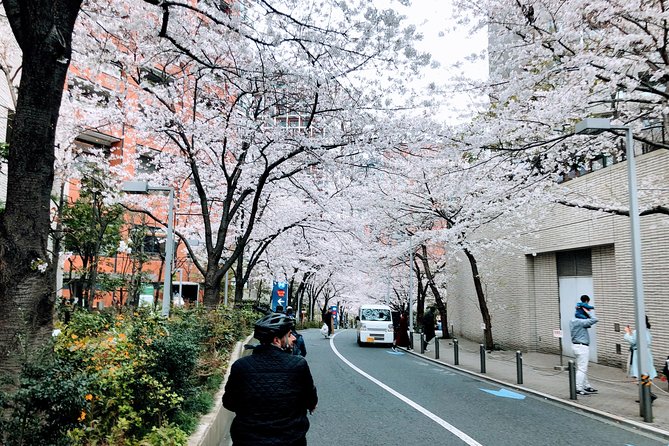
The other big win is how the ride changes what you notice. From the bike, you’re not only looking at trees from one angle. You’re moving along edges of parks and along scenic routes, so you see sakura framed by streets, bridges, and water. That’s also why guides can steer you toward the spots where the viewing is strongest at that moment.
Just remember: this isn’t a lounge-and-look tour. You do need to be comfortable riding a bicycle, even if it’s assisted.
Readers also shortlisted these Tokyo bookings:
- Tokyo Guided Small-Group Biking Tour
★ 5.0 · 1,250 reviews - Tokyo Great Cycling Tour
★ 5.0 · 811 reviews - Tokyo Top Highlights 3h Guided E-bike Tour
★ 5.0 · 714 reviews - 3h Tokyo E-Bike Tour: Hidden Gems, and Local Life with guide
★ 5.0 · 670 reviews
Getting started at Kanda: meeting point, gear, and what you carry
The tour meets at Cycling Holiday Tokyo in Uchikanda, Chiyoda City, very close to Kanda Station (JR Yamanote Line / Tokyo Metro). It’s a practical spot because Kanda is a hub, so you can usually build your day around it without complicated transfers.
Gear is handled for you: you get the rental E-bike and a helmet, plus the tour includes insurance. They also let you leave luggage (except valuables) with them during the ride, which is a big deal if you’re juggling a backpack, shopping bags, or overnight bags. One small comfort noted by the team’s base details: the Kanda location offers free Wi‑Fi, which is handy while you wait.
You’ll want to think about what you bring for the season. The tour suggests towels and sunscreen in summer, and warm clothes and gloves in winter. Also, since rain gear isn’t included, bring something you can actually use if the sky turns.
The route in plain terms: 3 hours, multiple parks, minimal backtracking
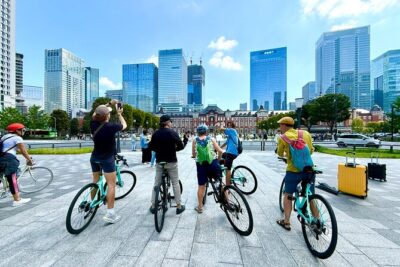
This is a tight 3-hour loop that’s designed around springtime highlights close to central Tokyo. You’ll meet, mount up, then cycle from stop to stop with scheduled time windows. The tour ends back at the starting point, so you’re not hunting for a new exit after the last photo.
What makes the schedule feel good is how it balances on-bike viewing with quick get-off moments. At some stops, you mostly keep moving and enjoy the sakura while cycling. At others, you hop off for a brief walk to get closer views. For a short tour, that’s the sweet spot: you get variety without losing your whole morning to slow transit and long wandering.
Group size helps too. With a max of 6, you’re more likely to glide through intersections smoothly and keep your own pace. In the reviews I’ve read, that small-group setup repeatedly shows up as a reason the streets feel less stressful.
Stop-by-stop: Chidorigafuchi and the Yasukuni Shrine photo moment
Chidorigafuchi (about 10 minutes)
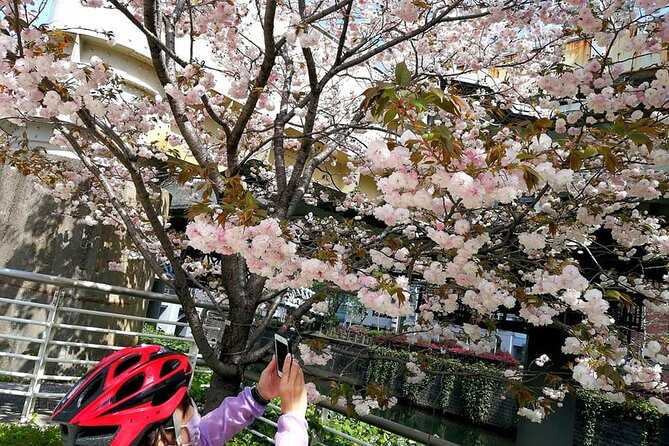
First up is Chidorigafuchi, where you enjoy cherry blossom trees while passing by on the E-bike. This is one of those classic “you can see it quickly from the road” sakura areas, which fits a short tour perfectly. If you’re hoping for that postcard look, this is your early hit.
The main practical benefit here is momentum. You’re not exhausted yet, and you’re already warmed up to the rhythm of the ride. You can take photos while you’re moving, then adjust quickly if you want a clearer shot on the bike.
Readers also shortlisted these Tokyo bookings:
- Tokyo: 3-Hour Bike or E-Bike City Highlights Tour★ 4.8 · 435 reviews
- Tokyo: 3-hour Guided E-Bike Tour of the City’s Hidden Gems★ 4.8 · 251 reviews
- Tokyo: 3-Hour Bike/E-Bike Tour of the City’s Highlights★ 5.0 · 209 reviews
- 3-Hour Tokyo Private E-Bike Tour Starting from Your Hotel★ 5.0 · 117 reviews
- Tokyo: 3-Hour Bike or E-Bike Tour of City’s Hidden Gems★ 4.7 · 81 reviews
Yasukuni Shrine (about 15 minutes)
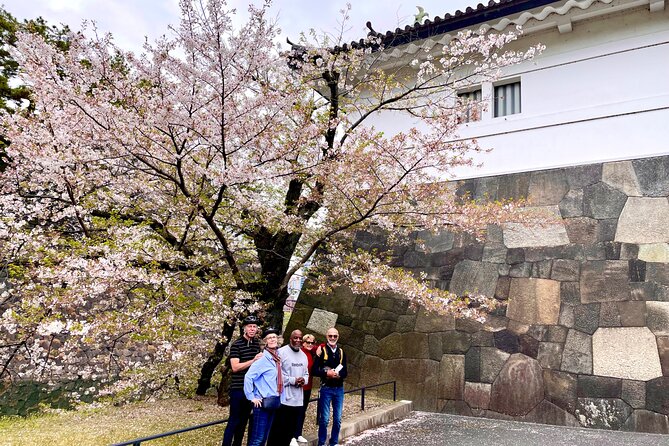
Next is Yasukuni Shrine, where you get off the bike and see the cherry blossoms inside the park. This is where the tour gives you a more traditional viewing moment: less passing-by, more strolling and looking up.
It also tends to be a calm change from cycling. The extra time (compared with some other stops) gives you space to slow down, step back from the bike, and actually see how the trees sit across paths and open areas. If you want one stop where you feel like you’re in the blossoms rather than viewing them from the street, this is it.
Sotobori Park, Hibiya Park, and how the ride stays scenic
Sotobori Park (about 10 minutes)
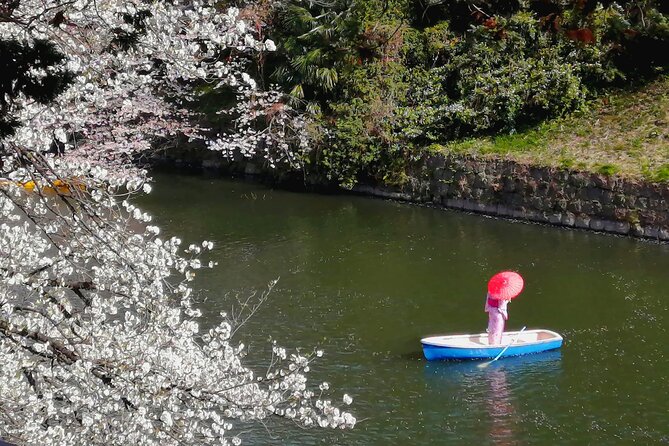
Sotobori Park is built around the outer moat area, and the tour includes a pass where you can see cherry trees along the SOTOBORI outer moat. Even if you only have ten minutes, moats and water edges tend to make spring scenes look more “complete,” because reflections and the width of the space change the feel.
One nice thing about a moat area is that it naturally creates a path. That means your guide can keep the group moving, while you get continuous sightlines.
Hibiya Park (about 5 minutes)
Then you pass Hibiya Park and look at cherry blossoms in the park while cycling. Five minutes sounds short, but for quick, targeted sightseeing, parks like Hibiya work. You’re getting the idea: trees lining walkways, that seasonal park atmosphere, and the feeling of being in central Tokyo spring.
This stop is best for fast snapshotters. If you like to linger, treat it as a “glimpse and move” moment rather than a long photo session.
Kensei Kinenkan: your last on-foot viewing break
Kensei Kinenkan (about 10 minutes)
The final scheduled landmark stop is Kensei Kinenkan, where you again get off the bike to see cherry blossoms in the park. This is a solid closing act because you end with a viewing time that’s enough to slow down after cycling through the earlier sections.
If the day has been busy, this last stop gives you a chance to regroup mentally and choose which photos you want to prioritize. It also helps you avoid the “we only stopped for 30 seconds” problem that happens on some sightseeing rides.
After that, you return to the meeting point. The loop ending where it starts is one of those small details that makes a tour feel less chaotic in a foreign city.
Guides and the human factor: why the stories add value
The guides here aren’t just traffic managers. They’re the difference between seeing cherry blossoms and understanding what you’re looking at. In the reviews, names that come up include Jenny, Take, Yoshiko, Kay, Kenta, and Yoshihisa (Yoppi). Each one is described as fun and helpful, with a focus on practical context about Tokyo and what makes each area feel the way it does.
That matters because cherry blossoms are visual, but they’re also cultural. A guide’s explanations can change how you notice the setting: how a park is laid out, why people gather in certain places, and what the surroundings mean beyond the flowers.
There’s also a strong vibe of hospitality. Reviews mention politeness and flexibility when timing gets tricky, which is exactly what you want when you’re trying to plan around sakura season uncertainty.
The biggest variable: sakura timing and when plans get adjusted
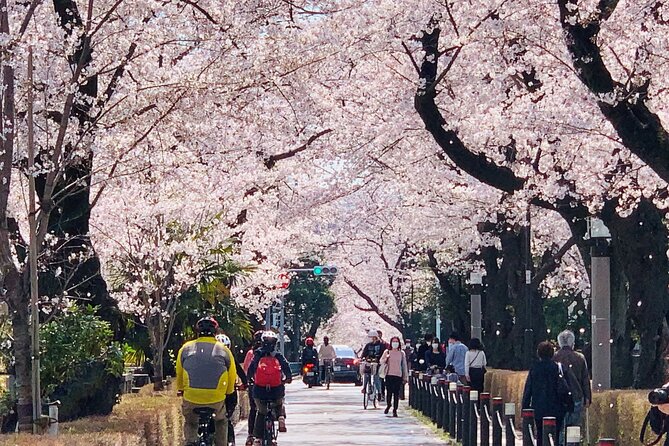
Cherry blossoms in Tokyo can be late. I’ve seen examples where the bloom timing wasn’t at its peak, yet the team worked to still deliver a great ride and viewing opportunities. Sometimes that means you’ll adjust expectations—maybe not every stop will be full.
This is where an E-bike tour helps you more than you might think. Even when flowering is uneven, you’re still getting movement through multiple sakura zones in a concentrated time window. You’re not stuck waiting in one crowded spot hoping for the “perfect” moment.
If you’re visiting with a tight schedule, you’ll probably prefer choosing one planned experience like this rather than trying to cover all the famous places on your own in a single day.
Comfort and safety: what you need to know before you mount up
First, check the simple requirements: the minimum age is 12, and the minimum height is 147 cm. If you can’t ride a bicycle, you can’t join this tour. That’s not a small note—it’s central to how the experience is designed.
Second, plan for weather. The tour requires good weather, and rain gear isn’t included. If you know Tokyo spring can swing between sun and showers, bring something you can use without ruining your day.
Third, clothing matters more than you’d expect for cycling. Even with electric assist, you’ll be moving and changing direction. Wear shoes that feel stable on Japanese streets and curb edges.
Finally, consider towels and sunscreen for warm days, and gloves when it’s cold. Several guides and the tour details explicitly recommend seasonal comfort because spring temperatures can surprise you.
Price and value: what $64.57 buys in Tokyo spring
At $64.57 per person for about 3 hours, you’re paying for more than just a bike. You’re buying a guided route through prime areas with rental E-bike, helmet, insurance, and structured stops where you can get off and look closely. You’re also paying for time saved—Tokyo is big, and “one more train plus a long walk” adds up fast during sakura season.
Value here is strongest if you want:
- help finding the best angles and timing during your limited time,
- a way to cover multiple areas without building a complicated route,
- and stories that make the sightseeing feel more meaningful.
If you’re an experienced cyclist who already knows exactly where you’ll ride and you’re comfortable navigating busy crossings, you might argue you could DIY it cheaper. But for most visitors, the guide + E-bike combo is what turns cherry blossom viewing into a smooth, efficient morning or afternoon.
Small-group momentum: what makes it feel personal
A tour like this can feel either like a production or like a shared outing. The max 6 group size repeatedly shows up as a reason people enjoy the ride: easier navigation, fewer bottlenecks, and more room to ask questions without shouting over a larger crowd.
It’s also why stops can feel more “human.” When your guide is guiding a handful of people, they can manage pacing, photo opportunities, and brief walking segments without turning the group into a traffic jam. One review even points out that the group size made it easier to navigate Tokyo streets.
The main downside isn’t the guide’s effort—it’s that with short time windows, you might have personal preferences about photos, eating breaks, or how long you want to linger. If you’re the type who wants to stop and stare for a while, you’ll need to use the available window wisely.
Who should book this E-bike cherry blossom tour (and who should skip it)
Book it if you want:
- an efficient way to see multiple sakura zones in central Tokyo,
- electric assist to reduce cycling effort,
- a guide who can explain what you’re seeing,
- and a short, focused 3-hour sightseeing plan.
Skip it if you:
- aren’t comfortable riding a bicycle,
- need lots of guaranteed flexibility for long photo sessions at each stop,
- or can’t handle weather changes when conditions aren’t great.
If you’re traveling with a teen who can ride, it can also be a good family option, as long as the minimum age and height requirements are met.
Should you book this tour?
I think this is a strong pick for your sakura day if your goal is to see several iconic areas without wasting hours in transit. The combination of small-group format, electric assist, and guided stop structure makes it feel like a best-of cherry blossom plan rather than a random bike ride.
My recommendation is to book with one expectation set: sakura bloom timing can be uneven. If that happens, you’ll still benefit from cycling through multiple viewing zones and getting a guide to steer you toward what’s working best that day.
If your schedule allows, this is the kind of experience that helps you see Tokyo spring in a way that’s both practical and genuinely fun.
FAQ
How long is the Tokyo cherry blossoms E-bike tour?
The tour lasts about 3 hours.
Where does the tour start?
It starts at Cycling Holiday Tokyo, 3-chōme-8-6 Uchikanda, Chiyoda City, Tokyo 101-0047, Japan, near Kanda Station.
What’s included in the price?
You get the rental E-bike, rental helmet, a guide, insurance, and the option to leave luggage (except valuables) with the team during the tour.
Is food or drinks included?
No. Food and drinks are not included.
Are there age and height requirements?
Yes. The minimum age is 12 years, and the minimum height is 147 cm.
What if it rains or the cherry blossoms aren’t at peak?
The tour requires good weather. If it’s canceled due to poor weather, you’ll be offered a different date or a full refund. If sakura timing is late, the experience may not look like peak-season photos at every stop.
More Cycling Tours in Tokyo
- Tokyo Guided Small-Group Biking Tour
★ 5.0 · 1,250 reviews - Tokyo Great Cycling Tour
★ 5.0 · 811 reviews - Tokyo Top Highlights 3h Guided E-bike Tour
★ 5.0 · 714 reviews - 3h Tokyo E-Bike Tour: Hidden Gems, and Local Life with guide
★ 5.0 · 670 reviews - Tokyo: 3-Hour Bike or E-Bike City Highlights Tour
★ 4.8 · 435 reviews
More Tours in Tokyo
- Mt Fuji and Hakone 1-Day Bus Tour Return by Bullet Train
★ 5.0 · 26,383 reviews - 1-Day Tokyo Bus Tour
★ 5.0 · 14,250 reviews - Tokyo: Shinjuku Food Tour (13 Dishes at 4 Local Eateries)
★ 5.0 · 6,603 reviews - Tokyo Mt Fuji 5th St & Hakone Cruise Bus Tour w/Bullet Train
★ 4.4 · 5,024 reviews - Flagship 2-Hours Official Street Go-Kart Tour – Tokyo Bay Shop
★ 5.0 · 4,974 reviews
More Tour Reviews in Tokyo
- Mt Fuji and Hakone 1-Day Bus Tour Return by Bullet Train
★ 5.0 · 26,383 reviews - 1-Day Tokyo Bus Tour
★ 5.0 · 14,250 reviews - Tokyo: teamLab Planets TOKYO Digital Art Museum Entry Ticket
★ 4.6 · 9,779 reviews - Mt Fuji & Hakone Cruise, Drum Show Bullet Train 1 Day from Tokyo
★ 4.0 · 7,413 reviews - Tokyo: Shinjuku Food Tour (13 Dishes at 4 Local Eateries)
★ 5.0 · 6,603 reviews
Latest Tokyo reviews off our desk

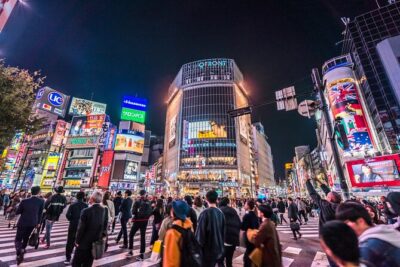
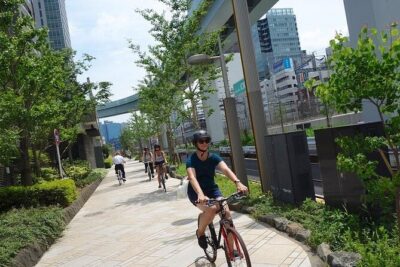
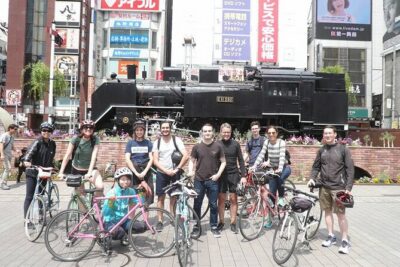
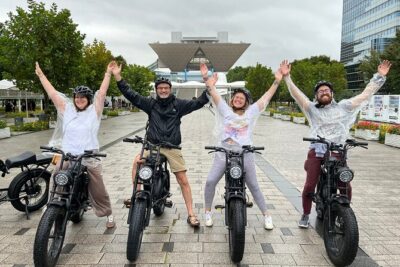
Cycling Tours, compared.
 ★ 5.0Tokyo Guided Small-Group Biking TourFrom $1061,250 reviews
 ★ 5.0Tokyo Great Cycling TourFrom $99811 reviews
 ★ 5.0Tokyo Top Highlights 3h Guided E-bike TourFrom $63714 reviews
 ★ 5.03h Tokyo E-Bike Tour: Hidden Gems, and Local Life with guideFrom $63670 reviews
 ★ 4.83-Hour Bike or E-Bike City Highlights TourFrom $45435 reviews
 ★ 4.83-hour Guided E-Bike Tour of the City’s Hidden GemsFrom $65251 reviews
 ★ 5.0Tokyo West-Side Cycling & Food TourFrom $99214 reviews
 ★ 5.03-Hour Bike/E-Bike Tour of the City’s HighlightsFrom $63209 reviews
Browse the lists this tour appears in