
Reviewed · CYCLING TOURS
Tokyo Deep Inside Cycle Tour~3 Hours E Bike Tour around Tokyo
Tokyo feels huge at first, then this tour shrinks it fast into human scale. You get a guided e-bike ride that mixes major landmarks with neighborhood backstreets, plus a hands-on snack stop with taiyaki. I like how the pace is set for real people, from history lovers to those who just want a break from step-counting, and how guides like Kumiko/Micky and Tussie focus on friendly, clear guidance. One consideration: it still involves cycling and a short walking component, so if you’re not comfortable on a bike, you’ll want to think twice (and note the under-145 cm height limit).
The route also does something smart: it links the city’s Edo past to the modern Tokyo you actually move through today. You’ll roll from the Tokyo Station area toward Kanda, swing into Akihabara, then head past shrines and the Imperial Palace perimeter. It’s short enough to fit into a busy itinerary, but it covers enough variety that you’ll leave with a better mental map than you’d get from hopping between stations alone.
In This Review
- Key Points at a Glance
- Tokyo in 3 Hours on an E-Bike (Not a Far-Running Tour)
- Meeting at Marunouchi: The Easiest Start Point in Central Tokyo
- How the Route Teaches Edo to Modern Tokyo (Stop by Stop)
- Tokyo Central Railway Station: Where a Former Field Became the Center
- Kanda Bridge Gate Stone Wall Remains: Edo Town Roots by the River
- Kanda Matsuya: Narrow Alleys Where Old Choices Still Matter
- Akihabara: From Postwar Black Market Roots to Today’s Tech Streets
- Kanda Shrine (Kanda Myojin): Chief Shinto Shrine of Edo
- Hijiribashi Bridge and Ochanomizu: The Student-Town Angle
- The Best Breaks: Taiyaki, Books, and Torii Moments
- Kanda Daruma Snack Stop: Taiyaki, Not a Pass-By Bite
- Kanda Jinbocho: One of the World’s Largest Secondhand Book Districts
- Yasukuni Shrine: A Big Torii Ride-Through and a Restroom Break
- From Edo Castle Grounds to Imperial Palace Gate Scenery
- Kitanomaru Park: Passing the Edo Castle Site and Nippon Budokan Area
- Imperial Palace: Why This Place Became the Imperial Palace
- Sakurada-mon Gate: A Landmark Gate Pass With Perimeter Views
- Ending at Marunouchi: Bike Return and an Art Stop
- Price and Value: What You’re Paying For (and What You’re Not)
- Who Should Book This Tokyo E-Bike Tour (And Who Might Not)
- Should You Book This Tokyo Deep Inside Cycle Tour?
- FAQ
- How long is the Tokyo Deep Inside Cycle Tour?
- What’s included in the price?
- Is bottled water included?
- What’s the height requirement for the tour?
- How big is the group?
- What happens if it rains?
Key Points at a Glance
- Easy e-bike riding designed for a range of experience levels, so you’re not training for a race
- Snack included: taiyaki (anko or cream), timed as a real break, not a token stop
- Old-to-new Tokyo flow through Kanda, Akihabara, Jinbocho, Yasukuni, and Imperial Palace outskirts
- Small group size (up to 4) helps keep the ride calm and manageable in traffic
- Helmet + bicycle insurance are included, so you can focus on sightseeing
- Weather-dependent comfort: it’s a cycling tour, so rain may mean switching to a walking option
Tokyo in 3 Hours on an E-Bike (Not a Far-Running Tour)
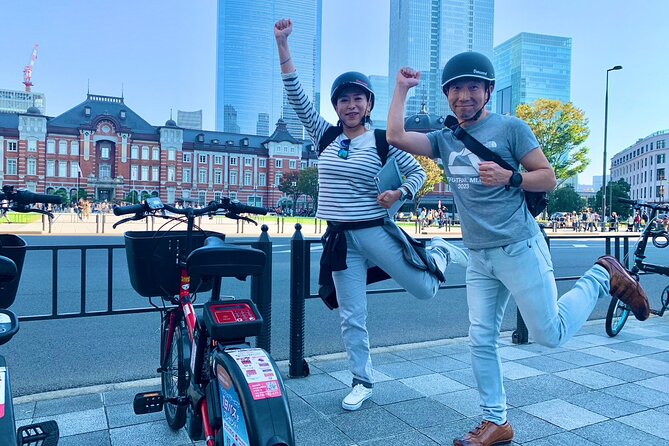
If you’ve ever tried to see central Tokyo by foot, you already know the problem: you walk great distances, then you arrive at the next stop exhausted. This tour is built around the idea that you should be active, but not wrecked. The e-bike does the heavy lifting, letting you keep your energy for photos, snacks, and actually listening to your guide.
A big win here is rhythm. Instead of one long slog between neighborhoods, you get repeated “arrive, look, learn, move” moments. That’s why the tour works for first-timers who want context without feeling like they’re stuck inside a museum loop. It also helps you reach places that are harder to line up perfectly by train, especially when you want both major landmarks and small streets.
In one review, participants even noted covering about 6.8 miles (over 10 km) without feeling like it was a punishment. That’s the sweet spot: enough distance to feel like you did something meaningful, not so much that you spend the rest of the day recovering.
Readers also shortlisted these Tokyo bookings:
- Tokyo Guided Small-Group Biking Tour
★ 5.0 · 1,250 reviews - Tokyo Great Cycling Tour
★ 5.0 · 811 reviews - Tokyo Top Highlights 3h Guided E-bike Tour
★ 5.0 · 714 reviews - 3h Tokyo E-Bike Tour: Hidden Gems, and Local Life with guide
★ 5.0 · 670 reviews
Meeting at Marunouchi: The Easiest Start Point in Central Tokyo
You meet at the JTB Marunouchi Store area, right near Tokyo Station—specifically a 1-minute walk from the Marunouchi South Exit of JR Tokyo Station. The tour also connects conveniently to lines serving Nijubashimae Station, which matters if you’re coming in from elsewhere that day.
This is the kind of start that reduces stress. When your meeting point is that central, you can build your morning around anything: an early coffee, a museum, or simply arriving in time to take photos around Tokyo Station before the ride. Starting at 1:00 pm is also helpful. It lands after the morning rush, and you’re not fighting the earliest commuter crowds.
Practical tip: there’s no mention of bottled water being provided, so plan to bring what you like. The included snack is taiyaki, not a hydration plan.
How the Route Teaches Edo to Modern Tokyo (Stop by Stop)
This tour’s story is really about transformation—how the city grew from Edo-era life into the dense modern metropolis you navigate today. You’ll feel that theme immediately: the ride keeps tying street scenes to the historical reasons Tokyo looks the way it does.
The stops are short and focused, typically 10–35 minutes each, which helps the day stay lively. You’re not stuck in one place waiting for the next group photo. Instead, you’re moving through the “why” behind each area.
Tokyo Central Railway Station: Where a Former Field Became the Center
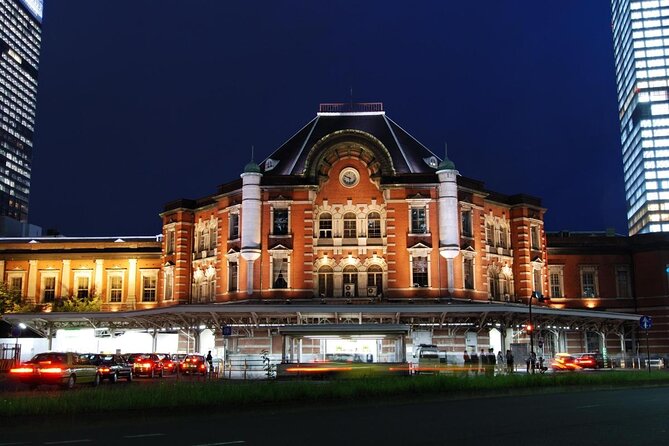
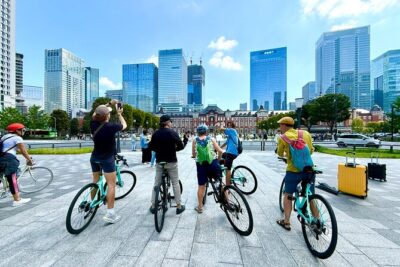
The ride begins in front of Tokyo Station. Your guide points out the irony that Japan’s “main gate” sits on ground that was once something far less urban. The point isn’t trivia for its own sake—it’s how a city concentrates power, movement, and identity around a single focal point.
If you like architectural variety and big-city scale, you’ll enjoy the way the tour frames Tokyo Station as a turning point. Even if you’ve passed it before, it can feel like background noise. Here, it becomes the opening chapter.
Kanda Bridge Gate Stone Wall Remains: Edo Town Roots by the River
Next you stop at the remains of the Kanda Bridge Gate’s stone wall. This area ties directly to how Edo town development grew from the Nihonbashi River flowing underneath the bridge. You also get context about traditional festivals and where the town name comes from.
Why this stop matters: it gives you a “river-to-city” lens. Tokyo is often read as trains and towers, but early city life depended on waterways and gateways. Even with short time on site, the explanation helps you look at what you’re seeing instead of just snapping pictures.
Readers also shortlisted these Tokyo bookings:
- Tokyo: 3-Hour Bike or E-Bike City Highlights Tour★ 4.8 · 435 reviews
- Tokyo: 3-hour Guided E-Bike Tour of the City’s Hidden Gems★ 4.8 · 251 reviews
- Tokyo: 3-Hour Bike/E-Bike Tour of the City’s Highlights★ 5.0 · 209 reviews
- 3-Hour Tokyo Private E-Bike Tour Starting from Your Hotel★ 5.0 · 117 reviews
- Tokyo: 3-Hour Bike or E-Bike Tour of City’s Hidden Gems★ 4.7 · 81 reviews
Kanda Matsuya: Narrow Alleys Where Old Choices Still Matter
Then it’s into Kanda Matsuya, described as a place where common people’s culture that chose to preserve the old still shows up. You’ll ride through narrow alleys lined with shops, and the quick pace keeps it from feeling like a walking tour marathon.
Possible drawback: since alleys can be tight, you’ll want to keep your cadence and follow your guide closely. This isn’t a “wander on your own” loop, so if you prefer total freedom, you might feel boxed in for brief stretches.
Akihabara: From Postwar Black Market Roots to Today’s Tech Streets
The tour shifts to Akihabara, explained as a district that learned to change with the times. The framing matters: Akihabara didn’t become what it is overnight. It has roots in postwar history, including a black-market phase, and it evolved into the modern tech-and-subculture magnet it is today.
Here’s why you’ll likely enjoy this stop even if you think you already know Akihabara: the tour doesn’t just say “tech stuff exists here.” It ties the area to decision-making and adaptation, which makes the streets feel less random.
Kanda Shrine (Kanda Myojin): Chief Shinto Shrine of Edo
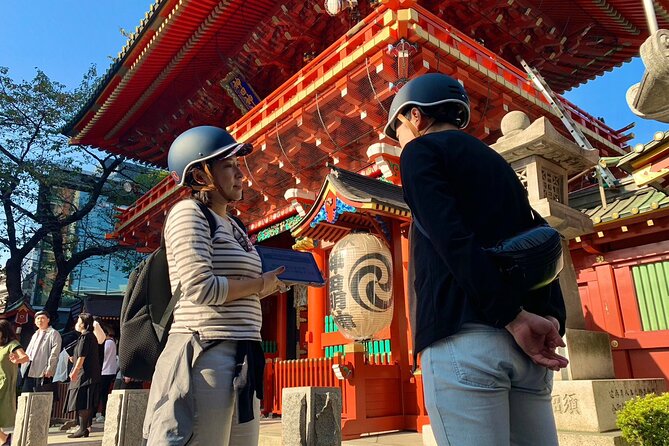
You’ll visit Kanda Shrine (Kanda Myojin), and your guide focuses on its Edo-period significance and the Kanda Festival. This is one of those stops that can reset your perspective. After busy streets, a shrine area gives you a pause—and it’s also one of the clearest links between “Edo” and “Tokyo.”
If you’re sensitive to group timing, note the time here is longer than some other stops (about 35 minutes). You’ll have enough room to look around and shop a bit at the souvenir shop mentioned in the tour flow.
Hijiribashi Bridge and Ochanomizu: The Student-Town Angle
A quick bridge stop follows at Hijiribashi Bridge, with views looking down toward Ochanomizu Station. The tour frames Ochanomizu as a student town with history, and this tiny detour works well because it gives you a skyline perspective without requiring a long climb.
The Best Breaks: Taiyaki, Books, and Torii Moments
This is where the tour feels like it actually has fun built into it—not just transportation with talking.
Kanda Daruma Snack Stop: Taiyaki, Not a Pass-By Bite
At Kanda Daruma, you get a snack break with taiyaki. You can choose anko (red bean paste) or cream. Even if you’ve had taiyaki before, this stop is valuable because it’s scheduled as a reset between concentrated sights.
It’s also a small cultural moment that’s easy to participate in. You don’t need advanced language skills to point at a flavor choice, and you get that warm, comforting bite that makes the rest of the ride feel easier.
Kanda Jinbocho: One of the World’s Largest Secondhand Book Districts
Next is Kanda Jinbocho, where the focus is an antiquarian bookstore district described as one of the largest in the world. In practice, this is a street-level Tokyo experience: small shops, signage, and the feeling that people actually browse here.
Even if you’re not hunting rare books, you’ll probably enjoy the atmosphere. It’s one of those areas where you can slow down mentally even while still moving forward physically.
Yasukuni Shrine: A Big Torii Ride-Through and a Restroom Break
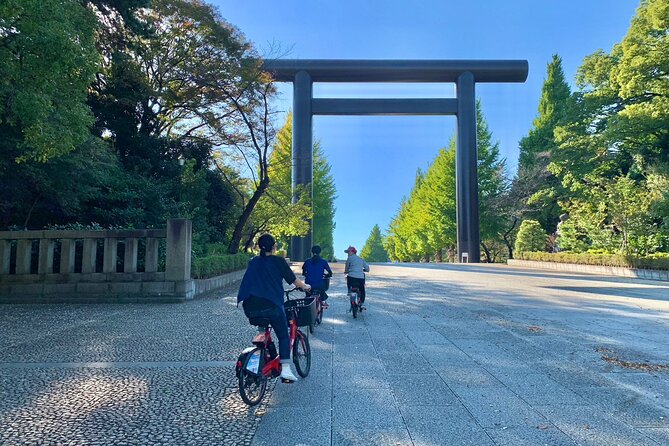
You’ll bike under the torii at Yasukuni Shrine, described as one of the highest and largest torii gates in Japan. Then you get time to experience the nature of the shrine grounds, with a restroom break included.
Why it works on this route: you’ve just come through crowded city districts, and then the tour gives you a calmer, more reflective setting. It’s a good contrast stop that keeps the itinerary from feeling flat.
From Edo Castle Grounds to Imperial Palace Gate Scenery
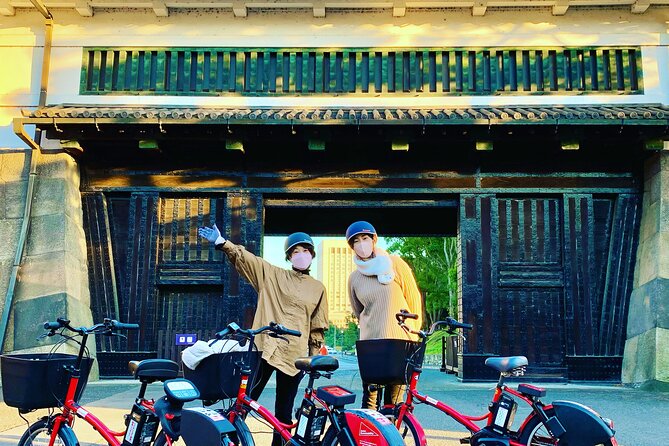
This part of the ride is especially good for building your mental map of Tokyo. You start connecting the dots between historical land use and what you see today.
Kitanomaru Park: Passing the Edo Castle Site and Nippon Budokan Area
The tour includes Kitanomaru Park, described as the site of the Edo Castle’s Kitanomaru, with a pass through to areas including Nippon Budokan and surrounding buildings. Time on this segment is quick, more of a ride-through than a long visit, but the framing helps you picture Tokyo as built on layered ground.
If you’re hoping for a long, in-depth castle-park walk, you may wish this stop lasted longer. On the flip side, quick transit through a big historical zone can keep the overall 3-hour flow comfortable.
Imperial Palace: Why This Place Became the Imperial Palace
The tour then reaches the Imperial Palace area. The guide explains that it was originally the site of Edo Castle, and you’ll hear the story around the transition away from the chonmage-era imagery. This is one of the stops where the “learn” portion really matters.
You won’t just see walls and gates. You’ll connect the geography to political change, which is what makes the area feel more than just scenic.
Sakurada-mon Gate: A Landmark Gate Pass With Perimeter Views
You’ll pass through Sakuradamon Gate, described as the largest gate in the Imperial Palace, and enjoy the scenery around the outer perimeter of the palace. It’s a clean “Tokyo landmark” moment, and the walking time is enough to take a few photos without turning the tour into a slow crawl.
Ending at Marunouchi: Bike Return and an Art Stop
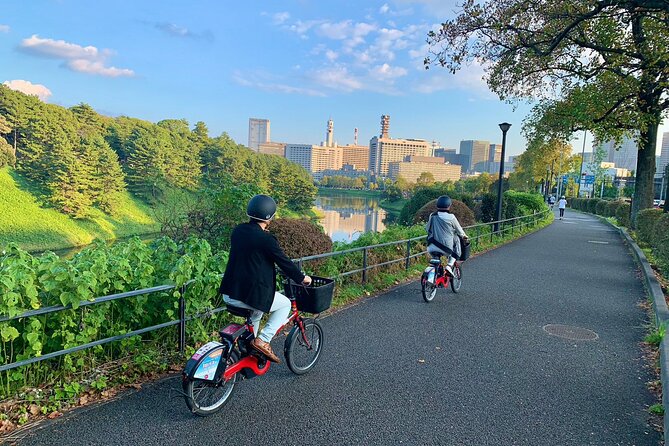
After the main sightseeing loop, you return the electric bicycles at the Marunouchi Building. Then you walk to a floor where art is exhibited, themed around Time and Memory.
Even if you’re not an art super-fan, this ending does two helpful things. First, it gives you an indoor break so you don’t have to keep biking until the very end. Second, the “time” theme quietly echoes the tour’s Edo-to-modern focus, turning the final stop into a neat emotional wrap-up.
Price and Value: What You’re Paying For (and What You’re Not)
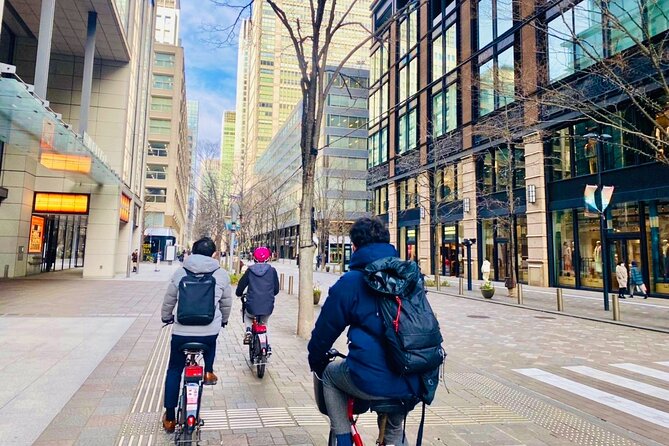
At $83.23 per person for about 3 hours, this isn’t a bargain discount tour. It’s priced like a guided urban experience in a city where everything is priced for convenience.
What you do get for the money:
- A guided e-bike experience (not just a rental)
- Bicycle helmet included
- Taiyaki snack included
- Bicycle insurance fee included
- Multiple key districts in a tight loop, which is hard to DIY efficiently
What you don’t get:
- Bottled water (bring your own)
- A long, museum-style deep dive at any one location (it’s a short-stop format)
In my mind, this price feels most justified if you want a guided route that helps you understand what you’re seeing quickly. If you’re the type who loves planning every stop yourself and doesn’t care about guided context, you might feel you could do parts independently. But if you want the city explained while you ride, the cost makes more sense.
Who Should Book This Tokyo E-Bike Tour (And Who Might Not)
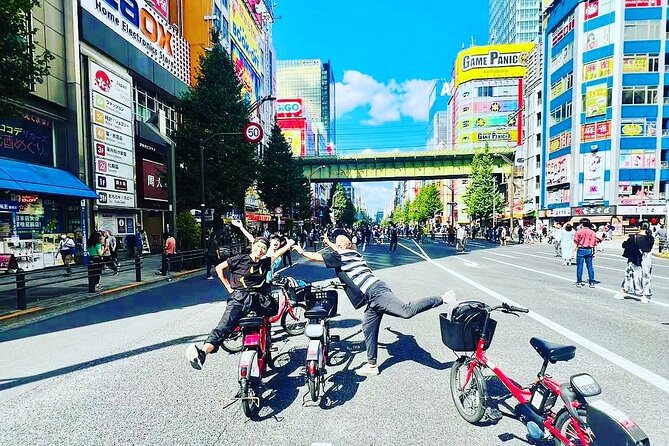
This tour is a strong fit if you:
- Want to see central Tokyo without burning your whole day on transit and steps
- Like mixing major sights with neighborhood streets
- Prefer learning with a guide rather than reading signs at random
- Appreciate a break built in, like the taiyaki stop
It’s also one of those tours that can work well for people who don’t want intense biking. In the reviews, one participant who was 60 and had a knee replacement months prior said they never felt unsafe, and credited the guide for being patient and safety cautious around local civilians. That’s not a medical recommendation, but it does suggest the ride is handled thoughtfully.
What might not fit as well:
- Very nervous cyclists who want totally low-speed, no-traffic cycling (this goes through central areas)
- People who can’t meet the 145 cm height requirement
- Anyone who expects a fully free-roaming bike day
Should You Book This Tokyo Deep Inside Cycle Tour?
I’d book it if you want a fast, high-value way to connect Tokyo’s Edo roots to modern streets—without the fatigue that comes from walking everywhere. The small group format, included helmet + snack + insurance, and the mix of Kanda, Akihabara, shrine grounds, and Imperial Palace perimeter make it a practical “Tokyo orientation plus highlights” plan.
If you’re on the fence, I’d decide based on one question: do you want your sightseeing guided while you ride, or do you want full independence? If you choose guided, this is a smart way to spend a few hours in central Tokyo.
FAQ
How long is the Tokyo Deep Inside Cycle Tour?
The tour lasts about 3 hours.
What’s included in the price?
Your price includes e-bike use, a bicycle helmet, taiyaki snacks, and a bicycle insurance fee.
Is bottled water included?
No. You’ll want to bring your own beverages if you need them.
What’s the height requirement for the tour?
Participants under 145 cm in height are not allowed.
How big is the group?
It’s a mixed tour with up to 4 travelers. If you reserve 4 people, it becomes a private tour automatically.
What happens if it rains?
If the plan can’t be held due to rain, you can choose a Rain Day Limited Walking Route or get a refund.
More Cycling Tours in Tokyo
- Tokyo Guided Small-Group Biking Tour
★ 5.0 · 1,250 reviews - Tokyo Great Cycling Tour
★ 5.0 · 811 reviews - Tokyo Top Highlights 3h Guided E-bike Tour
★ 5.0 · 714 reviews - 3h Tokyo E-Bike Tour: Hidden Gems, and Local Life with guide
★ 5.0 · 670 reviews - Tokyo: 3-Hour Bike or E-Bike City Highlights Tour
★ 4.8 · 435 reviews
More Tours in Tokyo
- Mt Fuji and Hakone 1-Day Bus Tour Return by Bullet Train
★ 5.0 · 26,383 reviews - 1-Day Tokyo Bus Tour
★ 5.0 · 14,250 reviews - Tokyo: Shinjuku Food Tour (13 Dishes at 4 Local Eateries)
★ 5.0 · 6,603 reviews - Tokyo Mt Fuji 5th St & Hakone Cruise Bus Tour w/Bullet Train
★ 4.4 · 5,024 reviews - Flagship 2-Hours Official Street Go-Kart Tour – Tokyo Bay Shop
★ 5.0 · 4,974 reviews
More Tour Reviews in Tokyo
- Mt Fuji and Hakone 1-Day Bus Tour Return by Bullet Train
★ 5.0 · 26,383 reviews - 1-Day Tokyo Bus Tour
★ 5.0 · 14,250 reviews - Tokyo: teamLab Planets TOKYO Digital Art Museum Entry Ticket
★ 4.6 · 9,779 reviews - Mt Fuji & Hakone Cruise, Drum Show Bullet Train 1 Day from Tokyo
★ 4.0 · 7,413 reviews - Tokyo: Shinjuku Food Tour (13 Dishes at 4 Local Eateries)
★ 5.0 · 6,603 reviews
Latest Tokyo reviews off our desk

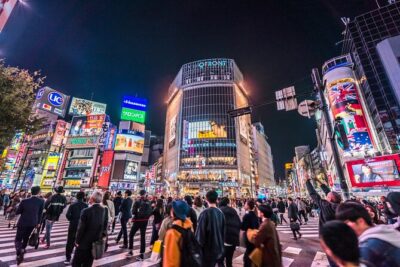
Cycling Tours, compared.
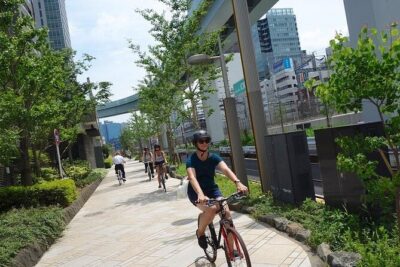 ★ 5.0Tokyo Guided Small-Group Biking TourFrom $1061,250 reviews
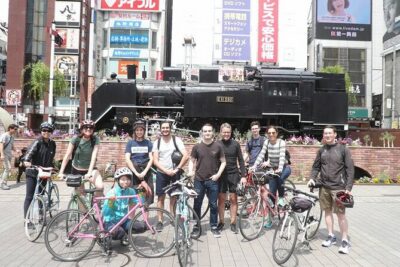 ★ 5.0Tokyo Great Cycling TourFrom $99811 reviews
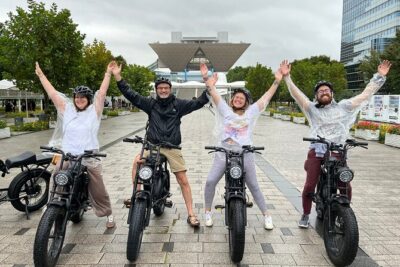 ★ 5.0Tokyo Top Highlights 3h Guided E-bike TourFrom $63714 reviews
 ★ 5.03h Tokyo E-Bike Tour: Hidden Gems, and Local Life with guideFrom $63670 reviews
 ★ 4.83-Hour Bike or E-Bike City Highlights TourFrom $45435 reviews
 ★ 4.83-hour Guided E-Bike Tour of the City’s Hidden GemsFrom $65251 reviews
 ★ 5.0Tokyo West-Side Cycling & Food TourFrom $99214 reviews
 ★ 5.03-Hour Bike/E-Bike Tour of the City’s HighlightsFrom $63209 reviews
Browse the lists this tour appears in